Posts Tagged ‘Document’

Artoffact Records – 5th December 2025

Christopher Nosnibor

In the last few years, CD box sets have become quite a thing. And I for one am a real fan. It’s not just about ‘fuck Spotify’ or the realisation that stuff has a tendency to disappear from streaming services at no notice – something true of Netflix and other TV streaming services, too. But, it is a fact that if you don’t have something physically, in some form or another, even if it’s only a digital file, you don’t have it, and you certainly don’t own it. But not all CD box sets are equal, and not all serve the same purpose. Much as I’ve come to appreciate the ’five albums’ sets and the like as instant collection fillers when it comes to acts I’ve previously managed to skip for whatever reason, they’re beyond stingy on bonus material. When it comes to releases for fans, releases like the monster boxes with all B-sides and bonuses galore, such as those by Fields of the Nephilim and The March Violets have been far more exciting.

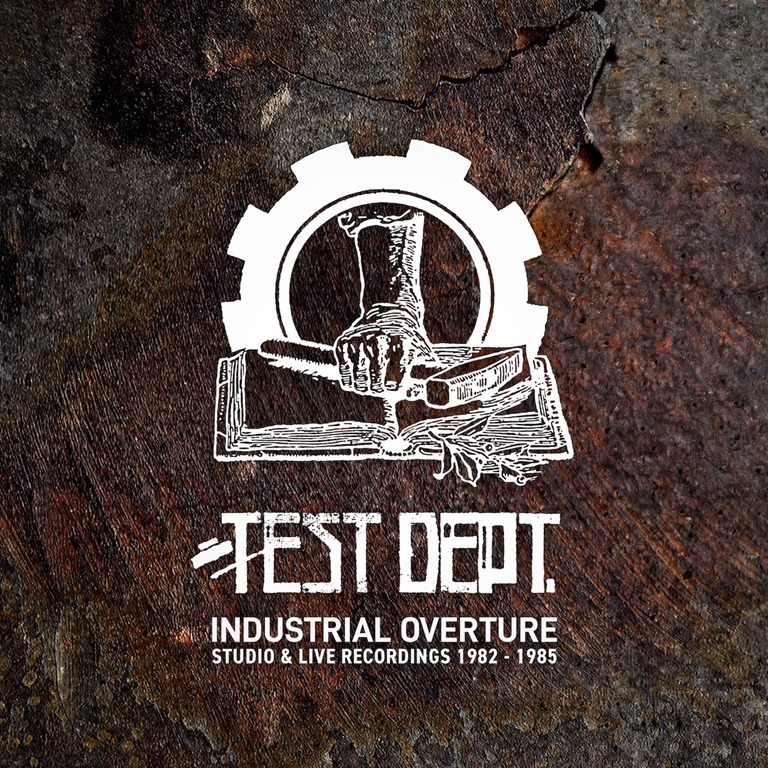
Industrial Overture: Studio & Live Recordings 1982-1985 is definitely exciting. It’s no simple repackage of the albums, and the chances are most people – even the staunchest fans of Test Dept – don’t own the majority of the material on this one, consisting as it does primarily of scarce material, outtakes, and Peel Sessions.

Industrial Overture: Studio & Live Recordings 1982-1985 consists of 42 tracks across 4 CDs and also available digitally. It’s a document of their earliest, most abrasive period – not that they exactly mellowed in the years after, as perhaps their most commercially successful album, The Unacceptable Face of Freedom (1986) attests, and includes a first ever reissue of the group’s 1983 cassette-only debut album Strength Of Metal In Motion, the classic Ecstasy Under Duress and Atonal & Hamburg albums (both unavailable for over three decades), plus a disc of hitherto unreleased studio recordings that incorporate two sessions recorded for the John Peel show on BBC Radio 1.

As the notes inform, ‘In total, 26 tracks are new to CD and digital formats, of which 12 have never been previously available at all. All contents have been compiled by Test Dept and are newly remastered by Paul Lavigne (Kontrast Mastering)’.

Disc one gives us Strength Of Metal In Motion – a collection of raw live recordings. The first five were recorded at Albany Empire, Deptford, in August ’82, and it’s fucking brutal. Even remastered, it has something of a bootleg sound quality about it, that muddiness that’s particular to 80s recordings. In many respects, this adds to the appeal here. It opens with the dissonant blasts of harping faux-brass blasts of ‘Last Rites’ – heraldic, but askew – before giving way to the pummelling percussion and shouting of ‘Shockwork / Workshock’, which is brief but brutal. ‘Prokofiev’s Dream’ is a full-on assault of clanking percussions with occasional horns, before ‘Drum and Body’ drops a shard of industrial punk noise, with rabid vocals-riding a wave of the most relentlessly aggressive beats. The dark ambience of ‘Death of God’ is nothing short of purgatorial, and showcases a different side of the band. Four more of the thirteen tracks were recorded at Temperance Hall, Newbury, four months earlier, and with samples, synths, and drum machines flashing in all directions, their debt to Cabaret Voltaire is clear there – as is the sense of their future direction. That said, ‘Kindergarten’ is pure Throbbing Gristle, laced with heavy hints of Suicide and the bibbling synths of Whitehouse. But the wayward experimental jazz elements are also strong. Overall, this is the sound of punk in a head-on collision with Throbbing Gristle and drumming that sounds like they’re battering the shit out of sheet metal. Unless you were actually there, one can only imagine what it must have been like to witness any of these early shows.

Ecstacy Under Duress was initially released in 1984 and is another (largely) live compilation consisting of recordings which again were captured in ’82 an ‘83, although this time featuring future debut single ‘Compulsion’. The compositions feel more evolved, and perhaps as a consequence, more honed in their attack. ‘Hunger’ builds to a punishing climax and sets the tone. The aforementioned ‘Compulsion’ is relentless. Samples and crashing percussion dominate the stark industrial landscape, and the intensity of these performances translates well despite the separation of time and medium. I suppose it’s here we can really identify the point at which Test Dept carved a path which departed from their industrial predecessors and peers in their pursuit of the most punishing percussion. Only Einstürzende Neubauten really compare, but even they’re not quite as up-front with the hammering beats, despite their love of sledgehammers and metallic objects. The twelve-minute ‘Efficiency’ takes the percussive assault to a whole other level, leaving the listener feeling pounded, pummelled, bewildered.

The third disc offers some respite by virtue of being studio-based and therefore not having that muffled 80s live sound to the recording – although it’s marginal. ‘Blood and Sweat’ – one of three demos from 1982 – is primitive and raw and very, very drum-orientated: the vocals are relegated to the back of the mix, anguished shouting buried in a barrage of noise. It’s cruel and it’s harsh and it’s heavy, and the demo version of ‘Shockwork’, recorded during the same session is similarly hard on the ear, with its combination of machine-gun drumming and squalling avant-jazz tones.

The two Peel Sessions, recorded in ’82 and ’85 shows a honing of the sound: between the two sessions, they would release their debut album proper, Beating the Retreat, which included contributions from F M Einheit and Genesis P. Orridge, as well as Shoulder to Shoulder, with the striking miners choir, and which would finally see the release of an official studio version of ‘Shockwork’ – another version of which featured in the 1983 Peel Session, which comes on as heavy and mercilessly brutal as Swans on Filth – which was released the same year and channels the pain of life enduring the crushing slog of capitalism.

AA

Of the four discs, this perhaps has the greatest impact, and not just sonically. Atonal, anguished-sounding vocals reverberate vast sonic swamps dominated by the ever-present barrage of industrial-strength percussion. It’s relentless in intensity, and the effect is cumulative. Between the pulverizing six-and-three quarter minute ‘Efficiency’ (which feels in some way to be their answer to Throbbing Gristle’s ‘Discipline’), and the six-and-a-half-minute ‘Red Herrings’ version of ‘Gdansk’, with the disorientating mutter of ‘State of Affairs’ in between, this is a sustained assault that hammers blows from every direction.

AA

Disc four, which contains the Atonal & Hamburg album – released in 1992, but documenting two live performances from 1985 marks a significant shift from the earlier live shows. Containing material drawn predominantly from Beating the Retreat and The Unacceptable Face of Freedom, the punishing volume translates well, and the force is more controlled. There is structure, too, building from dirge-like crawls – again comparable with Swans around this time – quickening the pace and the all-encompassing ferocity of the percussion.

Those familiar will likely already know, but in addition to providing a truly magnificent document of Test Dept at their most uncompromising early best, Industrial Overture shows how they were right at the heart of an emerging zeitgeist spawned in the wake of Throbbing Gristle, as represented by the likes of Neubauten, Cabaret Voltaire, Swans… this was not a scene or a movement, but a disparate array of artists channelling frustration at the dark underside of a time when the charts were dominated by the likes of Duran Duran and Culture Club. In pop culture, the early 80s is presented and remembered as being glitzy, aspirational, fun. But that was not the lived reality of many. Test Dept may have been underground not least of all because their racket was largely unpalatable to the majority. But as Industrial Overture evidences, they were providing the soundtrack of the grim realities of working life, drudgery and trudgery. Essential listening.

AA

AA
3fa9f627305a21e10fbc1f2455628c4f1a429e6e

Mortality Tables – 1st August 2025

Christopher Nosnibor

The latest instalment of the ambitious and wide-ranging Impermanence Project curated by Mortality Tables is a document, as the artist explains, simply and succinctly: ‘This is the sound of my footsteps. I walk through some woods every lunchtime when I’m at work. I try to take a different route every day. The recording starts and ends at the office door. There are two gates which separate a lake – one of several – from the woods.’

This simple premise of recording a walk – a few seconds short of seventeen minutes in duration speaks on a number of levels: the first, in context of the project’s premise, is also the context of the walk itself – the lunch break at work. A brief window in which to seek separation from the work and the workplace. Too few workers really use this time as their own, with many scoffing a sandwich as their desk, or nipping to a canteen or a supermarket for a prepackaged meal deal, instead of something more beneficial to both physical and mental health. I must stress that I’m not judging, and it’s not easy, but as a walker myself, when I was office-based, I would make a point of getting out on a lunch-break, and now home-based, divide my day with a walk. This time out from work is but brief, but affords an opportunity to decompress, to recalibrate.

The fact the artist reports trying to take a different route every day is interesting. Treading new ground, or even walking a known route in the opposite direction, or otherwise questing for variety keeps things fresh, and opens one’s eyes to new sights. These things are often in the detail, but also change with the seasons, noting the changes in the colour of the leaves, a toadstool, hearing birdsong. The world is ever changing, and while work can all too often manifest as a groundhog day of ‘same shit, different day’ which often feels like ‘same shit, same day again – and what day even is it?’ the outdoors paints a different picture. Even when the realisation hits that it only seemed as though Spring was beginning to break mere weeks ago and now summer has past and the air smells of Autumn, and that nagging sense of another year having evaporated and life slipping past settled awkwardly in the gut – a soft but palpable blow which serves as a reminder of how short life is, the outward signs of the passage of time are evidence of being alive.

Listening to 17 Minutes, we get to accompany Xqui on their walk in real-time. They keep a decent pace, too, and as one tunes the attention, changes in echo, background sounds, the metallic scrape of a gate hinges, the different terrains underfoot, all become significant. There is traffic. There are few people, at least speaking along the way. I abhor having to listen to people’s conversations as I walk. And yet I find I’ve been unable to listen to music while walking since lockdown, and simply have to hear everything.

Although documenting a walk through woods, the backdrop to 17 Minutes sounds somewhat urban, or at least overtly inhabited, a setting where human presence dominates nature. A couple of minutes from the end, a gate swings and clangs shut. Although we’re not yet back at the office door, it feels significant. I even feel myself slump a little inside, feeling that passing through this gate – which in the opposite direction represents the opening up of a path to freedom – signifies the end of this escape. And with this, comes the hard appreciation of the fact that nothing last forever, especially not a lunch break.

AA

a1847342772_10

Mortality Tables – 8th March 2024

Christopher Nosnibor

Mortality Tables once again bring us a release that’s deeply immersed in the spirit of the avant-garde, and about setting defined parameters within which a project must function. When it comes to such things, it’s not about dictating restrictions, but about providing focus. Not all artists like to work to guidelines, although a prompt can open infinite possibilities for interpretation, and as such, there’s creative potential in working in such a way. And so it is that, as the accompanying notes explain, ‘Central Park: A Picture-In-Sounds is a site-specific performance piece, for one or more performers aged between ten and 95 years old. It is a tribute to the multi-disciplinary work of Charles Ives that will be published in 2024.’ We go on to learn that ‘To execute the piece, each performer will refer to a map of Central Park divided into areas representing the life expectancies listed in an 1874 US insurance industry mortality table. Each performer will identify an area of the Park corresponding to their life expectancy in 1874 and make a field recording lasting precisely eight minutes and thirty seconds.’

These are some highly specific instructions, but, once there, what performers are essentially looking at is eight and a half minutes to express as they feel appropriate, and of course, here, the possibilities are near-limitless. How one responds to a setting, a time, a space is, after all, a purely personal thing. Just as no two people’s lived experiences are the same, so no two responses will be identical.

This is a document of Mat Smith’s second performance, recorded on. 9 February 2024, at 16:13.

His own commentary is illuminating, and merits citation here, for context:

‘I was 47 years old when I performed ‘Central Park: A Picture-In-Sounds’ for the second time. Although I was a year older, when I looked at the life expectancies table and cross-referenced that with my divided Central Park map, it indicated that I should once again perform the piece near Strawberry Fields… The character of a place is in a continual state of mutability, and that was evident when I began the piece. It was a different season, the trees were barren and sleeping, snowdrops were springing up everywhere, and there were significantly more people in the park than the day I performed the piece in June the previous year. A carpet of dry leaves covered the area I set myself up in, crispy underfoot, waiting to crumble into dust.’

He recounts how ‘Someone at the John Lennon memorial began singing. Somewhere near the path, a street musician with what sounded like an amplified violin began playing a rendition of ‘Jingle Bells’, even though Christmas was retreating rapidly into the past. In between, he would play a plaintive wistful little coda that seemed so at odds with the relatively gleeful ‘Jingle Bells’. Often, his playing is accompanied by the harsh ringing bells of bikes as they whizz along the bike paths…’

His narrative creates a vivid – and moving – picture of the scene. It’s easy to think of these kind of performances taking place either with some sort of ‘arrangement’ and a cluster of observers who are ‘in the know’ gathered as witnesses, or in seclusion; it’s not so obvious to consider the actuality of creating sonic art in a public space, and all of the randomness and happenstance which that entails.

However, Central Park: A Picture In Sounds (Performance #2) captures this perfectly. The combination of the breeze and traffic creates a constant roar in the background. Birds chirp in abundance – far more than one might associate with February, at least here in England – and dogs yap and bark constantly. You can’t move for bloody dogs anywhere, in parks in fields, post-pandemic, it seems as if there are more dogs than people. But for all the ambience, all the thronging noise – and this really does remind that even quiet spaces really aren’t in large cities, with blaring radios and chatter and that constant roar – this is mostly eight and a half minutes of ‘Jingle Bells’ being played on a fiddle. In February. Bloody buskers.

But, as a snapshot field recording, Central Park: A Picture In Sounds (Performance #2), is absolutely alive, buzzing, bustling, busy – a slice of life.

AA

a3856078691_10

Cruel Nature Records – 24th September 2021

Christopher Nosnibor

The lights that burn brightest tend to be the ones that burn briefest, and it’s something of a conflicting pull on the gut that surrounds reflections on this. The idea that acts who quit and artists who died leaving a small but impactful legacy are somehow unfulfilled and that we’ve been deprived of whatever they may have done is counterbalanced by the contention that perhaps curtailing a career at its peak or even still in its ascendency is the best way, and fans will be forever divided on this topic.

What if Ian Curtis had lived, and Joy Division had mutated into New Order? They would have been just another band whose longevity overshadowed that early career, another Manic Street Preachers. Simple Minds should have called it a day in about ’84, and Kasabian’s early promise was spent after just one album.

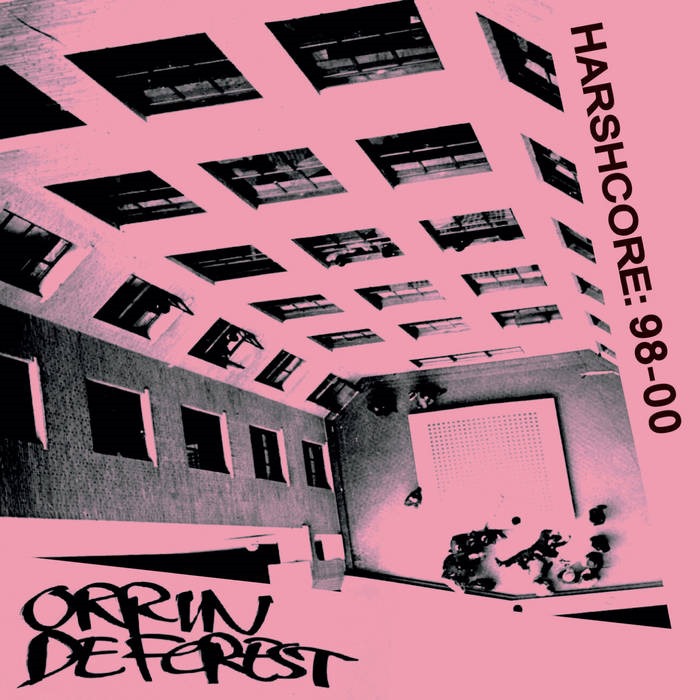
ODF never lasted long enough to really break out of the locality of Gateshead. As the liner notes to this retrospective observe, they ‘blasted onto the North East’s harshcore scene in 1998 and were gone in a flash three years later; their 2001 split album with Newcastle’s Jazzfinger the only remaining recorded output’. Everything leans toward the attainment of immortal cult status here, and the changes are infinitely more people have heard of the band, or otherwise heard them posthumously than ever did during that brief but explosive career.

This limited cassette, Harshcore 98-00, documents two live shows, both recorded in Gatehead, with the first seven tracks recorded June 2000 at the Floating Cup, Gateshead, and tracks 8-14 recorded June 1998 at the Soundroom, Route 26 Centre, Gateshead.

It’s pretty fucking brutal. Most of the songs in both sets are around the two-minute mark, and it’s as abrasive as hell. The vocals! Rob Woodcock (Marzuraan; Tide Of Iron; Fret!; Platemaker et al) sounds like a zombie from The Walking Dead on amphetamines, snarling and rasping with the most ravaged-sounding voicebox. There’s a lot going on here: ‘Calisthenics’ brings all kinds of jazz and math elements alongside the full-on, balls-out wild thrasher, and the fifty-five second ‘Aggressive Lowbrow’ brings everything all at once in a racket that suits the title.

Despite the close proximity of the sets, there’s a clear evolution here, so it’s a little frustrating that they’re presented in reverse chronology on the release. The ’98 set is less evolved, less detailed, less jazz, less multi-faceted, and more of its time – brimming with samples and songs that are little short of whirling explosions of whiplash-inducing racket, with ‘O.D.F. Will Kick Your Lame Ass Motherfucker!’ being exemplary, but also marking the band’s first forays into different terrains, with hints of swagger emerging amongst the frenzied racket. It’s gnarly, it’s intense, and it’s fucking punishing. And it really makes you wish you had been there.

AA

a1380330890_16

Out of context, it could be any extreme noise / power electronics / experimental / industrial crossover. Whistling high-end feedback, tortured, wailing drones, nagging, drilling analogue synth buzzes, pulsations, distortion and distant low-end rumbling provide the tonal span over which sounds of detonating shells, gunfire, panicked voices, and snippets of newscasts and other media are assembled. The piping sounds of Oriental flutes from India and Morocco are interwoven with stuttering electronica and wandering synths which cast dark, ominous shadows of unease.

In context – and ultimately, it’s all about the context – Gaza takes on a truly horrific dimension, a painful and harrowing documentary work. Gaza is in many respects a soundtrack: recorded during operation Protective Edge in July and August 2014, it is the soundtrack to violent and brutal war.

To read the statistics – the estimates of the numbers killed and wounded, the number of homes destroyed and the estimated costs of rebuilding in the wake of this intense period of battle is bewildering, numbing. Over 2,000 Gazans were killed and well over 10,000 wounded during the seven-week spell. More context: the Gaza Strip is 25 miles long, and between 3.7 to 7.5 miles wide, with a total area of 141 square miles. The city of Gaza is home to around 1.85 million Palestinians on some 362 square kilometres: by way of a comparison, Greater Manchester has a population of 2.7 million, in an area spanning493 square miles. The point is, really, that it becomes hard to compute, and ultimately impossible to imagine the reality of the situation, and what it must be like to live with such decimation. The Sky News images of ruins and rubble amidst clouds of dust and drifting sand may be horrific, but just as pictures of houses bombed in the blitz cannot convey the experience, so this type of footage feels distant, unreal, like a film set.

Pharoah Chromium (aka German-Palestinian musician and performer Ghazi Barakat, who took the name from a song of the band Chrome), I read, draws inspiration from diverse sources spanning free jazz, rituals from ancient past and near future, the dream syndicate, science fiction novels and neo-brutalistic architecture. But most importantly, this is an intensely personal work for Barakat, who writes that ‘having close family ties to the region, I felt it was necessary to politicize my work in order to avoid total disillusionment and estrangement from circumstances that, I feel, are a dead end for humanity. My focus on this one subject is not meant to diminish other conflicts and human-made catastrophes in the world. Although this one just happens to take place in the birthplace of monotheistic Judéo-Christianity, the cultural background of all western societies.’

As such, as intensely personal as it is, Gaza is also intensely political. But perhaps even more importantly, it’s an intensely human work. As Barakat explains, ‘Gaza is built around voices and field recordings that are used to express my subjective, emotional and personal involvement with this subject. The found source material is used to construct a chronology of the events… The sounds of the Korg MS 20 noise filter helped intensify the feeling of hysteria ensuing from violent confrontation during a state of war. An electric wind instrument provides the melodic components and the low frequencies that underline the narration on the second part of the piece.’

And this brings into sharp relief the reality of the experience. Listening to the album, you will jump and cower as gunfire and shells rain down. The sheer volume of the explosions and the shots is astounding, a hail of bullets becoming a blanket of eardrum-shattering noise. You find yourself sitting on the edge of your seat, nerves jangling, wondering if your house will still be standing in a moments’ time. There’s no way you can settle or so anything else: this isn’t background or entertainment. There’s no way in the world you could nod off or otherwise sleep through this. And then you realise, this is the reality of life in a war-zone. The idea of actually living in this environment, to an outsider, is beyond comprehension. It’s a sobering thought, to say the least.

Barakat’s commentary is again informative, and chilling: ‘The two sides of this record are about a place like no other on this planet, a city and its surrounding environs living under extraordinary conditions, hermetically sealed from all sides, only accessible through complex procedures and permits, making it is almost as difficult to get in as it is to get out. Like a cross between the Warsaw ghetto and Manhattan as a giant maximum security prison in John Carpenter’s Escape From New York. Every couple of years the Gaza Strip gets its share of bombardments, and since the summer of 2014, its infrastructure has been pulverized almost to the point of no return. The disproportionate use of force and the asymmetric use of military technology on those already living under siege has created a field laboratory for the military industrial complex with the civilian population as its guinea pig. […]’

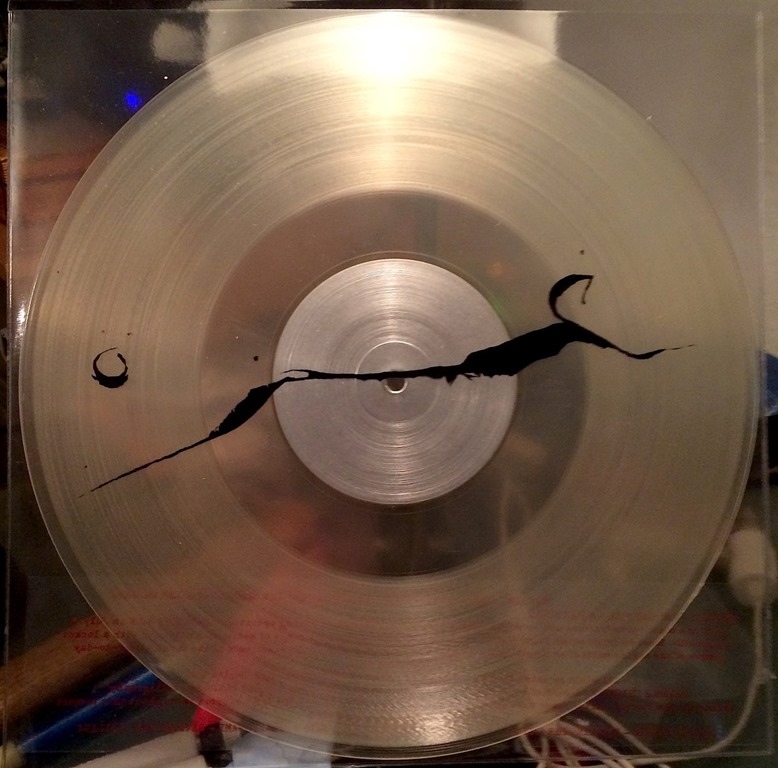
The locked groove at the end of each side is the engine noise of an Israeli drone in operation, intended to give listeners the experience of the sound of day-to-day life in the Gaza Strip.

It’s a phenomenally powerful work, which brings home the devastating realities of war in a way that’s truly unique. And while I’ve referred to this as a document, effectively a work of sonic reportage, it is, of course, a work of art. On a technical level, its execution is superb. To all intents and purposes, it’s a cut-up, a collage, and the pieces as assembled seamlessly, and achieve maximum impact. And what impact. Gaza is perhaps the most harrowing album I’ve ever heard. This is art on the front lines and behind the lines. All of the doom and crushing metal releases pale to nothing beside this: Gaza really is the sound of hell on earth.

Gaza


http://bandcamp.com/EmbeddedPlayer/album=72821540/size=large/bgcol=ffffff/linkcol=0687f5/tracklist=false/artwork=small/transparent=true/

Pharoah Chromium – Gaza on Bandcamp