Posts Tagged ‘Deftones’

Christopher Nosnibor

The best local bands tends not to stay local, so for RSJ to play a one-off reunion show seven years after calling it a day and singer Dan Cook replacing John Loughlin in Raging Speedhorn in their hometown is a big deal. Precisely what prompted this return isn’t clear, but it’s extremely welcome, as the near-sellout crowd indicates.

It’s busy early doors, and those who are present are rewarded with a killer set from York / Leeds metal act Disnfo. They’re young, loud, attacking and abrasive, pissed off and raging -against the government, society, the world. And too fucking right: there’s much to rage against, and it’s uplifting to see a band channelling that rage creatively, especially via thick, chunky low end riffs powered by some five—string bass action. The singer makes the most use of the floor in front of the stage. They lob in a Deftones cover about two-thirds of the way through the set, which gets progressively more melodic and overtly nu-metal toward the end of the set, but it’s supremely executed, and the interplay between the dual vocals is really strong and tightly woven.

DSC_5972

Disinfo

Beyond All Reason are also tight and proficient, but also quite cringeworthy in their straight-faced and immensely earnest performance of some epic but highly predictable hair metal with all the fretwork. They’ve been going for almost twenty years now and clearly have a substantial fanbase, meaning that I’m in the minority when I say I just can’t get onto it. Combining the po-faced thrash of Metallica with the vocal histrionics of Rob Halford, they’re every inch the band who did the ‘Shepherd’s piiiiiiiiieeeee!!!!’ Oxo ad from 2004. There is, however, something amusing about a support act playing a 350-capacity venue like they’re headlining Knebworth.

DSC_5978

Beyond All Reason

RSJ don’t look or sound like a band who haven’t played a gig together in donkeys and it’s full-throttle high-octane stuff from the second they hit the stage. There’s a lot of love for RSJ, and rightly so. Active between 2002 and 2017, they garnered significant acclaim in Kerrang and elsewhere, and knocked out four albums, while playing festivals such as Bloodstock and Sonisphere, as well as playing support slots for Slayer, Funeral for a Friend, Raging Speedhorn and Orange Goblin.

The band took their name from the construction term Rolled Steel Joist, and yes, they play some ultra-solid metalcore with no letup, whipping up a mega moshpit, but one that’s friendly – shaved heads and long beards hugging.
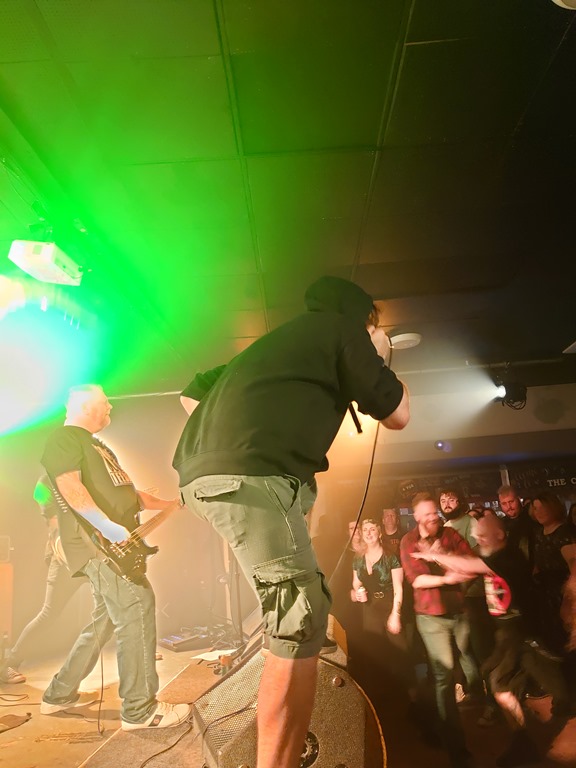
DSC_5997

RSJ

Leaning forward, bass dragging on the floor, the bassist hits all the lows and underpins a harsh, heavy guitar assault that just keeps on coming.

They switch to their original drummer halfway through the set for a handful of songs, and things get even heavier and more brutal: ‘Gordon’s Alive’ is a hundred-mile-an-hour frenzy.

DSC_6008DSC_5988

RSJ

It’s probably about half a dozen songs in that Dan announces that the next song is the last, which seems unfeasible. But if he announces it once, he announces it a dozen times over the next half hour, and it feels like a running joke in a good-natured set which reminds me why metal gigs are so often the best and the more brutal the music, the more docile and community-minded the band and crowd alike. The songs are all-out, but in between, the rapport between the band and their fans is heart-warming and a truly life-affirming scene.

In times of deep social division and shit on shit, we need more of this. And we certainly need more RSJ. Let’s hope this reunion isn’t the last.
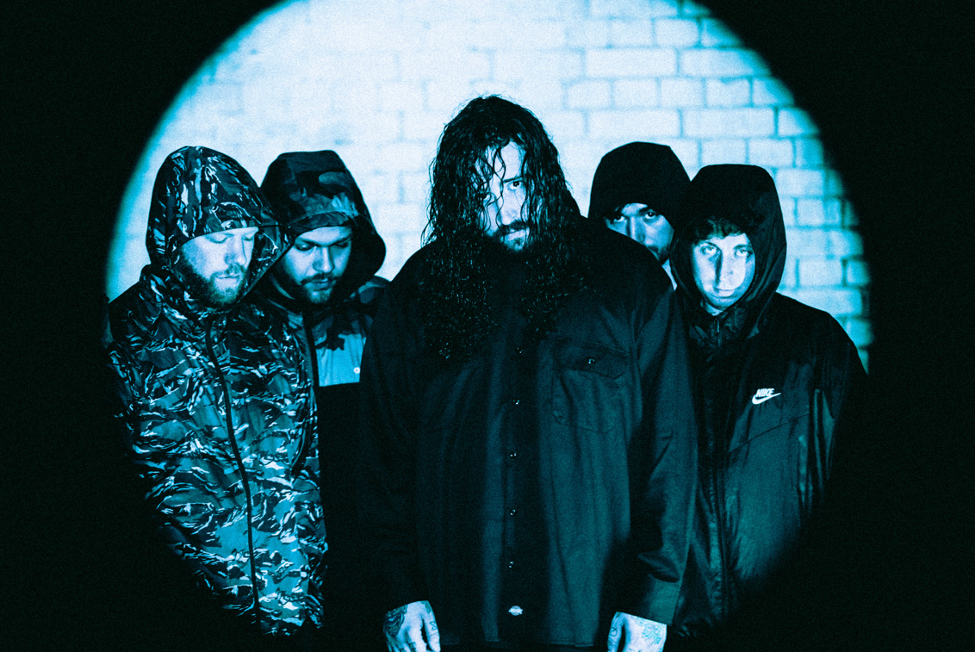
"White Noise is about sensory overload and the overwhelming feeling of claustrophobia that neurodivergent humans experience on a near daily basis,” explains lead vocalist Harvey Freeman. “It’s a horrible feeling of helplessness and anxiety that nothing can really help other than a quiet space and something to take your mind off of the situation.

We wanted to create something visually that could portray how that experience feels. The room used with the exposed hole in the wall was the perfect fit paired with the mirrors in particular scenes. We wanted it to almost look like you were inside the mind of someone going through that feeling."

Mixing moments of snarling nu-metal aggro and the scalding fury of Slipknot’s debut album with instrumental passages that at times recall the genius of Nine Inch Nails’ Trent Reznor, is where they have nailed the Graphic Nature sound.

Check the video here:

AA

gn1

Greece has spawned countless instances of criminally underrated music acts in diverse genres ranging from black metal to electronic to avant garde pop music, and the sophomore album of modern progressive metal act Playgrounded titled ‘The death of Death’ is yet another striking example.

“Where did this come from?” you will find yourself wondering, while absorbing the stunning intensity and musical prowess on display. From the perfection of the production and the inherent innovation in defining heaviness by means of not only downtuned guitars, but also elements of electronica are the pillars of an intriguingly idiosyncratic, incredibly mature sound.

Hailing from Greece, but spending most of their time in the Netherlands, the musical pedigree of the members of Playgrounded is quite unprecedented in the metal/rock underground. Main composer and producer Orestis Zafeirou is a graduate from the Institute of Sonology of the Royal Conservatoire of The Hague, a department focused on electronic music education and production research. Additionally, he works in a synth factory. Vocalist and co-producer Stavros Markonis graduated from the Amsterdam conservatoire and is an award-winning composer for film and TV. Bass player Odysseas Zafeiriou and guitar player Michael Kotsirakis both work as computer engineers, while drummer Giorgos Pouliasis is a graduate from the Rotterdam Conservatoire, as well as a drum teacher and a popular session musician in Greece as well as in the Netherlands.

Starting out in 2007, Playgrounded have been together for over 15 years, playing both national and international tours, while also opening for bands like Riverside and even Nine Inch Nails in Amsterdam. Their first EP Athens (2012, Casket Music) portrays an already mature band playing modern prog rock influenced by Tool and Deftones. Their debut full-length In Time With Gravity (2017) shows the band in full flux, experimenting with extended compositions as well as influences from influential contemporary electronic music acts like Modeselektor and Moderat.

Playgrounded’s sophomore album lives up to the aspiration of its lofty album title. The death of Death is music that results from mastery rather than lacklustre exploration and experimentation. The album was recorded at MD Recording Studios by Nikos Michalodimitrakis, long collaborator of Stavros in film productions. Mixing was handled by C.A.Cederberg (Leprous, Shining, and more) in Kristiansand, NO, while the album was mastered by George Tanderø (Madrugada, Satyricon, Jaga Jazzist, and more) in Oslo, NO.

Guitarist Michael Kotsirakis comments on the album’s title track which the band shared today,

"The death of Death" is a study of unity in opposition, a disclosure of contradictory aspects of reality, an expression of their mutual relationship.  For the occasion of sharing this first taste of the album with the world we worked closely with director Dimitris Anagnostou and director of photography Yannis Karabatsos, the duo that we came to know from the award-winning short film Mare Nostrum for which Stavros composed the score.  The director’s idea about a "study of movement" using early cinematography techniques drew inspiration from Orestis’ dialectically composed lyrics and was eventually adapted into the clip’s script. We felt that Karabatsos’ sinister photography was the perfect means to explore the song’s contradictions… black and white, direction and diffusion, alienation and struggle, stillness and life.”

Watch the video for ’The death of Death’ here:

AA

Demonstrating a profound understanding of the glitches they produce, Playgrounded evoke a sense of the uncanny closely related to the cut-up movie fragments of sound artists like the German Orson Hentschel. “We start with dynamic sound design structures, most of the times initiated by Orestis,” explains guitarist Michael Kotsirakis. “We then work in pairs expanding the musical space and creating variations and flourishes. Sometimes the lyrics and vocals will dictate a change in quality, other times it’s one of the instruments. After many ideas are on the table Stavros and Orestis sit together and propose a song structure. After this loop has been repeated over and over we have a very good idea of all the parts. That’s when we hit the rehearsal space and refine the details.”

The result is a collection of songs that reveal Playgrounded as composers in the act of decomposition. The memorable guitar riffs and vocal melodies serve as gateways to a deeper layer of glitchy synth textures and liquid drumming, until the perspective of radical decomposition consumes one whole. “The shortest sound units become extended themes,” explains main composer Orestis Zafeirou. “Steady rhythmical blocks interact with unstable ones. Noise becomes tone and melody. Sonic grains gather to form masses, masses dissolve into a single entity. With every repetition, comes change.”

On The death of Death, Playgrounded analyse and take apart their surroundings, reducing reality to its smallest components, subsequently converting them into sound to create a new platform – a representation of reality from which they build their artistic vision. In essence The death of Death is dialectical, a study of unity in opposition. A disclosure of contradictory aspects of reality, an expression of their mutual relationship. From these contradictions the band manages to construct a brooding world of dark magnificence. The death of Death has the appeal of a film score that slowly starts to haunt you as the movie progresses. The more you listen to it, the more its sublime beauty becomes apparent.

AA

Playgrounded