Posts Tagged ‘Craig Adams’

Christopher Nosnibor

For many so-called ‘heritage bands’, the gig circuit can be trail of diminishing returns – then again, for others, the gigs are bigger now than in their heyday. Nostalgia is a powerful market, but one that often tapers off as the fanbase ages. Our older population may be expanding, but that doesn’t mean they’re all up for gig-going in their retirement years. Spear of Destiny sit in the middle of this range: they’re not playing the 1,500-2,000 capacity venues of some of their peers, but they’re packing out smaller venues, such as this one, often. You have to wonder if Kirk Brandon can even remember what his home looks like given his intense touring schedule, if not with Spear of Destiny, then, more recently, with the resurrected Theatre of Hate. They only finished their Janus tour in June, and here, they are, back on the road after barely time to do the laundry and restock the merch. The frequency of visits to destinations with smaller demographics does nothing to diminish the attendance, either: the fanbase is hardcore, and they do seem to be drawing younger people in, too, as interest in the bands kids’ parents listened to appears to be on the rise. I’m not going to claim that the 80s and 90s were better than now for music – not least of all because I don’t believe that’s the case, despite it being harder to find stuff now if you want to escape the algorithmic force-feed – but there was something about those times that’s lacking now, and it’s not just innovation. Politics and protest seemingly had a more central place then, too: in recent years have

It was only last September that Theatre of Hate stopped by this very same venue, and the Spring of 2023 that Spear of Destiny trod these same boards – and yet tonight, perhaps because it’s a Friday – the place is packed, perhaps more so than on the last two visits.

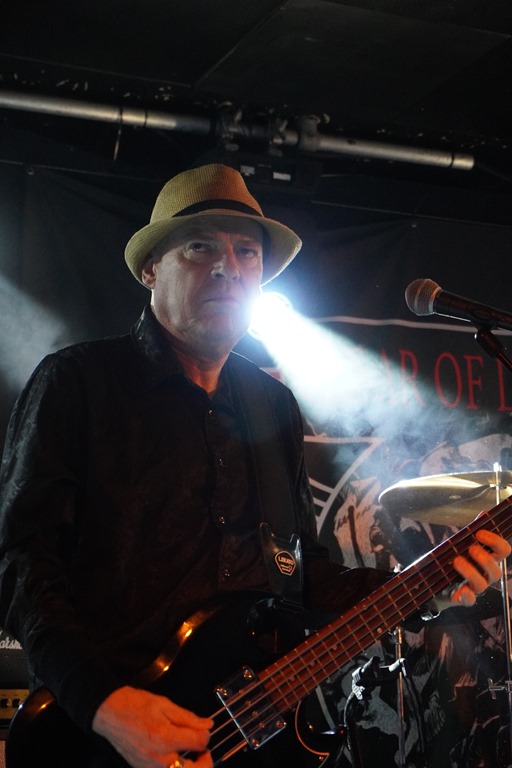
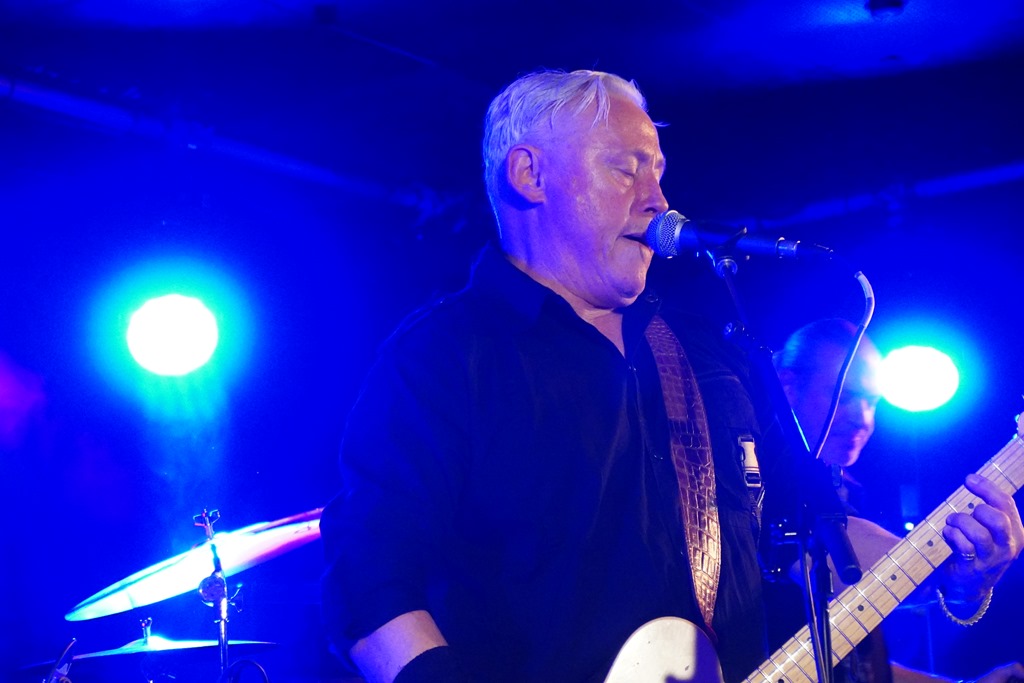
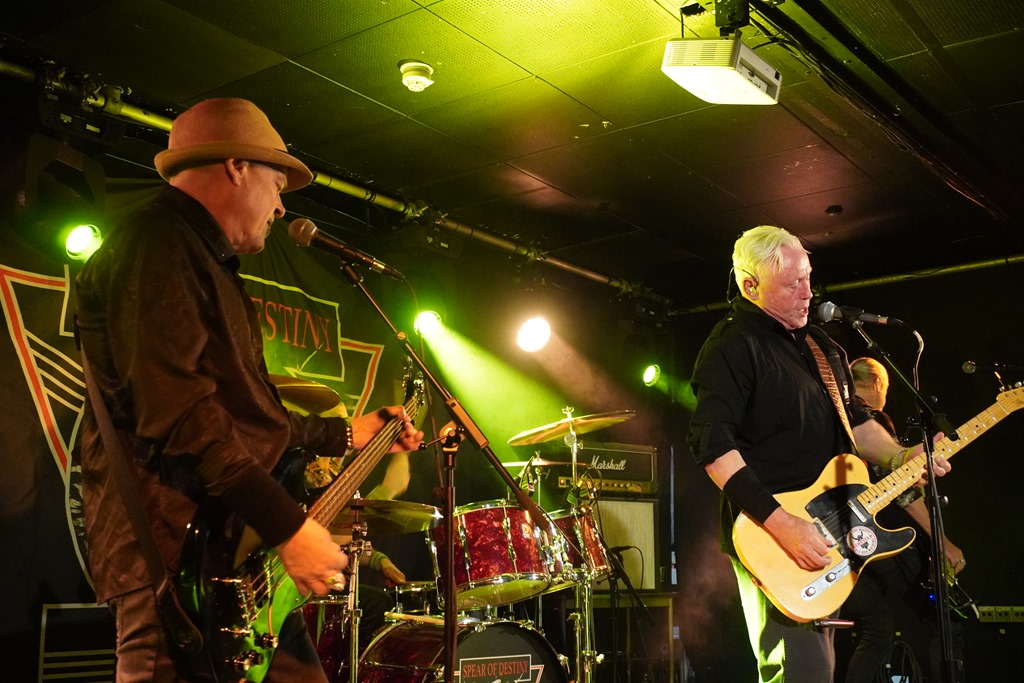
Immediately they dispel that whole ‘heritage band’ thing by opening a solid set with a slew of newer material, delivered with vigour. It’s also very much a set for the more devoted fans: popular songs and hits like ‘So in Love with You’, ‘Tinseltown’, and ‘Young Men’ are bypassed in favour of a set that works its way through recent tunes and deeper cuts, and only really goes all out on the big popular choices in the second half. No-one’s complaining, though, and the band look to be enjoying themselves: at one point, Kurt exchanges grins and chat with bassist Craig. And I’m reminded – as a huge, huge Sisters of Mercy fan, but one too young to see them in their first era – that I’m standing maybe six feet away from the bass legend that is Craig Adams. The fact that The Mission were the first major-league band I saw, from what felt like a mile away, at Sheffield City Hall in 1990 is the context here.

DSC04111DSC04198DSC04219

Kirk’s voice may not sound quite as strong as on his last visit, but the chap’s been poorly, and he’s still capable of belting out the tunes, and, soaring in all directions and, when it matters, leaping an octave in an instant and hitting all the high notes. And as a four-piece, while the absence of sax is notable particularly on some songs, they create a sound that’s dense, and as always, they play with precision tightness while maintaining a fluidity and a palpable energy. Everything else is in place, with a dominant rhythm section, from martial beats to thunderous tribal percussion, paired with Adam’s sturdy grooves.

Up front, there’s ‘Strangers in Our Town’, and ‘Never Take Me Alive’ lands early on, too. It’s easy for forget that this is a band who’ve released significantly more albums since their eighties heyday than during that time, and the set offers a fair balance of post-eighties material with a selection of songs from that commercially fruitful spell – and it’s worth noting that fan favourites aren’t necessarily the singles, but key album tracks. ‘Mickey’, for example, was only a single in The Netherlands, but is one of the highlights of World Service, and tonight’s set.

DSC04134DSC04157

Into the final leg, ‘Rainmaker’ really rouses the rabble, and ‘Radio Radio’ prompts a huge singalong before they depart the stage. The place erupts when the band come back on, and the encore launches with a spirited ‘Soldier Soldier’… and finished with ‘Liberator’ – because there is simply no other way to end a Spear of Destiny set. It brings the house down – every single time. More of the same next time, please.

10th May 2024

Christopher Nosnibor

Back in April 2020, writing on the release of their second album, Prepared for a Nightmare, I remarked that it had been four years since their debut, Observed in a Dream, and it had felt like an eternity. And here we are, a further four years on, and ‘A Foretold Ecstasy’ has landed as the prelude to album number three, due in the autumn.

Here, they’re straight in with that tight, solid rhythm section – a chunky bass with a hint of chorus to fatten it out while also giving it that classic spectral goth sound, melded to a relentless four-four metronomic thump, minimal cymbals, no flamboyant fills, just taut, a tense, rigid spine around which the body of the song grows. This, of course, is the foundation of that vintage gothy / post punk sound which originated with The Sisters of Mercy and, thanks largely to Craig Adams – who is arguably one of the greatest bassists of all time by virtue of his simple style of nailing a groove and just holding it down for the duration – carried on in The Mission. The Mish may lack some of the style and certainly the atmosphere and lyrical prowess of The Sisters, but the musical ingredients – and in particular that unflinching rhythm section – are fundamentally the same. And so it is that while the dominance of that thunking bass and bash-bash-bash snare may have become something of a formula, it’s hard to beat and absolutely defines the genre.

Mayflower Madame have always sat more toward The Mission end of the spectrum, whipping up songs which owe a certain debt to Wayne Hussey’s layered, cadent guitar style. But what they bring that’s unique is a swirly, psychedelic / shoegaze hue, a fuzzy swirl of texture and light. There’s a dark decadence, a lascivious richness to Mayflower Madame that accentuates the dramatic aspects of the gothiness: theatrical, flamboyant, but without being hammy or campy. And of course, Trond Fagernes’ vocals drift in an ocean of reverb, and the cumulative effect isn’t simply atmospheric: it carries you away on a sea of mesmeric sound.

With layers of synth which drift like mist across a production that balances dreaminess with a driving urgency, ‘A Foretold Ecstasy’ floats between haunting verses and surging choruses – and it’s hinting at their best work to date.

AA

5tqs_MayflowerMadame1photobyMiriamBrenne650--1

PHOTO CREDIT: MIRIAM BRENNE

Unbound – 11th November 2021

Christopher Nosnibor

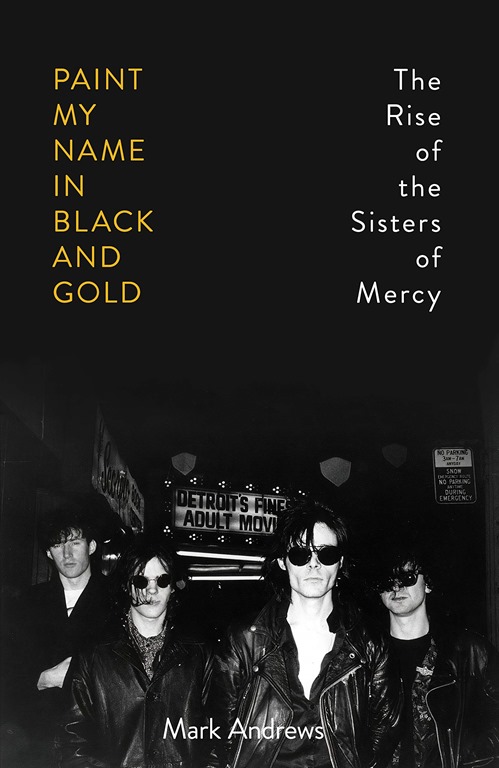
I may not have discovered The Sisters of Mercy until 1987 (being born in ‘75, I was simply too young to have been around in their first phase), like many, I have long been fascinated by those early years and their ascent from vaguely ramshackle indie act to the band who released the album which would essentially define the sound of ‘goth’ for decades to come. By ‘fascinated’, I really mean ‘obsessed’, particularly in my teens, but my love of The Sisters has endured. While the story of those first five years has been told, retold, fetishized and transformed into lore with elements of legend and myth blended in along the way (much of which having been perpetuated by Andrew Eldritch himself), it’s never been given truly detailed coverage, and for this reason, I joined many in pitching in for the crowdfunding of Mark Andrews’ biography. The wait felt like forever, and in the meantime, Trevor Ristow dropped Waiting for Another War (which I’m yet to pick up) on the same period. And so it is that Sisters bios are like proverbial busses, although that’s certainly no complaint: it simply indicates the impact and significance of a band who, despite having been in existence for over forty years and who haven’t released a record in the last thirty.

The book looks and feels like quality (although some have griped about the lack of capitalisation on the definite article both on the cover and throughout the text), but it’s on the contents that Andrews’ work should be judged. There is no two ways about it that Paint My Name in Black and Gold was worth the wait.

Two things immediately stand out: the quality and depth of the research, and the quality of the prose. The latter is particularly appreciated, and important: all the research in the world counts for little if not conveyed in a way that’s appealing. Put simply, Andrews writes nicely, and he writes well, accessibly but not pitched at those with a reading level of The Sun. Nor does he become so involved in trainspotting details of catalogue numbers or numbers of copies pressed or sold or takes in the studio. This is a very human biography, and the input from pretty much everyone involved with the band during the time (with the notable exception of Eldritch) not only brings it to life, but also gives it a real weight of credibility. Mark Pearman (Gary Marx) comes across particularly well, his reflections honest and considered, his position remarkably philosophical and even-handed.

The way in which Andrews places the development of the band in context makes for very interesting reading, with extensive coverage of the Leeds scene of the late 70s and early 80s, as well as the band’s strong links with York at the beginning (the Priestley’s signage remains at the top of Bootham, although it’s now a rather bourgeois homeware retailer). This alone makes for essential reading for anyone with an interest in the emerging post-punk scene, where writing about Leeds has been largely overshadowed by that on Manchester, and of course, London.

He moves things on at a steady but swift pace, but at the same time doesn’t skimp on detail, and pack the book with anecdotes and information about standout nights on particular tours and recording sessions, as well as various wild antics that seem so at odds with the seriousness of the music. Above all, Andrews captures the essence of the experience of existing in and around The Sisters during this time – the camaraderie and sense of community and even family, the buzz, the connection between the band, collectively and individually, with their fans. He also traces how the dynamic would shift and some of that proximity would diminish over time as the band got bigger. It’s also apparent that even in the early stages, the band dynamic and friendships thrived on the differences as much as the similarities of the members, and how much Eldritch was the driving force.

Andrews also presents an impressively balanced and objective perspective: while clearly a fan, there’s no idolisation of the band or any individual here, and his admiration for Eldritch – something that most of the interview subjects also express – is tempered by a realistic appraisal of his shortcomings and at times wilful stubbornness and perversity. That Eldritch is a stickler and prone to obsessive behaviour is widely known among fans, but Andrew really brings things to life when he writes of how Eldritch would literally spend long nights fiddling with EQ levels just to hear how they sound, and it requires no imagination whatsoever to comprehend the frustrations of band members and producers alike working alongside him. But more than even this, in Paint My Name, Andrews goes a long way to excavate the contradictions and complexities of the man who became Andrew Eldritch, how the nerdy, glam-obsessed Andrew Taylor would transmogrify into the beast that is Eldritch, and details the damage done to both himself – mentally and physically – and those around him along the way. The poverty and degradation are at times harrowing, and the long tours of ‘84 and ‘85 may have been among the band’s most memorable and seen them play to the largest numbers of fans of their career, but the way in which Andrews relays just how strung-out, fucked-up and fractured the band were behind the scenes renders their achievements all the more remarkable.

The epilogue provides a condensed overview of the years which would follow, but it’s clear that none of The Sisters’ subsequent history could come close to being quite as gripping as the first five years, whereby the rise of The Sisters would reverberate indefinitely.

The hardback is sold out, but the e-book edition is still available via Unbound.

81MD-vGPuqL