Christopher Nosnibor
Seeing the same band twice on the same tour – especially twice in the same week – may seem excessive to some. However, it’s not – and certainly wasn’t historically – unusual for fans to follow bands around the country, and even the continent. It’s something I’ve only done a couple or so times myself previously, at least that I can recall, and discounting the misfortune of having seen Sona Fariq around six times in three months supporting various bands in the early noughties. My first experience was seeing The Sisters of Mercy in Glasgow and Nottingham in the same week in 2000. The setlists may not have been radically different, if not identical, but the experiences could not have been more different. The Glasgow crowd was lively, and the band, visible through minimal smoke, were relaxed, and Andrew was chatty. A couple of nights later, in front of a static audience, the band were barely visible behind the wall of smoke and Eldritch didn’t speak a word all night. And so it was that I came to appreciate different locations, different crowds, etc., all have a bearing on the experience, and how two nights are never the same. I also decided to stand to the other side of the stage tonight, and being at the front that not only means a different view, but a different mix due to the proximity of the backline. We’ll come back to this shortly.
It’s perhaps less common to follow bands around now because the cost of tickets, accommodation and travel has skyrocketed way above the rate of inflation, and no-one hitch-hikes or sleeps on train stations anymore.
Anyway: some disclosure. Tonight is personal, I suppose. Having been offered press for the Leeds show before this one was announced, I jumped in, but on seeing a show a fifteen minutes’ walk from my house added to the itinerary, felt compelled to buy a ticket for the simple reason that I love the band, and – as they later remind us – their last visit to York was in 2011.
In the bar before doors, there’s a DJ spinning goth and post-punk tunes, and I get to hear ‘The Killing Moon’ over a PA for the second time in three days. And for the second time in three days, and the third time in as many months, I’m (pleasantly) surprised by the demographic: the first wave goth acts are no longer primarily the domain of those in their late forties or older. It could be that bands like support act Vision Video are proving to be something of a gateway – having discovered bands like The Violets and the whole early 80s scene pretty much the same way I did as a teen, they’re making music that’s influenced by those bands, with clear and accessible nods to The Cure and New Order, and finding an audience who are the age they were… etc. Anyway, it’s all to the good, and tonight’s audience is an enthusiastic one, and with youth on their side, they can dance and wave their arms without worrying about giving themselves a hernia.
The Crescent is a smaller venue than The Warehouse, and when Vision Video arrive on stage, aspects such as lighting and PA variations are thrown into sharp relief: it’s darker, smokier, the minimal lighting is predominantly purple, and the thumping bass I enthused over in Leeds was significantly less present or impressive. In between songs, they offer similar chat, but it’s clearly not scripted, but notably a lot less chat in general. Vocalist / guitarist Dusty Gannon talks faster, seems less more hyped up, rushing to remind us that the current tour is the ‘Death to Fascism’ tour. Given the state of things over here in the last week or so, they should probably be careful about things like that. But more seriously, anyone with a platform needs to be calling this out right now. Because it’s through silence – and allowing ourselves to be silenced – that fascism spreads.
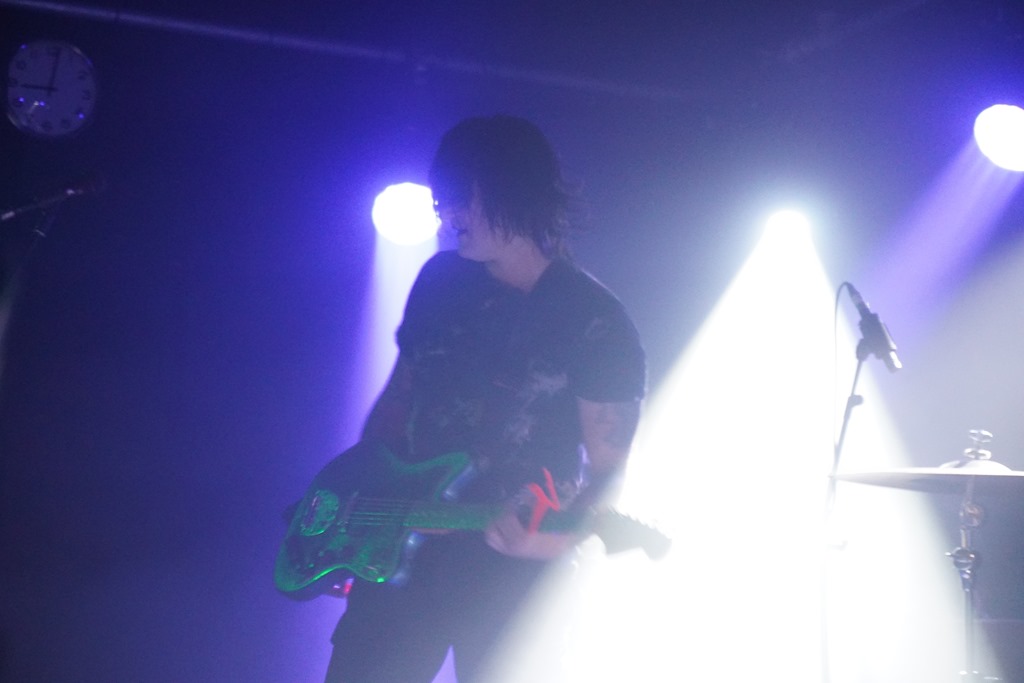
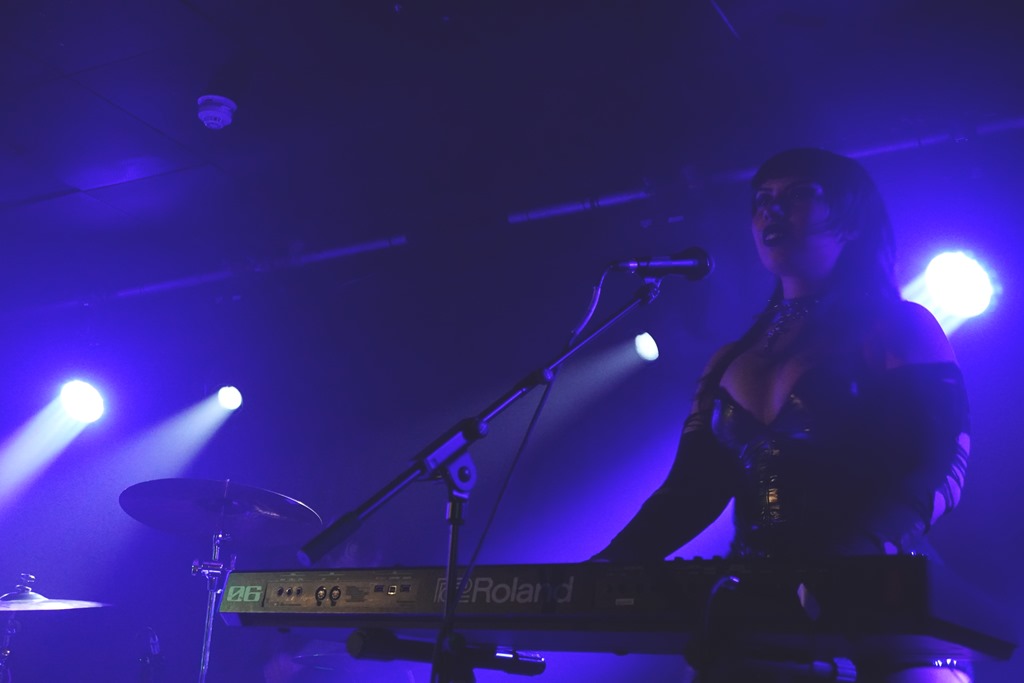
Vision Video
Notably, the whoops in support of the band’s anti-fascist messaging are louder tonight. It’s a smaller crowd, but they dance harder, encouraging Dusty to find the confidence to leave the stage and be among the crowd during last song of the set, ‘In My Side’.
I arrived home buzzing and without having written a single note during the whole of The March Violets’ set. The setlist was the same as Leeds, the intros were similar… but it was anything but a carbon copy show. On the one hand, the sound wasn’t as crisp, but this wasn’t by any means a detraction, in that it replicated that sonic haze of yesteryear, and even the early recordings. Not having Tom Ashton’s amp at face-height perhaps gave me a better sense of balance, and Mat Thorpe’s vocal were both louder and clearer, which was a strong plus.
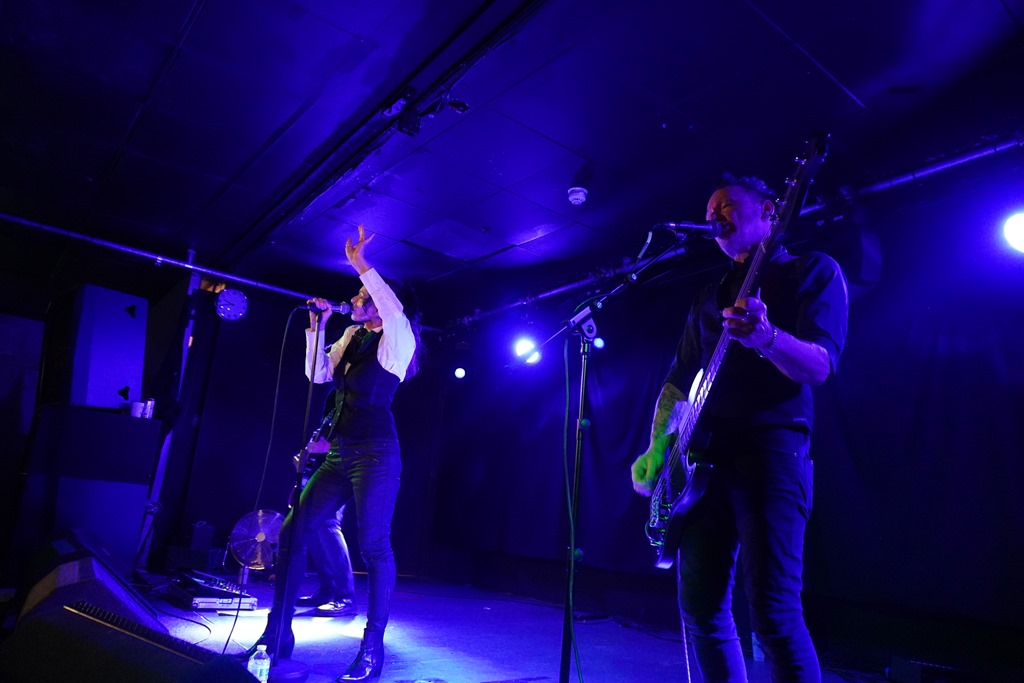
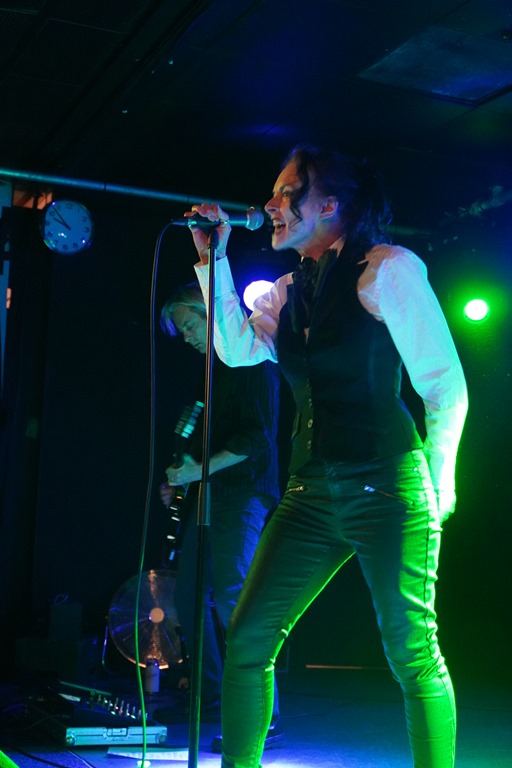
The March Violets
Notably, while the front of the Leeds show was frequently disturbed by a number of ambulant photographers – the usual types, tall blokes in T-shirts and knee-length cargo shorts hauling cameras with massive lenses – there was no evidence of any press or lens-luggers tonight (I exclude myself from this category because while I do now use a ‘decent’ camera, I stick to a small lens and keep to my spot, to one side, for numerous reasons, but not least of all to remain as inconspicuous as possible and not to interfere with anyone else’s view). As a consequence, the audience were free to move about down the front, and the band seemed more relaxed, presenting a different energy. They were still clearly enjoying themselves – if anything, more so. Rosie spent the entire set bouncing around like a pea on a drum, and her energy is infectious and joyous.
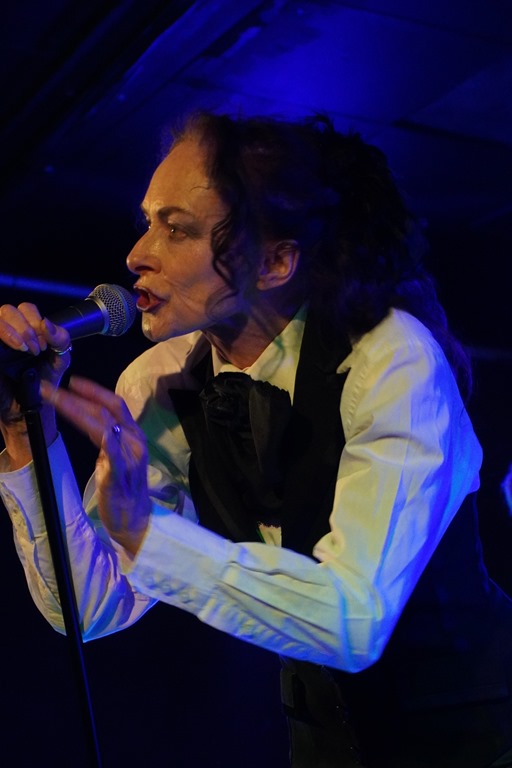
The March Violets
Ordinarily, one would anticipate a more rapturous response at a hometown show: this has certainly been my experience with other Leeds acts through the years. But perhaps Leeds has been spoiled: it was only last year they played at The Old Woollen, while across the border, it’s been a lot longer – like more than a decade (Whitby appearances notwithstanding).
Tellingly, in Leeds, the claps and chants after the main set had been the somewhat irritating (and rather lacklustre) call for ‘one more song’ which has become a thing in recent years. Tonight, there is a relentless baying noise from a crowd who want as many songs as they can get (there were calls for ‘Bon Bon Babies’ and ‘Undertow’ during the set, and there was a fair bit of banterous to-and-fro with the audience). ‘Fodder’ was well-received, but the place positively erupted for ‘Snake Dance’. The band seem to respond to this, and really attack it, making for a blistering finale to an outstanding performance. If the rest of the tour is half as good, people are in for a treat.

 Aural Aggravation