Posts Tagged ‘Band of Susans’

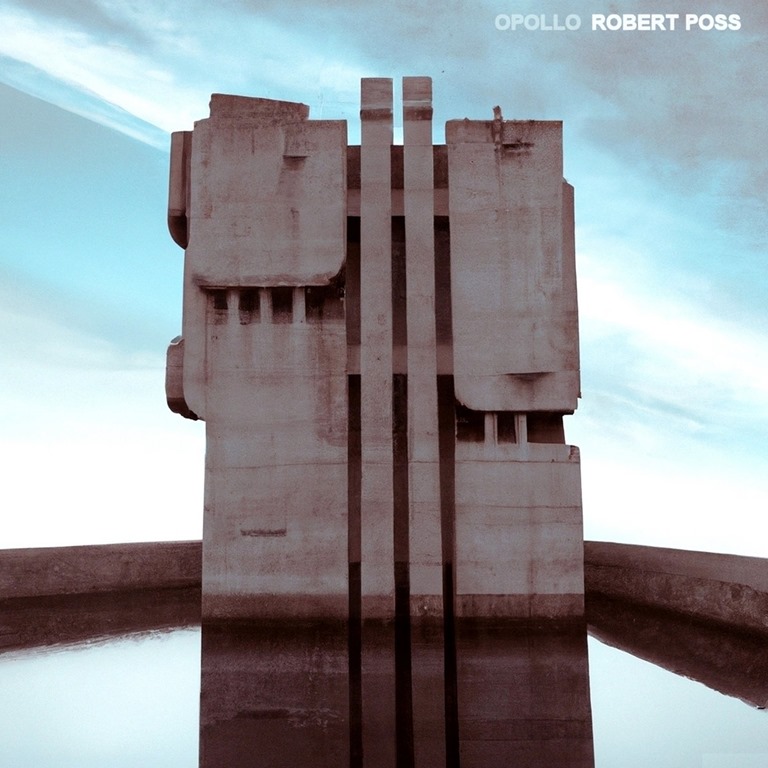
Robert Poss vs. Opollo is a new collaboration between Jarek Leskiewicz and Robert Poss (Band of Susans).

OTAGO is an expansive, textured, semi-ambient guitar work with some bold sounds and brooding atmospheres.

It’s available to stream or download via Bandcamp on a ‘pay what you feel’ basis. Check it here, along with the visual accompaniment to ‘Destroyed Wild Bird’:

AA

a0939137804_10

25th January 2024

With Band of Susans, active between 1986 and 1996, Robert Poss curved an arc from the New York noise scene towards more of a shoegaze sound. With releases on Blast First and Mute, and featuring a pre-Helmet Page Hamilton on second album, Love Agenda, not to mention a reputation for eardrum-shatteringly loud live performances, the band unquestionably achieved more in terms of influence and cult cred than commercial success (something their final album, Here Comes Success (1995) seemed to acknowledge in its title). But what qualifies as success? Capitalist culture and media tell us that success is a career, promotion, cash, holidays, cruises, bug house big car. But that’s because these are the status symbols capitalism tells us we should aspire to. How about having enough to be ok, a home you like and feel comfortable in, having friends, knowing yourself and being comfortable in your own skin, and having the freedom to do things which give you pleasure? It’s a question of values: what do you value more, time, or money? Status, or the satisfaction of being true to yourself?

There seems to have been a fair bit made of fellow BoS alumni Karen Hagloff’s return to music making in recent years, but not so much about Robert Poss’ sustained output since the band called it a day. But then again, Poss has spent a career being somewhat overlooked and vastly underrated. Both his songwriting and style of playing is quite distinctive and unusual – quirky seems a reasonable adjective, and is certainly not a criticism. The notes on bandcamp note that ‘The release is dedicated to composer/filmmaker/photographer Phill Niblock, a long-time mentor, colleague and friend.’ The timing of this certainly renders this dedication particularly poignant, and also highlights the way in which exponents of avant-gardism feed off one another and evolve one another’s ideas in different directions.

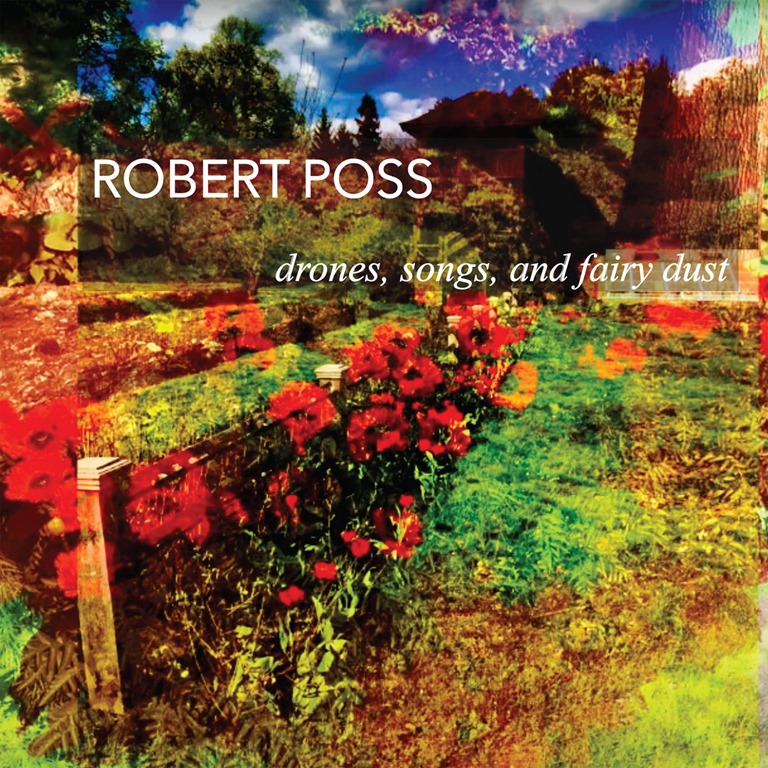
The Niblock connection certainly sheds additional light on Poss’ approach to composition and sound, favouring drones and repetition over rigid verse/chorus structures and progression, and Drones, Songs and Fairy Dust does very much contain, as the title suggests, a miscellany of bits and pieces, ranging from exploratory wanderings to fully-formed songs using conventional ‘rock’ format of guitars, bass, and drums – and on some, there are even vocals, notably the punchy post-punk cut ‘Your Adversary’, which marks a change of style with its murky production and blustery drum machine backing.

The first of these, ‘Secrets, Chapter and Verse’ is a title which could easily be on a Band of Susans release and the song carries that Band of Susans vibe – jangly indie but played loud – and I mean LOUD, with strolling bass running back and forth and up and down beneath the layers of guitar, the vocals low in the mix and serving primarily functional capacity – sonic placeholders.

‘Out of the Fairy Dust’ combines jangling indie and ambient drone and in many respects does carry echoes of ‘Here Comes Success’ – but also Love of Life era Swans – at least until about halfway through where it takes a sudden turn into deeper folk territory. It’s quite a contrast with the deep, ultra-droney sonorous ambience of ‘Foghorn Lullaby’.

Like the epic solo workout that is ‘Hagstrom Fragment’, which comes on like some legs akimbo 90s rock, ‘Skibbereen Drive’ lunges into rock mode, and follows the chord sequence of ‘Flood II’ from The Sister’s of Mercy’s Floodland – and sounds very like it, with its cold synths and crisp drum machine, but without the acoustic guitar detail and lead guitar line. It’s a real contrast to the epic dronescape of ‘Into the Fairy Dust’, on which the drums are a million miles behind the drone as they clatter and roll away, onwards, ever onwards, but also almost entirely submerged in the mix. Elsewhere, with its snarling synth grind, ‘S Romp’ sounds like Suicide doing dirty disco, and ‘Trem 23’ – well, it takes us back to the 23 enigma.

Drones, Songs and Fairy Dust showcases a remarkable diversity of styles, and it’s neither as dry nor as dark as all that, with ‘Imaginary Music On Hold’ presenting a most whimsical feel. As a collection, it never fails to be interesting, or enjoyable, and showcases Poss’ eclecticism and range, and there’s pleasure to be had from listening to a collection of work by an artist who never feels constrained or compelled to confirm to a given genre or mode. It’s something that seems to trouble many people, not least of all labels and critics, that an artist’s creations are based on the pursuit of creative endeavour and interest rather than assigning themselves a category by which they must live. The flipside of this is that it may not feel particularly like an album it its own right, but more like a collection of demos and ideas – and just as the title summarises the contents as three separate elements – Drones, Songs and Fairy Dust – so it feels like it contains the seeds of three separate and distinct projects – a droney one, an indie one, and a dark rock-orientated one. It would be exciting to witness those three projects realised, but what we have here, regardless of future intent, is a document of forward-facing music-making and an artist whose sole priority is doing his own thing. This is, ultimately, the ambition for any artist: to create without concern for commercial matters. And Drones, Songs and Fairy Dust is an exemplary product of creative freedom.

AA
a2882047316_10

1st January 2021

James Wells

After many years out of music – mostly to pursue medical school and a career as an oncologist, Karen Haglof, former luminary of the New York scene and also a member of Band of Susans among others, made her return just a few years ago, and has seen her release a flurry of new material. Making up for lost time, Haglof looks like an artist rejuvenated and energised, and what we’ve heard to date sounds like it too.

Kicking off the new year with new song, ‘Devastation Competed’ is the first of several tracks she’ll be releasing in 2021, and while featuring a host of musicians and instruments, including CP Roth on bass, piano, Hammond organ and percussion and Mitch Easter on Moog, the end result is stripped-back but solid sounding.

Less is more, for sure.

‘Devastation Completed’ is a reflection on the present, but also a call to unity and hints at optimism. It’s been a hard year / no-one would argue that’, she sings by way of an opening, with a chunky bass cranked up and booming fuzz on a rootsy blues riff. It’s simple, repetitive, and ends with an explosion. Right now I wish it would, but meanwhile, this is a great head-nodder of a tune.

12th April 2019

Creativity is one of those things that’s innate, and as such, while it’s something that can be suppressed, sidelined, ignored, overlooked, and can even lie dormant for protracted periods, it’s an urge that never dies.

Karen Haglof stepped in to play guitar with Band of Susans after two of the three Susans who featured in the original lineup departed after the first album and featured alongside Paige Hamilton on 1989’s Love Agenda and the band’s Peel session, also released as an EP before departing to pursue a more solid, and what some might call ‘grown-up’ career’.

Most people in bands have day-jobs on account of the economics of music-making, but few have successful headline careers in medicine. And yet, after building a career as an oncologist for some twenty years, Haglof felt the urge to get back into music. And somehow, she’s found time to release three albums and an EP since 2015 – although their writing and evolution goes back a little further.

Karen says of her music, “I love a heavy drum beat and thick deep bass. I love noise and wall of sound guitars and idiosyncratic rhythms. I love open D and finger style. I love a crunchy guitar. I love sly lyrics and depth of feeling. I love a pop song and a pop groove. I love a dance groove. Does all this come through in my music? I don’t know, but I am always trying for it to come through.”

Tobriano is certainly a lot poppier than anything Band of Susans released, and definitely boasts some tidy grooves, bringing to the fore elements of country and vintage radio-friendly rock. But pop should never be viewed as synonymous with lightweight, weak, or disposable. ‘Humbled and Chastened’ brings some beef, while ‘These are the Things’ brings some jazz brass and a solid groove. Elsewhere, the choppy guitars, insistent drums and raw sax of ‘Favour Favour’ calls to mind the early years of The Psychedelic Furs, which is certainly no bad thing.

To describe Tobriano as ‘mature’ isn’t to do it a disservice or dismiss it as dull: it’s an album that’s laid back, confident, assured. It isn’t about testing limits or pushing boundaries, and it’s in that sense that Tobriano is mature. What it is about is enjoying act of making music, and celebrating musicianship and creativity. And this very much does come through in the music, making for solid listening pleasure.

Karen Haglof online.

karenhaglof-e1537816517825

Trace Elements Records – 3rd August 2018

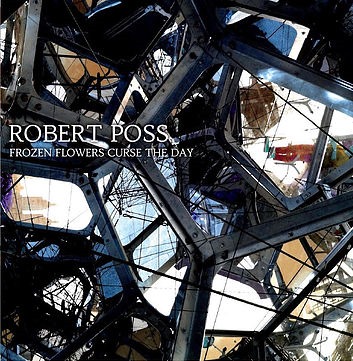
Frozen Flowers Curse The Day is the latest release from pioneering avant-guitarist Robert Poss, founding member of the legendary wall-of-guitars group Band Of Susans, who (in)famously started out with three members named Susan and usually maintained three guitarists in their ever-shifting lineup, which at one point featured a pre-Helmet Page Hamilton.

The development of the album Frozen Flowers Curse The Day was performed, recorded and mixed by Poss at Trace Elements Records studios in New York City with guest drummers including Dahm Majuri Cipolla (Torres, Lydia Lunch, Japan’s Mono) helping out on two tracks.

Being a solo release rather than a full-band effort, Frozen Flowers Curse The Day isn’t an overtly ‘rock’ album in terms of material or instrumentation and primarily features guitar and loops of strings, to sometimes woozy and disorientating effect. But Poss’ approach to guitar playing, lauded by none other than Steve Albini, is certainly distinctive.

Much of the material here is jangling drone, drifting, chiming indie shoegaze. It’s pleasant, easy on the ear, undemanding. In a good way. Frozen Flowers Curse The Day is an album which explores texture, tone, and mood, but above all, it follows the distinctive compositional template of Band of Susans in that the songs tend to bludgeon away at a simple three or four chord sequence while layers of droning chords or feedback build over the top as the song progresses.

This approach is very much to the fore on the album’s second track, ‘The Sixth Sense Betrayed’. Elsewhere, on ‘Partial Clearing’, Poss works the eddies and streams of swirling drone and exploits the basic mechanics of the instrument to create something quite compelling.

While much of the album is given to switch-flicking, string-tamping, knob-tweaking. It’s not so much about the simple chord motifs or notes which hang in the air, but more about their manipulation. But however much this an album shaped by technique you’d never call it a ‘technical’ album. Nores ripple and chime and collide against one another in washes of reverb in the most dreamy, immersive of fashions.

‘Time Frames Marking Time’ hints at ‘Elizabeth Stride’ from Band of Susans’ final album, 1995s Here Comes Success, and even echoes ‘Frere Jacques’, but these are fleeting moments, and that’s the whole point: this is really about transition ad ephemerality and the effects of the briefest of memory triggers from an artistic point of view. ‘I’ve got a Secret List’ is more up-front, a thunderous drum track thumping away beneath multiple layers of guitars, over which Poss strains over a repetitive lyric, while closer ‘I’ll Curse the Day’ comes on like Springsteen in a 4-track tape portastudio.  And yes, while battering away a single motif and simple chord structure, it does invite comparisons to BoS. Significantly, it holds up to those comparisons: Poss certainly hasn’t lost it.

Robert Poss