Posts Tagged ‘Ambient’

clang records – clang47 – 9th December 2016

Christopher Nosnibor

With Band Ane, Ane Østergaard has created her own musical world: armed with a singular magpie mindset and a laptop, she has spent the last decade incorporating elements of ambient, musique concrete, pop and avant-garde, Anish Music is essentially a genre unto itself.

If 2014’s Anish Music Caravan was an other-worldy exploration into unknown sonic territories, there’s a definite sense of order and structure to this outing: the three tracks which make up the EP Anish Music V form a triptych of complimentary and successively evolutionary pieces.

Beginning with a crackle and crystalline ambient tones, ‘Borrowed’ understatedly commences an EP which transitions effortlessly and imperceptibly through a shifting soundscape formed with delicate layers. Together, these layers create a sense of density, and a growing weight. Around the mid-point of the Spooneristic ‘Vultimerse’, a rumble of thunder peaks in a dark crescendo. It’s powerful, forceful, yet still texturally detailed and multi-faceted. It’s here that Ane transcends genre boundaries, stepping above ambience to foreground instrumental music. There’s a rare boldness about it.

‘The Pool’ is an expansive work, gentle washes of sound are rent with the dense roaring jet of a rocket taking off before floating, bleeping and crackling. Ane’s vocal appears on the EP for the first time, a haunting, ethereal whisper which drifts in and out on a soft ripple of humming ambience.

In some respects, it’s difficult to really summarise the qualities of Anish Music V, and even more difficult to present an objective critique. This is music which gently goads the listener’s senses and operates on something of a subliminal level. It’s a rather pleasant experience.


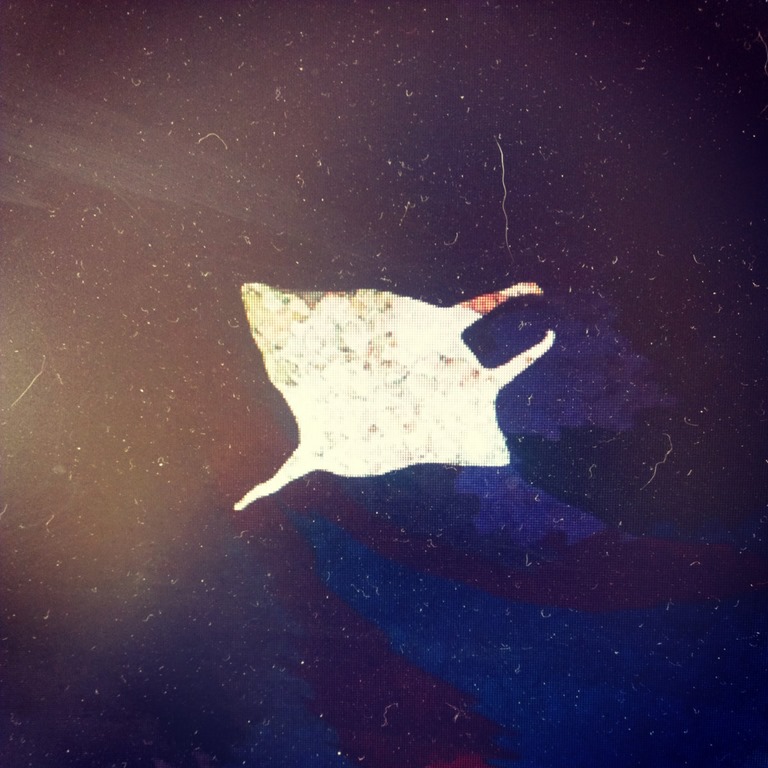
Band Ane - V

Hubro – HUBROCD2573 – 7th October 2016

Christopher Nosnibor

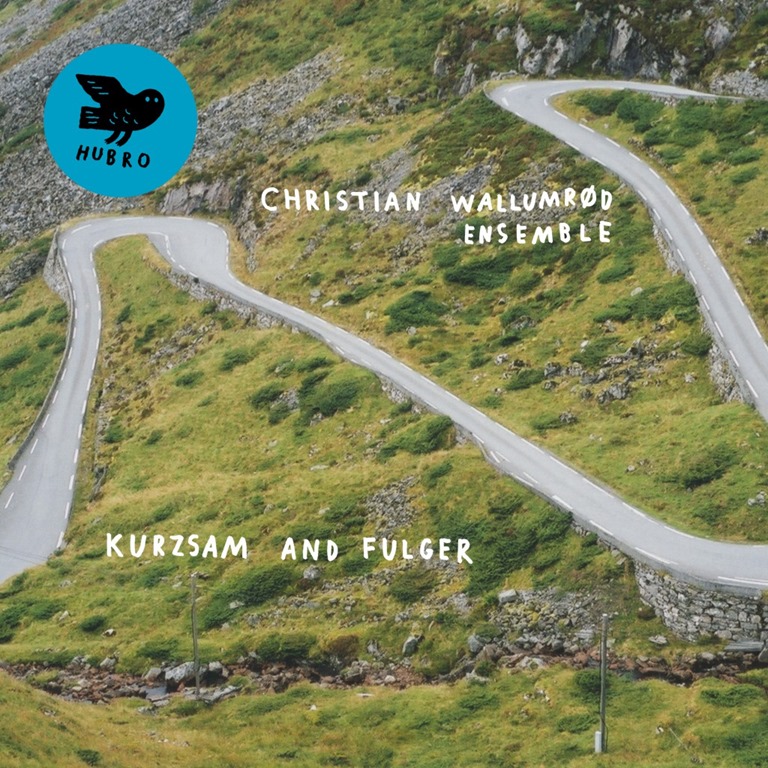
Krautrock country? Opiate-sedated tribal jazz? The seven tracks which comprise Kurzsam and Fulger don’t readily slot into any stylistic field. That’s Christian Wallumrød all over. This previous releases include a solo work and a collaboration with Trondheim Jazz Orchestra. This is an artist who thrives on variety, and one could probably argue with reasonable certainty, a certain sense of artistic perversity. But then, Wallumrød is interested equally in early polyphony and church music and the work of John Cage.

The pieces on Kurzsam and Fulger are sparse, minimal in their arrangements, yet fulsome in sound span. Shuffling drums, strolling, oscillating bass and lead piano that wanders all over, on and off key, along its own path. ‘Langsam’ ventures into mellow jazz territory, while insistent tom beats. The polytonal organ drone of ‘Phoniks’ offers more of an allusion to church music, but distilled to a skeletal frame, revealing the ensemble’s avant-garde orientation If the supremely brief ‘Klafferas’ is little more than a percussive interlude, the protracted meanderings of ‘Arpsam’ are an exploration of space, not least of all the space between notes, and as such, a piece which also interrogates the relationship between sound and not sound and the way the notes slowly decay while their echoes resonate in the mind. As the notes played vary slightly between each repetition of the motif which provides the key part of the track, the sense of disco-ordination increases as the track progresses.

The final track, ‘Kurzsam and Onward’ brings some levity, and its plinking keys call to mind a proliferation of 70s and 80s US sitcoms and I can’t help thinking of Taxi (despite the fact that it sounds nothing like it, and that growing up in the early 80s I never considered the show a comedy of any kind). The spaces between the playing are even longer, and push the parameters of composition and order, as well as the listener’s patience ad perception.

The less there is to hear musically, the more there is going on theoretically, and on Kurzsam and Fulger, Christian Wallumrød and his ensemble really do interrogate a broad range of theoretical positions in order to arrive at the finished work which is Kurzsam and Fulger.


Christian-Wallumrød-Ensemble_2400x2400-1024x1024

Kranky – 11th November 2016

Christopher Nosnibor

In researching and considering Loscil’s latest offering, I returned briefly to the previous album, 2014’s Sea Island. An album that was broadly ambient, it was also firmly a work of electronica, an album that was big on ideas, and engaging rather than immersive or entirely background.

Monument Builders expands on this, and while texture and tone continue to play central roles in the formation of the individual pieces which make up the album, it’s also an album on which the individual tracks are built on dynamic and contrast, and the structures of each piece are clearly defined. While the overarching tone is gentle, subtle, there’s much variation between the tracks, and the way in which sounds suddenly emerge in the foreground means there is a continual sense of movement within each piece and across the album as a whole.

Delicate beats thump like a heartbeat against the ticking clock: the soft notes which form a repeating motif through ‘Drained Lake’ may not in themselves build tension, but there’s something beneath the surface. All is not well, all is not calm. You sit, on edge, as an elongated drone undulates like a distant siren wail.

‘Red Tide’ is very much rhythmic in its focus, a cyclical synthesised bass loop – part Kraftwerk, part ‘I Feel Love’ – forms the spine of the track. ‘Anthropocene’, the album’s penultimate track, stands as something of a companion and counterpart to this, with a similar bubbling motif murkily pulsating beneath, while mournful brass conjures black and white or sepiatone scenes of bygone days. It’s an interesting contrast well executed.

Monument Builders is very much a ‘next stage’ work, which continues to expand Loscil’s sonic horizons in a host of directions. But equally as important as recognising the artistic developments, one has to consider the listening experience, and this is ultimately where Monument Builders triumphs. In switching between background and foreground musical dynamics and building and reducing the degrees of tension, Scott Morgan (aka Loscil) has masterfully created a work which demands attention without being excessively obtrusive.


KRANK204_10x10_300dpi

Clang records – clang049 – 4th November 2016

Christopher Nosnibor

So, what did actually happen? I’m reminded of William Burroughs’ theories around the cut-up and the construction of history, specifically a quotation from a 1974 interview:

“The past only exists in some record of it. There are no facts. We don’t know how much of history is completely fiction… There’s no record this conversation ever took place or what was said, except what is [recorded]. If the recordings were lost, or they got near a magnet and were wiped out, there would be no recordings whatever. So what are the actual facts? What was actually said here? There are no actual facts.”

So, when Lars Graugaard and Moritz Baumgärtner convened to record an album, what actually happened? Crashing cymbals and thunderous percussion in slow-mo roll through ‘Space Twist’, before uptempo jazz drumming crashes through electronic eddies on the seven-minute freeform workout that is ‘Fourth Quolandrum’. If it all sounds fairly standard in the world of avant-jazz, perhaps the arrangements in themselves are, but there’s something murky about the production: the sound has a booming density, a thickness. The sounds bounce back on one another, the bulbous bass tones bending and bow.

Some of this spatial strangeness is likely to derive from what the blub describes as the ‘unusual setting of drums and percussion’ and the ‘musical interactions and sonic scenery of real-time electronics,’ but to what extent to we believe that this is a wholly unadulterated document of the moment, as it happened?

Perhaps it is. It’s not a question of honesty. But the very process of recording introduces an element of distance between the event and the playback. An, indeed, the playback is another experience in itself. The amplifier, the speakers. The placing of the microphones, the recording device(s), the equalisation. There is no such thing as a precise master or a replica of the live event. Every stage equals a layer of distance between the happening and the review.

We may never know what actually happened, and so will have to rely on this album as a true document, until new evidence emerges.

https://i0.wp.com/images.junostatic.com/150/CS3228936-02A.jpg

Tavern Eightieth (TVEI) – 31st October 2016

Christopher Nosnibor

Don’t read too much into the Hallowe’en release date for this solo offering from Matt Christensen, who is more usually found lending his voice to Chicago genre-straddling guitar-based act Zelienople. There are no guitars to be found here, or vocals, and despite the album title’s connotations of the predatory, the sinister and the dangerous, this is no haunting horrorshow or ultra-dark ambient work coughed up from the bowels of the earth, although the five tracks on Prowl are certainly strong on atmospherics.

The title track sets the mood, a murky groove softly bounces along, the insistent beats largely submerged by a thick, opaque subaquatic sonic murk which strangely deadens the sound and creates a sensation that’s almost physical rather than simply auditory. When the rhythms are completely absent, as on ‘Mountains of Fire (Remix)’, Christensen glides effortlessly into what one may reasonably call ‘pure’ ambience: the forms are vague, intangible, with no discernible sense of structure as the soft and slowly-drifting washes of sound shift and turn gradually.

‘Spending It’ is perhaps the most haunting track on the album, crackles and pops – somewhere between the click and clatter of worn vinyl and the cracks and snaps of burning wood – form the distant rhythmic undercurrents which echo through the warping tones before being carried away into silence on a long, low wind-like drone. In contrast, ‘Junk Test’ is altogether more buoyant, bubbling beats flit beneath rippling Tangerine Dream synth motifs.

Everything is kept low-key, the sounds dissolving into one another and in a slow but continual evolution. It’s a radical departure from Christensen’s work with Zelienople, but, as one may expect, it’s an album that demonstrates a keen awareness of the dynamics of texture and tone. In the context of Prowl, these elements are explored in their most delicate and subtle forms, and in its field, it’s an accomplished and enjoyable work.


Matt Christensen – Prowl

VoxxoV Records – VXVCD011 – 19th September 2016

Christopher Nosnibor

The purpose, primarily, behind Aural Aggravation, was to give coverage to niche music produced by lesser-known artists and little labels. The idea was also to publish reviews geared toward a more long-form format, favouring more journalistic analyses than the soundbite snippets which dominate the mainstream music press (such as it exists now) and many of the more popular websites. Ultimately, of course, the ambition was to run a site which gave myself, as founder / editor and main contributor, free reign, to write about what I liked in a way I liked. It wasn’t so much the cliché that if other people liked it, it’s a bonus: I figure that if I like it, there’s an audience for it somewhere.

Vindication of this approach hasn’t just been in the traffic we’ve received – Aural Aggro will never achieve world-domination but after a year in existence, it’s built a steady and respectable readership – but in the labels and artists who’ve sought us out to submit releases for review because they like what we do. It’s mighty gratifying, and has led to the discovery of some fantastic acts and labels, too.

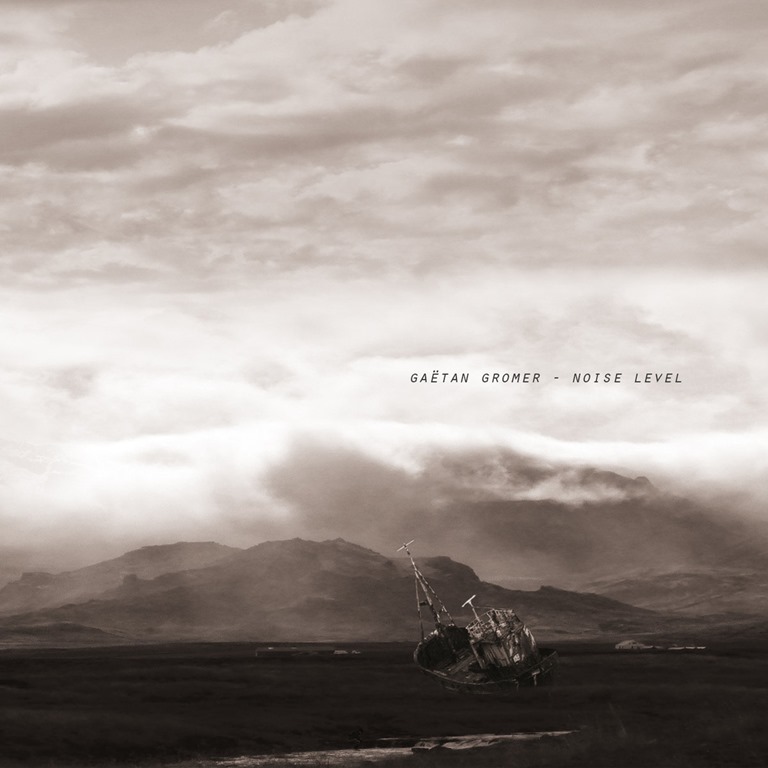
And so it was that microlabel VoxxoV found us and put their eleventh album, Noise Level by French artist Gaëtan Gromer our way. It’s about drone, noise and ambient music, and that’s what we dig here – amongst other things.

Noise Level is an album to get lost in, but also an album to listen to. The detail is what matters. For what seems like an eternity, so little happens/ but of course, a little is a world away from nothing. Then, amidst the elongated drones, small sounds, water-like drips and ripples disturb the tranquil surface. Barely audible, indecipherable vocal snippets and samples crackle through the airwaves. Notes bubble, drift and turn, wafting formlessly, invisible yet present, the subtlest ebb and flow forms an other-worldly soundscape. Burs of sharp static interfere with the flow, but fail to break out of the shadows. Gradually, so gradually, the notes turn and mutate, pulsate and undulate. Scratches of treble scour away and roughen the edges. Insectoid skitters flicker and clamour as circuitry bleeps, sonar calls and responses. Long, drawling notes sigh in resigned anguish on ‘Le Bibliotheque de Babel’.

The warmth hinted at by the soft-edged swells of sounds on the album’s final track, the ten-minute ‘Always Coming Home’ are countered by grazing guitar drones and clattering, arrhythmic percussive ruptures. Over time, it builds in volume and intensity, the guitar coming to the fore as the album’s only recognisable instrument, a bruising, dense mass of sound bringing the album to a powerful close. With this, Gromer is done, and goes whistling on his way.


Gaëtan Gromer – Noise Level

Opa Loka Records – OL160096

Christopher Nosnibor

It begins with a long, low, ominous hum. The movement is so gradual as to be barely perceptible. Slowly, so slowly, it grows, swells, and turns, its density, depth and texture shifting, microtonal layers emerge and fade. Dolorous chimes ring and resonate in the sonic mist. The individual tracks are segued together to form an extended, evolutionary work. Brooding strings strike and organs waver on ‘Stone Ether’, and over the course of the album, Cut Worms stalls time to create space and distance, ethereal soundscapes drift, soft, sculpted, immersive.

The forms and structures are as subtle, fleeting and inscrutable as the infiniteness of space and the existence of dark matter. Equally, the origins of the sounds which fill the album seem wholly removed from one another: Lumbar Fist is an electroacoustic work, created with live generated and processed sounds, without any prefabricated beats or loops, and as such, the process entails considerably more than the all-too-common mechanical laptop machinations of ambient works.

Richard Van Kruysdijk – the man who alone is Cut Worms (and what an evocative moniker that is… not that the album title’s far behind) has spent a long time honing his craft, and Lumbar Fist stands alongside artists like Tim Hecker, Oren Ambarchi, Glenn Branca, Stephan Mathieu, Will Guthrie and Jim O’Rourke not just as an exemplar, but an outstanding example of atmospheric, drone-orientated ambience.


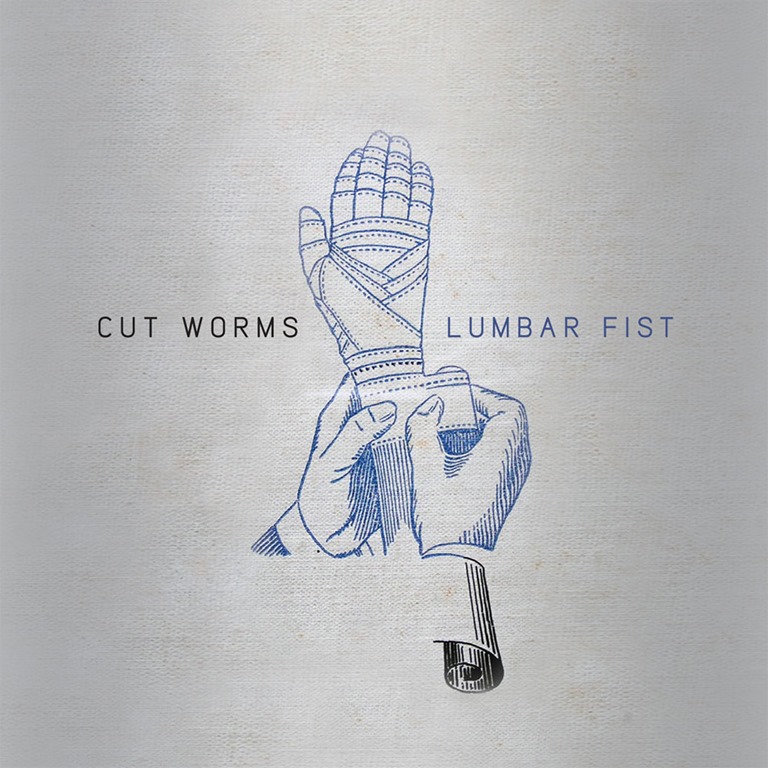
Cut Worms - Lumbar Fist

Gizeh Records – GZH70 –4th November 2016

Christopher Nosnibor

Aiden Baker’s name features on a staggering number of releases, and while Nadja – the duo consisting of Baker and bassist Leah Buckareff – may only be one of many side-projects, the discography they’ve amassed since 2003 is substantial, to say the least. On The Stone is Not Hit by the Sun, Nor Carved With a Knife, they offer three immense ambient doom tracks which make for a welcome addition to that discography.

‘The Stone’ opens the album with a deep, slow bass. A delicate guitar is soon obliterated in a deluge of overdrive. Over the course of the track’s imposing twenty-two minutes, they build a pounding groove, the drum machine and bass in combination emphasising the heavy rhythms. Baker’s vocals are low in the mix, and with the textured, picked guitar chords, they straddle the grinding abrasion of Godflesh and the majestic shoegaze of Jesu. The contrast between the mechanical, industrial drum sound and the rich, organic sound of the guitar is integral to the sound, while the space between the notes is a core aspect of the composition: the stop / start mid-section of ‘The Stone’ jars the senses.

‘The Sun’ provides the album’s colossal, megalithic centrepiece. It takes its time to rise, and a steady, soft, meandering clean guitar and gentle, reverb-heavy vocal owes more to psychedelia and shoegaze than ambient or doom. But there’s a simmering tension that builds slowly but surely. The textures and tones gradually transition from clean to distorted, before drifting out into an extended ambient segment. Yawning drones roll and rumble: these are vast expanses of sound, twisting out toward an infinite horizon. And when the guitar and bass return, it’s with an even greater, more crushing force. The drums are distant, partially submerged by the snarling, thunderous bass and immense guitar which carries the listener on am oceanic expanse of sound.

A subtle, amorphous drone hovers atmospherically through the final track,’ Knife’. Arguably the album’s most ‘pure’ ambient passage, it’s hushed, mellow, almost soporific and marks a real contrast with the previous two tracks. There’s a part of me that, on first hearing, found ‘Knife’ a shade disappointing in context of the album as a whole: ‘The Stone’ and ‘The Sun’ set a certain expectation that, at some point, devastatingly heavy, thunderous bass, crashing drums and cinematic drone guitar will hit like a landslide, but it simply doesn’t happen. However, on reflection – and this is an album which requires much reflection – it’s a well-judged change of form. In confounding expectation on the final track, Nadja show that they’re not tied to formula.

In exploring the contrasts of volume, texture and mood, The Stone is Not Hit by the Sun, Nor Carved With a Knife is a more considered and ultimately rewarding work.


Nadja - The Stone is Not Hit

House Of Mythology – 26th August 2016

Christopher Nosnibor

So, House of Mythology released two albums simultaneously in August, and having exhausted myself dissecting the David Tibet / Youth collaboration, Create Christ, Sailor Boy under the Hypnopazūzu moniker, it’s taken me a while to steel myself for this.

It’s important to be clear that this is a very different kind of album, the three (or four*) long-form tracks manifesting as darkly ambient instrumental works, which build layers of dissonance and feedback over textured drones and rumbling lower frequencies. While flickers of pan-cultural influence emerge from the thrumming layers of sound, Remoteness Of Light is entirely devoid of any of the trappings of pseudomystical bullshit.

And while ‘Agents of Altitude builds layers of sound which unsettle and unnerve, ‘World of Amphibia’ which follows, is altogether more sparse and delicate, and corresponds more obviously with the nots which accompany the album and situate it in the deep submarine world, which remain every bit as intriguing and unknown as outer space.

In describing the journey of a deep-sea dive (‘Dive a kilometre into the ocean and you leave all surface illumination behind… Descend another ten and luminous forms flicker and burst through the endless black’), The Stargazer’s Assistant contextualise Remoteness Of Light. Of course, the tribal drumming and whining pipes aren’t a literal representation of the underwater experience, but they convey the strangeness of the deep-sea world and the excitement of the decent.

Moreover, there are essentially three areas which offer endless fascination, but have been wholly inadequately explored: space, the oceans, and the human mind. Remoteness Of Light delves into, and connects with, all of these:

The droning, sonorous and subtly rhythmic sonic turnings of the title track are, at times, so quiet and careful as to be barely present, but as ever, dark and unexpected, and it builds o a wheezing, whining, moaning undulation of sound, with a long, slow playout of heavy, echo-drenched percussion and a log-tapering drone. Credit where it’s due: this s sonically and texturally interesting. With a lot going on, it conforms to no specific gene, but engages the listener in unexpected ways, and the varied textures and shades of light and dark unquestionably have the capacity to tweak at the psyche.

* Track 4, ‘Birth of Decay’, is a live recording only available on the double vinyl edition, or as a download for people ordering directly from the House of Mythology web site. It wasn’t included in the digital review copy we received, so it might be awesome or utterly shit, but if it’s on a par with the rest of the album, it should be pretty good.


Outside_8

Christopher Nosnibor

For a Sunday night it York, it’s not a bad turnout, and while I’m not often a fan of seated shows, this bill of laid-back electronic-based music lends itself perfectly to adopting a less upright position for optimal enjoyment. Plus, it makes a welcome change to be able to put my beer on a table in front of me, rather than have to clutch it and thus warm it with increasingly condensation-dampened hands, or to concern myself with wearing a jacket with adequately capacious pockets that facilitate free hands for taking notes, taking photographs.

Two of tonight’s acts I saw only a few weeks ago, and when Mayshe Mayshe opened up for Living Body (for whom Shield Patterns were the main support) at the Brudenell in Leeds, I was charmed by her lo-fi minimalist pop tunes. Tonight’s set confirms that the bells, whistles, mini-pianos and hair-dryers aren’t gimmicky features of a novelty act, but genuinely useful features of a sound that’s spurred by innovation. Her songs are beautifully crafted examples of quirky bedroom elecro-pop. But for all the sparseness, there are some dense bass tones.

Mayshe Mayshe

Mayshe Mayshe

Having been less than enthused by the performance of hipster laptop DJ Game Program supporting Silver Apples recently, I’m even less enthused by Jakoby’s noodlings. In fairness, he has a lot of ideas. Some of them are good, and some are very good. But many of them are not, and his compositions have a tendency to throw everything at every track, often simultaneously. There were at least a dozen points that would have made a tidy ending to the set, but he kept bringing it back up and what’s likely intended as a brain-bending sonic overload ends up being an overlong exercise in onanism.

Jakoby

Jakoby

What a contrast, then, Elsa Hewitt. Same format in principle: a solo performer with a laptop and a mix desk, she’s understated as a performer, but it very soon becomes clear she has an immense talent and is doing something genuinely different. In this line of work, even the inventive and the radical can pale against the sheer volume of acts trying to carve a niche by virtue of their supposed uniqueness. But with some thunderous trip-hop beats – which are in places contrasted with minimalist, flickering glitch beats – and washes of amorphous sound over low, throbbing, scrotum-vibrating bass, topped with ethereal vocals and looped self-harmonies, Else forges a sound unlike anyone else. Building some slow-burning, hypnotic grooves, the gap in the market for Urban Ambient is hers for the taking.

Elsa Hewitt

Elsa Hewitt

It’s Claire Brentnall’s birthday, and having launched the second Shield Patterns album with a hometown launch show in Manchester the night before, she celebrates with a superlative performance tonight. The duo’s layered, detailed music is well-suited to the intimate atmosphere of the darkened Crescent, and the PA does it justice. The tonal separation and sonic depth is magnificent, the vocals crisp yet still shrouded in reverb: effectively recreating the sound of their considered studio recordings, it’s easy to get lost in the space between the layers of sound. Brentnall’s haunting vocals are enveloped in extraneous noise and a gauze-like blend of synths and field sounds, while Richard Knox hammers out thunderous, rolling drum sounds on an impressive drum pad setup. With the minimal lighting, it all makes for a compelling show, and a magnificent way to end a weekend.

Shield Patterns

Shield Patterns