Posts Tagged ‘Ambient’

Gizeh Records – 26th April 2019

Christopher Nosnibor

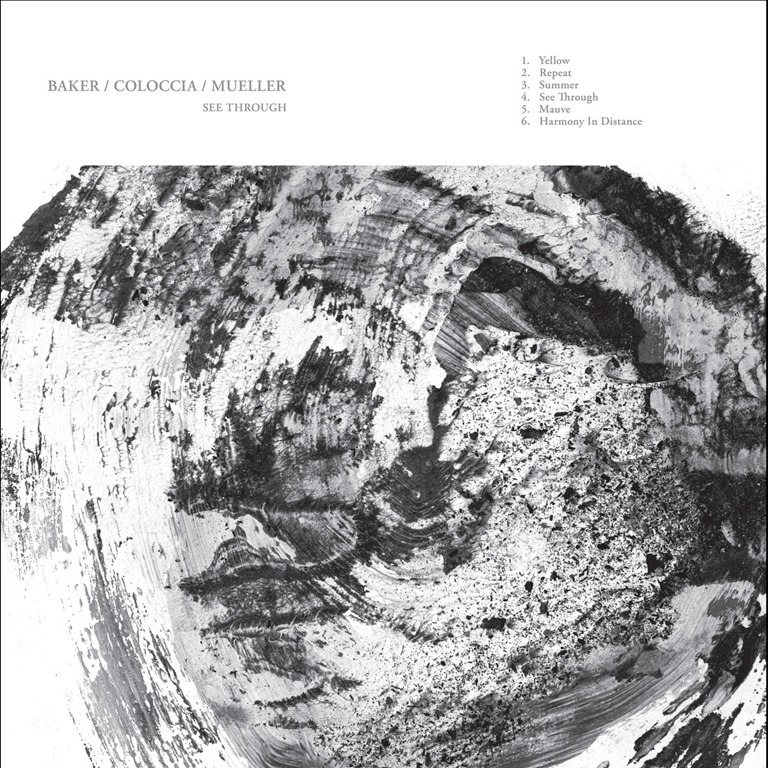
Aidan Baker has done it again: pulling together a brace of collaborators to form a perfect triangle, See Through is a magnificent sum that’s greater than the parts, showcasing the way relinquishing individuality in favour of collectivism can yield something… other. And See Through is decidedly other. The press release describes the process, an evolution and layering: ‘The project was brought to life through Baker exploring textural rhythms created by sampling small, sharp and abrupt sounds on the electric guitar and then sequencing them in a drum machine to form the bedrock of the tracks. Mueller then added his particular, signature brand of intricate, hypnotic percussion to the mix and the compositions began to grow and take shape. The pair agreed that the pieces needed a more human touch and Coloccia was invited onboard, contributing processed vocals via looping, tape manipulation and microphone feedback.

To describe it as ‘ambient with beats’ – a phrase I’ve used to describe worriedbaoutsatan, who sound nothing like this – may be vague, but it’s accurate. It’s all about the slow build… and the percussion. Starting with higher-pitched finger drums, it evolves to a polyrhythmic experience. Insistent tribal drumming hammers a martial beat that underscores wraith-like vocal echoes and soft, supple surges of abstract ambience… the effect is mesmerising, hypnotic. Snaking hints of the exotic twist through the hazy infusions of the sprawling eight-and-a-half-minute ‘Repeat’, which finds the percussion dampened, dulled, yet no less insistent as it clumps and clatters along in the swirling sonic mists.

See Through is an album of evolution, and the tracks seep into one another to form a cohesive but ever-shifting sequence. As is the case in respect the album as a whole, the percussion is key, and changes between each piece, backing off and rising to the fore once more.

‘Summer’ takes a more ambient direction, the beats subdued and submerged, muffled and distant and pulsing through a viscous, subaquatic density, before the title track ventures deeper into darker territory, an unsettling, shifting rumble that shudders and shuffles, suffused with incidental scrapes and vaporous drones which creep in and out of the frame like ghosts, like drifting mists, like so many intangibles. It’s dark, uncomfortable, disorientating, and extremely difficult to pin down -which is precisely its indefinable source of both its appeal and its artistic success. It builds to a scraping crescendo around the 8-9minute mark.

The final track, ‘Harmony in Distance’ wafts drifting ambience over a soft rhythm that builds in intensity, until the soft sonic washes and drifting vocals give way to a rising thunder of drums that drive the album to a tidal climax.

AA

Baker et al

This is it Forever – 15th March 2019

Christopher Nosnibor

It would be perhaps too obvious to quip that worriedaboutsatan / related releases are like busses, what with Gavin Miller’s latest solo offering appearing just weeks after the arrival of the duo’s fourth full-length album, Revenant. It would also be somewhat inaccurate, as both Gavin and Thomas Ragsdale have maintained a steady flow of solo releases in recent years, and, indeed, for much of the band’s lifespan to date.

I’ve variously sung the praises of split singles, and increasingly, split albums are a thing which well-suits the resurgence of both vinyl and cassette releases. Front & Follow’s The Blow series is a clear standout in the field of the split release, with some well-considered (or otherwise wonderfully random) curation resulting in some truly inspired pairings: sometimes, contrasting is every bit as satisfying as complimentary.

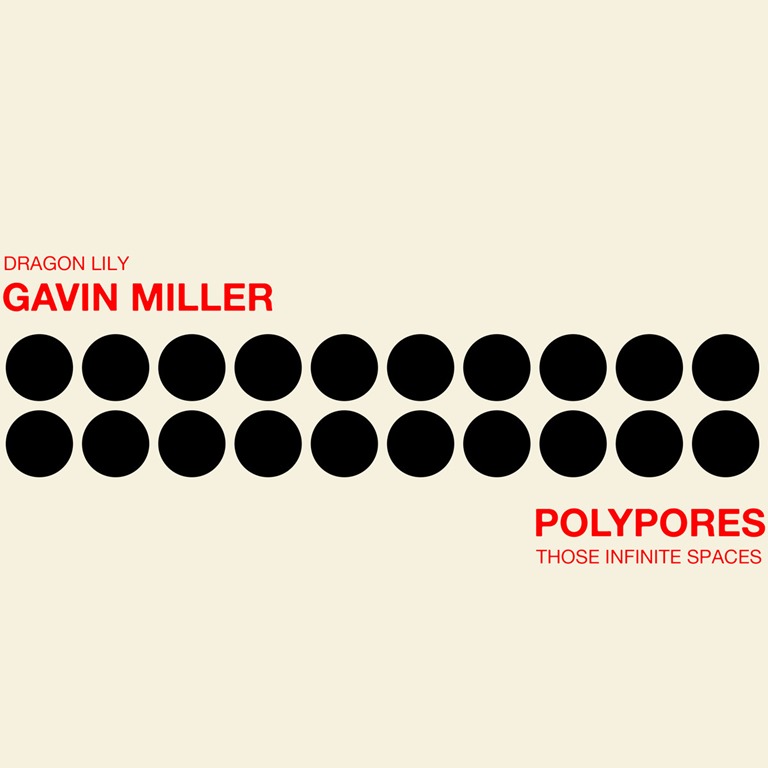
This release, according to the label, is ‘the first in a series of splits for the label’, which ‘sees Polypores and Gavin Miller explore their more dreamy, ambient sounds by taking a side of cassette each’.

Miller’s ten-and-a-half minute ‘Dragon Lily’ is a work of delicacy. There is movement, slow, sweeping, the tones soft and warm. There is progression: barely perceptible in the moment, as the listener is carried on the long drift, but definite, as picked notes begin to chime and the sound gradually swells with the scraping drone of an ebowed guitar drenched in reverberating echo.

Polypores’ ‘Those Infinite Spaces’ is more overtly structured, with distinguishable note sequences and sounds that are more ‘synthy’ in comparison to Miller’s abstract washes of sound. This gives the piece a certain sense of solidity, and although mellow and soporific, it’s the repetition the soothes and lulls – until around the mid-point, when everything flattens to an elongated, wavering multi-tonal drone, which quite changes the tone, if not the mood, as the trajectory moves towards a long, slow wind-down.

Individually, and side-by-side, the two compositions work well, and I suspect it’ll be worth keeping an ear out for future split releases from TIIF.

AA

Gavin Miller & Polyspores

Panurus Productions / Inverted Grim-Mill Recordings – 22nd March 2019

Christopher Nosnibor

It feels like I’ve been bombarded with spectral oceans lately, what with Teeth of the Sea’s Wraiths and now The Sea to Which the Body is Drawn by Wreaths, the project of Northumberland based artist Michael R. Donaldson, which utilises ‘four track experimentation, aged equipment, drones and field recordings to build haunting soundscapes’ lands in my inbox.

And such soundscapes are precisely what Wreaths deliver here. ‘Sea Lulled | A Spire Remains’ is what you might call a ‘classic’ example of contemporary ambient music, and opens the album in the most spectacularly understated style. It’s background, bit it’s also deep, layered, and multi-faceted.

Listening to the vast washes of sound in context of the album’s title, I become preoccupied with drowning. So often, I’ll describe ambient works as enveloping’ and ‘immersive’, but what is it like to be truly immersed?

‘Sorries’ hangs on a desolate, metallic drone that scrapes and swirls for some nine-and-a-half minutes. Ambient as it is, with soft piano notes ringing out into the air, the dominant textures and tones are harsh mid-range.

It’s a contrast to the titles, which allude to the soft, damp, organic, and also tell dark, depressing tales in Twitter-flash form: ‘Her Ornate Gown Marred by the Sea’; ‘Tides of Soil and Loam, Tides of Wreck and Ruins’; ‘Fell Foul of the Shallows’ – these all tell bleak and harrowing tales in their own rights, oblique hints of tales like tsunamis, tales like the flooding of Mardale Green beneath Haweswater Reservoir in Cumbia, and the creation of Ladybower Reservoir with Derwent village’s church spire rising above the water for some years after the village was submerged.

Water always wins, and even man’s harnessing of water is but finite, a power held on a knife edge.

The final track, the eighteen-minute ‘Timbers Sodden’ is a low, slow drone that hovers and drifts, conjuring the smell and feel of dank dampness, the sensation of slow decay. And herein lies the power of Wreaths: The Sea to Which the Body is Drawn is an album of atmosphere and evocation. It celebrates the transient, the fleeting, and conjures the ebb and flow, the mists and slow tidal pulls to create a listening experience that draws the mind as the sea draws the body.

AA

Wreaths - The Sea

Christopher Nosnibor

“Are you a journalist?”

I nod. I don’t like talking when a band is playing. I don’t like other people talking when a band is playing, so why would I do it? It’s rude. And I’m there to watch the band. And so I don’t explain that no, I don’t consider myself to be a journalist or a music journalist, but a writer who happens to write about music often.

She’s already asked me what I’m doing and tried to get a look at my notes – a spidery scrawl barely legible to myself, to which I’d responded by wordlessly waving my A7 pad at her.

Some people just don’t get hints.

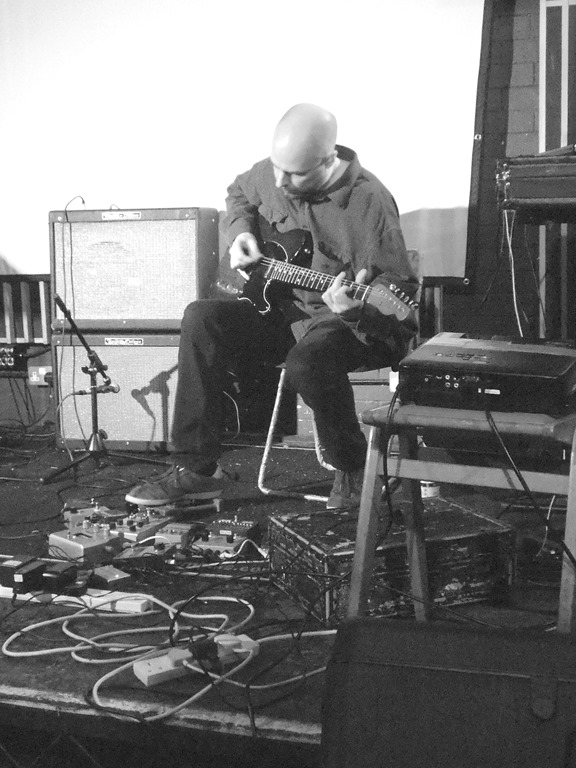
Following on from opening acts Steve Hadfield, who’ delivered a set of proficient but slightly static electronica and Dean McPhee, who performed some ethereal, atmospheric guitar instrumentals with the assistance of a bank of pedals that almost filled the venue’s small stage, worriedaboutsatan built their set nicely. One of their trademarks is intelligent structure, and while they’ve woven segments of their latest album’s more delicate parts into their set, they swiftly transitioned from drifting ambience through subtle rhythmic pulsations to propulsive beats, all the while conjuring rich layers of atmosphere. Gavin Miller’s guitar sounds even less guitar-like than ever, as he conjures rippling waves of sonic abstraction from six strings.

DSCF7638   

Steve Hadfield

DSCF7645                                                                            

Dean McPhee

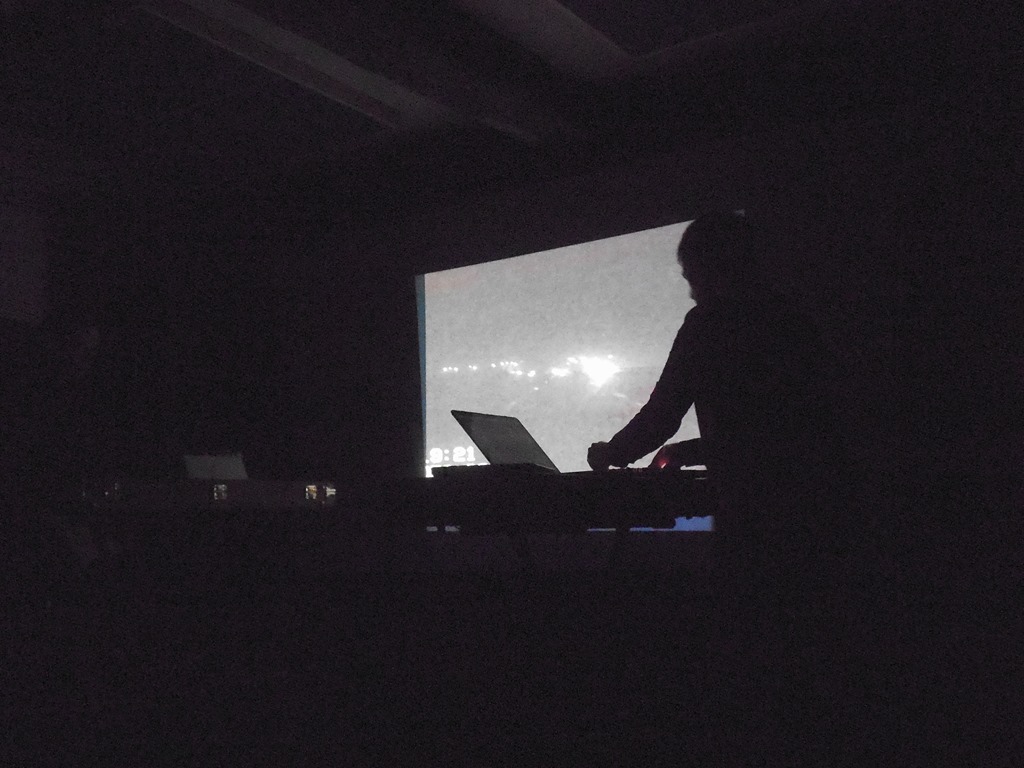
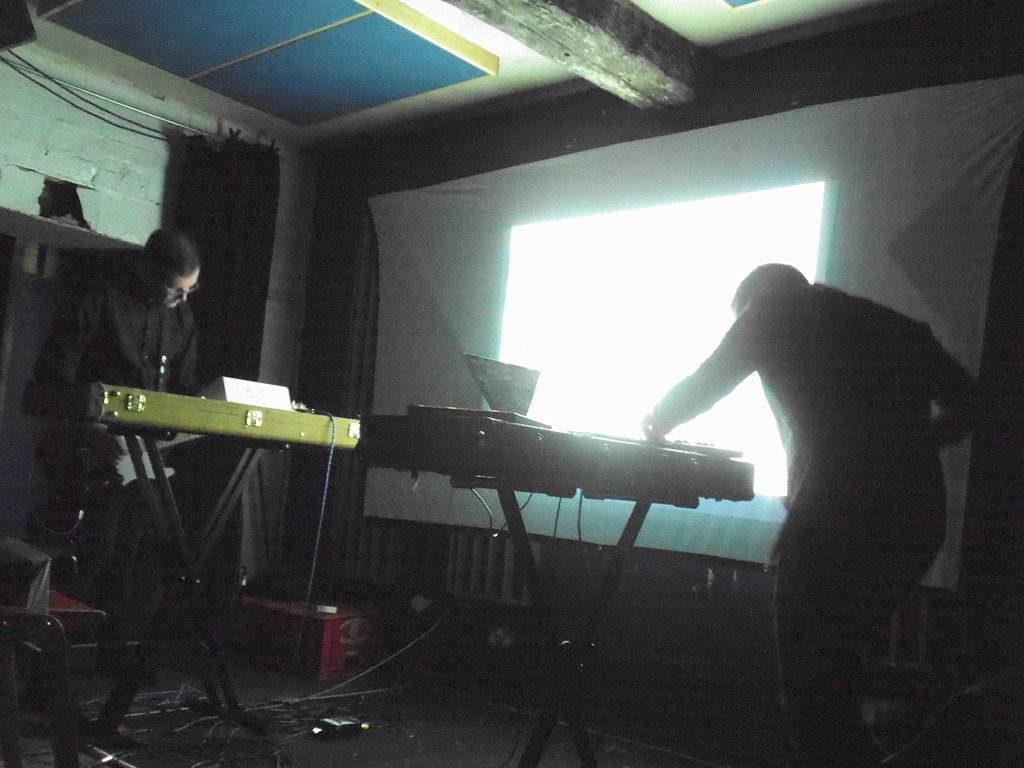
It’s been a long and taxing day, and I’ve consumed more beer than intended, than is wise, I’m switching between tenses, and I’m trying to decipher the narrative of the film projected at the back of the stage. It’s intercut with various black-and-white footage that conveys nothing in itself, but is evocative in its bleakness, and there are flickering light segments, too: beyond this, they play in darkness, visible only in silhouette. Their stage show hasn’t changed dramatically in recent years, but it’s visually striking and effective, and places the immersive music to the fore.

DSCF7691

 DSCF7685                                                                                                         

worriedaboutsatan

Then, halfway through, a couple of women appear at the front and get down to some mum-dancing: fair play, but they don’t need to be exchanging comments about it. I have my earplugs in and am in the zone, perhaps more even than usual in my state of inebriation. It’s the short, chubby one who starts nebbing at my pad – not that I’d have been any happier had t been her taller, slimmer friend.

“Who do you write for?” she shouts in my ear. It’s a shame earplugs only reduce volume and cut top-end rather than muting irritants.

“Me.” I want to tell her to fuck off, but even seven pints in, I’m mindful of manners.

This throws her but she seems to think it’s cool, and she asks yet more questions, and then she starts going on about how she’s worried about my eyesight, writing in the dark and all. I appreciate the concern, but my liver and blood pressure and anxiety are probably more of an issue than my eyes, and besides, I’m wearing tinted glasses at a gig, and if perfect strangers feel the need to worry about anything, I’d say climate change, Brexit, the stranglehold of capitalism, and the simple fact we’re all doomed are more worthy of that worry. Ok, so I don’t appreciate her concern one bit.

Eventually, she leaves me in peace and I’m able to watch the guys bring their set to a triumphant climax to an appreciative response from a home crowd. And deservedly so: the fact they don’t tour often, and when they do, they’re reliably solid, consistently engaging and dynamic in both set formation and performance, and perform with such incredible energy, makes an intimate show like this all the more special.

Burning Witches Records – 20th February 2019

Christopher Nosnibor

No, it’s not a reference to the movie. A revenant is ‘a person who has returned, especially supposedly from the dead.’ It’s a fitting title for the Yorkshire duo’s fourth full-length album: having disappeared, mutating into Ghosting Season and perusing solo projects following their initial flurry of EPs and debut album. It was six years before they would return with Even Temper in 2015, and since then, they’ve maintained a pretty strong work-rate. But, not so healthy as to feel like their output is a constant spate, and as such, a new album still feels like an event.

The write-up says that Revenant ‘marks a slight departure from their previous album, the critically acclaimed Blank Tape, by venturing into more synthesiser heavy pieces, based around dark, brooding atmospheres and switching from the bouncing arpeggios and slow, hypnotic rhythms of 10 minute album opener ‘Skylon’, to the jittering, cinematic rush of ‘Making Your Masks’’.

Revenant in fact begins with a brief introductory passage in the form of the soft-focus, minimal, and haunting ‘Hawk’ with muffled, distant voices echoing over almost subliminally-hushed droning notes, before the aforementioned ‘Skylon’, which inches its way in discreetly with subtle rippling rhythms and slowly building layers and textures. It’s a semi-ambient opus that carries heavy shades of Krautrock: the beats are s backed off as to be non-existent, but the pulsating notes coalesce to a steady, insistent rhythm.

Both the shoegazey, post-rock guitars and glitchy, flickering beats that characterise so much of their work, are largely left in the background and are sometimes virtually absent. Revenant is extremely subtle, low-key, and favours muted hues and abstract shades.

‘Strax’ is propelled by a flickering heartbeat, while the wispy contrails of ‘Making Your Masks’ are underpinned with a slow, deliberate beat and definite notes, and it marks the beginning of a closing sequence which sees a growing solidity of form, segueing into closer ‘Wasteland’, which is more overtly structured, beat-driven. The effect is like swirling mists solidifying, a phantom taking corporeal form.

Revenant is very much an album: a beginning-to-end experience. What it lacks in immediacy, it more than delivers in detail: the attention to subtle forms and also the overarching structure is impressive, but, one also feels somehow intuitive. There’s something special and unique about the interplay between Thomas Ragsdale and Gavin Miller, and it’s this which has always made worriedaboutsatan an act without peers, an act who effortlessly amalgamate styles and forms to create a space outside of time-frame and genre. Rarefied and refined, Revenant represents another step in the evolution of worriedaboutsatan, without denting the arc of their developmental trajectory.

AA

WAS - Revenant

Green Recordings – 30th November 2018 (Big Mouth)

A Gradual Decline is the debut album by CUTS, the audio-visual project of composer and filmmaker Anthony Tombling Jr. It follows the release of the EP ‘A Slow Decay’, which came out in October. The titles suggest a trajectory, an overarching theme, and Tombling’s preoccupation with environmental issues and global warming is the key here. “We are living in the age of the Anthropocene and it feels like everything is in decline,” he says.

He explains the process and inspiration as follows: “I have tried to make a record that feels like it’s all come from one place. My only musical influence on this was William Basinski’s ‘Disintegration Loops’. Not the music, but the process. The idea of a decline in sound really suited the concept of this record. All this music and instrumentation trapped in this declining digital signal. I wanted it to sound brittle and precarious. I also wanted to avoid doing overly dark material, opting instead for something that was more fragile, melancholic and even hopeful in moments.”

As such, this is a concept work, and a concept that’s conveyed by the medium of chilled-out electronica, propelled by quite mellow beats. And while there is a melancholy hue to the instrumentation it doesn’t exactly say ‘potential collapse of civilisation’ or ‘global warming: aaargh, we’re all fucked’. This is no criticism: it’s hard to reconcile the now with the future prospects was talk about endlessly but never seem to reach. Even positioning the Anthropocene is problematic, although using the increasingly popular placing of post-1945 as the marker, with that year being tipped by the Geological Society as The Great Acceleration in terms of the impact of human activity on climate and environment as the defining feature of the current geological age, is perhaps instructive in the context of Tombling’s comments that “we’re in a moment where extinction is regular. I wanted this record to reflect these frailties.”

The press release promises ‘11 widescreen, electronic compositions in response to global political and environmental breakdown,’ and explains how A Gradual Decline addresses the planet’s current fragility using actual field recordings of ice collapsing from glaciers’. This isn’t apparent in the music itself, and a lot of A Gradual Decline given to quite simple, straight-ahead electronica, and while there are warping synth washes to be found hither and thither, it’s gentle and genteel and doesn’t instil a gut-churning sense of panic. Then again, some of the pieces are quite stark and spacious.

The album’s trajectory is – as the title suggests – gradual. The pace slows and structures become increasingly loose and delineated, beats more fractured and fragmented as it progresses. It’s fitting: the slide into increasingly turbulent weather isn’t something noticeable on a day-to-day basis and on a global scale, rapid change is relative.

But by the time the listener has drifted through the rippling piano rolls and low-stuttering pulsations of ‘Maboroshi’ and the dilapidated slow-drone ambience of ‘Fear of Everything’ which suddenly vanishes to nothing after thirteen minutes of formless drift, the sense of journey becomes finally apparent.

A Gradual Decline is an album that makes more sense and grows in appeal with time to absorb and assimilate, to reflect and to refocus. Given time, A Gradual Decline makes sense. Its just a shame we don’t have the luxury of time to save the planet.

AA

CUTS - A Gradual Decline

OUS – OUS017 – 30th November 2018

Christopher Nosnibpr

Juxtapositions… oppositions… rippling waves of abstraction shimmer in broad washes while darker current bubble beneath… but the mood soon turns ugly as the bubbing low end becomes a churning throb and the soft waves harden into sharp-edged shards and extraneous sounds interrupt the smooth edges.

On ‘Feel Safe’ time and sound warp and blur: the time signature is but an illusion, an allusion to time rather than any true marker, and the naturally-occurring rhythms which emerge from the interweaving notes are constantly shifting, at first disorientating but gradually the while weft and warp becomes an aural blanket that softly smothers the senses and envelops the listener.

Nemeček conjures so many layers and with such subtlety it’s often hard to appreciate just how much is happening simultaneously. The soft rolling bass and drifting, cloud-like mid-ranges of ‘Organs’ become subject to crackling interference toward the end of the track, while ‘Incidents I’ is a disorientating oscillation.

The digital release benefits from the inclusion if ‘Incidents II’ which segues into ‘Incidents I’ and is a slow-building beat-backed blast of thunder that swells to epic proportions, and while the mellifluous sonic nebulae are as expansive and kaleidoscopically immersive as they come the dense, deliberate beats an booming detonations of sub-bass provide a sense of structure and form that focuses the attention back in. That isn’t to say the form places Recurrences fully foreground, or that the compositions even hint at linearity: they drift in and drift out again without having an overt direction. And all of this is good.

Recurrences is constructed as an ambient work, and its semi-abstract form and drifting layers of soft-focus vapouresness more than fulfil that criteria: that there’s more besides and beyond doesn’t detract from that ambition, and Recurrences is something of a masterclass in advanced ambient which occupies background, foreground, middleground, and twists the psyche all at once.

AA

Recurrences

1st October 2018

Christopher Nosnibor

Velvet Teeth was originally released as a 200 only limited-edition CD through the October issue of TQ Magazine, which is the kind of publication that gives coverage to the likes of Ceramic Hobs and Drooping Finger – not so much competition for Aural Aggravation, but a channel with a shared goal of giving coverage to the kind of acts most won’t, assuming they’ve even heard of any of the artists. The funny thing about niche music is that it has a fairly hardcore set of devotees, and there’s a kind of disparate, disconnected community that’s less of a scene and more of a rhizome-like underground network. And while a lot of fairly niche stuff may still only have a potential market of around 200, it’s often amazing just how many oddballs there are hiding in the cracks demanding the work of some bands that on the surface seem so obscure that even their mates haven’t heard of them. Chlorine – the musical vehicle of Graeme Hopper – certainly has that wider appeal, and moreover, most certainly deserves wider exposure and the opportunity of a larger audience.

Velvet Teeth is experimental in the most explicit sense, a sequence of fragmentary sonic collages. The longer pieces roam around murky depths with ominous fear chords obscured by laced shrouds of sonic fog. ‘Manlines’, with its down-tuned, sinister vocals and groaning, droning dissonance, and ‘The Scenic Route’ exploit dimetric tonalities and the prominent separation of frequency ranges, with rumbling, almost subliminal low-end providing a base for niggling treble. The six-minute ‘Low Hauxley Tide’ pushes further on the resonant low-end pulsations, a low, tidal throb providing the main body of the piece. It’s kinda mellow, but kinda shiversome, too. There’s a creeping fog of darkness that pervades both the piece, and the work as a whole, which creates a certain sense of separation. It’s simultaneously immersive and engaging, but there’s a feeling that you’re not quite in the same room and there’s a force-field preventing entry.

‘Who Pays for This’ is a spine-tingling mess of scrapes and jangles, muffled, slowed speech that’s just on the cusp of indecipherability, and elsewhere, ‘Bubbewraps’ is woozy, wibbly, vaguely disorientating. The album as a whole is built on a loose, drifting fluidity, with compositions that aren’t so much compositions as sonic coalescences which occur as much by chance as design.

Uncomfortable, awkward, unsettling… these are the positive qualities of the oddity that is Velvet Teeth.

AA

Chlorine - Velvet

Hallow Ground – 16th November 2018

James Wells

While the majority of the releases on the Hallow Ground imprint which have come my way have been pretty noisy, the Gloryland EP by PLYXY is notable for being extremely mellow indeed. Pressed into heavyweight red vinyl (and available digitally), with three tracks on side one and two on side two, it’s something of a vintage-style EP.

Nothing really happens over its duration, and one might conclude hat while the digital version achieves optimal immersion and absolute ambience, the vinyl version gives the listener reason to move in order to flip the record, meaning they’re tugged from their soporific torpor for a moment. With a digital promo, I find myself drifting… drifting… heavy-lidded and drowsy.

In keeping with the loosely-formed Aural Aggravation project to divide ambient works into background and foreground (and whatever shade in between seems appropriate), Gloryland is for me the apex of ambient: I enjoyed it, but was close to sleep around the mid-point. And this is no criticism: we need mellow, and Gloryland is a totally pleasurable listening experience.

AA

PLYXY – Gloryland

Panurus Productions – 19th November 2018

The title connotes very little that’s immediately apparent. A mass of zombies in The Walking Dead? The blank faces milling around in Asda on a Saturday afternoon? More than anything, I’m inclined towards abstraction, which is precisely what dominates this unusual assemblage. It’s pithed as ‘an 8 track dreamlike journey through electronics, looped field recordings and sampled textures’. It’s a fair summary, although it fails to convey the subtlety and nuance that define Loser Herds, which explores some highly detailed sonic canvases and probes the corners of those spaces.

“This is a test. 1, 2, 3, 4, Error.” It’s a striking start. The voice is close to the mic, and it’s a dry sound, somehow amateur-sounding… It’s at odds with the soft interweaving chimes that slowly rise up in the mix and gradually form supple rhythms that ebb and flow organically. The tracks segue together, shimmering with delicate, subtle ripples cascading multifaceted sonic tapestries. The higher frequencies shine opalescent refractions of light, spinning radiant atmospheres. Welcome to the world of Chlorine, the musical vehicle of northeastern visual artist and musician, Graeme Hopper. Citing Susumu Yokota or Tim Hecker as reference points, Loser Herds is an immersive, layered collection of compositions – although it’s perhaps more accurate to describe it as a single piece in eight parts.

The album takes a strange and ugly turn halfway through, when following the soft glissandos of ‘A Westerly Wind’ and ‘Buskers Night’, a screed of gnarly electronic grinding more reminiscent of Merzbow or Whitehouse clanks in under the guide of ‘Spotify Are Bunch Of Fucking Criminals Who Need To Be Crushed’. It might not be speaker-shredding torture, but it’s likely to be pretty unpalatable to most, especially those seeking the comfort of semi-ambient sonic drifts, the likes of which occupy the rest of the album’s space.

In combining samples with electronics, acoustic instruments feature quite prominently at times, although not always in the most conventional ways. Bewildering and intersecting time signatures paired with warping notes abound on ‘The Distant Breach’, before the epic finale, ‘Forever is Not Long Enough’ draws together all of the aspects of the album to create an immense sound collage that begins gently, but builds incrementally with burrs of distortion and increasing density. Cracking, fizzing overload, woozy cyclical grooves and grating, churning extraneous noise congeal behind an obfuscating gauze of soft-focus fuzziness. It concludes an immersive experience with greater immersion, rounding of a wonderfully wide-ranging work.

AA

Loser Herds