Posts Tagged ‘Ambient’

Cruel Nature Records – 20th April 2023

Christopher Nosnibor

Regular readers – or even more casual ones – will likely have noticed that Cruel Nature releases have received a fair bit of coverage here. The Newcastle-based cassette label, and brainchild of Steve Strode, are now celebrating a decade of their existence, releasing non-conformist, way-outside-the-mainstream music, and they’re celebrating with a compilation of 23 (of course, it has to be 23) exclusive tracks recorded specifically for this release, on a label who can now boast the tagline of ‘Channelling sonic diversity since 2013’.

Spectrum very much succeeds in showcasing that sonic diversity, presenting a collection that spans ambience to brutal metal. In times past, no-one who would listen to one would listen to the other, but my own musical journey over the last decade and a half means that whereas once I’d have sneered at one and hesitated over the other, I’m now on board with both. And why not? Cruel Nature Records has spent a decade now giving a home to music that doesn’t really fit, and doesn’t conform to a specific genre.

Of the 23 contributors, a fair few of them have previously featured on these pages, so new material from them is most welcome. VHS¥DEATH are among them, and ‘Sacrifice’ is a relentless industrial hardfloor disco banger, which couldn’t be more different from the mellow jazz ambience of Aidan Baker’s contribution, ‘Grounded Hogs’. And in a nutshell, the contrast between the two tracks instantly encapsulates the ethos of Cruel Nature. Anything goes as long as it’s different and interesting.

It’s great to hear snarking antagonists like Pound Land in the same space as Nathalie Stern’s haunting atmospheres and the spare folk of Clara Engel. Pound Land deliver a gloomy grinder in the form of ‘Flies’; despite its minimal arrangement, it’s dense and oppressively weighty, not to mention really quite disturbing in its paranoid OCD lyrical repetitions.

‘K Of Arc’ by TV Phase’ is a punishing, percussion-led trudge through darkness, while Charlie Butler’s ‘Eagle’s Splendour’ which immediately follows couldn’t be more different, it’s rolling piano and soft, rippling chimes providing six and a half minutes of mellow enchantment.

Petrine Cross bring a rabid howl of utterly crushing, dungeon-dark black metal that’s as heavy and harrowing as anything they’ve done, making for a most welcome inclusion here. Offering some much-needed levity, Empty House’s ‘Blue Sky Dreamers’ is a wistful slice of breezy indie with a hint of New Order, not least of all on account of the run-filled bassline, while Katie Gerardine O’Neill swings something of a stylistic curveball with some quirky deconstructed jazz.

Also worthy of mention (although in fairness, there isn’t a contribution on here that isn’t, had I the time for a track-by-track rundown) are Aural Aggravation faves Whirling Hall of Knives and Omnibadger, with the former whipping up a mangles mess of glitching distortion and the latter – these buggers get everywhere, having featured on the Rental Yields compilation I covered only last week – mixing up a collage of hums, thunderous drones, and a cut-up melange of feedback and miscellaneous noises to discombobulating effect. Then again, the final two tracks, courtesy of Lush Worker and Lovely Wife respectively bring some mangled reverb-heavy drone-orientated avant-noise and eight and three-quarter minutes of demented, downtuned, downtempo sludgy space rock. Both are truly wonderful, and this is a superlative compilation that perfectly encapsulates the eclecticism of Cruel Nature. It’s also the perfect illustration of why we need these small labels who aren’t driven by commercialism or profits or shareholder value. For disseminating all of this weird and wonderful music – music which often challenges the very idea of music – the world is a much better place.

Fans of the label with absolutely love this, and for those unfamiliar with the label, there couldn’t be a better introduction. Here’s to the next ten years of Cruel Nature.

AA

cover

Möller Records – 23rd March 2023

Christopher Nosnibor

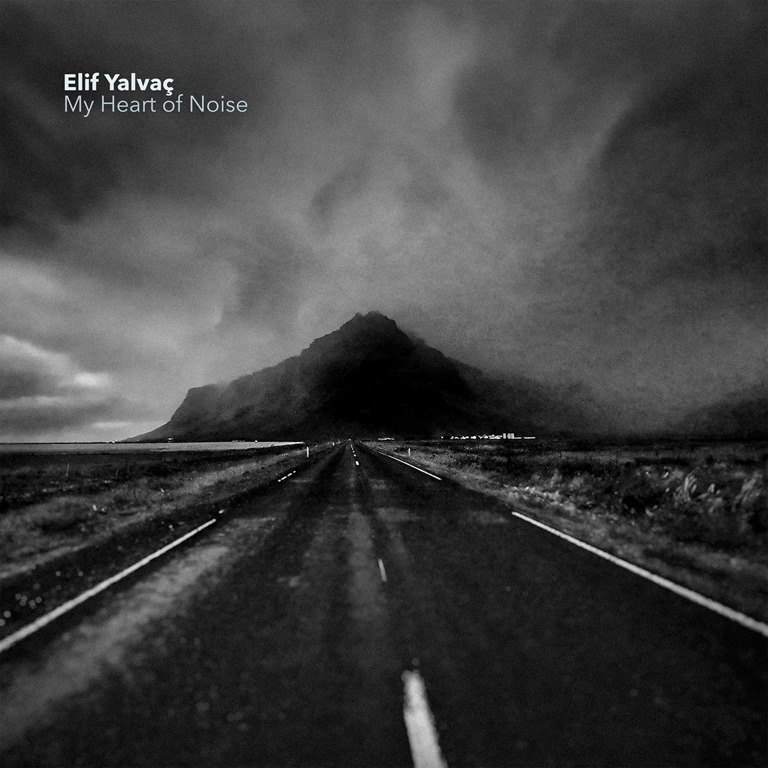
It’s clear that while the pandemic is officially over, collectively, we’re still very much coming to terms with it, and its aftermath. Lockdown, in particular, has had a deep psychological impact, on so many. Everyone’s experience was, and is, different, of course. I have friends who almost deny to themselves that it happened, that it was a dream or something, and for some of us, in some respects, it’s as though it never ended. This is how people deal with shock and trauma.

My Heart of Noise is not a pandemic album, a lockdown album, a post-trauma album, but as Elif explains, the album “began with a collection of studio and concert recordings from my travels north before the pandemic. It became like a puzzle: I could hear something special, but also that the pieces didn’t fit together well or feel complete. The breakthrough came in realising that this project was meant to be more about creation than preservation, and that it didn’t need to be a literal document any more. It could still be faithful, but instead to the spirit that inspired this music and my travels in the first place, instead of a particular recording. I created new musical starting points, and invited artists I met on my travels plus others, asking them to choose one to begin to work with together. Some artists incorporated our previous recordings, others set off in a new direction, while I shaped the pieces and found a way to connect them together.”

Recent history, then, is marked not as BC and AD, but BP and AP – before pandemic and after pandemic, and My Heart Of Noise reflects Yalvaç’s attempts to ‘make sense of a noisy world’. And the world is indeed, noisy, and difficult to articulate. There is simply too much noise too much happening all at once. It’s a perpetual sensory overload.

For this, her debut album, Elif Yalvaç involved a number of the people she encountered along the way of her journey, and the title also references this, the way she became the hub in a collective process.

The collaborative aspect means that each track does have a slightly different feel, despite all being centred around eerie ambient soundscapes.

‘Orchestra of Light’, the album’s first track, is a layered composition of dronies and hums and whispers which drift and swirl around some of the mind’s darker recesses. The textures and tones rub against one another and the edges aren’t all smooth, with buzzes and barbed, drilling sounds grating against the grain, meaning there’s a certain friction, a tension, creating a sense of discomfort.

‘Gate Check’, which follows, is softer, but the notes bend and twist and the supple, mellow tones are spun with a sense of the awkward and the uncanny, but nothing so warped as ‘Mielmaisema’, with its collage of human vocalisations and clunking clumps of thuds and thumps Amid whirls and crackles and hums, from which grinding groans of decaying Krautrock creak. It may be less than five minutes in duration but it packs a lot of shiversome strangeness into its short space, in which even chirruping birdsong feels somehow unsettling.

My Heart of Noise is not an overtly collage-based album, but it does assemble many sources and sounds, and often overlaps and overlays them to disquieting effect, and I’m at times reminded of vintage sci-fi and the BBC Radiophonic Workshop.

‘Cloud Score’ sits somewhere between post-rock and classic drifting ambience, while seven-minute closer ‘Taiga II’ very much feels like the lifting of the clouds and the breaking into light, but at the same time feels like a storm building on the horizon, and ‘Dronasaurus’ indicates that it’s not 100% serious 100% of the time.

My Heart of Noise is a restless work, one which ventures and explores, and never for a moment settles into comfort or conformity. It is not an easy album: whenever things feel like they’re settling into something nice, a cloud of disruption and difficulty will drift over and raise a shiver. You can never really settle or feel at ease with My Heart of Noise – but as a representation off life in the world as is, this is a fair summary. Keep your eyes and ears open: there is always something around the corner.

AA

a3629223309_10

Front & Follow – 14th April 2023

Christopher Nosnibor

These are shit times to be alive in Shit Britain, UK Grim: having taken back our borders, this green and pleasant isle is floating in a sea of shit – literal shit – that we’ve pumped out onto our beaches for our domestic holidaymakers to swim in, and we have 16-hour quest to leave the country to go on holiday for those who want to escape for a bit – damn those French bastards for checking the passports off non-EU visitors. But hey, at least we got rid of all of those foreigners working on coffee shops and bars for minimum wage and those doctors from overseas, right?

And yet, while the cost of living is spiralling, major corporations – and not just energy providers – continue to push up prices, not to cover the cost of paying their workers, but to preserve profit margins. It’s not that they can’t afford to increase wages, they simply won’t because capitalism is built on maximising profit. Fuck the staff, look after the shareholders. And of course, rent continues to rocket: landlords, too, need to protect their rental yields

An investigation undertaken in behalf of The Guardian late in 2022 found that ‘asking rents on new listings are up by almost a third since 2019, and some people are facing increases of up to 60%. Prices in 48 council areas are now classed by the Office for National Statistics as unaffordable when compared with average wages’.

The trouble is, capitalism is based on exploitation, and invariably, the wealthy become wealthy and grow their wealth through the exploitation of the less wealthy.

There is an irony here: in nature, the most successful parasites achieve a symbiotic relationship with their host. Under capitalism, the parasites seem determined to kill the host (the poor) on the premise that there will always be more. But then, the same is true of the human relationship with the planet: only, the resources are finite and there isn’t another planet, so we’re fucked.

The accompanying text pulls no punches in explaining the context:

“As we travel further into the year of our overlord 2023, the cold snap that had enveloped the country no longer seems to mock us as we struggle to complete the simplest of daily tasks. With public services at a standstill as the people actually doing the jobs fight tooth and nail for honest payment and work prospects, the rest of us eke out a little more of the heat reserve to keep us going as the ice finally begins to thaw. But the Rental Yields do not stop. The opportunity to make hay while the sun refuses to shine carries on as if no one was suffering. The money continues to be made and the towers in space continue to be built. Dark shadows now dominate the skyline of a city that has been forgotten to the wishes and demands of the few. Some will say this is the progress promised by those in charge of levelling up. But many others will suffer as the bankrolls of the rental yielders grow ever fatter. Still, the spring brings promises of its own.”

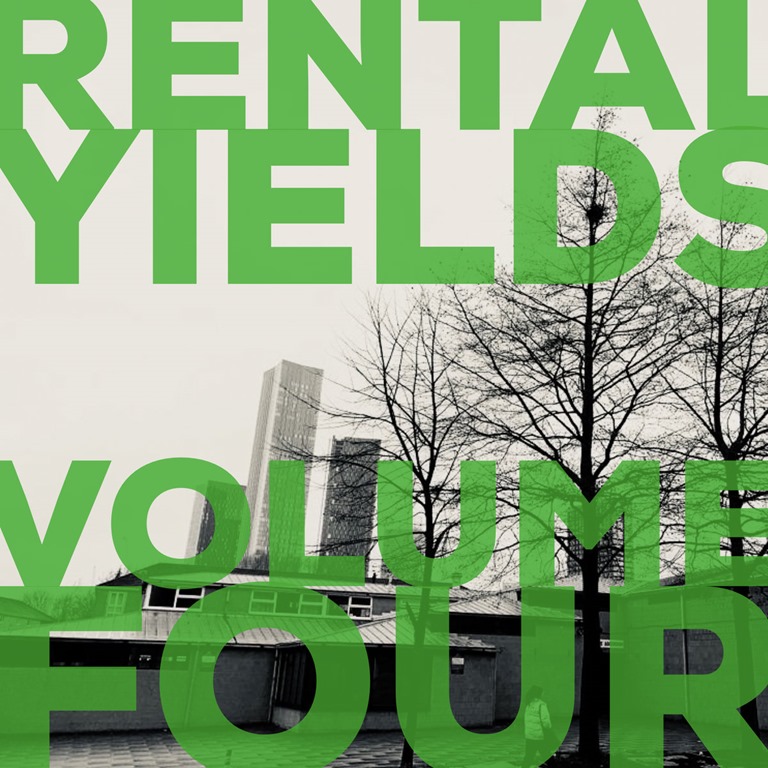
What makes life in this endless torrent of shit in which we’re all sinking is that there are some people who aren’t cunts, and who go out of their way to make the quality of life better for others, as well as themselves. The guys who run Front & Follow are among them, as are the many, many artists who have contributed to the Rental Yields compilation series, of which this is the fourth, showcasing tracks by myriad underground acts, remixed by myriads more in an exercise in infinite cross-pollination.

Featuring 26 new tracks and 52 artists, all money raised from this release will go to SPIN (Supporting People in Need), whose purpose is to feed, shelter, clothe and generally support the homeless and people in need of Greater Manchester.

As with the previous instalments, Volume 4, is very much geared towards ambient and more sedate electronica. With so many tracks and such an epic duration, and given the nature of the material, Volume 4 is a wonderfully immersive experience.

The overall quality is, again, excellent – meaning it’s consistently great across the duration and there’s nothing that makes you feel inclined to hit skip. There are, as always some names that leap out for a range of reasons: Kemper Norton. Yol, Omnibadger, The Incidental Crack, Field Lines Cartographer, Sone Institute – but the main point of this is not the names, but the merits of collaboration and collectivism.

Some tracks do stand out, notably ‘Acid Bath’ by BMH vs Lenina for it’s pumping beat, and CuSi Sound vs Robbie Elizee’s ‘I’m Not A Tourist, I Live Here’ for its overt wibbly synth weirdness, for starters. ‘The Enamel Hamper’ by Cahn Ingold Prelog vs The Ephemeral Man is a nine-and-a-half-minute dark psychological drift, while Omnibadger vs Grey Frequency’s ‘Speeding Ground (Part iii)’ is a glitchy, collaged morass of disorientation, with layers of noise, tribal drumming, and disembodied vocals, and ‘Home on the Whalley Range’ by Opium Harlots vs Yellow6 combines dark ambient, murky noise, and a hint of The Cure’s ‘Pornography’ to forge something intensely claustrophobic.

Solo1 vs yol’s ‘Black Spoons And Crosses’ is a collision of ambience and noise that will twist your brain, and the sonorous drones of Laica vs Learn to Swim’s ‘High Yields, Low Prospects’ is a doomy post-punk affair with an agitated drum machine hammering away amidst a sea of murk, and both the title and sound encapsulate the sentiment and the message of the album as a whole.

It is, once again, a triumph, not only artistically, but socially: the Rental Yields series is the epitome of community. And while our government speaks of community while acting in every way to destroy it, promoting division by every means, and social media has become a warzone whereby the goal is achieved, musicians are showing the way. This, this is how we will survive the shit and create a better future.

AA

a0601616053_10

Room40 – 14th March 2023

Christopher Nosnibor

You might describe this as a ‘technical’ album. I certainly would. Because much as it’s constructed using field records, the methodology behind it is, quite simply, not that straightforward straightforward. It’s not a guy with a mic wandering around capturing sounds from spaces, that’s for certain.

The accompanying notes explain that ‘Atmospheres and Disturbances registers the changes in high altitude ecologies caused by increasing global temperatures. The composition is based on field work undertaken at the High-Altitude Research Station at Jungfraujoch, Switzerland where for four weeks I deployed various recording devices around the station, and in the surrounding alpine environment to register natural, anthropogenic and geophysical forces. The project provides new encounters of an endangered alpine environment to enhance the way we perceive and engage with notions of place, community, and environmental dissonance.’

This, then, isn’t simple field recording, but environmental work, and the five pieces capture different aspects of environmental and ecological conditions. You may shrug and say ‘meh, weather’, but Atmospheres and Disturbances really captures just how affecting these are on our everyday existence.

It’s a perpetual joke that it’s the favourite topic of conversation for the British, but the fact is, meteorological conditions rule human lives; all agriculture is centred around the weather, our ability to travel is dictated by it. Tell me your mood isn’t affected by it.

Atmospheres and Disturbances is, then, very much a mood album, among other things.

For the most part, the fifteen minute ‘Wind’ which opens the album is subtle and simple, a recording of gusts as they rustle and buffet. It’s a relentless turbulence, a roar like a rough ocean, and it fills your ears and crowds your mind. While a windy day can be an annoyance or a source of irritation, there is always an element – no pun intended – of threat when it comes to winds, of damage even devastation. Around nine minutes in, things are building in volume and force, and it sounds like a barrelling blast hammering at a corrugated iron roof, rain, snapping twigs, and the tension is high as a storm rages. There’s something – not unreasonably – rooted deep in our psyche that finds storms a source of fear or excitement, or a combination of thew two, like a horror movie. Listening to this track, it’s all in there.

‘Stations’ begins with a gurgling trickle of water before a low00flying plane engine sound obliterates it, and cracks and thuds and slams coalesce to create a percussive force amidst fizzing electronic crackles and pops. Metallic crashes call to mind Einstürzende Neubauten, before more dense noise begins to blast and we’re dragged into a mechanical drone, the throbbing heart of the generators and mechanics of the station itself.

The remaining tracks are shorter – less than eight minutes apiece – but are darkly dense, blurring nature and machinery into a droning discomfiture. ‘Melt’ sounds very like the beginning of ‘Stations; but with additional disruptions and disturbances, thunderous roars and torrential rain. And, of course, one can’t help but feel that this is the literal soundtrack to global climate change, and with this comes a further reminder that we are, indeed, doomed.

I don’t say this for drama or hyperbole. It does seem to be pretty much established now: it’s simply a question of how quickly Venice will be sunk and the sea will swallow half of Britain.

It’s likely not Philip Samartzis’ intention that my mood should plummet as the album progresses. There is a sense that for all of its industrial bleakness and whirring machines and roaring engines and howling precipitation, Atmospheres and Disturbances is designed primarily as a documentary work, but, in context, it’s a documentary with a message.

As gusts roar through ‘valley’ in the wake of cracking thunder and drag chanking notes in its wake, the lingering experience is one of disquiet and discomfort.

AA

RM4202_front

Keplar Keplar – 3rd March 2023

Christopher Nosnibor

However much you think you know about music, there is always more to learn. And so it transpired that Holo was first released in 1998 and is ‘one of those rare records that managed to carve out a niche of its own while also building bridges to variety of genres like Chicago-style post-rock, the ambient mysticism of projects like Rapoon or the music made at the intersection of shoegaze, and electronic music in the late 1990s.’

Where have I been? Living in a cultural vacuum? Hardly. And yet this is my first encounter with KILN. And I’ve not heard of Rapoon and have no knowledge of Chicago-style post-rock either. Chicago house, I’m aware of, but… well, I daresay I’m not alone, and so this reissue off Holo may well prove to provide an introduction, and an entry point to the trio’s supposedly niche-carving brand of ambience.

It’s an album that’s rich in detail and texture, from clanking, clattering tin can percussion and big sweeps of amorphous sonic clouds that wash and crash in waves.

It’s hard to decipher precisely what’s what – is that a didgeridoo or just a digital drone? It’s impossible to unravel the layers and determine the individual sources as glugs and gurgles slide in between soft dulcimer-like notes and easy beats that bubble between all kinds of textures and tones which drift and slide and groan and drone in and out of the ever-shifting fabric of this fascinating album. Guitars and extraneous sounds flit and flicker in and out while instant drums nag and boom. At times it’s new age, at times it’s more tribal, and Holo pushes ambience in numerous directions.

There are segments – interludes, breaks, fragments – where this is a catalogue of challenging source materials melted together. At others, it’s altogether less challenging and simply washes of you in a soft breeze.

For an album that’s so chilled, there is much happening on Holo¸ and as much as it is an album to chill to, first and foremost it’s an album to explore.

AA

KeplarRev13LP_front

14th February 2023

Christopher Nosnibor

Having first encountered Deborah performing as one half of dark ambient noise duo Spore, I’ve discovered she’s nothing if not prolific, and having hit the classical charts with one recent album and released not one, but two new albums in the last few weeks, it’s hard to keep up, not only with her vast output but the stylistic range. Daughters Of The Industrialists is one of those new albums, and one which again presents a very different musical face.

Daughters Of The Industrialists couldn’t be further from the sound of Spore. The track tiles radiate a glowing warmth which translate in their sound, too. The first of the album’s ten compositions, ‘Sparkle’ does exactly that, a soft a mellow sonic hue rippling in slow waves and gradual washes, and ‘Angel’ is every bit as delicate and skyward-facing as you might expect. The same goes for ‘Dazzle’, a composition which exudes tranquil, calm, and soothing vibes but becomes increasingly busy, hinting at both 80s electronica and the vintage sounds of Kraftwerk and Tangerine Dream.

With no accompanying verbiage, Daughters Of The Industrialists is an album which very must stand to speak for itself. And it’s an album with sonic range and one which stretches out in many directions. A number of the compositions have been released previously as standalone singles via Bandcamp, including the ponderous, reflective ‘Mothtail’ a slow and wistful work built around drones and a swelling digital breeze – but collected here into an album context, everything fits into place with a sense of unity and coherence, with the majority of the pieces being concisely contained between three to four minutes in duration, meaning nothing feels overdone or stretched out to outstay its welcome.

‘Pixel Eye’ possesses space-age qualities despite its having been forged while rooted the spot, and there is much activity here.

‘Orange’ is sparse and contemplative, and while the flickering, misty ambience of ‘Callisto’ and Orb-like bleepery of ‘Waning Moon’ set their sights on the vast expanses of space, what really stands out is their organic feel, a sense of connecting with nature as well as the cosmos. It’s this sense of being attuned to the natural world and its cycles, and of being at one with the earth and in turn the space beyond that feeds through the six-and-a-half-minute closer, ‘Crystal Rain’. Here, slow, turning drones intertwine in a slice of truly classic ambience, and it’s so very soothing, and conveys a sense of vastness, of space. And in doing so, the album concludes by transporting the listener somewhere beyond the confines of four walls and reminds us that there is something outside, and beyond. Go, explore.

AA

a2647674050_10

Front & Follow – 25th November 2022

Christopher Nosnibor

Longtime Aural Aggro faves Front & Follow have delivered the third in their series of truly immense Rental Yields compilations, with another twenty-five tracks of remixed works which showcase the community spirit they espouse as a label and among those in its orbit.

They describe it as ‘a multi-release collaboration project raising money to tackle homelessness in Manchester… Inspired (if that’s the right word – perhaps ‘motivated’…) by our current housing system, the project encourages artists to steal (or borrow, nicely) from another artist to create their own new track – in the process producing HIGH RENTAL YIELDS. Over 100 artists are now involved (the spreadsheet is fun), each one tasked with creating a new track from the sounds created by someone else – we are then collating the tracks and releasing them over the course of the next year.’

Some would describe the project as ambitious, others as simply crackers, and it’s likely both in equal measure, but this is why we love F&F. That, and the fact that they seem of have a knack for attracting and releasing interesting artists who exist far beyond the peripheries of any kid of commercial radar (or even most alternative radars).

This compilation really does make the most of the medium: unrestrained by the limits of vinyl, cassette or CD, and has a playing time of about a week. Yes, I exaggerate, but the point is, each contribution is the length it needs to be, or the artist feels it ought to be, rather than cut or constrained, meaning that while a fair few pieces sit around the five minute mark, the Decommissioned Forests vs Pulselovers rendition of ‘Rental Yields’ runs for nine minutes and forty-four seconds, ahead of the ten-minute workout that is IVY NOSTRUM vs The Snaps Jar’s ‘AND MONEY LESS’ and a few other six- and seven-minute monsters.

But what is time, anyway, and what’s it for? As much as it’s a measure of time, it’s a tool by which lives are ordered, limited, constrained, controlled. The vast majority are paid work by the hour, not by output, and time on the clock is not your time, but your employer’s. You don’t own your time, and you don’t own your space, and you give your time to some company who profit from your time and output in order to pay for a roof over your head, a space to eat and sleep, for the profit of a landlord or a bank you owe tens, even hundreds of thousands.

How often do you hear people shrug about their shit jobs saying ‘well, it pays the rent’. Imagine lying on your deathbed, reflecting on a lifetime of drudgery to say ‘I paid the rent’, while your landlord’s spent their life living it up in restaurants and on overseas holidays and celebrating their success because you’ve paid their rent too.

Audio Obscura VS Secret Nuclear’s ‘Vacant Period’ opens the album with an apposite sample from a TV show discussing gross and net yield before embarking on a glitchy, flickering journey of droning industrial Krautrock, and paves the way for an extensive and magnificent-curated collection of variant forms of ambience. Pettaluck Vs Giant Head’s ‘Dot to Dot’ is disorientation yet soothing and hypnotic – and fucking strange. But we like strange, and Front & Follow provide plenty.

If it’s a long, long listening journey of crackling stating, looming darkness, bleeps, bloops, and extraneous noise intercut with snippets of radio, film, and TV, and ultimately forges an immense intertext of sources.

Sometimes it’s swampy, eerie, tense, others it’s quite mellow and finds a subtle groove, but Rental Yields is unyieldingly brilliant, both in terms of range and quality. And you really can’t go wrong for a fiver – the worthy cause is simply a bonus.

a2023857748_10

2nd September 2022

Christopher Nosnibor

UK duo Thraa consists of Sally Mason and Andi Jackson, whose bio states that ‘Working without the constrictions of a traditionally structured song, this duo improvise around meditative drones, combining Sunn 0))) influenced guitars with soaring vocals. Making single take recordings, they capture an organic sense of sound that has cavernous textures with minimalism at heart.’

In some respects, this debut EP brings us full-circle in terms of drone evolution, and it’s fitting in the most appropriate, and planetary sense. The most successful and celebrated purveyors of drone, Sunn O))) famously took their moniker as a reference to drone/ doom progenitors Earth, who will, in certain circles, be forever remembered for the tectonic grind of their epic second album, Earth 2, from 1993, which contains just three tracks spanning some seventy-three minutes, with nothing but guitar and bass feedback stretching out, crunching along at a glacial pace and carrying the weight of entire continents. It’s hard to believe that this release will ever be surpassed for all that it is, with two of the three tracks stretching out around the half-hour mark with no shape or form, only an endless, grating, grumbling grind. Into Earth connotes a return to base material, a slow collapse, even a decay into compost form, but also hints at a sonic slide toward this territory carved out by the original and definitive drone act some twenty-nine years ago.

Thraa intimidated at the shape of things to come in June with the release of ‘Move Among Them’, which is the first of the EP’s four tracks. It’s swampy, sparse, beginning with an awkward, gurgling, wheezing, a kind of tentative snuffling grunt in the bass region before soaring, sculpted feedback howls and churns metallic—tinged clouds of scraping ambience. It probably sounds like a contradiction on paper, but hear me out: the screeding layers blur into a whirl without definition and tumble into a vortex of abstraction, and in doing so, create the sound closest to that early Earth whorling wall I’ve heard from any other band.

The title track lacks even more overt form, spurs of guitar feedback screeching as it breaks loose from the dense, rippling wall of undifferentiated noise. There are strong elements of Metal Machine Music here, but it’s around the midpoint that a slow, rhythmic piano emerges, along with a haunting understated vocal from Sally that’s half-buried beneath the noise of explosions and / or tidal waves. It’s both dolorous and ethereal, and BIG | BRAVE comparisons aren’t out of place here, either.

Everything coalesces after the subdued scrape and low-end rumblings of ‘Elgon’ on the seventeen-minute finale ‘Over Warm Stones’. Nothing different happens as such: there is only more, in terms of duration, and in terms of atmosphere. The snaking, rattling notes that swell and shimmer provide a sparse, textured backdrop to a quivering, evocative vocal performance.

Into Earth may not offer anything new, per se, but does provide a strong contribution to the canon of emotive, evocative ambient drone / doom which features vocal, which in this instance are essential to the experience, and it’s an experience which is compelling, immersive, heavy as hell and at the same time heavenly, before it collapses into a landslide of feedback that stretches out to the horizon.

aa

a3764076389_10

Dret Skivor – 5th August 2022

Christopher Nosnibor

In typical Dret style, the accompanying notes are brief and to the point; functional, you may say.

As such, we know nothing of either AU or FDO as individuals – if indeed they are – of their previous works or methods, but then, nor to we need to in order to address the release at hand. ‘When analogue electronic drone meets toy keyboard drone, the results are this.’

‘This’ being a forty-three minute piece of continuous drone. Not that it’s all just one long drone: it’s multiple drones that hang and hover in layers. Despite its lack of overt structure or form, there are clear distinctions and a strong separation between the different layers, that, unexpectedly – and whether intentional or not – bring something of a conventional musicality to proceedings, with a distinct ‘lower’ drone overlaid with a higher ‘lead’ drone, as well as incidental moments of discord and dissonance as the shifting tones interact with one another. And, as the piece progresses, so the pitches change, and consequently, so do the moods. At first comparatively calm and tranquil, the tension rises over time.

Shrill wraith-like whispers flit through a darkening atmosphere as the lower drone begins to thicken and swell in density and volume and the overall sounds grows murkier, forging a more sinister, ominous feel.

Over time – and here, time feels like a vague concept, where seconds stall and minutes moderate and ultimately swing in suspension, slowing, until reaching a point around twenty-five minutes in where nothing moves and a perfect stasis is reached. The interweaving drones remain locked, and there is no movement. Life itself has stopped and the listener finds themselves frozen, like an insect set in amber to be preserved for all eternity. And here – here – the urge for any form of transition or trajectory abates, simply sliding away along with even the desire to move.

Somewhere along the way, you simply forget you exist and the sound becomes everything, and yet, simultaneously, it fades into the background as you find yourself in a fugue-like state, entranced, and barely notice when it ends.

AA

a2685101601_10