Posts Tagged ‘Album Review’

Tensheds Music – 6th December 2019

Christopher Nosnibor

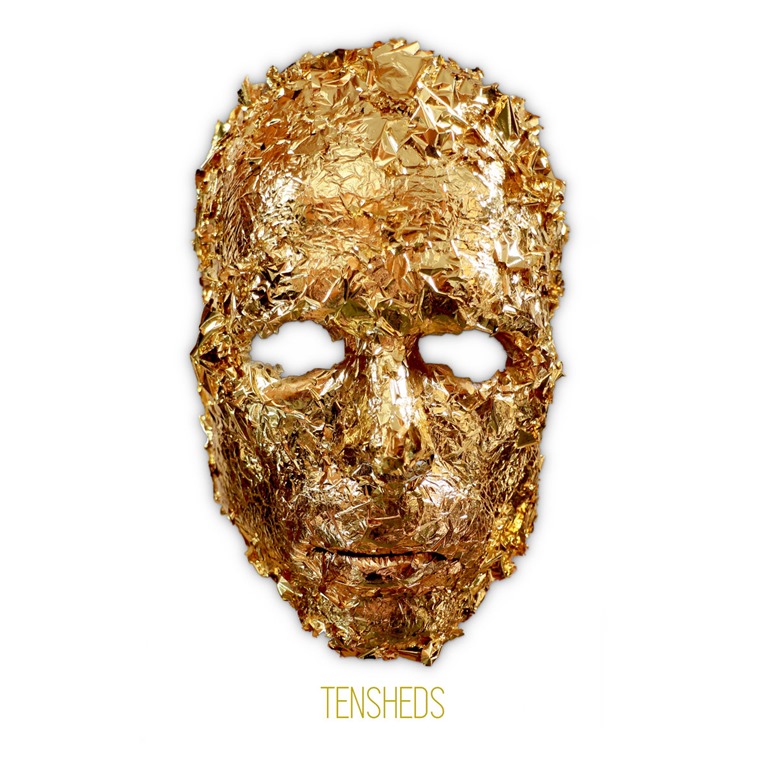
Having caught Tensheds live back in 2018 and been impressed by their gritty yet flamboyant sound, the arrival of an album in the form of Deathrow Disco promised to be good news. And it really is.

No guitars. No synths. No bass. Just a Rhodes organ. And some drums. Written in three days and recorded in three more, Deathrow Disco packs an immediacy without being lo-fi in a way that’s detrimental. However, everything is upfront and direct and cranked up, delivering maximum impact with a sense of urgency.

Everything fits together perfectly, and it all serves to showcase Matt Millership’s distinctive voice. The guy’s got more gravel than Jewson’s. And while that sand-blasted larynx is used to growl out mangled blued-based songs, he’s no predictable Tom Waits rip-off like so any others. Lead single and opening track ‘Youngbloods’ packs some flamboyant keys of a grandeur worthy of Muse or Yes, but pins the trilling tones go a stomping rhythm.

Second single cut ‘Gold Tooth’ is a grainy glammy blues boogie, but sonically, it’s a collision of The Doors at their swaggering badass baddest with Suicide, mining a relentless groove with a swirling Hammond that’s been mangled and

Then again, ‘Slag’ is more like a synth Mötörhead, only with some piano thrown into the mix. ‘Deathrow Disco’ combines immense theatricality with full-blooded rock ‘n’ roll, and elsewhere, ‘Black Blood’ goes prog and at the same times reveals a softer, more sensitive side, and ‘Troubleshooter’ inches toward lighter-waving anthem territory, or maybe would without the bitter heartbreak lyrics.

Deathrow Disco is varied, and largely uptempo and big on boppable grooves, but make no mistake, Tensheds have a highly distinctive style that works well, and makes optimal use of minimal kit.

AA

Tensheds - Deathrow Disco

Sound In Silence – 9th January 2020

Christopher Nosnibor

Fifteen years on from initiating worriedaboutsatan, Gavin Miller resumes work under the moniker as a solo performer once more. During that time, there have been lengthy breaks, solo releases and side projects, and five albums along the way, all of which featured Thomas Ragsdale. As a duo, it was always apparent that each of them brought something very different to the table, and on paper, the differences probably just shouldn’t work, with Ragsdale’s more beat-centric style seemingly at odds with Miller’s introspective post-rock / ambient stylings. But work it did, and incredibly well. The sound evolved over time, too, from the stuttering microbeats that characterised Arrivals to the up-front booming dance grooves particularly prominent in their later live sets, worriedaboutsatan developed, but remained distinctive.

So what impact Ragsdale’s departure to focus on his solo endeavours?

Pleasingly, Crystalline still has that je ne sais quoi that’s uniquely worriedaboutsatan, despite the contrasts being less pronounced, as Miller pursues the more ambient direction that defined Revenant and Blank Tape. The eight pieces coalesce as a whole to create an album that’s mellow and subtle, with reverby guitar notes chiming out into soft washes of ambient synth. It is predominantly background in its positioning: Crystalline isn’t an album where anything leaps out and grabs the attention, there are no peaks or troughs, and the whole thing more or les drifts by on a certain level that registers low on the concentration meter. That’s not a criticism, but a personal observation on its function as a musical work: it supplements the mood and occupies a space in an understated fashion, and is something that can be played while you’re working or reading. By the same token, that doesn’t make it ‘forgettable’ or mean it isn’t worthy of attentive listening: Miller has constructed some magnificently layered compositions, and while the overall sensation emanates from broad washes of sound that could be described as impressionistic, there is considerable detail beneath the surface.

The forms are vague and vaporous, the individual instruments indistinct, but this changes on penultimate track, ‘Secretly’, where the guitar becomes clearer and more ‘guitary’, and judders as the echoes take over the notes, creating a doubling effect as the picked strings stop and stutter against a heartbeat pulse of a beat.

The album closes with the mournful drones of ‘Switching Off’: sparse, spaced out, blank in their connotations before a swell of overloaded feedback begins to rise in the loudest, most abrasive moment on the album, before it’s suddenly cut dead. Thank you, and good night.

The suddenness of this ending is unexpected, and breaks the suspension of time that the preceding half hour of amorphous sound punctuated by barely-there beats has created. It’s a jolt, and you’re back in the room.

AA

worriedaboutsatan – Crystalline

Christopher Nosnibor

Two Acorns – 2A16 – DL release date: Out Now / CD release date: 6th March 2019

Celer’s Future Predictions is a vast and ambitious work: spanning four discs, it’s an ambient exploration on a truly grand scale. Each disc contains a single longform track, each running at around half an hour, with the shortest, ‘No Sleep in Medan’ clocking in at 27’30”, and the longest, ‘Nothing Will Change’ 42’36”.

According to the write-up, the compositions are made with ‘tape loops, from digital and acoustic instruments, field recordings and foley sounds’, and ‘with a focus on introspection and imagination, each piece begins with all layers playing, with minimal additional long-term structural development in order to maintain a state’. There’s a conceptual lineage here, if not an auditory one: Future Predictions is the follow-up to 2018’s Memory Repetitions which was based on memory and the interpretation of it over time. Future Predictions, we learn, ‘is instead based on the idea of future situations, and should be seen as a meditation on future events’.

While the various elements of tape loops and various instruments are indistinguishable, combining in their simultaneity to create soft, supple sonic washes, hovering drones interweaving interminably, the overall effect is incredibly immersive.

The first of the four, ‘Merita’ is light, drifting like mist over dewy expanses of grassland at sunrise, and while I initially find myself waiting for some progression, expecting some transitional shift, after a time the stasis becomes the end in itself.

‘No Sleep’ inches into darker territory, with deeper, rumbling low notes but after a few minutes this sense of difference dissipates in the drift of elongated notes that have no clear definition, no forward trajectory, no overt sense of movement, but instead hover and hang in the air for all time. ‘Quaraous’ brings new layers, new tones, new, shades, a shimmering light and swell of organ to the proceedings, and for aa time it again feels different, but again, that difference fades over the course of half an hour of sameness.

The effects of Future Predictions are cumulative. It’s true that on a purely practical level, few, if any, are likely to listen to all four discs or digital files in succession, although it’s in this context of continuous play that it works best. Admittedly, this is not music to listen to, but to allow to drift by. You don’t listen: you feel it and on a subconscious level as you drift, and you let life happen and continue as normal. I read and replied to texts and emails, while the sound swelled and hummed in eternal undulations. They didn’t transport me anywhere, they didn’t ‘do’ anything. And yet, inducing a certain sense of sedation, of slowness, of tranquillity, they achieved everything.

AA

Celer

OUS – OUS027 – 7th February 2020

Christopher Nosnibor

The accompanying text reports that Bit-Tuner’s seventh album, EXO ‘marks a milestone in his work’ and tells of how this ‘widescreen and beatless opus focusses on musical storytelling and atmospheric depth’.

EXO is unquestionably cinematic, with synth washes that are simultaneously soft and cloud-like, but achieve a density by their layering, and they conjure a breadth of sound, too, that evokes vast vistas that stretch from horizon to horizon. This isn’t ambient in the conventional sense, and while ‘beatless’ is a largely accurate description, it’s by no means formless, without rhythm, or without a certain sense of sensory attack. There’s a deceptive amount going on across the album’s eight pieces, and EXO is an album that doesn’t simply require attention, but demands it. This is not all wimpy, wispy sonic contrails that hang in the air: EXO has a certain solidity, depth, force that renders it anything but background. You can’t settle down and chill out to this, and while the musical storytelling may not be immediately apparent, the atmospheric depth is all-encompassing.

The prefatory single ‘Passage’ very much sets the tone, and on revisiting the piece here, it’s apparent just how much the mewling top-line, that semi-resembles a lost, plaintive seagull lost in the sweeping swathes provides a contrast and focus: this is an ambient work with intense focus, and, despite the absence of beats, a strong focus on rhythm. Then, ‘Valve’ pulses and throbs and crackles with distortion and decay around the edges and while it’s expansive, it’s also probing inwards toward the depths of the listener’s psyche. This isn’t music you can just leave running in the background: it continually grabs you and draws you in, demanding attention. And at times, it’s downright difficult and edgy.

‘Disbander’ pulses and grinds, low-end hums undulate and swoop into subsonics while mid-range interference collides against thumps and crackles and upper-frequency skitters and flits. There’s a lot going on, and while it’s anything but dark, it is incredibly tense: if you equate ambient with gentle, soft, and soothing, think again. ‘Ghost Light’ hits something of a Tangerine Dream stride, and electronic blips approximating beats coalesce to create a rhythmic structure that pulsates and throbs.

So is this ambient? It certainly doesn’t conform to the notion that it’s unobtrusive, or in an way calming, or soothing, and any contemplation encouraged here is rent with challenges. How does it make you feel? Ambience is so often geared toward the cerebral, but there’s a physicality to EXO, however subtle and subliminal: there are textures that make your skin crawl, tonalities than make you twitch, tense, and tingle.

AA

OUS027_front

KSCOPE – 7th February 2020

James Wells

Inescapable is Godsticks’ fifth studio album, and on it, the central focus is emotion. The accompanying blurb reports how the band ‘found themselves wanting a definitive theme running through Inescapable, without turning it into a concept album, of being more open, more personal and ultimately one that shines an inquisitive light on Charles’s struggle with inner demons which gave the songs a new level of intimacy’.

The first and most striking thing about Inescapable is its range. Opening with lead single ‘Denigrate’ which features TesseracT’s Daniel Tompkins, Inescapable announces its arrival in strong style, and not for the last time am I reminded of Alice in Chains – not because they sound like them so much, as the way they weave their melodies and vocal harmonies, the drawling, elongated vowels, and squirming darkness in the chords themselves: metal that’s not metal.

The nine-minute ‘Change’ slows the tempo and ups the angst, before the pairing of ‘Breathe’ and ‘Time’, both of which are altogether more succinct, counterpart one another nicely, the former being delicately wrought, the latter packing some punch, with sinewy lead guitars and chunky riffage that drive the album to dynamic straight-up rock finish.

AA

Godsticks – Inescapable

Potomak – 31st January 2020

Christopher Nosnibor

hackedepicciotto is Alexander Hacke (Einsturzende Neubauten) and Danielle de Picciotto (Crime & The City Solution), and The Current is their fourth album It’s pitched as being ‘their most powerful album yet,’ and the press release explains that ‘after composing desert drones for their previous album Perseverantia and dark foreboding melodies for Menetekel, their new album moves forwards, gaining in speed and energy’.

The energy is abundant, but it’s dark and flows in subterranean currents. Recorded in Blackpool, of all places, there is little sense of illumination in a work that’s dominated by shadow, although that’s by no means a criticism.

‘All people / are created equal’ de Picciotto announces in a stilted monotone which echoes out across a bleak and solemn soundscape of atmospheric, picked guitar and dramatic strings which glide and swoop over a swirl of electronic crackles, indistinguishable voices and dolorous bells. Over the course of the piece, she utters various permutations of the phrase, revealing new meanings with each arrangement.

There is very much an exploratory feel to The Current: this is not an overtly linear work, or an album comprised of songs in the conventional sense. These are eleven distinct ‘pieces’ which are more spoken word / narrative works with music than anything, although this misrepresents the fact the words and sounds are very much equal in their billing. And yet there is a sense of progression, as the rhythms become stronger, more forceful, and more dominant as the album progresses.

‘Onwards’ plunges downwards with a grating bass pitched against a relentlessly rolling rhythm; ethereal, choral vocal harmonies and cold, cold synths forge an unusual juxtaposition, and the result is powerful, stirring deep-seated emotions that swell in the chest as the energy rises.

In contrast, ‘Metal Hell’ goes post-industrial with metallic clattering an scraping disrupting a choppy, processed guitar riff that cuts a murky path over an arrhythmic mess of percussion, and the title track thunders a slow martial beat to build a grandly epic piece that conjures images of sweeping vistas dominated by rugged mountains and dense forests.

Things take a turn for the unsettling on ‘Petty Silver’, which finds de Picciotto writhe and wheeze in a sort of little girl lost voice against a backdrop of chiming xylophone and a heavy synth grind that’s pure Suicide. The penultimate track, ‘The Black Pool’ opens with a cluster of samples from news soundbites or similar about ow ‘the UK is fucked’ (fact, not an opinion) over some swirling ambient drone and a Michael Gira-esque monotone vocal trip

When the pair share vocal duties, Hacke’s cracked, grizzled growl is the perfect contrast to de Picciotto’s clean, airy yet tense and high-string delivery. And it’s the contrasts that make The Current: it isn’t any one thing, but a number of things simultaneously and while the rhythm section resonates deep and low, there’s lot going on at the front of the mix, and it’s this dynamic that gives the album a constant movement. To dissect it beyond this would be do damage the effect: The Current is an album that possesses a subtle force and brings submersion by stealth.

AA

hackedepicciotto – The Current

Fabrique Records FAB073 – 17th January 2020

Christopher Nosnibor

As the press text summarises, ‘Cusp is a collection of compositions taken from the soundtrack for the film STRESS by Florian Baron. The feature-length documentary gives voice to five young veterans, their experiences and trauma’. It was never going to be light or upbeat, and immediately, the sounds emanating from the speakers are unsettling, disturbing: blasts and reverberating crashes echo all around over slow, elongated drones, and ‘It’s Happening’ washes into the slow ebb and flow surges of synth that form ‘Them or Me’.

It may be good to talk, but those of us who haven’t been there simply cannot relate, cannot compute or comprehend the meaning, the pain, the anguish. It’s a world beyond and it would be a mistake and an insult to pretend otherwise. Anything, from sympathy to empathy feels like an underestimation and an undersale, a devaluement. Perhaps it’s an act of solipsism: the suffering in the mind of another is unknowable. This renders the territory Cusp and the film it soundtracks difficult on a number of levels.

Trauma is by no means entertainment, and while I haven’t seen the film, Irmirt’s handling is impressive in its subtlety, and it’s understandable why she was awarded the German Documentary Film Music Award in 2019. The jury remarked how in her soundtrack, she ‘dissolves the boundaries between sound design and musical composition in a virtuoso and at the same time self-evident way, thus creating a sound cosmos that, through uncompromising reduction, generates brutal knowledge.’

The best soundtracks are always understated, and compliment, rather than dominate the visuals they accompany, and Cusp, which takes fragments of the soundtrack as a whole – with eight tracks, half of which are only around the two-minute mark, this is a distillation of a broader experience, and it works well.

It is dark, unsettling, but nothing is overdone. And that’s why it works.

AA

Jana Irmirt - Cusp

Midira Records – MD080 – 13th December 2019

Christopher Nosnibor

It’s new year’s day, 2020. Like many, I’ve spent the last few weeks reflecting on the passing year: I usually do around this time, remembering where I was a year ago, two, three, five, ten years previous. Wondering precisely what I’ve got to show for it. that slow, sad, weight of nostalgia as the images captured in memories fade and curl around at the corners. Wondering: was I actually happier then, less prone to panic, or is this simply rose-tinting, psychological refuge in the comfort of the known, the life lived, rather than the fearful prospect of the unknown future? Such conflict, such dichotomy and dilemma.

And so, another year is indeed over, and here we are, staring into the void. Teetering on the brink of the abyss of a new decade in a post-fact, post-truth world where the capitalist world teeters on the brink of self-induced collapse and global climate catastrophe. And there is no success like failure.

We’ve failed as individuals, and as a species. The year is over… so what is there in prospect?

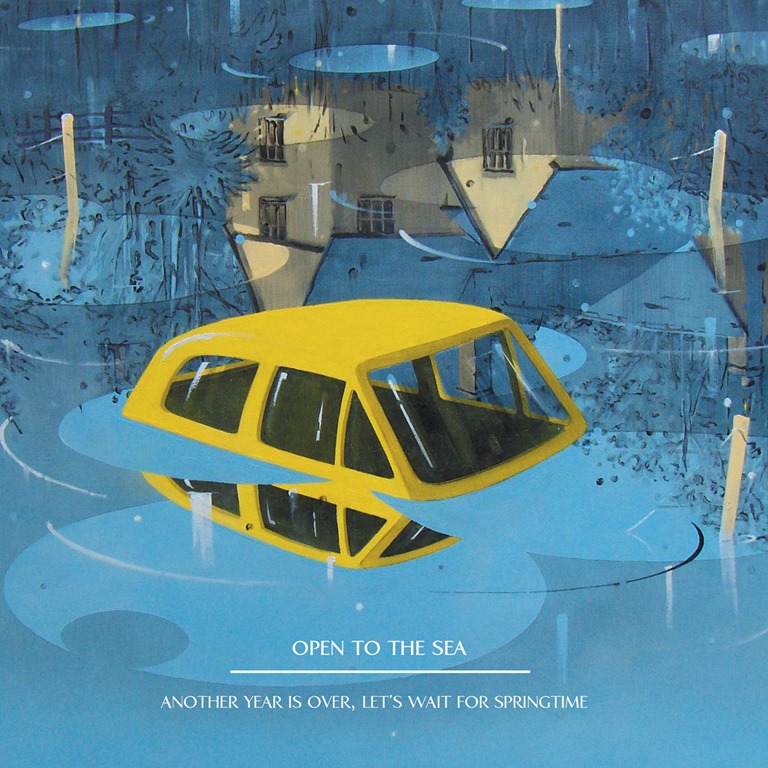
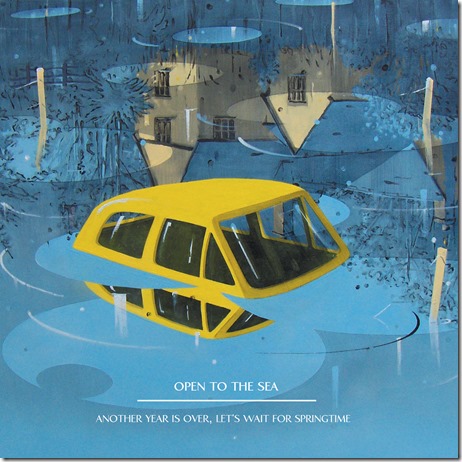
Open to the Sea’s new album, released late December provides the soothing backdrop to my existential strife, and it’s barely there for the most part. And yet, it’s there just enough: understated, yet still clearly stated.

The press release provides some useful insight into the album’s origins and its creators: ‘Open To The Sea is the collaboration project of Matteo Uggeri and Enrico Coniglio and Another Year Is Over is their second album. While Coniglio focusses on guitar, synths and other instruments, Uggeri adds samples and field recordings to create a soundcosmos full of tiny melodies and themes with appereance by some guest musicians on drums, trumpet and cello. That would make a perfect experimental ambient album with jazzy moments, but Uggeri & Coniglio push this release further by adding some vocals to most of the tracks by inviting guest singers like Dominic Appleton (This Mortal Coil) or Lau Nau from Finland.’

Minimal post-rock forged from sparse piano notes which drift into a rarefied air, spun with subtle, near-subliminal swirls of ambience, and stammering, glitching beats that hammer like a palpating heartbeat rattling in a tense ribcage, and picked guitar notes waft into the ether.

With different vocalists contributing to the various tracks, the tone and feel changes: ‘Heavy Like a Falling Leaf’ is soft, airy, yet poised, while ‘Uninvited Ghost’ and ‘Crystal Dog Barks’ feature a spoken word lyrical delivery, which in some respects changes both the dynamic and balance, and the function of the musical accompaniment, rendering the piece less a song and more of a narrative with instrumental backing.

‘Duduk Confession’ is hushed, brooding, with haunting strings and ominous hums lingering in the shadows, and on ‘Tapes and Cows Pt 1’, lonely brass wails softly over low notes to produce the most forlorn jazz imaginable. Scraping strings and frosty synth flickers accompany the deepest woe, which gradually evolves into warped space-age electro that melts into some warbling jazz trumpet.

The penultimate composition, ‘facing the waves’ is by far the most conventionally ‘songy’ of the ten, with a straight-ahead drum rhythm and solid piano providing the primary instrumentation on a whispy indie/shoegaze work. The fading refrain of ‘time now to start again’ is sung by a layered-up vocal set and, unexpectedly, Interpol come to mind.

The final song, ‘Another Year is Over, Let’s wait for Springtime’, with its whispering dialogue and soft dulcimer shimmers and soft, snowy strings that glide smoothly into the darkest corners, reminds me of my urge to hibernate, but also the fact that everything passes in time and everything is cyclical. Yesterday, today, tomorrow – they’re all points on a circle, and as linear as life lived is, as sure as birth and death, one year will follow the last, and so it will go on, whether we’re here or not.

AA
MD080_front

Panurus Productions – 22nd November 2019

Christopher Nosnibor

Newcastle-based cassette label Panurus really don’t have a particular house style, genre r aesthetic beyond releasing stuff that’s different and obscure. A lot of music that languishes in obscurity does so not because it’s not good, or even necessarily because it’s inaccessible, but because it simply doesn’t receive the ‘right’ exposure – or any at all.

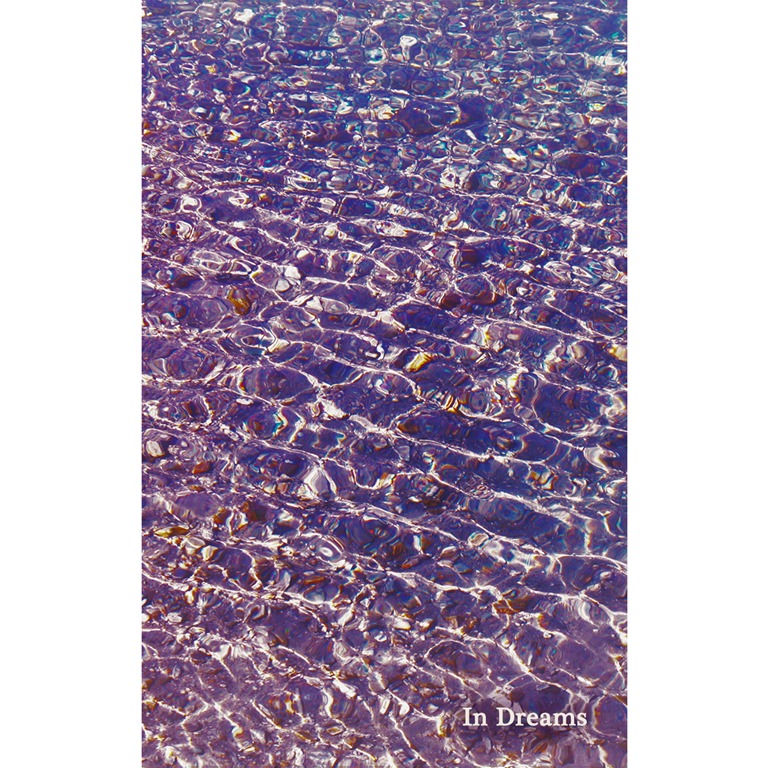
In Dreams is a sharp contrast with the last two Panurus releases, in the for of the ultra-harsh blackened hardcore torrent that was Mineshaft’s VENUM LUXDOR DISCOVERY SUPER NOVA and Whelmed, a deluge of sluge and nose courtesy of Lump Hammer and Bodies on Everest, in that it’s an electronic work that promises ‘a serene soak in this sonic pool – an oneiric rendition of water and submersion’.

The majority of the titles share an aquatic theme, and the albums ripples in gently with ‘Floating’. The soft, easy notes tinkle softly like summer rain on the surface of a kale, with a soothing effect. It segues seamlessly into the broader sonic wash of delicate hums which form ‘With the Tide.’ This is not the surge of waves breaking on rocky outcrops, but a steady, low-ebb lapping.

Deeper currents begin to build on ‘Awash’, and for the first time, there are hints of tension and an indication of the potential power a body of water may possess. This dissipates as the listener is carried almost subliminally into the otherworldly space of ‘Drifting Slowly’, a strange and almost silent sonic realm that calls to mind Blue Planet scenes, the serenity of the deep, a vast expanse occupied exclusively by strange and silent creatures. The final two compositions, ‘Out of Body’ and ‘Descent’ merge together in a soft, muffly suspension.

In Dreams is almost quintessential in its ambience, almost formless, the amorphous shapes impossible to capture or define. It’s undemanding, and it’s pleasant.

AA

cover

December 2019

Christopher Nosnibor

Ukranian industrial duo Kadaitcha, consisting of Andrii Kozhukhar and Yurii Samson, have stepped up a gear for their fourth album, Tar, which follows Southern Phlegm, which landed at the front end of the summer. It’s an expansion in every sense: sonically, it displays a broad palette, from barely-there ripples and clicks to all-out abrasion, with all shades in between, and with seven compositions, ranging from six-and-a-half to thirteen-and-a-half minutes in duration, there’s a lot of room in which to venture on an exploratory journey.

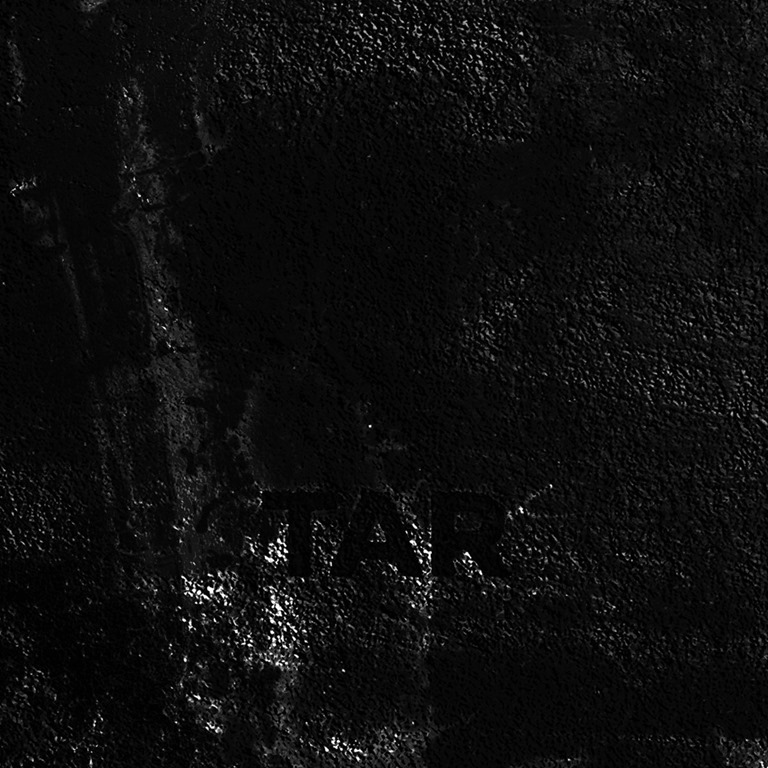
They describe Tar as their ‘most powerful and elaborate release so far’, and there’s a story of sort behind it, as Andrii explains: ‘[The] album cover is based on the images from the series APEIRON by Ukrainian photographer Maxim Dondiuk. It’s a series of scanned photo negatives found in the Chernobyl exclusion zone, which were remaining there lost and forgotten for over 30 years, being subject to radiation and forces of nature.’

The images, available on Dondiuk’s site are disturbing and otherly, and convey more about the horror of the Chernobyl catastrophe, an event on an environmental, ecological and human scale that still has yet to be fully assimilated and that has, globally, faded into the annals of time for many, than any narrative possibly could. Tar effectively provides a soundtrack to these images. The album has a discernible arc, which transitions and deteriorates into ever-deepening distortion and degradation.

Spacious, atmospheric electronic layers hover and cascade around sparse desert guitar twangs at the start of the first piece, ‘Idle Hands’, before mangled chords, overdriven and distorted, crash in. ‘2219 F’ also collides soft, semi-ambient soundscaping with crushing wall-of-noise guitar screes that come on like an avalanche and devastate everything in their wake. And yet things are only just beginning to take shape: this only foreshadows the aural challenges yet to come. ‘Ran’ brings pulverizing rhythms and a deluge of noise in an altogether more overtly ‘rock’ format, and it’s got tension and attack, and marks the first stage in the transition toward a harrowing mess of ugly noise.

There aren’t many vocals on Tar, but when they do enter the mix, they’re gnarled, dehumanied, and monotone: ‘Eclipse’ is Throbbing Gristle on a doom-infused downer: a persistent electronic throb provides the backdrop to a detached, dehumanised vocal wheeze, and ‘Serpent Hill’s slithers into a murky morass of discomfiture. By the end – the overloading analogue explosion of the 13-minute ‘Yatagarasu’, which calls to mind Halogen-era Whitehouse – it’s a barrage of noise, a clunking beat and something semi-musical plinking away beneath a squall of white noise.

It hurts, but in a good way, a way that conveys damage, devastation, and environmental devastation.

AA

AA

AA

K - Tar