Archive for the ‘Albums’ Category

Medication Time Records – 27th January 2023

Christopher Nosnibor

My first encounter with Fågelle was supporting Big | Brave in Leeds last spring. Despite suffering some technical difficulties and being on before a band so mighty that I still haven’t quite got over the experience, I wrote that ‘Fågelle proves to be an absolute revelation’.

The release of her new album, album Den svenska vreden (The Swedish rage), affords proper time to digest, and to reflect on this. And live, I remarked on her understated presence and the variety, shifting from quiet restraint to some heavy noise, and with experimental elements. Those are all present here, to forge what the press release set out as ‘collage-like soundscapes made with twisted field recordings, mobile memories, digital trash, dark electronics, and howling choirs while moving between harmony and noise.’

For the most part, Den svenska vreden is subtle. There are soft, electronic washes and the slightest of glitches ripple and stutter almost subliminally. The layers rub against one another to create tensions, but still, the overall mood of the album is comparatively light, particularly given the album’s title and her explanation of the album’s context and contents.

“I was so angry and had been for years.” explains Fågelle, “A kind of adult rage that was new to me. Feeling forced to accept and stay in circumstances making me miserable. To patiently suffer now for a better future. But also, a subdued Swedishness that doesn’t hold space for flaring, tearing, wallowing rage but rather pushes it down from the surface and inwards. Question is, where does the rage go, and which forms does it take? That became a starting point for the record where I kept exploring my personal boiling points, pressures and releases, where to hold my rage, in words and in the body, as a swede and as a woman.”

She continues, “Swedish social norms value the level headed and emotionally subdued. There is a pressure put especially hard on women to function like social glue and to always be consensus oriented. It’s a pressure to practice self control, a self choking of non-agreeable ideas and feelings. Rage being one of them.”

As such, one senses the rage is very much tempered by the Swedish restraint. And that’s something that there is a strong sense of, listening to Den svenska vreden – that there is in fact far more beneath the surface, simmering.

‘Slavar’ is dark and tense, tentative, mysterious. In contrast, ‘Aldrig mera här’ is almost minimal pop in its flavour. As a prelude to the soft folk reflections of ‘Fåglar’, which in parts invites comparisons to Suzanne Vega while in others goes quite wonderfully weird, ‘Tredje långgatan tretton’ begins as hushed ambience and builds into dramatic strings. It’s on the title track that the rage burst forth, manifesting as two minutes of mangled noise, and the album culminates in a thumping burst of beat-driven electronica which I wouldn’t go so far as to describe as dance, but it’s certainly got enough groove to get down to.

There’s a sense that Den svenska vreden reflects its creator: complex, inscrutable, enigmatic, and multi-faceted.

AA

919308

Efpi Records – 27th January 2023

James Wells

Twittering birdsong and delicately tranquil tunes may not be things you’d immediately associate with jazz, but this is how the third studio album from Beats & Pieces Big Band announces its arrival. But as the track’s title suggests, you should wait: because in a moment, they’re offering up strolling, rolling sultry piano and bold brass on ‘op’ and we’re plunged deep into big band jazz territory.

There’s a lot of that, but the most striking thing about Good Days is its variety. The droning nine-minute ‘elegy’ is a sparse dirge of a tune, but it’s soft, contemplative, and ‘cminriff’ saunters into sultry, smoky territory with effortless ease.

The technicality of the playing is something else – and I really mean something else, on another plane.

Mojo have described them as ‘Spine-tinglingly good’, The Guardian love them, and the press release suggests parallels and links with not just Charles Mingus, Keith Tippett, Gil Evans, Charlie Haden’s Liberation Orchestra, but also suggests ‘there’s also a post-rock undertow to many of these tracks which shows a consciousness of such contemporaries as Björk, Radiohead, or Everything Everything’.

Whether or not you hear these – and I have to admit that I personally don’t so much, and I didn’t find my spine tingling either, although my ears were definitely totally grooved – there’s both a busy and a smooth element to Good Days as notes twist and spial against busy percussion. ‘blues (for linu)’ sounds like a sleepy improv based on Dave Brubeck’s ‘Take Five’. ‘woody’ gets woozy and goes all out on the bold brass, before the album is rounded off as it begins, with a snippet of a ‘reprise’ take on ‘wait’.

And at the end of the day, Good Days brings the swing – and if you’re talking jazz, that’s just what you want.

AA

B&P Big Band - Good Days album cover 3000px

Christopher Nosnibor

Coldwell’s own notes which accompany this – truly epic – album explains and articulates it best, when he writes ‘This new retrospective is certainly not your typical album. Each track is almost an album in its own right! The material sees CC at his most experimental, stripped back, noisy and immersive. Following on from last year’s Music for Documentary Film, this collection gathers together some of Michael C Coldwell’s sound art work and music written for exhibition and gallery contexts.’

This is very much one of the benefits of the digital format: there is no restriction of duration on account of data capacity. Time was when physical formats restricted the running time of a release, with a vinyl LP optimally running for around forty-five minutes but having the capacity to squeeze in about an hour, with CDs being able to hold seventy-two minutes and while a cassette could – precariously – take two hours, no-one released a two-hour single cassette.

Conflux Coldwell’s collection of installation works is immense, and with a running time of around two-and-a-quarter hours, it’s in the realms of recent Swans albums. While it’s by no means a brag, I’ve endured longer, notably Frank Rothkamm’s twenty-four-disc, twenty-four-hour Werner Process, and am also aware of Throbbing Gristle’s legendary 24 Hours cassette box set, but the point is, Coldwell has really made the most of the space available to him here.

I sometimes differentiate albums as being foreground or background, and Music for Installation is very much background, the very definition of ambient. That isn’t to say it’s uninteresting or unengaging. It’s simply a vast set of field recordings and sound collages that make you feel as if you’re in a certain environment. Unlike the aforementioned Swans albums, which I find are difficult to listen to because they require a commitment of time to sit with them and focus, to actively listen, Music for Installation is a very different beast which works while rumbling on while you’re doing other things. And as an experience, this very much works.

The fifty-five minutes excerpt (!) of Remote Viewer is exemplary. Passing cars, scrapes, drones, the sound of metal on metal, clanking, indistinguishable muttered dialogue, and extraneous sounds that range from – possibly – the rush of wind to the sound of feet gently passing on creaking timbers, all sit side by side and overlap in various shapes to create a latticework of real-life founds the likes of which you probably would ignore if you even noticed them at all under normal circumstances. Of course, if this is an excerpt, where’s the rest? It’s the kind of immersive soundwork that could run for hours and that would be perfectly fine.

The live performance of ‘Dead Air’, which runs for an album-length headline performance is superb. It’s testing, but it’s also magnificently executed. The sounds and textures are balanced, but the overall sound is gloopy. The result is a piece that’s creepy, evocative, and dissonant, and built around wailing whistles and pulsating drones that coalesce intro their own organic rhythms, drawing together elements of Kraftwerk and Throbbing Gristle to conjure a dark, dingy soundscape.

‘Dismantle the Sun’, running for fourteen minutes feels concise in comparison. It’s barely there for the most part, the most ambient of field recordings. It’s hard to identify any of the individual sources, but again, there are rhythms that emerge from the rumble off passing cars and the whisper of the wind, and the piece transitions both sonically and spatially as it progresses, at times evolving from a whisper to a howl. One feels a sense of movement, which in turn creates a sense of disorientation, although the voiceover detailing ‘solar oscillations’ in the closing minutes provides a certain grounding.

The final brace of compositions, ‘Alternating Current’ and ‘The Specious Present (How Long is Now?), which have a combined time of around ten minutes feel like barely snippets or sketches in comparison to the other three immense pieces, but what they lack in duration, they compensate in depth, being richly textured and showcasing some interesting beats and conjuring some dark, confined spaces. And for all its vastness, Music for Installation is quite a dense, claustrophobic experience at times – and it’s a quite remarkable experience, too.

AA

cover

10th December 2022

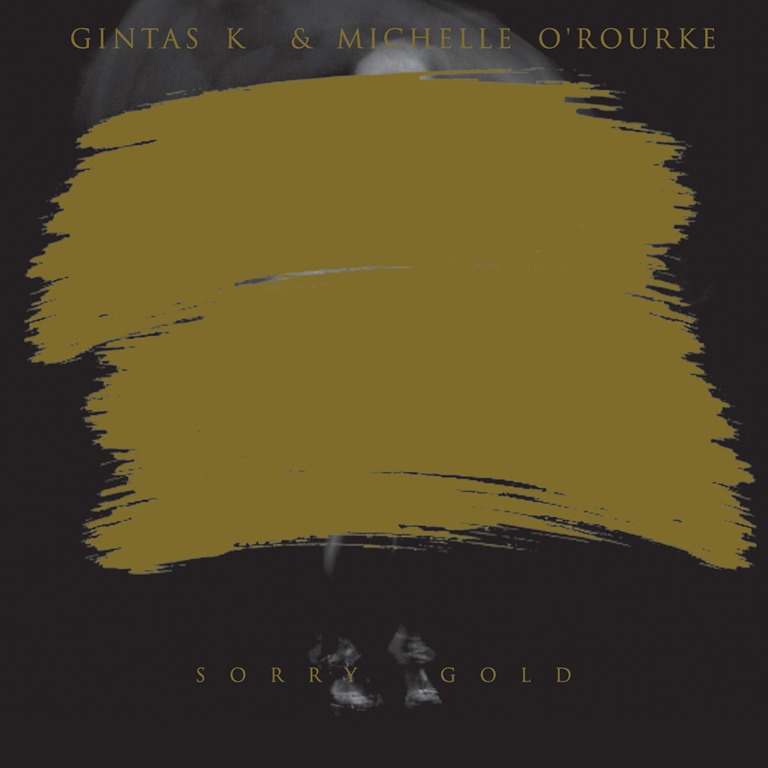
Gintas K wraps up a(nother) truly prodigious year with a collaboration – and an apology. The Lithuanian sound artist hasn’t strayed so far from his experimental electronic roots, at least fundamentally, but at the same time, Sorry Gold does mark something of a substantial and significant departure.

As the accompanying text explains, ‘this recording was made on stage at the Project Arts Center in Dublin, during the making of the film Sorry Gold Emily Aoibheann. The artists improvised to the visual landscape of the rehearsal space, stage design and dancers…’ it was funded by the Arts Council / An Chomhairle Ealaíon and Dublin City Council, supported by Dublin Fringe Festival, add the performances premiered as a part of Dublin Fringe Festival at Project Arts Centre in September 2019.’

With additional production and resigned from the original project, the album is only sort of a soundtrack, and the track numbering is both confusing and frustrating, with #1, #2, #4, #3, being followed by #4 #2, #2 #2, #4 #3 and #3 #2 before the more sequentially logical #5 and #6 conclude this most eclectic listening experience.

Replacing the glitching frenzy of bubbling, frothy digital frenzy that is Gintas K’s trademark is a much sparser, more minimal approach to composition, with single notes that sound like ersatz strings being plucked, atop quivering drones and low-rumbling organ sounds that fliker erratically like gas lights and resonating out into a spacious room. It has an almost orchestral feel, albeit distilled to absolute zero. The notes are a little fuzzy and ring out into emptiness, while the haunting vocals of Michelle O’Rourke are utterly mesmerising and border on transcendental. In combination, the atmosphere is deeply absorbing and heavily imbued with a spiritual, other-worldly element.

The first piece introduces us to a strange, haunting space beyond the familiar, and while it’s not by any means unpleasant, it is disconcerting, and sets the tone, ahead of ‘Sorry Gold #2’, which is melancholic, brooding, spaced-out notes hovering while O’Rourke ventures into almost operatic territories. It’s a not only a different atmosphere, but a different mood when placed alongside K’s other works: it feels a lot more serious, and has a different kind of energy, a different kind of intensity. I’m accustomed to feeling bewildered by the frenetic kineticism and abundant playfulness of his work. Sorry Gold isn’t entirely without joy, but it is much darker and much, much slower-paced, delivering a different kind of intensity.

It’s not until ‘Sorry Gold #4’ that things even hint at K’s more characteristic and overtly electronic noodling, and as the album progresses, we do encounter more of his feverish electronic tendencies, notably on the grinding ripples of ‘Sorry Gold #3’, but they’re much more restrained. ‘#4 #2’ brings a surging swampy wash of noise that’s a buzzing, grinding industrial blast of fizzing distortion. O’Rourke, barely audible in the sonic storm, sounds lost, detached.

Of the ten tracks, only two are under four minutes in length, and the pair use these extended formats to really push outwards: the ten-minute ‘Sorry Gold #4 #3’ brings helicoptering distortion that crashes in waves, at times low and rumbling, at others, crackling and fizzing with treble, and it creates a different kind of disturbance. Dissonance howls desolately on ‘#3 #2’, and so does , wracked with pain and spiritual anguish.

By the time we arrive at the brief and delicate bookend that is ‘Sorry Gold #6’, one feels inexplicably drained. The experience is somewhat akin to wandering ancient tunnels by flickering candlelight, observing ancient wall art while a subliminal mind-control experiment blasts random frequencies directly into your brain. You’re left feeling somehow detached, vaguely bewildered and bereft. And you feel deeply moved. Sorry Gold is special: Sorry Gold is bleak and harrowing, but it’s solid gold.

cover

Mille Plateaux – 23rd December 2022

Christopher Nosnibor

Where do you go when the press describe your debut album “a game changer, the sound of the future, now”?

Ethernity was certainly an outstanding work, a hybrid electronic album of myriad forms in combination and juxtaposition, with no shortage of space-rock elements, but also many textures and layers, not to mention a fair amount of atmosphere and some noise.

The way to go, then, at least if you’re Simona Zamboli, is on your own direction. Instead of attempting to create Eternity II, she’s pursued her experimental bent to create a substantial body of work in a short time, with singles, EPs, and live performances all testing different angles, before narrowing her focus for this second album to explore a specific subject, namely laughter. She describes laughter as ‘a fragile rebellion’ which ‘can be also a kind of horror’. And there is no shortage of horror – or strangeness – on offer here.

Yes, it’s still electronic, and there are still loops and beats, but the vibe is quite, quite different on an album where, according to the accompanying notes, ‘Zamboli destroys the standards of the current horrible music of a harmonies-of-harmonies.’ Indeed, A Laugh Will Bury You belongs more to the Industrial scene of the late 70s and early 80s than anything else: the ominous murky tones of Throbbing Gristle, and the relentless barrages of percussion as typified by Test Dept and Einstürzende Neubauten. It’s a dense and often quite weighty work, and Zamboli counterpoints low, low, sub-bass frequencies with some pretty harsh treble while misting things in a murky midrange to quite claustrophobic effect.

‘Movement’ is the first composition to feature voice, and it manifests as an eerie, slightly twisted thing that renders the words difficult to decipher at times, and when they are clear enough, something about the delivery seems to alter their sense, somehow, taking on quite a nightmarish quality against a minimal, rumbling sonic background with backed-off beats thudding around low in the mix. Voice becomes another instrument as the album evolves, echoing, abstract, haunting, not quite present but not absent either.

There are moments of unexpected lightness, few as they are: ‘I’m not there’ is a pretty straight techno tune in many respects, the kaleidoscopic waves of synths spinning about an insistent beat that’s entirely danceable. ‘Dive’ is propelled by a glitched-up march of sorts. Time stalls as the loops twist, melt, and blur into one another on the slow and oppressive ‘Guiditta & Oloferne’, before ‘Corrosive Tears’ brings six minutes of mangled beat-driven abrasion and gnarly bass. The vocals sound more like howls of pain than peels of laughter, and there’s a sense of unease that permeates the work as a whole, and grows as the album progresses. It’s that sense of the eerie, the unheimlich; the near-familiar but not quite right. It feels like a burial, and any laughter you may splutter out is likely to be uneasy and mirthless.

And yet, as the ear-battering attack of the title track reins down a hard battery of beats and blasts of noise, as much as the feeling is one of tension, there is also, ultimately, joy. There is that release in catharsis, and the pleasure of experiencing sound used in such a radical and creative way that is uplifting in a way that words can only skirt around. A Laugh Will Bury You is more than just an album, more even than an evocative, multi-sensory experience, but something… immersive… and submersive. Let it bury you.

MP52_art

Panurus Productions – 2nd December 2022

Christopher Nosnibor

Panurus Productions are renowned for their favouring of pop and jaunty indie on their catalogue, but as the title suggests, they’ve really excelled with the saccharine-sweet, shimmery Christmas bauble stylings on this December release by Distant Animals, the vehicle for Daniel Alexander Hignell.

The accompanying blurb sets the pitch for ‘A scuzzed out synth/noise/punk affair… straddling a range of genres but never settling on any one of them for long, shifting around with an angry, anxious energy directed at our bleak status quo.’

Granted, this does mean it’s nowhere near as abrasive as recent releases from Trauma Bond or as dark as Carnivorous Plants, this is a hybrid form that coalesces to convey the sound of post-industrial nihilism.

The synths drive and dominate the sound, and they’re layered into thick, foggy swirls pitched against grinding, fuzzy-as-fuck sequenced bass and a drum machine that’s largely submerged beneath the swelling squall. The opener, the eight-and-a-half-minute ‘Greetings from the MET Office’ builds and builds into an immense wall of sound, the guitar adding layers off noise and feedback rather than melody. There is a tune in there, somewhere, and vocals, too, buried in a blitzkrieg that sounds like Depeche Mode covered by My Bloody Valentine and then remixed by Jesu or Dr Mix and the Remix.

‘Phase Down and Sweat to Death’ gets dubby, with samples and snippets cut in and out of the mix, and actually finds a murky, echo-drenched groove in places, before veering off on myriad detours.

As titles such as the title track and ‘Panning For Shit In The Shallow End’ intone, this is far from a celebratory collection, with the delicate and brittle-feeling ‘Hegel’s Violin’ sounding like it could have been penned by The Cure circa Seventeen Seconds, and yes, it’s fair to say that there are what some may refer to as ‘gothic’ elements to the brooding sound.

If songs titles like ‘Fondly Remembering When Primark was a Woolworths’ and ‘They Didn’t Have Snowflakes In 76’ might suggest that Hignell’s been gorging on the Memberberries, but on the evidence there is, buried away in trudging industrial sub-zero trudges and stark, oppressive abstraction, this couldn’t be further from the truth, and we can appreciate these compositions as critiques of the multi-billion-pound nostalgia industry and Brexit Britain, where narrow-minded twats get dewy-eyed all over social media reminiscing over false memories of a golden age that never was. ‘They don’t make ‘em like they used to…’ It’s patent bullshit of course, but so many subscribe to this that, well, it must be true that The BBC haven’t screened Monty Python in decades because they’re woke lefties (and nothing to do that after airing it in 2019 for the fiftieth anniversary, the rights were purchased by NetFlix), and Stranger Things is only good because, well, it’s like The Goonies, isn’t it?

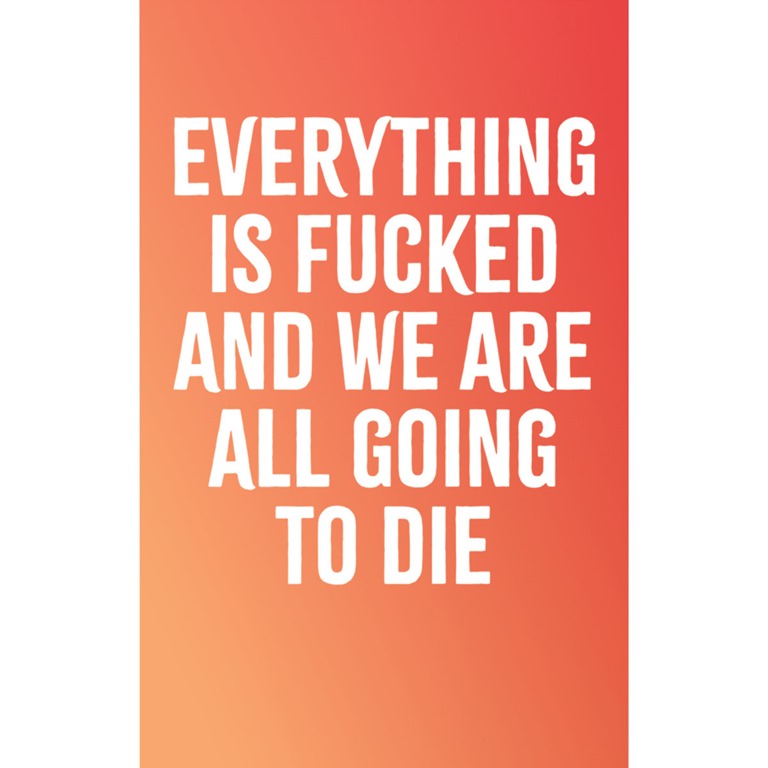
‘Panning for Shit’ is sparse, minimal electro that borders on Krautrock, and is the sound of drowning, not waving from our turd-encircled island, and there are many elements of this album which seem to align with the bleak perspectives and sounds of early industrial acts like Throbbing Gristle. But, to be clear, these are simply touchstones, rather than direct comparisons. Everything Is Fucked And We Are All Going To Die may evoke a sense of familiarity and a strange sense of déjà-vu, but ultimately presents a unique view and amalgamation of influences and stylistic references, and herein lies its true strength.

AA

a0758660749_10

25th November 2022

Christopher Nosnibor

If you’re after something subtle, melodic, and imbued with rich emotional depth, stop here. Because with song titles like ‘Aborted Eggs Benedict’, ‘Hymen Drizzled Hotcakes’, Rancid Risotto’, and ‘Fetal Fajitas’ the food-themed debut album from this ‘tech/brutal death’ act from Ohio is none of these things.

They’re keen to stress that while not entirely bereft of humour, they’re by no means a parody or novelty act, pointing out that the album ‘serves enough morbid and bizarre courses to fulfill the craving for extreme and wild. On top of that, the Northwestern Ohio group is serious about their music and does not deem their band as a fun or side project. To make their live shows more vivid, A La Carte members perform with the same characters displayed thematically and dress in maître d’ outfits’. Not that the lineup of Chef Cuck, Chef Highman, and The Maitre d’ remotely hints at anything even vaguely comedic.

The tile track, which lifts the lid on this crazy concoction of an album, is a whirl of psychedelic and theatrical flamenco-flavoured strangeness, before the heaving and churning begins with the sample-soaked intro to the technical thrash of ‘Aborted Eggs Benedict’, thrashing its way hard into a frenzy of guttural vocals and squealy notes emerging from the gnarly grind like flames spurting from a molten volcano. The lyrics are indecipherable, but thankfully, they’ve shared them, so it’s possible to grunt along with corking couplets like ‘When Boiling The Fetus Adjust The Oven Rack / With out Consent I Poach Your Tusks From A Elephant Add A Dash Of Vinegar Hatch A Meal So Sinister / Lower Fetus Boiling Immolate Carefully So It Dosent Seperate Make Sure You Only Cook A Little Skin Is Tough Gooey In The Middle / Breakfast Is Served All Atop A Carved Out Toasted Flaky Womans English Muffin’.

If only the instructions were so clear and straightforward for the majority of recipes I find online! And not that any of this translates in the listening, where the vocals mostly sound like phlegm-thick garglings of ‘Gurrrhgggghhhhh!’.

It would be ridiculous to criticise Soup Dejour for being puerile, and while it is largely cliché, it also shows some real creative flair. Not because it’s bombastic or theatrical, but because of how it pulls in a range or elements and presents some quite distinctive bass runs that aren’t genre-typical.

The twiddly guitar does get a bit much, and the crisp production only highlights the dominance of the fretwanking, and at times it works, and at others, it just feels excessive – and it’s by n o means the kind of excess that points towards the palace of wisdom, and, to turn to Blake’s proverb, ‘you never know what is enough until you know what is more than enough’.

Listening to Soup Dejour, I believe I may have made that vital discovery. That is, it’s solid and consistent as an album, the musicianship is absolutely faultless, but small servings are recommended.

AA

Cover Art_A La Carte_Soup Dejour

A La Carte_ band photo

Dret Skivor – 23rd December 2022

Christopher Nosnibor

Swedish microlabel Dret Skivor may be many things, primarily a champion of the obscure and staunchly uncommercial (hell, they even put out a split release with one of my spoken work / noisewerks this time last year), but exuberant is not one of the adjectives that comes to mind. But look at those exclamation marks in the title!

But following the customary roughly annual Procter / Poulsen collaboration, they’re putting out a bonus release – release twenty-three, no less – to celebrate the label’s second anniversary. It’s a just cause for celebration and a display of public exuberance, not least of all because the catalogue they’ve swiftly amassed is a treasure trove of wonderfully weird and dark experimental noise, and this three-tracker featuring Fern and Fåntratt is no exception.

Fåntratt’s fifteen-minute excursion into harsh noise wall sits between ‘frolics from Fern! It’s an F-macka!!’ the blurb tells us (which I assume is a good thing, since my ears tell me it is). And the contrast works well: the two Fern tracks are brief, at least in comparative terms, with the five minutes of ‘Field Trip’ pulling together dark, damp, ominous ambience and achingly spiritual choral singing which drifts and glides in and out of the nightmarish soundscape. It creaks and rumbles and thunders with deep, murky tones, the vocals rendering the experience even more unsettling. ‘Heaven in my Hands’ couldn’t be more different – a snarling blast of industrial/grindcore crossover, where everything is so mangled and distorted it’s impossible to make anything out other than the broken-sounding beats. It’s as heavy as hell.

Yet, perversely, it feels like light relief after the release’s centrepiece. Fåntratt’s ‘Morot’ is fifteen minutes of high-end hell. It’s harsh even by harsh noise all standards. And whereas many of the Dret releases have been HNW exemplars, the majority have featured subtle variations in tone or frequency: not this cut. This is pure HNW. We’re in Vomir territory, but pitch-shifted up a few notches to a pitch that drills through the brain penetrates to the core.

I did, for a moment, think I had detected some slight sonic shift, but then realised, after further exploration, that this was simply an effect created by moving my head to one side or the other in relation to the stereo speakers. Swallow, move, it sounds different for a fleeting second, but the fact is that this is solid noise, a sheer and unmoving wall of noise of the kind that will induce migraine, tinnitus, and seizures. Possibly. While some noise can be quite soothing – admittedly, I speak for myself here, but can’t be alone in finding this – Fåntratt’s ‘Morot’ is torturous, tension-building, painful-inducing. It’s powerful stuff, and the perfect party tune for Dret’s second birthday. Here’s to the next two years.

a1095810778_16

PNL Records – 16th December 2022

Christopher Nosnibor

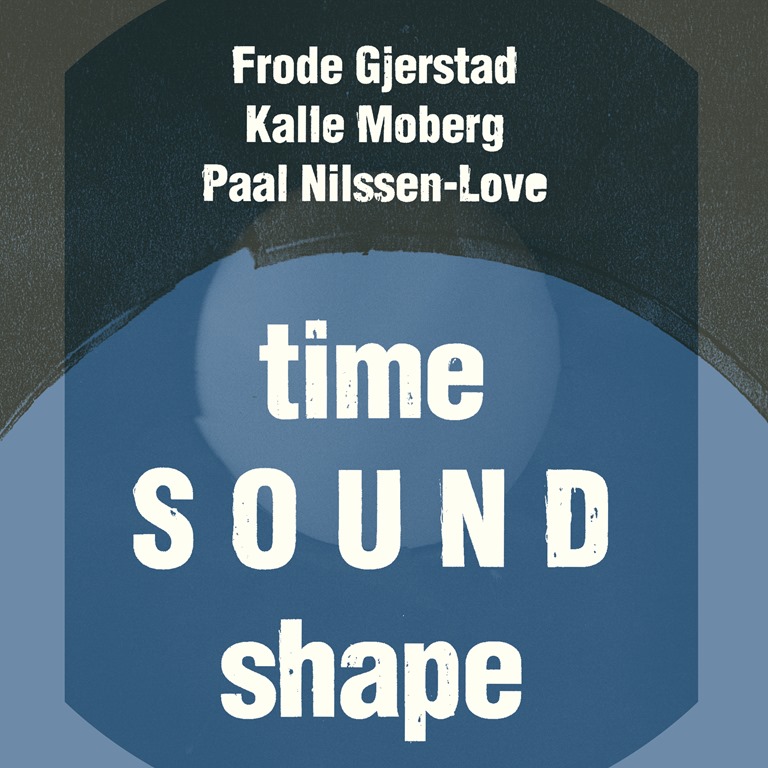
Nice… as you’d probably expect from this three-way collaboration, Time Sound Shape is a work of atmospheric instrumental experimentalism with some strong jazz leanings. That’s not smooth or mellow jazz, of course: more the weirdy, spaced-out non-musical kind of jazz. So not so much nice, as awkward, uncomfortable, challenging. This is not jazz of the cardigan and slippers variety, and you certainly wouldn’t play it at a dinner party, apart from perhaps at thee point when your remaining guests have overstayed their welcome and you want them to fuck off home.

Time Sound Shape is a single continuous piece with a running time of a full-length album, clocking in at precisely forty-nine minutes, and it’s a great example of intuitive improvisational collaborative work, and it sounds far better than the clunky text-based cover art suggests.

There are some dissonant, discordant, even outright difficult to digest crescendos, and moments of queasy chamber orchestral meanderings, as they tweet and toot together in a sort of droning solidarity. It begins gently enough, with some trilling woodwind courtesy of Frode Gjerstad who brings flute, and clarinet to the party as well as sax, but it doesn’t take long before things shift in numerous different directions.

There are moments that almost feel ‘continental’ in vibe, perhaps not least of all on account of Kalle Moberg’s accordion work. And all the while, Paal Nilssen-Love brings texture and atmosphere with his application of a wide selection of Paiste gongs, bringing doomy dolorous chimes and rolling thunder. At times, the crashing gongs are strong enough to vibrate the internal organs within the ribcage.

In many respects, Time Sound Shape delivers precisely what you would expect from these three musicians coming together, and yet at the same time, it brings more. It’s a richly textured work, that evolves as it progresses, and it never stays stull, and yet the changes are often subtle. Time drifts and bends as the sounds transition, changing shape. Let yourself be carried.

AA

PNL052_front