Archive for the ‘Albums’ Category

Dret Skivor – 6th December 2024

Christopher Nosnibor

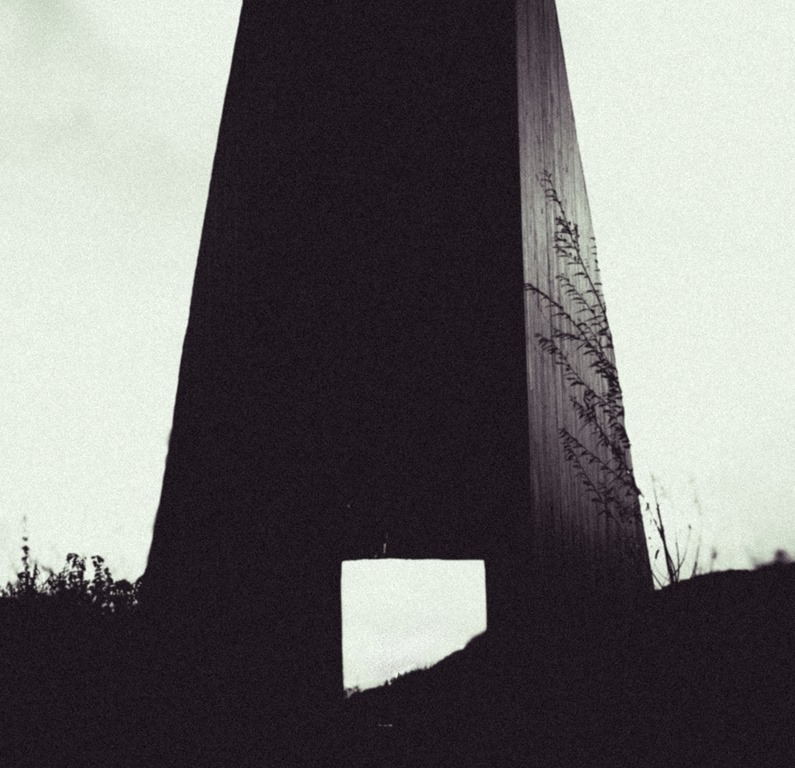
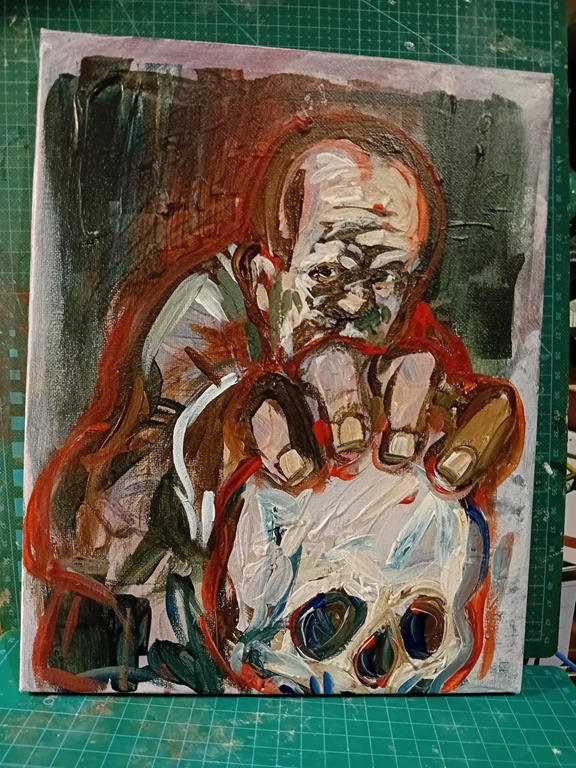
Another Bandcamp Friday, and another release from Dret Skivor, Swedish microlabel specialising in noise and weird shit on super-limited cassettes. This time, they promise a ‘beast of a release with artwork by the manbear that is Christian Blandhoel’. Side A of this cassette is supposedly the ‘hard side’ and Side B the ‘soft side’, but these things are relative. Mellow it is not, and it really is a beast. I’d been forewarned that it was a long one, and landing the same day I received my copy of the new Swans live album, which clocks in at a solid two and a half hours, I kinda shrugged it off, thinking ‘yeah, it’s long, but it’s not that long…’ and while that’s true, I perhaps should have paid more heed. It’s not just about the length with this one. It’s about the intensity. For the records, Swans’ Live Rope is intense, and anyone who’s seen them live in the last couple of years will appreciate this. But the recordings simply do not capture the experience of being in the room, the decimating volume.

The thing is, there’s listening to music, and listening to music. I listen to music while I’m cooking, but it’s simply on, whereas listening to music with focus is a true commitment, and takes some energy. Listening to and knowing is half the battle takes a lot of energy.

Only a minute or two into ‘bad things keep happening’, the first of the album’s seventeen tracks, there’s some extreme panning that’s churning my guts and making me dizzy, and that’s without the feedback whistles that land just in the region of tinnitus. It’s a challenging six minutes, which culminates in a slugging blast of lung-rattling bass sludge.

‘Danger draws near to what you hold dear’ is an ominous piece of dark ambience with static and hum, crackles and horrific ruptures of noise. There’s a low-end mechanical thrum, low-end doom frequencies which flicker and throb, and nothing comfortable. Trilling feedback whistles for what feels like an age before more bass frequencies hit, and then static and distortion hums and hovers from left to right. This feels like an album designed to inflict optimal pain and anguish. ‘Loaded for bear what a nasty spectackle’ hums and drones and bursts distortion to a point at which is inflicts pain at first, before diminishing in its confrontational intensity.

Scraping strings and ominous drones and unsettling discord and dissonance are all the things one might expect from a track bearing the disturbing title ‘i always hope to find you fully dilated and bleeding’, and when it suddenly ruptures into a surge of fizzing distortion, the experience becomes quite overwhelming – and it only grows more intense and anguishing as it progresses.

‘rendering flesh’ is a horrible mess of buzzes and hums, feedback trills and screams, snarling whirls and blips and glitches. And the unpleasant frequencies, the serrated waves, the tension-building noise just keeps on coming, with the pieces packed back-to-back with no pause for decompression. At times it sounds like a bulldozer ploughing through the speakers, at others it’s more akin to the soundtrack to psychological torture or one of those anxiety dreams from which you wake, drenched in sweat, which fuck the entirety of your day.

Christian may be in pain, and and knowing is half the battle is his way of letting it out. Or perhaps he’s a sadist who derives pleasure from inflicting pain on others. Either way, and knowing is half the battle is likely to stand as an endurance test which many listeners will fail. Christian seems to have a knack for finding all the frequencies which resonate in the wrong way: every throb and click is a tension-building, gut-worrying microassault. ‘Abakan hyperburst’ again exploits both wild panning and distortion to distressing effect, before ‘the current trend of selective autism’ presents a sparse but challenging question. What is he trying to say here? Well, it does seem that a certain type of person will defend shitty behaviour by claiming that they may be on the spectrum – undiagnosed, of course – or have some other issue as a justification, which diminishes and undermines those who are truly autistic, in the same way as the people who shout loudest about their mental health and take time off work for mental health reasons aren’t necessarily those who are truly suffering. It is a minefield, and a topic which goes far beyond the reach of this review, but one that we shouldn’t ignore, since Christian has raised it.

Other titles are perhaps less provocative, and instead are more surreal – such as ‘mcdelivery plush trumpet’ and ‘the wonder of phosphorous burned eyeholes’, but ‘exploding heads in peacetime’ is a blistering trill of feedback worthy of Whitehouse, underlaid with billowing bass.

This would be a tortuous work regardless of duration, as Christian remorselessly pushes all the buttons for noise which is uncomfortable, distressing, but the fact this album seems to last a lifetime only heightens the tension. and knowing is half the battle is painful, horrible in every way – so needless to say, I love it, but I wouldn’t recommend it.

AA

a1827600571_10

Transylvanian Recordings – 31st October 2024

Christopher Nosnibor

The title is, sadly, true. Somehow, recent years have ‘normalised’ everything, but not least the worst and most cuntish behaviour. Men being sleazy shits is just so normal that ‘grab ‘em by the pussy’ is an election-winning slogan, and a majority – however slim – in the US is ok with electing a convicted felon to the most powerful political position in the world. Somehow, billionaires have been normalised. Genocide has been normalised. These things have just become the backdrop to the every day. Many of us simply reel at this realisation.

But instead of reeling, we need to react. And if we ourselves find ourselves unable, it’s at least something to find there are other out there who are able to articulate on our behalfs. Enter Killer Couture, with their third album.

Gothface celebrate Everything Is Normal as being ‘Not overproduced; just back-to-basics angry, editorial of society style late 80’s/early-90’s music; the kind of stuff you could expect from Skinny Puppy’s and Ministry’s DGAF approach in the 80’s’. The band themselves describe it as ‘a 40-minute violent outburst of pent-up energy, challenging the concept that there ever was a status quo to begin with, the people who feel the need to try and uphold the illusion, and exploring the psychic maelstrom of living in the true chaotic reality beneath the mask.’

From a muffled cacophony of discord and a patchwork of samples emerges the first pulsating beat and blasting riff, from which ruptures forth squalling guitar and the intensity builds as the collage of snippety bits layers up to an unbearable level… and then ‘Terrible Purpose’ barrels in, the guitars thick and fat and dirty, overloading but with that digitally crisp edge, and as much as Ministry and Skinny Puppy so come to mind, while the speaker cone-shredding distortion hits like a two-footed flying kick to the chest, I’m thrown into recollections of early Pitch Shifter, of the searing industrial metal abrasion of Godflesh. The bass snarls, the percussion is simply devastating, and this is proper, full-tilt. If you need more comparisons, and more contemporary ones, I’d be placing this alongside Uniform for its uncompromising, full-on raw industrial attack.

Hot on its heels, the title track is a relentless percussive blast which propels a mess of noise, guitars set to stun, vocals set to rabid punk rage.

The guitars on ‘Teeth’ come on like a wall of sheet metal. If the refrain ‘I’d like to break your teeth’ lack subtlety, it achieves the desired impact. Everything Is Normal is not about subtlety or nuance: it’s about expunging that raw, brutal rage, it’s about catharsis, it’s about venting the fury, and Killer Couture are simply splitting their skins and breaking open their craniums with it.

‘KCMF’ brings another level of overload, the bass crunching and guitars churning and squalling against a relentless mechanised beat, and this is some furious, high-octane adrenalized noise shit. ‘Bastards’ speaks – or rather hollers – for itself, and ‘Composite Opposite’ is as gnarly as hell.

Everything Is Normal is one of the few self-professed ‘industrial’ albums I’ve heard of late which isn’t some Pretty Hate Machine lift, and isn’t essentially an electropop album with a dash of distortion. Killer Couture deliver on their promises with an album that’s brutal and uncompromising, heavy, and properly noisy.

‘Bad Waves’ brings things to a close, combining a certain shoegaze element with the hypnotic throb of suicide, and calls to mind The Sisters of |Mercy’s legendary live renditions of ‘Ghostrider’ circa 1984, often segued into ‘Sister Ray’ and / or ‘Louie Louie’ with the same relentless beat. And yes, my only complaint is that at 4’59”, it simply isn’t long enough by half. But then, the best songs always leave you wanting more, and despite Everything Is Normal being truly punishing album, a little more wouldn’t hurt that much… probably.

It’s important – and now sadly necessary – to distinguish between the red-faced outrage of those perpetuating hate and raging against all things supposedly ‘woke’ and those who are calling out the injustices, who are willing to stand up and point out that we need to be woke, that if you have an issue with antifa, you’re pro-fa, and you’re the problem.

Killer Couture are the voice of anger, the conduit of rage, and Everything Is Normal is precisely the album we need right now.

AA

a2402686568_10

Cruel Nature Records – 29th November 2024

Christopher Nosnibor

Creativity can have immensely therapeutic effects. The psychology behind it is likely complex, if it’s even fully understood, but immersing oneself in something creative, be it music, writing, or visual arts seems to uncoil the mind in ways nothing else can quite manage.

With I: Awakening The Ancestors, described as ‘a profound journey through sound, blending experimental folk, noise, and shamanic practices’, Stuart Chalmers, under the moniker of Nomad Tree, presents ‘the culmination of an 18-month exploration from burn-out and self-doubt to discovering a new voice. Using feedback techniques, contact mics on frame/bass drums, amplified dulcimers, gongs, and percussion made from natural materials, the album creates a dark, hypnotic soundscape. Recorded in unique locations like Cathedral Cave and Luds Church, the tracks evoke a sense of ancient connection to the land and spiritual practice. It’s a cathartic release aimed at healing and altered states of consciousness’.

And so it is in Chalmers’ case, perhaps, that the creative process, paired with reconnecting in some way with nature, and with places which inspire a sense of ancient history, a time before religion as it now exists, before civilisation as we know it, even, has provided a sense of escape from the all-pervasive shit of the now.

I: Awakening The Ancestors consists of three longform pieces, each over ten minutes long, and these are compositions laden with dense atmosphere. ‘On Sorcerous Wings Take Flight’ is so dense as to be oppressive: heavy, thunderous percussion rings out across barren moorland and reverberates around thick forests. Winds blow and the very earth moans and mumbles. Darkness creeps ever closer, growing ever heavier. There is a sense of a presence, but, at the same time, the absence of anything which feels overtly human is conspicuous. Although the track’s evocation is ancient mists, my mind takes me to a most contemporary on-line discussion around the hypothetical question ‘If you were alone in the woods, would you rather encounter a bear or a man?’ It’s a talking point around women’s safety, but in the last year I have taken to going on ever-longer walks in a quest to be in nature, but away from people. As Brion Gysin said, ‘man is a bad animal’, and as unnerving as the unknown and the unseeable may be, the prospect of encountering other people is considerably scarier.

‘Seeking Through Deepest Fears’ careens into dark space with droning, melancholic string sounds, wheezing, rumbling, polytonal tension and low, slow-building layers, to which primitive percussion eventually joins. There’s an oddly psychedelic sheen to this piece as it settles into a hypnotic groove overlayed with what sounds like scrawling, scraping walls of feedback, and it lands somewhere between Black Angels and latter-day Swans in terms of the listening experience: intense, almost overwhelming, but also uplifting on account of the complete immersion it engenders.

If the liner notes imply a sense of progression, a narrative arc, or any sort of linearity, the actuality of I: Awakening The Ancestors confounds that expectation in its merciless gloom. With tribal beats bashing away, hard, ‘Amongst Forest Spirits Or Wild Beasts’ conjures a sense of tapping into something elemental. It eventually tapers away to silence amidst a clamour of chimes, leaving a sense of emptiness, and much to reflect on.

AA

AA

a0749069146_10

Metropolis Records – 6th December 2024

Christopher Nosnibor

The pitch:

Clan Of Xymox will release a new EP entitled ‘Blood of Christ’ on 6th December. The title song is also included on ‘Exodus’, the current album by the dark wave wizards released in June 2024, with the EP also including the brand new ‘You’re The One’ plus six remixes of each track for a total running time of 64 minutes.

The reaction:

EP? EP??!! Well, yes, I suppose with fourteen tracks and a running time in excess of an hour, its play is certainly extended. What kind of duration would qualify for a long player, I wonder? On vinyl, this would be a double album at 33rpm. Available as a download only, Blood of Christ retails at the same price as the album which spawned it, Exodus, released in the summer.

Carping and pedantry aside, this is an ambitious project for a single, with the album track accompanied by a non-album B-side – something which is always welcome – and, as advertised, six remixes of each. Does anyone really need six remixes of any song, even the most diehard fan? It’s debatable, although not a debate I’m about to open to the floor.

I suppose electronic music does lend itself more readily to remix treatment than more rock-orientated stuff. The 80s and early 90s witnessed the rise of the remix via the extended 12” mix and then over time, we began to see 12” and CDs with different remixes, which were all about milking fans in order to boost sales and chart positions

As a choice of single, ‘The Blood of Christ’ is a strong one: pumping beat and pulsating bass underpin a solid tune with stacks of atmosphere and a huge, theatrical chorus, straddling the boundaries of both classic and contemporary goth. ‘You’re the One’ is a bit popper, but still driven by those all-essential dark undercurrents.

And so, onto the remixes: the album’s remaining twelve tracks alternate between the two songs, the obvious benefit being that you don’t get back-to-back takes of the same track for half an hour. However, by presenting the same two tracks alternately, it’s a little like the old days of flipping a 7” over and over, only hearing differences and new details with each play, and over the course of an hour and a bit it becomes quite mind-addling, and with both tracks employing similar stabby, undulating synths and tempos, the sameness starts to dull the senses after a while.

Too much of a good thing? Perhaps. And perhaps there’s a time commitment involved in distinguishing between the different versions and finding your favourites, preserved for the serious fan. Individually, the tracks are great, although I’m not convinced any of the remixes really improve on the originals, but presented together in such quantity, it feels like overkill.

AA

a1318500700_10

Mortality Tables – 29th November 2024

Christopher Nosnibor

Because life experience creates linguistic associations, for me, it’s impossible to see or hear the word ‘interzone’ without immediately thinking of William S. Burroughs. The title of a collection of short stories and ‘routines’ penned in the mid-1950s, Interzone was the working title of the seminal breakthrough novel Naked Lunch (1959), and the collection, published in 1990 consists of segments which failed to make the final cut. The pieces were written while Burroughs was living in Tangier, something of a haven for expat writers, including, perhaps most notably, Paul Bowles, but also polyartist and true inventor of the cut-up method, Brion Gyson. Burroughs described the city as an ‘interzone’, and it was indeed both an ‘international zone’, as the portmanteau implies, and a space between zones, outside of any single culture or jurisdiction, its administration divided between the US, French, Spanish, and English sectors, where ‘nothing is true, everything is permitted’. Of course, there are numerous other connotations, but this is what I’m bringing in terms of prececeptional baggage to this.

The accompanying notes certainly indicate that the album’s content holds up to these parallel positions: ‘Like its name implies, these are place of transiency. Intermediate places. In-between locations. Melting pots of different people and different ideas, constantly evolving as one thing collides with another, and another, and another.’

The album was initially recorded in 2022 as a solo work, but subsequently scrapped and rerecorded with a different collaborator on each composition. Collaborations do tend to bring out different aspects of an artist, and it should therefore be of no surprise that this suite of nine pieces, recorded between 2022 and 2024 in Switzerland, England, Luxembourg, France and Zimbabwe, is eclectic in its take on electronica.

As the bookending pieces, ‘Entry Visa’ and ‘Exit Visa’ indicate, travel, movement, and transition, are the key themes here. But this is not some pan-cultural pick ‘n’ mix grab-bag, and instead creates an experience which replicates the disorientation of travel. It’s difficult to articulate just how this sonic patchwork works, or quite how the experience feels. It’s not as if it lurches from techno to grunge, to opera, to thrash, and in this respect Lally’s works represent his ‘two inches of ivory’, so to speak. But within the realm of electronica, Interzones covers substantial ground.

‘Play Position’, featuring Salford Electronics, is a sample-packed exploratory work with a prominent beat, which contrasts considerably with the near-ambience of ‘A Stealth Approach’, featuring Scanner; contrasting further, Simon Fisher Turner brings a sort of drawling space-age country aspect to ‘Calmer’, before things take a spin toward out-and-out trance on the title track, and Karen Vogt’s airy, soft vocals on ‘Running Circles’ pull the album gently into hypnotic shoegaze territory. The album continues on this trajectory, sliding deeper into dark, gothy electropop with ‘Ripples’.

The insistent beat and overtly dance style of ‘Exit Visa’ makes for an unexpected change in direction – despite the fact that, by this point, nothing should be truly unexpected. The effect, however, is disorientating, and you find yourself wondering how you came from A to B over the duration of the album. It’s testament to both Lally’s compositional skills and his selection of contributors – as well as the album’s sequencing – that somehow, it flows and the transitions themselves are seamless, which only heightens the sense of moving between spaces with no real sense of how it came to pass. Vitally, Interzones is a subtly detailed work, with hidden depths and moments of genuine beauty.

AA

a2037434320_10

26th November 2024

Christopher Nosnibor

It’s eight and a half years since HORSEBASTARD last made the virtual pages of Aural Aggravation, when I witnessed their explosive set at the now sadly-gone CHUNK in Leeds in May 2016, with fellow equestrian favourers Palehorse (playing their last Leeds show), and the debut performance from future legends Beige Palace, who are also sadly missed). They’ve been going for donkeys, but despite a slew of EPs and split releases, this is their first long-player. Well, the track-list is long, at least, with twenty-eight tracks – but still only with a running time of seventeen minutes.

With the exception of the final track, ‘CORYBANTIC IDIOGLOSSIA’, the songs – or projective noise-vomits – are all around the half-minute mark, and with all of the titles set out in block capitals, it’s almost as hard on the eyes as on the ears. Almost. With titles spanning poor wordplay (‘CHAIRWOLF’, ‘FLIGHT OF THE ALLIGATOR’, ‘OLD TESTAMENTALITY’, ‘IRRELEPHANT’), the nihilistic (‘ANHEDONIA’, ‘MEANS TO A DEAD END’), and the straight-up daft (‘NOT ONCE. NOT TWICE. BUT THRONCE’, ‘INDEED RESUME COMMENCING’), it’s got everything you’d expect from a grindcore album, being a genre that recognises and revels in its absurdity, and while it can be serious, often pretends to be serious instead.

With a high-tuned snare cutting through the barrage of noise that bursts forth at two hundred miles an hour, while the vocals – as much given to screams as guttural growls – set them apart from many other acts. This means that ‘CRACK WASP’ sounds exactly how you’d expect it to, a twenty-nine second of squalling agony which assails the listener from all angles.

Guitars stop, start, stutter and lurch, and everything’s so hard and fast it’s almost impossible to distinguish between a chord change and the next song: they’re packed in with absolutely no gaps in between, resulting in the album being a continuous blur of brutal noise. There are details in the guitar playing, but they all pass so quickly it’s impossible to really register them. There’s something of a formula, in that songs tend to start with a rapid-fire drum fill before all the noise piles in on the back of it. With absolutely no let-up from beginning to end, HORSEBASTARD is a frenetic slab of face-melting ferocity.

AA

a3234403836_10

Sinners Music Records – 3 November 2024

Christopher Nosnibor

The line ‘hell is other people’ comes from the 1944 play ‘No Exit’ by Jean-Paul Sartre, and it’s something that many of us find relatable. Indeed, it’s a line which more or less summarises my world view. One of the few settings I feel comfortable with multiple ‘other people’ (I’m on with one on one or very small groups, at least in moderation) is in a live music setting, because I can choose whether or not to interact, can limit interaction to the brief times between acts, and – and this is significant – the kind of people I find myself sharing a space with tend to be less representative of the general population. Most of us do have ‘our people’; the only trouble is finding them.

Ian J Cole’s latest work is a concept album based on No Exit ‘whereby Three damned souls, Joseph Garcin, Inèz Serrano, and Estelle Rigault, are brought to the same room in Hell and locked inside by a mysterious valet. They had all expected torture devices to punish them for eternity, but instead, find a plain room with no windows, mirrors and permanent strip lighting. They are all afflicted with fused eyelids or Fraser Syndrome where they can’t ever close their eyes and must spent [sic] eternity in this room and in this state.’

The Fraser Syndrome, from which the album takes its title is a rare genetic disorder characterized by fused eyelids.

Sartre seems to have essentially inverted the effects of the condition, but being unable to either open or close one’s eyes is a terrifying prospect. What’s worse: see nothing, or see everything? Cole’s album is based on the latter scenario, and presents a disturbing soundscape from which there is no escape.

The album opens with the immense sixteen-minute opus ‘Frightened of Cliches’, a heady blend of light-night jazz, erratic beats, and swirling ambient tension. There’s very much a filmic, soundtrack quality to it, and over its expansive duration, there are gradual shifts. The beats dissipate, there are creaks and groans like the rusty hinges of big metal doors being swing shut.

‘A Beauty Diamond Lipstick and No Mirror’ plunges deep into dark ambience. There are some synth incidentals to be found, wandering, lost, amidst the murk and the chimes, the muffled samples and layers of distortion and dissonance, but this is not an easy listen. It is, however, an intensely focused and coherent work.

‘Thelema’, created in collaboration with The Wave Prophets’ offers some light, and reintroduces the faux sax synth sound that was a central feature of Cole’s live sets a while back. But that smooth 80s vibe is now twisted into an altogether darker concoction, a conglomeration of sound that’s unsettling – and no more so than on the sparse feedback drone and hum of the eight-minute ‘Night Never Comes’: it’s a restless, uncomfortable space which it occupies, echoes and metallic clanking reverberations reverberating through the slow wailing undulations.

The piano-led ‘Hell is Other People’ is unsettling and chimes and tinkles against minor chords, before the album’s second ‘big’ piece, the twelve-minute ‘Three Damned Souls’ looms large in every way. It’s richly atmospheric, and while the atmosphere may not be overtly gloomy, it certainly is unsettling in places. Echoes and eerie whispers reverberate amidst trilling organs, bleeps and trickling electronica.

The final track, ‘Hell is Dead People’ is a live recording, and in some respects feels a bit bolted-on, but it’s a strong piece – piano-led, atmospheric, with discordant cadences playing throughout. It rounds off a solid and focused work. While concept albums can be a bit corny, or feel somewhat forced, The Fraser Syndrome finds Cole immersing himself in the themes and going deep into the psychologically difficult spaces that the source material necessitates, and the result is a strong suite of compositions, and quite possibly Cole’s strongest and most engaging work to date.

AA

a2119088003_10

Tsuyukusa Records Tsuyu— 8th November 2024

Christopher Nosnibor

Tomoyoshi Date’s biography makes for an interesting read: he’s described as ‘a physician and musician known for his releases on prominent ambient labels such as 12K (US), LAAPS (France), and QuietDetails (UK)’. There’s much to be said for having a creative outlet which is completely separate from one’s day-job, especially when that day-job carries a degree of responsibility and likely brings with it no small level of stress.

Tomoyoshi Date has gone a step further, though. You couldn’t really call being a musician releasing ambient works on avant-garde microlabels a ‘side-hustle’ – which seems to be all the rage of late, and seems to be something people are proud of and the media love as much as they used to love contestants on Big Brother after they’d left the house, rather than acknowledging that this is a symptom of how capitalist structures are failing so many working-class people: this is more of a parallel career, and presumably Tomoyoshi Date’s ‘professional’ occupation affords the time and space to pursue the ‘other’ career.

Having recently written on how the four-CD box by Dolium, and the near hour-long single track album Leaves never fall in vain by Fear of the Object require a certain time commitment, I’m here in the face of not one, but three albums. Because Piano Trilogy is not a set of three compositions, but three separate works, recorded between 2021 and 2024, which collectively form a trilogy, released as a cassette package in an edition of 150 copies. It’s niche, alright, and as I said, there’s no way this would pay the rent as a primary occupation – which is a shame, but it’s the crappy capitalist world we live in, unfortunately. Were things different, I could write about music all day long and put food on the table.

This trilogy is formed of ‘ 438Hz, As it is, As you are, released by LAAPS and selected as one of Bandcamp’s Best Ambient albums in January 2023; Tata, composed for Silver Gelatin’s exhibit at Tata in Koenji, Tokyo; and Requiem, a piece dedicated in memory of a close friend who passed away too soon’ and ‘All three albums are packaged in special jackets featuring found photographs curated by Silverわ Gelatin and are being released simultaneously.’

An album trilogy released simultaneously is a lot to assimilate, and few, if any, listeners are ever going to listen to these three albums back-to-back, not even Tomoyoshi Date’s biggest fans. But for review purposes, that’s precisely the task I have set myself.

Date is clearly a gifted composer and musician, and it’s certainly no criticism to observe that the music drifts by, lightly and effortlessly. Amidst the piano notes which ripple serenely are stutters and glitches which deviate from the more classically-orientated template and explore more electronic, experimental territories. But Date does so subtly, delicately.

438Hz, As it is, As you are is a most soothing work, consisting of four compositions spanning around half an hour. Drones and slow-turning ambient tones, and birdsong occupy much of the space between piano notes, and the effect is relaxing, like a walk in nature. It’s the shortest of the three, with Tata and Requiem both stretching well beyond forty minutes I duration.

Tata is more ‘pure’ piano, and runs for almost forty-five minutes, while Requiem is sparse and melancholy, and stands apart: a pure piano work, it comprises six pieces, all over five minutes and up to more than eight and a half minutes in length, and rich in low-key melancholy.

These are clearly separate and distinct works, but they’re very much complimentary, and work together as a suite.

0031744212_10