Archive for December, 2024

Lamour Records – 16th December 2024

Christopher Nosnibor

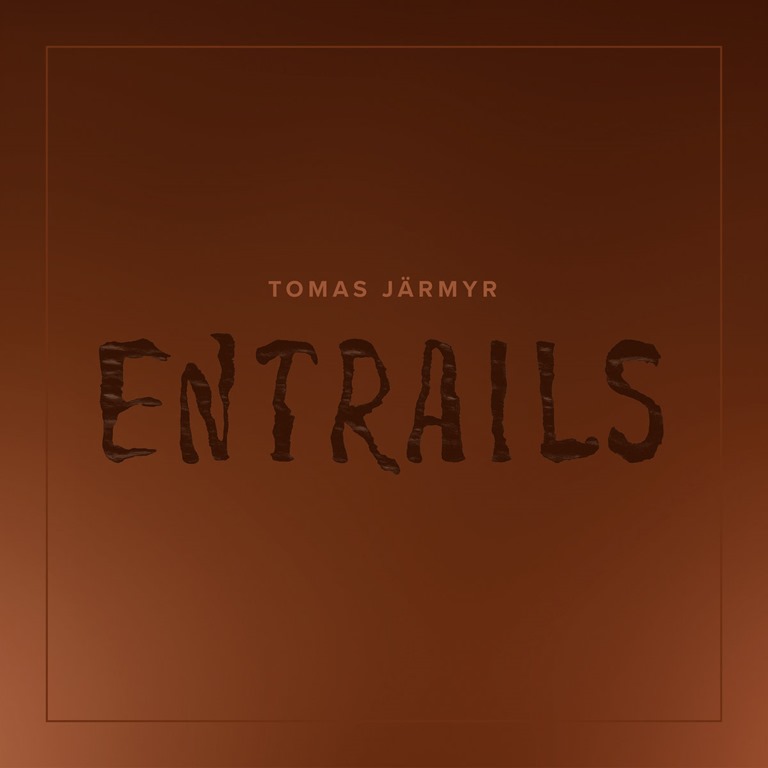
When you read that someone is exploring metal, the likely response is to think it’s a metal album in terms of genre. But not Tomas Järmyr: his explorations into ‘the deep frequencies of metal’ are quite literal. ‘Using only cymbals’, the notes accompanying the release explain, ‘Järmyr creates a slowly rotating musical sphere that holds beauty, deep emotion, and fierce heaviness… Entrails is an album that shows the core of his artistic expression and serves as the perfect introduction to Tomas Järmyr as a solo artist.’

As titles go, Entrails is unquestionably visceral in its connotations – another thing which would, for many, suggest a ‘metal’ album rather than a ‘metal’ album. But here we have an album containing a single track, which runs for thirty-eight minutes, consisting of nothing but cymbal work.
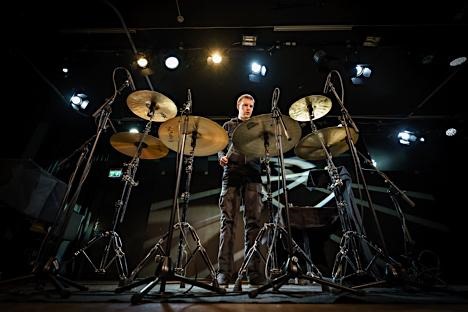
Thomas J

Photo: Thor Egil Leirtrø

In the context of a full drum kit, cymbals provide expression, and also an amount of ‘fill’ to the overall sound, not only of the kit, but the band, creating a wash of resonance in between the notes of the instruments and the beats of bass drum, snare, toms, etc. How do cymbals stand up when separated from everything else?

In the hands of Tomas Järmyr, we come to appreciate the range and versatility of the cymbal. Size certainly matters, and Järmyr’s setup which spans small, light crashes to huge, resonant, bell-like peels, against a backdrop which builds from a delicate clatter to a clashing, splashing tempest, is educational.

There are passages where the clatters and chimes diminish, and make way for dank, atmospheric reverberations which evoke the gloom of subterranean caverns, dark ambience which bears no discernible resemblance to anything remotely percussive, at least to the average ear – or mine.

Sometimes, with experimental music, the mystery is an integral part of the appeal: I prefer not to know which instruments have been used to create which sounds, and similarly, knowing how certain synths or laptop-based programmes have been used to conjure alien sounds feels like something of a spoiler, because I find myself scrutinising the sound and seeking to pick apart its construction. On Entrails, the opposite is true, because most of the sounds simply do not correspond to the source. So on the one hand, Entrails does lay bare the guts of the instrumentation: on the other, as I sit in the swirling drone which fills the room around the eighteen-minute mark, I find myself perplexed and in absolute awe at the creativity of the musicianship. How does anyone come to discover that cymbals have the capacity to be this versatile, to create sounds like these? Who has both ready access to this many cymbals and the time to explore their sounds and the way they interact with one another in such detail?

Sometimes the crescendos are delicate, slow-building: others, they explode unexpectedly. At others still, the sensation is more like an outflow of molten lava from a volcano.

Järmyr’s metal album may be devoid of guitars and guttural vocals – or, indeed, any vocals – bit it is still, for the most part, a heavy album, issuing forth an immensely dense, dark atmosphere, not to mention some quite challenging frequencies, spiking at the top end while rumbling heavily around the lower sonic regions. Ominous, oppressive, Entrails is not a fist-forward punch to the guts, but instead prods and pokes. The effect is no less potent.

AA
a3439715063_10

Metropolis Records – 6th December 2024

Christopher Nosnibor

Heralding the arrival of their first new music since 2010 (discounting the 2012 remix album, Transfusion), Unit:187 slapped down ‘Dick’ by way of a single, and gave cause for me to prick up my ears.

Their bio explains the ad reason for the extended hiatus:

Founded in 1994, Vancouver’s Unit:187 forged a name for itself with a crushing mix of industrial and metal. After the passing of founding member Tod Law in 2015 & taking time to process the loss, Unit:187 now honours his legacy with KillCure – finishing the songs the band wrote with Tod before his death, as well as new music.

It’s a difficult – and seemingly all-too-common dilemma for bands: what to do when a founding member and key player dies? There is no right or wrong thing to do: for some, their passing equates to the death of the band, for others, pressing on is a way to honour their memory. And fans react to these decisions differently, too: the return of Linkin Park with Emily Armstrong fronting in place of the late Chester Bennington is a perfect example of how divisive these things can be.

Former backing singer Kerry Vink-Peterson has stepped up to front Unit:187, which feels like something of a natural move forward, and when they state that some songs on KillCure are ‘finishing the songs the band wrote with Tod before his death’, that means that his contributions remain intact, and he’s credited on the album. In bringing past and present together in this way, KillCure stands as a transitional album, and in some ways feels like the episodes of Dr Who where the Doctor regenerates.

It’s by no means some maudlin, sentiment-filled baton-passing effort, though. Oh no. KillCure is an album which blasts forth with fist-pumping energy to declare that Unit:187 are undefeated and as fierce as ever. ‘Glamhammer’ swings in with some toppy guitar harmonics, sirens blaring over a juddering synth grind and pumping industrial-strength beat, coming together for a groove-laden swagger, breaking out into a monster chorus with snarling vocals and big power chords. It’s one of those tunes that just grabs you by the throat, and it strongly reminiscent of PIG in the mid-nineties, circa Sinsation and Wrecked.

It sets the template for the album nicely. As much as KillCure is rooted in that milieu of Wax Trax! and KMFDM, Unit:187 dial down the hyperactive aggrotech aspects to deliver something that feels somehow more considered, perhaps owing to the favouring of lower, more conventional ‘rock’ tempos and the guitars having a less processed feel, but it’s dark and aggressive, and ‘Dick’ is exemplary, proving itself as a worthy choice of lead single.

Landing in the middle of the album or what would be the end of side one on an old-school vinyl album release, the brooding – and perhaps appropriately-titled – ‘New Beginning’ slows things down, but amps up the sleaze and grind with some scuzzed-out guitar ripping its way over a stomping beat amidst fizzing electronics.

The second half is straight-up solid: samples abound amidst dense guitars and everything meshes into a relentlessly gritty chug-driven industrial grind. But there’s a certain theatricality to it, a knowingness that’s unstated, understated, but unmistakeably present, and it’s nowhere more apparent than on the raging in-yer-face muscle-flexing of ‘Overrun’.

Concluding the album the title track, with a duel-vocal performance, feels like the perfect summary of where Unit:187 are at, and the perfect intersection between the Tod Law and Kerry Vink-Peterson eras.

AA

a2448606893_10

Sound In Silence – 5th December 2024

Christopher Nosnibor

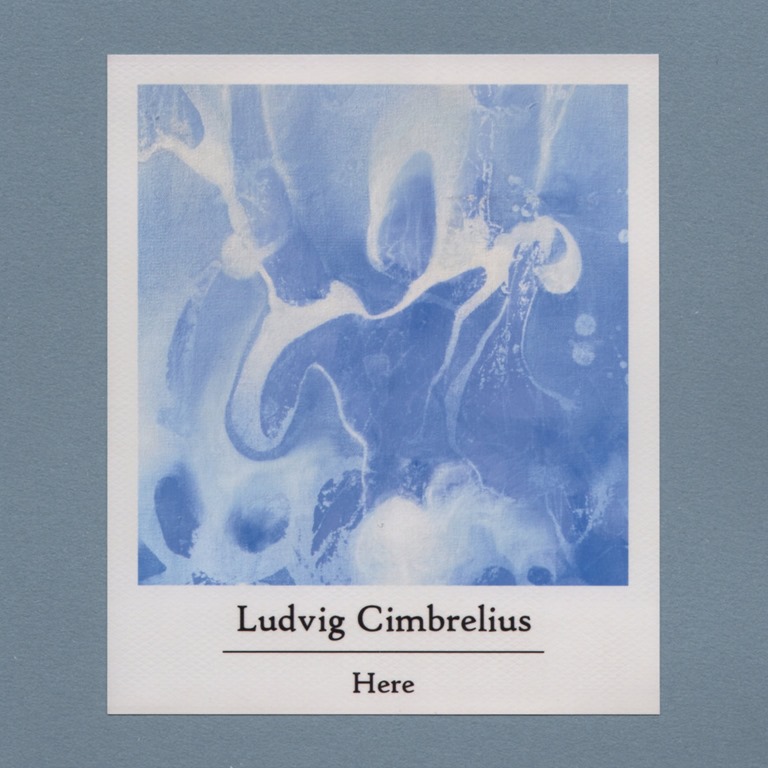
Ludvig Cimbrelius has been around for some considerable time now, and the label bio outlines how the Swedish musician – now based in Turkey – has, for over a decade, been producing music ranging from ambient and modern classical to deep electronic and minimal dub techno, under his own name and many different aliases such as Eternell, Purl, Illuvia, and others. His latest offering incorporates sound sources such as ‘calm acoustic piano, ethereal vocal spheres, atmospheric electric guitars and field recordings’

Despite containing only six tracks, Here has a running time of almost fifty minutes. These are expansive, contemplative works, and offer more than a hint of neoclassical gentility. Hearing ‘Left But Never Left’ is a wonderfully calming experience. It’s true, of course, that any individual’s response to anything musical or otherwise creative is entirely personal, but Cimbrelius transcends the layers of atmosphere between floating adrift and arriving in layers of mist and haze. The notes flow with space in between, and this space provides a lull in which to exhale, and to reflect. This piece, at just under four minutes in length, is just a prelude to the immersive soundscapes which follow.

‘When Warm Tears Fell from the Sky’ is a composition of the kind of ambience which evokes the soft wash of diluted watercolours spreading on paper to conjure, as if by some form of magic, a sky, a sea, fields, with just a few simple brush strokes, whereby the effect is greater than the input, at least to the eye. This is the sound of currents in the air, of mist, of cloud drifting, evaporating, reforming, changing shape as it moves through the sky.

The fourteen-minute ‘These Flames I Gently Let’ encapsulates the essence of the album in its entirety within its parameters. It begins with lilting, light-as-air piano and gradually melts into a soft swash which includes what sounds like rainfall and wordless vocalisations which slowly run into the broad flow of non-specific sound which slowly slips from being the focus of your attention into the background. It is, in this sense ambient in its purest form, falling into the background. ‘Lost in the Mists at Dawn’ is the soundtrack to the narrative vignette contained in the title: haunting, evocative, it conjures the scene in your imagination without actually saying anything, and its power lies within the depths of its wispy vagueness.

The execution of Here is magnificent. The tracks trickle into one another imperceptibly, creating a seamless sonic flow. The layers are interwoven so as to meld into a finely-textured gauze, and everything is so smooth, so soothing and soporific.

AA

a2808403183_10

Trestle Records – 18th December 2024

Christopher Nosnibor

Tout isn’t a seedy guy flogging – or trying to buy, at a cut-price – tickets outside a gig, but a band which, on this, their fourth album (bet you never guessed that) brings together aspects of contemporary classical, jazz and ambient, in addition to the ‘folk and new age traditions’ which influence their previous works. It follows and extends the trajectory of their previous albums, sequentially numbered with the exception of their last Live, released in 2017.

It’s certainly a lot to toss in together, and with no fewer than ten musicians contributing to this release, the compositions certainly afford a considerable amount of layering and offer much to process. Even after a few listens, I’m still digesting and on the fence as to whether the combined elements are appealing or not.

Jazz comes in almost infinite flavours, and it’s not the ‘nice’ jazz to which the cliché of the listener sporting a goatee and cardigan applies which is the strain that tantalises my taste buds – but Tout do sit perilously close to this at times. At others… they’re truly sublime.

One of their habits is to title the tracks – instrumental pieces, all – in such a was as read in sequence, they form a poem, although on Fourth, it ends abruptly, despite the full stop making it clear that this is no accidental cliffhanger.

I rob the rich to feed the poor

Which hardly is a sin

A widow ne’er knocked at my door

But what I let her in

So blame me not for what I’ve done

I don’t deserve your curses

And if for any cause I’m hung.

‘I rob the rich to feed the poor’ makes for an expansive, atmospheric start to the album, slow-swelling cymbals and understated percussion hover in the background while delicate sonic waves rise and fall, while smooth saxophone echoes out atop it all, growing increasingly excited toward the climactic finish.

It’s broad-brushed, sweeping synths and soft strings which provide the backdrop to ‘Which hardly is a sin’, where a strolling bass stumbles and stutters from time to time. ‘A widow ne’er knocked at my door’ marks something of a change in tone, with sparse acoustic guitar mournful strings bringing an altogether folkier feel in contrast to the jazz vibes. At the same time, it’s reminiscent of some of the post-rock which was all the rage circa 2005.

‘So blame me not for what I’ve done’ is truly magnificent: a minimal, piano-centred piece, it’s haunting and melancholy and leaves you feeling somewhat hollowed and bereft, and it’s apparent that – to my ears, at least – the less overtly jazz works are the superior ones on the album. Admittedly, that’s a matter of taste, but, objectively, Tout seem at their most inventive and creatively enthused when venturing into these different territories.

The album ends as abruptly as the poem it spins: one moment, ‘And if for any cause I’m hung.’ after a subtle, sedate start, is jazzing along, the bass strolling and ambling – and then suddenly it isn’t, petering out, unresolved. Et c’est tout. It’s well played, both literally and figuratively.

AA

a3531274275_10

COP International is incredibly proud to add another milestone release to the discography of this iconic band. The band’s first new studio record in more than thirty years, the Driving Black EP serves as a tantalizing prelude to their forthcoming album Strange Kind of Paradise (due February 2025). The EP offers three exclusive tracks alongside three distinctive mixes from the upcoming album, including one by the legendary producer John Fryer, renowned for his work with Depeche Mode, Nine Inch Nails, and Cocteau Twins; and another by the Lorries’ own bassist and producer, Simon ‘Ding’ Archer, known for his work with The Fall, 1919, PJ Harvey, and Pixies, who brings his signature experimental edge to the production.

Today, they’ve unveiled a video to accompany the lead track, and you can watch it here:

AA

a4237431651_10

After three years of silence, Pântano return in full force with their new single, "Inferno." The band, whose name translates to “swamp,” delivers a raw, sludgy southern rock sound with a touch of classic Alice in Chains seamlessly woven into the mix.

Staying true to their dark and melancholic essence, the band unveils a new lineup and an even more refined, mature sound on this latest track.

With Nuno Rodrigues (WAKO) on vocals and Arlindo Cardoso (Low Torque) on drums, Pântano now features Aires Pereira (Moonspell) on bass and Paulo Basílio (Ex-Votos) alongside João Arroja (Low Torque) on guitars.

"Inferno," mixed and mastered by the renowned Daniel Cardoso (Anathema, Anneke…), marks the natural evolution of the band, blending a melancholic and dark atmosphere with heavy, slow riffs imbued with a strong emotional weight.

The single is accompanied by an impressive music video, directed by Beatriz Mariano, which masterfully captures the intensity and introspection of this new chapter for Pântano.

Watch the video here:

AA

b2af49a0-3162-2f2e-3be5-0b29b32893c4

29th November 2024

Christopher Nosnibor

While the entirely of this EP has already been made available as individual tracks, some of which have made our ‘recommended streams’ pages, songs as standalone pieces are one thing, but understanding them in context can often be quite another.

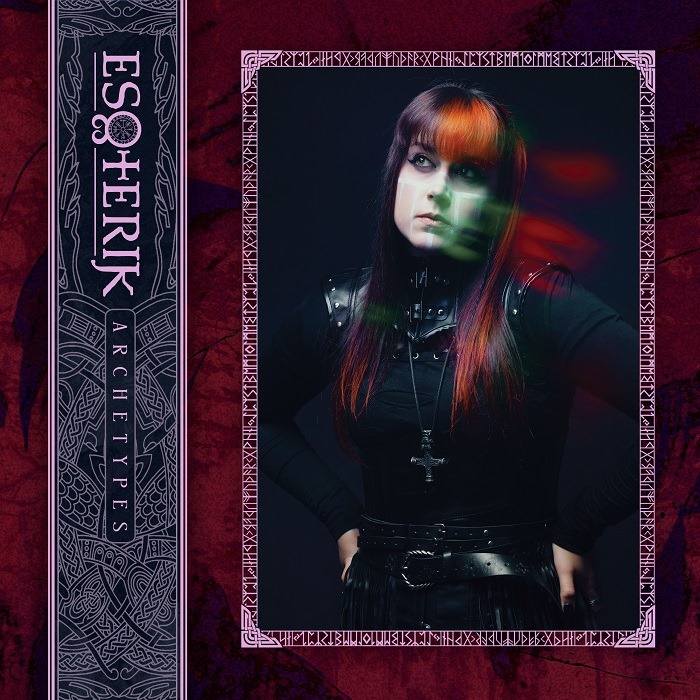
And so it is that Archetypes ‘explores timeless themes that have shaped societies for centuries. The band delves into the power of language and storytelling, celebrating legends that transcend time and culture. These stories, rich in symbolism and ritual, carry the wisdom of generations and continue to captivate audiences with their enduring lessons and sensational nature.’

Hearing the songs in isolation, the sense of thematic unity which unite them as an EP isn’t immediately apparent, particularly with the visual accompaniments of highly stylised neon-flashing cyber-tinged promo videos. They’re necessary – even essential – tools for grabbing attention in our hyper-stimulated, visually-obsessed world. Post some words, or some audio, and it’s like standing in the middle of a field at night dressed in black and expecting attention – but post an image, or a video, and people notice. It really is that clear-cut. It’s as if people need their media injected directly into their eyeballs, but listening the songs in sequence and only in audio, draws the attention to the music itself.

‘Mentor’ opens the EP, driven by a sturdy industrial groove and some tidy two-way vocals which form a dialogue and pivot around themes of disconnection while pitching a magnificently melodic chorus that really brings all the hooks. ‘Trickster’, the first song to be released from the EP, is bold and energetic, and if the backing is like a pumped-up disco interpretation of Depeche Mode, the belting vocals bring from-the-gut passion. The song’s overt pop sensibilities are enhanced with this raw edge, making it a clear and instant standout.

AA

As the title implies, ‘Shadow’ is darker, and finds the duo tunnelling deeper into the psyche and troubled waters, and satisfaction – or lack of – bubbles to the surface amidst the lyrics, and what filters through over the course of the EP is that as much as Archetypes is about the power of language, Esoterik are interrogating the shortcomings of language to fully convey complex emotions – the elements of which constitute our very DNA which ties us to those myths and legends of centuries past, and which, ultimately, are the essence of the human condition.

‘Hero’ makes for a strong, bombastic finale, the big drum-fills and powerful snare sound evoking the spirit of the 80s power ballad as they push to the conclusion with a surging chorus. Just how effectively they explore the elements of symbolism and ritual may be questionable, but as a superbly-realised slab of dark pop, Archetypes is hard to fault.

801465

THURNIN present the video clip ‘Arcturus’ as the first single taken from Dutch dream folk pioneer Jurre Timmer’s forthcoming new album Harmr (Old Norse for ‘grief’ or ‘sorrow’), which is slated for release on March 14, 2025.

THURNIN comment: “For the first advance single of this album, I have chosen ‘Arcturus’ the most obvious track,” composer and instrumentralist Jurre Timmer writes. “The track offers a mix of traditional Thurnin songwriting and a glimpse of the atmosphere that defines Harmr. This song celebrates the value of life, for there would be no grief without love.”

4689472b-02b1-7661-189b-77c15614f208

THURNIN’s third album Harmr was born out of the deep feeling of grief that only love can bring. The title refers to an old Icelandic word that is probably more literally translated as ‘grief’ while its contemporary meaning rather implies ‘sorrow’. The loss of one or even more loved beings is hard to bear for any person.

It is therefore hardly surprising that the lower key and a reduced tempo are permeating Harmr throughout most of the songs; and much more so than on its predecessor Útiseta (2023), on which THURNIN mastermind Jurre Timmer interpreted this numinous act as a way to commune with nature, and to gain spiritual wisdom in a time of introspection and transcendence.

5th December 2024

Christopher Nosnibor

Growing up in the 80s, when Wide Awake Club, and subsequently Wacaday was a huge thing, ‘Mallett’s Mallet’ engrained word association as a lifelong mental exercise. And of course, the rules “you mustn’t pause, hesitate, repeat a word, or say a word I don’t like… The one with the most bruises loses!” are indelibly etched in my mind.

Lemon Power reminded me of this, inadvertently, and certainly not by their own design, by triggering my brain to recall The Mighty Lemon Drops, Lemon Jelly, The Lemonheads, and Cat Power, for no reason other than spontaneous word association. I guess alternative music is packed out with lemons. The London-based duo, fronted by vocalist and guitarist Sere, with Ale on bass, bear precisely nil resemblance on any level, but I felt a compulsion to share my workings, so to speak.

‘I’m An Animal’ is pitched as ‘a stirring, introspective anthem exploring themes of escape and self-discovery, so the fact my mind escapes and ventured on a circuitous voyage of self-discovery before I even hit ‘play’ feel like reasonable preparation.

Although ostensibly the same song, ‘I’m An Animal’ is significantly different from ‘Animal’, which featured on their 2022 EP release A Ghastly Meaningless Aggregate. Over a minute shorter, it’s faster, more stripped back and at the same time, punkier, with more edge and more guts and drive.

It’s fascinating to observe just how a change of treatment can alter a song, and it’s evolved from a slow-burner with a nagging groove and ‘big’ chorus to a proper eye-opening slap. It shows that a good song is a good song however you spin it, but it does feel like they’ve really nailed it with this version, with its bold energy and sense of self-liberation. It’s time to let the animal inside loose.

AA

SBlue Web L24090216400

Ipecac is honoured to release the new album from legendary musician, composer and arranger, Jean Claude Vannier. Jean Claude Vannier et son orchestre de mandolines, out on Feb 14th, 2025 is a playful album of beautiful reveries composed on mandolin and accordion, that are both poetic and unrestrained. As a taster, the new track ‘La 2CV rouillée’ (‘The rusty 2CV’) has been shared.

About the new track, Vannier comments;

I’ve always dreamed of writing for a mandolin orchestra – the instrument’s tremors seemed apt to expose romantic and sentimental melodies. It brings back old memories.

On Sundays, my father used to take us to the countryside in his 2cv.

It’s a funny car, with the slightest change in speed, a flick of the brake or the gas pedal, and it rocks like a duck on the water.

During these drives, I was unable to see the landscape because I was seasick.

My father was an inventor, and had come up with a rudimentary air bag that went off at the slightest jolt.

Those rides in the countryside were a nightmare for me, and I now avoid trips in the 2CV…

A pinch of strings, a hint of childhood, melodies that touch the heart, orchestration that is always unexpected… these are just some of the elements to emerge from this album.

Listen to ‘La 2CV rouillée’ here:

AA

JCVandVBD645A2909copyrightLoAlestro-9903cf028a03cf3c

Photo credit: Léo Alestro