Archive for October, 2020

2nd October 2020

Christopher Nosnibor

Back in July, elk impressed with the Beech EP, a magnificently understated work of haunting grace. The project of 22-year old Leeds based multi-instrumentalist Joey Donnelly, elk has now evolved into elkyn, which comes with certain connotations of what elvin is to elves, and is certainly easier to find on-line.

This first release under the new moniker features re-imaginings of the songs from beech by family and friends, including Miles. (brother Mikey), Mark Peters, S.T. Manville, Tim Wright, and others.

It’s not entirely surprising that the artists who’ve reshaped the songs have focused on their dreamy quality, and Mark Peters’ soft, soporific take on ‘yue’, which was aired in advance of the release is representative.

With the exception of ‘something’, which on this release is retitled as ‘here’ (which sounds like a Depeche Mode doing dreamwave), it’s the same songs in the same sequence, but such a very different record.

Although being twice the length of the original, ‘avenue’ is perhaps the least radically altered, at least in terms of the song itself between an extended intro and outro. Elsewhere, Miles. brings some stark synths and waves of ambience, not to mention sampled narrative to ‘Seventeen’, and it’s a radical transformation as the softly-picked acoustic song becomes a wistful dapple-shaded shoegazer, with Joe’s voice floating on a cloud above it all. Shed Seven’s Joe Johnson retains the brittle fragility of ‘winter’, and the last song, ‘stupid world’ sees Tim Wright introduce some grinding, wheezing organ drone and some stuttering to add more weight and tension to the cracked melancholic introspection.

What makes this release is just how sensitive and considered the reworkings are, completely transforming the songs – in very different ways – while preserving their essence and integrity.

AA

AA

a2856295865_2

2nd October 2020

Christopher Nosnibor

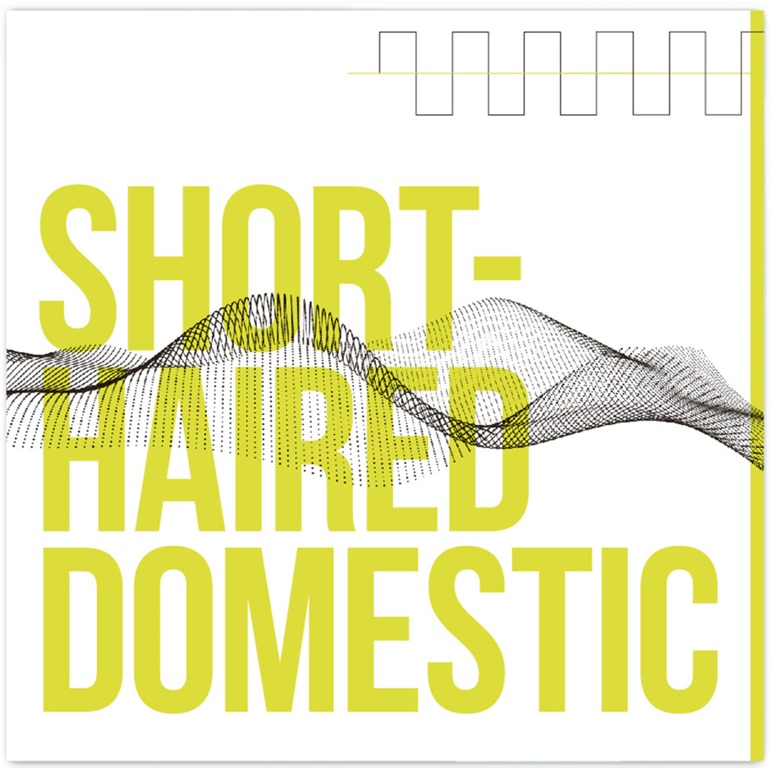
Having been brought into Talk Talk to assist with remixing on ‘It’s My Life’ in 1984, Tim Friese-Greene became an integral contributor to the band on their subsequent albums. Short Haired Domestic sees Tim come together with his wife, Lee, formerly of 90s act Sidi Bou Said and currently lead vocalist and guitar player for Pavlova.

As the liner notes explain, the vocals for each song are sung in a different language, and ‘have at their heart a breakbeat loop, sampled fragments, scratching, insistent funk and Latin rhythms, surprising appearances of acoustic guitar and just about every sound it’s possible to wring from a WASP synthesiser’.

This manifests as a collection of songs with a quirky charm to their style, which has something of a mainland European, vaguely gallic feel to it, and their touchstones of Stereolab and Francois Hardy, among others, sit comfortably. It’s so not my regular bag, but sometimes I need something to chill to, and a complete change of scene by way of a pallete-cleanser.

The titles are helpful in their explanatory nature but disclose little about the stance on the subjects being sung about – but that probably speaks more of a global Anglocentrism when it comes to song lyrics than anything – and also highlights that you don’t necessarily need words to appreciate a song.

It’s a laid-back sashaying groove and swinging beat that sets the scene with ‘A song in Latin about the importance of comfortable shoes’, and without a lyric sheet and translation, it’s hard to be certain, but it sounds like they rather like them. And who wouldn’t? Who says you can’t have style and comfort?

They hit an insistent funk groove of ‘A song in Spanish addressed to men who drive big cars’, and work it hard, while ‘A Song in Bulgrian for Lovers of Gin; is positively loungey in its laid-back jazziness, a head-nodding groove as smooth as the silkiest chocolate. Things get a bit Prince on ‘A song in Italian saluting his mother’, and there’s even a dash of piano reminiscent of Talk Talk on the slower, sparser head-nodding A song in Hindi for insomniacs’.

For their sugared pop coating of sunny melodies, these simple-sounding and accessible tunes are layered and steeped in experimentalism, and they pull it off with a deceptive ease.

AA

Short-Haired Domestic (album cover)

SPV Records – 2 October 2020

Christopher Nosnibor

It’s easy to forget just how absolutely massive The Mission were at their peak, packing out headline shows at Wembley Arena, Finsbury Park, and Reading Festival.

There was a time when Wayne Hussey looked like being the new Bono. Or something. And now he’s gone and done Band Aid for goths, with a rerecording of ‘Tower of Strength’ featuring a truly immense roll-call of luminaries from the gothier end of the alternative / post-punk scene to raise funds for covid charities around the world.

The press release reports that alongside Mission frontman Hussey, the project involves Andy Rourke (The Smiths), Billy Duffy (The Cult), Evi Vine, Budgie (Siouxsie and The Banshees), Gary Numan, James Alexander Graham (The Twilight Sad), Julianne Regan (All About Eve), Kevin Haskins (Bauhaus, Love & Rockets), Kirk Brandon (Theatre of Hate, Spear of Destiny), Lol Tolhurst (The Cure), Martin Gore (Depeche Mode), Michael Aston (Gene Loves Jezebel), Michael Ciravolo (Beauty in Chaos), Midge Ure (Ultravox), Miles Hunt (The Wonder Stuff), Rachel Goswell (Slowdive, The Soft Cavalry), Richard Fortus (Guns N’ Roses, The Psychedelic Furs, Love Spit Love), Robin Finck (Nine Inch Nails, Gary Numan, Guns N’ Roses), Jay Aston (Gene Loves Jezebel), Steve Clarke (The Soft Cavalry), Tim Palmer and Trentemøller, the latter of whom has provided a remix of the new recording.

Having properly got into The Mission by hearing ‘Tower of Strength’ during the weekly top 40 (I was 11 and my exposure to ‘alternative’ music had been quite limited at that point), the song has a certain special place on a personal level, and the likelihood is that it’s the same for many fans. Reworking a classic is risky, potentially an act of desecration or sacrilege (referential word-choice half-intended).

The EP contains four 2020 versions in total, with the regular single version, a radio edit, and three remixes.

In term of the instrumental backing tracking track, the single-version sound very like the original, only with some additional extraneous details and the meat where the bass and extra layers kick in stripped out. Meaning it’s ok, but while one of the major criticisms of The Mission has ben that they lean toward the bloated and bombastic, the fact is that was always a part of the appeal. But overall, it’s nicely done: the guest contributions, both instrumental and musical weave into one another pretty seamlessly, and there are no instances of any one person stealing the limelight with their overstepping delivery of a line. There’s no ‘tonight thank God it’s them instead of yoooouuuu’ moment, and this feels very much like a collective, collaborative, egalitarian effort, and I almost feel as if I could give it a virtual hug for that.

The nine-and-a-bit ‘Beholden to the Front Line Workers of the World’ mix comes closest to the basking, expansive glory of the original. It’s a song that’s meant to just keep going, and this version does just that.

Trentemøller goes technoambient with his reworking, and kudos for breaking the mould, and double for the fact that it works. It’s all in the strings, of course. The Albie Mischenzingerzen remix is drummy but doesn’t seem to bring quite as much to the party.

It might not quite pack the power of the original, but it’s not far off: the people playing on it are worth hearing, and it would be churlish to criticise a release made with such positive intentions. In bleak times, Hussey and his pals aren’t only a tower of strength, but a beacon of humanity, and it’s a powerful thing.

AA

ReMission International (cover artwork)

13th September 2020

Christopher Nosnibot

Barnyard Baptism’s biographical info is nil, but the cover art to their new EP, 9:58 is probably all the info you need: it’s dark and disturbing, and it’s not entirely clear what you’re looking at beyond a face and a door. Mostly it’s a blur, but a blur that positively screams mental derangement, anguish, psychological torture, distress, and pain.

And this is precisely what Barnyard Baptism articulate with their full-on sonic assault: pain and anguish and a soul-sapping sense of being utterly overwhelmed yet fermenting a frenzied disquiet, burning from the inside is what’s conveyed by the tempestuous tumult that tears from the speaker from the offset, with ‘Dead on the Water’ plunging us deep into the harshest of harsh noise explosion, a blizzard of white noise ruptured by blasting nuclear winds and the occasional piercing shriek of ultra-sharp, shrill feedback that cuts through like a rapier puncturing a gauze drape, tearing to shreds in an instant any smoothness of surface.

‘Negative Headspace’ is a gouging blast of mid-range nastiness, a full-force blast of frequency with a tearing, serrated edge. There’s nothing to be extracted here, no musical revelation: this is nothing but all-out sonic horror, noise on noise.

The title track is mined from a seem of vintage power electronics with an experimental edge, with a thrumming oscillating drone crackling into snarling distortion. As a child, I used to suffer a recurring nightmare, where things would present as line drawings, smooth and silent, before being crumpled like paper and destroyed in a black scribbly mess. These dreams were silent – conspicuously so – to the extent the silence filled my head to a roar, and the crumpling of the lines actually hurt, crumpled my cranium like distortion expressed without sound. These dreams still haunt me now, at 45, and the way these gliding hums crunch into a distorted mess of noise reminds me of that. On a personal level, it’s painful, traumatic. In its own context, it’s still painful and traumatic: this is head-shredding abrasive noise of the highest order, and it hurts, both physically and psychologically.

The noise swells and grows in pace, volume, and sheer nastiness over the course of the last couple of tracks, which bled into one another in a billowing bluster of pulverising distortion.

Barnyard Baptism don’t do breaks or contrast, and there are no tranquil segments or rests here; no spaces between songs, no breaks in which to restore a sense of equilibrium: this is relentlessly brutal, and there isn’t a moment to breathe during the crackling horror of 9:58 – no so much as a moment of calm, and Barnyard Baptism are utterly obliterative.

AA

a3430755877_10