Archive for February, 2017

Ahead of the release of the album Burning the Threshold, Six Organs of Admittance offer up second single release ‘Threshold Of Light’.

Burning the Threshold brings a wealth of Six Organs-styled lightness into one of his sweetest musical meditations yet. A head-full of ideas were driving Ben Chasny to think and speak music as a spirituality superimposed onto a reality, with the ghosts of both whispering at each other. In the end, what sits in our listening ears is the sound of communion. And with a brain that at times seems to throb with such intensity as to possibly burst the seems of his skull, Chasny’s perpetual thirst for knowledge and inspiration often comes from unlikely places. Unlikely for many, at least – but most songs on Burning The Threshold are coloured by a historically Chasny-an commonality.

This couldn’t be more true of the album’s second single: ‘Threshold of Light’ is in fact completely congruent with the Six Organs school of (flowering) thought. Inspired by the works of Algis Uzdavinys and Aaron Cheak, ‘Threshold of Light’ is a spectral mediation on ancient myths and alchemy; a sly nod back to ‘S/Word and Leviathan’ found on Asleep on the Floodplain. ‘Threshold of Light’ is draped in shadowy illusions and ethereal sounds, as weeping harmonies stretch and transport Ben’s words from this astral plane to another. Listen and find details of the record release show in London, and other dates below…


SIX ORGANS OF ADMITTANCE – RECORD RELEASE SHOW

Wednesday February 22nd at St. Pancras Old Church in London

(with support from Alex Neilson + Amy Cutler)


SIX ORGANS OF ADMITTANCE – US TOUR
02/03/17 – Vancouver, BC at The Cobalt

03/03/17 – Seattle, WA at Fremont Abbey Arts Center

04/03/17 – Portland, OR at Bunk Bar

06/03/17 – San Francisco, CA at The Chapel

07/03/17 – Los Angeles, CA at Bootleg Bar

08/03/17 – San Diego, CA at Soda Bar

23-26/03/17 – Knoxville, TN Big Ears Festival

28/03/17 – Atlanta, GA at The Earl

29/03/17 – Asheville, NC at Mothlight

30/03/17 – Raleigh, NC at Kings

31/03/17 – Washington, DC at DC9

01/04/17 – Brooklyn, NY at Union Pool

02/04/17 – Boston, MA at Great Scott

03/04/17 – Portland, ME at Space Gallery

05/04/17 – Philadelphia, PA at Johnny Brenda’s

06/04/17 – Pittsburgh, PA at Club Cafe

07/04/17 – Cleveland, OH at Beachland Tavern

08/04/17 – Detroit, MI at Third Man Records

09/04/17 – Chicago, IL at Empty Bottle

10/04/17 – Minneapolis, MN at 7th St. Entry

12/04/17 – Milwaukee, WI at Collectivo Coffee

14/04/17 – St. Louis, MO at Duck Room at Blueberry Hill

15/04/17 – Louisville, KY at Zanzabar

Room40 – 17th February 2017

Christopher Nosnibor

The title carries an implicit connotation of juxtaposition. It’s also a direct reference to the 2011 text by Lauren Berlant, which explores power and the ‘cruel optimism that has prevailed since the 1980s, as the social-democratic promise of the postwar period in the United States and Europe has retracted’ and the collapse of the liberal-capitalist dream.

English explains the album’s context as follows: ‘Over the course of creating the record, we collectively bore witness to a new wave of humanitarian and refugee crisis (captured so succinctly in the photograph of Alan Kurdi’s tiny body motionless on the shore), the black lives matter movement, the widespread use of sonic weapons on civilians, increased drone strikes in Waziristan, Syria and elsewhere, and record low numbers of voting around Brexit and the US election cycle, suggesting a wider sense of disillusionment and powerlessness. Acutely for me and other Australians, we’ve faced dire intolerance concerning race and continued inequalities related to gender and sexuality. The storm has broken and feels utterly visceral. Cruel Optimism is a meditation on these challenges and an encouragement to press forward towards more profound futures.’

For Cruel Optimism, English has enlisted, amongst others, Swans contributors Norman Westberg and Thor Harris. As their recent excursions outside Swans demonstrate, they are both musicians capable of magnificently nuanced sound – a stark contrast to the shuddering power of Swans in full force. They bring subtle, understated performances to the pieces on which they feature here. Tony Buck and Chris Abrahams of The Necks are also featured, although again, their input is suitably muted and the line-up is far from overplayed in the promotional materials which accompany the album.

A sense of contrast and contradiction is woven into the fabric of the soundscapes which combine to form Cruel Optimism, as soft layers drift down over coarser, grainer sonic terrains beneath. There are moments of darkness, shadowy, vaguely unsettling but not overtly eeriy or horrific, tempered equally by moments of tranquillity and light ‘Hammering a Screw’, as its title suggests, is an awkward, jarring piece. Sinister chords jam and jolt abrasively, rupturing the soft tissue of sound which hangs almost invisibly in the air while fluttering heartbeats pulse erratically way down in the mix. ‘Negative Drone’ rumbles ominously, a formless, amorphous cloud of sound which bleeds into the must-like atmospherics of ‘The Somnambulist’. The album ends with the entwined drones of ‘Moribund Territories’, which offers a tone of bleakness which intimates the dissipation of optimism in the face of a chilling future.

Writing in October 2016, English described the album as an album of ‘protest against the immediate threat of abhorrent possible futures’. Depressingly, those futures have arrived, and we are now living in dark, dark times. But for all of the turbulence which motivated the compositions and the underlying anxiety poured into their realisation, Cruel Optimism is a beautifully calm album, in the main – or at least, it maintains a calm exterior. As such it’s a work of peaceful protest, which succeeds in making itself heard in a loud, violent, and ugly world.


RM470_Lawrence_English_Cruel_Optimism

Symbol Of Domination – 30th January 2017

Christopher Nosnibor

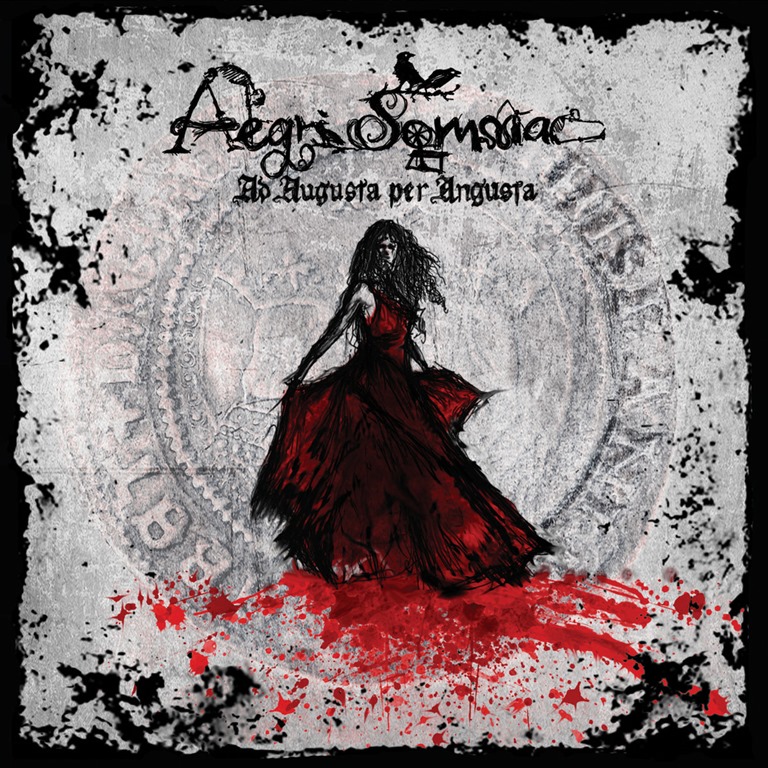
The album’s title translates as ‘through difficulties to honours’, and this collection of Iberian folk songs, popular in the late 19th and the early 20th century conveys nothing if not the supremacy of strength of character, and a sense of journey, through adversity to triumph in a way which speaks of the resilience of the human spirit, and the human soul.

The album’s accompanying blurb sets the scene: ‘A travel through the rural Spain watered by our ancestors’ sweat and blood, an approach to the magical Spain with its lights and its shadows, and a gaze in to the abyss of the black and tenebrous Spain with the inner cruelty and brutality of human beings. Pieces of memory, tradition, secrets and myths transmitted over the years from generation to generation, around bonfires, while long working days under the sun or during celebrations. Small samples of popular wisdom which, unlike others already entered into the mists of time and have been rescued from our elder memory before their demise.’

Folk music, by its nature, tends to be narrative, but also dramatic and allegorical. While the lyrical content is, admittedly, entirely lost to me, the sentiments conveyed by these ambitious reshapings of traditional compositions remain intact, and, using contemporary rock instrumentation Aegri Somnia succeed in rendering them powerful and moving in an alternative context.

To unravel the workings of this project, which was pieced together over the course of some five years, some biographical detail may be useful: formed by Cristina R. Galván “Lady Carrot” from the Castilian folk music scene and Nightmarer from the avant-garde metal projects As Light Dies and Garth Arum. Aegri Somnia is a folk / dark wave duo from Madrid, Spain.

If it sounds like a curious hybrid, Ad Augusta Per Angusta is proof that it’s one that can work well. It’s loud, dark, metallic. It’s contemporary, but also timeless.

‘Seran’ launches the album with an immense swell of theatricality, huge swathes of post-metal guitar propelled by a spiky drum machine bringing force and layers of drama to the gothic symphony.

‘Señor Platero’ is a beautiful, graceful folk song – played in a full-throttle metal style. The guitars burn, slabs of molten lava over which Galván’s operatic vocal soars s if swooping from the heavens to grace this interzone between the earthly and the ethereal. The loping drums and serpentine vocal of ‘La Niña de la Arena’ is high-tempo and high-power, but features some neatly executed techno-industrial percussion breakdowns. Entirely incongruous with the origins of the material, such features serve to highlight the versatility and absolutely timeless nature of traditional folk music.

Elsewhere, on ‘Charro del Labrador’, the violent, top-end-orientated drum track duels with a chorus-heavy picked guitar line to create a sound that will resonate with anyone who’s heard – and enjoyed – a bootleg containing demos by The Sisters of Mercy from circa 1984. I’m probably writing for myself alone at this point, but this is by no means an album exclusively of interest to old goths. Far from it.

The album’s sound is dominated by big, grainy, up-front guitars with a thick, metallic edge: sometimes almost overbearingly so. That’s by no means a criticism per se: the production values are unusual, in that the guitar sound is as ‘unfiltered’ as it is up-front, a shade messy, and prone to burying everything else in the mix, including the vocals. All of this adds to the potency of Ad Augusta Per Angusta, an album which yields rewards through perseverance. Exactly as the title foretells.


Aegri Somnia

GoldMold Records – 10th February 2016

Christopher Nosnibor

Once upon a time, everything was tapes. The romanticism of a frustrating and often inconvenient medium has endured perhaps largely on account of the potential impermanence of their nature: how many music fans of the cassette age mourn the loss of a beloved recording on account of a moment’s forgetfulness which resulted in overrecording, or some freak event which resulted in demagnetisation? How many hours spent spooling and respooling tape which had become mangled in the heads, or otherwise stretched or snapped? The albums of yesteryear, all recorded to quarter inch tape, slowly decaying are an integral backdrop to our appreciation of the existence of the sounds they contain.

But is with books in the printed medium over digital text, it’s easier to form a bond with an artefact which feels somehow personal and personalisable. Just as a book with various creases and marks, perhaps even annotations develops a tangible, unique sense of ownership a Kindle edition never can, a playlist can never have the same resonance as a lovingly-sequenced mix-tape with hand-scribbled notes accompanied by a creased post-it or page from a spiral-bound notepad containing a covering note, folded into quarters and stuffed inside a scuffed case. On an emotional level, at least, sonic fidelity counts for less than fidelity to a pure moment, and it’s the thought that counts: those analogue documents of yesteryear can contain the entirety of a crush that dissipates in weeks or the early stages of a lifelong relationship on any level.

While the debates over the nostalgia ‘industry’ continue to rage, it’s fair to say that the renaissance enjoyed by the cassette is not a purely economic one. After all, the costs involved in burning a bunch of CD-Rs and stuffing them into handmade sleeves is negligible, and even though a bulk batch of 100 C30 cassettes can be obtained for in the region of 55p per unit, the time and effort required to dub even a small run of tapes is proportionally greater than any number of CD-R burns. But the changing nature of the music industry means that where it’s at now is in the small-scale, the personal, and the idea that an artist or label has invested time and personal attention on a product imbues the object with an instant emotional resonance.

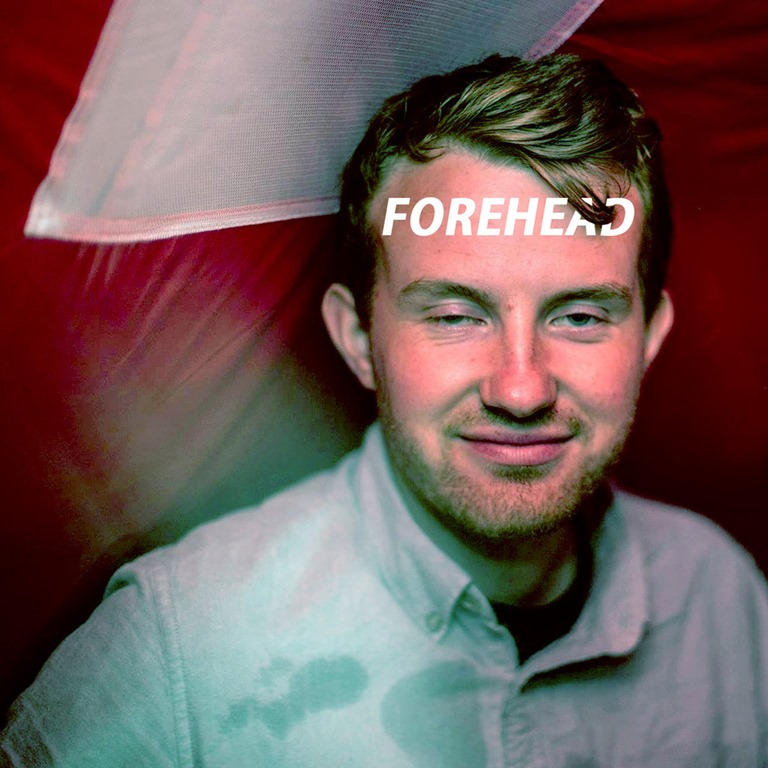
The debut release from Glasgow’s Forehead – the vehicle of Sean Garrett (said to be ‘the shyest frontman you’ll ever meet’ and mother goose of the Lovely Ladies) – is appropriately named, as it is being released – if you hadn’t already deduced – on (baby blue) cassette, in a limited edition of just 15. It’s also being released as a download of course. Because no artist makes a release exclusively for 15 people.

The blurb notes that the four tracks contained herein ‘have been about for a while but are only being released now, a testament to Sean’s wholly unwarranted modesty’. And yes, the songs are superb, in a sketchy, nervous, hesitant yet achingly sincere way. You get the impression that Garret’s shyness is integral to the material, to the extent that its awkwardness defines what makes it special. And by no means interpret awkward as clumsy: there’s a skilled songwriter hiding behind the sonic fog here.

Regardless of the protracted journey between conception, recording and release, in keeping with the EP’s title, Bedroom Tapes conveys the spirit of 90s analogue enthusiasm. Low-key, lo-fi indie rock songs, reminiscent less of Pavement and more of Silver Jews, define the Forehead sound. This only serves to amplify the nostalgic quality of the release, evoking the excitement of hearing something stubbornly lo-fi, dubbed from a cassette or a record, the grind of a worn stylus on cheaply-pressed vinyl, for the first time.

Forehead also captures the awkward shyness of J Mascis on ‘Honest’, and the swampy plod of ‘Corner Pieces Falling Apart’ bursts into slanted psych-hued noise before crawling off to hide under the table.


Forehead

10th February 2017

Christopher Nosnibor

If dreampop has overbearing connotations of weak and wispy, vague and ethereal, then the slant on the genre VEYU bring on ‘Where Has The Fire In You Gone?’ a taster of their forthcoming EP, ‘Underbelly,’ will likely confound the expectations of many. The chiming guitars and layered atmospherics are all present and correct, but they’re married to a hard-driving and insistent rhythm track that owes more to the conventions of rock.

Chris Beasley’s vocals are distinctive and commanding. Shifting effortlessly from a delicate, haunting falsetto to a strong, emotionally forceful tenor, comparisons to Morten Harket are perhaps obvious but entirely justified. But then, A-Ha were fantastic at penning pop songs which are both gripping and moving – a fact perhaps eclipsed by their biggest hits – and with elements of early New Order also in the mix, VEYU look capable of marking out their own territory in the contemporary musical landscape.


Christopher Nosnibor

Sometimes, stuff just gets buried in my inbox. People – bands, PRs, family, friends – all probably figure I’m ignoring them, or just being a twat as usual. The latter may well be true, and as for the latter, perhaps so, but unintentionally. John Peel always used to make a point of listening to everything he was sent. Unfortunately or otherwise, depending on your perspective, I’m not John Peel.

“We all have that need to break out of the cycle of daily life,” says the band’s guitarist and vocalist Dein Moore. He’s right. I’m at work all day every day during the working week, which makes wading through review submissions hard. So, yeah. I’m almost six months late this this. But better late than never, right?

The seven tracks on Kleptocracy showcase the band’s immense range, often within a single track. Opener ‘Alleviate’ begins quiet, lilting, an amalgamation of folk and prog with a distinctly mainland European flavour, before rupturing into a surging alt-rock climax.

Salsa rhythms clack through the delicate, supple guitars and build gradually on ‘Colour Tone’, and if ‘Autumn Leaves’ manifests as a rather middling, mellow radio-friendly acoustic rock number, the soulful depth of the vocals have a certain appeal. There are also elements of 8 Storey Window (whatever happened to them?) and Amplifier in the arrangement, and the comparisons carry through on the driving title track, too.

There’s plenty of meat to Kleptocracy, but also a lot of detail, making for a neat balance and an EP that’s got a fair bit to hold the attention.


Sonitus

SpaceFest presents a brief documentary about the latest experience with Pure Phase Ensemble. In its current incarnation, the collective is led by a true legend: Anton Newcombe of The Brian Jonestown Massacre, along with with Emil Nikolaisen of Scandinavian rock band Serena Maneesh.

Filmed by RSU / Agencja Vizualna, this film presents a sneak preview of what is to come on the ‘Live at SpaceFest!’ album and the story behind Pure Phase Ensemble 6. Every December during Gdansk’s illustrious SpaceFest!, an eclectic group of musicians from across Poland are joined by a guest curator from abroad to form Pure Phase Ensemble. The group’s makeup constantly changes, guided by the artistic vision of a new curator every year and directed by Karol Schwarz of Nasiono Records who has been responsible for its musical cohesion from the very outset.

Through improvisation at a workshop organized by Nasiono Records and SpaceFest!, the musicians produce a set of unique songs during a week-long workshop ahead of the festival at the Laznia 2 Centre for Contemporary Art in the city’s Nowy Port district, seeking inspiration amidst its post-industrial atmosphere. The festival then culminates in this music being performed and recorded in real time for the inevitable album release.

Anton Newcombe espoused one rule for this experiment – that there are no rules when making music… and one standard… “get weirder… be heavy. and dreamy. but not pointless”.
Pure Phase Ensemble 6 is comprised of 8 musicians, including six from emerging Polish alternative bands: 
Karol Schwarz (7faz, KSAS) – guitar, vocals
Olga Myslowska (Polpo Motel) – vocals, keyboard
Maciej Karminski (Jesien) – drums
Marcin Lewandowski (Judy’s Funeral, Castlings, Soon) – bass guitar
Jakub Zwirello (Oslo Kill City, Szezlong) – guitar
Kacper Graczyk (Aiodine, coding) – electronic beats, synths, backing vocals

“I prefer to hear the sound bouncing off the walls and most festivals are outside and have time limits and various handicaps…I am more or less a jazz folk guy, I’m not an entertainer there to jump up and down and get you pumped…I just do as I feel…,”says Anton Newcombe. “I see myself as an idea person. I play like 80 instruments in as many ways as I can reinvent them because I am not a virtuoso… I want to contribute to Polish culture by writing at least one song that is worth listening to.”

In past incarnations of Pure Phase Ensemble, the group was curated by Mark Gardener (Ride), Laetitia Sadier (Stereolab), Ray Dickaty (Spiritualized), Steve Hewitt (Placebo), Jaime Harding (Marion), Chris Olley (Six By Seven), and Hugo Race (The Bad Seeds, The True Spirit). Nasiono Records’ very own Karol Schwarz (7faz, KSAS) has been responsible for the Ensemble’s musical cohesion from the very outset.

You can watch a preview of the forthcoming documentry here:


Moabit Music – 27th January 2017

Christopher Nosnibor

Despite having three previous albums to her credit, including one with Gudrun Gut, this is my first encounter with Canadian spoken word artist Myra Davies. I sometimes wonder, as an occasional spoken – or shouted – word performer myself why there aren’t more talkers putting out spoken word recordings. As a medium, spoken word is enjoying a surge in popularity, with both open mic and curated spoken word nights springing up all over, in addition to those longstanding ones which have survived, sometimes by virtue of being the only platform around for a form of entertainment which is, one could argue, the oldest of all.

There are a fair few big name authors who have extensive catalogues – Charles Bukowski, William Burroughs, Henry Rollins are among the first names which spring to mind – but apart from the odd clip on YouTube, it seems that very few writers who read aloud commit their voices to the recorded medium. Granted, some writers simply aren’t cut out to perform, and sadly, their readings to their material a disservice. But then, when done well, performance can bring a piece of writing to life and convey elements of the work not always immediately apparent to a reader. It’s all about the emphasis, the intonation. And there’s nothing to say spoken word recordings have to replicate the experience of those readings which take place in pubs and libraries: there is infinite scope to render the words very differently and to add myriad depths and dimensions – as Joe Hakim’s collaboration with Ashley Reaks and the recent album by The Eagertongue evidence – when done well, spoken word can be exciting and can reconfigure whatever perceptions one may have of the genre – which, of course, isn’t really a genre. Because spoken word can spill into so many other fields, and far beyond rap at that. Kate Tempest? C’mon, please! Her accessible, right-on doggerel may be well-meaning, but it’s little more than sixth-form poetry delivered in a hip-hop style without the beats.

On Sirens, Myra Davies brings the beats, thanks to her two musical collaborators, Beate Bartel and Gudrun Gut, who provide the backing to alternate tracks Despite this, Sirens demonstrates a remarkable cohesion, and doesn’t flip-flop between styles. Davies is a fantastic orator: she’s not only blessed with a cool, laconic tone, which benefits from her dry Canadian accent, but she’s also got a real sense of what works for narrating her own words. Sounds simple, but many writers lack this skill.

‘Armand Monroe’ sets the tone: sparse, angular, electropop with a funk groove, it’s cold yet fiery, as Davies spins out a succession of evocative imags. Jittery, tense robotix with propulsive, grinding synths abound, and wibbly loops and sumptuously spacey motoric beats dominate the album. ‘Golddress’ is a taut effort: listening through ‘phones, I find I have a racing pulse and my sense of anxiety increases as the track builds: it’s steely, detached tone is curiously out of kilter with real time and current space, it’s hard to let it simply pass.

Instead of sounding like a retro hash of futuristic music from the 80s – to which it does bear clear parallels – Sirens captures a sense of alienation, of otherness. It’s not simply in the weird doubling and echo-based effects on the vocals, or the treatments of the drums, or the twitchy, slowly warping effects of the synth backings – all of which contribute to Sirens being far more than a ‘spoken word’ album – but a combination of all of these factors, with the addition of something intangible. Perhaps it’s simply the restrained force and clinical focus of Davies’ delivery of words which are both gritty and discomforting. Ultimately, it comes down to the fact that Sirens is a superlative work of art. A hybrid of spoken word and electro-pop / coldwave / etc., it represents a perfect creative synthesis.


Myra Davies Music by Beate Bartel & Gudrun Gut – Sirens