Archive for January, 2017

Leonard Skully Records – 9th December 2016

James Wells

I’m growing rather weary of arty shots of naked or semi-naked women adorning the covers of releases by post-rock and shoegaze bands. And shit post-metal and post-hardcore bands. Everything’s post-something now, and I’m beyond weary of that. But we live in a click-bait world where adolescence is suspended in perpetuity, and despite the fact that everything’s freely available and as hardcore or strange as you want it at the click of a button, there’s still a certain lure in the risqué.

Call it art – and it should be possible to do so – but the prevalence of the practice makes it feel hollow, cheap and exploitative. ‘Yeah, let’s slap a chick on the cover of our meandering, ponderous post-rock EP… it’ll make us look arty and interesting and like we know photographers who can get girls to pose for them. Incidentally, I hate photographers as a rule, especially the ones who manage to make like they’re ‘safe’ aren’t sleazy… and no, not because I’m jealous. I really do just think they’re cunts.

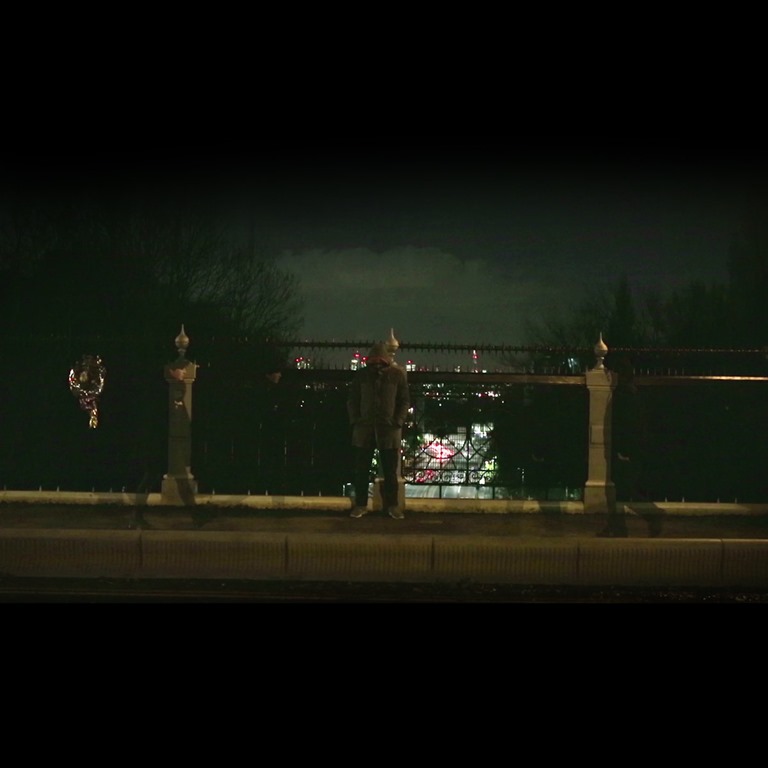
The_Veldt_-_In_a_Quiet_Room

In a Quiet Room’, the single cut from The Veldt’s preposterously-titled The Shocking Fuzz of Your Electric Fur: The Drake Equation has an arty black and white head and shoulders shot of a woman, or a girl, by way of a cover. Apropos of absolutely bloody nothing. It certainly says nothing of the layered, textured, murky, glitchy, drum ‘n’ bass influenced soulful post-rock sonic expanses they conjure, the trickling cymbal work which grips a tight tension over squalling, drifting guitar treble on the EP’s opener ‘Sanctified’ or the shimmering post-rock / r’n’b crossover of said single ‘In a Quiet Room’.

Quite how comfortable I am with their seemingly incongruous but seamlessly smelted hybridity, I’m not sure, but there’s no faulting its execution. The Veldt get atmosphere, and they get sleekness. I’m not sure I get it, or the appeal, but it’s neatly executed and sounds nothing like the cover art suggests.


Veldt EP

PIG mark the release of new album ‘The Gospel’ with a UK tour, for which the Lord of Lard Raymond Watts has enlisted former KMFDM colleagues En Esch and Günter Schulz, Greg Steward aka Z.Marr (formerly of Combichrist) and Galen Waling (Left Spine Down/16 Volt).

The ‘Swine & Punishment’ tour is jointly headlined with Mortiis. Dates are as follows :

10.03.17  NOTTINGHAM Rescue Rooms

11.03.17  GLASGOW Ivory Blacks

12.03.17  NEWCASTLE Think Tank

13.03.17  YORK Fibbers

14.03.17  SHEFFIELD Plug

15.03.17  MANCHESTER Ruby Lounge

16.03.17  BRISTOL The Fleece

17.03.17  NORWICH Epic Studios

18.03.17  LONDON The Garage

Tickets can be purchased here.

PIG and Mortiis have recently reworked one of each other’s songs for new remix records. PIG’s is entitled Swine & Punishment and will be released in May. It also features remixes by the likes of Chris Vrenna (as Tweaker), Kanga, Skold and Marc Heal of Cubanate (as MC Lord Of The Flies).

Meanwhile, you can watch the video for ‘The Diamond Sinners’ here:

Southern Lord – 20th January 2017

Christopher Nosnibor

It’s part and parcel of the music critic’s remit to know anything and everything about all music, and to have an opinion on it all, too. More importantly, the music critic’s job description entails knowing more about music than you, irrespective of anything. Go on, talk to me about music. I’ll gush about some of the things you life if they’re cool, and I’ll shit over everything else, demolishing your favourite bands on which because I’m the fucking expert. Why? What drives this propensity for inordinately cunty behaviour? Think about it. In the age of the internet, everyone’s a fucking expert. So how else do we justify our position if not by proving we’re more expert, more opinionated and more eloquent in our critiques?

So, it’s confession time: much as I dig a fair bit of proper, old-school US hardcore, I do not profess to be an expert. Having not heard of Uniform Choice, I asked a friend of mine who’s a proper fan of US hardcore for his opinion on Uniform Choice. He hadn’t heard of them either, which means he’s not as much of a fan or expert as I took him for, or Uniform Choice are really bloody obscure. Either is equally likely, and Southern Lord’s commitment to excavating lesser-known bands of the heyday of hardcore is laudable.

But I did have misgivings about Uniform Choice: the press release promises ‘furious hardcore energy and a signature vocal delivery combine with empowering lyrical output to formulate one of the most renowned and longstanding albums of the ‘80s hardcore scene.’ ‘Fourteen straightedge anthems’ I can handle, but something doesn’t sit to comfortably: namely, the fact Uniform Choice are pitched as ‘California’s godfathers of positive hardcore’.

‘It’s going to be shit,’ I told my friend.

‘You need to be more positive,’ he replied.

‘Ok, I’m positive it’s going to be shit,’ I told him.

I’m funny like that. It’s the way I tell ‘em.

But really, isn’t positive hardcore a dismal oxymoron which sits in the same field as Christian metal?

Sonically, Screaming For Change, their first full-length album, originally released in 1986, is incendiary, a blistering, fiery powerhouse of punk rock noise, an album which encapsulates the ferocity, the intensity, and the raw, brutal determination of the early hardcore movement to make a difference. The songs are – as you’d expect – hard, fast and short. The drums are hell-for-leather and the guitars a furious chug. The production is surprisingly crisp, with clear separation between the instruments. Screaming for Change finds Uniform Choice exploit many popular punk tropes, with terrace-chant ‘choruses’ – the title shouted out a few times, as on ‘Use Your Head’ and shouted vocals bellowing out the expletive-filled lyrics so fast half the words are impossible to catch.

It’s all about the force of expression, and more about the sentiment than the melody: ‘it’s all the same / and I’m tired of taking the fucking blame!’

The ‘positive’ aspect doesn’t come across as preaching, and despite titles like ‘Straight and Alert’ and ‘My Own Mind,’ ‘Don’t Quit’, Uniform Choice are pissed off and looking to smash the system. But instead of blind nihilistic rage, theirs is a message that celebrates the idea that there are alternatives, that you don’t have to follow the crowd, that shit as everything is, you don’t have to perpetuate the same shit yourself. And I’m down with that.


tp0009c_SP_Gate_Cover

Grunge is not dead. What’s more, with Hands Off Gretel, it’s kicking, scratching an hollering loud and angry. Having grabbed our attention last year, they’re starting 2017 in suitably fiery fashion, with a new self-released video. ‘World Against She’ is an angst-spitting belter. You can watch it here, and we srongly recommend that you do:

ELaB Records – 10th February 2017

Christopher Nosnibor

Being a teen of the late 80s and early 90s, I discovered curve through the pages of the music press as was, and absolutely bloody loved them. It’s perhaps hard to appreciate now, in these jaded, music-saturated ties, just how exciting it all was back then. I’m not disparaging the current music scene: far from it. I find new bands which excite me on a weekly basis. But that’s part of the problem: it’s all there, streams and links shared by friends and reviews rippling across social media within hours of posting by a single person of note. And said person of note can be anyone with a high media profile. Back then, it was all about the ability of a critic to capture the imagination, and then for the music fan to seek it out. If you were lucky, John Peel would be spinning something by the act in question. If not… well, you’d got legwork to do. If it sounds arduous, think again: it was fun. It was rewarding.

Anyway. Post-Curve, Dean Garcia formed SPC ECO with his daughter, Rose Berlin. The parallels between this current vehicle and Curve are abundant, to the extent that they require no comment: you can likely find those observations elsewhere all over the internet, and such duplication is such a bore.

What you want – need – to know is that this EP which features five tracks which break the mould: instead of bursting with compressed guitar and mechanised drum-machine led shimmering walls of sound, these are hushed sedate and understated works. Restrained and dreamily subdued as they are, they’re rich in atmosphere depth.

Instrumentally, ‘Under My Skin’ has hints of Moby and The XX about it.. It begins quietly, Rose’s voice close to the mic singing quietly and backed by only a brooding piano. But there are layers building beneath, with tapering synths and delicate reverb filling the space and the space between.

‘Creep in the Shadows’ is a weird one: the bloopy autotuned vocals are so heavily processed as to be essentially robotic, detached, unhuman, and they drift over a backing so minimal as to be barely there: a sparse beat clacks away way back in the distance as a super-low, dubby synthesised bass wanders at will. There’s practically nothing to get a hold of, and it’s so produced it’s hard to position. Contrast that with the lo-mo tri-hop dub of ‘Lt it Be Always’: murky beats and swampy bass conjure dark atmospherics while Berlin comes on like Beth Gibbons at her most hauntingly ethereal.

In its pursuit of the fragile and the paired-back, this EP is by no means SPC ECO’s most immediate release, and doesn’t offer the dynamics of some of their previous releases, but it does follow their recent trajectory which has seen the duo create music of an increasingly claustrophobic, hushed intensity.


SPC ECO - Under My Skin

No Sleep Records – 16th September 2016

Christopher Nosnibor

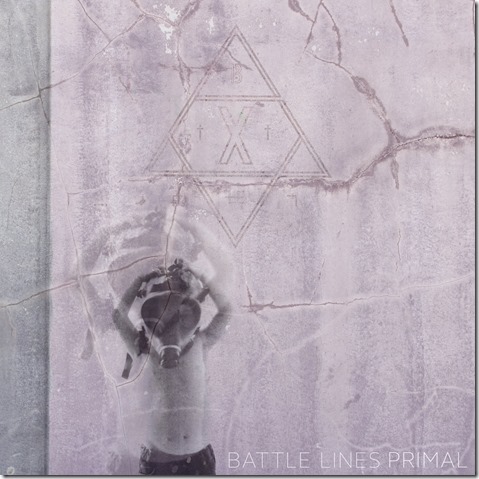
I have to admit, I’d been wondering what was happening with Battle lines. Following the single releases ‘Colonies’ and ‘Hunting’ (split with Post War Glamour Girls), and a storming set at the Brudenell to launch it, there was talk of an album when I chatted with the band afterwards, and then… Well, they seemed to drop off the radar. Carly had mentioned work and all of the things that get in the way of doing things, although it was some time ago, and I’d had a few pints during the evening and what with work and an endless stream of new releases demanding my attention… well, I sort of forgot about things. I’m sorry for the fact that this makes me the same as pretty much everyone else: I blame the ‘net age, the insane pace of our post-postmodern culture, where memories are overlaid and replaced in an instant, buried in the endless blizzard of shiny new things, images, sounds, more bad news and another media frenzy over the latest celebrity scandal. And so, a guilty late review of an album by a band I’m a big fan of.

While I’m looking around at intangibles to blame, I’m also aware that I’m feeding my own anxieties and understanding more the pressure on any artist, in any medium, to devote as much time to promotion as to the production of actual art. It’s all about the momentum! Paradoxically, to weather the storm that is the blizzard of social media, one is required to contribute to it further, and constantly. If you’re out of the public eye, you’re forgotten in a flash. It’s an absurd situation, of course: artists need to retreat in order to produce. In an over-loud world, silence is good, and importantly, silence from a band means they’re likely holed up working on material.

Battle Lines, individually and collectively, have been getting on with their lives, and thankfully, have been doing the things that are important, instead of fretting over their public profile. The press release apologises for their apparent absence, but is matter-of-fact about things:

It’s not a secret that we’ve been very quiet over the last year… There’s no big story, we love each other, we’re as good friends as we’ve ever been. Life has moved on for all of us, and we now reside in New York, London, Brighton and Leeds, geography prevents us from touring, but it can’t prevent us from releasing new music.

And so, while I was busy being distracted, Battle Lines slipped out their debut album, a record I’d waited more years than I care to count for: having first discovered them in their previous guise as Alvin Purple, I’d been captivated by the quality and richness of their dark, post-punk influenced material and the incredibly assured live performances they gave so consistently.

The switch to Battle Lines marked a refocusing: the energy which effused from their earlier songs was directed more inward, and the material displayed an almost ascetic discipline in its execution on those first single releases and in the live shows, more clinical, more icily intense than their previous incarnation.

This is all captured perfectly on Primal. The sparse title track and album opener hints equally at The XX and Closer era Joy Division. But then, glacial electropop undercurrents and thunderous tribal drumming also define the sound. And the sound… the fact they’ve taken their time over this means that the sound is honed to perfection. There isn’t a note out of place. That isn’t to say it’s overproduced within an inch of its sterile life or stripped of its soul: they’ve pulled everything to tight as to render it almost claustrophobically dense, a work which offers an insight into a near-obsessive control over the output. In context, it makes sense:

There’s an honesty about the notes which accompany the release which is at once uncomfortable and refreshing:

Lyrically this was an incredibly dark place to go to, I had come out of a relationship that became mentally abusive; looking back I wondered who I had become in excusing that kind of behaviour. This is what drove me in the album, those darkest moments became a journey of self discovery and a realisation of who I really am and what I deserved.

When life is out of control, what can you do but obsess about the things you can control – your art? But from darkness comes light, and creativity can be so cathartic. As dark as Primal is, it contains some truly beautiful and magnificently uplifting musical moments. Carly’s vocals at times soar so high as to disappear from the register of the average human ear, but ‘Sea of Fear’ is a swelling anthem of a track, and the sunburst shoegaze of ‘Smother’ ripples with the joy of drinking in clear air and rediscovering the potentialities of life.

‘Outsider’ is built around an insistent motoric beat and exploits the quiet / loud dynamic, bursting into explosive shoegaze wall-of-FX guitars which call to mind Ride in their early years, but as is always the case with Battle Lines, Carly’s ultra-high-frequency vocals means they don’t really sound like any of their forebears, or their contemporaries.

Of their single releases, only ‘Hunting’ has made it to the album. This is a bold and admirable choice, and one which makes a statement: a statement which says that \Primal is an album proper, a document, and not a ‘Hunting’ is, of course, a belting wall of noise driven by a twitchy disco beat and shuddering synth with metallic screeds of guitar peeling off a Donna Summer groove, over which Carly comes on like Siouxsie Sioux, breathy and intense.

The album concludes with ‘Riot’, a richly-layered and uplifting song which blossoms in a screed of guitar noise over an insistent rhythm section, the drums and bass tight and locked into a sedate groove.

Primal displays remarkable poise, and as much as its architecture is concerned with the turbulence which inspired its lyrics and overall tone, its coherence and control are remarkable. But rather than feeling soulless in its clinical execution, there’s a clear sense that Primal is about holding it together and showing just what can be achieved through sheer will and determination and the exertion of mind over matter. Despite the obstacles, personal and geographical, Battle Lines have (meticulously) produced a powerful album that was more than worth the wait.

 

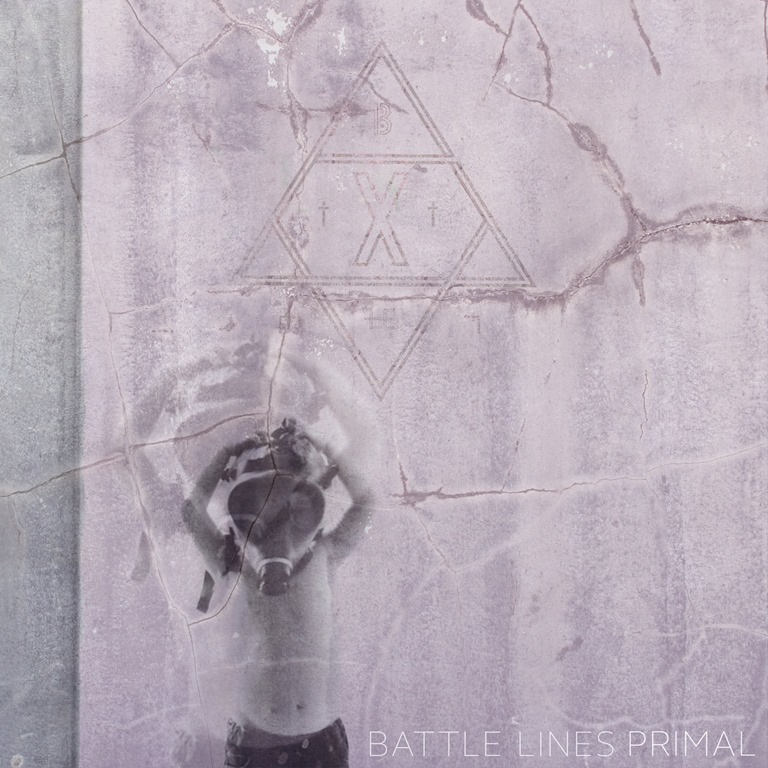
Battle Lines - Primal

6th December 2016

Christopher Nosnibor

Some reviews are seemingly fated. This is one such review: I was slow to get started, and then, having spent several evenings working on a detailed critical analysis, exploring the album’s wild eclectism on a more or less track-by-track basis in a discourse of some eight hundred words, my laptop crashed and most of the work was lost, with the only available version being a collection of notes which were days old. How it happened, when my word processor is set to autosave every five minutes, I have no idea. Thanks Microsoft.

Still, this is an Ashley Reaks album, and a man who can produce three albums in a year – and continue to produce art, and to gig relentlessly, under difficult personal circumstances – deserves the same kind of unbowing attitude from a reviewer.

Because it’s an Ashley Reaks album, anything can happen. And it will. And it does. Following on from Reaks’ ‘punk album’ This is Planet Grot (and a remarkable credible and impressive punk album at that), Growth Spurts, on the one hand, could be considered a return to more familiar territories. But then, on the other, it could justifiably be tagged his ‘jazz album’. The familiar elements of reggae and post-punk inspired dub are present and correct, but this collaboration-based collection of tunes also brings in some wild jazz stylings. The collaborative element is also key here, not only to appreciating Growth Spurts, but to understanding Reaks as an artist, at least as much as it’s possible to grasp such an idiosyncratic and singular individual.

Like his collage artwork, his music is a mish-mash of elements drawn from here, there and everywhere, often bolted together at weird angles and demonstrating incompatible proportions and lines of perspective. He has very much his own slant on things, and his approach is also very much his own: Reaks is one of the few artists who consistently produces work which has the capacity to surprise, to confound, and, occasionally, confuse – which is a healthy response to something which is so staunchly unconventional. You get the impression that Reaks’ raison d’être is to produce art which surprises and confounds himself, as much as any notional audience. His mindset appears to be that if it’s not fresh, unexpected, and if it’s not sincere, then it’s worthless. Collaboration, when done right, yields an output which is greater than the sum of its parts, and draws out facets of each contributor which may not otherwise be known.

As such, Growth Spurts is a world away from his previous collaborative effort, Cultural Thrift (2015) with poet Joe Hakim, on which Reaks stepped toward the rear portion of the stage to provide a background accompaniment (which in itself was a departure given Reaks’ propensity for dizzying soundclashes). Five of the ten pieces – it would be wrong to refer to this as a collection of songs, given that they feature spoken word and poetry – feature writers and poets from a broad and diverse range of backgrounds. They’re disparate characters, as varied as Reaks’ own sources of input, hand-picked to contribute to the album.

The result is dizzying, a rollercoaster journey through a vast swathe of cultural terrain. Each of the collaborative pieces is distinct and different, and finds Reaks attentive to the style of the different speakers. And as the strange, strangles vocal cacophony which introduces the album’s first track, the oddly ominous prog-dub drum‘n’bass neoclassical jazz mixup that is ‘Divorced from the Body’ shows, he’s digging deep to locate new and unexpected hybrids. And yet, amidst the chaos, he still whips up some killer hooks – something so many experimental / genre-smashing artists completely overlook in their quest to innovate, to dazzle with their imagination and technical prowess.

‘The Gentle Art of Ignoring’ with Sylvie Hill is the most outright jazz track on the album, and her sassy vocal delivery and confident Canadian accent brings another sharp dimension to an album which displays almost infinite dimensions, but there’s just so much to take in. But if you need a pointer for where to start, start with the basslines. The crashing jazz-influenced drum ‘n’ bass drumming, the wild brass, the myriad perspectives of the different vocalists all slot into place over those low-down basslines that stroll and groove and leap and boogie. Get on down.


Ashley Reaks - Growth Spurts


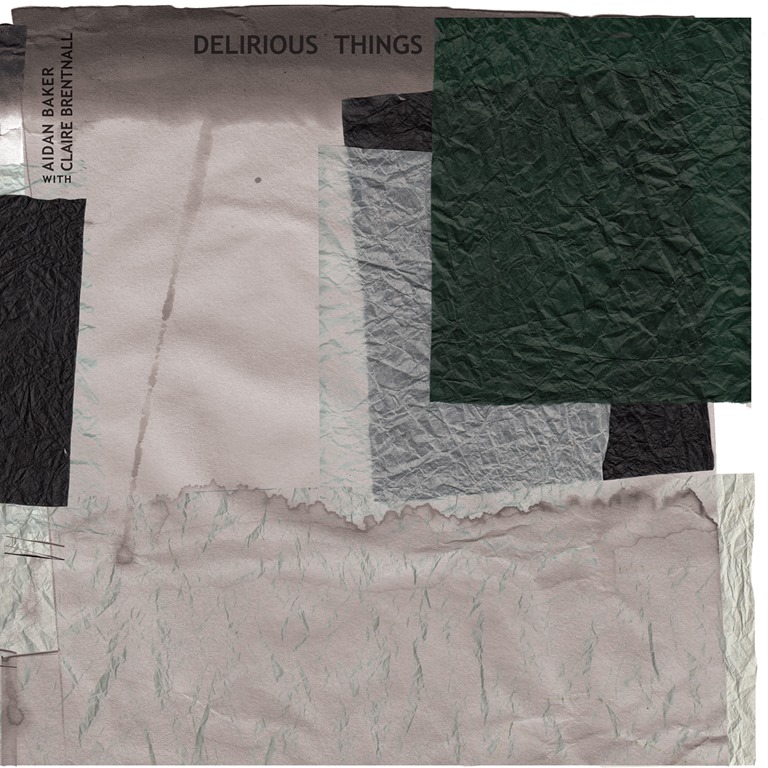
The premise of this collaboration between Aidan Baker and Claire Brentnall of Manchester-based purveyors of ethereal dark pop, Shield Patterns, is neatly summed up in the press release. It’s not an indication of lethargy to quote directly and at length but a recognition of the fact that a label or PR has the best handle on what it’s doing, and is every bit as capable of articulation as a journo. So much so, that there are those who also have a handle on the possessive apostrophe, for which respect is due. So, ‘Delirious Things is an exploration of Aidan Baker’s interest in 80s-influenced cold-wave, shoegaze, and synth-pop from such recording artists as Factory Records’ Durutti Column, Joy Division, and Section 25 and 4AD’s Cocteau Twins and This Mortal Coil’.

‘Combining song-oriented tracks with abstract interludes, the primary instrument on Delirious Things is a 1980s Casio synthesizer, rather than Baker’s usual guitar, though the synth is processed through his usual guitar effect pedals, creating heavy, layered washes of droning synth sounds overlaying electronic rhythms and pulsing bass lines. Baker is joined by guest vocalist Claire Brentnall, whose voice is reminiscent of Liz Fraser and Kate Bush but still distinctly her own.’

It’s a curiously hushed, tempered work and it’s the overall sense of quietness which is its most striking feature. We live in a loud world. As I noted when reviewing Jeffrey Roden’s Threads of a Prayer – Volume 1, I find it increasingly difficult to find the time and space to listen to quieter, more contemplative music: the ‘noise’ of the fast-paced society in which we now live is no longer a metaphor, and it’s evermore difficult to find a moment’s peace, metaphorically or literally. I’m not in a position to offer empirical evidence to substantiate the correlation between the pace and volume of life with the increasing prevalence of mental health issues because I’m a) a lazy journalist b) too busy to invest time on such detours while researching album c) struggling with my own anxieties (aren’t we all in our various ways, whether we admit it or not?). All that said, it’s perhaps also worth noting that despite the bewildering quantity of releases I receive to review, either physically or digitally, the number of works which dare to explore such low volume registers are few and far between. This means that while often being barely audible in some settings, such releases stand out alone by virtue of their difference. But, significantly, Delirious Things also stands out on merit.

Delirious Things is an album which is rich in atmosphere, but there’s something about it which feels uncomfortable and radiates a subtle but inescapable sense of discomfort. It takes a while to ascertain precisely what it is that’s awkward and vaguely discombobulating about it. Superficially, the songs are spacious, atmospheric dreamworks, th tructures loosely defined, the sounds partially abstract, the emotions they convey as fleeting and ephemeral as the recollection of the sensations and images of a dream on waking.

There’s an icy fragility about the songs, and Brentnall’s breathy vocals – as much reminiscent of Cranes’ Alison Shaw and Toni Halliday of Curve as the common touchstones of PJ Harvey and Kate Bush – are captivating yet, at the same time, also subliminal in their power. Laid down in layer upon harmonising layer, her voice is everywhere, and drifts from every corner of the music and even the silence between the sounds. This is nowhere more true than on the album’s vaporous final track, ‘Shivering’, which delicately glides beneath the skin and brushes at the bones and the soft matter beneath. The funereal ‘Dead Languages’ has echoes of late Joy Division or Movement era New Order, and distils its sonic elements to a stark minimalism that’s spine-tinglingly powerful.


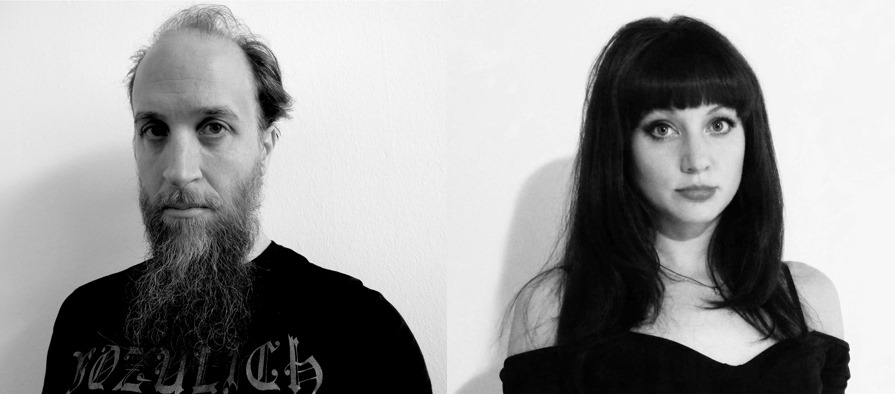
Aidan & Claire


Beneath the surface, ripples of tension radiate and currents of darkness surge, silently but powerfully. Baker utilises stereo panning to optimal effect and subtle details like a fractional lag between beats across the left and right channels are incredibly effective, particularly when listening through headphones (which is strongly advised, because it facilitates optimal appreciation of the detail, while also reducing the bled of noise from the outside world, be it the babble of work colleagues, the hum of the boiler or the whirr of the laptop fan: reducing extraneous interference is essential in order to absorb the meticulous detail of this album). There are fractional delays between some of the beats between the channels. The effect is barely perceptible, but nevertheless a tiny bit disorientating. Of course, once you’ve noticed this, you can’t unnoticed. It’s impossible to tune out. But tuning in and embracing the It’s when one begins to look closer into the album’s detail that its true magic discloses itself.

On the surface, it’s a collection of quiet, calm, opiate-slow songs with a misty, hazy quality. How does this, and the referencing of the Cocteau Twins reconcile with 80s-influenced cold-wave, shoegaze, and synth-pop? Again, it’s in the detail: Delirious Things incorporates stylistic elements of all of the above, but reconfigures them, so, so carefully. The album’s success lies in the way it draws together recognisable genre trappings and familiar stylistic tropes and renders them in a fashion which is similar enough to be still familiar and yet different enough so as to be unfamiliar. What is different about this? you will likely ask yourself. In the mixing – the pitching of the beats way down in the mix, the way in which the sound is scaled down and paired back and stripped out of made for radio / iPod compression and exists with a very different set of production values. This gives Delirious Things a feeling of freshness, and ultimately renders it a triumph of artistic vision over commercial conformity.


PL055-LPjacket

12th January 2017

Christopher Nosnibor

Ummagma have been making quite a name for themselves, and have done a great deal in revitalising the shoegaze / dreampop crossover style characterised by early 4AD releases. This release finds the Ukranian/Canadian act join forces with dreampop pioneers A.R. Kane (who also released music as half of M/A/R/R/S) and who have been silent since the 90s.

To try to get to the root of what it is about dreampop’s capacity to touch the listener is, indeed, akin to trying to locate the source, and subsequent emotional resonance of a dream. Waking up at 5am – as I often do – I was groggy with the images of dreams melting from my mind as I made the uneasy transition from unconscious to conscious. Some of the scenes clung, but their significance, which had been immense whist in sleep, swiftly evaporated as I rose to the surface. There was a logic to some of the more anxiety-inspired elements of the dream – desperately trying to send a text message while trapped in an eternal office meeting held in a room with no windows, for example – required little unravelling, but others subscribed to a dream-logic which only sustains any sense of coherence while in a dream-state.

Dreampop, at its best, suspends the listener’s connection with the concrete world and transports them into a mental zone somewhere in between realities. For the three to five minutes the song plays, the sound occupies the mind completely, and conjures a rarefied emotional state, a distillation of a deeper inner self that’s only partly accessible at any given time. This is why, in order to fully appreciate the cream of dreampop, it’s necessary to fully surrender oneself to the music. Anything else is likely to leave the listener feeling very much on the outside, looking in, and completely untouched.

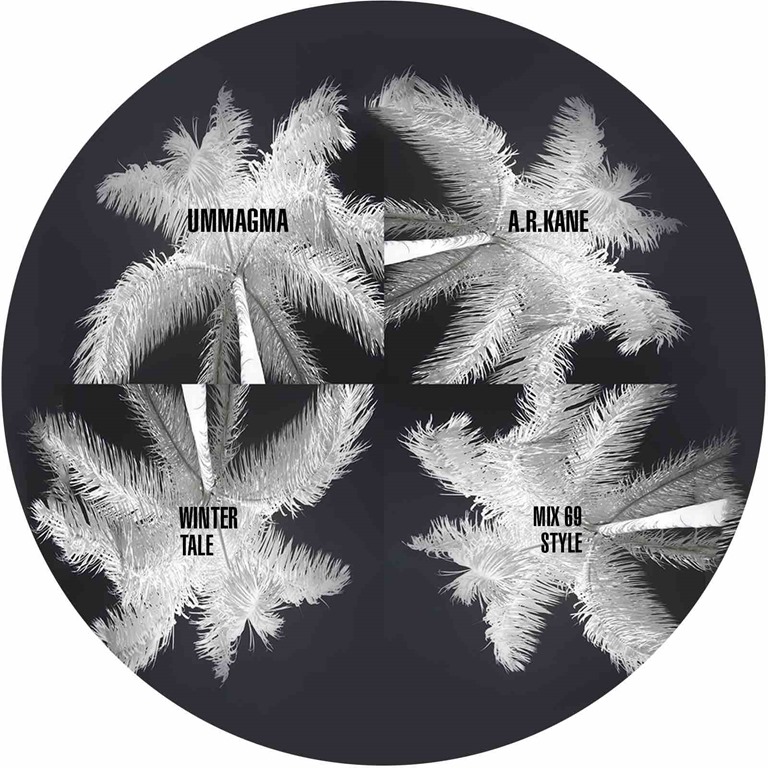
‘Winter Tale’ is a song by Ummagma, featured here in its original form and subject to a substantial reworking by A.R.Kane, and accompanied by an abridged radio version of the A.R. Kane interpretation.

The original is a dainty, delicate ditty, wistful, softly blurred, a lightly skipping vocal melody careening its way over a sparse backing of simple percussion and cloud-like synths, and it’s full of wintry imagery and a pervading sense of suspense. Shauna McLarnon’s vocal is delicate, airy, and floats mellifluously on the breeze.

The alternative version is quite different. A.R.Kane’s primary addition, however, is an overloading guitar. It’s kept at a respectful distance and doesn’t submerge the entire frame of the underlying original, but crashes like waves and breaks into howls of feedback, bringing textural layers and additional depths to the song, accentuating the darker aspects. The absence of percussion somehow abstracts the song in some way, and the gently rising bubbles of synth bring a sense of colour.

But when it ends, it’s hard to recall exactly what it was about it, like a cloud that’s changed shape and the rabbit is now just a streak in the sky.


Ummagma   A.R.Kane - Winter Tale (cover artwork)