Posts Tagged ‘unique’

A-Zap Records – 23rd August 2024

Christopher Nosnibor

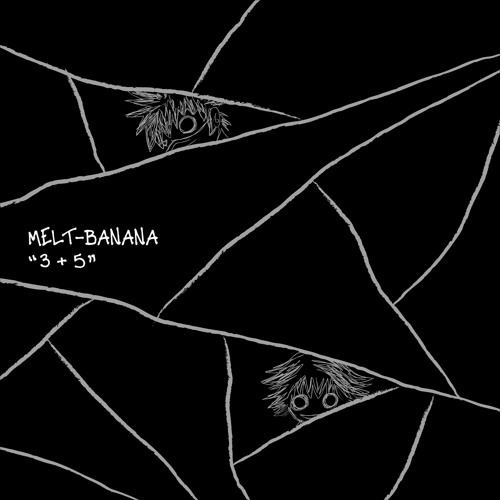
There is truly only one Melt-Banana. And Melt-Banana boldly encapsulate all of the craziness that makes Japanese music so peculiar and unlike the music to emerge from any other place. Here in the west, we can, in truth, only marvel at it – all of it. Because it makes no sense. It’s a country of extremes, with hyper-pop culture dominating, and a sense of plasticness and artifice defining the mainstream. But then, Japan is also the home of the most extreme noise – Merzbow, Masonna, for example. It’s not just extreme sonically, but beyond words in terms of performance.

The pitch for this, their eighth album, informs us that ‘3 + 5’ synthesizes elements of a variety of Extreme Musics, Hyper-Pop, classic Punk, vintage Metal, and Noise. It’s informed by Japanese culture in general, and the subcultures of gaming, anime and homegrown underground music in particular. The album’s nine tracks have been crafted to maximize the independent appeal of each song (since so many listeners will be streaming and playlisting these songs). Each selection boasts its own unique charm and ideas that beg for repeated listening.’

I had the good fortune to witness their live spectacle here in York not so long ago, and they were everything anyone even vaguely aware of their work would expect: intense, noisy, crazy, and wildly entertaining.

They create music that fits with the bizarre incongruity of their name – abstract, humorous, combining elements that don’t – or shouldn’t – really sit together – somewhat surreal, patently absurd, but also perhaps a shade Pop Art. Put another way, everything all at once, tossed in a blender and blitzed, the output being like a bubbling hot smoothie or something.

They do have a tendency to favour short and fast, as recent taster track ‘Flipside’ reminded us, clocking in at a minute and fifty-six. It does happen to be the album’s shortest track, but then, the longest is under three-and-a-half, and the majority of the nine songs are around the two-and-a-half minute mark. That means that with a running time of around twenty-seven minutes, the album would comfortably fit on a 10” record.

For a moment, ‘Code’ hints at something spacious, experimental and electronic to open the album – before seconds later, all kinds of sonic mayhem erupt and chipmunk yelping vocal squeak over something that resembles Metal Machine Music played at double speed, before it takes a turn into space rock territory, but again, at twice the pace, with some prog flourishes and a bunch or bleeps and widdly synths all criss-crossing over one another at two hundred miles an hour. For anyone for whom this is their introduction to Melt-Banana, they’ll likely find themselves dizzy and completely bewildered as to wat the fuck they’ve just heard. It is, unquestionably, utterly deranged, and at doesn’t get much more quintessentially Japanese than this.

‘Puzzle’ is kind of a high-octane rock tune, at least at first – but then someone hits the accelerator and in a blink you’re on ‘Rainbow Road’ on the N64 Mario Kart after eating three bags of Skittles and you’re totally wired.

Hyper doesn’t really cut it. Even the more expansive instrumental segments of ‘Case D’ happen at about 600bpm, and it’s like listening to a prog album at 45rpm.

As I listen, I find myself typing faster and faster, as if I’ve sunk six cans of Red Bull while chomping on a whole packet of Pro Plus. My fingers are pale blurs against my black illuminated keyboard, and they’ve seemingly run away from my brain and are just frothing out words in response to the frantic mania pouring into my ears – no, not pouring, but being injected by 10,000-volts of electrical current into my brain via my eardrums.

‘Scar’ slams big guitar rock and skittish melodic pop together like a banging of heads. It sounds like music from a computer game or an animated movie. It sounds like music made in a fictional context. Because in real life, music like this couldn’t exist. And in the main, it doesn’t. Only Melt-Banana are demented enough to actually make it.

Penultimate track ‘Whisperer’ goes big on dance / rock crossover and actually slows to a pace that doesn’t feel like a synaptic twitch or a seizure, before ‘Seeds’ closes the album with a two-and-a-half minute frenzy which chucks everything into the mix.

The whole experience leaves you feeling giddy, dazed, amazed. 3 + 5 may not bring anything radical, new, or revelatory to the Melt-Banana oeuvre, but stands as a classic example of what they do – and it’s as ace as it is nuts.

AA
MB 3 5

New Reality Records – 17 October 2023

Christopher Nosnibor

Speculum Bunny’s been doing the rounds on the live circuit with New Reality Records labelmate Stewart Home of late, and while in terms of presentation they’re leagues apart, her modus operandi bears strong parallels with Home’s, not least of all the audacious piss-takery of his earlier career, which is – quite unexpectedly – experiencing something of a renaissance – she’s also a completely different animal.

Her bio outlines how ‘Having written music since she was a kitten, Speculum Bunny enjoys blending words and sound to provoke, enthral and mystify her audience. Inspired by the depraved nature of love in all of its majestic forms, her childhood, masochism and devotion. Challenging mainstream narratives on motherhood and women’s expression she blends noise, synths, voices and field recordings. She pushes her edges.’

Female voices in music – strong ones, not sonic wallpaper popmakers dollied up by record labels – may be growing in number, but they’re still few and far between in the scheme of things. It’s a sad reflection on society and the music industry, but it does mean that when someone comes along and says ‘fuck the norms’, it’s powerful, and stands out, and Speculum Bunny – an overtly challenging moniker, uses a profile pic on her Bandcamp bearing the slogan ‘I’m not cute, I’m disgusting’ (it’s the cover art from her first release in May 2023: this is her fourth). It’s clear that her objective is to provoke a real sense of discomfort, and if both her choice of name and the EP’s title work through incongruous juxtapositions of hard / soft or similar, then the four tracks contained therein are the sonic manifestations of this oppositionality.

‘Demon Boyfriend’ is built around a chubby bass groove that’s reminiscent of the early years of The Cure, and it provides the backdrop to a dark spoken word piece. ‘he’s quite old… and he’s quite hairy… and he’s got horns…’ Much of the impact / appeal lies in the delivery, of course. Flat, monotone.. and unashamedly Scottish. There’s a tinkly fairytale tone to the keyboard sounds on the lo-fi ‘Dragon of Lure and Dread’. The vocals are sung, but mumbled so as to render the words almost inaudible, and the drums are distant, a thumping heartbeat below the surface.

You can probably consider this a spoiler alert. Pretty much the last thing I expected was for ‘House of the Rising Sun’ to be a fairly straight acoustic cover, delivered in what one might – for wont of a better description – an intimate, witchy tone. As the song plays out, a double-tracked vocal gives a slightly disorientated twist. The final song, ‘There is No Ash Without Fire’ is again minimal in its arrangement, and while a bulbous Curesque bassline provides the main element of the backdrop to her haunting vocal, which soars and swoops, the atmosphere is more akin to Young Marble Giants.

Liminal Fluff doesn’t sit within any single genre pigeonhole: in fact, none of the songs really conform to any style or genre, and ultimately, it seems a fair summary of Speculum Bunny as an artist. It’s truly refreshing to discover an artist who really doesn’t sound like anyone else – and even more of a deal when what they’re doing is good. And this is good.

AA

a3042142564_10

Sub Rosa – 26th November 2021

Christopher Nosnibor

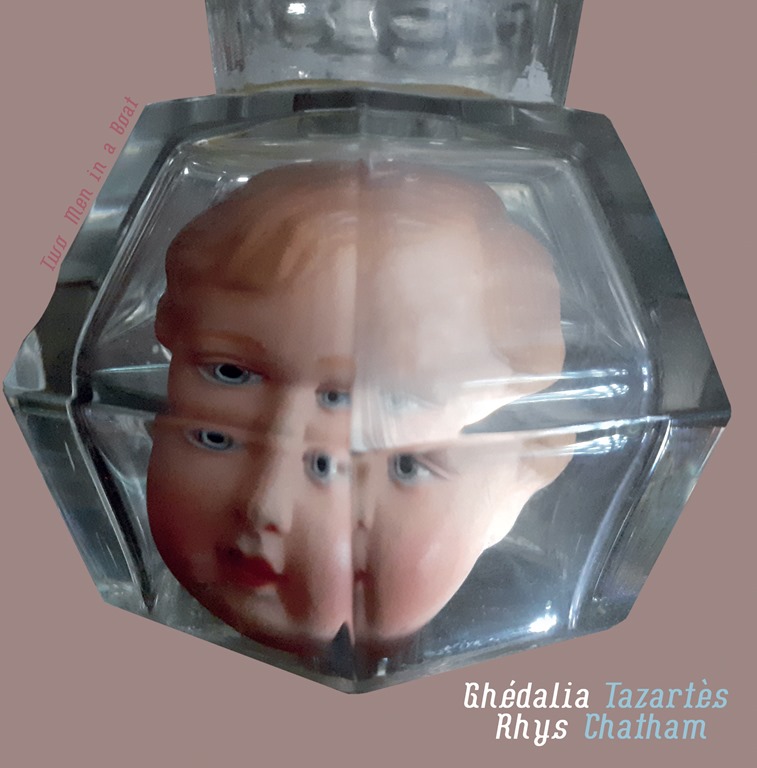
In the scheme of Ghédalia Tazartès singular career, which saw him featured more prominently in dance, theatre, and cinema than on record – a career spanning back to the mid-late 70s yielded just thirteen albums – this release is significant in several ways, not least of all in that it contains probably his final recordings prior to his death in February 2021 at the age of 73. It follows his last album release, Superdisque, which was released a full decade ago, in 2021. It also documents a collaboration that almost never happened.

As the story goes, ‘Tazartès and Chatham had met once in 1977 at CBGC’s and had not seen each other since then when they were asked by their mutual agent to play a private show in Paris. This happened in September 2018 in a house with a garden where sax player Steve Lacy had lived back in the 1990s. This album presents the recording of this show plus another show at La semaine du bizarre festival in Montreuil, France a year later, mixed with a couple of studio sessions.’

Their coming together yields something – and I’ve struggled to find a word that comes anywhere near describing what others have simply classed as ‘indescribable’ and ‘unclassifiable’ – most otherly. Tazartès singing is, in itself not only unique as a style, but also as an experience. It’s less about what it conveys as such, and more about how it touches you. It’s certainly not singing in the conventional sense; and yet, it is very much musical, rather than mere vocalisation. Tazartès sings from different parts of the body, and his voice tremors and quivers, trills, gargles, and ululates.

On the four parts (or ‘actes’) of the ‘Jardin de Simone’ performance, Chatham’s sparse, minimal backings provide a shimmering backdrop that ripples and glimmers softly. On ‘Acte 1’, it’s chiming notes, picked, on a clean electric guitar, while on ‘Acte 2’, it’s wavering woodwind which accompanies Ghédalia’s soft croon. Scraping strings create a dolorous discord alongside a wailing, weeping, skittish vocal performance on ‘Acte 3’ while the fourth and final piece floats into the atmosphere in amorphous waves if sound.

The three parts which make up the ‘Semaine du bizarre’ set are quite different, with Chatham’s backing on the ten-minute ‘Acte 1’ being denser, the electric guitar rattling and with strains of feedback filtering through the stuttering notes. The stutters are not of hesitation, but of tightly-reined tension, and over time the form evolves into an elongated tapering drone. The vocal adopts an almost falsetto-range droning quality, at times shifting to a guttural throb, at others, an open-throated note sustained on, and on. Woodwind drapes and twists around like fingers of mist. In combination, it feels mystical, in an impenetrable, occult way. Overall, this set is more drone-orientated, Tazartès’ vocals venturing more toward the lower register, the growlier, the more atonal. And yet, in places, he soars almost operatically, albeit descending like a punctured bellows after, while the instrumentation wheezes out, fatigued.

The vinyl finds a performance on each side, while the digital version features a bonus cut, appropriately entitled ‘Encore’. This, too, is quite drone-orientated, with the addition of a certain hint of an Eastern twang.

As a whole, Two Men In A Boat feels like a meditative work, and one which exists out of any kind of context, real or imposed. Without any constraints in terms of structure, culture, time, place, or even meaning – explicit or implied – the performers can be found revelling in the freedom of musical explorations. These are songs of the soul, and Two Men In A Boat is a unique document.

AA

SRV520_front