Posts Tagged ‘Transformation’

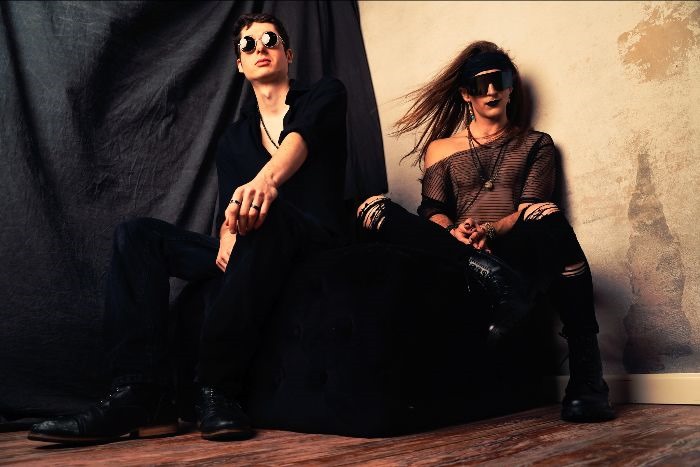
Seattle turbowave duo, DUAL ANALOG return with ‘Pale Visage,’ a new single and video that signals the dawn of their next era. With the video directed by Skye Wardenm, the clip and song explore transformation and self-recognition through a stark yet ultimately empowering lens.

“It wasn’t really a self-correction so much as it was a survival tactic,” says Chip Roberts of DUAL ANALOG. “We wanted the liberty to explore the expansive soundscapes that make us who we are.”

Reintroducing the world percussion, cinematic guitars, and progressive flourishes that defined DUAL ANALOG’s early sound, "Pale Visage" bridges bleak beauty with renewed color – both visually and sonically. It marks yet another glimpse of the band’s forthcoming 2026 album, Primal Grill, and is a bold declaration that all are welcome in the Temple of DUAL ANALOG.

AA

From the rain-soaked streets of Seattle’s Chinatown, DUAL ANALOG channels desire and distortion into a singular force—turbowave—a fusion of new wave, metal, industrial, and world rhythms. Formed in 2019 by vocalist-guitarist Chip Roberts and multi-instrumentalist Kurtis Skinner, the duo blends sleek futurism with raw emotion, crafting immersive performances where sound and atmosphere collide. Each ritual is a sensory experience—sweat, light, and pulse converging in devotion to rhythm and release. Their 2022 debut, Lust, Worship, and Desire unveiled a lush yet crushing sound—sexy, anthemic, and unapologetically heavy. 2024’s The Wheel descended into colder textures and brooding tones, anchored by extended-range guitars and nihilistic lyricism. Now shaping their third album, Primal Grill, DUAL ANALOG expands the boundaries of turbowave through a series of singles—’Kontrol’, ‘Sacred Sin’, ‘Save Me’, and the latest one, ‘Pale Visage’—each revealing a new facet of the band’s evolution between the sacred and the primal.

AA

e774eb44-89f4-4eb4-06d3-5434c3b502c3

Kranky Records – 28th May 2021

Christopher Nosnibor

Over the course of two decades and fourteen albums, Scott Morgan, under his Loscil moniker, has created a body of work which has probed myriad different directions within the electronic / ambient field. While his previous works have explored minimal arrangements and the application of difference source materials such as field recordings, none has been so intently focused on rendering a limited range of course materials in the most varied ways possible – which is precisely what Clara does, taking the same source material and seeing just how far it can be taken in different directions.

The accompanying text explains the process in detail, describing the album as ‘a stunning meditation on light, shade, and decay, sourced from a single three-minute composition performed by a 22-piece string orchestra in Budapest. The subsequent recording was lathe-cut on to a 7-inch, then “scratched and abused to add texture and colour,” from which the entirety of Clara was sampled, shape-shifted, and sculpted. Despite their limited palette, the compositions summon a sense of the infinite, swelling and swimming through luminous depths. Certain tracks percolate over narcoleptic metronomes while others slowdive in shimmering shadowplay, sounding at times like some noir music of the spheres’.

In some respects, then, Clara is a remix album, in the sense that some remix albums stretch and deviate so far from the original material that the song being remixes becomes unrecognisable, and one begins to question the extent to which the track is the work of the original artist and the extent to which the credit for its creation belongs more to the remixer. This may all be Morgan’s ‘own’ work but at what point does the source material become buries beneath the reworking? Perhaps what’s most remarkable about the album, considering its origins, is just how…. Normal, how smooth it sounds, as opposed to being a fucked-up mess of crackle and pop, hiss and static. I had anticipated scratches, abrasion, mangled noise, clicks, pops, something approximating the sound of a Brillo pad being applied directly to the microphone. But no.

‘Lux’ introduces the album in what feels like familiar territory: long, slow swells of strings flattened out into partial abstraction, smudging the definitions that stand between orchestral and ambience to forge sounds that have become almost the standard form in contemporary ambient. And this indeed the form for the album as a whole.

It’s no criticism to observe that Clara sounds like Loscil: Morgan is a master in the field of contemporary ambient, and has a supreme ability to sculpt slow-shifting soundscapes that are eternally intangible, unreachable, yet immersive in their soft clouds and vaporous drifts. ‘Lumina’ has some softly bouncing bubbles rising and eddying around in a soothing sonic foam that’s slow and gentle, while the ten-minute ‘Stella’ floats past almost imperceptibly.

Nothing about Clara is going to raise the blood pressure.

The track titles all refer to light and luminosity, and instead of scouring the ears and the soul, Clara recreates the warm glow of a log fire burning down to embers, or a dimmed bulb late on a summer’s evening after the sun has faded from the sky, leaving a purple-hued sky in its wake. ‘Sol’ slows and dissolves down to a low, pulped-down pulsation, from which in its mist emerges a rippling loop of rippling mellowness that hints at the abstracted ambience of Tangerine Dream.

Even in the face of the most broken, damaged of source sounds, Loscil smooths the edges and renders them something else, and something other, by a process of softening, of melting into abstraction. Clara is a magnificent work of transformation, of distancing, whereby the end product emerges in an entirely different sphere from that which begat it.

AA

457773

Lamour Records / Purlieu Recordings

Christopher Nosnibor

Spending most evenings immersing myself in an array of weird and wonderful and sometimes not so wonderful noise, this album came as a real surprise. The accompanying text does little to prepare the listener for such a gentle and exquisite collection of cinematic neoclassical compositions.

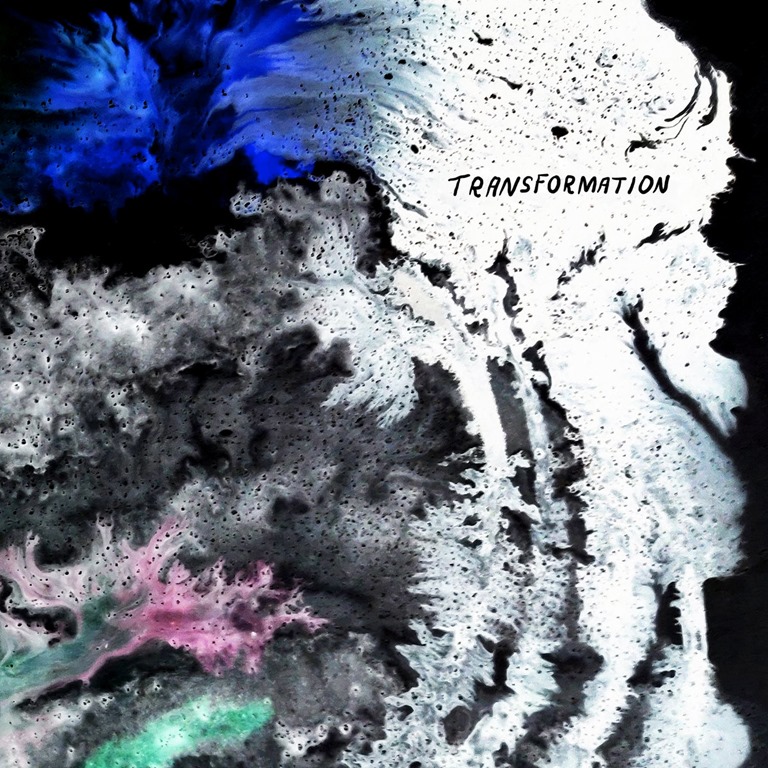
And yet the liner notes are precisely why Transformation is surprising, because all is not as it seems, explaining that ‘The album Transformation challenges the boundaries of human and machine, the physical and the artificial, the feasible and the impossible. The result is a thoughtful and true emotional storm where the piano forms the basis for an opposite pole between sound and playing technique. When the sound is real, it is played with inhuman technology. When played by hand, the sound moves outside the spectrum of the physical piano. What role does "lying" play for the listener?’ And what exactly are we listening to here?

It’s impossible to distinguish organs and organic sounds from synthesised or sampled approximations, and while the human / inhuman / orchestral /electronic sounds are impossible to distinguish – is that piano, performed by a musician with a real passion and a deep sense of drama, creating rippling waves of notes, or is it all so much programming? Listening to ‘Skeppsrå’, it sounds real. It feels real. I want it to be real. Can I therefore simply not believe that it’s real and accept it?

It’s not quite as straightforward as that. Once you’re aware of something, it’s impossible to erase that awareness. You want to feel as though you’re tapping into something real, otherwise it’s just muzak, film music made to fill a space and manipulate an emotional response to what may otherwise be a blandly-shot scene.

‘Tradition’ sounds like the product of synthesised sounds, while the brooding sonorous atmospherics of ‘Mekanik’ are simply other-worldly, while ‘Skogsrå’ is another magnificently supple slice of post-rock flavoured ambience that swirls and soars towards the stratosphere.

There’s no questioning that the elegiac solo piano piece, ‘Artikulation’ a beautifully poised piece, understated yet rich and immersive, and likewise ‘Klinga’ which follows. But are those ‘wrong’ notes simply artifice? Are they programmed in to create ‘imperfections’ in order to create a sense of humanity and therefore a greater ‘trust’ in the machine? Or is this an example of an openness about human error? I’m not convinced: why would any musician play to highlight their flaws? But this is the challenge and the dilemma: what and who do you trust?

Trust nothing and trust no-one: but do trust me when I say that Transformation is a fascinating and most listenable work.

AA

a2896102920_10