Posts Tagged ‘The Helen Scarsdale Agency’

The Helen Scarsdale Agency – 8th August 2025

Christopher Nosnibor

When the accompanying notes and press release which replicates them describes a release as ‘dire’, you know you’re in for an uncomfortable ride. In the world of noise, such a choice of adjective doesn’t carry quite the same negative connotations as is the majority of musical spheres. When it comes to noise, and certain strains of metal, the objective is to make it as unpleasant as possible. It will alienate most people, and that’s precisely the objective: those who can withstand the torture are the right people.

And so it is that Mutual Consuming is described as ‘a dire piece of isolationist thrum, spectral caterwaul, and heavy gloom through an oblique and abstracted coupling of electronics, noise, and ominous field recordings.’

To quote further from the accompanying notes, Roxann and Rachal Spikula, the twins who make up Relay for Death’, offered the consideration that “Mutual Consuming comes from a concept in the philosophies that underpin traditional Chinese medicine theory, where the two opposing states (yin and yang) are 2 states on a continuum and their interactions produce an infinite possible number of states of aggregation. Within this interplay, there is a dynamic balance that is maintained by a constant adjustment of their relative levels. So an excess of yin consumes yang and vice versa.” We asked if this has anything to do with the concept of the Ouroboros, to which they responded, “We hadn’t thought about Ouroboros, but the eternal cycle of things makes sense too. The gorge fest of existence.” Does this relate to previous works? The twins concisely respond to that question in a rare interview in Untitled, “No.”

The album features but two pieces, each clocking in around the seventeen minute mark. An awkward length, but plenty of time to make for an uncomfortable, unsettling, and even torturous experience. And it is.

‘intone the morph orb’ is a darkly unsettling expanse of dark ambient, the sounds of thunder and cavernous growls from the pits of hell are collaged with scrawling metallic drones. Distant detonations reverberate, like volcanic eruptions beyond the horizon, as wispy ominousness lingers in the air. Very little tangible takes place, but the tension grows. There is a dark thriller / horror aspect to this: the hairs on the back of your neck prickle and you fear whatever may lie around the corner. The second half of the track is less precipitous, given to a protracted mid-to-high-end drones that swirls and eddies, cut through with occasional whistles of feedback.

There’s something vaguely Ballardian about the title ‘terminal ice wind’, and it is, indeed, a cold atmosphere which runs forth from the speakers, churning an ever denser sonic murk as the first few minute pass. It’s a seeping morass of dark discordance which takes cues from Throbbing Gristle. Three minutes in, thunderous explosions register, and all is noise, albeit for a brief time. In time, dissonant drones, thrumming reverberations and low rumbles emerge and come to dominate the mix in what is an ever-shifting soundscape, where light is in limited supply. This is, indeed, dark, and oppressive.

Everything about Mutual Consuming is as it should be. A collage of challenging sound on sound, any underlying concept fades to insignificance as the sounds assail the ears without apology. Mutual Consuming is not harsh, and on the noise spectrum, it’s fairly gentle, but it’s by no means accessible or easy on the ear.

AA

AA

RFD Promo

The Helen Scarsdale Agency – 23rd May 2025

Christopher Nosnibor

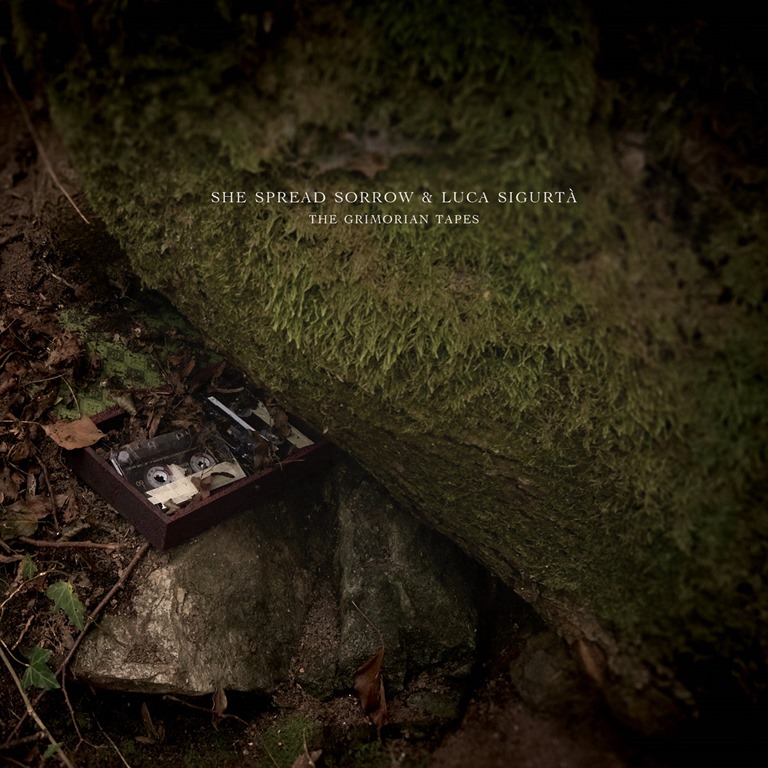
The pitch alone is harrowing: ‘“Don’t be scared by death,” Alice Kundalini (aka She Spread Sorrow) calmly instructs at the beginning of her collaborative Grimorian Tapes with partner Luca Sigurtà. Her words slither from her lips with a subtle, sinister unease, compounded by the unsettling quality of her whisper. The fear of death, this most profound condition, has long been a subject of philosophical, spiritual, and existential inquiry. To fear death is undeniably human; to transcend that fear is often seen as reaching a higher plane of existence. At least, that’s the intention behind the rituals, the spells woven into the fabric of The Grimorian Tapes.”

I myself have spent a lot of time contemplating death, and the fear of death, especially of late. We are all scared of death, particularly in Western culture. When my wife was diagnosed wit stage 4 breast cancer, where it had spread to her bones, I was terrified, not only of losing her, but of waking up to find her dead in the bed beside me. What do you do in that situation? I did not want to see her dead, and she did not want me to see her dead. Thankfully, she made it to a hospice for her last day, but I lived for a year under the shadow of that ‘what if…?’

You might think that her passing brought peace, but it did not: instead, I have spent many mornings twitching and drenched in sweat lest I should die and leave our daughter an orphan, being thirteen. This is not a call for sympathy – simply as summary. It’s hard not to be scared by death, inevitable as it is.

For additional context, it’s worth delving into the details of the album’s inspiration, a large portion of which comes form The Black Pullet, ‘an 18th-century French grimoire filled with instructions for making talismans and magical artifacts’. We learn that ‘Kundalini weaves her own take on the book’s esoteric themes into the shadowy tape loops that comprise The Grimorian Tapes. The Black Pullet is a detailed guide into alchemy, divination, and occult practices, with a particular focus on harnessing hidden forces through the construction of specific objects imbued with magical power. Though Kundalini doesn’t practice these rituals per se, she finds a deep, poetic resonance with these ancient teachings. The allure isn’t in the performative aspect of these rituals but in the seductive power of its symbols and ideas, which speak to a long-forgotten language of metaphysical mystery. It’s this sense of transmutation, hidden knowledge, and occult wisdom that lends The Grimorian Tapes its dark, ritualistic intensity.’

And so it is that ‘grimoire’ introduces the album with a dark etherality, whispered vocals, the words indecipherable. Echoing amidst rumbles and a persistent drone which ebbs and flows. It’s compelling, and enticing, but at the same time, unsettling. It’s the fear of the unknown, of course: the esoteric and other-worldly and anything that speaks of a realm beyond one’s ken is always difficult to assimilate. This, in a nutshell, is the appeal of horror, because a lot of us find entertainment in being scared. It’s the same reason people go on rollercoasters. Being scared half to death reminds you that you’re alive. And The Grimorian Tapes is pretty scary, in the suspense and horror sense.

‘initiatory’ rumbles and hovers dark and murky, sonically entering the domains of Throbbing Gristle, and again, the whispered vocals are menacing, and reminiscent of Prurient’s Cocaine Death, while ‘the stairs’ brings a hint of disturbing playground, psychological derangement, the other ‘other side’ we’re all so afraid of due to a lack of comprehension. And the further this album progresses, the more uncomfortable and unsettling it becomes, the further it extends beyond the domains of the ordinary, the mainstream comprehension.

‘babele’ is a dank, muddy morass of sound over a slow thudding heartbeat rhythm, while ‘kirtan’ brings flickering, stuttering beats, while again leading the listener through hair-prickling terrain, with triffid-like stem-clattering and gloomy swirls and abstract vocals. ‘we worship you’ plunges deeper into a darker space, with sputtering electrostatic sparking, and gargled vocals, deep and robotic, growling, threatening and emanating from another place, another world, one beyond reach. ‘me and I’ churns like slow machinery, and is industrial in the primitive sense. Again, the way we have come to understand ‘industrial’ has evolved: Foetus is a far cry from Throbbing Gristle, and both are a world away from NIN and Ministry. But The Grimorian Tapes takes us right back to the origins of the genre.

This is one dark and difficult album, heavy and suffocating and uncomfortable from beginning to end. Two thumbs up. And now I need to lie down.

AA

a0844152259_10

The Helen Scarsdale Agency – 14th June 2024

Christopher Nosnibor

For some time now, The Helen Scarsdale Agency has homed some quite challenging experimental noise and industrial-orientated releases. It seems somewhat incongruous, the name suggesting they’re a stuffy literary agency or something.

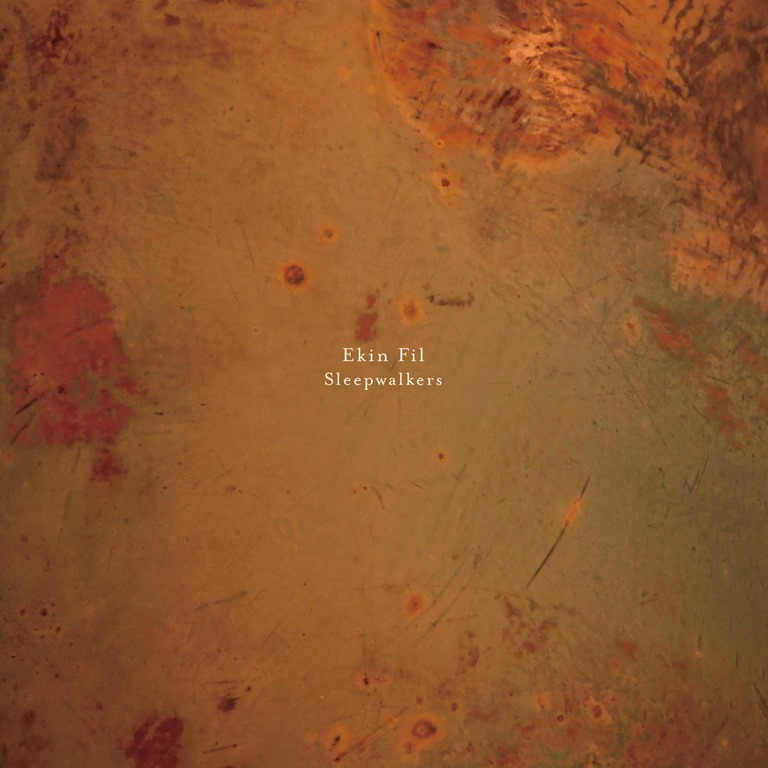
The notes which accompany this latest offering from Ekin Fil are instructive and informative, in terms of expectation and context, and as such, worth reproducing here:

‘The drone-pop consternations of Ekin Fil emerge through vaporous tone and forlorn, distant song, as if plucked from a dream. These exist on their own accord, moving with their own internal logic of an emotion heaviness that belies any the passing observation of this as mere shoegazing ambience. Her songs, her compositions find themselves adjacent the fragmented etherealization of Elisabeth Fraser’s voice from a forgotten scene of a particular David Lynch film, as a ASMR trigger for Proustian recollection. Something profound. Something hidden. Something desolately sad.’

Do I want to feel something sad? This is a question I asked myself in all seriousness. Everyone has felt deep, desolate, profound sadness at some point, to varying depths and degrees, and while wading through the mires of a recent bereavement I find I can be set off easily and unexpectedly. But sadness is necessary, and is sometimes something to be embraced. To embrace sadness is not the same as to wallow, and to face sadness squarely is to accept its presence, and perhaps begin to make peace with it. And only in making peace with it is it possible to begin to move on.

The album’s first piece, ‘Sonuna Kadar’ is a billowing cloud of thick ambience, suffocating, disorientating. Occasional chimes do little to light the way, and the vocals drift, lost, lonely through this tentative space. Things grow darker still with ‘Stone Cold’: long noes echo out like sirens, and soft, fizzy-edged notes ripple before being absorbed by cruising waves of thick, heavy sound. The organ is almost without question the heaviest of sounds, a droning, wheezing sound that has the capacity to be uplifting, but, more often than not, is slow a d mouthful. It’s a synthesized organ drone with slowly throbs away on ‘Reflection’, too lugubrious, soporific effect.

Vocals echo as if reverberating in caverns, cathedrals, while the instrumentation is abstract, its direction unfathomable. ‘Sleepwalkers (Version 2)’ is heavy with atmosphere, and the experience is haunting.

The absence of percussion or structure renders these pieces formless, rootless, shapeless, and consequently they hang like heavy cloaks which drag the head down to the ground, and, staring at your feet you contemplate the weight of the world.

Sleepwalkers is one of those albums which seems to build in effect cumulatively over its duration, and wile it’s not overtly heavy with, say, distortion or volume, it brings a weight that drags you down, and the final composition, the ten-minute ‘Gone Gone’ pulls the shoulders down.

Listening to Sleepwalkers doesn’t fill me with sadness, as much as a sense of unease. It does unquestionably bring a sense of weight, but on listening I feel a sense of uneasiness and uncertainty more than anything. But music presents much of what you pitch in and bring to it. With Sleepwalkers, Ekin Fill presents music with open doors. What will you bring?

AA

a0105911352_10

The Helen Scarsdale Agency – 8th December 2023

Christopher Nosnibor

It’s often difficult to keep up with artists’ outputs, especially the super-prolific ones. Jim Haynes not quite make the super-prolific category, but having first written on his work with a review of The Decline Effect back in 2011, I’ve covered three albums between 2017 and 2021 alone. I tend to take a particular interest in albums released through The Helen Scarsdale Agency, which despite sounding rather prim and literary, is a label which has a particular knack for platforming music of an experimental and often difficult and noisy nature.

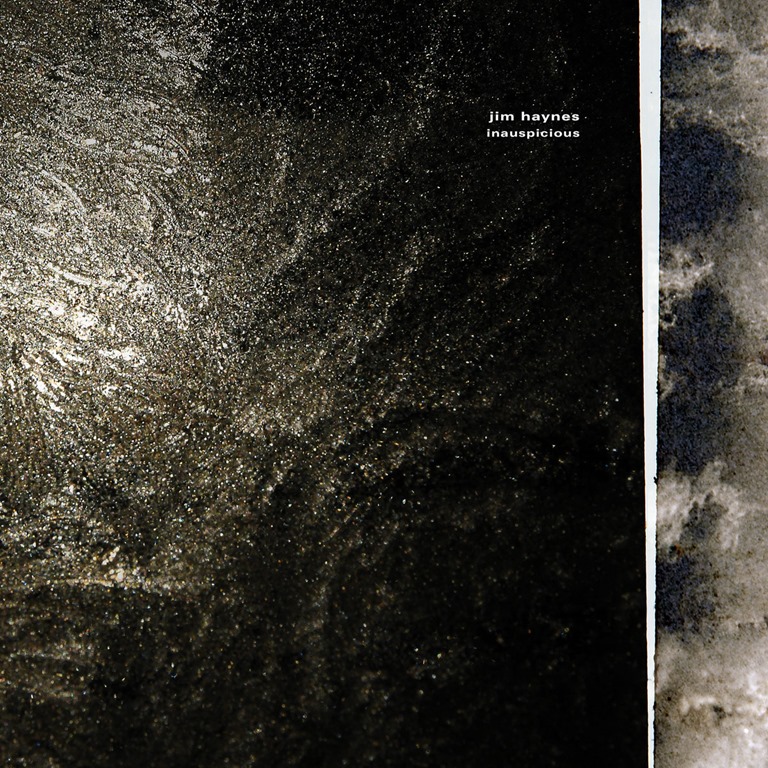
Haynes’ work has become progressively harsh over time, and the press release for Inauspicious notes that this has been particularly true post-pandemic, while acknowledging the cliché that the pandemic marked a pivotal point for many musicians. Crucially, it notes that ‘The tools for Haynes’ work remain limited: motors, electronics, shortwave radio, found objects, all applied with considerable pressure. Compositionally, Inauspicious is a very rough moire pattern from overlapping elliptical structures that can negate and obfuscate just as easily as they can compound and aggregate. The album surges and collapses upon the two twenty minute chunks of controlled noise that follow an internal logic that snakes from brooding power drones, spectral radio transmission, and an aktionist demolition cast upon metal, glass, and unfortunate wooden objects. Rupture and release. Purge and pulse.’

As such, while the output, and the dynamic may be different, Haynes’ fundamentals remain unchanged, and this matters, in that it demonstrates that more often than not, the end product is not so much dependent on the input and the raw materials, but their application and the process.

Inauspicious features just two compositions, ‘Variant, Number Fourteen’ and ‘Variant, Number Fifteen’, which each run to precisely twenty minutes apiece. It’s a work that’s seemingly designed for a vinyl release, with each piece occupying a side of the LP, and I daresay that the dank ambient rumblings have their greatest impact when rolling from the grooves of a thick chunk of vinyl. Still, it works digitally when played through some decent speakers which afford air to the album’s slow, granular churnings. It’s not that fat into ‘Variant, Number Fourteen’ that it’s built to a brain-shredding blast of drilling noise. Beneath the ear-destroying mesh of treble and shredding abrasion, there are swells and surges of lower-end noise. It’s easy to overlook the slight details in the face of such a wall of abrasion, but it matters. While Haynes is bringing a relentless assault, it’s important to pause by the details, and Inauspicious is abrim with them, although ‘Variant, Number Fourteen’ spins into a restless ancient howl in its final minutes and tapers into a dank rumbling that brings a heavy tension.

‘Variant, Number Fifteen’ brings more of the same: heavy drone, grainy texture, harsh noise, spluttering and droning,  a deep sense of ominous foreboding, only with lower, deeper, more resonant bass, the tone of which drags on the lower abdomen among the swishes and swirls. And then grating mid-range abrasion. It’s hard to know how to react to this truly painful grind. By turns, I feel as if I need to defecate and vomit, although in the end I do neither as I simply clench my stomach during passages of this dark mess.

This is an album that brings noise and it brings pain. It’s a relentless grind and growl, and not for the first time, Jim Haynes has tapped into a sense of awkwardness which really grates and grinds.

AA

a3232720135_10

The Helen Scarsdale Agency – 4th August 2023

Christopher Nosnibor

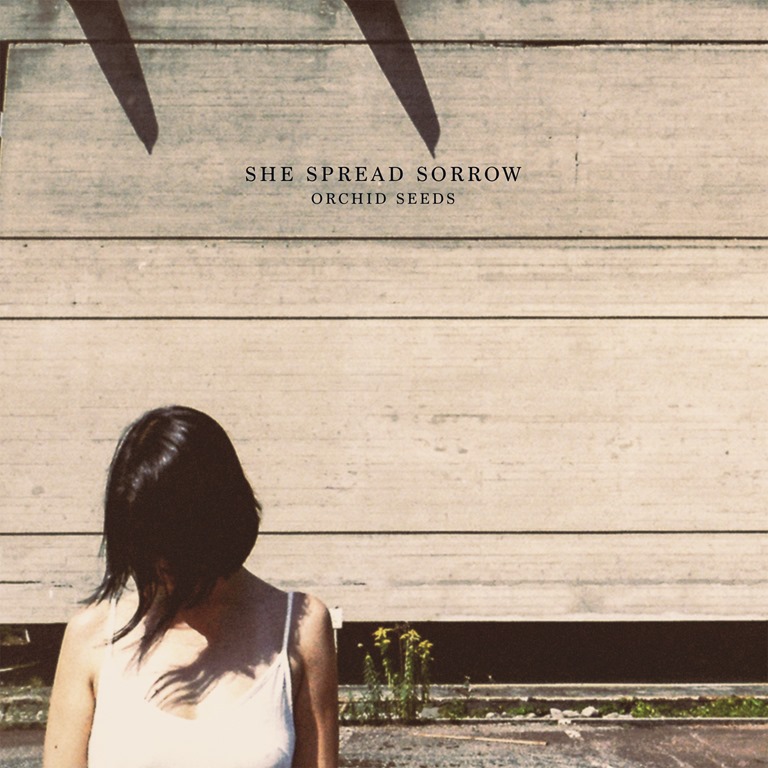
She Spread Sorrow is the musical vehicle for Italian artist Alice Kundalini, and over the course of a number of releases, the majority via Coldspring, she has explored a minimal industrial style, stark yet dense, and characterised by an eerie, whispered vocal delivery.

As the accompanying notes explain, ‘Orchid Seeds was originally published as part of the instantly out of print On Corrosion – a 10 cassette anthology from 2019 that was housed in a handcrafted wooden box and featuring full albums from Kleistwahr, Neutral, Pinkcourtesyphone, Alice Kemp, She Spread Sorrow, G*Park, Relay For Death, Francisco Meirino, Fossil Aerosol Mining Project, and Himukalt. The collection also stood as the 50th release for The Helen Scarsdale Agency, an imprint founded in 2003 and dedicated to post-industrial research, recombinant noise, surrealist demolition, existential vacancy and then some.’

Four years on, it finally gets a standalone release, both digitally and on vinyl.

Kundalini states that the album, “is about 5 different women of my family. Each track is about one of them with their difficult story and strengths. My family is totally destroyed now, no relation between anyone, but in the past there was a strong tradition of women with

interesting personalities.”

And even by the standards of She Spread Sorrow, Orchid Seeds is stark and eerie, dark and unsettling. The reverby, robotic vocals that whisper and moan over the sparse backing of ‘The Solitude in the Giant House’ may set the tone, and with a vintage drum machine thudding and clopping in the background, it has that late 70s vibe – somewhere between Young Marble Giants and cabaret Voltaire.

Things twist into darker territory with ‘Star’ as strains of feedback and grating, serrated synth ripples fizz and crackle beneath her gasping monotone vocal. This is much more reminiscent of Throbbing Gristle. It makes for a tense eight minutes: so often, when acts capable of producing great and heartstopping noise show such restraint as to keep it minimal yet audibly straining, the effect is amplified. This is one such composition; you find yourself moving to the edge of your seat, limbs tensing, waiting for something that never comes.

While the songs are about different people, ‘She Didn’t Care’ and ‘Queen of Guilt’ show opposite aspects of a theme, and perhaps provide some insight into the dynamic of the familial relationships and why they collapsed. The former is built around a stammering beat and hovering, hesitant synthesized organ hum; the sound and overall performance is primitive, immediate, while in contrast, the latter is dominated by a slow, heavy beat defined by a thunderous, reverberating snare, over which a simple synth wanders as echoed vocals drift, fuzzed and breathy and way off in the distance. The effect is some king of industrial dub, and it’s unsettling but not altogether unpleasant, perhaps because it contains stripped-back elements of common pop and dub tropes and so its oddness is countered by a certain stylistic familiarity.

The fifth and final track, ‘The Fortune of Others’, builds through serrated oscillations to grind away for what feels like a slow-throbbing eternity of electronic claustrophobia. It’s important to bear in mind the context: this is an album that’s equal parts narrative and concept, and the execution really pushes the concept to the fore, building the atmospheres of moments missed.

Without more detail – and let’s face it, more detail would likely be unsettling, even potentially traumatic – it’s impossible to determine the full extent of the meaning and also the pain behind the title. But for better or worse, the prospect of taking a firm grasp on the album seems to grow ever further away as it progresses. There is something magnificently and also frustratingly elusive about Orchid Seeds, and however deep you delve, however long you seek it, one suspects it will remain eternally beyond grasp.

AA

HMS050J_front