Posts Tagged ‘Ran Slavin’

Nocturnal Rainbow Recordings – 5th September 2025

Christopher Nosnibor

One significant downside to digital music formats is that is reduces the dimensions of the experience. With a record, and even a CD, there is a physicality which is in many ways integral to the experience. I’m not here to sell the whole multi-sensory experience and tactility of vinyl line: yes, I grew up with vinyl, and in the 90s, a new LP was maybe £7.50 while a CD was £11, so I would often buy vinyl simply because I could get more music for my money. And records do scratch, sleeves get bent, and generally, vinyl requires more care than a CD, so I’m as much a fan of 5” silver discs as I am 12” black ones. And now, vinyl has become something of a fetishised luxury item: as much as there’s still pleasure to be had from sliding a thick chunk of wax cast in whatever hues from a glossy, heavy card sleeve, there’s sometimes a sense that they’re all trying too hard, and the £30 price tag takes some of the shine off the experience. There are a few exceptions – recent Swans releases have been works of art in every sense, and the physical formats have added essential dimensions to music which is something more than just some songs, recorded.

Had Ran Slavin’s latest offering been given a vinyl release, it would have been a triple LP, containing as it does thirty tracks, with a running time of almost two hours. It would have been epic. But despite having released previous albums on esteemed labels including Mille Plateaux, Cronica, and Sub Rosa, it’s unlikely that Ran Slavin has the kind of fan base that could justify, from a label perspective, a triple-vinyl release. But what Nocturnal Rainbow Recordings have done here is interesting, and utilises the digital format in a novel way, by offering alternative artwork in recognition of the album’s multi-faceted nature. Yes, it’s been done by major artists who’ve released physical albums with variant covers, with a view to enticing hardcore fans to buy multiple copies and thus increase sales and enhance the chart position (The Rolling Stones’ Hackney Diamonds probably wins the award for the pinnacle of pisstake on this score), but the idea of buying an alternative digital cover for a nominal price isn’t something I’ve seen before.

As the notes on the Bandcamp page explain, ‘Just as the music migrates across genres, the visuals migrate across states of being, extending the album into a network of parallel identities. Together, they construct a fragmented yet coherent cosmos, where each image is both an entrance and a deviation, multiplying the ways Neon Swans can be seen, heard, and inhabited.’

Appropriately, Neon Swan doesn’t quite sound like anything I’ve heard before, either. To unpack that, it contains many elements which are common and familiar. There’s sparse techno, minimal dance cuts with sped-up vocals and swathes of space between low-key beats and glitchy grooves, as represented by single release and album opener ‘tell///me///now’ – one of many titles which reflect the sense of fragmentation and juxtaposition which define the album (‘s4dert1ac’ and ‘d3xr3rity’ provide other examples, but then there are the likes of which also disrupt the conventions of language in the same way Slavin disrupts the language of genre tropes).

‘audio ease my pain’ plunges into darker territory, while introducing rap vocals atop heavy hip-hop beats (although there’s an instrumental version as well further on, which offers a different perspective again on the same material). Elsewhere, ‘c-r-i-m-s-o-n-schema’ brings spacey, spaced-out bleeps, heavy percussion that has a late 90s feel, a blend of The Judgement Night soundtrack’s melding of rap and rock, and the Wu-Tang Clan.

For all of the space, the reverb, the minimalism, something about tracks like ‘searching_heart’ is quite claustrophobic: the intense repetition and synthetic feel, paired with crackling fizz, brain-melting glitches and some grinding bass tones. It may be constructed using the fundamental elements of dance music, but this is not dance music. Electronic music to induce uncontrolled spasms and twitches isn’t a genre, but if it was, Ran Slavin would be a leading exponent.

It’s a long album, with a lot to digest, and as it thumps and wobbles and glitches away, snippets and fragments collaged across one another, there are times it all feels a but much, a bit bewildering. At times it’s draining, exhausting, at times you simply zone out, and often, I find myself questioning the wisdom of persisting with it. The vibe is that of the kind of underground clubs I never got on with in the 90s and early 00s, and I’m particularly reminded of the time Whitehouse played an Optimo night in Glasgow in 2003: I was there for Whitehouse, who played for forty minutes starting around midnight, and the music being played was rather in the vein of the more groove-centric cuts on here. The people there for the DJs weren’t happy for the low-key electro pulsations to be paused for the noise and antics of Bennett and Best, but for my part, I struggled to get into the low-key electro pulsations. But the other reason I recount this experience, challenging in its incongruousness, is that in places, Neon Swans feels incongruous with itself, an album riven with unreconciled contradictions.

The execution of Neon Swans is hard to fault, and it does cover considerable ground, with range, over its expansive duration. But it is sprawling in its scope, its focus is variable, and it is very long. And it’s maybe better with drugs.

AA

NRR38 art 1

Nocturnal Rainbow Recordings – 4th October 2024

Christopher Nosnibor

Where does the time go? It’s a question one hears people ask often, and I often ask myself the same. Time, it seems, evaporates when you’re busy simply existing, keeping going from one day to the next, working, paying bills, shopping, eating, sleeping. All the things you want to do, but simply never get around to, for one reason or another.

Where does the time go? All too often, I’ll receive an album well in advance of release, and, because of life, and an endless inflow of upcoming releases and other diversions and distractions, I will take a long breath of relief on calculating that I have ages, weeks, before the release date, to listen, process, and digest the work, to write and refine my review, and still be ahead of time. The next thing I know, I’ve reordered my review schedule numerous times, perhaps drafted a few preliminary notes, and the album’s been out for almost a month.

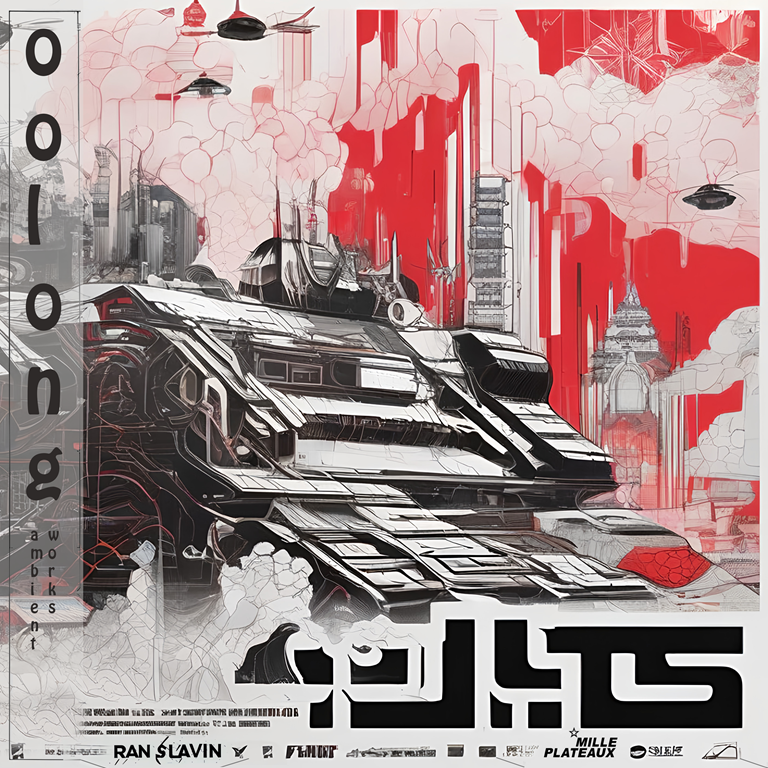
It was only a little over six months ago that I covered Slavin’s seventeenth album, Oolong: Ambient Works.

New Dawns, we’re told ‘exemplifies Slavin’s nonconformity, commitment and expansion to his cultural roots of exploratory music, through early clicks and cuts electronica and instrumental ambient, highlighting an immediacy and necessity for musical independence, through which he hopes to reach attentive new audiences… The album is more than a collection of tracks. a cohesive blending of diverse influences and sounds into a unified experience. A beginning of a journey. As with his previous projects, New Dawns invites listeners to immerse in a unique and tropic sonic world, where the boundaries between acoustic traditional instruments, post leftfield electronica, east and west, are blurred.’

New Dawns comprises sixteen tracks, titled ‘Dawn 1’ to ‘Dawn 16’, each representing, I suppose a new dawn. Each composition is distinctive, and distinct: there is separation, rather than segue, and this very much determines how this feels as an album – in that it feels like an album rather than a single composition sliced into tracks. And as such, there is a sense that each piece, appropriately, starts afresh. And while the overall experience is mellow and broadly ambient, there are solid features which mark the territory, and actual, distinct instruments, too, which punctuate, and, indeed, provide form and structure to the wispy ambient soundscapes: strolling, jazzy double bass, haunting, twangy guitars, piano, irregular beats, and splashing cymbals all feature… to say they feature prominently may be something of an overstatement, but their presence is clear, and in context, powerful.

Just as the sun rises in the east, so the twang and drone of sitars colour some of Slavin’s dawns, and across the span of the sixteen pieces, the sense of mood changes every bit as the sense of geography. Oftentimes, the dawning is gradual, a slow emerging of gentle light, but then, for example, the more percussive ‘dawn 7’ arrives abruptly and unexpectedly, and simultaneously brings with it more overtly electronic vibes which bring together Krautrock and minimal techno. ‘dawn 8’ brings swaggering avant-jazz wrapped in a cloak of prog rock leanings, shrouded in a murky fog of obscurity. ‘dawn 11’ has the kind of murky robotic minimalism of late 70s industrial, hinting at the point where Chris and Cosey would go on to spawn trance.

Its total running time may be under seventy minutes, but New Dawns is an immersive work, and I find myself drawn deeper into the details as it progresses. And those details are abundant. There’s simply too much going on for this to be considered a truly ‘background’ work: zone out for a second, and something else will prod its way to the fore, nagging and needling for attention, before sinking below the surface, to be replaced by something else. Having found myself drawn into the scrapes and drones, the subtle – and not to subtle – details, the album slips by, and so does an hour and a bit. And that, I come to realise, is where the time goes.

AA

a2974132267_10

Mille Plateaux – 22nd March 2024

Christopher Nosnibor

What’s often fascinating to me as someone who writes about music quite extensively, is to observe the avenues other writers explore, particularly when engaging with music that’s ambient, obscure, or otherwise difficult to take a hold of and to pin down. This fascination is amplified when the music, either by its inherent nature, or by virtue of explanatory words from the artist, has a foundations in a theoretical or conceptual context.

Achim Szepanski has been tasked with a challenge when it comes to the notes to accompany

Oolong: Ambient Works, which is the 17th studio album from multi disciplinary artist Ran Slavin, which is pitched as ‘a 74 min drone-ambient-minimal-symphonic infused LP that takes after various teas in the far east.’ To heighten the experience, each track is accompanied by ‘a slow and atmospheric visual journey shot by RS in East Asia and the total can be experienced in total and joined as an immersive 74 minute journey.’

Szepanski helpfully explains the layered meanings in the translations of the word ‘oolong’, and expounds the complex interconnections of tea and dragons through a filter of Felix Guattari (which isn’t entirely surprising, given the label releasing it). He grapples with ‘the minimalist concept of tea architecture’ and the way in which ‘Not only the centripetal, but also the centrifugal orientation of the sound is imaginary.’

While the visuals clearly form an integral pat of the project overall, I shall preserve my focus exclusively on the audio release, and in advance of this draw the distinction between audio created to provide a soundtrack, and visuals created to accompany an audio work, because while Szepanski discusses at length the relationship between the visuals and the tea path and the simultaneous limitations placed on the work by the visuals and their capacity to enhance the experience, Oolong: Ambient Works is an audio release or an ambient persuasion, as the title suggests.

The seventy-four minutes is divided into eight individual pieces, with titles such as ‘Grand Jasmin’ and ‘Assam Jungle; as well as others which are less overtly tea-derived, like the first composition, ‘Time Regained’. It’s fifteen minutes of slow-simmering ambience, the levels of which fluctuate and catch, the glitches rupturing the smooth surface of the soft sonic fabric.

Szepanski makes an important point when he writes ‘It is impossible to know exactly what the individual sounds signify. Sometimes it might be the intention to hear the sounds of nature. But it’s not a question of identifying its source and its effect.’ And so we come to what is, for me, the crux of the ambient listening experience, whereby the source of the sounds is far less significant than what the listener hears. Not even what I hear as a listener, although I can only speak and interpret for myself, and the beauty of this experience is that however much Slavin strives to imbue this work with meaning, it cannot be imposed. Slow pulses bring a rhythmic element to this otherwise abstract piece, which is deeply calming, but occasional warps jolt the listener from their state of tranquillity like a prod.

‘Butterfly of Ninh Binh’ flits by with crackles and scratches by way of disturbance, and the introduction of static and ersatz surface noise to recordings is a curious one, as something which only became a feature with the advent off digital audio. Those who have come to vinyl since the renaissance are less likely to relate, since vinyl is now a plush commodity and not something people leavy lying around or use as a coaster or whatever as was commonplace in the sixties, seventies, eighties. But such interference is integral here: Slavin’s approach to ambience on Oolong is subtly different, and introduces just enough dissonance and discomfort for it to be not entirely comfortable.

The ten-minute ‘Ruby Ceylan’ is soft and ripping repetitive and hypnotic, but something – perhaps the abstract moans, perhaps something else – is just off.

Iroh, in Avatar: The Last Airbender, is a keen advocate of the calming properties of Jasmine tea, and I get a far stronger Jasmine connection from this – the original animates series, that is – than from ‘Grand Jasmin’ here – the album’s shortest track is subtle and soothing, but also marks a change of texture with a thumping beat which echoes away hard and fast beneath its slow-swelling outer layers.

‘Himalayan Flower’ unfurls slowly and with pronounced percussion, before the ten-minute ‘Summer Monsoon’ brings the album’s conclusion. A slow, mesmeric, soporific cloud of ambience passing by, with occasional clangs and abstract interruptions which echo through the drift, this is a real; eyelid-drooper which suggests it’s time to sleep, or time for a coffee.

AA

MP69_front

Crónica – CRÓNICA109

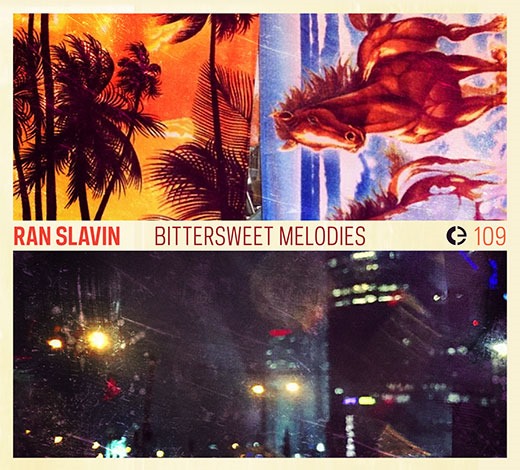
Given Ran Slavin’s broad artistic pursuits, which span video installation, sound and film, and his far-reaching interests which manifest in the exploration of the tensions between opposites, Bittersweet Melody is something of a summation of his preoccupations.

Just as ‘bittersweet’ is one of those words that encapsulates contradiction and juxtaposition, so Slavin’s latest album is built on contrasting sounds and forms. Culled and curated from pieces of work from Slavin’s archives and a release from over a decade ago, the material which comprises Bittersweet Melodies has been disassembled, reassembled and generally re-rendered.

A mellow organic drone hovers and hums through ‘Saturday’s Dress’, but the ambience is disrupted by very mechanical-sounding pings and spring and microtonal bleeps by way of irregular rhythms. A repetitive thrumming hum provides the framework for the minimal yet dense and sinister ambient hip-hop of ‘Category: Murdered Entertainers’, with distant snippets of exotica adding a heightened sense of the unfamiliar to its curious texture. Elsewhere, polyrhythmic percussion collides with stuttering trip-hop beats and eastern-flavoured scales entwine luscious soundtrack strings. Frenetic drum ‘n’ bass ballasts against shimmering electronic froth and looped vocal fragments wash in and out of rumbling scrapes, fear chords, dissonance and a rich soup of sound from all corners of the globe and of the recesses of the mind. Woozy ambience and glitchtronica waft into passages dominated by dank pulsations and murky, shadowy shapes.

The fragments evoke neither nostalgia nor excitement, but a sense of displacement, or alienation. How else does one respond to pan-cultural motifs overlaid and strewn with dancehall music and digital blips but with a sense of vague bewilderment? Slavin does not contrive to create a typical collage mash-up: Bittersweet Melodies is something altogether more subtle in many respects. Moreover, the contrasts and oppositions are moulded and melted into one another to as to become complimentary. Strange, disorientating and uncomfortable, with a lot happening simultaneously, but complimentary nevertheless.


Ran Slavin


Ran Slavin Online