Christopher Nosnibor
It doesn’t get much more goth than a gig in a graveyard. Through the wrought iron gates, the approach to the chapel, the venue for tonight’s performance, is set either side and as far as the eye can see with headstones. Fulford cemetery is immense. The chapel is an appropriately imposing building: designed by James Pigott Pritchett and completed in 1838, it’s a grand neoclassical structure and considered possibly one of the greatest cemetery chapels in the country, with huge doric columns outside, while its interior, white with gilt trimmed faux-pillars which only accentuate the incredibly high ceiling is spectacular to behold.
The room – a neat oblong – is packed out with a broad array of people, but there’s a strong showing of what I’d call Whitby goths, that is to say, the kind who dress to impress rather than your biker jacket and boots type. There’s a lot of lace, silk, and taffeta to be seen, meaning that for once I feel rather less conspicuous sporting a knee-length velvet coat. But equally, the audience is notable for its broad spectrum and diverse demographic, and while details of the event in advance had been purposefully scant, there is clearly a keen interest for something different, and not specifically in York. There are people who have travelled to be here tonight.
The bar, such as it is, is offering red and white wine, bottles of Stella, and Coke, and taking a seat toward the back – the front ten rows were full and by the time the lights go down, leaving the space illuminated by mellow candlelight, the seats are pretty much all occupied. It’s pleasing to see, especially knowing that this event coincides with the annual nighttime walk for cancer, and a metal gig not five minutes up the road.
First, we were treated to some operatic vocal accompanied by piano. It’s not only exquisitely performed, but it’s absolutely perfect for the setting. And in this moment, it becomes crystal clear that this is going to be an event like no other. To describe it as an evening of culture would be to downplay all of the other music events and spoken word nights and more on offer, but when it comes to high culture, there’s most certainly a gap – but the greatest gap is in events which bridge the divide between your regular gig and a night at the theatre or the opera or a night at the proms. This, however, is a superbly curated event which achieves precisely that.
Immediately after this introduction, host and co-ordinator Stephen Kennedy leads an ensemble consisting of bass guitar and percussion through a set of three songs, starting with a brace of deep cuts from Fields of the Nephilim’s catalogue, with ‘Celebrate’, and then ‘Requiem’ from Mourning Sun, with the trio joined for the second two songs of their set by a cellist who remains on stage to play a solo set after. Kennedy’s vocal is strong, and he really does a remarkable job of reproducing Carl McCoy’s gravel-heavy growl.

After a handful of cello instrumentals, Kennedy returns to the stage – although technically it’s the floor, but wonderfully lit – to provide vocal accompaniment to her graceful strings.
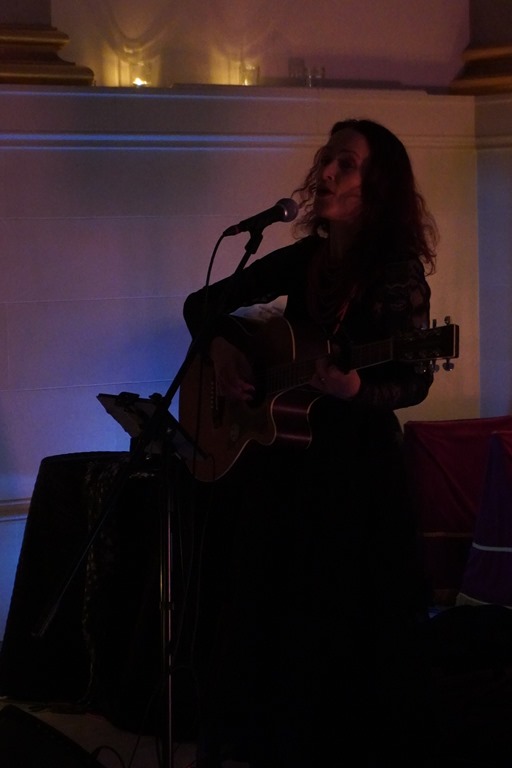
The switches between performers are near-instantaneous, with no announcements as to who’s who and no-one informing us who they are. There is a programme available at the merch table, but in a way, the individual credits feel of little import: this is very much a collective work, an ambitiously grand collaboration, striving to create a unique experience of an ever-shifting sonic smorgasbord. Individual names and egos are put aside in the name of this being Gothic Moth. There’s harp – moving – and powerful, and an emotive vocal while makes for a stirring performance, which is rapturously received, a solo acoustic-guitar led performance with folk-hued vocals, before the first half of the evening is rounded off with a piano and tenor recital, Benjamin Staniforth’s impressive voice matched only by his impressively voluminous leather trews.
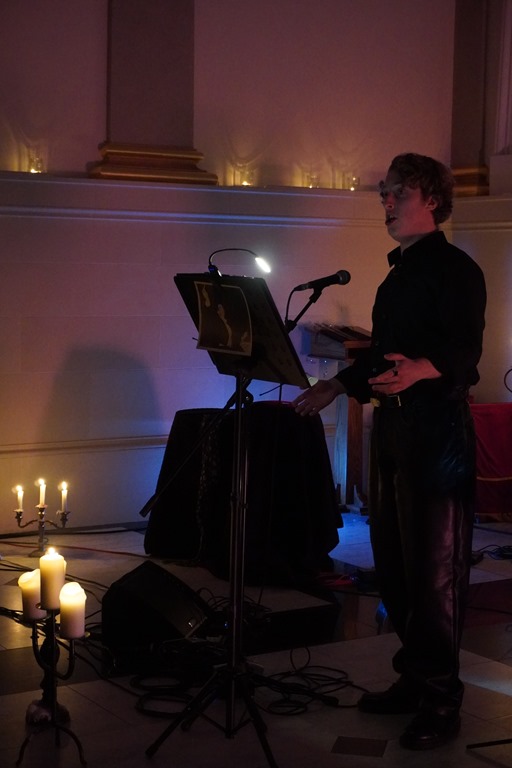
If the second half offered more of the same, with some of the performers getting a second set, it also gave us a while lot more. During a longer harp and voice set, the rendition of Metallica’s ‘Nothing Else Matters’ was a clear standout of the night, but then again, Iryna Muha’s Ukrainian folk performance, with acoustic guitar – with some effects to really fill out the sound – and hurdy-gurdy was mesmerising, and was equally well received.
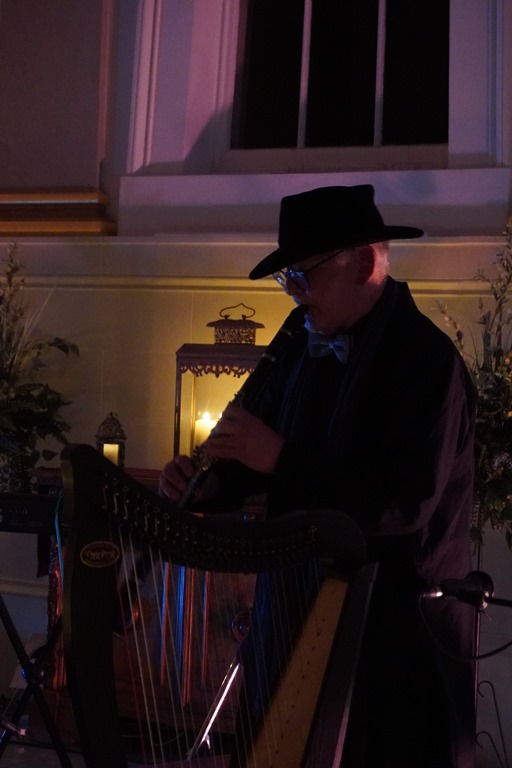
After a clarinet interlude from a man in a hat and long coat (there are a fair few of those this evening) who turns out to be Ian Karlheinz Taylor from Skeletal Family, Taylor moves to the keyboard and the full band return for a magnificent and moving rendition of The Mission’s ‘Sweet Bird of Passage’ followed by ‘Island in a Stream’. Close your eyes and it could be Wayne Hussey dinging: Kennedy, it seems, is truly a vocal chameleon, bringing the night to a close with a remarkably close approximation of Ian Curtis on an impressive version of Joy Division’s ‘Atmosphere’ – something this event had in copious amounts.
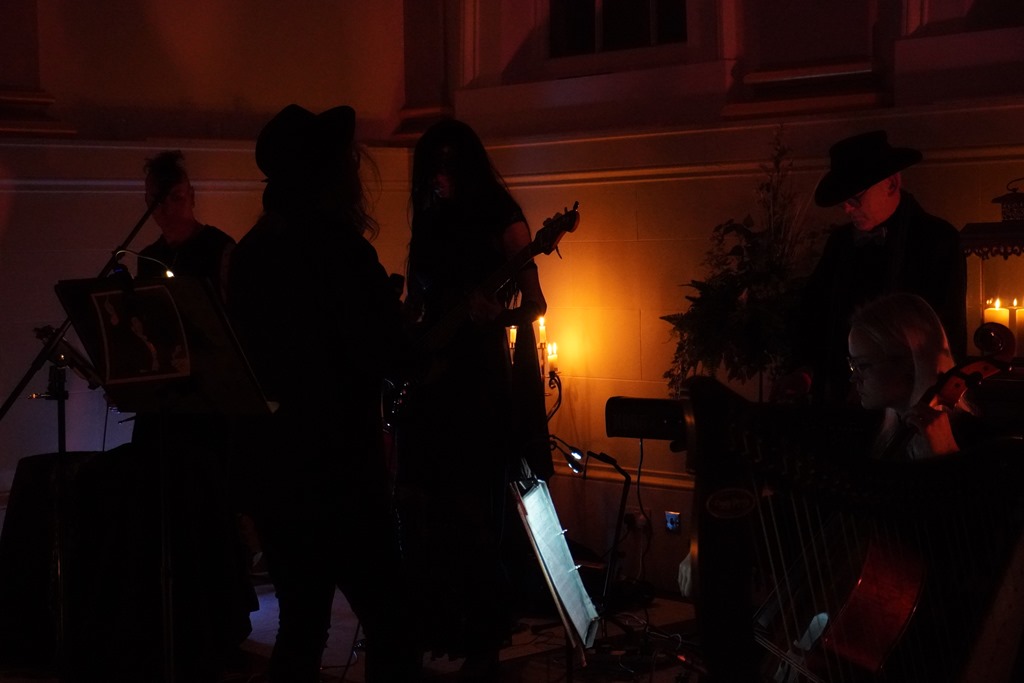
Stephen Kennedy needs to take a bow: this, the first Gothic Moth event, was an incredibly ambitious coming together of a staggeringly eclectic range of artists, and many of those collaborating hadn’t even met one another until the day. This is unquestionably testament to their individual and collective talent, but also to Kennedy’s aptitude as a curator in bringing them together. Everything about this evening was stunning, and it’s pleasing to see future events are already being booked, filling a niche few knew even existed.
 Aural Aggravation