Posts Tagged ‘Lawrence English’

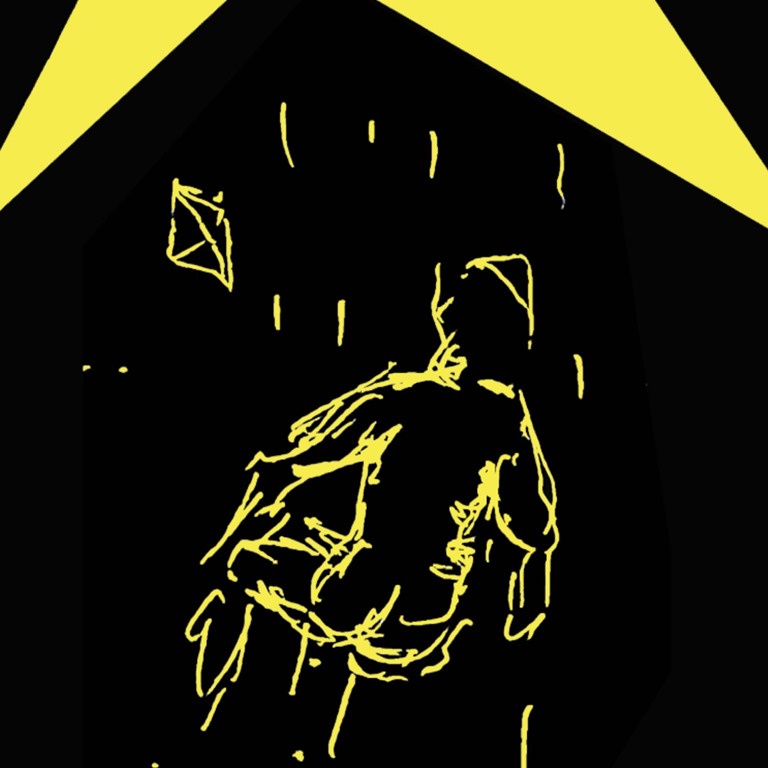
‘Negative Drone’ is one third of a final suite on the record, born out of his own research into the sound of fear and the weaponisation of audio over the past few decades. It is a piece about “recognising that technologies with huge promise tend to fall into particular tropes that are pre-existent and reflect cycles of power and capital interests.” Lawrence continues to describe how his research led him to all manner of surveillance and target acquisition footage from drones and other military craft… “Needless to say it was harrowing viewing, but it very much made me recognise the dynamic shifts erupting just beyond our everyday horizons. We don’t tend to think about these things, what they are used for and what it is they could be used for. We just assume that their uses are somehow prefigured. For most of us these machines and the implications they carry are distant and in some way unthinkable, but for other peoples across the world their sound alone is enough to bring terror and anxiety. I found this a powerful question to explore and the composition grew out of it. In fact the final third of the album grew from this particular line of investigation.”

Musically, ‘Negative Drone’, featuring Norman Westberg and Thor Harris of Swans, Werner Defeldecker and The Australian Voices, was one of the final pieces to come be completed on the record. It is also one of a number of pieces in which Lawrence plays pipe organ, recorded on what was once the largest organ in Queensland, the state he resides in.

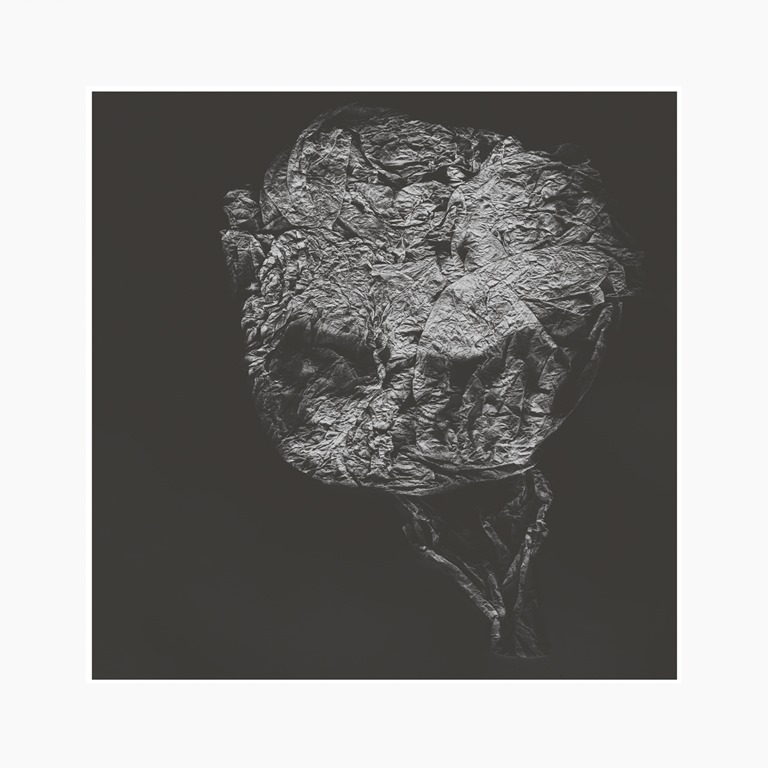
Expanding investigations into the politics of perception, and exploring the possibilities of new recording processes, technologies, locations and relationships, as well as conveying different sonic textures, Cruel Optimism is ultimately a record that considers power (present and absent). It meditates on how power consumes, augments and ultimately shapes two subsequent human conditions: obsession and fragility.

We’re big fans of Lawrence English and Room40 here at AA (as our many reviews of the label’s output attest) and the indications are that this could be one of his strongest works yet. Check out ’Negative Drone’ here:


https://player.vimeo.com/video/194648555


ROOM40 – EDRM426 – 4th November 2016

Christopher Nosnibor

This is one for the David Lynch fans, but also fans of experimental industrial noise, and those who appreciate works which exist in the realms between media.

Factory Photographs was one of a number of commissions made by the curator of the exhibition David Lynch: Between Two Worlds, a retrospective exhibition held at Brisbane’s Galley of Modern Art in 2015. The exhibition featured Lynch’s works in painting, sculpture, installation and photography, and included a large section of his Factory Photographs: shots of factories in various states of disuse, taken over several decades.

Raised in the country, surrounded by woods and farms, Lynch developed a fascination with the architecture, the machines and ‘the smoke and fear’ of factories from his visits to his mother’s native Brooklyn. HEXA is Laurence English and Jamie Stewart (Xiu Xiu), and Factory Photographs is their sonic response to Lynch’s images.

While Lawrence English’s work is often typified by a delicate approach to sound and the use of delicate field recordings, it’s clear that the inspiration and the collaborative input of Stewart have pulled him toward something altogether more visceral: Factory Photographs is an intense and brutal work.

‘Sledge’ rumbles and crashes in with some heavy noise, an amorphous roar barrels and funnels a dense sonic cloud, from amidst which shuddering throbs grind and thrum. Each piece is a blast of earthmoving noise, more evocative of a super-scaled atomic destruction than heavy industry or its demise and dilapidation. Yet as noise without clear definition or shape, it’s still highly evocative, and does correspond with Lynch’s conception of ‘the ideal factory location’, with ‘no real nature…’ This is sound which is brutal, harsh, unrelenting and unnatural, wholly man-man made yet wholly inhuman. The barrage of noise is built from a conglomeration of hums drones and thunderous sounds on sounds, roiling, churning. The rhythms are not percussive, but born from cyclical undulations, the churn of industry at its heaviest, in its earthiest form: the mine, the quarry, the drilling rig, the smelting of ore and the forging of metals. But of course these are only echoes of an industrial past: the factories lie empty now, derelict or inching toward dereliction, and the workers have gone, transferred, replaced, relocated, on the same scrapheap as the rusted machinery or otherwise forced into alternative careers.

As crushingly depressing as the factory may have been, its absence leaves only a lack and the question of progress, but as what cost? But equally, the earth-gouging sounds of Factory Photographs reminds of the finite nature of the earth’s resources, in particular fossil fuels. What is left apart from irreparable scars on the landscape once every last scrap has been excavated? Where is the future?

Dark, sonorous notes hang heavy on ‘A Breath’, and Factory Photographs is rich in gloomy atmosphere. Sheet metal thunder resonates through vast empty spaces, and clusters of clangs reverberate in the grimy darkness to create a bleak and oppressive sensation. The turbulent roar of ‘Vertical Horizons’ is harrowing and unforgiving, building to a shrieking howl of feedback while the regular rhythm of heavy machinery rotating is replicated on ‘Over Horizontal Plains’, while thuds and distant rumbles continue endlessly beneath. Digging, dredging…

It’s unsettling but exciting, and the prospect of an audiovisual work, featuring, with Lynch’s approval, the original visual montage of his photographs in 2017 is a thrilling one. Meanwhile, the album more than works in its own right as a dark, stark and uncomfortable collection of pieces which shake the listener’s sensibilities and leaves a hollow, uneasy sensation in its wake.

https://f4.bcbits.com/img/a0775137879_10.jpg

A Guide to Saints – SNT020

James Wells

The coronet the title refers to is not a nobleman’s headwear but a Cornet Phase 2 amplifier, favoured by Brisbane-based musician Leighton Craig on account of its fuzzy tones. The four pieces here, each approximately fifteen minutes on duration, are built around cyclical keyboard motifs which drift, ebb and flow gracefully in a soft-focus sonic aura. They take flight and depart their original structures to float upwards amidst a cadence of chimes, whistles, chirps, chattering birdsong and marshmallow-soft synth squelches.

While the album, released on Lawrence English’s ROOM40 offshoot label dedicated to cassette (and digital) releases is pitched as ‘an unlikely subtropical Harold Budd homage – with a lo-fi suburban edge and noise outro’, the elongated organ drone of ‘Drowned World’ evokes the dystopian bleakness of a Ballard novel, the trilling clarinets adding depths and dimensions of dissonance and alienation. The attention to gradual evolution of textures and shifting tonalities is subtle, but the currents nevertheless run deep beneath the soft, iridescent surfaces.

The stammering fades toward the end of ‘Arc the Solar causeways’ are unexpected, breaking the gentle flow, but as promised, Craig retains the biggest contrast for the final track, as a multitude of howling notes swell together in a void. It’s a graceful, dreamy and ultimately mellow work, imaginatively brought to an uncomfortable and incongruous climax.


Leighton Craig - Green Coronet

ROOM40 – RM475

Christopher Nosnibor

If the album’s cumbersome title sounds like a collection of abstractions thrown together by the same random title generator that The Fall use, then the enormously protracted song titles take the form of semi-abstract narratives which evoke mysterious, shadowy scenes.

Many of the tracks are shorter than their titles, and while the soundworks consist largely of rumbles, scrapes, thuds and electrostatic crackles which are essentially abstract, they do develop some kind of implicit meaning when played in context of the titles. The extent to which this is intentional is unclear: Toop explains the album’s development as being born out of ‘three periods of solitude’ and a conversation with composer and ROOM40 label owner Lawrence English which spurred him to reassess his perspective on releasing music in the 21st century.

Gathering sounds drawn from myriad and disparate sources which lay as ‘spores or maybe dormant clusters of digital files’, Toop has created a work which captures and conveys a sense of the ephemerality of all things. Sights, sounds, experiences, spaces, are each experienced by an individual in but a momentary way. Collectively, all the fragments of experience, however minor and seemingly insignificant, form the life lived; in short, life is one vast intertext, and it’s from this array of ‘things’ Entities Inertias Faint Beings is formed. And so one is pushed to contemplate not simply the sounds or words themselves, but their relationships to those in which they coexist, and to consider their contexts.

‘Dry keys echo in the dark and humid early hours’ is in fact a phrase lifted from Clarice Lispector’s Aqua Viva, and Toop references various other texts (Timothy Morton’s Hyperobjects and Stephen Mansfield’s book on Japanese stone gardens). Toop also makes mention of a ‘hypnagogic image of ‘a transparent swimming pool suspended over the mouth of a volcano.’

As such, Entities represents a gathering of sources, a cut-up collage of sorts, gathering sound, image, memory, thoughts and ideas together in a melange of drones, thuds, whistles, hums and a miscellany of abstract sounds. There are moments of melody and rhythm, some of which are charming and delicate, but thy fade out and vanish as quickly as they emerge. When a scratchy picked guitar and conventional instrumentation emerges on ‘Compelled to approach’, it sounds almost alien in context. The mournful strings on ‘Ancestral beings, sightless by their own dust’ are draped over soft chimes and the sampled speech on ‘Human skin and stone steps’, overlaid with a solitary woodwind and low gong, takes on a hypnotic tone.

The album ultimately tapers to silence, leaving the listener to ponder and reflect.


David_Toop_Entities_Inertias_Faint_Beings

Room40 – RM463 – 26th August 2016

Christopher Nosnibor

‘The self-reflexive sequencing that tracks the sub-harmonic series in the opening blast of ‘Falling Forward’ positions the record as Chantler’s most explicitly melodic. These melodies however do not exist in a mono-dimensional vacuum, rather they co-exist in a meshed framework of dynamic timbral layers… The record’s abrupt cuts, deft variations of density and unexpected diversions are happily explored with headlong dives into ravishing texture and extended stretches of surface stasis. The music draws on a domestic reimagining of the traditions of studio based electronic music/musique concrete and 20th century minimalism and delivers this with brash revitalized energy.’ So explains the blurb which accompanies the release. Not being acquainted with Chantler’s extensive back-catalogue, I must assume that when it comes to being ‘explicitly melodic’, these things are indeed relative.

That isn’t to say that the material on Which Way to Leave? is a mess of atonal, non-melodic noise: far from it. However, this is not an album of dainty tunes, but a work which explores sound in terms of texture and tonality and the relationships between the two.

‘Falling Forward’ does indeed commence the album with a veritable sonic assault. The volume of the piece is a necessary element, in that the tonal richness comes from the relationship between sounds as they resonate against one another. But this is an album of contrasts. The minuscule bleeps of ‘Clearing’ and the ringing hum and dank atmospherics of ‘Fixation Pulse’ rise and fall and chop and change in volume and pitch unexpectedly. At times almost silent, low downtuned tones growl and bark monstrously, contrasting with delicate chimes and sparkling flickers of light like crystals. While the majority of the pieces are short, almost fragmentary, the ten-minute ‘First December’ builds a cumulative effect by sustaining a steady multitonal drone which envelops the listener. This rippling wall is heavy with texture and rent with extraneous incidental sounds.

It may not be explicitly melodic in conventional terms, but it is an album which is sonically engaging and eminently listenable.


John Chantler - Which Way to Leave

Someone Good – RMSG014 – 18th March 2016

Christopher Nosnibor

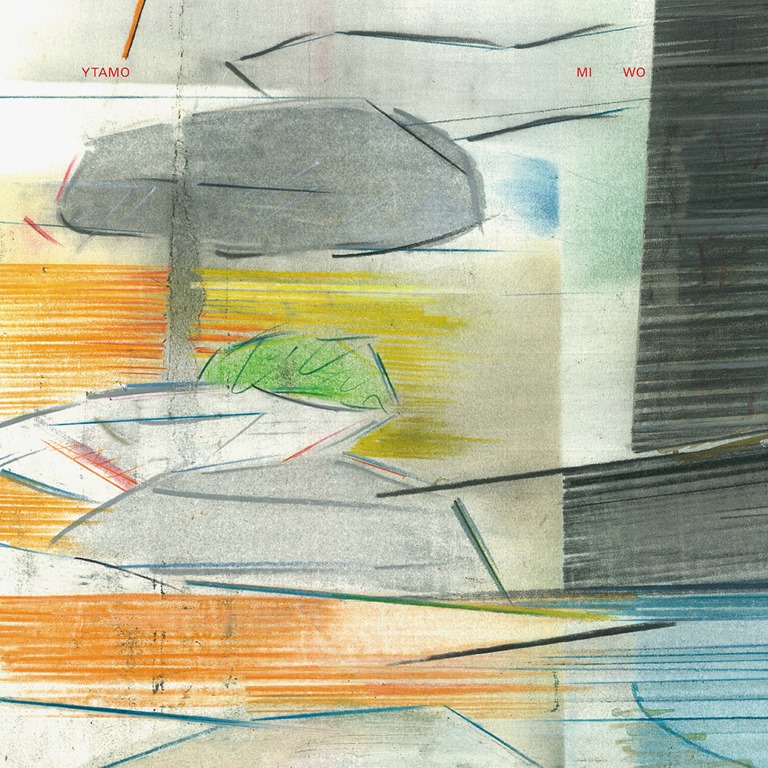
Lawrence English, sound sculptor and the man behind the Room40 label and subdivision Someone Good, has a god ear and a keen sense of what makes for interesting and unusual listening. The liner notes to Mi Wo centre around English’s recollection of his discovery of Ytamo while touring Japan in the early to mid 00s. Specifically, he writes of how the first time he saw her perform, he was completely enthralled by the unusual and soothing music Ytamo conjured.

Listening to Mi Wo, it’s immediately apparent what he found to captivating. There’s an otherworldly quality to the music, and the sounds emerge and fade into one another as if created by some invisible force.

Ytamo’s style is built on diversity and eclecticism, while simultaneously, it’s about understatement and subtlety. The methods by which she draws together seemingly disparate elements transcends not only the boundaries of genre, but also culture and time. Despite its overt modernity, there are motifs and atmospheres which hint at traditionally-rooted music with ancient origins.

Laid back jazz vibes filter through and gradually evaporate in the sparse digital washes of ‘Autopoiesis’, and jaunty bleeps and whistles flicker lightly through trilling easy listening tones and mellow, bumping beats. The familiar blurs into the unfamiliar, with unexpected resonances. Subtly powerful, Mi Wo is a work of musical alchemy.

Print


Ytamo on Soundcloud

Gizeh Records – GZH65DP – 18th March 2016

Christopher Nosnibor

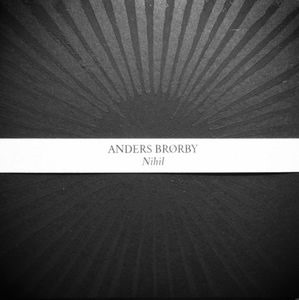
Gizeh is a label which grasps the importance of the complete music experience, and never stint on their packaging. Anyone purchasing their product can feel a tangible sense of both art and artefact, and Anders Brørby’s brooding instrumental album Nihil, the second release in their ‘Dark Peaks’ series, is no exception, housed as it is in a textured gatefold sleeve, the radiating sunburst design raised from the surface, in heavy black ink on a matt black background. How much more black could it be? The answer is none. None more black (the white paper band printed with the artist’s name and album title which much be carefully slid from around the sleeve in order to access the contents notwithstanding).

The presentation provides a suitable indication as to the sonic experience it prefaces. Nihil meaning nothing: while it has, since the 19th Century come to connote a negativity, manifesting as antagonism or rejection through the widespread use of ‘nihilism’, as of and in itself, ‘nihil’, or ‘nothing’ implies an absence. Neither positive or negative, it is simply a lack. Absolute nothing is beyond the human ken, and so, in artistic terms, there is a need to portray nothing, absence, with something. This is something Norwegian composer sound artist Brørby achieves on the 10 pieces which comprise Nihil.

Primarily, the music is dark. There is a lack, an absence, of light, at least in terms of the overall sensation it conveys. Melding elements of drone and dark ambient with more abrasive sounds, the compositions infer an experimental bent which places atmosphere at the fore. The structures are almost subliminal, the shapes of the pieces largely evolve and emerge briefly through a succession of transitions as layers of sound overlap and drift across one another almost imperceptibly. Musical forms are therefore explicitly absent, expounding the concept of ‘nihil’. As such, Nihil is a work of subtlety, and a work which bears theoretical scrutiny, and sits alongside works by the likes of Christian Fennesz, Lawrence English and Tim Hecker.

But subtlety should not be read as a synonym for sedate or tranquil. ‘As Dead as the Stars We Watched at Night’ builds layers of dark noise and swelling drones scrape and torment the nerves, and while the gentle, chimes which ripple in cadence through ‘I Will Always Disappoint You’ offer a glimmer of light and warmth, ‘Put Your Ear to the Ground’ finds a harsh, thick distorted fuzz that obliterates the smooths contrails beneath and accentuates the unrest on which Nihil is constructed. Likewise, the serrated howl of ‘From the Window Above the Lake’ conveys the anguish of emptiness.

Through the medium of sound, Brørby creates a conceptual absence (not to be confused with an absence of concept). There is no message, and Brørby does not purport to convey anything through the work beyond ‘raw atmospheres’. ‘Raw’ implies unfiltered, unadulterated, without manipulation nor refinement, and while this may not be strictly true of Anders Brørby’s creative process, Nihil nevertheless presents itself as being self-contained, a work about absence of anything but the sounds it contains. It is not ‘about’ Anders Brørby, and if anything, the artist is, if not completely absent, then very much hiding in the shadows.

It’s an album that’s best appreciated in a semi-present state, to allow the sounds to slowly wash over the senses and most of all, to be heard without preconceptions or expectations. Because nothing can often leave you with so much more than something.

Anders Brorby - Nihil


https://bandcamp.com/EmbeddedPlayer/album=4022471447/size=large/bgcol=ffffff/linkcol=0687f5/tracklist=false/transparent=true/


Anders Brørby Bandcamp