Posts Tagged ‘Ian J Cole’

Sinners Music Records – 3 November 2024

Christopher Nosnibor

The line ‘hell is other people’ comes from the 1944 play ‘No Exit’ by Jean-Paul Sartre, and it’s something that many of us find relatable. Indeed, it’s a line which more or less summarises my world view. One of the few settings I feel comfortable with multiple ‘other people’ (I’m on with one on one or very small groups, at least in moderation) is in a live music setting, because I can choose whether or not to interact, can limit interaction to the brief times between acts, and – and this is significant – the kind of people I find myself sharing a space with tend to be less representative of the general population. Most of us do have ‘our people’; the only trouble is finding them.

Ian J Cole’s latest work is a concept album based on No Exit ‘whereby Three damned souls, Joseph Garcin, Inèz Serrano, and Estelle Rigault, are brought to the same room in Hell and locked inside by a mysterious valet. They had all expected torture devices to punish them for eternity, but instead, find a plain room with no windows, mirrors and permanent strip lighting. They are all afflicted with fused eyelids or Fraser Syndrome where they can’t ever close their eyes and must spent [sic] eternity in this room and in this state.’

The Fraser Syndrome, from which the album takes its title is a rare genetic disorder characterized by fused eyelids.

Sartre seems to have essentially inverted the effects of the condition, but being unable to either open or close one’s eyes is a terrifying prospect. What’s worse: see nothing, or see everything? Cole’s album is based on the latter scenario, and presents a disturbing soundscape from which there is no escape.

The album opens with the immense sixteen-minute opus ‘Frightened of Cliches’, a heady blend of light-night jazz, erratic beats, and swirling ambient tension. There’s very much a filmic, soundtrack quality to it, and over its expansive duration, there are gradual shifts. The beats dissipate, there are creaks and groans like the rusty hinges of big metal doors being swing shut.

‘A Beauty Diamond Lipstick and No Mirror’ plunges deep into dark ambience. There are some synth incidentals to be found, wandering, lost, amidst the murk and the chimes, the muffled samples and layers of distortion and dissonance, but this is not an easy listen. It is, however, an intensely focused and coherent work.

‘Thelema’, created in collaboration with The Wave Prophets’ offers some light, and reintroduces the faux sax synth sound that was a central feature of Cole’s live sets a while back. But that smooth 80s vibe is now twisted into an altogether darker concoction, a conglomeration of sound that’s unsettling – and no more so than on the sparse feedback drone and hum of the eight-minute ‘Night Never Comes’: it’s a restless, uncomfortable space which it occupies, echoes and metallic clanking reverberations reverberating through the slow wailing undulations.

The piano-led ‘Hell is Other People’ is unsettling and chimes and tinkles against minor chords, before the album’s second ‘big’ piece, the twelve-minute ‘Three Damned Souls’ looms large in every way. It’s richly atmospheric, and while the atmosphere may not be overtly gloomy, it certainly is unsettling in places. Echoes and eerie whispers reverberate amidst trilling organs, bleeps and trickling electronica.

The final track, ‘Hell is Dead People’ is a live recording, and in some respects feels a bit bolted-on, but it’s a strong piece – piano-led, atmospheric, with discordant cadences playing throughout. It rounds off a solid and focused work. While concept albums can be a bit corny, or feel somewhat forced, The Fraser Syndrome finds Cole immersing himself in the themes and going deep into the psychologically difficult spaces that the source material necessitates, and the result is a strong suite of compositions, and quite possibly Cole’s strongest and most engaging work to date.

AA

a2119088003_10

Sinners Music Records – 15th May 2023

On reviewing the debut EP by Fashion Tips recently, I commented that the northern noise ‘scene’ was, in effect, more of a community. I suppose this is something that is true of many more niche corners of the musical world, and it’s certainly true of the electronic scene, particularly that which has grown up around the EMOM (Electronic Music Open Mic) nights that take place around the country as a platform for all strains of all things electronic based (several of which I’ve reviewed, and a few of which I’ve performed at). These nights are a broad church, and have not only welcomed me, but opened the doors for myriad collaborations, as well as providing a safe space for testing stuff out as well as an opportunity for seasoned performers and novices alike to connect with an accommodating audience, and this release comes courtesy of Sinners Music Records, established by Ian J Cole, another face familiar to attendees of the York EMOM nights, who also streams the Audiophile radio podcast showcasing weird and wonderful exploratory electronica.

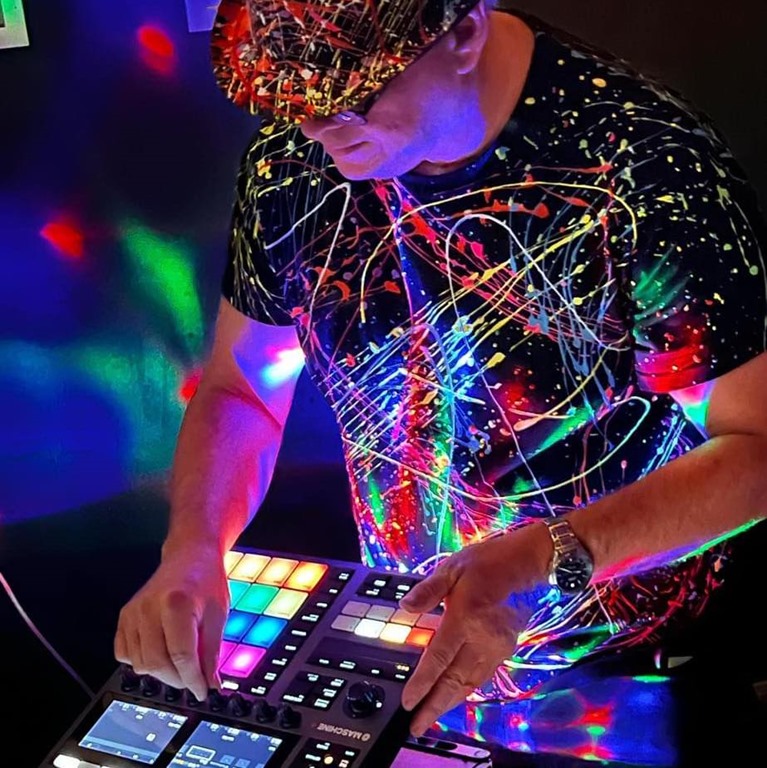
Mho – that’s ohm backwards, and pronounced ‘mo’ – is the musical vehicle of Dave Walker, who’s been a regular face at the EMOM scene, and has become established as being instantly recognisable for his stagewear, with neon-splatter t-shirt and hat. Obviously, these visual props don’t translate to the recordings, which must stand on their own merits – and they very much do.

Over the course of ten tracks, Walker showcases a broad span of styles and sounds, and the compositions are all accomplished and considered. As his bio states, he ‘began his foray into making electronic music at school when he built a Transcendent 2000 synthesiser and a ETI String Synth, as the Polymoog synth cost as much as a house back then’. He’s since switched to more contemporary kit, but his years of experience have led to a nuanced approach to musicmaking: there’s a lot of detail, but nothing’s overdone. Every drop, every time the beats bang back in, every layer, every stutter, every new sound and sample, is perfectly placed – but not in such a way that the precision leads to sterility. Walker’s tunes flow with a rare naturalness, and there are no jarring jolts or awkward lurches between segments.

Predominantly, these pieces are built around conventional piano sounds and broad strokes of synth which fill out broad spaces, and there’s a lot of analogue-style pulsations, too, cut from the cloth of Mike Oldfield and Tangerine Dream.

There’s something familiar that I just can’t quite place about the melody of ‘Nie Rozumiem’ (which will undoubtedly annoy me for days), and elsewhere, ‘Chorale’ brings ambience with low-key beats that washes along nicely, being largely undemanding but pleasant. ‘Eternal’ brings a hint of Eastern promise and a vaguely operatic vocal carried on a soft breeze of shuffling beats and rippling piano.

‘Contact’ and ‘Moon’ appear to be thematically linked, the former bursting with samples and laser-beam bleeps, and it does have quite an 80s feel to it. This, though, is true of much contemporary electronic music which isn’t overtly dance – or EDM and the encroaching Americanism would have it. The latter is a seven—minute sonic exploration that expands through time and space with crackling radio transmissions from the lunar landing of 69.

‘Take it Easy’ is pure 80s retro tootling melting into 90s euphoric trance, and while well-executed, it’s perhaps the least engaging or enticing tracks on the album, but it’s but a brief weakness in an otherwise solid album which concludes with the surprisingly light and accessible spin of ‘I Am With You’ which practically skips along.

With EMOM sets providing just ten to fifteen minutes for artists to showcase their style (these nights are absolutely bloody packed, to the point that despite being ‘open mic’, all slots are usually taken a full month in advance), it’s good to hear the full span of the elements which feature in an Mho set, and even better to hear that Mho has the material for not only a longer set, but a full album which is at once diverse and cohesive.

AA

333455632_2197845260603259_2646669291313228150_nmho1

7th July 2020

Christopher Nosnibor

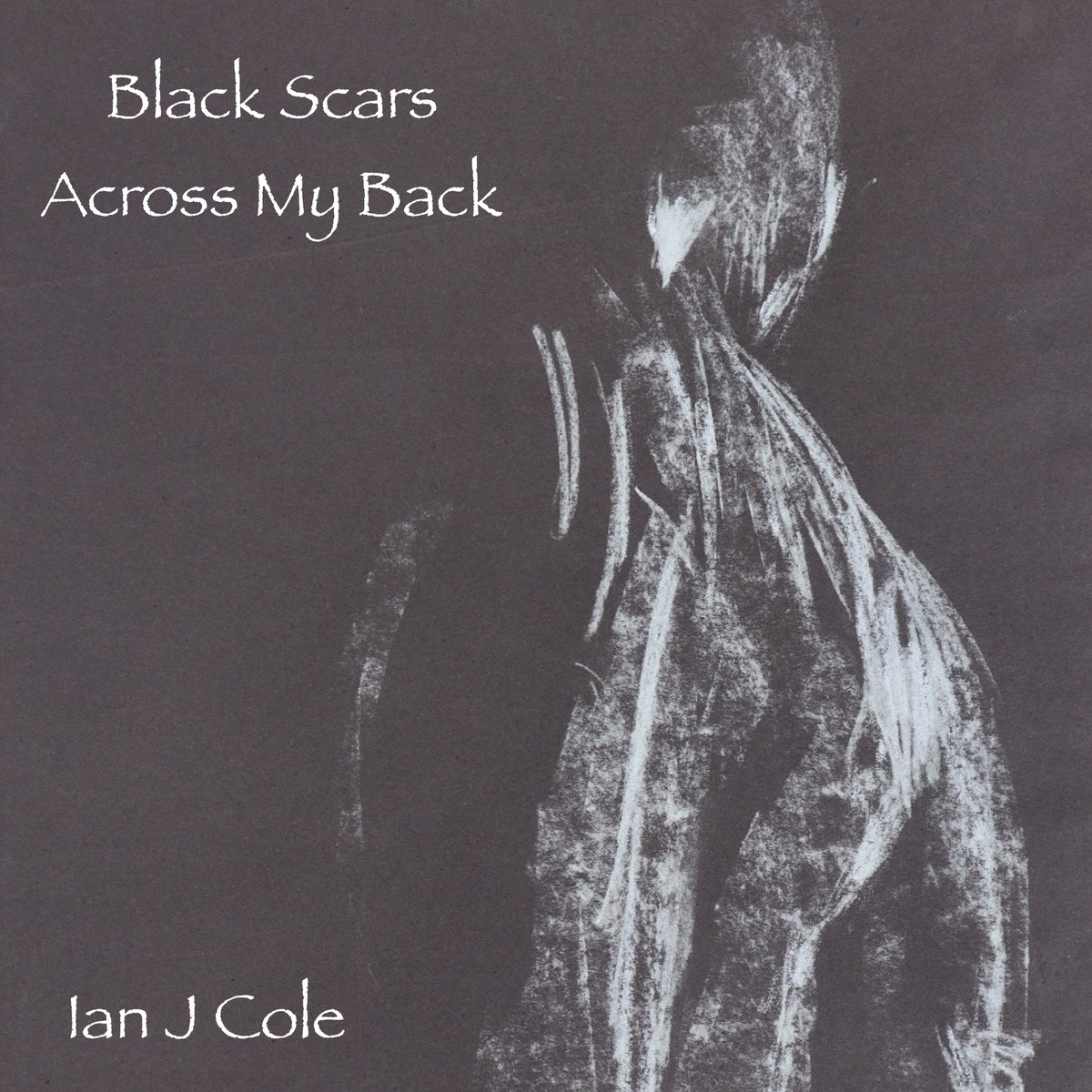
Another face on the Yorkshire electronic music scene, Ian J Cole is someone I’ve seen – and enjoyed – performing a few times. Obviously, not recently, nor probably any time soon, which makes the arrival of his new album, Black Scars Across My Back, most welcome.

Inspired by Bevin Boy John Copley, who died as a result of working down a Doncaster Mine in 1946, Black Scars Across My Back is a conceptual / narrative-based album in essence, although translating any concept or narrative to purely instrumental compositions means the scope for interpretation is vast. The expanse of the album is also pretty substantial, clocking in just shy of an hour and a half.

The details accompanying the album are minimal, but a spot of research show that Copley, who died aged 21, who is buried in York cemetery, was ‘one of the 48,000 ‘Bevin Boys’ (named after Ernest Bevin who was the Minister of Labour & National Service) who were conscripted to work in the UK coal mines between December 1943 and March 1948.

Then again, music alone can convey meaning and emotions in a way that resonate deeper and in ways that words simply cannot. And what’s particularly noteworthy about this album s that it focuses not on grand narratives, the political or even the personal, but a microcosmic sliver of local history, often neglected. Real history isn’t about wars and politicians, but the lives of the everyman, lived and forgotten about. Yet without these people, what would we have?

The album’s sixteen-and-a-half-minute opener balances elegiac piano with creeping swirls of ambience. It’s delicate, and softly transitions between spaces over the course of its duration, with richly layered washes of sound that interlace and interweave. What does it convey? Nothing… but everything. A certain air of simplicity, of airiness, unhurried and uncluttered breathes through the spacious arrangement, which subtly turns moods from optimism to shades of gloom via plain drifting.

There is only one Elvington Terrace in the whole UK, and located in the centre of York it measures a mere 90 metres: ‘2 Elvington Terrace’ is a haunting piece that drifts and wafts, ghostly and ethereal.

The shuffling groove of ‘Cook, Trowton and Simms’ is unexpected, and unexpectedly buoyant, introducing percussion to the album’s palette and upbeat, lively percussion at that – although there are thunderous rumbles and crashing waves in the distance, which twist the tome a little. Next up, the gloopy tension of ‘The Balloteer’ features looped samples amidst the electronic bubbling, calling to mind early Test Department and the like, and lines like ‘produce for victory’ bear remarkable parallels to the latest slogans like ‘eat out to help out’. Do we ever learn from history? It’s a rhetorical question, and I think you know.

‘Drift Sights’ is a conglomeration of clattering, industrial percussion and sparse notes, while the epic ‘The Bevin Boy’ is a constant flux of tempestuous ambience that’s far from tranquil. It provides a bleak backdrop to segments of spoken-word narrative.

The title track brings a chiming, glistening charm, as well as sprightly bright flashes of light, which bounce across the ripples and creaks of metal-cast shade, before the album’s last piece, ‘She Left Flowers on is Grave’ draws the curtain with a dolorous finality.

Black Scars Across My Back may not expressly articulate the life of its subject, but is highly evocative, and knowing the story, the context, imbues it with a sadness that’s affecting. It’s hard not to be touched by its quiet intensity.

AA

a0882284475_10