Posts Tagged ‘Gaza’

Dret Skivor – 1st November 2024

Christopher Nosnibor

Procter’s been at it again. The only artist I know who can go on tour and play under different guides doing different music – or ‘music’ – depending on the booking. Not that anything he does is commercial or has any kind of mass appeal: it comes down the question of if you’re on the market for harsh noise or something a bit gentler. And how he’s back from one of his excursions, here we have new studio work, which clearly didn’t make the merch table – released in a limited physical edition of just three hand-painted CDs.

One might wonder just how far it might be possible to push the concept of Fibonacci Drone Organ, but since the mathematical Fibonacci sequence is endless, so it would seem are the limits of this project. This particular outing, with a title inspired by Ken Loach, does mark something of a departure for FDO, being less droney and more barrelling bassy murky noise. It’s also more overtly political – nothing new for Dave Procter, but usually something reserved for his other projects.

‘Disenchanted with the state of the fucking world? You’re not alone’ he writes. ‘This is a synthesised reflection of the current state of my brain. I hope it brings you some peace.’

How much peace one can expect from longform tracks entitled ‘war war death death’ and ‘american client state’ it’s hard to really know, but I for one can relate to Proctor finding solace in the cathartic release of creating dense noise. Because there comes a point where words are not enough: indeed, there are no words. In fact, I derive some comfort – small as it is – from this release. It does indicate that the state of Dave’s brain isn’t the best, but with the US election looming and the very real possibility that Trump could become president again, I can’t help but feel a combination of gloom and outright terror. In recent months, as the war in Ukraine has rumbled on, and the hell on earth in Gaza has escalated, and escalated, and escalated, and Israel’s nauseating genocidal mission continues to be funded by the West, it’s felt like a growing weight in the atmosphere. I’ve found myself tense and on edge. Everything is wrong. ‘I find no peace,’ as Thomas Wyatt wrote.

It feels as if the world was waiting for the pandemic to pass, and as if during the successive lockdowns, world leaders were simmering, festering, building their fury to unleash the moment restrictions were listed. Recent years have been painful, and as Procter’s brief notes indicate, there are many of us who are struggling, powerless, as our governments continue to push the line of Israel’s ‘right to defend itself’. No-one would deny that right, but no rational person would agree that a death toll of almost 44,000 – with many tens of thousands of women and children, not to mention other civilians in that figure – is proportional, or merely self-defence. While news outlets do report these figures – which are, it has to be said – beyond nauseating – there is no compassion in the reporting. Deaths are but numbers, the words ‘humanitarian crisis’ but words. The images of smoke and dust and devastation are horrifying, but to actually be in the midst of it, with no safe places to go, as schools and hospitals are targeted, is beyond imagination.

It’s in this context that Procter has created two grey, grating, heaving and ugly tracks, one fifteen minutes in duration, the other over twenty-three.

‘war war death death’ is bleak, and dense. There’s the heavy whip of helicopter blades at the hesitant start of the track, which gradually emerges as a long, wheezing, churning drone, resembling the rumble at the low end of the mechanical grind of the first Suicide album. And this is pretty much all there is. And from this minimal piece emerges a sense of desolation, particularly as the end, which concludes with just rumbling static – and nothing. Devastation. Dust. Annihilation.

‘american client state’ is again, heavy a serrated edged, humming drone that hovers, panning and circulating like a malevolent drone. It’s pitched in the range that really gets under your skin and penetrates the skull, not in an exhilarating way, but instead slowly wears down the spirit, dissolving any sense of motivation. The monotone hum seems to somehow articulate, in ways that words cannot, the sense of powerless I personally feel, and suspect others do, too. There’s something empty in the monotony, not to mention a squirming discomfiture. What can we do?

All digital sales money from this release will go to the Palestinian Medical Relief Society, and while it may be a drop in the ocean, and while what needs to happen is for aid to actually be allowed to be delivered – something which will require an intervention which is long overdue – something, anything, is better than nothing.

Often, there’s a droll humour to Dave Procter’s work, but apart from the title, the higher the monkey climbs, the more you see of his arse is a bleak work, and a depressingly droney as it gets. But it provides an outlet, an expression through which to focus that release, and reminds us that we must hope against hope for better ahead.

AA

a1192190513_10

Human Worth – 3rd November 2023

Christropher Niasnibor

For all of our astounding advances over the last three millennia, as a species, man is not only a bad animal, but the worst. We have the capacity to achieve truly great things, but instead expend immeasurable amounts of time and effort – and that most ruinous of human constructs, money – on destroying one another and the planet we inhabit. The world is eternally at war, but recently, tensions have escalated to levels which are difficult to comprehend: as the war in Ukraine continues to rage, with almost universal condemnation of Russia, events in the last few weeks in the Middle East have provoked rather different reactions. Division, it seems, begets division, and it seems that the frame has frozen while people bicker over sides, the need to condemn Hamas and to support the mantra that Israel has the right to defend itself.

Perhaps some of this is war-fatigue, perhaps it’s the influence of the media, perhaps some of it’s simply pure shock at the horror of the scale of the bloodshed, but it feels as if the world has paused while all of this plays out with gruesome inevitability. Social media is a minefield, and it feels like any kind of comment could prove inflammatory. But the fact is, political allegiances need to be set aside in the face of the fact that thousands upon thousands of civilians are dying – with women and children disproportionately affected.

The notes which accompany this release set out the situation plainly and directly: there is no need to employ emotive language here, as the stark facts hit far harder.

‘Children in Gaza are living through a nightmare – one that gets more distressing by the hour. So far since the war broke out nearly 4,000 children have been killed – that’s 800 more than yesterday! This horrifying a number surpasses the annual number of children killed in conflict zones since 2019. With a further 1000 children reported missing in Gaza, assumed buried under the rubble, the death toll is likely much higher. All the funds raised through this charity release will be donated to help Save the Children and their network of charities to provide direct lifesaving and mental health support, distribute essential supplies, as well as education facilities and safe spaces for children.’

We know that Human Worth are good guys: the label’s very name is an advertisement for their operating model which involves the donation of a portion of sales proceeds from each release to charity, and they’ve put out a couple of charity compilations already in their relatively brief existence. And while governments sit and watch on, or otherwise give their unreserved backing to Israel, Human Worth have galvanised themselves and their impressive network of artists to pull together a new compilation from which all funds raised will be donated to support Save the Children’s Gaza Emergency Appeal.

This is reason enough to buy it anyway. But this is a stunning release in its own right, featuring twenty-eight tracks from the Human Worth roster and beyond, with a slew of exclusive cuts which make this a quality compilation of music from the noisier end of the spectrum.

It’s got some big hitters, too: Steve Von Till is up first with ‘Indifferent Eyes’ and Enablers are also up early with ‘In McCullin’s Photograph’, and kudos to both the label and the artists for coming together for this.

Sort of supergroup Cower, featuring among others, members of Blacklisters and USA Nails and who released their album BOYS through Human Worth in 2020 offer an exclusive in the shape of the jarring ‘False Flag’, as do Thee Alcoholics with the jolting ‘Catch the Flare’.

Elsewhere, we get representative selections showcasing the best of the label’s recent releases, not least of all ‘Wasted on Purpose’ by Remote Viewing’ and the astringent nine-minute behemoth that is ‘As Shadow Follows Body’ by Torpor from their devastating debut Abscission. Newcastle noisemongers Friend give us eight minutes of carefully-considered transitions and some really quite nice melodies as they build the emerging riff-monster that is ‘Uncle Tommy’. The buzzy, lo-fi gothy synth-punk of The Eurosuite’s exclusive cover of Smashing Pumpkins’ ‘Zero’ is quite a contrast – and sounds like one of Dr Mix and the Remix’s brutal smash-ups – and on the subject of brutal, the sub-two-minute grindcore assault that comes courtesy or FAxFO is utterly furious. HUWWTD’s Late Cormorant Fishing makes for an unexpected standout. Think Shellac with metal vocals and you’re on the way.

Despite the rushed – by necessity – nature off the release, the sequencing shows real consideration as the songs shift between different atmospheres and moods. Human Worth III displays the consistency of quality we’ve come to expect from the label, and the artists’ rapid willingness to contribute speaks volumes about all of them. As a result, Human Worth III is a bloody good album. Go buy it – and pay as much as you can.

a1762019530_10

7"/DL – Not on label – 16th November 2018

Christopher Nosnibor

Pharoah Chromium’s Gaza was one of the most remarkable, and incredibly powerful releases of 2016: an audio collage constructed primarily with audio captured during during operation Protective Edge in Palestine in July and August 2014, it was a document of life in a war zone.

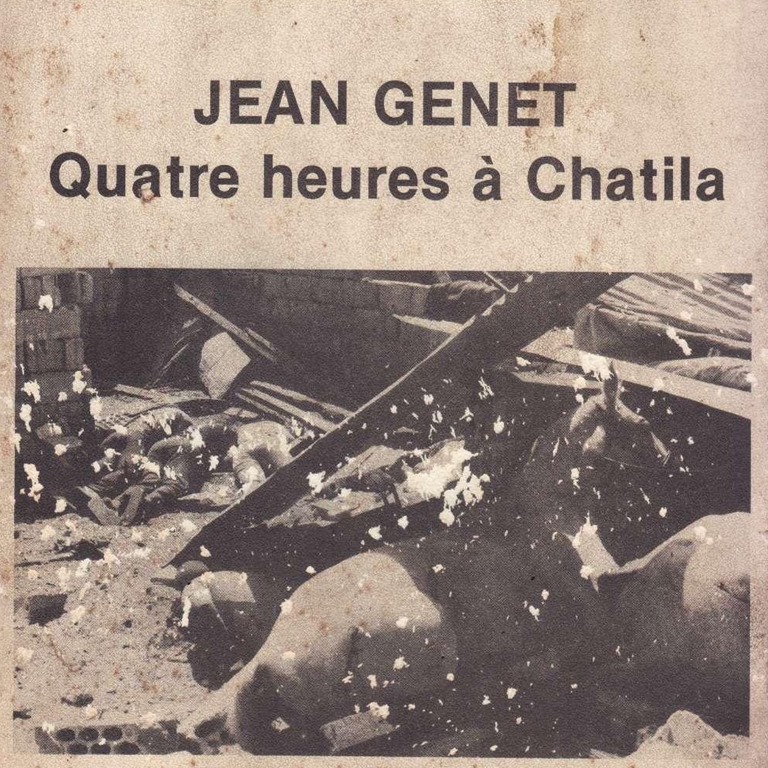
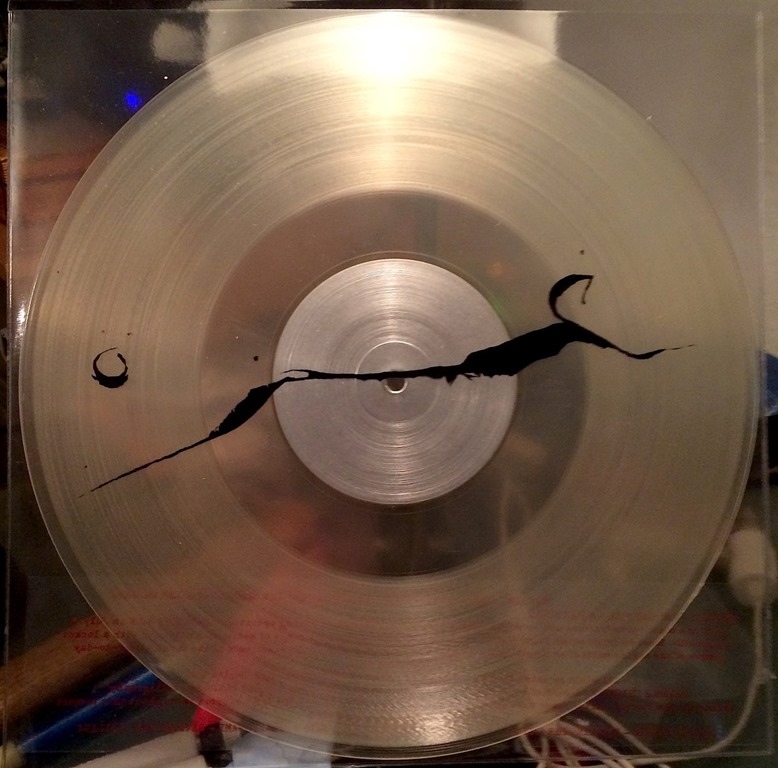
The press release which accompanies this 7” vinyl-only release, described as ‘a spoken word record with a sonic background’ explains that ‘Quatre heures à Chatila’ is a continuation of the Gaza project’, although this time the focus is on ‘the massacres that took place in the refugee camps Sabra and Shatila over the course of three days in September 1982, in Beirut, Lebanon’.

Of the Gaza LP, I suggested that context was everything, and this is also true here, as the accompanying text explains: ‘In an eerie twist of fate, one the most talented and subversive writers of the 20th century happened to be visiting Beirut at the time these gruelling events occurred. He was one of the first foreigners to enter the camps and witness the carnage. His text “4 hours in Shatila” is a minutious and poetic account of the war crimes Genet’s eyes encountered and endured for 4 hours that day’.

As such, the release – culled from the Eros & Massacre album project – features Elli Madeiros reading two segments of Jean Genet’s text against an electronic backdrop of elongated drones and a drifting wave of overlays from buzzing top-end and extraneous intrusions that bend and twist forged by Ghazi Barakat (aka Pharoah Chromium), and augmented by guitar courtesy of Osman Arabi on ‘Une Photographie a Deux Dimensions’ on side 1, and whispers courtesy of Rahel Preisser on ‘Saint Genet à Chatila’ on side 2.

‘Une Photographie a Deux Dimensions’ creates a creepy, unsettling atmosphere, flickering sonic shadows skitter this way and that behind the narrative, and while perhaps it’s best appreciated in its native tongue and without the encumbrance of text or the need to engage in activity which distracts from the listening experience as intended, the availability of an English translation of Genet’s text on-line does help in fleshing out the context. It also serves to render the full horror of the experience explicit.

The shorter ‘Saint Genet à Chatila’ is built – at least at first – around a looped, cascading motif. The vocal is delivered close-mic and with a certain urgency as digital diddles flit every which-way, spider-like across stop-start surges of bass that start sparse but echo to rolling thunder. It’s spine-tingling and uncomfortable, although one suspects something is lost in translation – or lack of.

Fittingly, as much as Genet’s depiction of the gruesomeness streets littered with bloodied corpses is horrific, it’s the pains he goes to to articulate the limitations of any given medium which render his account so powerful:

‘A photograph doesn’t show the flies nor the thick white smell of death. Neither does it show how you must jump over bodies as you walk along from one corpse to the next. If you look closely at a corpse, an odd phenomenon occurs: the absence of life in this body corresponds to the total absence of the body, or rather to its continuous backing away. You feel that even by coming closer you can never touch it. That happens when you look at it carefully. But should you make a move in its direction, get down next to it, move an arm or a finger, suddenly it is very much there and almost friendly.’

As such, Barakat must necessarily accept that the medium of sound can only convey so much, and while the composition and recital evoke the bewildering scenes and the effect of witnessing them first-hand, they can never truly convey that lasting traumatic impact.

AA

Chatila_front

Out of context, it could be any extreme noise / power electronics / experimental / industrial crossover. Whistling high-end feedback, tortured, wailing drones, nagging, drilling analogue synth buzzes, pulsations, distortion and distant low-end rumbling provide the tonal span over which sounds of detonating shells, gunfire, panicked voices, and snippets of newscasts and other media are assembled. The piping sounds of Oriental flutes from India and Morocco are interwoven with stuttering electronica and wandering synths which cast dark, ominous shadows of unease.

In context – and ultimately, it’s all about the context – Gaza takes on a truly horrific dimension, a painful and harrowing documentary work. Gaza is in many respects a soundtrack: recorded during operation Protective Edge in July and August 2014, it is the soundtrack to violent and brutal war.

To read the statistics – the estimates of the numbers killed and wounded, the number of homes destroyed and the estimated costs of rebuilding in the wake of this intense period of battle is bewildering, numbing. Over 2,000 Gazans were killed and well over 10,000 wounded during the seven-week spell. More context: the Gaza Strip is 25 miles long, and between 3.7 to 7.5 miles wide, with a total area of 141 square miles. The city of Gaza is home to around 1.85 million Palestinians on some 362 square kilometres: by way of a comparison, Greater Manchester has a population of 2.7 million, in an area spanning493 square miles. The point is, really, that it becomes hard to compute, and ultimately impossible to imagine the reality of the situation, and what it must be like to live with such decimation. The Sky News images of ruins and rubble amidst clouds of dust and drifting sand may be horrific, but just as pictures of houses bombed in the blitz cannot convey the experience, so this type of footage feels distant, unreal, like a film set.

Pharoah Chromium (aka German-Palestinian musician and performer Ghazi Barakat, who took the name from a song of the band Chrome), I read, draws inspiration from diverse sources spanning free jazz, rituals from ancient past and near future, the dream syndicate, science fiction novels and neo-brutalistic architecture. But most importantly, this is an intensely personal work for Barakat, who writes that ‘having close family ties to the region, I felt it was necessary to politicize my work in order to avoid total disillusionment and estrangement from circumstances that, I feel, are a dead end for humanity. My focus on this one subject is not meant to diminish other conflicts and human-made catastrophes in the world. Although this one just happens to take place in the birthplace of monotheistic Judéo-Christianity, the cultural background of all western societies.’

As such, as intensely personal as it is, Gaza is also intensely political. But perhaps even more importantly, it’s an intensely human work. As Barakat explains, ‘Gaza is built around voices and field recordings that are used to express my subjective, emotional and personal involvement with this subject. The found source material is used to construct a chronology of the events… The sounds of the Korg MS 20 noise filter helped intensify the feeling of hysteria ensuing from violent confrontation during a state of war. An electric wind instrument provides the melodic components and the low frequencies that underline the narration on the second part of the piece.’

And this brings into sharp relief the reality of the experience. Listening to the album, you will jump and cower as gunfire and shells rain down. The sheer volume of the explosions and the shots is astounding, a hail of bullets becoming a blanket of eardrum-shattering noise. You find yourself sitting on the edge of your seat, nerves jangling, wondering if your house will still be standing in a moments’ time. There’s no way you can settle or so anything else: this isn’t background or entertainment. There’s no way in the world you could nod off or otherwise sleep through this. And then you realise, this is the reality of life in a war-zone. The idea of actually living in this environment, to an outsider, is beyond comprehension. It’s a sobering thought, to say the least.

Barakat’s commentary is again informative, and chilling: ‘The two sides of this record are about a place like no other on this planet, a city and its surrounding environs living under extraordinary conditions, hermetically sealed from all sides, only accessible through complex procedures and permits, making it is almost as difficult to get in as it is to get out. Like a cross between the Warsaw ghetto and Manhattan as a giant maximum security prison in John Carpenter’s Escape From New York. Every couple of years the Gaza Strip gets its share of bombardments, and since the summer of 2014, its infrastructure has been pulverized almost to the point of no return. The disproportionate use of force and the asymmetric use of military technology on those already living under siege has created a field laboratory for the military industrial complex with the civilian population as its guinea pig. […]’

The locked groove at the end of each side is the engine noise of an Israeli drone in operation, intended to give listeners the experience of the sound of day-to-day life in the Gaza Strip.

It’s a phenomenally powerful work, which brings home the devastating realities of war in a way that’s truly unique. And while I’ve referred to this as a document, effectively a work of sonic reportage, it is, of course, a work of art. On a technical level, its execution is superb. To all intents and purposes, it’s a cut-up, a collage, and the pieces as assembled seamlessly, and achieve maximum impact. And what impact. Gaza is perhaps the most harrowing album I’ve ever heard. This is art on the front lines and behind the lines. All of the doom and crushing metal releases pale to nothing beside this: Gaza really is the sound of hell on earth.

Gaza


http://bandcamp.com/EmbeddedPlayer/album=72821540/size=large/bgcol=ffffff/linkcol=0687f5/tracklist=false/artwork=small/transparent=true/

Pharoah Chromium – Gaza on Bandcamp