Posts Tagged ‘Experimental’

Thrill Jockey Records – 17th November 2017

Christopher Nosnibor

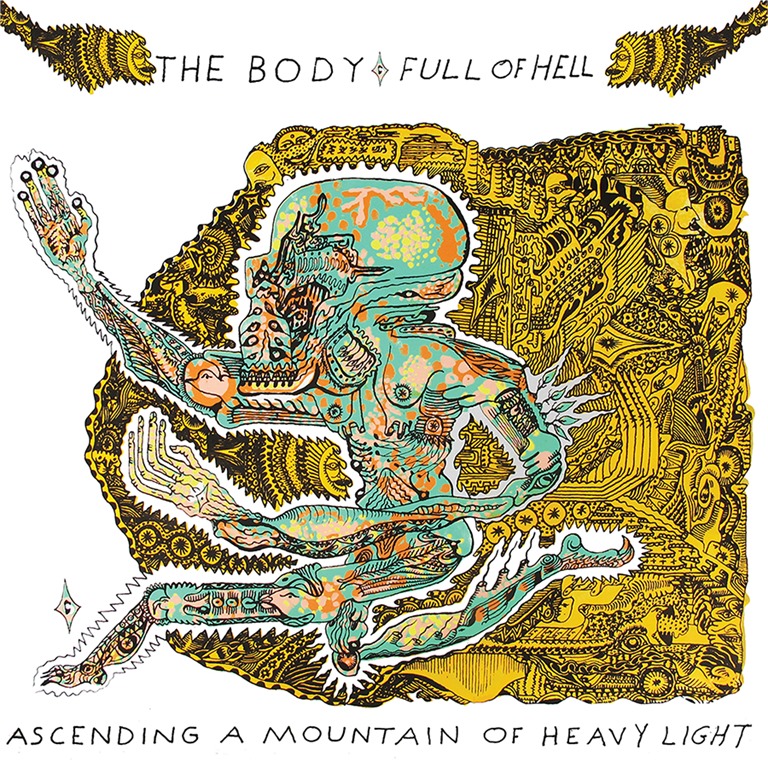
The second collaborative album between The Body and Full of Hell, which collides with the earth like a meteor, and a mere 18 months after its predecessor, and just six months after Full of Hell’s full-tilt annihilation that was Trumpeting Ecstasy, it’s every bit as unremitting and remorselessly heavy as anything previous. It’s the sound of two uncompromising bands finding compromise by amplifying one another to the nth degree, meaning that Ascending a Mountain of Heavy Light is fucking intense, fucking heavy, and yes, even more fucking intense.

The accompanying blurb forewarns that ‘samples, synth, saxophone, and a drum orchestra all throb, and sputter, coagulating under the weight of the two bands. Programmed drum patterns and loops taking cues from hip hop are bent and twisted throughout, flawlessly emboldening the distortion drenched guitars and howling vocals.’ And did I mention that it’s intense?

Beyond the first few seconds of skittering synth oscillations, there is no light on the opening track, ‘Light Penetrates’. The crushing power chords land at tectonic pace, while the vocals – an impenetrable scream of anguish – are nothing more than a primal scream of pain. And then the jazz shit beaks loose, with horns squealing like tortured pigs bleeding in all directions.

There’s nothing pretty about this, but occasionally, from amidst the screeding walls of amorphous racket emerge full-throttle stoppers, like the pounding ‘Earth is a Cage’. Elsewhere, ‘Didn’t the Night End’ is a snarling, grinding, bowel-shaking racket of surging waves of noise that simply hurt. It’s the kind of snarling, grinding, bowel-shaking racket that makes you want to lie on the floor and curl up into a foetal position. It makes you want to die, and it certainly makes you long for the night – and the noise – to end, as it assails the senses from every angle.

The drum intro is nabbed from oh, so many tracks – a simple four-four thump of a drum machine bass – before everything explodes in a tempest of screaming industrial-metal fury. Early Pitchshifter come to mind, at least in the drum programming, but this is something altogether more psychotic in its unbridled fury, and in its amalgamation of paired-back hip-hop and industrial metal, all crackling with overloading distortion, ‘Master’s Story’ invited comparisons to the innovations of Godflesh – at least until it goes all crushing doom halfway through.

As with anything produced by either band, either independently or collaboratively, Ascending a Mountain of Heavy Light is not music for pleasure, and large chunks are little short of anti-music, blistering walls of sonic brutality built on discord with the most challenging of tones and frequencies explored to the max.

AAA
cover

Gizeh Records – 10th November 2017

Christopher Nosnibor

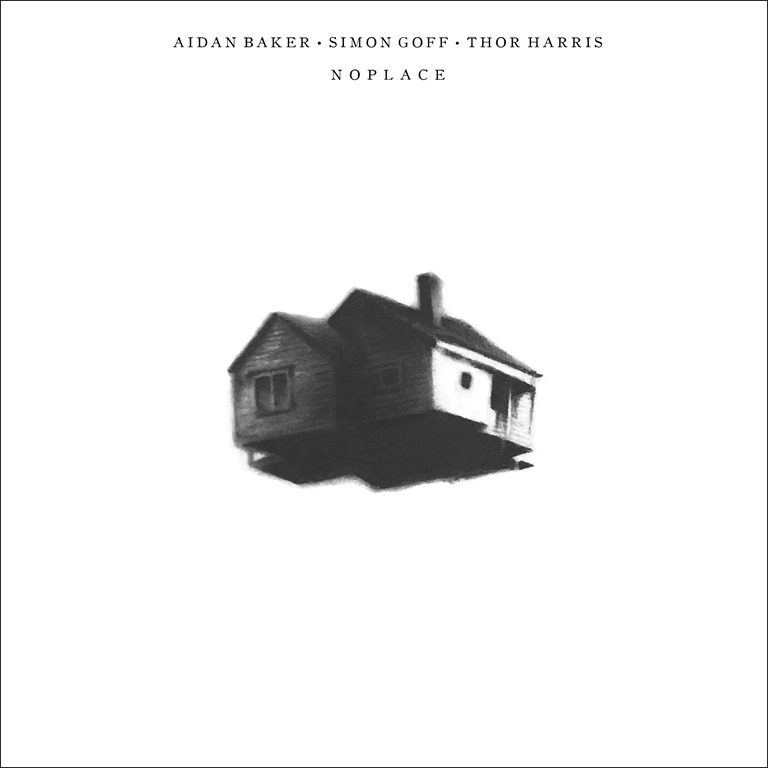
This is certainly quite the collaborative lineup, featuring as it does Aidan Baker (Nadja / Caudal / B/B/S/), Simon Goff (Molecular, Bee & Flower), and Thor Harris (Swans, Shearwater, Thor & Friends). What renders Noplace all the more impressive is that it’s an improvised work, recorded in a single day.

As the press release recounts, ‘having known each other for a number of years and previously contributed to one another’s recordings this trio finally came together as a whole on May 7th 2017 at Redrum Studios in Berlin. In a short, improvised session of just a few hours they set about laying down as much material as possible which was then subsequently edited and re-worked (without overdubs) to form this album.’ And the results are quite something, and I very quickly manage to put aside the thought that the cover art reminds me of the film Up, minus the balloons.

Rippling strings quaver over softly swelling undercurrents while rolling percussion provides a subtle, unobtrusive rhythm as ‘Noplace I’ introduces the album before creeping into the darkness f counterpart piece ‘Noplace II’. And yet it’s very much only the beginning: having been moulded post-recording, the album’s seven individual pieces are structured and sequenced so as to lead the listener on an immersive journey which gradually and subtly moves from one place to entirely another.

‘Red Robin’ builds a pulsating, looping groove overlaid with creeping stealth. Its repetitious motif may owe something to the hypnotic cyclical forms of Swans, but its trance-inducing sonic sprawl also alludes to a hypnogogic reimagining of dance music – and this filters into the spacious ‘Noplace III’, which draws together expansive ambience and, in the distance, shuffling, tranced-out beats, to create something that stands in strange, murky Krautrock / dance territory. Yes, it sounds electronic. Yes, it sounds unique, but at the same time, yes, it sounds familiar in terms of the individual genre tropes. It’s ‘place’ is precisely ‘noplace,’ in that it belongs nowhere specific, yet appeals on many different levels and in many different ways.

Interweaving motifs continue to feature in ‘Tin Chapel,’, but the rhythm here is much more prominent, a weighty four-four bass/snare beat driving a linear road through the sweeping, strings that glide from mournful to tense. The locked-in psyche-hued desert rock bass groove pushes the piece forwards, while at the same time holding it firmly in one place. In turn, it tapers into the bleak, murky expanse that is ‘Northplace’.

The final composition, ‘Nighplace’, brings things down and almost full circle as the percussion retreats into the background amidst a wash of elongated drones which ebb and flow softly.

Noplace certainly doesn’t feel improvised, and while it’s remarkably cohesive, as well as possessing a strong sense of structure, it also reveals a remarkable range, both sonically and compositionally. And irrespective of any context, it’s an engaging and immersive aural experience.

AAA

GZH79-Baker-Goff-Harris-Noplace-Digital-Sleeve

Holotype Editions – HOLO7 – 25th September 2017

Christopher Nosnibor

It’s hard to reconcile the sounds emanating from the speakers with this being a document of a live performance. And yet Schulevy Maker, which comprises two long-form tracks in the form of ‘Schulevy Maker’ Parts 1 and 2, was recorded live at Cafe Oto in London in December 2013, and captures two outré sonic experimenters coming together to forge something that’s weird and wonderful in equal measure. It’s credit, then, to the artists and all involved in the creation of this album that the sounds are so rich, layered, and detailed so as to sound as if they were meticulously ordered, edited, polished and mixed with great labour in the studio. There is a lot going on, and none of it is remotely obvious or predictable.

The set begins with a nagging motif, repeated end on end and resembling a demo of The Fall circa ‘79, over which electronic screaches and wibbles and irregular, occasional clatters of percussion weave and flit in an out. And over all of this, Tazartès and Dunietz grunt and ululate, quaver and trill. At times, rather less a walrus of love and more like a walrus slain, Tazartès explores the lower registers of the larynx, while Dunietz offers a soaring, semi-operatic counterpoint.

Amidst grating industrial drones and scrapes, weird samples and chiming finger cymbals, the pair challenge accepted notions of melody with their often deviant vocalisations which stray from the roots of key and tempo. And yet as much as they often run contra to one another, every instant is a moment of perfect connection and compliment, and there’s a synchronisation of their idiosyncrasies which renders the performance utterly compelling.

It’s strange and disorientating, and it’s not always easy to find a foot or handhold amidst the ever-shifting soundscapes which rapidly transition from accessible to strange, and often appear to originate from another world entirely.

AAA

Ghedalia Tazartes   Maya Dunietz

Christopher Nosnibor

The facts:

Jeph Jerman: snare drum, frame drum, cymbal, pumice, e-bow with metal, wok lid, old brass bowl and ball bearing, disintegrating paint brush ​
Giacomo Salis: percussion, objects, field recordings ​

Paolo Sanna: percussion, waterphone, prepared zither, thingamagoop2, s.w.radio ​

So, not just any paintbrush: Jeph Jerman’s instrument of choice is a disintegrating paintbrush. The list of instrumentation deployed in the production of Kio Ge is nothing if not improvisational, and this is in keeping with the spirit of the album’s twelve improvised fragments.

There’s nothing fully realised in an explicit sense here, but that’s not what Kio Ge is about. These pieces – they’re not strictly compositions in that they’re not pre-ordained, but by the same token, composition can take place in real-time, spontaneously – but it may be more appropriate to refer to them as musical happenings or sonic events.

While many of the tracks sit in the three to four-minute bracket, a number are barely a couple of minutes in duration, but what they offer in a holistic sense is a series of sketches which clatter and clank, bubble and scrape, transitioning through simple, sparse arrangements to dense, multitextural works.

These aren’t pieces which resonate on any particular level, and they don’t move the mind, the soul or the body with their abstract firms and absence of rhythm. But that does not mean that Kio Ge lacks engagement: in fact, Kio Ge engages at precisely the points the attention begins to wander.

AAA

Jerman Salis  Sanna – Kio Ge

Someone Good – 1st September 2017

Christopher Nosnibor

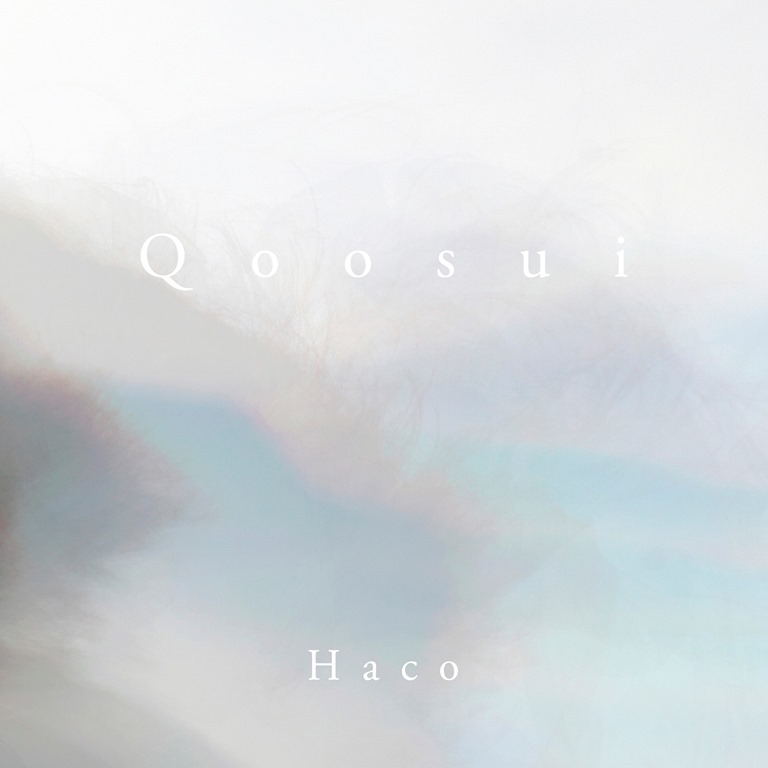
David Toop enthuses over Haco as ‘weightless, not so much a voice from heaven but a voice that swirls in liquidity, water spirit…’ In this, he probably gets as close to capturing the essence of Haco’s music as its possible. It’s a challenge for any writer when presented with sonic abstraction: how to render the intangible tangible, and at the same time convey the experience of sound in words?

The music on Qoosui is not easy – and in fact almost impossible – to pin down. An analogy to catching a cloud is close, but not right: the seven pieces exist in a state somewhere between liquid and vapour, and flow in multiple directions seemingly simultaneously. Rippling synths slowly bubble as wash aquatically on ‘Kusul’, and paves the way for a sequence of amorphous, drifting compositions which drift and tether. Crystalline shards cut through cloud-like washes on ‘White Letter from Heaven’, and Haco’s voice is seemingly not of the human body, transcendental, and not of this world.

This is, in many respects, the source and heart of Qoosui: inspired by spirit voices, Haco becomes one. The medium is the message on every level.

https://player.vimeo.com/video/224449651

AAA

RM461_2WT1K(125mmX125mm)-1003

Gizeh Records – 13th October 2017

Christopher Nosnibor

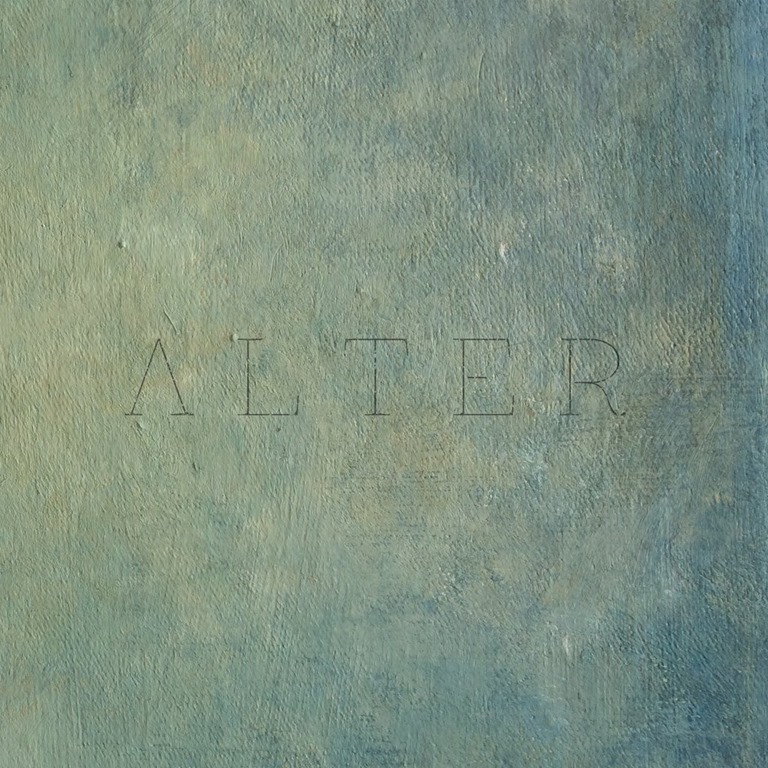
Otto Lindholm is based in Belgium. More pertinently, he plays double pass and is an electronic producer. Divided into four colour-inspired, long-form movements, the press release informs us that Alter takes off from Lindholm’s previous work (a self-titled album released in 2015), and ‘pushes the already abundant palette of sounds even further’. It also references Greek chamber-doom merchants Mohammad by way of a touchstone, but suggests that Lindholm’s latest may focus more attention on textures and melody.

Alter is very much a slow burn, to the extent that it crawls from the speakers with the first track, ‘Fauve’, which starts low and slow and gradually burrows deeper, with a long, low, resonant bass throb providing the undercurrent over which tremulous strings brood and sweep. ‘Lehener’ is sparser and more tentative-sounding, exploring more the space between the sounds, as the notes pulse and decay. The bass rolls in by stealth, before a range of sounds, all attenuated to different tones, textures and frequencies, as well as modulations. The notes rub against one another as they shift in different times and spaces.

At ten and a half minutes, ‘Alyscamps’ is the album’s longest piece, and Lindholm explores dark spaces through shuddering sonic shapes in slow collision.

The final composition, ‘Heliotrope’, is perhaps the most conventionally ‘orchestral’ of the four, and the one which offers the lightest of mood, with bowed bass and strings combining to create a delicate and graceful feel. But there’s a magnificent fluidity about Lindholm’s compositions, and these moments of levity emerge but briefly from the sombre atmospherics, before being subsumed into shades of grating dissonance.

The structures may be obscure, but there is a definite sense of form lurking behind the shape-shifting ambience of Lindholm’s work. And through those near-subliminal structures, which tease at the senses and inch into the subconscious, Lindholm achieves something which reaches beyond the listening experience and into another realm altogether.

AAA

Otto Lindholm – Alter

Nakama Records – NKM008

Christopher Nosnibor

Strolling bass, graceful strings, rolling piano: these are the defining elements of Nakama’s Most Intimate. But if this sounds like it’s an album of romantic pastoral compositions, then this would be to misrepresent the range and expanse of the more experimental bent of the Most Intimate sonic experience. And none of this touches the

By way of background, Nakama is ‘a five-piece band led by Norwegian bassist Christian Meaas Svendsen. Nakama is Japanese and can be translated as ‘comrade’, or simply a community where no-one is above the other, but rather watches over one another.

The intimacy articulated on this album, then, is not of a sexual nature, but instead reflects the close interaction of artists working in collaboration. Can anything be more intimate than revealing the soul of one’s creative process, the core of one’s art?

At times discordant, at times venturing into free jazz, at times eerie, and at times playful, the album’s fifteen tracks bleed into one another to forge an aural journey. Over its course, the album demonstrates musical range and a certain depth. It’s not always fun, and it’s not always easy. But it’s never anything less than art. And the embossed cover is something special.

Nakama,

Clang – 29th September 2017

Christopher Nosnibor

There’s probably a press release somewhere, but I should probably just listen and lose myself in this. Endless Undo is a work of infinite subtlety, layered and detailed. It is, of course, the result of meticulous editing, a restive mind working and reworking, doing and endlessly undoing in order to achieve moments of microtonal bliss.

Böhm’s field is, ostensibly, the space between ambience and beat-propelled electronica: the compositions are rhythmic at heart, and while there are distinct and definite beats, they’re rarely dominant, and are often subdued, restrained or otherwise bouncing agitatedly in the background.

‘Heissenberg’ is built around bleeps and whistles, crackles drones and some swampy avant-electro percussion, and creates an enticing atmosphere without disclosing even a fraction of the range of the album as a whole.

‘Liub’ goes scratchy and glitchy against clanking electronica, explosive blasts of shuffling, processed beats and while it’s paired back and sparse on the surface, there is a lot going on: ‘Dezembur’ bumps and scrapes, bumps and scrapes its way through tremulous fear chords and dramatic yet understated piano. Glass tinkles and chimes while a single picked note hangs in the air for an eternity, swelling before a slow decay. It segues into the dense swell of ‘Klicker’, which builds to a bubbling, bassy groove which is far from ambient, bit so swampy as to be submersive.

There’s a definite arc to Endless Undo, and while it may only contain five tracks, over the course of its thirty-five-and-a-half-minute running time, Böhm may not exactly develop a sense of narrative, but does build upwards in solidity and intensity before the sparse, crystalline ‘Madeira’ turns in on itself to bring the album to a delicate yet moody close.

There’s a sense that Endless Undo is an album about potentials: the end product is simply the version the artist has settled on after a relentless tweaking and adjustment. It could have been a very different album. But then again, perhaps not, but we will never know.

Volker Böhm – Endless Undo

MC/CD/DL – Nakama Records –NKM012 – 22nd September 2017

Christopher Nosnibor

I’m not entirely sure what a no-input mixer is, and I’m not sure I have the energy or motivation to find out. But it’s one of the ‘instruments’ Utku Tavil ‘plays’ on this album, in addition to snare drum and sampler.

What I do know is that Juxtaposition is a studio work of four Oslo based improvisers (and not the indie mongs who went by the same name who came round to my flat in Glasgow in 2000 to be photographed by my achingly hip flatmate) recorded in the spring of 2016. Various timbres of opposite extreme, as a result of each musicians’ different approach and background, coexist without hierarchical restrictions. Having that in mind during playing, the mixing process played a crucial role to deliver a concrete body of equalitarian sonic output. Without compromise, moments of joy and pain, screams, feedback and bird sounds are layered on top of each other.

This is not music that’s easy to listen to, let alone love. Scraping, distorted clanks and clatters echo atop growling, prowling, near subsonic bass intrusions and an elongated howl of sustain. And that’s just the first thirty seconds. An overloading mass of shuddering, screeding extranea rapidly builds to skull-crushing intensity, as shrieks of treble erupt like solar flares from amidst the tempestuous racket.

‘Pakistansk Mango’ is a fiendish mash of vocals – Natali Abrahamsen Garner does not sound of this world, and it’s hard to compute that the sounds emanating from her being are untreated, unprocessed – shudder and judder to a babble of stuttering repetition, against a backdrop of bubbling synths, ear-shredding bursts of pink and white noise, and nail-scraping feedback reminiscent of Total Sex era Whitehouse. Pleasant it is not. In fact, as distorted metallic bangs and hammers batter through a sonic riot of indeterminate origin, I’m feeling pretty fucking tense.

A yammering percussion that sounds like a cross between a locomotive and a nailgun provides the spine behind a whirling aural assault for ‘Revolver’.

Natali Abrahamsen Garner and Agnes Hvizdalek’s voices exist outside the realm of the human, and serve to add a disturbing, unheimlich aspect to the already hellish, grating sonic torture. Screams, shrieks howls and growls are all integral to the traumatic experience. ‘1000 Poeng’ features a host of primal screams over growling synth bass and brutal, waspish feedback. On ‘Enkle I’, a deranged bleating entwines with a surging skitter of overloading electronics and a swirling vortex of nastiness, and a mess of brown noise buzz blasts in around five minutes into the final track, ‘Trost’.

Juxtaposition is a cruel and punishing work, which exploits the full sonic spectrum and every texture, from grainy abrasion to the razor-sharp to inflict maximum pain.

AAA

- dsn - JUXTAPOSITION - VIDEO titles

Gusstaff Records – 2nd September 2017

Christopher Nosnibor

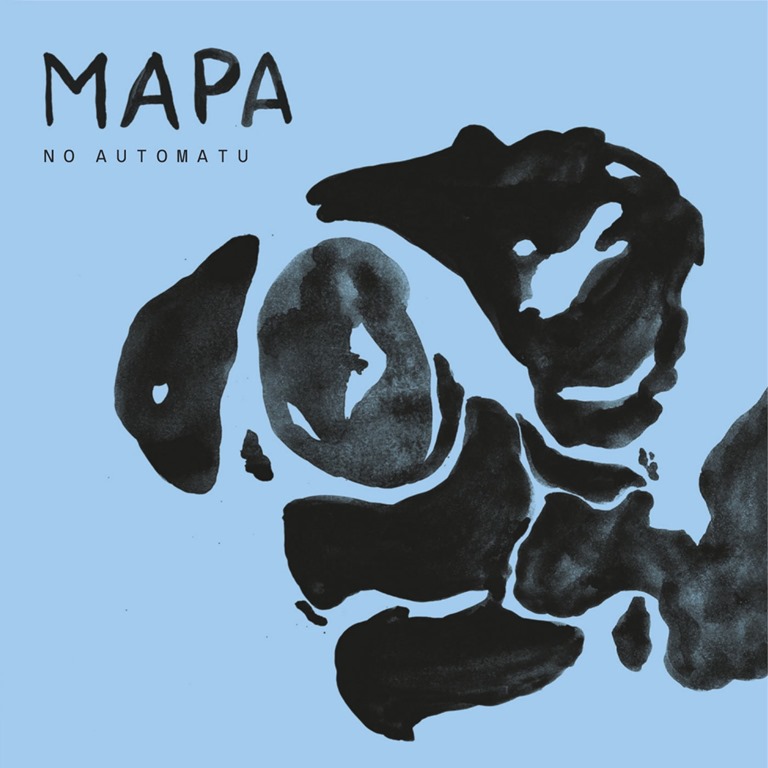
It may have bene groundbreaking and have acquired a legendary status, but I have to confess to being unfamiliar with Mapa’s previous album, Fudo, released some nineteen years ago. That said, No Automato is billed as being quite an evolution and reveals a newfound simplicity and sense of minimalism.

Not that you could exactly call any of the album’s nine compositions simple or minimal, because there’s a lot going on, but there is a directness and energy which emanates from the music. Stylistically, it’s all in the mix, incorporating elements of punk, avant-garde jazz, instrumental hip-hop and experimental electronica.

There’s a playfulness about the way they forge juxtapositions: slow, ritual percussion booms and rattles tribalistically as if marking the pace of a funeral march deep in the jungle. In contrast, warping bass tones and flickering, glitchy electro whirs and bleepy scrapes shape the sound: this is ‘MPA Jazz’, and this is how Mapa introduce themselves on No Automatu, and it’s clear that working with Marcin Dymiter brings out a different side of Paul Wirkus.

The mad, lo-fi disco of ‘Burnt Tragiczny’ transitions into the world of the weird as the juddering retro beats slip their sprockets, and the rapid-fire retro snare explosions which pin the woozy bass undulations of ‘Heute Tanz A’ in place evoke a bygone era of experimental electro recordings. ‘Heute Tanz B’ juxtaposes surging waves of analogue synth with a beat lifted almost directly from Cabaret Voltaire’s ‘Nag Nag Nag’, and it’s the primitive drum machine sounds that define the album’s sound throughout.

‘Rudyment’ may be instrumental, but its sparse plod is harrowing and oppressive, and it’s clear that Mapa are abundantly capable of forging an atmosphere more or less out of nowhere and pulsing throbs build the backdrop of the infinite layers that build on top. The title track is the album’s closer, and it’s a dense, relentless attack built around motoric drums and woozy, abrasive synth-bass.

Mapa are all about the clatter and clang, and No Automatu is a curious album whichever angle you care to view it from. Messy, noisy, unpredictable, the range of atmospheres and vibes packed into the album keeps it moving at pace, and means it’s never less than fascinating.

AAA

mapa-no-automatu