Posts Tagged ‘Experimental’

17th December 2024

Christopher Nosnibor

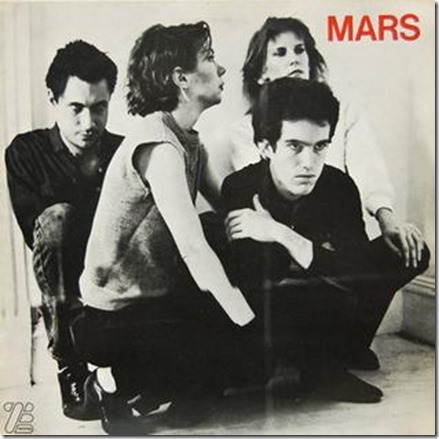
It’s inevitable that with the sheer volume of music in existence, there will be a fair bit which bypasses even the keenest enthusiast of the obscure. Trek and Quintronic is a pairing I feel I really ought to be familiar with. Emerging in 1980 Paul Wilcox (Trek) and David Kane (Quintronic) recorded two albums, noted for pioneering ‘electronic rock’, with Landing in from 1980, and the self-titled follow-up Trek w/ Quintronic LP the following year, created using an array of synths, plus pedals and six- and twelve-string electric guitars. There was a reissue, entitled Landing Plus, released in Europe in 2012 and the US a couple of years later, which featured the entirety of Trek w/ Quintronic and a couple of additional cuts by way of the ‘plus’, but twelve years on, it’s not exactly easy to come by, and this new release offers something quite different, featuring as it does ‘9 of the original Tw/Q tracks plus 11 new, never released songs written by Paul Wilcox, spanning a period of 40 plus years, all remixed and remastered.’

This means that some of the material was recorded after their second album, without seeing the light of day, while some of the contemporaneous recordings have been flaking away on old tapes since 1980 or thereabouts, and their restoration and repair has been quite an undertaking, achieved quite remarkably by David Lawrie of The Royal Ritual. The aim, as they state on the website, was to ‘present the definitive collection of the best of Trek with Quintronic’, and containing some twenty tracks, this is a wide-ranging, and in-depth summary of their work – and it’s often the case that musical careers consist of considerably more than the material that was released at the time, for whatever reasons.

That ‘You Might be Lonely’ and ‘As We Sing’ first appeared on Landing makes this a truly career-spanning document, which showcases the full span of their musical vision and innovation. It’s often easy to forget just how new to the market (affordable) synths were at this point in time. The advent of 80s synthpop and industrial music came about as a result of the emerging technology, which also, notably, included drum machines. It was a revolution.

There’s a gothic, church organ feel to the introduction, and its grandeur also makes a nod to the prog past of the pair, but it’s listening to ‘You Might be Lonely’ that the span of their influences coupled with the use of the kit at their disposal becomes apparent: it’s like Hawkwind but with synths, both rumbling and swirling and with additional laser blasts and primitive drum machine knocking out a metronomic rhythm, all coalescing to provide a backdrop to a vocal delivery that’s an overt Bowie rip.

The Bowie influence looms equally large on the glammy ‘All the Rave’, only here with the addition of sweeping string sounds. It sounds remarkably fresh, as well as prefacing – by a long way – the trend for orchestral flourishes which would be a big thing in the late 90s with, and winding up with a big, flashy guitar solo. It’s visionary stuff, and the execution is remarkably sophisticated, particularly for the time.

Some of the songs sound more of the era: ‘Zolian Space’ lands somewhere in the region of OMD and Ure-era Ultravox, but it’s a nifty enough pop song. There are a fair few of those on offer here, not least of all the bouncy Suicide-meets-Bowie ‘White Hoods’, and the hyperactive twitch of ‘Twin Forces’.

The guitars are to the fore on the previously unreleased ‘Built to Average’, hinting perhaps at one of the many directions they could have veered. It’s a solid tune, but coming on like a collision between Bauhaus and Mr Mister, it’s dated more than some of the other material, whereas, in contrast, the spiky ‘Wally And The Rich Kid’ is pure vintage yet still more impactful in its stark, dramatic stylings.

Some of – what at least I assume to be – the later material stands out because it sounds different: ‘Religion’ is slicker, the drum machine in particular more ‘real’ sounding, and in a way it tells a story of technological advancement and its effect on music-making. Objectively, it sounds better, in terms of clarity, fidelity, separation, but for everything that’s been gained, something has been lost, and it’s something that using emulators or even vintage gear can never fully recapture. There was an unmistakeable zeitgeist about the ‘79-’82 spell, which was unique, and Trek with Quintronic were right there and probably didn’t even realise at the time. No-one did, really.

Hindsight really is everything. Stranger Than Today is an outstanding compilation which goes beyond in providing a hitherto unseen insight into the context of their groundbreaking second album and beyond.

AA

a3920472662_10

Ideologic Organ – 10th January 2025

Christopher Nosnibor

It’s already looking like 10th January is going to be an intense date in terms of the sheer volume of releases. Time was when January was something of a quiet spell for new music, as everyone recovered from the Christmas glut, and labels tended not to release much since people were skint. It also used to be the case that unexpected releases would sneak unexpectedly high in the charts, especially the UK singles top 40, with remarkably low sales figures, usually with cult acts with savvy labels whacking out a release that would have barely scraped the charts any other month – White Town’s ‘Your Woman’, released 13th January 1997 and hitting number one in the UK and going top ten globally – however briefly – is a classic example.

There’s no danger of Nate Wooley registering on any charts with Henry House, released on the Ideologic Organ label, curated by Stephen O’Malley of Sunn O))) legend, and home to a long line of truly magnificent avant-garde and otherwise most unusual musical works, of which this is very much one. That’s not because it’s not good, it’s just that the nature of charts has changes beyond recognition over the last thirty years. There is also the statistic which recently came to light that there was more music released on any single given day of 2024 than during the entirety of 1989. It’s a pretty staggering statistic, and one of many factors when considering just how difficult it is for artists to make a living from making music. Something I have touched on previously is the fact that simultaneous with this explosion of output, culture has become both more homogenised and more fragmented. In terms of the mainstream, this homogenisation has facilitated the advent of multimillionaire and even billionaire ultra-megastars like Taylor Swift – but at the other end of the spectrum, there are tens of thousands of artists releasing music on Bandcamp and Spotify with no backing or publicity whatsoever, to be heard by maybe five people.

But we need music that’s unpopular, that isn’t created with any commercial intent, and we very much need labels like Ideologic Organ to provide a platform and to point us toward the cream of those artists who may not otherwise reach the audience they so richly deserve.

And as an album containing a single composition split into five parts, described as ‘a recurring dream song’ with a running time of some eighty minutes, this is a work which is very much non-commercial in every way.

As the accompanying notes detail, this is a work which combines ‘closely tuned instruments and sinetones, tape-music editing techniques, field recordings, and voice,’ providing the context that ‘this eighty-minute, five-part song cycle is an evolutionary step away from the spontaneity of the free jazz/noise aesthetic usually found in the music of Nate Wooley. Henry House expands on the ecstatic, durational work found in Wooley’s Seven Storey Mountain, a six-part composition that has been premiered over the last ten years by an ensemble that now includes multiple drummers, guitarists, a twenty-one-person choir, and the composer on amplified trumpet. But its ritual is more serene, more natural, slower.

Henry House is the first long-form piece that doesn’t feature Wooley’s trumpet. It is also the first to be constructed around his poetic writing. Wooley weaves a strange funeral mass for a fictional everyman from isolated phrases culled from essays, poems, and non-fiction written by Wendell Berry, John Berryman, Joseph Mitchell, and Reiner Stach. After organizing the fragments into a dream narrative, Wooley rewrote the text dozens of times, manipulating the stitched-together story until only glimpses of its sources remained.’

It’s ten minutes into the twenty-minute opener, ‘Acacia Burnt Myrrh’ that the poetical oration begins, with the words spoken by Mat Maneri. He speaks in a calm, not entirely flat, but level tone, of geometry, of space, of time. The words conjure abstractions, images, moods, against backdrops of elongated hovering hums, oscillator-driven quivering drones. The words are audible, but comparatively low in the mix, and it’s not always easy to stay focused on the narrative, such as it is: instead, the mind focuses on absorbing the atmosphere. There’s a lot of that, and Henry House is an immense project with near-infinite dimensions. Megan Schubert’s faster-paced, more driven-sounding delivery is quite a contrast to Maneri’s, and from these counterpoints, the album grows in terms of dynamics and depth.

So much happens: listening to Henry House is like reading a book which contains stories within the story, and illustrations in a range of styles. No two tracks are really alike, and the arrangements change across the course of each piece. It draws you into a dark fairytale, a unique world which isn’t exactly scary, but unsettling because it feels unfamiliar, dissonant. The fact that two of the pieces bear the same title only add to the bewilderment. Horns and drones radiate between the narrative segments, and the final piece, ‘Aleatory Half Sentences’ is led by some flighty piano work, which trills and flickers against a heavy, nagging, low-level hum. It’s one that really takes some time to process, but it’s very much worth the effort.

AA

a3180996504_10

Self-Released – 13th December 2024

Christopher Nosnibor

Sometimes, the notes artists pen to accompany their latest works are somewhat dry, rather technical. Others provide effusive essays, while others still no details whatsoever. Flin Van Hemmen’s words which accompany Luxury of Mind are poetic, somewhat vague and elliptical, but lyrically rich and personal, if vague.

In order to thaw matters of the heart, one must go to where it’s cold.

It was the summer of 2022 and I was finally summoned there.

My personal winter had come, a place at once foreign and familiar.

In a flash I was made aware of all my life’s dimensions – the ones less welcome, or simply too big to face.

My sense of musicianship was temporarily halted, at that point unsure of its return.

Early 2024 I knew my personal winter was waning, and so I started tinkering away again, musically.

The pitter patter of the rain, the orchestra rehearsing their parts simultaneously, the sounds inside the corner store where I buy my daily coffee.

And how do they sound, together?

What indeterminacies reveal itself, or do I pick up on?

That’s my journey and a journey I wish to share with you in Luxury of Mind.

I have elected to quote in full because they are clearly pertinent to the substance of this material. Van Hemmen is clearly and peculiarly specific that he feels the need to share this specific journey, which clearly has involved stasis and self-doubt. Writer’s block? He seems to allude to rather more than that here.

Flin van

‘A Picture of Your Face (In the Light of the Fire)’ is bold, choral to begin. It’s not grand in the bombastic sense, but feels deeply spiritual, ceremonial, and for wont of a better word, ‘churchy’. While the sense of grandeur is uplifting, and spiritually powerful, the drone of organ and voices coming reverberating in a large, echoey space reminds that where there is a ‘churchy’ aspect, religion – particularly of the Christian persuasion – for all the exultation, is laced with guilt, apology, pleading – pleading forgiveness for sins, pleading for entry into heaven. And as such, it reminds of the paradox whereby Christians prefer to confess and atone their sins rather than simply try harder not to err in the first place. There are scratches and crackles which rupture the graceful smoothness of the piece, and the title track slips into a darker, danker space, with a sound like torrential rain on a tin roof, with murky ambience lurking about.

‘Eloquence and Grief’ brings new levels of disorientation, sort of a film-soundtrack piece with discordant background babble and crowd noise as an orchestra forges a soundscape which evokes mountains and canyons. Its meaning is difficult to extrapolate: it feels like multiple narratives occurring simultaneously, and the same is true of the eerie dark sound collage of ‘Volition & Velocity I’, and its equally gloomy, dolorous counterpart, ‘Volition & Velocity II’.

The whole feel of Luxury of Mind is haunting, unsettling, like walking through the soundtrack to a vague and abstract film, traversing time and space, intersecting scenes of bustling medieval towns, and post-apocalyptic shots of burning villages, intercut with occasional psychedelic visuals, while electronic circuits in heavy rain and church bells chime for the funerals of unnamed bodies. It’s not quite horror, but it’s heavy with gloom and trauma, and, by this measure, Luxury of Mind sounds like the soundtrack to a period filled with anguish and psychological pain. It concludes with the sparse and dank clanks of ‘Last Year in Cantecleer’ – and it must have been a washout.

It feels as if we’re sinking in floodwater, drowning in a tidal wave of toxic bullshit, while all around everything goes wrong. But at least one thing has gone right for Flin Van Hemmen: Luxury of Mind is an album with so much texture, so much depth of texture, so much mood, that it’s impossible to deny its creative success.

AA

a0351313896_10

Cruel Nature Records – 6th December 2024

Christopher Nosnibor

The ever-prolific Aidan Baker has been a frequent and recurrent feature on the pages of Aural Aggravation since its inception in 2016, and I’ve been listening to, and covering, his works since a fair few years earlier. He’s an artist who never fails to intrigue, and his manifold collaborations see him revealing new aspects to his creativity.

This three-way collaboration was, according to the accompanying notes, ‘recorded live at Morphine Raum in Berlin, Germany on February 21, 2024 by Canadian guitarist Aidan Baker, Korean-American guitarist Han-earl Park, & German drummer/percussionist Katharina Schmidt. The group brings together their respective, disparate musical backgrounds to explore the intersections of ambient music, improvisational (free) jazz, and musique-concrète.’

It’s worth noting just how many live releases of collaborations there seem to have been released recently: in fact, only yesterday I was delving into the dynamics of the latest offering by CEL. This may be a ‘cost-of-living’ matter, in part: economic circumstances really aren’t favouring anyone who isn’t two-homes-and-at-least-one-cruise-a-year rich, and this is a global issue, whereby post-pandemic the disparity between the wealthy and the rest has increased exponentially (a word I’m mindful of tossing about being aware of its actual meaning), and it’s never been a tougher time to be a musician, unless you’re Taylor Swift, or Ed Shearan or Elton John or Coldplay… you get the idea. And it’s certainly not (only) because of the shit streaming revenues paid (or not) by Spotify. Studio time is expensive: getting together for intercontinental collaborations is expensive… and when it comes to it, it’s not always easy, or even possible, to recreate the energy, the frisson, the immediacy of a live performance in the studio.

And so here was have Thoughts Of Trio, which captures a set from the start of the year, mastered as eight segments, simply titled sequentially ‘TOTone’ to ‘TOTeight’. The arrangements are often sparse, and combine nagging, regular repetitions with erratic irreglularities: ‘TOTone’ sounds like a pulsating wave or a slow alarm simultaneous with a game of ping-pong and some urban foxes foraging through bin bags. I mean, it doesn’t really sound quite like that, but the different elements belong to different places, and while it does work, it does not feel like a composition in any conventional sense. And this is very much the form of the album: there are no overt structures, there is no sense of cohesion or linearity.

But where Thoughts Of Trio evades the pitfall of being a discordant disaster is in just how they somehow keep things together, with an absorbing, if loose, sense of rhythm, which is both absorbing and bewildering, but, however subtly, ever-present. ‘TOTthree’ features springing guitar twangs and lurching grumbles, but a distinct sense of almost abstract rhythm. Clanking rattles and slow-bending, woozy drones hover and slowly wilt, with scrapes and subterranean bumps and nudges unpredictably rising and falling.

There’s no obvious shape to any of this, but amidst a set of pieces which are five or six minutes long, the eighteen-and-a-half-minute ‘TOTseven’ stands out a dominant track on the album, although one suspects that for those who were actually there, it was difficult to differentiate the pieces, which tend to bleed into one another. It rumbles and hums, tense and dense, simmering, without ever breaking through the tension that holds down the surface.

There’s little to no audience noise, no applause in the interludes or intersections, which works well in terms of the overall listening experience, but means that this doesn’t sound or feel like a live album. That’s by no means a criticism, and again illustrates how live recordings can replace studio recordings for so artists. This simply doesn’t sound or feel like a live recording, and that’s not only due to the lack of audience noise, but the way everything flows.

For all of the discord, the twists and knots and disparities, Thoughts Of Trio comes together somehow. While it’s is by no means overtly, jazz, Thoughts Of Trio sits between jazz and ambient, with an experimental / avant-garde. Ultimately, it does its own thing.

AA

AA

a4098448952_10

Mortality Tables – 22nd November 2024

Christopher Nosnibor

Matthew’s Hand by Nicholas Langley is the twenty-fifth instalment in Mortality Tables’ LIFEFILES series, now in its third season. The principles of this ongoing project are simple: ‘Recordings of places, people, objects, moments in time, environments and quotidian events are shared with a range of artists working across different disciplines. Those artists are free to respond to the recordings in any way they like.’

Simple principles, but in actuality, giving free reign to the artist to respond to the source material offers near-infinite possibilities. And so it is that Nicholas Langley presents to six-minute pieces in the form of ‘Milton Keynes University Hospital, 3 April 2024’ and ‘Milton Keynes University Hospital, 17 April 2024’.

Label head Mat Smith provides the following context for the source material for this release: ‘On 2 April 2024, I fell over while walking near Smithfield Market on my way to work, and broke my hand. The two recordings used by Nicholas were both made at Milton Keynes University Hospital – the first while waiting for an x-ray that confirmed the fracture the following day, and then two weeks later while in the waiting room for the cast to be removed.’

I’ll spare the tale of the time I fell and broke my ribs and shredded my hand one night, but shall move to the point that for some of us, the reaction to an event which contains an element of shock and even mild trauma is to document it. Having photographed my bleeding palm, and recorded the horrendous roar of the oxygen machines which were installed in our living room for the final nights my wife was with us, I can only conclude that recording these things creates a separation which enables us to process them as being ‘media’, for wont of a better term, rather than the painful reality of our actual lives. I certainly prefer this rationale to the idea that it’s a sociopathic impulse to revel in experiences of trauma and pain.

‘Matthew’s Hand’ captures the ambient chatter and clatter of a waiting room, at least initially, before this fades out to be replaced with something that one might describe as echo-soaked abstract synth jazz. Langley applies the principles of dub reggae, but without the percussion. The sonic experience is in some ways like the lived experience of the waiting room, as the chatter dims into the distance and your head slowly swims in a sea of overwhelmed strangeness as you wish you were elsewhere.

Someone recounts the grim tale of someone who was close to a mortar explosion at the beginning of ‘A Mortar Went Off Near Him’, before heavy elongated, humming drones enter the mix, and Langley builds a dense soundscape of whistles, hums, and whooshes which owes as much to early 80s industrial as it does to more contemporary dark ambience. A monotonous throb emerges, and it’s overlaid with scrawls of feedback and sharp, needling treble. Ultimately, little happens over the course of its seven-minute duration but somehow, you feel the effect.

Taken together, the two tracks have an impact which somehow extends beyond their sound alone.

AA

a1808514016_10

Dret Skivor – 6th December 2024

Christopher Nosnibor

Another Bandcamp Friday, and another release from Dret Skivor, Swedish microlabel specialising in noise and weird shit on super-limited cassettes. This time, they promise a ‘beast of a release with artwork by the manbear that is Christian Blandhoel’. Side A of this cassette is supposedly the ‘hard side’ and Side B the ‘soft side’, but these things are relative. Mellow it is not, and it really is a beast. I’d been forewarned that it was a long one, and landing the same day I received my copy of the new Swans live album, which clocks in at a solid two and a half hours, I kinda shrugged it off, thinking ‘yeah, it’s long, but it’s not that long…’ and while that’s true, I perhaps should have paid more heed. It’s not just about the length with this one. It’s about the intensity. For the records, Swans’ Live Rope is intense, and anyone who’s seen them live in the last couple of years will appreciate this. But the recordings simply do not capture the experience of being in the room, the decimating volume.

The thing is, there’s listening to music, and listening to music. I listen to music while I’m cooking, but it’s simply on, whereas listening to music with focus is a true commitment, and takes some energy. Listening to and knowing is half the battle takes a lot of energy.

Only a minute or two into ‘bad things keep happening’, the first of the album’s seventeen tracks, there’s some extreme panning that’s churning my guts and making me dizzy, and that’s without the feedback whistles that land just in the region of tinnitus. It’s a challenging six minutes, which culminates in a slugging blast of lung-rattling bass sludge.

‘Danger draws near to what you hold dear’ is an ominous piece of dark ambience with static and hum, crackles and horrific ruptures of noise. There’s a low-end mechanical thrum, low-end doom frequencies which flicker and throb, and nothing comfortable. Trilling feedback whistles for what feels like an age before more bass frequencies hit, and then static and distortion hums and hovers from left to right. This feels like an album designed to inflict optimal pain and anguish. ‘Loaded for bear what a nasty spectackle’ hums and drones and bursts distortion to a point at which is inflicts pain at first, before diminishing in its confrontational intensity.

Scraping strings and ominous drones and unsettling discord and dissonance are all the things one might expect from a track bearing the disturbing title ‘i always hope to find you fully dilated and bleeding’, and when it suddenly ruptures into a surge of fizzing distortion, the experience becomes quite overwhelming – and it only grows more intense and anguishing as it progresses.

‘rendering flesh’ is a horrible mess of buzzes and hums, feedback trills and screams, snarling whirls and blips and glitches. And the unpleasant frequencies, the serrated waves, the tension-building noise just keeps on coming, with the pieces packed back-to-back with no pause for decompression. At times it sounds like a bulldozer ploughing through the speakers, at others it’s more akin to the soundtrack to psychological torture or one of those anxiety dreams from which you wake, drenched in sweat, which fuck the entirety of your day.

Christian may be in pain, and and knowing is half the battle is his way of letting it out. Or perhaps he’s a sadist who derives pleasure from inflicting pain on others. Either way, and knowing is half the battle is likely to stand as an endurance test which many listeners will fail. Christian seems to have a knack for finding all the frequencies which resonate in the wrong way: every throb and click is a tension-building, gut-worrying microassault. ‘Abakan hyperburst’ again exploits both wild panning and distortion to distressing effect, before ‘the current trend of selective autism’ presents a sparse but challenging question. What is he trying to say here? Well, it does seem that a certain type of person will defend shitty behaviour by claiming that they may be on the spectrum – undiagnosed, of course – or have some other issue as a justification, which diminishes and undermines those who are truly autistic, in the same way as the people who shout loudest about their mental health and take time off work for mental health reasons aren’t necessarily those who are truly suffering. It is a minefield, and a topic which goes far beyond the reach of this review, but one that we shouldn’t ignore, since Christian has raised it.

Other titles are perhaps less provocative, and instead are more surreal – such as ‘mcdelivery plush trumpet’ and ‘the wonder of phosphorous burned eyeholes’, but ‘exploding heads in peacetime’ is a blistering trill of feedback worthy of Whitehouse, underlaid with billowing bass.

This would be a tortuous work regardless of duration, as Christian remorselessly pushes all the buttons for noise which is uncomfortable, distressing, but the fact this album seems to last a lifetime only heightens the tension. and knowing is half the battle is painful, horrible in every way – so needless to say, I love it, but I wouldn’t recommend it.

AA

a1827600571_10

Cruel Nature Records – 29th November 2024

Christopher Nosnibor

Creativity can have immensely therapeutic effects. The psychology behind it is likely complex, if it’s even fully understood, but immersing oneself in something creative, be it music, writing, or visual arts seems to uncoil the mind in ways nothing else can quite manage.

With I: Awakening The Ancestors, described as ‘a profound journey through sound, blending experimental folk, noise, and shamanic practices’, Stuart Chalmers, under the moniker of Nomad Tree, presents ‘the culmination of an 18-month exploration from burn-out and self-doubt to discovering a new voice. Using feedback techniques, contact mics on frame/bass drums, amplified dulcimers, gongs, and percussion made from natural materials, the album creates a dark, hypnotic soundscape. Recorded in unique locations like Cathedral Cave and Luds Church, the tracks evoke a sense of ancient connection to the land and spiritual practice. It’s a cathartic release aimed at healing and altered states of consciousness’.

And so it is in Chalmers’ case, perhaps, that the creative process, paired with reconnecting in some way with nature, and with places which inspire a sense of ancient history, a time before religion as it now exists, before civilisation as we know it, even, has provided a sense of escape from the all-pervasive shit of the now.

I: Awakening The Ancestors consists of three longform pieces, each over ten minutes long, and these are compositions laden with dense atmosphere. ‘On Sorcerous Wings Take Flight’ is so dense as to be oppressive: heavy, thunderous percussion rings out across barren moorland and reverberates around thick forests. Winds blow and the very earth moans and mumbles. Darkness creeps ever closer, growing ever heavier. There is a sense of a presence, but, at the same time, the absence of anything which feels overtly human is conspicuous. Although the track’s evocation is ancient mists, my mind takes me to a most contemporary on-line discussion around the hypothetical question ‘If you were alone in the woods, would you rather encounter a bear or a man?’ It’s a talking point around women’s safety, but in the last year I have taken to going on ever-longer walks in a quest to be in nature, but away from people. As Brion Gysin said, ‘man is a bad animal’, and as unnerving as the unknown and the unseeable may be, the prospect of encountering other people is considerably scarier.

‘Seeking Through Deepest Fears’ careens into dark space with droning, melancholic string sounds, wheezing, rumbling, polytonal tension and low, slow-building layers, to which primitive percussion eventually joins. There’s an oddly psychedelic sheen to this piece as it settles into a hypnotic groove overlayed with what sounds like scrawling, scraping walls of feedback, and it lands somewhere between Black Angels and latter-day Swans in terms of the listening experience: intense, almost overwhelming, but also uplifting on account of the complete immersion it engenders.

If the liner notes imply a sense of progression, a narrative arc, or any sort of linearity, the actuality of I: Awakening The Ancestors confounds that expectation in its merciless gloom. With tribal beats bashing away, hard, ‘Amongst Forest Spirits Or Wild Beasts’ conjures a sense of tapping into something elemental. It eventually tapers away to silence amidst a clamour of chimes, leaving a sense of emptiness, and much to reflect on.

AA

AA

a0749069146_10

Sinners Music Records – 3 November 2024

Christopher Nosnibor

The line ‘hell is other people’ comes from the 1944 play ‘No Exit’ by Jean-Paul Sartre, and it’s something that many of us find relatable. Indeed, it’s a line which more or less summarises my world view. One of the few settings I feel comfortable with multiple ‘other people’ (I’m on with one on one or very small groups, at least in moderation) is in a live music setting, because I can choose whether or not to interact, can limit interaction to the brief times between acts, and – and this is significant – the kind of people I find myself sharing a space with tend to be less representative of the general population. Most of us do have ‘our people’; the only trouble is finding them.

Ian J Cole’s latest work is a concept album based on No Exit ‘whereby Three damned souls, Joseph Garcin, Inèz Serrano, and Estelle Rigault, are brought to the same room in Hell and locked inside by a mysterious valet. They had all expected torture devices to punish them for eternity, but instead, find a plain room with no windows, mirrors and permanent strip lighting. They are all afflicted with fused eyelids or Fraser Syndrome where they can’t ever close their eyes and must spent [sic] eternity in this room and in this state.’

The Fraser Syndrome, from which the album takes its title is a rare genetic disorder characterized by fused eyelids.

Sartre seems to have essentially inverted the effects of the condition, but being unable to either open or close one’s eyes is a terrifying prospect. What’s worse: see nothing, or see everything? Cole’s album is based on the latter scenario, and presents a disturbing soundscape from which there is no escape.

The album opens with the immense sixteen-minute opus ‘Frightened of Cliches’, a heady blend of light-night jazz, erratic beats, and swirling ambient tension. There’s very much a filmic, soundtrack quality to it, and over its expansive duration, there are gradual shifts. The beats dissipate, there are creaks and groans like the rusty hinges of big metal doors being swing shut.

‘A Beauty Diamond Lipstick and No Mirror’ plunges deep into dark ambience. There are some synth incidentals to be found, wandering, lost, amidst the murk and the chimes, the muffled samples and layers of distortion and dissonance, but this is not an easy listen. It is, however, an intensely focused and coherent work.

‘Thelema’, created in collaboration with The Wave Prophets’ offers some light, and reintroduces the faux sax synth sound that was a central feature of Cole’s live sets a while back. But that smooth 80s vibe is now twisted into an altogether darker concoction, a conglomeration of sound that’s unsettling – and no more so than on the sparse feedback drone and hum of the eight-minute ‘Night Never Comes’: it’s a restless, uncomfortable space which it occupies, echoes and metallic clanking reverberations reverberating through the slow wailing undulations.

The piano-led ‘Hell is Other People’ is unsettling and chimes and tinkles against minor chords, before the album’s second ‘big’ piece, the twelve-minute ‘Three Damned Souls’ looms large in every way. It’s richly atmospheric, and while the atmosphere may not be overtly gloomy, it certainly is unsettling in places. Echoes and eerie whispers reverberate amidst trilling organs, bleeps and trickling electronica.

The final track, ‘Hell is Dead People’ is a live recording, and in some respects feels a bit bolted-on, but it’s a strong piece – piano-led, atmospheric, with discordant cadences playing throughout. It rounds off a solid and focused work. While concept albums can be a bit corny, or feel somewhat forced, The Fraser Syndrome finds Cole immersing himself in the themes and going deep into the psychologically difficult spaces that the source material necessitates, and the result is a strong suite of compositions, and quite possibly Cole’s strongest and most engaging work to date.

AA

a2119088003_10

True Blanking – 1st December 2024

Christopher Nosnibor

No-one will be surprised to learn that I spend little to no time listening to mainstream or chart music anymore. I say anymore, as growing up, this was my first access to music, just as it was for anyone else growing up in the 80s. Top of the Pops, the top 40 on a Sunday night on Radio 1, The Chart Show (which even had an ‘indie chart’ rundown)… This was a time when ‘alternative’ bands scored top 40 singles. People of a certain age always hark back to the revelation that was seeing Bowie perform ‘Starman’ on Top of the Pops, and seeing Marc Bolan. For me, I have formative recollections of Killing Joke on Top of The Pops… Divine… The Sisters of Mercy. I didn’t necessarily know what to make of these artists at first, but they made an impression. And after the Top 40 in a Sunday, there was the request show with Annie Nightingale, which played all kinds of stuff… and this was, I suppose, a route which led towards John Peel, reading Melody Maker… Now, to find anything different, outside of the mainstream takes effort – but equally, unless you’re already actively engaging with it, one has to actively seek it. Since The Internet became the dominant medium, terrestrial radio has seen its role and reach significantly diminished.

But from the little contemporary pop I have heard in recent years, I’m acutely aware of how songs have got shorter, how intros are abridged to the point of non-existence, how diving straight into the chorus as soon as possible is the objective. Delayed gratification? Forget it. Build-up? Huh? Albums?

Outside the mainstream, in evermore fragmented circles, artists have been pulling in the opposite direction. Albums designed to be played in sequence, containing songs with long intros and slow buildups are actually in favour.

Fear of the Object’s Leaves never fall in vain is an object which would likely strike fear into the heart of anyone unaccustomed to non-mainstream music. It’s a rumbling, dark ambient work, entirely devoid of beats, and almost of vocals (featuring as it does features the poem “Democracy Destruct” by David Henderson, produced by Kjell Bjørgeengen at Harmolodic Studios in 2003), and contains just the one track, which has a running time of over fifty minutes. There’s no ‘getting to the chorus’ on this epic slab of sonic abstraction.

Leaves never fall in vain, which takes its title from Japanese poet Chori (1739-1778), is a live recording, which documents a concert at Kunstneres Hus (Artists ́House) in Oslo October 2023. It features an expanded lineup, featuring original members Aimeé Theriot on electric cello and Ingar Zach on vibrating membrane/transducers, with the addition of Inga Margrete Aas on double bass. Not that you would know from the sound alone that there is a double bass in the mix – or indeed, any single, specific instruments. The instruments all melt together to create a free-flowing – or, perhaps more accurately, free-trickling – babble of sound, which is simultaneously busy, bubbling, with top-end activity frothing and scraping like a mountain stream, but with long, slow currents of droning mid-range flowing sedately beneath. There are passages where, perhaps, the sonorous tones of the cello are discernible, but in the main, it’s a conglomeration of sounds meshing together – layered, certainly ranging in tone and frequency, with a foam of treble which pressures the top-end of the aural spectrum at times, not to mention the nails-on-a-blackboard incidental scrapes. In places, the interweaving feedback takes on a texture like Metal Machine Music on heavy sedatives, and as much as the interplay between the performers is remarkable, so, it has to be said, is their patience. It takes a certain skill to hold your nerve and play a piece out like this. And the longer they maintain this slow-roiling, minimal-yet-dense drone, punctuated by occasional crackles and rips, the tenser it becomes.

Henderson’s poem arrives in the final minutes, a spoken-word piece which stands, stark, dry, crisp, and clear, and unaccompanied, after the instruments have died away and fallen to silence. It’s a powerful work in its own right, and placed as it is, hits with unanticipated impact. As the silence takes over the space occupied by sound for the best part of an hour, you’re left feeling affected, and somehow altered. The power of Leaves never fall in vain lies in is understatement, its subtlety. But also, its duration is a factor, being as if the entire track was an extended intro to the passage of poetry. Buildup, delayed gratification… alien to the attention-deficit age in which we live, Leaves never fall in vain stands out for existing in another world completely.

True Blanking 04 front

Nakama Records – 29th November 2024

Christopher Nosnibor

Is there such a thig as music-listening burnout? Probably not, but reviewing a new album on a more or less daily basis is knackering. There’s listening to music, and then there’s listening to music: one is passive, while the other is very much an active pursuit. But engaging – and fully engaging – with different forms of music can be strong and vigorous exercise for the mind, and when presented with music which is overtly challenging, there is a sensory workout involved, too. And Segaki, the second album by the Norwegian-Malaysian trio Hungry Ghosts, consisting of Malaysian tenor saxophonist Yong Yandsen ‘accompanied by the Norwegian powerhouse duo of Christian Meaas Svendsen on double bass and Paal Nilssen-Love on drums’ is most certainly challenging.

As their biography attests, ‘their debut record has been described as an album with an ‘unstoppable energy’ and like actual hungry ghosts (my italics) — the unfortunate souls who are reborn as pitiful creatures into their own miserable realm, punished for their mortal vices — the trio has an insatiable appetite for more… This appetite was temporarily quenched during their European tour in 2022. As part of this tour they played in a small Austrian town by the name of St. Johann in Tirol. That concert was recorded, and that recording became the raw ingredients for this release. Now, after having gone through a rather extensive two year long digestive system of listening, mixing, listening, mastering and listening again, the trio has brought us their second dish of hard hitting improv.’

The digestive system must be in quite a state if the album’s first track is anything to go by: ‘In search of filth like vomit and faeces to eat’ is sixteen sprawling minutes of frantic percussion and discordant sax frenzy. The title conjures an array of disturbing scenarios, from the dog, driven by stress, boredom, or anxiety to eat bodily waste, to something altogether more depraved and disturbed. The music itself provides no answers, only a crazed sprawl of rabid jazz which wanders and lurches in all directions, but amidst the mania, the phrase ‘shit-eating grin’ pops into my head uninvited. Of course it did. Some swear by various narcotics to open the mind, but for my money, music is the most powerful gateway to making unexpected associations and triggering recollections and reminiscences from almost out of nowhere. It’s not a grin I’m wearing by the end of this wild excursion, though, but a grimace, white knuckles gripping the sides of my chair as I exhale slowly. My head’s swimming, and I’m dizzy from the rollercoaster ride, and it’s the phrase ‘eat shit and die’ which bubbles up into my mind from my churning innards.

The viscerally continues on the altogether shorter ‘Small bits of pus and blood’ which completes side one. It’s sparser, atmospheric, uncomfortable. The percussion is altogether more restrained, yet dominates the minimal arrangement, and rhythms fleetingly emerge from the erratic clomps and clods before petering out to a lone trilling whistle.

Flip to side two and ‘Mountain valley bowels full of grime’ starts quietly but soon builds to a sustained crescendo, and keeps on crashing and braying away with a cranium-splitting intensity for almost twenty-two minutes. The drums explode in a perpetual roll, the double bass runs… run and run beneath sax mania that sounds like a jet engine.

‘A great decomposing odour’ delivers the final blow: at a minute and fifty-three seconds long, it feels like a jazzed-out sucker punch which takes unfair advantage of the dizzy, bewildered state one finds oneself in having seemingly, unknowingly, fallen down the mountainside into the valley and into the grime head-first.

The titles feel as if they belong to a gritty, grimy, sludgy metal album, but what Hungry Ghosts evidence on Segaki is that darkness, weight, intensity, and befouled viscerality are not exclusive to the metal domain, and that it’s possible to articulate sensations with a rare physicality without the need for distortion or snarling vocals – or, indeed, any vocals at all. With Segaki, Hungry Ghosts achieve a level of intensity and a power which is intensified by just how unexpected it is.

AA

a4155131662_10