Posts Tagged ‘Evocative’

12th January 2024

Christopher Nosnibor

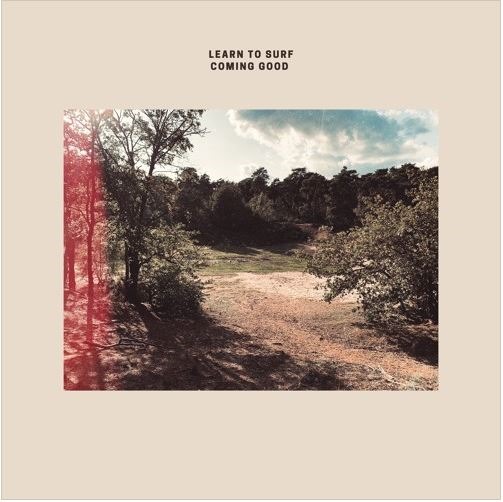
Sometimes, a song has the capacity to make you feel different. I find this happens most often when it’s least expected. ‘Coming Good’, the debut release by Learn to Surf came particularly unexpected. It’s certainly not my usual kind of thing – but there’s just something about that melancholic, reverby picked guitar and the washes of rippling chords cascading down over the top, and there’s a nuanced complexity in the relationship between this, and the layered harmonies, which are imbued with a carefree dappled-haze chilledness with a twist of wistful pining that’s hard to really put a finger on.

Because all music is now a vast nexus of intertext and influence, unravelling or otherwise attempting to frame songs – and bands – in a clear and specific context is nigh on impossible, not least of all because so much context comes from within, from one’s own spheres of reference, and as culture has become increasingly fragmented, so our experiences and references lose the sense of universality they once would have had. Time was, when there were only four, or five, TV channels, the entire nation was glued to the same show at the same time, and the following day, everyone would be talking about that episode, even if it was only EastEnders. This was a time when the main way to access music was via the radio, and if you wanted to hear anything beyond the charts or the classics, you needed to tune into John Peel, or Annie Nightingale after the Top 40 on a Sunday night. How times have changed!

I digress, but for a purpose, insomuch as the more disparate our experiences and reference points become, the less relatable and relevant they become to anyone who doesn’t live inside your head. I spent an age wondering what it was about ‘Coming Good’ that sounded familiar, before eventually concluding that it was ‘Gentle is Her Touch’ by Post war Glamour Girls, and the Alt-country / Americana act Sons of Bill on their Cure-influenced last album Oh God, Ma’am. It would likely be more useful for a broader audience to draw comparisons to Ride, and note the jangly indie psychedelic aspects of what is an absolutely marvellous, goosebump-inducing song with ‘classic’ vibes radiating from it in every direction.

1st December 2023

Christopher Nosnibor

The latest offering from Mark Beazley’s Rothko follows 2022’s Let Space Speak EP, and standalone single ‘Summer In October, Winter In July’, which was an uncommonly loud and abrasive work by his usual standards, although, in context, it made sense, as he wrote, ‘Things have been blurred, uncertain, scary…here’s to certainty soon’, adding ‘I got my brain scan results today, they all came back showing nothing untoward. Good news on a personal level after such uncertainty, but close friends of mine have not had such positive news this year. This is for all of us.’

It would be a stretch to say I found solace in those words following the loss of my wife at the beginning of the year, but having found grief to be an extremely isolating experience, even with the support of friends, it helps in some small way to realise that you’re not the only one dealing with extreme personal difficulty. It’s easy to go through life feeling somewhat blasé, shrugging ‘hey, what’s the worst that can happen?’ But when confronted with the stark realisation of ‘the worst’, your mindset changes. And after the worst has happened, what then?

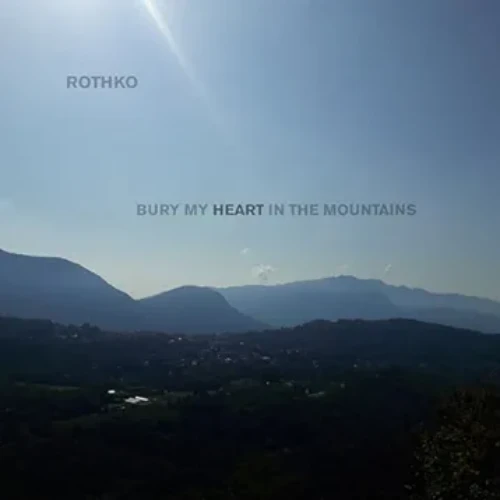
The five compositions on Bury My Heart In The Mountains take their titles from the names of peaks in the Swiss Alps, and capture the brooding beauty of these spectacular summits. Mountains possess a powerful magnetism: simultaneously alluring and foreboding, they can mean so much to so many. It would be misguided of me to even begin to attempt to comprehend or to make assumptions about Beazley’s own relationship with these impressive peaks – I can only know my own relationship with those I have climbed or otherwise stood in awe of, here in the UK, particularly the Lake District, a curious blend of exhilaration and tranquillity, joy and fear. Because the mountains may provide the perfect escape, the ultimate experience of life-affirming freedom, but you can never treat them with too much respect, and while they may in themselves be immutable, they’re prone to rapid change when it comes to conditions, and each mountain has its own character of sorts – and this is something which the six pieces on Bury My Heart In The Mountains conveys in the most nuanced of fashions.

The first track, ‘Monte San Giorgio’ extends beyond eleven minutes in duration and brings together all of the different expressions of terrain and the associated emotions, marking the start of an exploratory adventure that’s contemplative and largely calm, but not without peaks and troughs and moments of mounting drama.

Field sounds create a thick atmosphere at the start of ‘Monte San Salvatore’, with cooing and gurgling, and extraneous sounds, before delicate picked guitar notes drift off into the crisp, clear air, while it’s Beazley’s bass which dominates the grumbling yet expansive ‘Säntis’. A chill wind blows on the arrival of ‘Monte Tamaro’, before drifting into a brittle, cold conglomeration of chimes and drones. The final track, ‘Monte Bre’ is but a brief outro, all of the elements of the preceding compositions compressed into a minute and a half, bringing calm and tension simultaneously. It’s unexpected, sending ripples of disquiet through the stilling waters left in the wake of the slow ebbing of ‘Monte Tamaro’ moments before. One suspects that this brief judder is intentionally placed, and leaves the atmosphere that bit less smooth and soothed than before, a reminder that it doesn’t do to become complacent or too comfortable or settled, because life is full of surprises, and you never know what’s around the corner.

Cruel Nature Records – 26th May 2023

Christopher Nosnibor

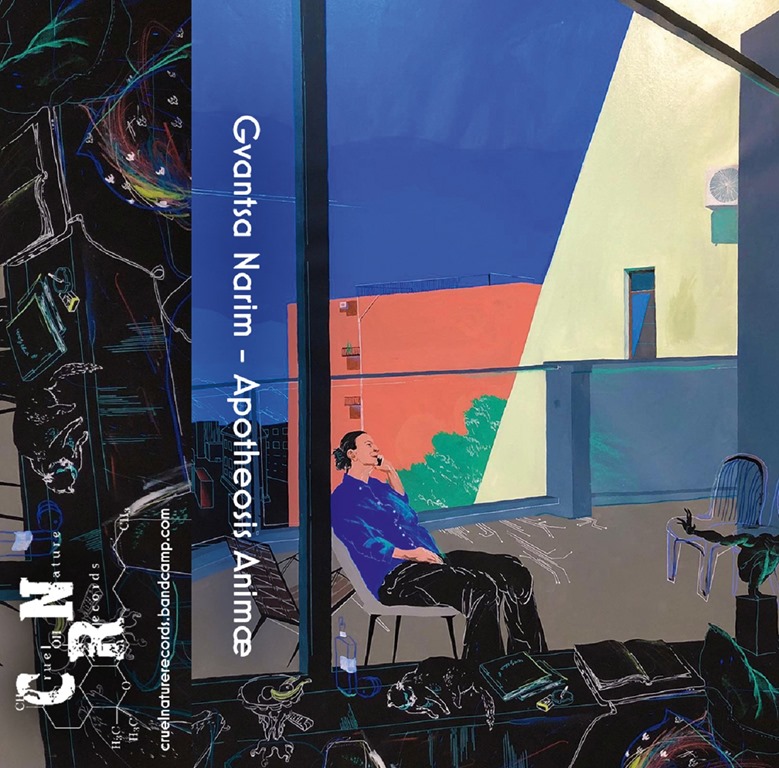
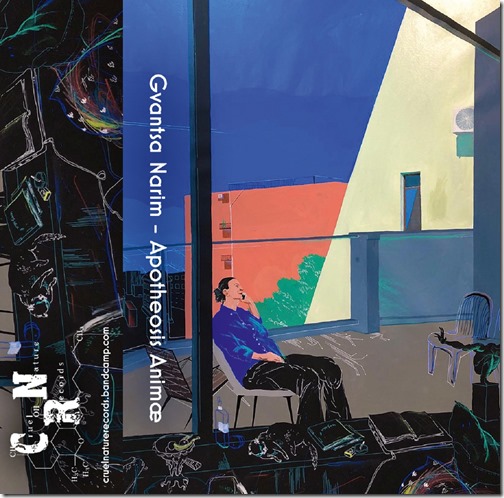
Having recently celebrated a decade of diversity, Cruel Nature Records continue to release a broad range of non-mainstream music – and the range couldn’t be more pronounced than placing two of May’s releases side-by-side: Gvantsa Narim’s latest offering, Apotheosis Animæ exists on another sonic plane form the grating industrial noise of Omnibadger’s Famous Guitar Licks Vol. III. They’re a sort of Yin and Yang: the world definitely needs both, and I personally need both, too, and it’s testament to Steve Strode’s singular commitment to releasing music of quality regardless of style or genre that they can both find a home on the same label.

Apotheosis Animæ, we learn, takes ‘inspiration from religion, esotericism and Georgian polyphonic music’, and that ‘her latest work was written in late 2022 / early 2023 and tells the dark and cold story of winter’.

It seems very much that winter now is not like the winters of twenty or thirty years ago: instead of two feet of snow, we get seven feet of flash flooding here in the UK. And now, despite it being the middle of May, it’s impossible to predict from one hour to the next, let alone from one day to the next if it will feel more like October or February. But despite this, winter not only has timeless connotations, but also, whether it’s sub-zero or only just a bit chilly, the cold winds and long dark nights do have a profound effect on human activity and our lives as individuals. It’s not only psychological; it’s biological and metabolic, and some of this is genetically coded into us from our prehistoric existence all the way through to as recently as just before electric lighting and mains power. There’s a case that says this is where we went wrong, as a species, and for the planet, in evolving beyond lives in tune with nature.

We each have our own unique relationship with winter, and our own associations and reminiscence. While I’m prone to Seasonal Affective Disorder, presenting as low mood and low energy, my wife would invariably suffer a low ebb in health from late October through the February, often suffering back-to-back colds that would drag on for weeks, the lack of daylight dragging down her levels of vitamin D and her immune system struggling to fend off the endless barrage of bugs and viruses that thrive in the cold months, especially when being breathed around in close-packed environments like offices. I fully acknowledge, then, and actually embrace, the fact that I am coming to this album fully loaded with my own baggage which will colour my experience and interpretation. This is a healthy, a function of music, something which can exist as a vessel for us to pour our thoughts, feelings, memories, and traumas into.

The compositions ‘Apotheosis’ and ‘Animæ’ bookend the album, and as the former lifts the curtain, it’s a slow, simple piano that evokes a slowing, a darkening which paves the way for mournful strings and distant echoes of bass and percussion on ‘Sicut Mortuss’ (which I believe translates as ‘like death’ or similar) conveys that paralysing sensation which descends with the darkness; while on the woozy, disorientating ‘Amnesia’, snippets of speech drift in and out, but instead of giving a sense of human connection, as they echo into the droning hum, there is only distance and detachment. Stretching out past the tend-and-a-half-minute mark, it’s hypnotic and unsettling, a little like the point at which you realise you’ve gone a little too far into your own head and need to drag yourself back to life, if only because it’s scary in there and you’ve got to work and at least appear normal.

There are moments of grand, sweeping ambience, soft and gentle, which convey the comforting experience of watching large flakes fall, heavy and silent, settling thick and deep in a silent white blanket; there are also moments of gritty disturbance, swirling glacial winds and shards of ice. ‘Born in the Mist’ is dark and brooding, shapeless, formless, ominous, impenetrable, the howling scrapes that ebb and flow are unsettling and uncomfortable, and it’s evocative; personally, I’m reminded of slogging across mountain tops in the Lake Diastrict in dense cloud and storm-force wind, and no doubt anyone else would being different mental visuals along.

This is where instrumental, abstract music really does come into its own: listener response simply cannot be prescribed, and has to come from within, and for this reason, we will all hear and experience something different. Following on, ‘Stopwatch’ sounds like the clouds lifting and waking up from a daze to remember that you do know how to live, that sense that perhaps hibernation is over and there’s a world outside, and this applies not only to the winter which is determined by the meteorological and astronomical seasonal changes, but the winter of the soul which can chill even deeper.

It’s soft and soporific: ‘Train’ glances and glides with crisp, crystalline tones into the – sadly missed, proverbial – sunset. The fifteen-minute ‘Codex’ is a big, brooding, bruising storm building in the form of a rumbling drone that’s dark as oppressive. Crackles, bleeps and bubbles rise cautiously on the edges of this mass of dense, dark atmosphere. Over time, it throbs lower and slower, and rippling details emerge and float along on the surface – but that darkness, that threat, is always present. At some point, you find yourself lost in the drift, and a slow thumping beat emerges behind a locked loop of synthesised notes… and then it shifts again, reminding us that nothing is ever static, however much it may seem that nothing changes, however much we may yearn to remain in a moment forever.

There are some truly beautiful passages; but they’re tempered by sadness and tension, which conveys the sense of coldness, darkness, isolation, longing that the long dark nights bring – a yearning for warmth, for comfort, for hot, hearty food, the primitive craving to sit beside a roaring fire.

AA
cover

26th January 2022

Christopheer Nosnibor

Elkyn first came to my attention – and, quite frankly, blew me away instantaneously – in his previous iteration as elk, in the spring of 2019, an appreciation that was cemented with the release of the ‘beech’ EP that summer. Since then, Leeds based multi-instrumentalist Joey Donnelly has become elkyn and gone on to craft not only more remarkable songs, but also something of a rarefied space artistically.

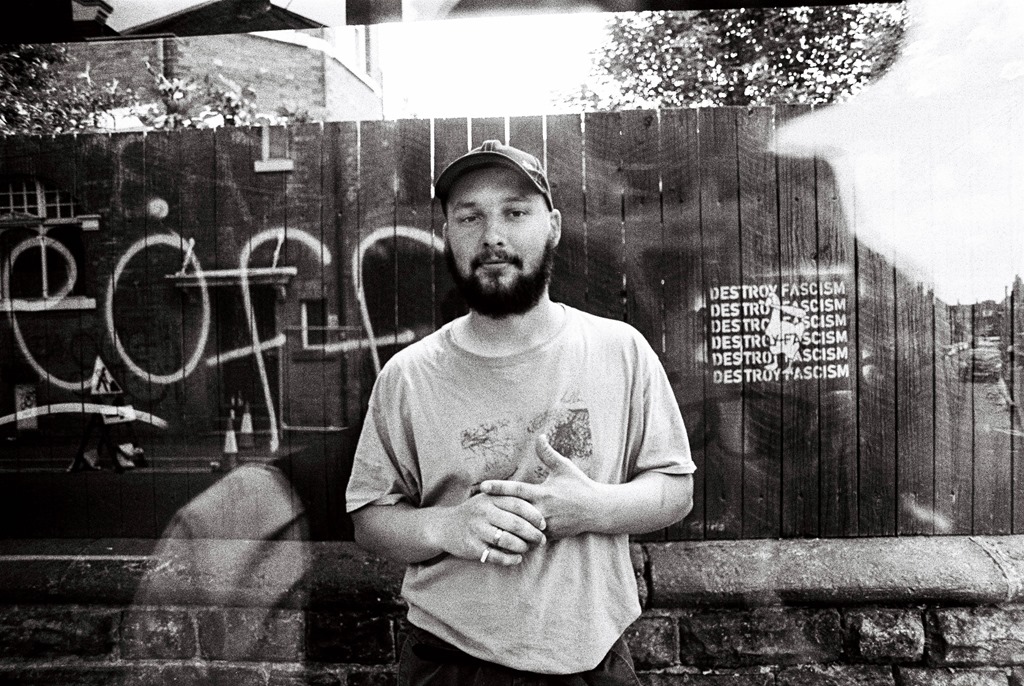
In many respects, there’s very little of Joey out in the public domain: press shots tend to be similar in style, and unassuming, and interviews, while interesting in themselves, and while he comes across well, reveal little about the man behind the music. In contrast, his songs are so intensely personal that there’s likely little need to elucidate further: the songs really do speak for him.

Those songs have already earned him airplay on BBC 6Music, BBC Introducing and Radio X, and deservedly so, and now, with a debut album, holy spirit social club, due for release in the spring, elkyn is sharing ‘talon’ as a taster.

Fuller in sound and more up-tempo than previous singles ‘something’ and ‘everything looks darker now’, it’s more akin to ‘found the back of the tv remote’, which found him flexing new muscles and venturing into Twilight Sad kitchen-sink melancholia.

It’s a(nother) magnificently-crafted tune, and it’s clear by now that Joey has a real knack for bittersweetness. The guitar is melodic and imbued with a wistfulness that’s hard to define. There’s a Curesque lilt to it, in the way that when the Cure do pop, it’s somehow sadder and more emotionally touching than then they do gloomy – or is that just me who experiences that sensation where a certain shade of happy just makes me want to cry inexplicably? But more than anything, when Donnelly’s voice enters the mix, I’m reminded of Dinosaur Jr. Joey’s a better singer than J Mascis, but his voice has that same plaintive quality that tugs away and evokes that emotional hinterland between gloom, resignation, and hope.

Donnelly deals in self-doubt, self-criticism and articulations of inadequacy, and this is why his songs are so affecting and relatable. But it’s the hope that shines through on ‘talon’ – thin rays of sun through the closed curtains of despair perhaps, but with a tune this breezy it’s hard to feel anything other than uplifted by the end.

Live dates:

18/03/22 Hyde Park Book Club Leeds

19/03/22 Fulford Arms York

20/03/22 The Castle Manchester

24/03/22 Scale Liverpool

25/03/22 JT Soar Nottingham

26/03/22 The Flapper Birmingham

27/03/22 Duffy’s Leicester

29/03/22 Strongrooms London

30/03/22 Folklore Rooms Brighton

01/04/22 Clifton Community Bookshop

02/04/22 Tiny Rebel Cardiff

Elkyn_@StewartBaxter-98

Pic: Stewart Baxter

Opa Loka Records – OL2004

Christopher Nosnibor

Just over two years on from The Forcing Season: Further Acts of Severance, and Michael Page delivers another instalment of Sky Burial music.

According to the accompanying text, ‘Stations of the Sun was composed in the spring of 2020 after returning from travels through Europe, the Middle East, and North Africa’, and ‘the five tracks form a ritual soundtrack to a journey which became an inadvertent pilgrimage to view the rising and setting sun from ancient sites of historical significance’.

As is often the case with ambient works, while intended to be evocative, its evocations remain secret, hidden from the listener and locked inside the creator’s mind and separated by process. The sense of journey, the sense of location, isn’t particularly apparent here, and as is so common, to the genre where there’s a concept and an inspiration deriving from some specific experience or place, that sense of place, space, and inspiration is largely lost in vague mists. That said, there are some rich textures and nice tones here, and while the idea of ‘journey’ may not be readily conveyed, there is a definite trajectory and evolution across the album’s five tracks.

The expansive opener drifts and washes broad strokes, with little detail, but over its sixteen-minute duration becomes increasingly calm and soothing. As you let it wash over you, you become more attuned not to the location in Michael Page’s mind, but your own immediate surroundings. As ever, I’m in a small, tunnel-like rectilinear room, but at the same time, I am drifting beyond it in my mind due to the transportative effects of music on the mind.

‘Stations of the Sun 2’ is sparse, fleeting notes that glide in and out through tweets and trills of sounds that imitate birdsong without being actual birdsong, as n erratically-pulsing beat throbs and glitches at its heart, like a muted Kraftwerk, or an ultra-muted take on Throbbing Gristle’s ‘Discipline’. As the album progresses, distant samples and incidental interventions creep in, changing the tone, and the rhythms become more pronounced and the atmosphere grows darker, although by ‘Stations of the Sun 5’ – a sixteen-minute megalith to bookend the album with a counterpart to the opener, the beats have evaporated, replaced by random, clanks and scrapes that echo dolorously through eternal caverns of gloom. Whirs, bleeps and whooshes like shooting stars occasionally flicker and flash through the dense, dark space.

And so it ends more or less as it begins, and we find ourselves, having been led onwards and through a succession of sonic spaces, that the terminus resembles – at least in memory – the origin. So where have we been? For each of us, the answer will be different. From the comfort of our own spaces, Stations of the Sun leads the listener on a journey of the mind.

AA

OL2004_front

Kranky – 6th April 2018

It was Alexander Trocchi, often referred to as the ‘Scottish Beat’ with whom the phrase ‘cosmonaut of inner space’ who seemingly has the strongest connection, largely on account of the fact that this was how he often referred to himself. However, it was in fact coined by William Burroughs, who said, “in my writing I am acting as a map maker, an explorer of psychic areas, a cosmonaut of inner space, and I see no point in exploring areas that have already been thoroughly surveyed”.

This is pertinent, as the press release which accompanies the functionally-titled No. 4 – Belgium-based composer Christina Vantzou’s fourth full-length for Kranky – explains how her latest work ‘ventures further into the uniquely elusive and evocative mode of ambient classical minimalism which has become her signature: a fragile synthesis of contemplative drift, heady silences, and muted dissonance. In regards to the new album she speaks of focusing particular attention on the effects of the recordings on the body, and of “directing sound perception into an inner space.”’

More often than not, I will dismiss the contents of any accompanying verbiage in order to engage with the music unswayed by sales pitch or theoretical position. However, there was something about the context of this album which resonated, and – not wholly intentionally, I should stress – informed my listening and analysis. One may assume that ambient music is ambient music. But no: there are those vast, swirling, cinematic ambient works which explore immense spatiality; there are those works which gather and collage sounds specific to a given time or place, or both, and which are concerned in some way with location, be it geographical or temporal; and then there are those inward-looking explorations which filer through the libraries of the mind and memory. This very much sits in the latter category, with Vantzou’s sparse, minimal compositions possessing deeply haunting qualities, with the notes echoing into the deeper recesses of recollection.

The titles ascribed to the eleven compositions which comprise No.4 are all vague yet strangely evocative. ‘Doorway’; ‘Staircases’; ‘Some Limited and Waning Memory’… so non-specific, and precisely for this reason, so resonant. Within the personal lies the universal and between the spaces between the softly echoed piano notes, the subtle, drifting strings, the soft washes of sound that drift like vapour and gradually dissipate into the air.

Tranquillity descends. Under Vantzou’s aural guidance, I find myself reflecting on my own inner space and conjure images and recollections of experiences linked – however tangentially – to those spaces named in the titles. A bulbous bass pulsates on ‘Garden of Forking |Paths’ and I’m transported back to my father’s long, sprawling garden – and because the bass sound is reminiscent of The Cure circa Faith – specifically Carnage Visors – I’m back to when I discovered this music, age fourteen or fifteen. I visualise dappled orchard sunlight and smell grass clipping. This will mean nothing to you, but by allowing myself to drift inside, I’m feeling that interiority that Vantzou’s work intimates.

In times past, I may have felt embarrassment as taking such a tangential approach to a review. But music – and the response it elicits – is not scientific. To analyse this objectively would be futile, and worse still to strip the soul from its very heart. No.4 isn’t an album to listen to, so much as to feel.

AA

Christina Vantzou – No.4