Posts Tagged ‘Einstürzende Neubauten’

Artoffact Records – 5th December 2025

Christopher Nosnibor

In the last few years, CD box sets have become quite a thing. And I for one am a real fan. It’s not just about ‘fuck Spotify’ or the realisation that stuff has a tendency to disappear from streaming services at no notice – something true of Netflix and other TV streaming services, too. But, it is a fact that if you don’t have something physically, in some form or another, even if it’s only a digital file, you don’t have it, and you certainly don’t own it. But not all CD box sets are equal, and not all serve the same purpose. Much as I’ve come to appreciate the ’five albums’ sets and the like as instant collection fillers when it comes to acts I’ve previously managed to skip for whatever reason, they’re beyond stingy on bonus material. When it comes to releases for fans, releases like the monster boxes with all B-sides and bonuses galore, such as those by Fields of the Nephilim and The March Violets have been far more exciting.

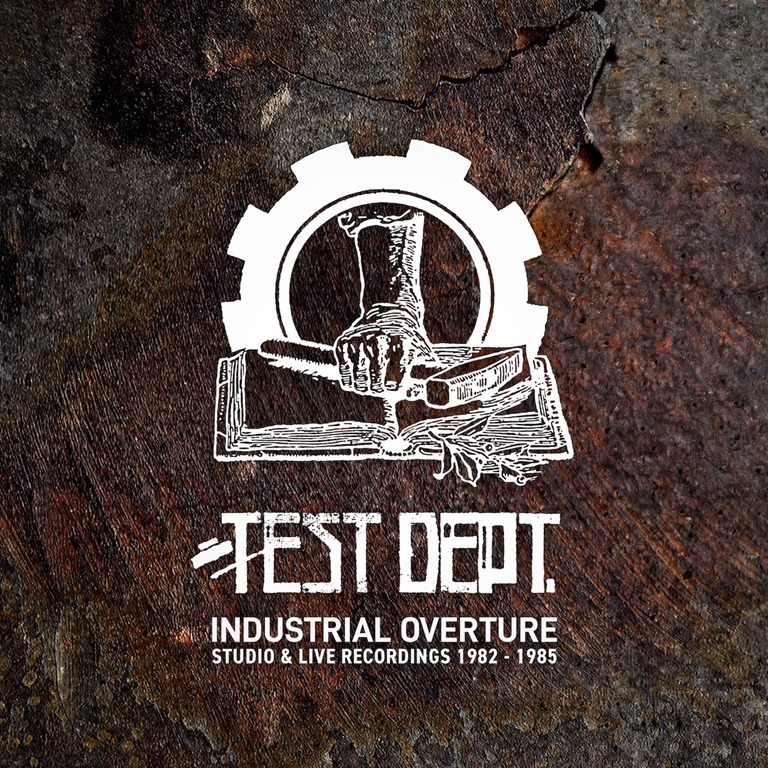
Industrial Overture: Studio & Live Recordings 1982-1985 is definitely exciting. It’s no simple repackage of the albums, and the chances are most people – even the staunchest fans of Test Dept – don’t own the majority of the material on this one, consisting as it does primarily of scarce material, outtakes, and Peel Sessions.

Industrial Overture: Studio & Live Recordings 1982-1985 consists of 42 tracks across 4 CDs and also available digitally. It’s a document of their earliest, most abrasive period – not that they exactly mellowed in the years after, as perhaps their most commercially successful album, The Unacceptable Face of Freedom (1986) attests, and includes a first ever reissue of the group’s 1983 cassette-only debut album Strength Of Metal In Motion, the classic Ecstasy Under Duress and Atonal & Hamburg albums (both unavailable for over three decades), plus a disc of hitherto unreleased studio recordings that incorporate two sessions recorded for the John Peel show on BBC Radio 1.

As the notes inform, ‘In total, 26 tracks are new to CD and digital formats, of which 12 have never been previously available at all. All contents have been compiled by Test Dept and are newly remastered by Paul Lavigne (Kontrast Mastering)’.

Disc one gives us Strength Of Metal In Motion – a collection of raw live recordings. The first five were recorded at Albany Empire, Deptford, in August ’82, and it’s fucking brutal. Even remastered, it has something of a bootleg sound quality about it, that muddiness that’s particular to 80s recordings. In many respects, this adds to the appeal here. It opens with the dissonant blasts of harping faux-brass blasts of ‘Last Rites’ – heraldic, but askew – before giving way to the pummelling percussion and shouting of ‘Shockwork / Workshock’, which is brief but brutal. ‘Prokofiev’s Dream’ is a full-on assault of clanking percussions with occasional horns, before ‘Drum and Body’ drops a shard of industrial punk noise, with rabid vocals-riding a wave of the most relentlessly aggressive beats. The dark ambience of ‘Death of God’ is nothing short of purgatorial, and showcases a different side of the band. Four more of the thirteen tracks were recorded at Temperance Hall, Newbury, four months earlier, and with samples, synths, and drum machines flashing in all directions, their debt to Cabaret Voltaire is clear there – as is the sense of their future direction. That said, ‘Kindergarten’ is pure Throbbing Gristle, laced with heavy hints of Suicide and the bibbling synths of Whitehouse. But the wayward experimental jazz elements are also strong. Overall, this is the sound of punk in a head-on collision with Throbbing Gristle and drumming that sounds like they’re battering the shit out of sheet metal. Unless you were actually there, one can only imagine what it must have been like to witness any of these early shows.

Ecstacy Under Duress was initially released in 1984 and is another (largely) live compilation consisting of recordings which again were captured in ’82 an ‘83, although this time featuring future debut single ‘Compulsion’. The compositions feel more evolved, and perhaps as a consequence, more honed in their attack. ‘Hunger’ builds to a punishing climax and sets the tone. The aforementioned ‘Compulsion’ is relentless. Samples and crashing percussion dominate the stark industrial landscape, and the intensity of these performances translates well despite the separation of time and medium. I suppose it’s here we can really identify the point at which Test Dept carved a path which departed from their industrial predecessors and peers in their pursuit of the most punishing percussion. Only Einstürzende Neubauten really compare, but even they’re not quite as up-front with the hammering beats, despite their love of sledgehammers and metallic objects. The twelve-minute ‘Efficiency’ takes the percussive assault to a whole other level, leaving the listener feeling pounded, pummelled, bewildered.

The third disc offers some respite by virtue of being studio-based and therefore not having that muffled 80s live sound to the recording – although it’s marginal. ‘Blood and Sweat’ – one of three demos from 1982 – is primitive and raw and very, very drum-orientated: the vocals are relegated to the back of the mix, anguished shouting buried in a barrage of noise. It’s cruel and it’s harsh and it’s heavy, and the demo version of ‘Shockwork’, recorded during the same session is similarly hard on the ear, with its combination of machine-gun drumming and squalling avant-jazz tones.

The two Peel Sessions, recorded in ’82 and ’85 shows a honing of the sound: between the two sessions, they would release their debut album proper, Beating the Retreat, which included contributions from F M Einheit and Genesis P. Orridge, as well as Shoulder to Shoulder, with the striking miners choir, and which would finally see the release of an official studio version of ‘Shockwork’ – another version of which featured in the 1983 Peel Session, which comes on as heavy and mercilessly brutal as Swans on Filth – which was released the same year and channels the pain of life enduring the crushing slog of capitalism.

AA

Of the four discs, this perhaps has the greatest impact, and not just sonically. Atonal, anguished-sounding vocals reverberate vast sonic swamps dominated by the ever-present barrage of industrial-strength percussion. It’s relentless in intensity, and the effect is cumulative. Between the pulverizing six-and-three quarter minute ‘Efficiency’ (which feels in some way to be their answer to Throbbing Gristle’s ‘Discipline’), and the six-and-a-half-minute ‘Red Herrings’ version of ‘Gdansk’, with the disorientating mutter of ‘State of Affairs’ in between, this is a sustained assault that hammers blows from every direction.

AA

Disc four, which contains the Atonal & Hamburg album – released in 1992, but documenting two live performances from 1985 marks a significant shift from the earlier live shows. Containing material drawn predominantly from Beating the Retreat and The Unacceptable Face of Freedom, the punishing volume translates well, and the force is more controlled. There is structure, too, building from dirge-like crawls – again comparable with Swans around this time – quickening the pace and the all-encompassing ferocity of the percussion.

Those familiar will likely already know, but in addition to providing a truly magnificent document of Test Dept at their most uncompromising early best, Industrial Overture shows how they were right at the heart of an emerging zeitgeist spawned in the wake of Throbbing Gristle, as represented by the likes of Neubauten, Cabaret Voltaire, Swans… this was not a scene or a movement, but a disparate array of artists channelling frustration at the dark underside of a time when the charts were dominated by the likes of Duran Duran and Culture Club. In pop culture, the early 80s is presented and remembered as being glitzy, aspirational, fun. But that was not the lived reality of many. Test Dept may have been underground not least of all because their racket was largely unpalatable to the majority. But as Industrial Overture evidences, they were providing the soundtrack of the grim realities of working life, drudgery and trudgery. Essential listening.

AA

AA
3fa9f627305a21e10fbc1f2455628c4f1a429e6e

Moabit Musik – 8th March 2024

Christopher Nosnibor

Gudrun Gut has forged a career on the fringes, participating in numerous collective and collaborative activities as well as solo projects. Often creating artistic work which sits well outside the boundaries of genre categorisation, her output has never been dull, or predictable. And so it is that GUT Soundtrack is precisely what the title suggests – her own soundtrack, to – wait for it – a mini-series about Gudrun Gut.

It’s a difficult call to make in assessing whether this is indulgence or an essential artistic profile, especially without actually viewing the series, but reading the synopses of the three episodes, it does seem that GUT is a bizarre hybrid of documentary and reality TV, particularly on the arrival of episode three:

Episode 1 The Blank Page. In the first episode of “GUT,” everything revolves around the mysterious blank page that means so much to artists. A Boat trip at moonlight with Thomas Fehlmann, a foto session with Mara von Kummer, and the surprise guest Ben Becker.

Episode 2 MMM. In the second episode the letter M takes center stage: Music, Mother, Malaria, and the mysterious Monotron. Gudrun composes the soundtrack for her series, everything turns into a pink dream. In the studio with her bandmates Manon Pepita and Bettina Köster.

Episode 3 The Sourdough. In the final episode, Gudrun turns her attention to the everyday, the routines, the laundry, and the bread. Here, an artistic ode to the freedom hidden in the seemingly ordinary unfolds. The visit of musicians Pilocka Krach and Midori Hirano culminates in a garden performance with Monika Werkstatt. A delicate symphony of the everyday, the essence of art and community resides.

Ah, that delicate symphony of the everyday. On a personal level I find pieces where people recount their routine not only vaguely dull, but, worse, depressing, as they invariably seem to have time – time to eat a nutritious breakfast, do some yoga or go to the gym or got for a run, before their morning session of creativity or money-making from a comfortable environment, be it a studio, or spacious office, or a coffee shop or somesuch. I feel myself shrivelling inside as curling with envy as I compare these routines to my own, which involves a daily to-do list an arm long whereby I squeeze in endless laundry and changing cat litter around my dayjob, runs to the shops and making sure everything is ready for my daughter to go to school in the morning, including making a packed lunch, before finally sitting down to knock out a review around 9:30pm and waking up at my desk, review-half-written around 11:30 and panicking about being back at the dayjob for 6:30 the next morning.

But I’m not here to berate the former Neubauten member’s breadmaking, but to critique the audio accompaniment, and, as ever, to reflect on how well a soundtrack stands when standing apart from the visuals to which it is intended to augment.

The series may contain three episodes, but the soundtrack comprises some twenty-four short, incidental snippets, which are nothing if not wide-ranging in style and form. One minute it’s like an episode of The Clangers; the next, it’s like listening to percussion made from the banging of bin lids. Spoken word and space-rock, swirling synths and fizzing electronics are tossed around all over the shop. There are moments of glacial synthpop glory – ‘Gutscore’ is atmospheric, dynamic, a bit Kraftwerk, a bit Tangerine Dream, a bit Mike Oldfield, while ‘Garten (Edit)’ is reminiscent of Yello. Yes, it does sound, often, overtly German, but then, Gudrun Gut was there from the early days of electronic exploration and as such, she isn’t following the lineage, but has been instrumental in its evolution.

‘Biste Schon Weg (23 Mix)’, one of the set’s few longer songs – that is to say, over three minutes – is a reworking of the song which appeared on Guts’ last album, the 2018 release Moment, while ‘How Can I Move (24 Mix) revisits a song which originally featured on Wildlife in 2012.

Tossing bumping electronica and some weird excursions make for an interesting journey, and a collection which encapsulates Gudrun Gut’s varied output during the course of a lengthy career. Quirky, odd, idiosyncratic, these are all highly appealing features which define a unique artist, and render GUT Soundtrack a fascinating listen.

AA

MOA24_front

Broken Clover Records – 19th February 2021

Christopher Nosnibor

Danielle De Picciotto is a true polyartist, as an exhibiting artist, an author, and musician, who has sung with Crime & The City Solution and Space Cowboys. She co-initiated the Berlin Love Parade in 1989 and “The Ocean Club” together with Gudrun Gut, and has been producing music under the hackedepicciotto moniker with husband Alexander Hacke, founding member of Einstürzende Neubauten, for the last twenty years.

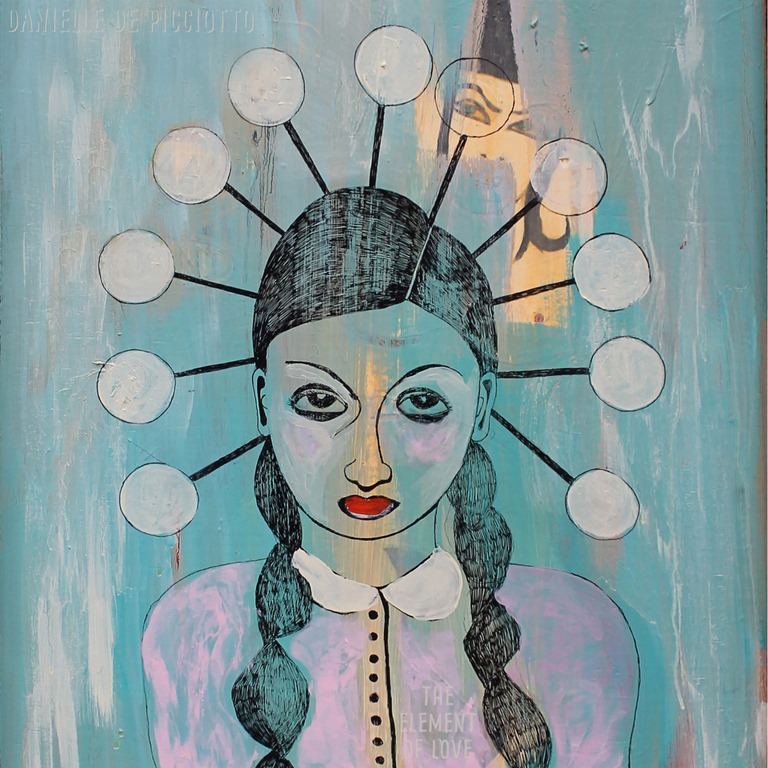
The Element of Love, her third solo album, is an intriguing affair, drawing on elements of experimentalism and spoken word and placing them to the fore. It’s a curious hybrid of sparse, droning instrumentation, and narrative pieces delivered quite dryly, with low-key orchestral instrumentation.

For the most part, the backing is subtle, spacious, and there is a palpable sense of distance and wonderment. ‘Is anybody out there?’ she asks, breathlessly, on opener, ‘Sea of Stars’, and the narrative pieces which occupy the album are an interesting blend of postmodernism and mysticism, referencing Harry Potter and more serious magic, as well as a host of cultural touchstones both obvious and oblique. Precisely what the lyrical bent of The Element of Love is, is unclear, but space, superheroes and, as the title suggests, elemental forces, appear to be central themes

Third track, ‘Solitude’ is a murky morass or extraneous noise, a distant grind and an ethereal vocal off in the distance: with its rhythmic industrial gratings it’s reminiscent of 90s Swans and Jarboe. In contrast, the title tracks is a sedate, string-led instrumental that simply exists in its own space and time, while ‘Who Am I’ is more overtly electronic, with dripping analogue notes and a simple beat reminiscent of Young Marble Giants’ primitivism. The majority of the album is simple, minimal, and in many ways the reconstructed sound installation of the record is all there is. On the surface, The Element of Love is very much a wandering around a certain sameness, and it’s not until one spends time and delves into the details that the depths and differences reveal themselves and reveal the range, which lies in the tone, texture, and mood.

For the most part, The Element of Love is swampy and murky and difficult to define in any sense, lyrically or musically – but especially musically, as it hangs in mid-air, undecided about its identity as so many of the common and popular tropes point toward the dimly-lit back of the auditorium. But don’t let that be a deterrent: there is much to discover here.

AA

a0009307537_10

Potomak – 31st January 2020

Christopher Nosnibor

hackedepicciotto is Alexander Hacke (Einsturzende Neubauten) and Danielle de Picciotto (Crime & The City Solution), and The Current is their fourth album It’s pitched as being ‘their most powerful album yet,’ and the press release explains that ‘after composing desert drones for their previous album Perseverantia and dark foreboding melodies for Menetekel, their new album moves forwards, gaining in speed and energy’.

The energy is abundant, but it’s dark and flows in subterranean currents. Recorded in Blackpool, of all places, there is little sense of illumination in a work that’s dominated by shadow, although that’s by no means a criticism.

‘All people / are created equal’ de Picciotto announces in a stilted monotone which echoes out across a bleak and solemn soundscape of atmospheric, picked guitar and dramatic strings which glide and swoop over a swirl of electronic crackles, indistinguishable voices and dolorous bells. Over the course of the piece, she utters various permutations of the phrase, revealing new meanings with each arrangement.

There is very much an exploratory feel to The Current: this is not an overtly linear work, or an album comprised of songs in the conventional sense. These are eleven distinct ‘pieces’ which are more spoken word / narrative works with music than anything, although this misrepresents the fact the words and sounds are very much equal in their billing. And yet there is a sense of progression, as the rhythms become stronger, more forceful, and more dominant as the album progresses.

‘Onwards’ plunges downwards with a grating bass pitched against a relentlessly rolling rhythm; ethereal, choral vocal harmonies and cold, cold synths forge an unusual juxtaposition, and the result is powerful, stirring deep-seated emotions that swell in the chest as the energy rises.

In contrast, ‘Metal Hell’ goes post-industrial with metallic clattering an scraping disrupting a choppy, processed guitar riff that cuts a murky path over an arrhythmic mess of percussion, and the title track thunders a slow martial beat to build a grandly epic piece that conjures images of sweeping vistas dominated by rugged mountains and dense forests.

Things take a turn for the unsettling on ‘Petty Silver’, which finds de Picciotto writhe and wheeze in a sort of little girl lost voice against a backdrop of chiming xylophone and a heavy synth grind that’s pure Suicide. The penultimate track, ‘The Black Pool’ opens with a cluster of samples from news soundbites or similar about ow ‘the UK is fucked’ (fact, not an opinion) over some swirling ambient drone and a Michael Gira-esque monotone vocal trip

When the pair share vocal duties, Hacke’s cracked, grizzled growl is the perfect contrast to de Picciotto’s clean, airy yet tense and high-string delivery. And it’s the contrasts that make The Current: it isn’t any one thing, but a number of things simultaneously and while the rhythm section resonates deep and low, there’s lot going on at the front of the mix, and it’s this dynamic that gives the album a constant movement. To dissect it beyond this would be do damage the effect: The Current is an album that possesses a subtle force and brings submersion by stealth.

AA

hackedepicciotto – The Current

Editions Mego – 1st November 2019

The 80s was an exciting and revolutionary time, and UK label Some Bizzare gave a platform to some of the more unusual exploratory and experimental acts around the middle of the decade, meaning that while acts like Depeche Mode and Soft Cell were mainstays that brought in funds, they were able to release albums by Soft Cell offshoots like Flesh Volcano, as well as work by Foetus, The The, Coil, Einstürzende Neubauten, and Cabaret Voltaire. Their reputation may have slipped in later years following various stunts and a major falling out with Neubauten over unpaid royalties, but the legacy very much remains strong.

The Elbow is Taboo was Renaldo & The Loaf’s fourth and last album of their initial phase prior to their return in 2010, which was released by and Some Bizzare in the UK and Ralph in America in 1987. Marking a significant expansion and evolution on their previous outings in compositional and instrumental terms, and the result of three years’ work, it’s considered to be ‘the definitive statement by the group in this early period’.

There was a 2016 reissue, with a stack of ‘elbonus’ material and I’m sold on the pun alone, but this Editions Mego reissue has to be the ultimate, as in addition to the elbonus stuff, the first 300 vinyl copies and digital editions also include bonus bonus 7” tracks ‘Hambu Hodo’ live and a remix, ‘Hambu Hoedown’, which ultimately sees the album’s original nine tracks expanded to twenty-two. Comprehensive is the word.

But is it any good?

It’s leftfield, weirdy and experimental: the album’s first piece, ‘A Street Called Straight’ melds medieval folk with tribal drumming and something pan-pipey and hints at neofolk but then goes off at some odd tangents, before ‘Boule’ does some kind of quirky somersaults across traditional Japanese music and sparse, clattering electronica. It’s the stuttering, busy-yet- rattly percussion that defines the oddball and off-kilter compositions, from the wonky country twangery of the title track to the marching Krautrock groove of ‘Hambu Hodo’ that lands somewhere between the pulsing electro of DAF and the zany mania of early Foetus. ‘Critical/Dance throws some jazz and atonal bleepings into the mix. It’s this offbeat eclecticism paired with an emphasis on rhythm that renders The Elbow is Taboo simultaneously compelling and bewildering.

The slew of bonus material on Elbonus ranges from fragmentary loops to fully realised versions and songs, spanning disorientating sound collage to audio collisions which are simply dizzying, not to mention quite inexplicable.

If ever an album qualified as a lost classic, it’s The Elbow is Taboo. So if the 80s underground is your scene, you need this. And if it isn’t, then it’s time to get educated.

AA

Renaldo & The Loaf – The Elbow is Taboo