Posts Tagged ‘Drone’

Gizeh Records – GZH65DP – 18th March 2016

Christopher Nosnibor

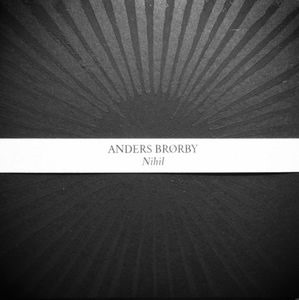
Gizeh is a label which grasps the importance of the complete music experience, and never stint on their packaging. Anyone purchasing their product can feel a tangible sense of both art and artefact, and Anders Brørby’s brooding instrumental album Nihil, the second release in their ‘Dark Peaks’ series, is no exception, housed as it is in a textured gatefold sleeve, the radiating sunburst design raised from the surface, in heavy black ink on a matt black background. How much more black could it be? The answer is none. None more black (the white paper band printed with the artist’s name and album title which much be carefully slid from around the sleeve in order to access the contents notwithstanding).

The presentation provides a suitable indication as to the sonic experience it prefaces. Nihil meaning nothing: while it has, since the 19th Century come to connote a negativity, manifesting as antagonism or rejection through the widespread use of ‘nihilism’, as of and in itself, ‘nihil’, or ‘nothing’ implies an absence. Neither positive or negative, it is simply a lack. Absolute nothing is beyond the human ken, and so, in artistic terms, there is a need to portray nothing, absence, with something. This is something Norwegian composer sound artist Brørby achieves on the 10 pieces which comprise Nihil.

Primarily, the music is dark. There is a lack, an absence, of light, at least in terms of the overall sensation it conveys. Melding elements of drone and dark ambient with more abrasive sounds, the compositions infer an experimental bent which places atmosphere at the fore. The structures are almost subliminal, the shapes of the pieces largely evolve and emerge briefly through a succession of transitions as layers of sound overlap and drift across one another almost imperceptibly. Musical forms are therefore explicitly absent, expounding the concept of ‘nihil’. As such, Nihil is a work of subtlety, and a work which bears theoretical scrutiny, and sits alongside works by the likes of Christian Fennesz, Lawrence English and Tim Hecker.

But subtlety should not be read as a synonym for sedate or tranquil. ‘As Dead as the Stars We Watched at Night’ builds layers of dark noise and swelling drones scrape and torment the nerves, and while the gentle, chimes which ripple in cadence through ‘I Will Always Disappoint You’ offer a glimmer of light and warmth, ‘Put Your Ear to the Ground’ finds a harsh, thick distorted fuzz that obliterates the smooths contrails beneath and accentuates the unrest on which Nihil is constructed. Likewise, the serrated howl of ‘From the Window Above the Lake’ conveys the anguish of emptiness.

Through the medium of sound, Brørby creates a conceptual absence (not to be confused with an absence of concept). There is no message, and Brørby does not purport to convey anything through the work beyond ‘raw atmospheres’. ‘Raw’ implies unfiltered, unadulterated, without manipulation nor refinement, and while this may not be strictly true of Anders Brørby’s creative process, Nihil nevertheless presents itself as being self-contained, a work about absence of anything but the sounds it contains. It is not ‘about’ Anders Brørby, and if anything, the artist is, if not completely absent, then very much hiding in the shadows.

It’s an album that’s best appreciated in a semi-present state, to allow the sounds to slowly wash over the senses and most of all, to be heard without preconceptions or expectations. Because nothing can often leave you with so much more than something.
Anders Brorby - Nihil


https://bandcamp.com/EmbeddedPlayer/album=4022471447/size=large/bgcol=ffffff/linkcol=0687f5/tracklist=false/transparent=true/


Anders Brørby Bandcamp

It’s sad that in 2016 there should be a need for a York Stand Up To Racism benefit gig. But, as one of the speakers noted, periods of austerity tend to bring division, and invariably, race-blame is one of the ways in which frustration at social deprivation and disparity manifests itself. And so, as war rages in the Middle East and we bear witness to the biggest mass displacement of people since WW2, there’s a disconcerting negativity toward asylum seekers, continually referred to in the media and beyond as ‘migrants’ (like it’s a dirty word, and somehow associated with vagrants), with a particular antagonism towards Muslims (as if all Muslims are extremists, and that’s before we consider Christian extremism, which has seemingly been acceptable since the Crusades).

But we’re all here – and yes, it’s a more than respectable turnout – for a mix of speakers and music-makers, disparate in style but united in the opposition to racism, to social division, to stigmatism, to segregation.

It is, necessarily, a mixed bag, and some of the speakers are more compelling than others: Pinar Aksu spoke lucidly of her experience of life in the UK since arriving as an 8-year-old asylum seeker from Turkey in 2001 and living in Glasgow, and Labour MP for York, Rachael Maskell was passionate and rousing during her succinct and well-paced speech. Some of the other speakers seemed less confident, less organised and less cogent, undermining the importance of their messages. But it would be wrong to criticise their contributions: this is about inclusivity. Not everyone can be a great public speaker, but that doesn’t diminish their societal contribution. If anything, tonight’s event highlights the way in which the current right-wing government, and the equally right-wing mainstream media are exerting their control by means of slick manipulation of the mainstream media channels. Tonight is not about spin, but the voices of real people, who have experienced the traumas of racism, of war, being heard.

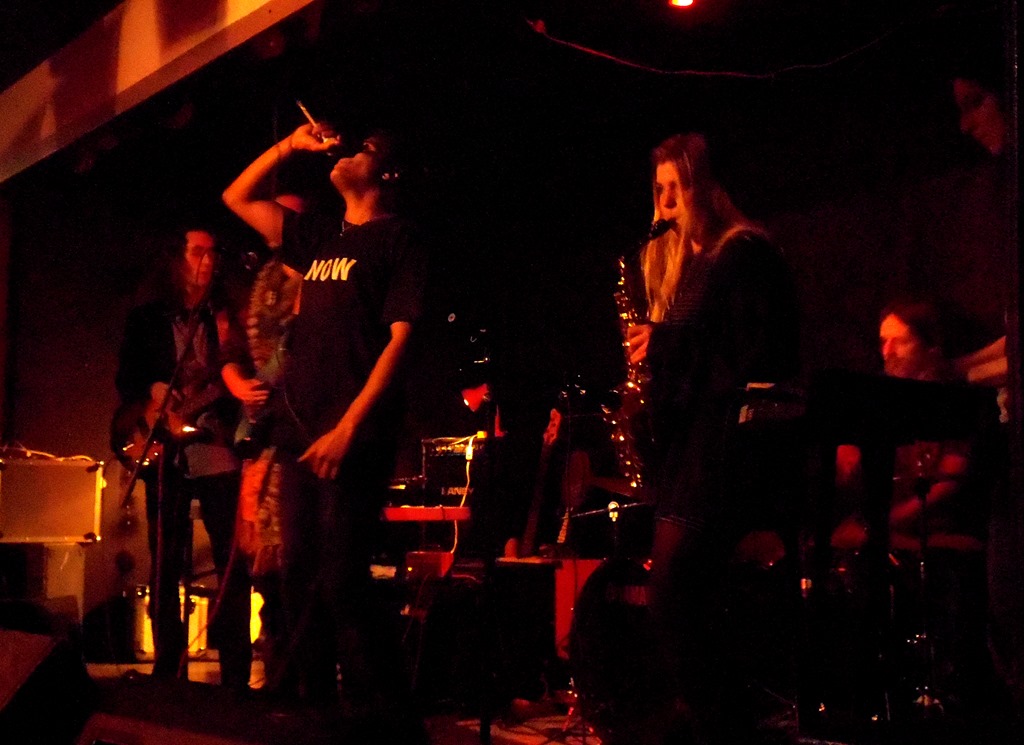
Of the bands, Low Key Catastrophe and Orlando Ferguson proved to be the night’s real standouts: the former, on early, and making their debut appearance had an infectious energy that infused throughout the audience. Their brand of punky / post-punk tinged dub reggae has something of an anarcho vibe to it, and while the band as a whole are busy working out some chilled grooves overlayed with some tetchy, angular guitars, front man Jim Osman is a real live wire – a charismatic performer, he’s got the kind of passion you can’t fake and is and utterly compelling.

Low Key

Low Key Catastrophe

In contrast, Orlando Ferguson – duo John Tuffen and Ash Sagar – push hard on their avant-garde credentials and are all about the drone. Summ O))) without the power chords or distortion, ‘Earth 2’ reimagined without the gut-churning metal grind, their set, sculpted with duelling bass / guitar feedback and essentially nothing else is the droniest of drone. And it’s ace. There’s no overt political message here, but it’s clear that these guys are on the side of good.

Orlando Ferguson

Orlando Ferguson

The running order changed a few times, and things were running spectacularly late, which meant that after a long day at work after a 4am start, I wasn’t up for watching ZiZ (and I’m prey hardcore about staying it out to the end of a gig). Irked as I was at times by the apparent lack of organisation, and the conversation over performers (Nick Hall, offering his own brand of Folk Rock / Americana had a particularly tough battle against the endless babble), it was a landmark night that brought people together, and that’s what matters.

Pomperipossa Records – PRLP2 – 16th April 2016

James Wells

An act called drøne can surely only be about one thing, and yes, drøne (Mark Van Hoen, who’s renowned as a solo artist as well as for his work under the Locust moniker, and Mike Harding – no, not the folk singer / comedian known as the ‘Rochdale Cowboy’) are indeed masters of drone. Reversing into the Future contains two tracks, ‘This Strange Life’ I and II, although the digital version masters them as a single continuous track with a running time of some 42:45. Really, how much drone – or drøne – do you need?

Drone-heavy as it may be, ‘reversing into the future’ manages to hold the interest by exploring a wealth of different textures, creating a is a collage consisting of field recordings, short wave radio, and modular synth, assembled seamlessly to forge a journey of electrically-charged dissonance, drones and electronic melodies.

It would be an absurd act of pomposity and pretention to devote 500 words to the transportative effects of the music, just as it would be an exercise in needless intellectual onanism to effuse over the nuances of the way the various textures and tones resonate with and against one another to achieve various effects.

Reversing into the Future is an intriguing album, and one which will resonate in different ways with every listener. It’s dark, it’s ominous, but it’s also uplifting, graceful. For those who respond on a more technical or theoretical level, there are near infinite depths to explore.

Don’t be deceived: Reversing into the Future offers so much more than mere drone.

Drone

Drøne Online

Gizeh Records – 12th February 2016

Christopher Nosnibor

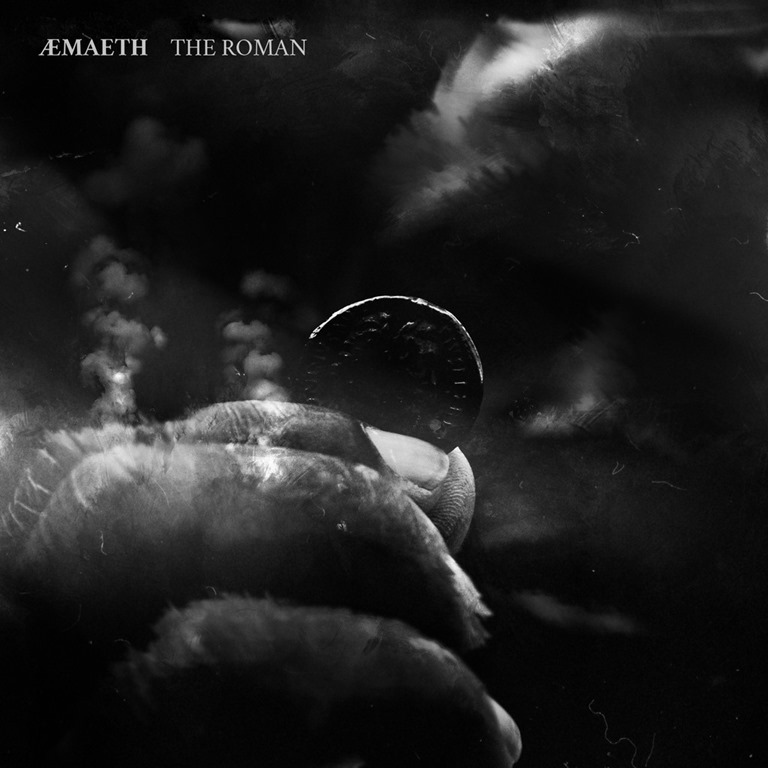
Æmaeth is the project of Owen Pegg (A-Sun Amissa / Hundred Year Old Man), and he’s already scored a number of films. Independent flick The Roman is a silent work which to which ten segments of improvisational drone-based passages played on guitar and piano were composed by way of an accompaniment.

Since the film premiered in May 2014, its soundtrack has been evolving, developing, accruing layers and details, until finally, the ten pieces came together to form a fluid, brooding sequence that stands as a whole, and as a powerful sonic journey. It’s fitting for a film which is no gung-ho Hollywood take on history based on a succession of cast off-thousand battle scenes. Simon Rawson’s movie, shot in Yorkshire, is outlined as a story of two men, lost, who are ‘challenged and tested by nature, each other and the inner most conflicting primordial affiliations with man’s body and mind’.

Pegg’s soundtrack conveys so much, its dark, tense tones resonate as they connote psychological drama. The battles fought within the mind, the conflict and the uncertainty. The barren, unforgiving landscapes, shadowy woodlands and bleak moors. These are the scenes portrayed within the compositions, which are spacious, often sparse. Delicate piano notes drift airily but ponderously, gradually eclipsed by deep, dark, thunderous rolling drones, stormy and threatening. At times, the sheer weight and density of the ominous tones are oppressive, the sounds so large as to create a sensation of a pressure being applied to the skull.

That isn’t to say the soundtrack lacks subtlety: far from it. There are passages of quiet, so hushed as to compel the listener to strain their ears listening for some faint sound – and invariably, there is something, something small, soft, indistinct. Or there are layers of sound, often in the upper frequencies, needling the senses, tugging at the peripheries of the psyche, somewhere in the background or half-hidden, off to one side. These, like the brief moments of light which occasionally present themselves, are integral to the soundtrack’s dynamics, and the power of its effect.

There is torment, there is discomfort. There is also an ever-present sense of danger, sometimes distant, sometimes heart-stoppingly close.

The final passage, the nine-minute ‘Neptune’ is vast, built on a slowly turning vortex of sound. A rumbling rhythm lingers as it pulses just beneath the surface of its soft tonality and offers a hint of redemptive relief at the conclusion of a journey which is most worthy of the term ‘epic’.

Æmaeth - Roman


Æmaeth – The Roman at Gizeh