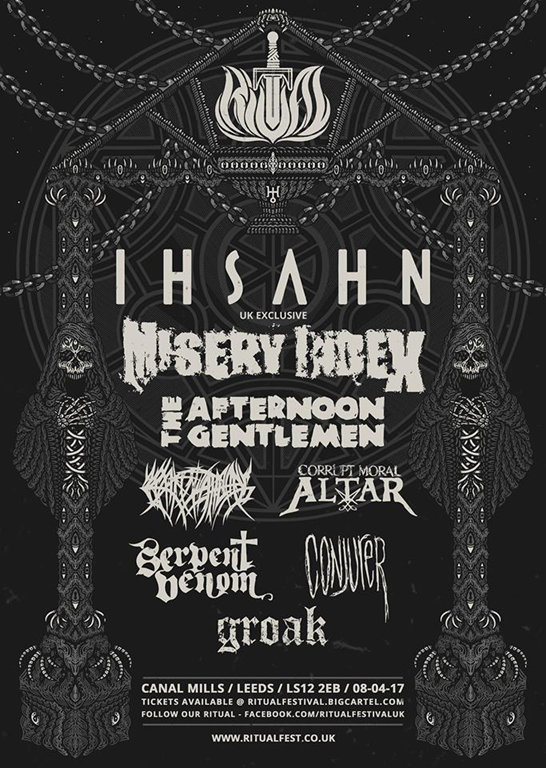
Ritual Festival, which aims to be bring the best in doom and death metal to Leeds will return on 8th April 2017. Following the success of this year’s festival which boasted the likes of 40 Watt Sun, The Body, Conan, Venom Prison and Full of Hell, Ritual have announced that Norweigan black metal pioneer Ihsahn will headline next year.
Alongside Ihsahn, the lineup so far is looking pretty strong to say the least, and includes Misery Index, The Afternoon Gentlemen, Crepitation, Corrupt Moral Altar, Conjurer, Serpent Venom and Groak.
Christ, this is fucking dark. The video which accompanies ‘Abysmal Channelling’ (the album’s bonus track, perversely enough), depicts scenes of an occult ritual, complete with burning incense, singing bowls, self-mutilation, frenzied bell-ringing, pools of blood, all against a backdrop of murky, mangled industrial noise.
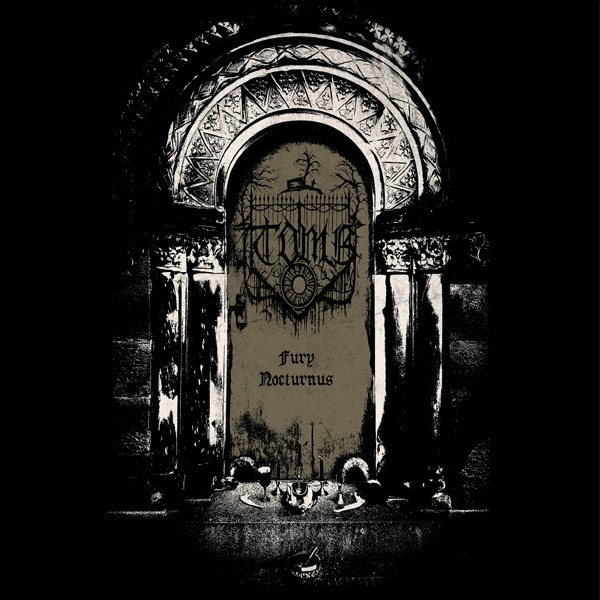
Describing themselves as ‘blackened noise occultists’ US act T.O.M.B. (that’s Total Mechanical Occultic Blasphemy) have been going for 18 years now, and have, not surprisingly, remained deep, deep underground. Positively chthonic, in fact.
Fury Nocturnus is their thirteenth release, and while containing thirteen tracks (plus the aforementioned bonus cut), it contains no tunes, and the truth is, it’s very difficult to really establish what the hell’s going on amidst the dense sonic fog. Yes, they’ve fully embraced the
production values of early black metal classics – and it’s perhaps worth noting that Hellhammer, drummer of infamous Norwegian black metal trailblazers Mayhem is a key contributor to this album. This does mean, of course, that the guitars, drums, vocals and dark ambience which pervades every corner of the album is obfuscated by a thick, grainy coating of dinginess. A number of the tracks end abruptly, and there’s a distinctly low-budget, ‘cassette’ feel to this release. But then of course there is. And while occasionally grinding riffs seep through, there are no tunes, no overt structures and for the most part, it’s a seething morass of dark, dark noise cut through with tribal percussion.
Sometimes, there’s a very fine line between portentous and pretentious, grand art and derangement that borders on the dangerously deviant. It’s not entirely clear where T.O.M.B. sit, other than on a throne of bones in a temple hewn into some inaccessible rock face. They’re very much keeping it real in their approach to the music-making process: when creating the field recording soundscapes which feature on Fury Nocturnus, they report that certain necromantic instrumentation was used: human and animal bone, cemetery crypt doors, tombstones and coffins, and audio EVP equipment. I’m inclined to take them seriously if only because I don’t fancy the idea of being the next sacrificial offering, and crucifixion is, I understand, quite a painful way to go. I’m certainly not about to snort with derision about the cliché of the snarling vocals ranting about Christianity on ‘Hoards Rise Now, or any of the album’s many demonic invocations.
It’s not a fun or pleasurable experience, and protracted exposure to this dank, demonic, deviant, and deeply sinister noise feels like an act of self-flagellation. Needless to say, I’d take it over Justin Bieber, Kanye or Katy Perry any day.
This dubiously-monikered stoner doom foursome have come a long way since their self-released cassette debut crawled from deepest, darkest Wrexham: containing just one thirty-minute track, Nachthexen was a behemoth alright, but while it hinted at the juxtaposition of throbbing riffs and soaring, choral vocals that has become their trademark, it gave no indication of just how much, and how quickly, they would hone and refine their megalithic sound.
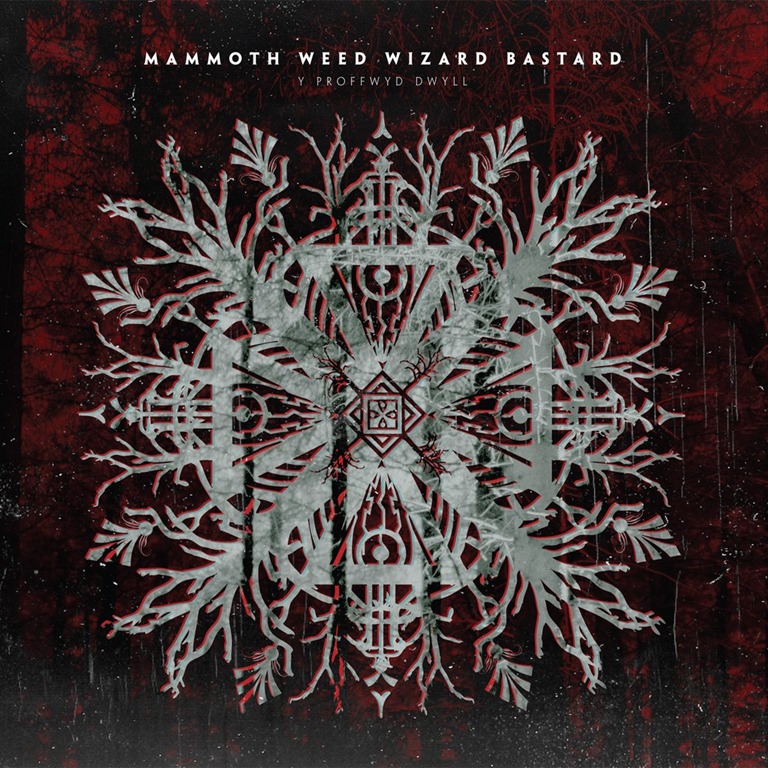
Noeth Ac Anoeth was truly a beast of an album, which saw them shifting further from the standard doom tropes to forge a more unique sound, and, following less than a year later, Y Proffwyd Dwyll shows a further evolutionary leap that’s s colossal as the riffs they grind out. For their latest outing, they’ve gone pop. Well, ok, no they haven’t, but the songs are notable not for their immensity, but their concision. The fact the album contains six tracks gives an indication of their newfound brevity, with not a single track extending beyond the ten-minute mark.
The melodies are strong and there are distinct and remarkably memorable choruses here. Jessica Ball’s vocals are the band’s trump card, the key aspects which not only separates MWWB from their peers and every other doom / stoner band around, but renders them essentially unique. No guttural snarling here: her vocal style is wonderfully tuneful, soaring, ethereal, and despite the churning guitar backdrop, MWWB stand comparison with acts like Curve, Cranes, and the shuddering, horrific beauty of Chelsea Wolfe.
The heavily chorused guitar on the intro to ‘Testudo’ is pure Cure, but naturally paves the way for some crushing, low-BPM riffology. Even so, the way that they work tonal and textural variations and the overall dynamics within the song structures and across the album as a whole is impressive.
Closer ‘Cithuula’ is the most straight-ahead heavy rocker, a crawling Sabbathesque beast of a tune. A blitzkrieg of space synths not only add texture and depth, but alter the overall feel of the album. This is no straightforward doom album. In fact, it’s not a straightforward album, period: it’s a genre-bending effort and an album of real depth that stands proudly on its own. It’s also really, really good.
Aiden Baker’s name features on a staggering number of releases, and while Nadja – the duo consisting of Baker and bassist Leah Buckareff – may only be one of many side-projects, the discography they’ve amassed since 2003 is substantial, to say the least. On The Stone is Not Hit by the Sun, Nor Carved With a Knife, they offer three immense ambient doom tracks which make for a welcome addition to that discography.
‘The Stone’ opens the album with a deep, slow bass. A delicate guitar is soon obliterated in a deluge of overdrive. Over the course of the track’s imposing twenty-two minutes, they build a pounding groove, the drum machine and bass in combination emphasising the heavy rhythms. Baker’s vocals are low in the mix, and with the textured, picked guitar chords, they straddle the grinding abrasion of Godflesh and the majestic shoegaze of Jesu. The contrast between the mechanical, industrial drum sound and the rich, organic sound of the guitar is integral to the sound, while the space between the notes is a core aspect of the composition: the stop / start mid-section of ‘The Stone’ jars the senses.
‘The Sun’ provides the album’s colossal, megalithic centrepiece. It takes its time to rise, and a steady, soft, meandering clean guitar and gentle, reverb-heavy vocal owes more to psychedelia and shoegaze than ambient or doom. But there’s a simmering tension that builds slowly but surely. The textures and tones gradually transition from clean to distorted, before drifting out into an extended ambient segment. Yawning drones roll and rumble: these are vast expanses of sound, twisting out toward an infinite horizon. And when the guitar and bass return, it’s with an even greater, more crushing force. The drums are distant, partially submerged by the snarling, thunderous bass and immense guitar which carries the listener on am oceanic expanse of sound.
A subtle, amorphous drone hovers atmospherically through the final track,’ Knife’. Arguably the album’s most ‘pure’ ambient passage, it’s hushed, mellow, almost soporific and marks a real contrast with the previous two tracks. There’s a part of me that, on first hearing, found ‘Knife’ a shade disappointing in context of the album as a whole: ‘The Stone’ and ‘The Sun’ set a certain expectation that, at some point, devastatingly heavy, thunderous bass, crashing drums and cinematic drone guitar will hit like a landslide, but it simply doesn’t happen. However, on reflection – and this is an album which requires much reflection – it’s a well-judged change of form. In confounding expectation on the final track, Nadja show that they’re not tied to formula.
In exploring the contrasts of volume, texture and mood, The Stone is Not Hit by the Sun, Nor Carved With a Knife is a more considered and ultimately rewarding work.
This one’s been out a little while now but has only recently landed with me. I can’t feel too much guilt: Regolith aren’t exactly the fastest of movers, however you look at it. They’ve been going for a full decade, and despite having racked up a substantial catalogue of EPs and split releases, it’s taken until now to get around to a proper album (although, arguably, 2009’s Music for Hot Air Balloon, with its three tracks spanning a full hour, would constitute an album by most people’s reckoning). Musically, they’re not exactly about pace, either, trading in crawling ambient drone of almost incomprehensible proportions.
Their debut album proper isn’t exactly about the immediate hit, the hooks or the general accessibility, either, and necessarily requires time to engage, cogitate and digest.
I is a monster work: a double album comprising just four tracks. And the sound is as immense as the album’s duration, inching toward the 80-minute mark, with each of the tracks clocking in around 20 minutes in duration. But it’s not just about the length: feel the weight. The sounds may be produced electronically using analogue synths and a vast array of effects, and Regolith may describe themselves as ‘tech freaks’, but the material is heavily steeped in the tropes of doom. Having spent my childhood living on the flight path of the takeoff / landing of the RAF Vulcans, I feel qualified to make the analogy of the drones sounding like jet engines rumble and roar, a spectrum of lower-end frequencies that focus on the ribcage, the particle-splitting noise is also more than enough to terrorize the most dulled eardrums. ‘Platinum’ sounds like my young recollections of the Falklands War. The molecule-destroying, air-shredding sound engulfs the listener; the experience is immersive and annihilative.
‘Comet Tails’ is a far sparser affair, echoed beats decaying into the void, the space between the sounds comparable to the distance between planets. Gradually, as slowly as a planet on the outer reaches of a solar system orbits its sun, a low drone begins to rise and swell, a dark, large sonorous body of sound, a black hole cruising closer with inexorable determination. The hum continues to grow until its edges begin to distort and disintegrate and bleeds into ‘Star Trails’. One benefit of hearing this in a digital format is the two tracks do run together. Of course, the downside is simply that however enormous the sound, the full enormity can only really be conveyed via the medium of vinyl, and ideally on a decent set-up with a solid amp and some fuck-off powerful speakers. It’s an album that has the capacity to make the earth move.
The sound is more than fitting for a band named after ‘a layer of loose, heterogeneous superficial material covering solid rock, which includes dust, soil, broken rock, and other related materials and is present on Earth, the Moon, Mars, some asteroids, and other terrestrial planets and moons,’ and whose objective is to create ‘music on a geological scale; music of mountains, shifting like glaciers, slow and relentless processes on grand timescales’. The tracks on I are at once heavy on the ground, and beyond gravity, simultaneously tectonic in their movement and of galactic proportions.
PYR is the third album by sludgelords Ghold,and the press release promises an album ‘towering with a sonic thickness, frantic dizzying energy and shattering immediacy, penetrated by despondent howls and an uncompromising slice of remorselessness’. Christ. So it’s heavy, then?
You could say that. It begins with a slow throb, a low, deep bass tone that borders on ambience and lurks on the peripheries of awareness. Off course, you know it’s going to come in heavy at some point, but the suspense… The release is glorious. A throbbing beast of a riff ploughs in, the bass dominant, the occasional vocals barely audible in the landslide of sludge. After the 11-minute monolithic beast that is the first track, ‘Collusion with Traitors’, ‘Blud’ piledrives in with a squalling frenzy that’s more Fudge Tunnel than Sunn O))) and clocks in at an uncharacteristically concise five minutes.
‘CCXX’ brings more weight and overloading riffs with crushing bass to the fore, but it’s the 21-minute ‘Despert Thrang’ which dominates the album in every way. It’s practically an album in its own right. Again, it’d all about the build, about the pacing. Gradually, a tempest rises from not a whisper but a downturned, growl. Blasts of percussion and powerchords blast in, haltingly, threatening to break but holding back until finally, the levee breaks and the riff powers forth. What else is there to do buy clench your fists, mouth ‘fuck yes’ and get down? It’s got some serious heft, and evolves over the course of its epic span, finally culminating in a blitzkrieg of noise.
While this is very much an album made for vinyl – of the kind that you want to play rather than stick on your wall as some kind of hip-kid statement, the CD does offer a bonus cut in the shape of ;’Something of Her Old Fire’, a gnarly bass-driven grind that trudges its way mercilessly to a final climax.
For all the big distortion and emphasis on the bottom end, not to mention the relentless churn that defines the album, there is texture, and in terms of tempo changes and dynamic, PYR has considerable range. And yes, it’s devastatingly heavy.
The Poisoned Glass is the current musical venture of G. Stuart Dahlquist and Edgy59, formerly of Seattle doom metallers Burning Witch who called it a day in 1998. While former bandmates Stephen O’Malley and Greg Anderson have gone on to achieve world domination, Dahlquist and Edgy59 have maintained rather lower profiles. As such, The Poisoned Glass are unlikely to garner the kind of attention Sunn O))) receive, but this is no sleight on their output: 10 Swords is dark, heavy, textured, and immensely atmospheric.
The album begins sparse, stark and dark, with the six-and-a-half minute ‘Plume Veil’; a ringing drone hovers icily. Anguished vocals intonating impenetrable lyrics emerge amidst erratic percussion that hits like cracks of thunder, and bass notes that register the kind of vibrations that could cause mountains to crumble.
‘Toil and Trouble’ is an elegiac, spiritual piece, haunting in tone and vast in magnitude, its sepulchral tones rent by demonic howls of pain and extraneous crackles of surging noise which seemingly rise from the underworld.
It’s incredibly dark stuff that borders on the oppressive at times; drones and groans, rumbling piano chords echoing in empty rooms of crumbling castles. The vocal harmonies on ‘Verbatim’ are overtly rock in style, but set against a doomy bass trudge that’s as crushingly heavy as planets colliding.
CD bonus cut ‘The Still Air’ marks quite a departure from the rest of the album; it still features brooding, droning atmospherics, but is led by a soulful vocal acapella which is every bit as compelling as the cold noise that radiates from the other tracks.
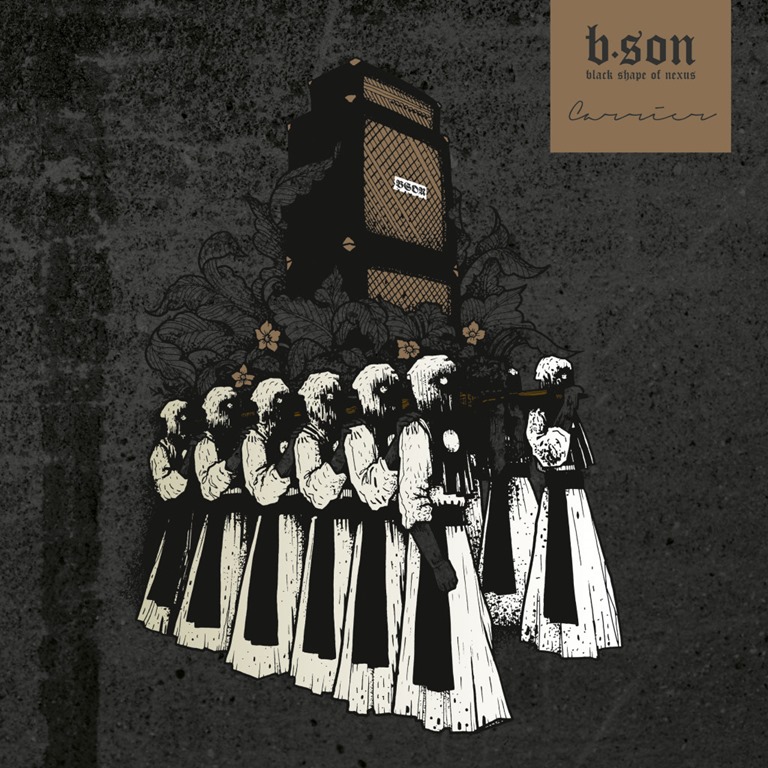
‘The only constant is the blackness of the shape. Everything else, including the shape itself, is in a constant state of flux for Black Shape Of Nexus.’ So begins the press release. If it sounds like preposterous hyperbole with a hefty hint of pretention, then think again: it doesn’t even begin to convey the enormity of this dark, dense work which on the surface confirms to all of the conventions of droney doomy stoner sludge metal, but in fact breaks every last one. The imagination of Carrier is astounding.
To get down to brass tacks, there’s heavy, and then there’s HEAVY. And then there’s this, which is all shades of heavy, and more. As the press blurb implies, Black Shape of Nexus are not a band to align themselves or define themselves as any one fixed thing. Never mind the full sprawl of their output, which occupies four previous releases, Carrier could provoke lengthy and heated debates over which section it should be located in at the local record store (if such a thing still existed. But imagine High Fidelity set in a shop devoted to all things alternative, rock and metal. The conversations would run for pages). And that’s cool.
It’s also cool that Black Shape step up and slap a political disclaimer on the front page of their website. They shouldn’t have to, but kudos to them for making it clear that they’re principled about the people they want as their fan-base. The message reads, ‘Note: There are some doom/drone bands out there sympathizing with fascist/racist “views” – we want to make it as clear as possible, that we strongly disagree with such opinions. B·SON is anti fascist and anti sexist. Thank you for paying attention! Got that? WE’RE ANTIFASCIST YOU NAZI FUCKS!!! EAT SHIT!!!’
It’s depressing that we do live in a world where extreme right views are rife, not only in countercultural circles, but havebecome almost accepted in corners of mainstream politics. But at least we can be sure that Black Shape are among the good guys, and not just musically. Although, you could argue that musically, they’re the band guys, ‘cause Carrier is creaking under the interminable weight of the devil’s tunes.
(Shape)shifting between styles, ‘Carrier’ explores various manifestations of heaviosity If the idea of a light, vaguely jazzy break for a few bars in the middle of a seven-minute trudge through the most devastatingly cataclysmic doom seems not so much incongruous as eye-bulging crazy, then you’ll be in even more of a spin to learn that it actually works. Yes, opener ‘I Can’t Lift It’ is a belter, and sets the bar high.
The guitars are backed off – and barely present – on the dark ambient pulsations which occupy the first half of ‘Lift Yourself’, before ripping into a dingy crust-punk thrashabout. If you’re struggling to keep up already, quit now: the Melvins to Sabbath sludge of ‘Sand Mountain’ threatens to collapse under the weight of its own riffage before ‘Facepunch Transport Layer’ lunges in to bring a psychedelic twist to the pulverising chug.
It all comes to a colossal, gut-churning head on the mangled doom of ‘Triumph of Death’: 12 minutes of relentless metal. Transitioning from slow-paced doom and cranking up the tempo and the brute force to build to a driving riff, it drives the album home
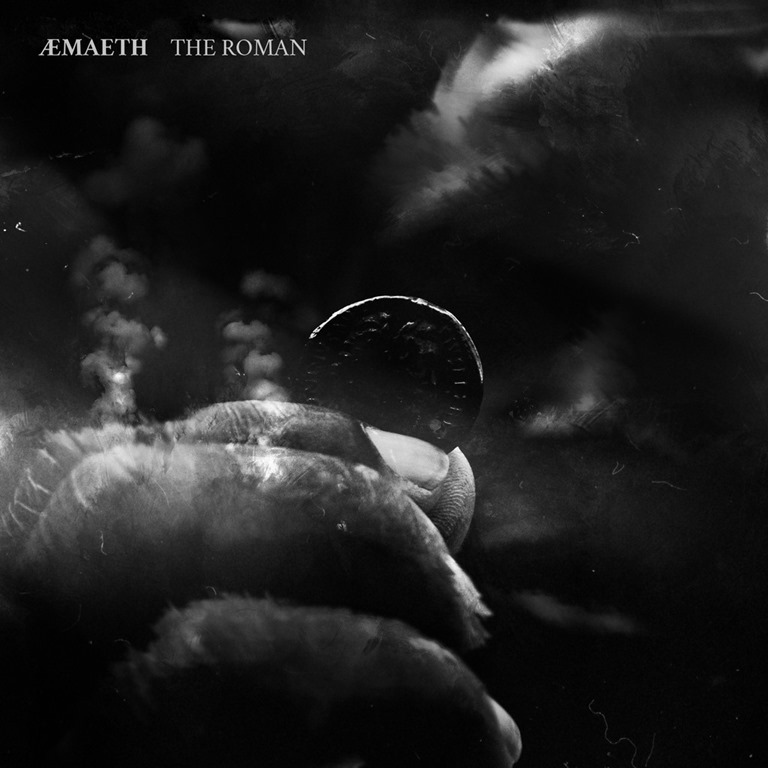
Æmaeth is the project of Owen Pegg (A-Sun Amissa / Hundred Year Old Man), and he’s already scored a number of films. Independent flick The Roman is a silent work which to which ten segments of improvisational drone-based passages played on guitar and piano were composed by way of an accompaniment.
Since the film premiered in May 2014, its soundtrack has been evolving, developing, accruing layers and details, until finally, the ten pieces came together to form a fluid, brooding sequence that stands as a whole, and as a powerful sonic journey. It’s fitting for a film which is no gung-ho Hollywood take on history based on a succession of cast off-thousand battle scenes. Simon Rawson’s movie, shot in Yorkshire, is outlined as a story of two men, lost, who are ‘challenged and tested by nature, each other and the inner most conflicting primordial affiliations with man’s body and mind’.
Pegg’s soundtrack conveys so much, its dark, tense tones resonate as they connote psychological drama. The battles fought within the mind, the conflict and the uncertainty. The barren, unforgiving landscapes, shadowy woodlands and bleak moors. These are the scenes portrayed within the compositions, which are spacious, often sparse. Delicate piano notes drift airily but ponderously, gradually eclipsed by deep, dark, thunderous rolling drones, stormy and threatening. At times, the sheer weight and density of the ominous tones are oppressive, the sounds so large as to create a sensation of a pressure being applied to the skull.
That isn’t to say the soundtrack lacks subtlety: far from it. There are passages of quiet, so hushed as to compel the listener to strain their ears listening for some faint sound – and invariably, there is something, something small, soft, indistinct. Or there are layers of sound, often in the upper frequencies, needling the senses, tugging at the peripheries of the psyche, somewhere in the background or half-hidden, off to one side. These, like the brief moments of light which occasionally present themselves, are integral to the soundtrack’s dynamics, and the power of its effect.
There is torment, there is discomfort. There is also an ever-present sense of danger, sometimes distant, sometimes heart-stoppingly close.
The final passage, the nine-minute ‘Neptune’ is vast, built on a slowly turning vortex of sound. A rumbling rhythm lingers as it pulses just beneath the surface of its soft tonality and offers a hint of redemptive relief at the conclusion of a journey which is most worthy of the term ‘epic’.

 Aural Aggravation