Posts Tagged ‘church organ’

Ideologic Organ – 20th June 2025

Christopher Nosnibor

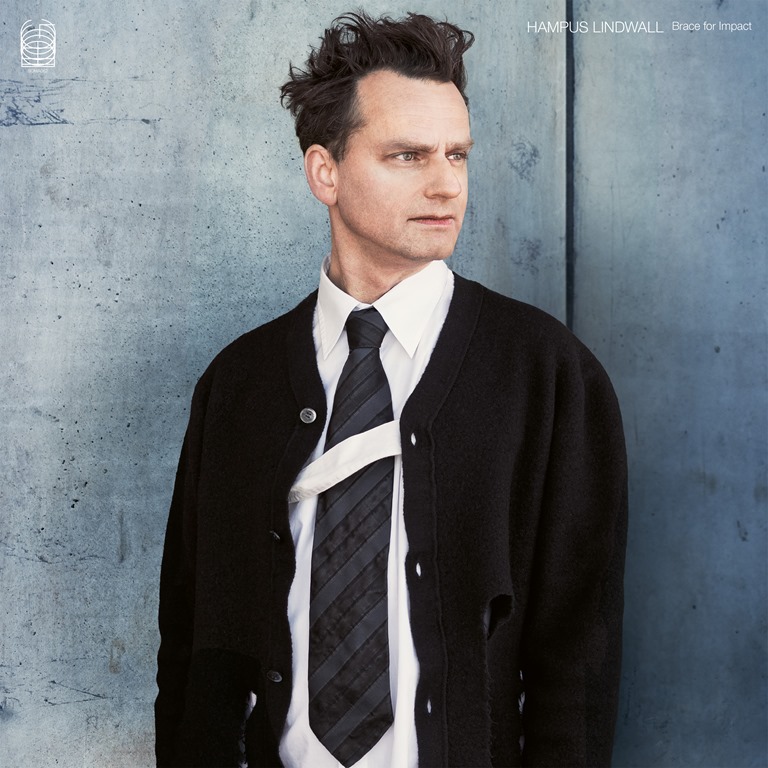
In his liner notes, Robert Barry suggests that ‘Brace for Impact might just be the first album of post-internet organ music’, and goes on to explain that ‘it is a record weaned on networked processes and algorithmic thinking, a suite of tracks which build their own systems then push them to the point of collapse. Lindwall is not a programmer, but he will wield whatever technology is ready to hand much as Chopin made use of the richer, fuller sound of an Erard piano. From the software subtly weirding the interior textures of ‘Swerve’ and ‘Piping’ to the juddering, kernel panic of ‘AFK’ and ‘À bruit secret’, these are works of music unthinkable without the ubiquitous experience of life lived online. Imparting that hypermodern aesthetic sensibility through the austere sound of a baroque organ only heightens the anachronistic sense of temporal disjuncture characteristic of days spent rabbit-holing through ever-multiplying stacks of browser windows. The vernacular of Web 2.0 is here re-transcribed in the ornate script of a medieval illuminated manuscript.’

As Barry also suggests, the organ has been undergoing something of a renaissance in recent years, and cites a number of significant organs which have been recently restored, including the grand organs at the cathedrals of St John the Divine and Notre-Dame (New York and Paris respectively, and, not so much closer to home but on my very doorstep, York Minster, which ‘heralded a “once-in-a-century” refurbishment of its own 5,000-plus pipe instrument’.

It marks something of a shift from an album I reviewed around maybe fifteen years ago, the details of which elude me now, which was recorded on a series of broken-down and dilapidated organs from around Europe which wheezed and groaned as if gasping out the last breaths from their collapsed lungs.

Brace for Impact is an altogether more vibrant work, although as much as it celebrates the organ and the instrument’s sonic magnitude, it also reaches far further into exploratory sonic territories over the course of these five compositions.

The title track features ‘a highly saturated and distorted electric guitar, performed by collaborator and SUNN O))) founding member, Stephen O’Malley’ – and ranges from tectonic crunches, machine-gun rattles and alienated whines rising from the kind of dissonant dronescape only O’Malley can conjure. And so we brace… and then we swerve. The collision fails to materialise during the ten-minute dark ambient swirl of the second track, spreading ominous overtones and watery, echo-heavy plips and plops. The muffled beats are akin to listening to a minimal techno set overlayed with a piece from the BBC Radiophonic Workshop, performed in the Blue John Cavern, and it shimmers accordingly, slipping into off-kilter fairground trilling in the final minutes.

The final diptych of compositions rally ventures out: both ‘AFK’ and ‘Piping’ extend beyond twelve minutes. The former brings jolting discord and drama, lurching stabs that manage to bring a crazed dance feel to the sound of the organ before swinging into a circus-type jive. It stands out as perhaps the most playful track on the album. There is a playfulness to ‘Piping’, too, but it feels more like it belongs to a film soundtrack or theatre performance, and it whirls and winds and spins and pirouettes it way to a pretty but perhaps confused conclusion.

Brace For Impact is very much a non-linear work, and one which stands, uncertain of where it’s going next. But is it unquestionably interesting, not to mention disorientating, and it’s a work which seems to bend time as well as notes. It’s an album to lose yourself in.

AA
SOMA062_3mmCover

Trace Recordings – 11th October 2024

Christopher Nosnibor

One might say that this collaboration has been a long time in coming: the pair have been friends for some twenty years, and have made contributions to one another’s recordings over that time. There’s no question that it was worth the wait. Their process and the way in which they each contributed is integral to the finished work, and here, not only to save typing, but to ensure nothing is lost in translation or paraphrase, I shall quote from the accompanying notes:

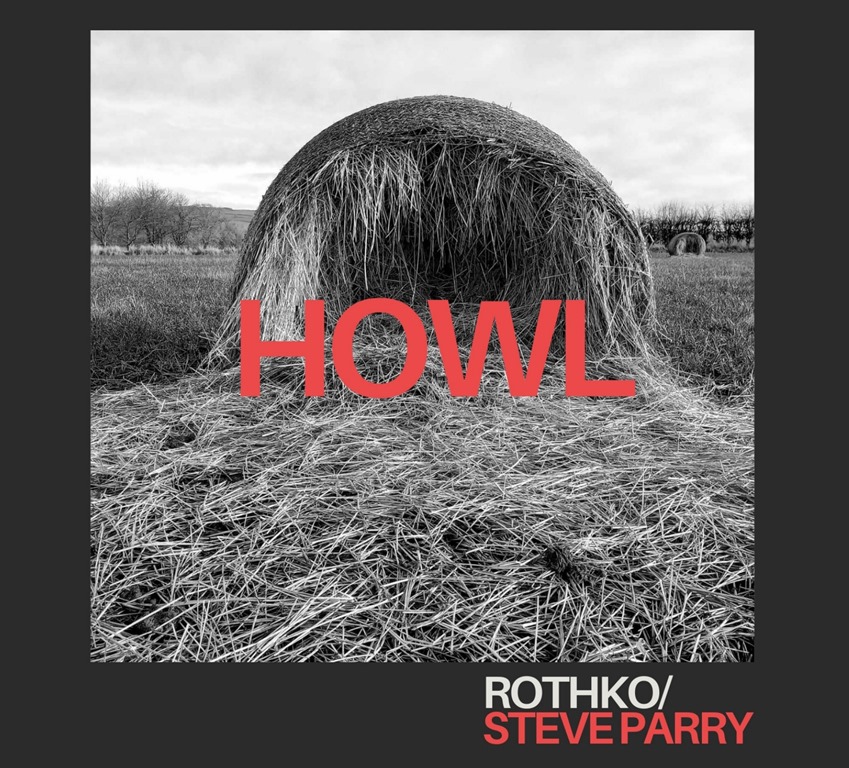
‘Emanating from the sounds of a church organ, with many short pieces recorded by Steve Parry in an ancient secluded church, and then embellished by Beazley, with his resonant bass tones, electric guitar and electronics, HOWL captures the senses of ambience, harmony, discordance and noise, with recordings of the churches space, of its emptiness, interspersed with the music.

‘The two, long, resulting pieces, create an almost ritualistic event, of something taking place that is mysterious, uplifting, and, in parts, unsettling.

‘The album reflects an emptiness, the echoes from ancient walls, a deep sense of place—and the refractions between these two artists. HOWL veers between moments of meditative beauty and unsettling discord, creating a soundworld that feels ritualistic, mysterious, and transformative.’

This is very much an accurate summary and fair description of the album, consisting as it does of two compositions each with a running time of around twenty minutes, but it’s more of a challenge to convey in fullness the resonant effects of this vaporous sonic drift. The first, ‘In the Season of Darkness’ is formed around elongated drones, but their organ origins isn’t immediately obvious in the ear. One associates the instrument with bold, piping swells which sing to the heavens, but here, it’s more subdued, almost a low, rumbling wheeze which provides an eddying undercurrent. Acoustic guitar and slow, meandering bass are far more dominant, and it’s very soon clear that this is by no means an ambient work, or a work without structure or form. The guitar and bass play distinct notes and motifs, often alternating with one another, but sometimes playing in co-ordination, and others still across one another. Treble strains like taut whines of restrained feedback filter through, these higher-end frequencies forming a counter to the resonating bass and the mid-range organ drone which slowly begins to emerge and take form a few minutes in.

The dissonant incidentals rupture the surface like lightning through a thick, rolling cloud cover. The mood is sombre, ominous. The fact it’s pitch black outside and has been since around 6:30, I’m feeling autumnal and writing by candlelight probably means I’m feeling it more, but this is music with a subliminal, subconscious pull. There’s a segment around the mid-point where there’s a pause, and there’s nothing but clatters and clanks, like tin cans rattling in the wind, before the drone returns, darker and denser than before, and with a sepulchral reverb, and it’s something which taps into something primitive and earth-born within. I can only really articulate it by way of a brief recollection of a time I visited an obscure stone circle in Scotland. Most of the stones were gone, but the shape of the circle was marked out by a ring of nettles. It was probably around twelve metres in diameter, and the few remaining stones were no more than three feet high. It was a little way off a minor road, in an unkept grazing field and as unremarkable as it was forgotten and neglected, and I had only paused by it because I had spotted it on the map. But, arriving at the place, something happened: the air temperature dropped a couple of degrees, the wind sped up and clouds obscured the sun; but more than this, there was an atmosphere which brought goosebumps and a shiver down my spine. The place had an atmosphere, and I almost felt as if I was for a brief moment splitting across millennia. The sensation was but fleeting, but it was palpable. The experience of hearing this piece is akin to that, resonating on a level beyond the sphere of commonplace experience.

Counterpart composition, ‘In the Season of Light’ is, again, constructed around a long, long, reedy drone, this time with piano and delicate scrapes and wind-like rustles and whooshes adding the additional layers and textures. It doesn’t feel our sound especially light or uplifting: dark sonorous tones and groaning creaks occupy the corners, before, again around the mid-point, a gentle guitar part, reminiscent of later Earth tunes, arrives, and there are some delicate strings, too. Finally, light begins to break through.

HOWL clearly has no correspondence with Allen Ginsberg’s seminal poem, but does very much tap into something primal and primitive, the way we feel the effects of the seasons, the sun, the moon, possessing what one might perhaps describe as a ‘spiritual intuition’, reaching elemental aspects of the human DNA. Understated, but powerful and moving, it’s a subtly intense work.

AA

6 page ECOpack with measurements.pdf

Kit Records – 31st August 2016

James Wells

The title is a reference to various artists who enjoyed a creative surge in their later years, who, instead of tapering away to an end horizon, defied the conventional downward trajectory to create works which marked a new and noteworthy phase in their already illustrious careers.

As the blurb explains, ‘Ageing isn’t always a dignified, serene fade. The brink before death can be violently creative; it can bring about loss of inhibition, unexpected innovations and sourceless leaps. In art, late style often means an unfettered outpouring. Confined to a wheelchair following cancer surgery, Matisse turned to simple paper cutouts in his later years. The work produced in this period, his ‘seconde vie’, became his most admired – physical restriction had been inverted in an expression of freedom and colour. Goya’s last works were also a departure from former style. Increasingly deaf and fearing insanity, he created a series of dark paintings reflecting this bleak, morbid outlook on life. Sensory deterioration seemed to offer Goya unprecedented vision’.

In recent months, I’ve heard and reviewed a number of albums which use – and abuse – church organs to unconventional ends, although a common thematics are their slow decay and their relationship with their surroundings, the architecture and sense of place. Sense of space is also integral to the instrument’s sound: as grand an instrument as a church organ is, much of its power resides in the natural reverb of the building in which it is installed.

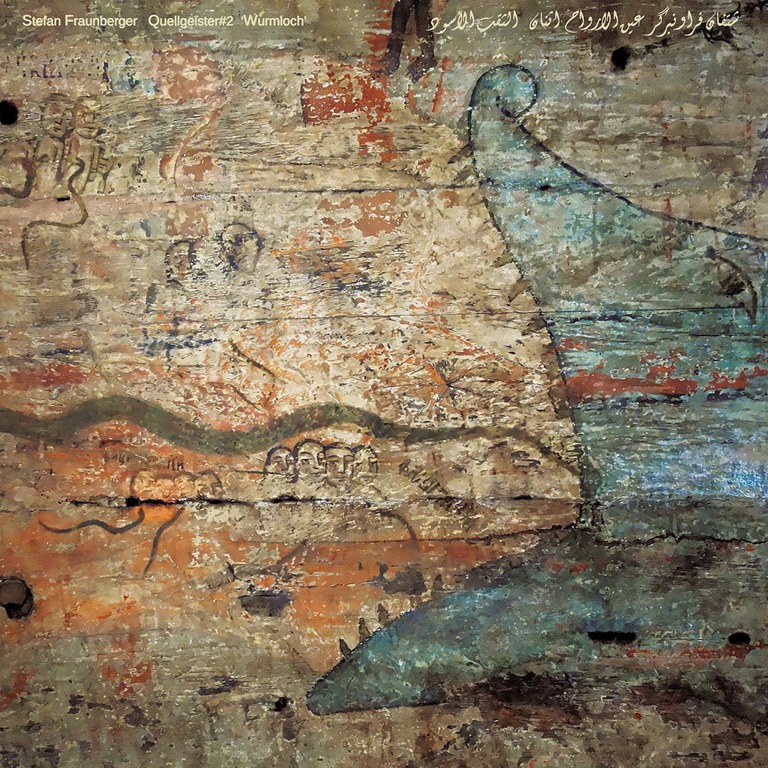
But Late Style is a work preoccupied less with location or architecture, but time, and where the organ’s power is concerned, the focus of attention here is on the diminishment of that power, something which also inspired Stefan Fraunberger’s recent album Quellgeister 2: Wurmloch.

However, while Fraunberger’s work and Michel Moser’s Antiphon Stein were centred around pipe organs, Drömloch’s instrument of choice is a Hohner church organ, a synthesiser situated at the label’s headquarters. And so it is that an instrument which once produced sounds resembling a pipe organ near the end of its life wheezes in a different kind of way, leading to the contemplation that ‘Perhaps circuitry and software can have late style, too.’

As is often the case when process becomes integral to the end product, a little expanation goes a long way: ‘Like creatures and plants, they change over time; they decay, confront mortality, and their functions adapt. This record is a collection of live takes recorded directly from a Hohner church organ at the point of collapse. This circuitry of this hulking synth, long-installed at Kit HQ, has inexplicably decayed over time, rendering its preset drum loops and melodies as raptures of white noise, squelches and and bizarrely spiralling clangs. The result is primitive, aleatoric music – weirdly moving digital swan-songs, each named after the mangled preset triggered during recording’.

Late Style may be dominated by elongated drones and quivering, wavering hums, sounds recognisable as originating from the groan and swell of a dilapidated organ, but bubbling bleeps and less organ-ic sounds are overlaid and cut across these to forge strange juxtapositions.

The first track ‘8 Beat Variation’ finds the organ fading in and cutting out while stop-start percussion and variable echoes and delays disrupt any kind of flow. With volumes and tones wavering and fluttering unpredictably, and extraneous feedback, whistles, crackles and pops interfering with the irregular drum machine beats, the effects is disorientating.

‘Waltz’ sounds very like the time one spends fiddling with a keyboard trying to find the right sound, when every preset just sounds naff. If much of Late Style sounds like s much pissing about, then perhaps that’s largely the point: like many experimental albums – Miguel Frasconi’s Standing Breakage (for Stan Brakhage) captures the artist striving to push a cracked glass bowl to its limits and beyond – Late Style is about taking an opportunity when it presents itself and capturing the outcome. In this sense, it’s a truly experimental work.

The fact that this album, and those mentioned previously, are concerned with the destruction, or death, of an instrument, is significant: the fundamental premise of the avant-garde is that in order to move forward, to create anew, it is first necessary to destroy.

There are also some quite compelling moments to be found here: the surge and swell of ‘OI’ builds an ominous drama, while ‘Key’ is a rather fun exercise is microtonal blippage that sits alongside Mark Fell’s exploratory releases on Editions Mego. However, unlike Fell’s works, Late Style is both more varied and more listenable.

Drömloch - Late Style

Edition RZ

Christopher Nosnibor

Returning to a brace of recurrent themes, including that of process as touched on in my write-up of Laurent Perrier’s latest collection of ‘one-way collaborations’, process and place are again key factors in the making of Michael Moser’s sprawling double album, Antiphon Stein. The majority of the sound featured on the album derives from Klaus Lang playing organs in various churches – although the sounds here are very different from those featured on Stefan Fraunberger’s recent album.

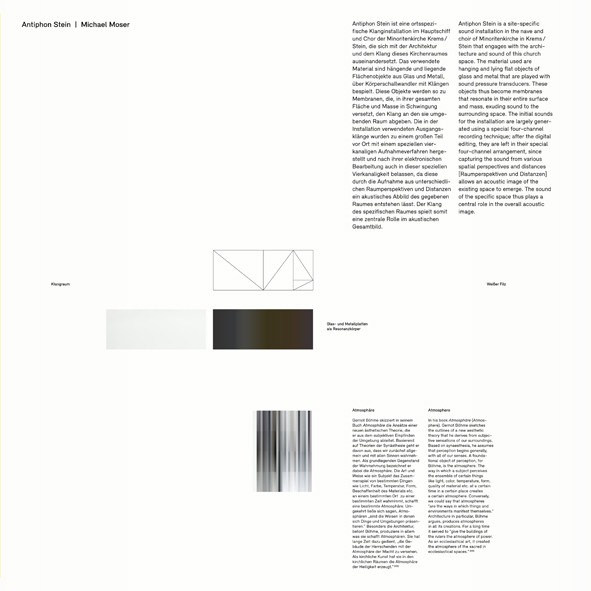
As the album cover explains in notes replicated in the press release, Antiphon Stein is a site-specific sound installation in the nave and choir of Minoritenkirche in Krems/Stein that engages with the architecture and sound of this church space. The materials used are hanging and lying flat objects of glass and metal that are played with sound pressure transducers. These objects thus become membranes that resonate in their entire surface and mass, exuding sound to the surrounding space. Of course, the album release is not site-specific, but serves the purpose of transporting the listener to that space, and a degee of visualisaion does enhance the listening experience.

The organ sounds on Antiphon Stein are as much a product of their places, the architectural structures and the decorations within them being integral to their textures. In addition to the organ recordings are drums and percussion courtesy of Berndt Thurner, while Moser himself adds glass plates and electronics. But of course, Moser’s primary contribution is the process. Each source sound exists as a ‘compositional miniature’ of three to seven minutes in duration, but processed digitally to form four pieces each with a running time of approximately twenty minutes. The process is therefore absolutely transformative, and as such integral to the realisation of the end product which bears little semblance to the initial input.

In context, the importance of process is not only significant but central, and the process is many ways is about amplification. The input is relatively modest, in that this large-scale work is constructed from an assemblage of much smaller scale recordings. Specifically, the material itself consists of compositional miniatures of three to seven minutes in duration, which have subsequently been fed through a computer to yield four untitled long-form pieces, each occupying a side of vinyl and running for some twenty minutes each.

The scale of the final work is grand, and it’s not simply about the length of the tracks. The atmosphere is immense, and while there are dark shadows, the overall sensation Antiphon Stein inspires one of awe. The sounds, described as ‘small compositional miniatures of a duration of three to seven minutes’, having been combined digitally to form a vast sonic mass, coalesce to create something which sounds entirely natural. And yet, the work is structured, the realisation of an ambitious project of sonic architecture.

Cavernous echoes amplify the depths of slow, low rumbles. Subtle chimes roll and glissando, throb and whistle. Hums hang heavy in slow-turning air. There is nothing hurried about the way the sounds layer and unfurl, and this deliberate, considered approach to the sculpting of the sound is extremely effective in terms of how the engages the listener.

Perhaps a limitation of the format is the fact that a work that readily lends itself to existing as a single, continuous piece is interrupted by the need to turn the record over. Yet, by the same token, this very act necessitates a physical engagement, and render the tactile qualities of the music tangible.

And so it is that the listener becomes engaged in the process, adding a layer to the process beyond the product itself, namely that of participation, of engagement. And ultimately, this is the level on which the album succeeds. It’s impossible to avoid the sequence of process with Antiphon Stein. And yet the process does not render the material sterile: far from it. If anything, the process is vital to bringing the material to life and is precisely what engages the listener.


moser-antiphon-cover

Interstellar Records – INT039

Christopher Nosnibor

Perhaps it’s because I’m not a speaker of German that I find the language so fascinating. In particular, the way compound words create long strings of letters which evoke phlegm. The album’s title and the titles of the two tracks, ‘Ereignishorizont’ and ‘Zustandhorizont’ translate as ‘Event-Horizon’ and ‘State-Horizon’ respectively, according to the press release (penned by a fellow based in Berlin and whose translation I trust), and they stand as megalithic sonic sculptures, forged using sounds conjured from 300-year-old organs. Hose are church organs, of course – an instrument which has been a longstanding fascination for Stefan Fraunberger. He has devoted considerable time to travelling extensively through Transylvania and exploring abandoned churches in such of disused organs and capturing their sounds.

Transylvania contains a number of small villages, which have seen the majority of their population lost to migration following the fall of communism, leaving the fortress churches, built during the Ottoman Wars, abandoned, vacant and crumbling.

It’s perhaps because of these conditions that the organs which feature on this album’s two long-form tracks sound worn, rusted dilapidated forlorn. Conventionally, the organ yields a sound that is vast, bold, empowering, a sound which reaches to the skies and beyond, which fills the heart, the soul and the lungs, and which is rousing, and which is ultimately uplifting, spiritual.

But rather than the grand surges of sound commonly associated with church organs, Fraunberger’s compositions are delicate, gentle, long, reedy sighs which trill and quaver. Sad wheezes groan limply, a forlorn puff of a punctured bellows. The sounds cautiously teeter together, bend, hum and drone, ephemeral moments of accord and discord move seemingly at random. Gentle glides slide into cacophonous ruptures, key changes and chords disregarded.

The variety of tonalities and textures, atmospheres and moods is remarkable, and Fraunburger’s approach to transitions between these is ceaselessly inventive, with sudden changes bringing drama and more subtle shifts proving more calm and sedate. Impressively, the two pieces were recorded in single takes and are released here with no edits whatsoever, although the double vinyl release sees each track split into two pieces.

Given that the organ is, conventionally, a mighty and powerful instrument, to hear such dilapidated cases, puffing and droning creaking and fatigued, is strange and sad. The off-kilter and anticlimactic crescendos, the off-key climaxes and underpowered upsurges reveal a very different side of an instrument that carries undeniable connotations of a transcendental connection. And so what this album conveys, on many levels is a sense of diminishment, revealing as it does the fragility and ultimate humanity of the instruments. The organs recorded here are no more immortal, immutable or otherwise godly than anything else made by human hands, and as such, they’re prone to the same forces of nature and of ageing as anything else.

Fraunberger considers his work to be a form of ‘sonic archaeology,’ and it’s a fitting description. These recordings are based on instruments long forgotten, excavated after decades of decay. The moss and ivy grow as the timbers split and the tiles fall from the roofs. Nature always wins, and time is the only unstoppable force.


Stefan Fraunberger - Wurmloch