Posts Tagged ‘Can’

‘The Witness’ is the first video released from Love Spells , the debut album from Death Doula, a dusky Art-Rock band hailing from Portland, Oregon. The new album was recorded at Jackpot Studios by Adam Lee (Built to Spill, Sleater-Kinney) and mixed by Bob Cheek, (Deftones, Band of Horses). It’s being released as a digital download and via streaming platforms by Death Doula Records on October 11.

Check the video here:

AA

Kerry Jones had a crush on his best friend. Kyle List didn’t mind, he asked her to come collaborate at his tiny home studio anyway. By the end of the night, they were in love and had created a demo of ‘Disembark’, which would be lead single from Love Spells. Three weeks later, he moved to Portland to live with her, with no plan beyond an intuition that the music would take them somewhere.

Fast forwarding two years later, they recruited the veteran rhythm section of Keith Vidal on bass (Marjorie Faire, Nyles Lannon) and Adam Kozie on drums (Pollens, Crystal Beth) and adopted the name Death Doula. The music they’ve created shows their shared love of artists like Can, Television, Jeff Buckley, The Cranberries, Deerhunter, Kate Bush, The Sundays and Deftones, while remaining altogether sonically new.

After having their lives dramatically reshaped during the pandemic, the members of Death Doula approach music with an intensity that can only come from having spent a lifetime wanting it. Kerry and Kyle have an 11 year age difference. Keith and Kyle have a 22 year age difference. Each member pours their lifetime of experience into performances that place emotion and groove first.

“In a world so algorithmized it’s numb,” says Kerry “we just want to make people feel something again.”

AA
a1823952626_10

Cruel Nature – 6th January 2023

Christopher Nosnibor

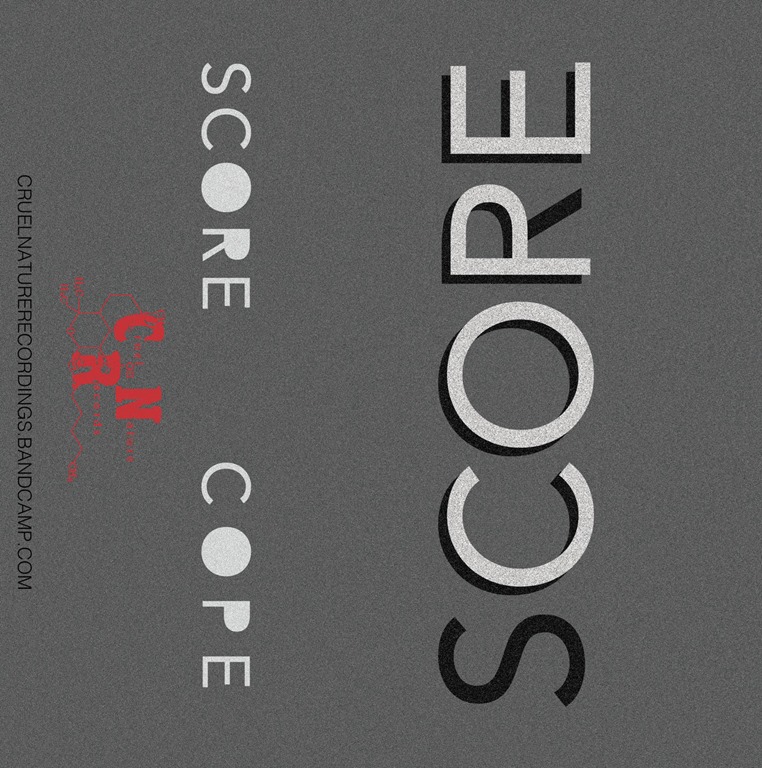
It’s something of a relief to discover that Score’s seventh long player for Cruel Nature isn’t some gentle exercise in self-help and mental health wellbeing, or otherwise the soundtrack to some existential post-pandemic breakdown – because the former are utterly fucking nauseating, and the latter, while I’m all for those primal screams of anguish, which I often find relatable, at least to an extent, variety isn’t only the spice of life but the key to staying within the marginal parameters of sane in an insane world. No, COPE, recorded in six weeks at the end of 2022, which somehow feels like a long time ago now already, takes its title from Julian Cope.

As the blurb explains, ‘the album was directly inspired by the musical descriptions to be found in the autobiographies of Julian Cope: Head On and Repossessed. Using Cope’s impassioned words as instructional starting points for each track, COPE references Mott the Hoople, Patti Smith, CAN, Duane Eddy, The Doors, Suicide, Dr John, Sly & The Family Stone and more.’

Julian Cope of one of those people who I’ve long been somewhat perplexed by, and, truth be told, haven’t spent too much time investigating, either musically or biographically. He has always struck me as having a career less centred around his relatively low-key musical output following a degree of commercial success with The Teardrop Explodes, and more around the fact that he’s Julian Cope. Some may want to set me straight on this, but right now, I don’t need to hear it, and a familiarity with the source material shouldn’t be a prerequisite of my ability to critique the work at hand, which interestingly, in drawing on his biographies, only serves to further indicate that Julian Cope spends more time writing about being Julian Cope than making music I need to hear.

COPE is a document to creativity under intense circumstances. To quote from the accompanying notes, COPE was ‘recorded as it was written, in one or two takes in a tiny garage and drawing on an old quote from the arch-druid himself as a creative manifesto: “It had to be very cheap, very fast, very loose. I needed to be an ambassador of looseness”’… ‘COPE is an exercise in embracing limitations and existing in the moment, a lyric-less love letter to Rock ‘n’ Roll itself, and a one-word command to the fried modern human.’

Containing nine instrumental compositions, COPE is a pretty demented journey, an absolute rollercoaster of a ride, that swings between psychedelia and krautrock, twangy desert rock, swampy jazz, with the six-minute ‘Brick’ bringing it all together with a Doorsy kind of trip with the added bonus of some woozy brass in the mix. ‘On The One’ goes deep into a funk workout that grooves hard, but ‘Old Prick’ stands out for its darker post-punk feel that suggests it could almost be a Psychedelic Furs or The Sisters of Mercy demo. The twelve-and-a-half-minute ‘Softgraundt’ is more than just expansive in terms of duration, and is a multi-faceted musical exploration that wanders hither and thither, shifting, evolving, a dozen or more songs in one. And perhaps this is the key to COPE – both the album, and the man. It’s everything all at once, and it’s more than you can really keep up with. It’s a challenge, and one I’m not entirely sure I’m up to, but there’s never a dull or predictable moment here.

a1384536327_10

Everyday Life Recordings – 30th November 2018

Christopher Nosnibor

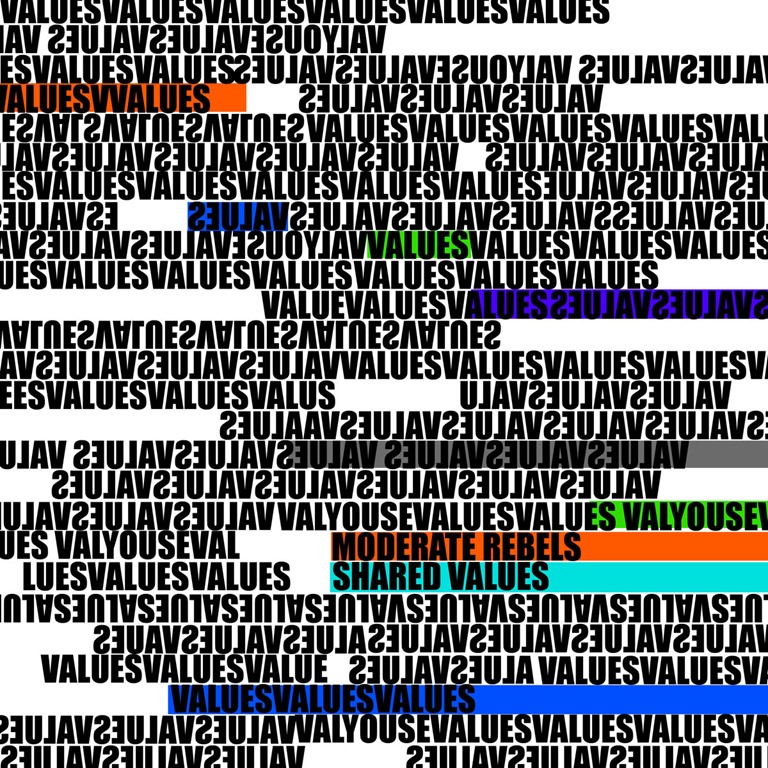
“We went into the studio with a couple of songs to record an EP, and we ended up with an album-length EP. We like to just let things happen and for songs to mostly write themselves. It’s a case of mucking around and seeing what feels right and what doesn’t. We say it all the time, but it’s important to note – we don’t intend anything. We don’t feel like ‘artists’ with grand statements to make.” So London-based ‘anti-music’ collective Moderate Rebels say of their second album, Shared Values – proving they’re fairly strongly anti-promotion, too.

Perhaps their lack of giving a shit, their lack of pretence, their self-effacing rejection of artistry is key to what makes Moderate Rebels true artists. It’s in this self-imposed distancing, even more than in their pursuit of repetitious, off-kilter kraut-influenced indie that Moderate Rebels really betray the influence of The Fall. You very much get the impression that if they had a hit they’d immediately bury further underground just to be bloody-minded.

‘The Value of Shares’ kicks it all off with a motoric drum machine – vintage, primitive, muddy and half-buried in the mix – and a chugging, wonky guitar that becomes increasingly swathed in flange and as they plug away at one chord and one line on and on and on, it gets more messy.

‘Stranded in Brazil’ is languid and magnificently sloppy in that early Pavement way, while ‘Eye in the Sky’ pitches a damning picture of austerity, privatisation and the whole morass of economic shit of 2018 against a ramshackle three-chord groove. There’s no shortage of those, with singe cuts ‘I Love Today’ and ‘Faith & Science’ being not so much standout tracks as prime examples of Moderate Rebels’ capacity to push a template to the max and achieve optimum effect.

‘Who will save me from my government?’ they ask – repeatedly – on closer ‘Have to Save Myself’, before answering with the song’s title. Repeatedly. It might not be a grand statement, but in a simple couplet they’ve captured a certain vital essence of the now. The answer encapsulates the culture of privatisation and absolute neoliberalist capitalism. Fuck you: save yourself or die. And in its absolute reduction to the repetition of just two lines, it also reminds us of May’s empty mantras and the soundbite media that dominates every aspect of our lives.

The structure of the album – essentially alternating spaced-out, meandering psychey efforts with straight-ahead, thumping Krauty rockers – swiftly emerges, and if, as a formula, it’s far from subtle, it’s no detraction, just as the fact that Shared Values sounds very like its predecessor, 2017’s The Sound Of Security, with its atonal multi-vocal disharmonies and sparse, repetitive song structures and lyrics, whereby two lines and three chords are stretched past the four-minute mark. And yet it’s not for a single second remotely tedious – and I say that completely without sarcasm, because they’ve totally nailed the trick whereby an infinite sonic loop feels like a kaleidoscopic tunnel that pulls the listener ever forwards despite being rooted to the spot. All of which is to say, it may not be a huge leap but then, if didn’t need to be. In the canon of wonky Kraut-rock, Shared Values is every bit as welcome and necessary as The Sound Of Security. Here’s hoping they continue to release an album a year for the next 40 years, and that they all sound like this. Meanwhile, it’s enough to play the two albums they’ve got out back-to-back and on a constant loop.

AA

Moderate Rebels - Shared

Play Loud! Productions – PL063LP

Christopher Nosnibor

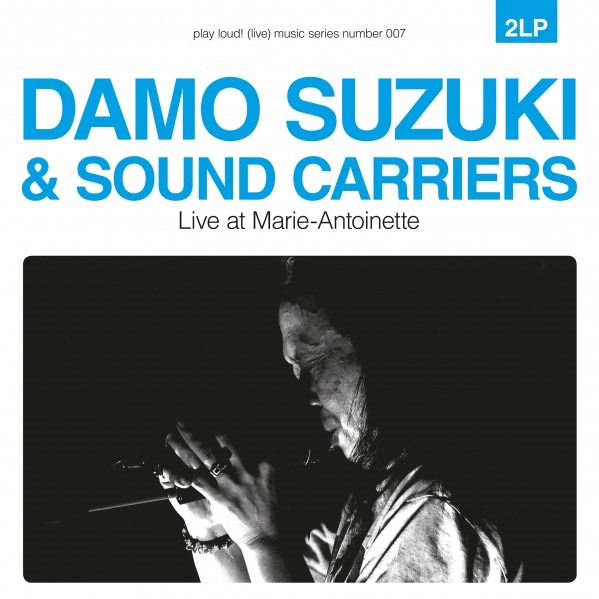
Mark E Smith is not Damo Suzuki. Only Damo Suzuki is Damo Suzuki. Damo Suzuki requires no introduction, of course. However, his vast and almost immeasurably influential output seems to exist almost in the ether, his own name and that of CAN being names to conjure with, but perhaps carrying more connotations than actual connection.

Suzuki’ status as an innovator and a one-off requires no comment, either. The fact he’s been going for multiple eternities, and continues to perform sets that are completely off the wall means his reputation remains unharmed, and this release – one more addition to already impressive body of work which essentially stands to define Krautrock – won’t dent that.

As the title suggests, this set was recorded live at Marie-Antoinette, Berlin, Germany, on 24th November 2011. Damo Suzuki was joined on stage by a stellar lineup, consisting of Dirk Dresselhaus (Schneider TM, Angel) on electric baritone guitar and effects; Ilpo Väisänen (Pan Sonic, Angel) on electronics and effects; Michael Beckett (kptmichigan, Super Reverb) on electric guitar and effects; Claas Großzeit (Saal-C) on drums and percussion, and Tomoko Nakasato (Mio, JINN) on dance and electric rake. No, I have no idea what an electric rake is, but on vinyl, each of the album’s half-hour tracks occupies a side of the two-disc set.

Ordinarily, live releases take the best cuts, or the single best night of a tour. Dirk Dresselhaus’ comments which accompany the release suggest that this recording doesn’t necessarily follow that rule, and instead presents an honest account of a singular event: “I find it fairly difficult to say something about how the music in this concert came about, cause we didn’t plan or rehearse anything and hardly were able to hear each other on stage. Wherever it came from, the energy and course of this concert is very much based on group dynamics and an almost telepathic sort of communication, like a swarm of fish. When I mixed the sound later on in the studio I discovered a lot of weird things on the separate tracks: for example Kptmichigan’s guitar signal is changing level for about +/-30 dB once in a while which is a lot and was probably caused by a broken microphone cable. Luckily the fucked up parts made the sound even heavier and more distorted instead of destroying it,” he says.

At times the lack of planning and rehearsal is apparent, but in the main, Live at Marie-Antoinette captures a collective who are capable of a rare musical intuitiveness. And whatever it may have sounded like on stage, and regardless of the occasional stab of feedback and errant extraneous intrusion, the recording captures a tense, atmospheric musical soundscape which transitions across the various parts with a creeping stealth.

To draw attention to any one passage would be to entirely misrepresent the overall arc of the performance. From the tribal chants to the undulating synth-like tones to the slow-building crescendos and the sustained sonic blitzkriegs which absolutely tear through the curtains of sonic decency, each and every aspect of the set is integral to the overall experience, which is built around a series of ebbs and flows, often rising from next to nothing to a whorling tempest quite unexpectedly. And it’s true that the colossal peaks are accentuated by the shuddering volume and crackling distortion they produce. Sometimes, fucked up is good.

This is all part and parcel of the live medium: while the studio affords total control over every aspect of every element of the sound, when playing live, anything can happen. The real test of a band’s capabilities is how they deal with the unexpected eventualities and how they deliver the show to a crowd under adverse circumstances. There is no audience sound on Live at Marie-Antoinette, which means it’s impossible to gauge the audience reaction to the show. But the sound balance suggests the audience were subjected to a punishingly loud and challenging set. It’s probably one of those rare live albums where the recording is more pleasurable than the actual event.

http://playloud.org/archiveandstore/trailers/damosuzuki/trailercode.html


damo-suzuki-sound-carriers-live-at-marie-antoinette