Posts Tagged ‘Avant-garde’

ETYMTONE – ETYM-005 – 22nd November 2016

James Wells

Takamovsky’s second solo album works on the basic premise of juxtaposing the harmonies and structures of early music with electronic sounds. Specifically, the tracks – according to the press release – revolve loosely around a bourrée from Bach’s Cello Suite No 4, BWV 1010, which also simultaneously forms the start and end of Sonic Counterpoint.’ As such, it’s both an electroacoustic work, and a work of traditional and contemporary classical music.

Thudding bass beats and clicky microbeats flicker through the spaces in the delicately picked acoustic guitar notes. Initially, the swirling synths are soft-edged, rounded with, the overall feeling is of a very organic nature, but on ‘Sun’, burrs of white static fizz and cut through the soft tones, bringing a harsher edge to things, and the medieval-sounding picked string motif accompanied by a drum ‘n’ bass rhythm and squiggling blurts and bleeps brings the notion of contrast and counterpoint prominently to the fore.

The balance and relationship between electronic and acoustic sounds swings between the tracks. It’s perhaps noteworthy, albeit in some small way, that the ‘electronic’ aspect of the compositions is limited to beats and extraneous noise, and as such, the separation between the two worlds is rendered apparent in Takamovsky’s approach. ‘Running in the Background’ is the first and only track to feature vocals, and consequently stands out as something of an oddity – but then again, vocals and lyrics provide a counterpoint to instrumental works, so perhaps it works in context of the theme. The final track, ‘D.C’ is a deep, fuzz-tines swirl of dense, overloading semi-ambient noise, a purely electronic revisioning of the bourrée.

It’s interesting, both sonically and conceptually, and although it does seem that it’s not an especially original concept, or that its execution is exactly the height of innovation, it’s still not without merit.

https://player.vimeo.com/video/181293885


SONIC-COUNTERPOINT_Cover-300x272

SOFA551 – 22nd July 2016

Christopher Nosnibor

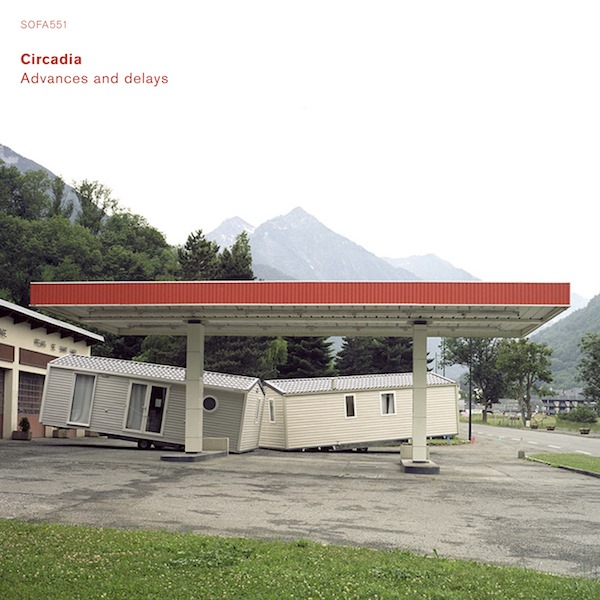
This two-track album by a collective who suggest they ‘might be your favourite new experimental psych-impro-folk band’ is housed in a spectacularly nondescript cover. Nondescript, yet also bizarre: a pair of cabins, on wheels as though for towing, at a garage in the middle of nowhere. Rugged mountains lie in the back. What does it mean? What is it saying? The absence of any people or any sense of movement is also a factor in what makes this image so striking in its plainness. There’s a sterility about it.

This is carried through into the title of both the album and the tracks. ‘The Animal Enters and Traverses the Light’ has an air of clinicality. The sounds themselves are more of nature, yet somehow in keeping: the jangling chimes and gently thrumming rhythms would sit comfortably on the soundtrack of a nature documentary. However, as the track progresses, picked guitar strings begin to build in volume and urgency, achieving a sustained multitonal throb by the twenty-four minute track’s mid-point which gradually gives way to deliberate low-end drone, beneath which crackling burrs rattle a twitchy percussion. The musicality of a strummed acoustic guitar, however irregular and however dissonant the chords, sounds almost incongruous against the rumble which slowly fades. The shifts are gradual but definite.

‘The Human Volunteers Were Kept in Isolation’ begins subtly, a single hum, before picked guitar notes and harmonics creep in by stealth. Gentle acoustic washes glide over supple, delicate percussion.  It’s pensive and understated, and creates an atmosphere that’s hard to define, and a sound more focused on texture and tone than rigid structures. There is melody, but it’s subtle, and there is movement, but it’s not necessarily overtly linear. But to return to the question posed earlier, what does it mean?  More interesting than the cover art is the fact that this superficially conventional line-up of two guitars, bass and drums, creates such unconventional music. But this is the work of David Stackenäs, Kim Myhr, Joe Williamson and Tony Buck of the widely-acclaimed The Necks. It was never going to be straightforward. And does there have to be an extrinsic meaning? Sometimes, the exploration of sound is enough.

Circadia – Advances and Delays

Sub Rosa

Christopher Nosnibor

It’s not entirely clear, but it appears that Book of Air is a series of album releases with different collectives interpreting it differently, with VVOLK being the second collective after Fieldtone who released a Book of Air album in 2015. But perhaps given the nature of the project, identity is something which is of little to no consequence, names mere markers for marketing purposes. This is, after all, very much music where its origins and its makers are not only interchangeable and very much in the background but largely invisible – as is the music itself. This is a project about the listener, about perception, and about intangibles.

While I must confess that I’m unfamiliar with the concept of ‘bundled compositions’, I can readily grasp the concept of an album comprising four pieces performed by some eighteen improvisational players with musical roots in jazz and classical. Their collective objective is to investigate and interrogate improvisation in close relation to present time, asking the questions ‘what are the possibilities in playing music, when changes in the music pass unnoticed?’ and ‘how does our hearing and memory react to these slow changes?’ The album’s concept, then, is based around making music which is perceived less in the present time, ‘but rather occurs in our memory of the past’. As such, the album’s form pieces (spanning four sides of vinyl, and mastered as just two tracks of approximately twenty-five minutes apiece in duration on the CD) are built around slow notes and the compositions evolve at an evolutionary pace and are based around the gradual transition of the seasons, with the first track ‘Lente > Zomer’ giving way to ‘Herfst > Winter’.

Some time around the fifteen-minute mark during ‘Lente > Zomer’ I realise there are slow cymbal splashes washing over the gradual turning drone that forms the track’s foundation. Gradually, so gradually, the sound swells and grows in volume and resonance. Guitar notes flicker in the slow-turning sonic mass and imperceptibly, darkness turns to hint towards light. The two tracks segue together, with ‘Herfst > Winter’ beginning as a light, delicate undulation which draws out time itself as the notes interweave like starlight from distant galaxies making their way through space to be seen by human eyes millions of years later. The images of ice-capped mountains inside the album’s gatefold are appropriate: time move at a pace akin to that at which mountain ranges change. Such things are also relative: while the Himalayas continue to rise as the Indian tectonic plate continues to drift and buckle against the Eurasian, the Appalachians are slowly eroding. The analogy extends to the arrangements, which explore in painstaking detail the way sounds interact and reverberate against one another. And it all happens a truly glacial pace

‘Herfst > Winter’ tapers to a sparse dissonance around the sixteen-minute mark, simmering down to a hushed yet insistent throbbing tone, a frequency that nags at the nerves despite being soft-edged and gentle. The instrumentation is delicate and understated to the point that this is not an album one really listens to, but simply allows to wash over oneself and to form an almost subliminal listening experience.

Such sparse sound arrangements demand considerable restraint for so many musicians, and the collective result in many respects is one of subtraction. And yet, this is by no means a negative assessment. The music’s presence increases after the slow fade to silence.

VVOLK

Kit Records – 31st August 2016

James Wells

The title is a reference to various artists who enjoyed a creative surge in their later years, who, instead of tapering away to an end horizon, defied the conventional downward trajectory to create works which marked a new and noteworthy phase in their already illustrious careers.

As the blurb explains, ‘Ageing isn’t always a dignified, serene fade. The brink before death can be violently creative; it can bring about loss of inhibition, unexpected innovations and sourceless leaps. In art, late style often means an unfettered outpouring. Confined to a wheelchair following cancer surgery, Matisse turned to simple paper cutouts in his later years. The work produced in this period, his ‘seconde vie’, became his most admired – physical restriction had been inverted in an expression of freedom and colour. Goya’s last works were also a departure from former style. Increasingly deaf and fearing insanity, he created a series of dark paintings reflecting this bleak, morbid outlook on life. Sensory deterioration seemed to offer Goya unprecedented vision’.

In recent months, I’ve heard and reviewed a number of albums which use – and abuse – church organs to unconventional ends, although a common thematics are their slow decay and their relationship with their surroundings, the architecture and sense of place. Sense of space is also integral to the instrument’s sound: as grand an instrument as a church organ is, much of its power resides in the natural reverb of the building in which it is installed.

But Late Style is a work preoccupied less with location or architecture, but time, and where the organ’s power is concerned, the focus of attention here is on the diminishment of that power, something which also inspired Stefan Fraunberger’s recent album Quellgeister 2: Wurmloch.

However, while Fraunberger’s work and Michel Moser’s Antiphon Stein were centred around pipe organs, Drömloch’s instrument of choice is a Hohner church organ, a synthesiser situated at the label’s headquarters. And so it is that an instrument which once produced sounds resembling a pipe organ near the end of its life wheezes in a different kind of way, leading to the contemplation that ‘Perhaps circuitry and software can have late style, too.’

As is often the case when process becomes integral to the end product, a little expanation goes a long way: ‘Like creatures and plants, they change over time; they decay, confront mortality, and their functions adapt. This record is a collection of live takes recorded directly from a Hohner church organ at the point of collapse. This circuitry of this hulking synth, long-installed at Kit HQ, has inexplicably decayed over time, rendering its preset drum loops and melodies as raptures of white noise, squelches and and bizarrely spiralling clangs. The result is primitive, aleatoric music – weirdly moving digital swan-songs, each named after the mangled preset triggered during recording’.

Late Style may be dominated by elongated drones and quivering, wavering hums, sounds recognisable as originating from the groan and swell of a dilapidated organ, but bubbling bleeps and less organ-ic sounds are overlaid and cut across these to forge strange juxtapositions.

The first track ‘8 Beat Variation’ finds the organ fading in and cutting out while stop-start percussion and variable echoes and delays disrupt any kind of flow. With volumes and tones wavering and fluttering unpredictably, and extraneous feedback, whistles, crackles and pops interfering with the irregular drum machine beats, the effects is disorientating.

‘Waltz’ sounds very like the time one spends fiddling with a keyboard trying to find the right sound, when every preset just sounds naff. If much of Late Style sounds like s much pissing about, then perhaps that’s largely the point: like many experimental albums – Miguel Frasconi’s Standing Breakage (for Stan Brakhage) captures the artist striving to push a cracked glass bowl to its limits and beyond – Late Style is about taking an opportunity when it presents itself and capturing the outcome. In this sense, it’s a truly experimental work.

The fact that this album, and those mentioned previously, are concerned with the destruction, or death, of an instrument, is significant: the fundamental premise of the avant-garde is that in order to move forward, to create anew, it is first necessary to destroy.

There are also some quite compelling moments to be found here: the surge and swell of ‘OI’ builds an ominous drama, while ‘Key’ is a rather fun exercise is microtonal blippage that sits alongside Mark Fell’s exploratory releases on Editions Mego. However, unlike Fell’s works, Late Style is both more varied and more listenable.

Drömloch - Late Style

Monotype Records – mono086

Christopher Nosnibor

The trend for positive thinking isn’t one I’m on board with. Social Media is aclog with well-meaning but vacuous affirmations and new-age wisdom might briefly lighten the bubble some – many – people are content to float around in, but none of it actually does anything to address the underlying causes of the feelings of sadness, melancholy, anger, emptiness which afflict us all. The idea that it’s possible to think oneself healthy or successful – is one which is clearly problematic. That isn’t to say that mental training can’t improve wellbeing, but anyone who supports the belief that positive thinking can cure depression, or remedy the ills of the world is very much mistaken. But any idea looks more interesting and offers new possibilities when turned on its head, so inverting the popular notions of the power of positive thinking is almost certain to spark some flash of inspiration.

The International Nothing have built a career on inversion, as previous albums The Dark Side of Success, Less Action, Less Excitement, Less Everything, and the mega-ironically Mainstream attest, not to mention their very name, a name which connotes inversion of something to present the absolute absence of anything, on an international scale. In context, I get the impression that The Power of Negative Thinking, housed as it is in a rather surreal cover depicting drawings of mythical cross-breeds floating in the air amidst fluffy clouds, isn’t entirely serious in its titling. Nevertheless, anger, frustration, sadness, can all be channelled creatively to yield powerful artistic results. The International Nothing is ‘psycho-acoustic clarinet duo’ Michael Thieke and Kai Faganaschinki, working here in collaboration with Christian Weber (double-bass) and Eric Schaefer (drums and percussion) (collectively, the ‘something’).

The album’s seven experimentally-led (but very much not improvised) tracks are not negative in the sense that they express or articular any explicit negative emotions, there’s no nihilistic noise or an overt espousal of any ideology, philosophy or mindset. What the pieces do convey is an ominous atmosphere which is ambiguous. And that ambiguity provokes a sense of creeping doubt. Contrary to the popular consensus, doubt is not necessarily a bad thing: uncertainty requires consideration, appraisal, in order to pursue a resolution of certainty. Certainty without discourse is simply blind faith. ‘The Golden Age of Miscommunication’ could well be a term applied to our present times, and the track’s plucked double bass and skittering rhythms which stop and start is disruptive, and a reminder that to reach the truth, one must question and challenge the facts as they’re presented. To accept unquestioningly, to allow oneself to become comfortable, is to be complacent and complacence brings vulnerability. The easy comfort of the snaking groove which emerges, only to fade to nothing, can be read as a metaphor, it’s disappearance a reminder of the importance of being prepared for unexpected change. The lugubrious ‘We Can Name You With Their Names’ is built around a strolling bass and scraping clarinet drone which is soon drowned to a long-building swell of percussion and a shrieking howl of treble. ‘Long Bow Glowing’ may be brief, but it’s dark and ominous, a foreboding bass drone is disturbed by hovering, high-pitched hums.

Sonically, the tonal explorations are highly engaging in themselves: the ways the clarinets resonate against one another is fascinating, and a defining feature of the work of The International Nothing. The additional instrumentation brought by the Something bring dynamic range and a real sense of depth to the pieces. Compositionally, this is a dark and thought-provoking work, although its weight lies as much in its connotations and implications and the work it invites the listener to involve themselves in which provides its real power – the power of negative thinking.


Internation Nothing

Clang Records – Clang 042 – June 10th 2016

Christopher Nosnibor

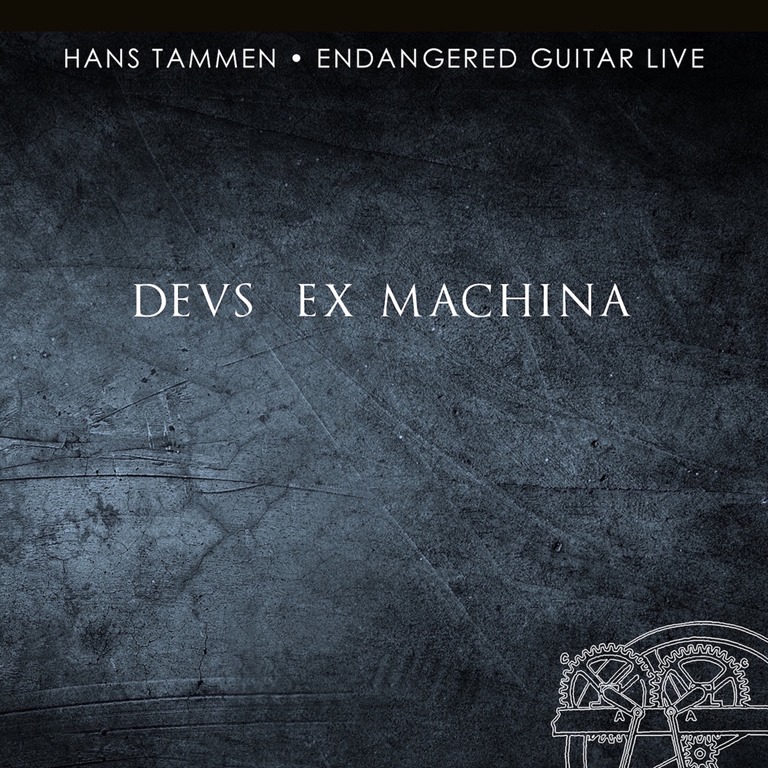
Hans Tammen’s Music for Choking Disklavier was one of the first albums to be reviewed here on Aural Aggravation, back in December last year. Deus Ex Machina finds Tammen continue to explore the possibilities of instruments when played in a fashion they were not designed to be played. Since 2000, Tammen has been working with the ‘Endangered Guitar’, and tirelessly developing its functionalities.

Tammen’s website summarises this ‘Guitar-Controlled Live Sound Processing’ in a fshion that’s more intriguing than explicitly instructive: ‘The Endangered Guitar is a journey through the land of unending sonic operations, an interactive hybrid between a guitar and a computer. The software “listens” to the playing, to then determine the parameters of the live sound processing. The guitar is the sound source, but the same sound is also used to control the software. Sounds of the guitar are processed in realtime, pitch and various other parameters of the actual playing serve as control source of the processing. Currently, additional control sources are provided by a Leap Motion Controller.’ Technical yet simultaneously vague, what it boils down to is that Tammen has devised a guitar / computer hybrid, and in 2004 her introduced a random element to the software.

Tammen’s collaboration with Lars Graugaard under the Infernal Machines moniker, which came out earlier this year, was more about utilising the Endangered Guitar in a tempered, moderated and counterbalanced way. In contrast, this live recording, the title of which references the theatrical practice of lowering a ‘god’ character on stage using a cable device in order to resolve a troublesome situation in the plot of a play, and in which Tammen casts himself the role of the actor, lowered to the stage to daringly intervene, is built on improvisation and a wide-ranging exploration of the hybrid instrument’s capabilities.

Tammen writes of the computer crashing while performing, and of how wildly unpredictable the whole setup is, and this very much translates into the audio captured on the album.

Scratched overdriven chords and discords splinter and snarl. Massive, distorted, overloading sludged-up Sunn O)))-like drones rumble on… and on… walls of sound collapse in on themselves. Pickups cut in and out intermittently, feed back and crackle. Occasionally, recognisable notes – albeit notes that sounds like a version of Metal Machine Music are distinctly audible. There are no tunes to be found here, and often, it doesn’t even sound like a guitar. On ‘Transaxle’, the guitar effects the sound of violin strings being scraped, against a droning, wheezing sound like a deflating bellows, while on ‘Interlude at Rake’, it conjures a techno sound, replicating synth stabs and booming bass beats. Rapid, looping modulations, bleeps and squiggles replicate the effect of analogue synths, with sounds which would be at home on a track by Factory Floor or Whitehouse, and elsewhere, dark ambient passages hum, rumble, grind and billow and grating industrial barrages relentlessly assault the senses. At times, it hurts. But it’s also entertaining and often enjoyable: Deus Ex Machina is sonically challenging and one can’t help but contemplate just how the sounds of a guitar can be mutated in real-time to create the diverse and sometimes utterly insane sounds captured here. It’s by no means a novelty album, either: the concept of the Endangered Guitar may sound like something of a gimmick, but Tammen demonstrates that his leading preoccupation is with innovation for the purpose of creating new sound, and more importantly, creating something with those sounds.


Hans Tammens - Deus Ex Machina

Christopher Nosnibor

Is it wrong to review an event you’ve participated in as a performing artist? Very probably, but in the scheme of things, and in the current global socio-political climate, a minor display of poor etiquette really doesn’t amount to anything. Besides, this is more about what I – as a writer, reviewer, artist and site editor – believe to be the primary function of running a site dedicated to the coverage of non-mainstream music, namely to give artists and acts I believe in exposure. At times, focusing on a niche – albeit a pretty eclectic niche – feels like the audience are likeminded obscurists but I like to think there are things for those likeminded obscurists to discover here. So. I landed a spot initially to provide a spoken-word interlude to some bands – bands I like. The night before the gig, this evolved into a collaboration with one of the bands, one-man experimental noise act Legion of Swine. It was something I’ve wanted to do for ages.

So I rocked up while the soundchecks were getting going to discuss what we were going to do. The little pub venue was bursting with more kit than many all-dayers and everything was pointing to this being one loud night before anyone even got plugged in.

And the lineup! Five acts, three (and a half) over from Leeds for a measly three quid? You have to hand it to both the venue and first-time booker Jim Osman for the wild ambition here. There’s so much that could go wrong.

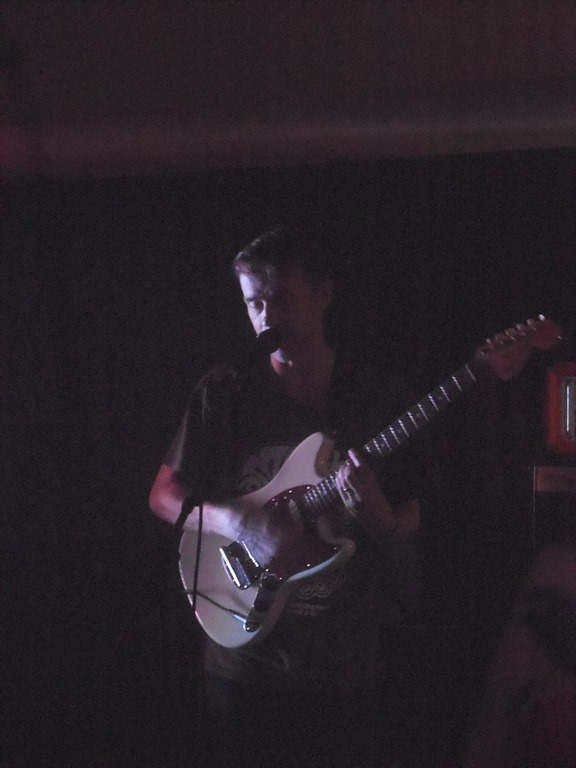
Neuschlaufen are only just soundchecking fifteen minutes after they’re due to play, and their bassist, Ash, has to be out and on his way to another gig by 7:45. Yet somehow they manage to pull it together and are churning out their heavy, hypnotic grooves in next to no time. Ash Sagar’s hefty, Jah Wobble-esque basslines boom out, underpinned by Jason Wilson’s uncluttered drumming. In cominationm they provide  a solid base for John Tuffen’s textured guitars, and while the set may be short, it builds nicely, going beyond Krautrock and into territories as yet unexplored.
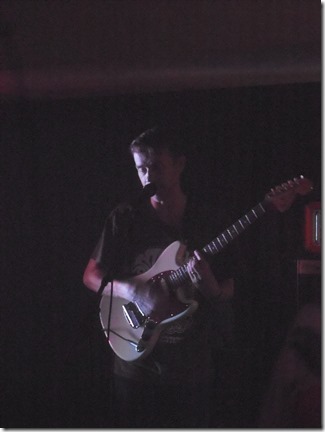
DSCF5071

Neuschlaufen

Immediately after, everyone vacates to cool down in the car park, with its impressive beach art installation. It also serves as a sandy area where people can go and sit and smoke and buy cocktails and stuff and pretend they’re not in a car park in a city pub.

Consequently, I began spouting my first rage monologue (a recent piece entitled ‘Ambition’, if anyone’s interested) to an audience numbering half a dozen (plus sound man and bar staff), but – probably for the first time in the years I’ve been performing – people began to filter into the room by the time I left Legion of Swine to run the set to its natural conclusion of feedback and bewilderment (what other response is there to a man in a pig’s head and lab coat, ambulating the space with a condenser mic taped to his face and a battery-powered 3W Orange amp to his ear?) there was a substantial crowd. Most of them were confused, and more interested in the spectacle than necessarily enjoying watching a 40-year-old man spew vitriol and expletives into a mic, but I had an absolute blast. Literature is the original rock ‘n’ roll and the new rock ‘n’ roll, and the footage of the performance, for which I can take no credit whatsoever, is outstanding.
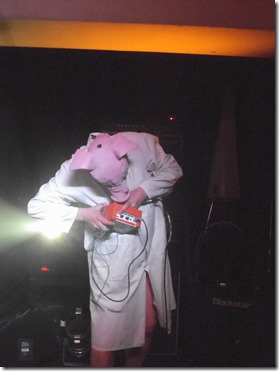
DSCF5078

Legion of Swine

https://player.vimeo.com/video/175067654


One of the benefits of being lower down the bill is that it’s possible to kick back, drink beer and watch the other acts, and while the temperature was steadily rising, it was a joy to sup a cool pint and listen to Fawn Spots road test a set based on their upcoming second album. I‘ve lost count of the number of times I’ve seen these guys since they started out as a snotty York-based two-piece and it’s been a source of pride to witness their evolution to a Leeds-based four-piece with a debut album on Fire Records. Their hard-gigging work ethic is admirable, and they’ve got both songs and attitude. If the new material showcased tonight is a little less frenetic than the older stuff, it’s no less intense, and there’s every indication that album number two will be a stormer.
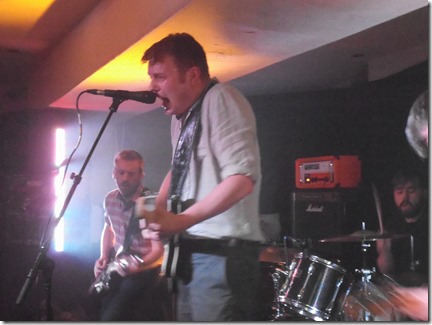
DSCF5085

Fawn Spots

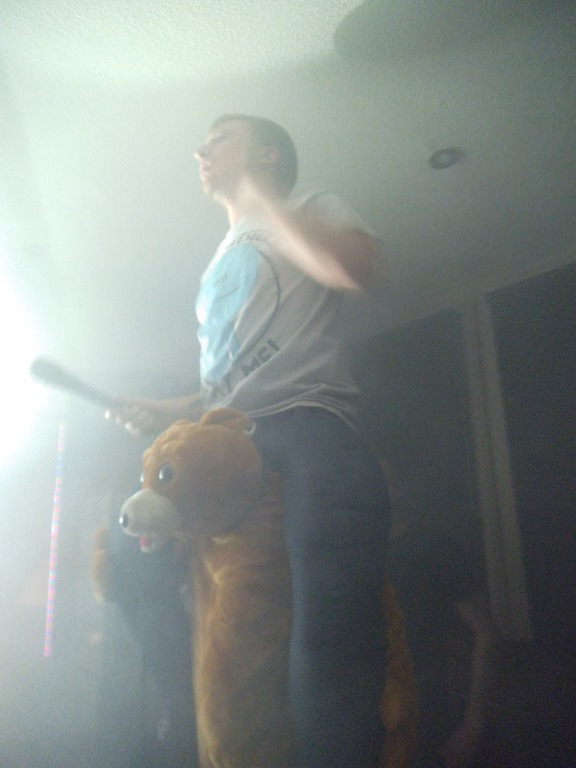
It’s a little over a year since I saw Super Luxury play. Supporting Oozing Wound at the Key Club in Leeds, I’d been impressed by the power of their performance. However, as their gig photos and the anecdote I’d heard from a friend about front man Adam Nodwell delivering vocals for a large portion of a set from inside a box on stage, it seems they’ve been evolving the performance aspect of their show. They pulled out all the stops for this one, Nodwell arriving on stage cowelled in a hooded cloak, stripping it off to reveal some crazy man/badger legs thing that simply looked wrong. With confetti guns bursting all over and crowd-surfing and a general air of crazed mayhem, you might think the music was taking a back seat. But you’d think wrong: with enough back-line to shake a venue three times to size to its foundations, they blasted through a ferocious set with terrifying vigour and psychopathic precision. They may be zany in their presentation, but when it comes to the songs and slamming them in hard, they’re entirely serious.
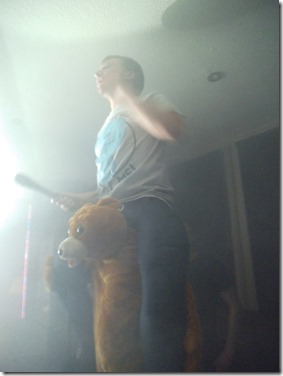
DSCF5127

Super Luxury

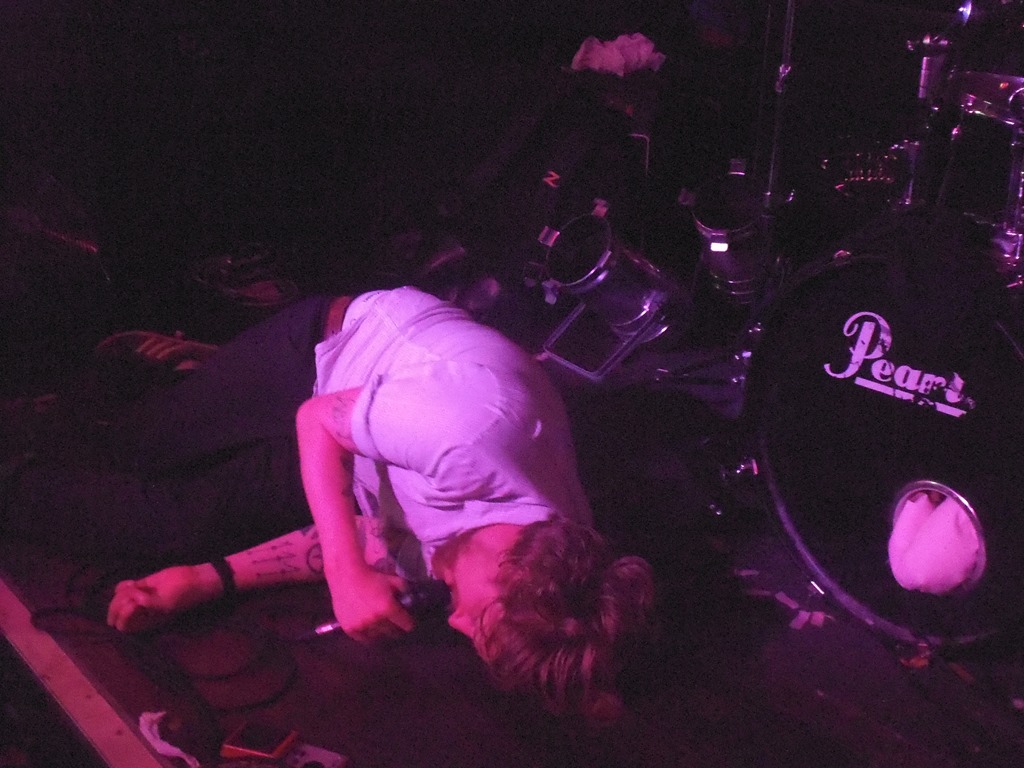
Irk are pretty fucking serious, too. It’s barely been a fortnight since I caught their set in Manchester supporting Berlin’s heads, and while they were pretty ripping them, tonight they really do take things to another level. Of course, when I previously stated that they sound like fellow Leeds band Blacklisters, I meant it as a compliment: Blacklisters are one of my favourite bands of recent years. They’ve delivered two gut-wrenchingly hefty albums and are one of the most consistent live acts you’ll find. But it’s on this outing that I first truly appreciate Irk in their own right as the drum / bass / vocal trio lumber, lurch and piledrive their way through a full-throttle set. Jack Gordon – an affable, articulate chap off stage – comes on like a man possessed, hurling himself about the low stage amid crushing bass riffs and powerhouse percussion. While the power trio format is often lionised as the optimal band configuration, there’s even less room to hide when there are only two instruments and a vocalist. And so it is that Irk are tight as hell and double the intensity of the playing to compensate the absence of instruments and bodies on stage. In contrast to Super Luxury, here’s little by way of over showmanship on display here, and instead it’s all about whipping up a blistering intensity through directness and unadulterated force.

DSCF5231

Irk

With not a weak act on the jam-packed, super-value bill, and every act giving every last drop of juice to their performance, this is going to stand as one of the gigs of the year. The venue may not have been packed to capacity, but there’s no question that those who were there will be talking about it. That’s precisely how legends are made, and I’d wager that that at some point in the future, tonight will go down as one of those landmark events. And if I’m wrong… fuck it, it was a great night.
Room40 – RM469 – 20th May 2016

Christopher Nosnibor

The liner notes describe Memory Fragments as ‘a collection of compositions from sonic fragments recombines, thinned, edited, rejected, re-listened to, improvised, forgotten, filtered, slowed, remembered, reworked, erased, detuned, undone, layered, cut, compressed, trashed, moved, accelerated, pasted, composed, played and exported – undergoing a slowly evolving transience and sedimentation to arrive at this fairly constant state.’ In other words, it’s a collage of fragments which have been utterly fucked about with and manipulated so as to render them unrecognisable. The notes also draw attention to the fact that as integral to the ‘finished’ work (and one must question when a work is the result of such a convoluted succession of processes, to what extent it can ever be truly considered finished) the process is, the listener cannot, and will never hear the process, and the process is something which the artist will only recall through the filter of memory.

These are extremely spacious compositions. To begin, a single note resonates…. And then silence. The notes are some twenty seconds apart. The listener becomes attentive to the silence. Gradually, subtly, but so quietly, the sounds build. The build, the delay… are these notes backwards, or is there extraneous noise loitering in the silence, which then becomes shrinking semi-silence? You listen. You need to listen. And then, to pause for thought. It’s not music to get down to, but to contemplate. It requires focus.

Elongated notes expand as they’re dragged and stretched across time and space. Heavy sounds hang and linger. The track titles are evocative rather than literal, cumbersome but descriptive. Again, some refer to the process, while others carry allusions to how either the artist feels or the sensation. ‘Built on Folds and Braids’ builds a densely-layered wall of tonalities, fizzing and hissing static tears through an ominous low-end and arrhythmic globular beats. ‘Sparseness Gave Way to Infinite’ carries the closest approximation of a tune, but it’s slowed to the point that the output is little more than a protracted groan. The thick, burr-edged electronic sawing of ‘Broadsided by Sudden Swells’ is a dank, fear-inducing sonic experience, bleak and weighty.

But with the seed of awareness sown, it’s impossible not to hear these sounds without returning to the process, and I found myself contemplating the original fragments, the source materials. Specifically, I wanted to unpick the recordings, to examine the ‘original’ Warnecke had done to them. But thinking backwards through the process only provides so much food for thought: as noted in the liner notes, the released version only represents a moment in time, a point at which the artist has deemed the material satisfactory for release. But where could the sounds be taken in future? Is this a ‘definitive’ version? What would the result have been had the project been continued? Such questions are of course unanswerable, but provide fodder to chew on while Memory Fragments unravel from the speakers to form a sonic cloud that’s almost impossible not to get lost in.


Pierce Warnecke - Memory Fragments


Piere Warnecke Online

Entertaining Violence

Christopher Nosnibor

I am often drawn to duality of interpretation or meaning, particularly when that interpretation hinges merely on emphasis. As such, I think ‘Entertaining Violence’ is a great name for a publisher / label, and looking over their small but select catalogue to date suggests it’s highly appropriate. Essentially, Entertaining Violence is concerned with art, and the principle functions of art should be both to entertain and to educate, or, perhaps more accurately, to provoke thought. Art and entertainment are by no means mutually exclusive, and nor should it be considered untenable for art to both entertain and provoke. Their latest release achieves this, although it does very much depend on one’s perspective as to just how much entertainment it provides.

To provide some context from the press info: in the summer of 2015, Sergio Calderón – founding member of London-based avant-garde band 無 (MU) – was invited to participate in the exhibition Not a State, But an Artists’ Colony at Intelligentsia Gallery 智先画廊, Beijing. Sergio conceived STEREO as a transcendental and meditative experience compromising a Two Channel-Video and Sound Installation. As such, STEREO is a soundtrack piece, which was recorded as a live improvisational work of guitar sound and texture recorded at Entertaining Violence Gallery, London the 15th August 2015.

It is not a work which builds at any point: there are no crescendos or bursts of sound, but there are infinite textures. STEREO is a work which explores tonality, in the subtlest of ways. The track drifts on, concentrating on the ebb and flow, the wash and drift as notes struck rise and fall, decay and reverberate in the space in which they’re created. It doesn’t ‘go’ anywhere: that is not its purpose or aim.

What this 47-minute piece really conveys is the tonal range of the electric guitar, when played minimally and given room to breathe. Some may call this drone, ambient; and certainly, the notes and chords stuck are left to hang in the air for an eternity. The tones, the sounds are in themselves muddy, hazy, murky; this is no crisp digital replication of a guitar’s sound, but a fading analogue sound, fuzzed and degraded by environment, by space, by recording technology. It reminds that the listener is never truly ‘in the moment’ when listening to a recording, they are not ‘present’ and the recording is just that; a captured version of events; a recording is not the event itself. A recording may accurately convey the sound, or at least he sonic experience, but it can never fully convey the environment in which the recording was made, it can never capture and convey the experience of being present in the moment the audio was captured. It will never incorporate the experience of whatever may be going on around simultaneously, it can never capture the emotion or the mental processes contemporaneous to and triggered by, the moment.

For all of this, however great the listener’s separation from the moment, a work like STEREO, or, indeed, specifically STEREO affords almost infinite space for the listener to lose, and find, themselves.

https://player.vimeo.com/video/165013545?color=ffffff&title=0&byline=0&portrait=0

STEREO — 無 (Excerpt) from Sergio Calderon on Vimeo.


mu01_stereo1

MU at Entertaining Violence Online

Norwegian avantgarde rock/metal band Virus who release their new album  ‘Memento Collider’ next month have shared a new video made by Costin Chioreanu, who has worked with the likes of Paradise Lost, At the Gates, Mayhem, Spiritual Beggars, Roadburn Festival and many more. You can watch the video for ‘Rogue Fossil’ here:


unspecified