Posts Tagged ‘Abstract’

Christopher Nosnibor

Well, this one landed unexpectedly. It’s a welcome arrival, although taking a second hit of material from Uniform’s latest and quite possibly most brutal and challenging album to date does feel like an exercise in Masochism. It’s also a superb example of alternative marketing, landing this alternative version of American Standard less than a month after the album’s release, on digital and tape formats.

Context, from Uniform’s bandcamp: ‘A companion piece to American Standard, Nightmare City is essentially the same record devoid of the rock elements. By removing the presence of traditional instruments, the synths, lap steel, and pianos that sit beneath the surface of the proper album are allowed room to breathe and speak for themselves. The end result straddles the worlds of Basic Channel influenced dub, Tangerine Dream inspired soundscapes, and brutal death industrial.’

It’s a bold move, befitting of Uniform, a band who have relentlessly pushed themselves to explore ever-wider horizons, switching from their original drum-machine driven raw industrial noise to adopting live drumming, undertaking a number of collaborative projects with the likes of The Body and Boris, and especially befitting of this album, where Michael Berdan tore away the last vestiges of artistic separation to rip off his skin and purge the rawest emotions stemming from his dealing with Bulimia.

Nightmare City is another step towards stripping away the layers and presenting the naked self. ‘The bedrock of American Standard stands upon the Nightmare City. It’s not the happiest of all places, but understanding the landscape yields its own rewards,’ they write alongside the Bandcamp release.

One thing about being in a band – even if there are only two of you – is that there’s somewhere to hide, somewhere to transfer the focus. Hell, even performing solo, if there’s noise, there’s something take shelter behind. I’ve always thought that solo acoustic and spoken word performers were the bravest: there is simply no place to hide, and nothing to blur or mask any fuck-ups. Nightmare City isn’t quite solo acoustic, but it is seriously minimal.

Removing the ‘rock’ elements to reveal the bare bones of the songs shows the inner workings of Uniform, and they’re unexpected, to say the least. One would expect them to build up from the elements of drums bass, guitar. But this leads us on a different journey.

Punishing riffs and pulverising percussion, rather than supple layers and swirling instrumental ambience. As the band put it, ‘Although the finished product stands as a culmination of cohesive sounds, the individual threads that weave songs together often provide necessary nuance and exposition all of their own. Each isolated stem might be part of a greater story, but the whole cannot stand as intended without a complex series of seemingly disparate elements.’

Hearing the swirl of these ‘seemingly disparate elements’ feels like hearing the ghost in the machine, a haunting, eerie, ethereal echo, which barely seems to correspond with the structured framework of the final versions of the songs. One might almost consider this a palimpsest, an album beneath the album, submerged by process of layering and erasure. The tracks are – and I shouldn’t be surprised, but still I find I am – completely unrecognisable. Instead of being the punishing beast the album version is, ‘American Standard’ sounds more like one of the epic instrumental segments of recent SWANS works. There’s a muffled thud like a heartbeat on ‘This is Not a Prayer’ which possesses something of a womb-like quality, while ‘Clemency’ feels like a moment caught between heaven and hell, soundtracking the struggle of being pulled between the two in some purgatorial space as ceremonial drums hammer out a doomy passageway and spluttering vocals spew raw anguish.

In common with American Standard is the darkness which looms large, the tension, the suffocating gloom, the discomfort which dominates, and hearing this spectral echo of the album brings a fresh understanding and appreciation of the process and the depth of layering and everything that goes into their material. ‘Permanent Embrace’, too, sounds both like an ascent to the light and a sepulchral sigh, a funereal scene in which the grave suddenly opens like a sinkhole sucking everything down into the bowels of the earth.

Nightmare City is appropriately titled: it is a truly hellish, tortuous listening experience – but at the same time quite remarkable. Uniform, in their quest to do something different, to push themselves and in refusing to conform to genre conventions, continually find new ways to articulate the pain of the human condition.

AA

a1449843444_10

Dret Skivor – 6th September 2024

Christopher Nosnibor

Traditions are important: they’re grounding, they give us a sense of comfort and safety in their familiarity. In times of tumult, of confusion, during difficult times, they offer a raft to cling to in a sea of unrest. I’m not referring solely or specifically to old traditions, either, especially not the ones where Christianity has usurped pagan tradition, only for these traditions to in turn be usurped by the mechanisms of corporate capitalism. Christmas is the kind of tradition that should be tossed on the fire. What we need is to establish new traditions, traditions which are personal and meaningful – anniversary gigs or meet-ups, for example.

On a personal level myself, since one of the last holidays we made as a family saw us meet my late wife’s step-mum on Lindisfarne on August bank holiday week, and we had been due to stay there in accommodation with a view of the castle, we instead scattered some of her ashes with that view of the castle, and visit the spot around the same time each year before going to the pub we lunched in on that last visit. On the one hand it’s sad, but in such a magnificent and historically-rich location (we got married in Northumberland, and had Lindisfarne fruit wines obligingly delivered directly to the venue across the causeway), this new tradition of ours feels right, and in many ways positive.

The same is true – albeit in a different way, of course – of the traditional reconvening of the pairing of Procter and Poulsen. Something was written about it once, I seem to recall. Two friends, who see one another infrequently, but always make some noise together, and release the results, at some point or another. This is the kind of tradition which possesses real meaning, a symbol of connection. In a way, whatever music the session yields is irrelevant: this is about ritual, and interpersonal resonance.

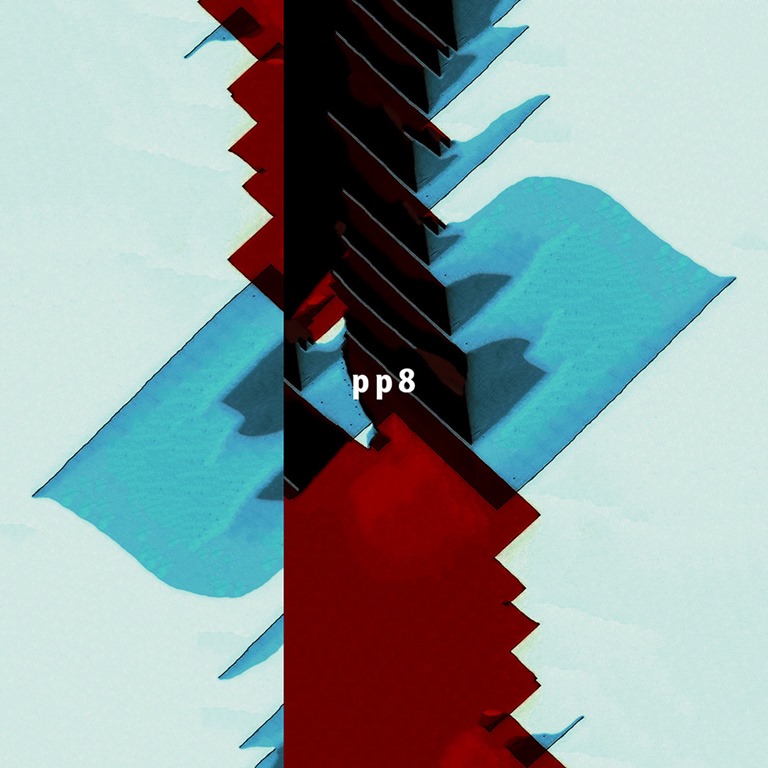
As the title suggests, this is their eighth collaborative release, and contains two longform tracks, each occupying a full side of a C40 cassette, this time released in a limited edition of six.

There’s no way you’d describe the devastating soundtrack to nuclear annihilation that is ‘A’ as ambient: distorted, mangled vocals crackle out from the howling wails of feedback torn from shredded circuitry in a heavy gale which carries pure devastation. Once that raging storm dissipates, we’re still left with the sonic equivalent of a nuclear winter, the sounds drifting over shattered remains, fragments of things which existed before. Glitching beats fizz out in crackling walls of noise and fizzing distortion. Bleeps and wibbles pop and buzz and there are moments where it’s possible to catch a short breath. Sometimes it’s almost dubby, but it’s always a desert. It’s always desolate. The atmosphere is always thick, uninhabitable.

‘B’ is dronier, buzzier, more overtly electronic – but more like a giant bee hovering in suspension – sedate, bur trapped. As the track progresses – at least in terms of duration – it seems to degenerate, forms disintegrating, fracturing, crumbling, degrading. It’s not done elegantly, aesthetically, but presents as a greyening mess of murk and twisted wires, indistinct moans and Triffid-like clicks and clacks. It’s oppressive, and feels like crawling through the soundtrack to being a survivor of the apocalypse in a bleak 80s dystopian series.

Nothing is comfortable. Nothing is right. Tension and darkness are all around: every inch of this experience is eerie, uncomfortable. You don’t want to be here – but there is no escape. This is sheer horror, without words.

The shuffle into some sort of 80s industrial experimentation with a scratching guitar and stammering heartbeat percussion which soon slips into fibrillation, which comes to pass close to the end, only renders the experience all the stranger, before birdsong and groans hint that perhaps, this is it – you’re here, you’re dead. Perhaps we are all dead already, and life is an illusion. Perhaps this would be for the best.

AA

a3358540954_10

The Helen Scarsdale Agency – 14th June 2024

Christopher Nosnibor

For some time now, The Helen Scarsdale Agency has homed some quite challenging experimental noise and industrial-orientated releases. It seems somewhat incongruous, the name suggesting they’re a stuffy literary agency or something.

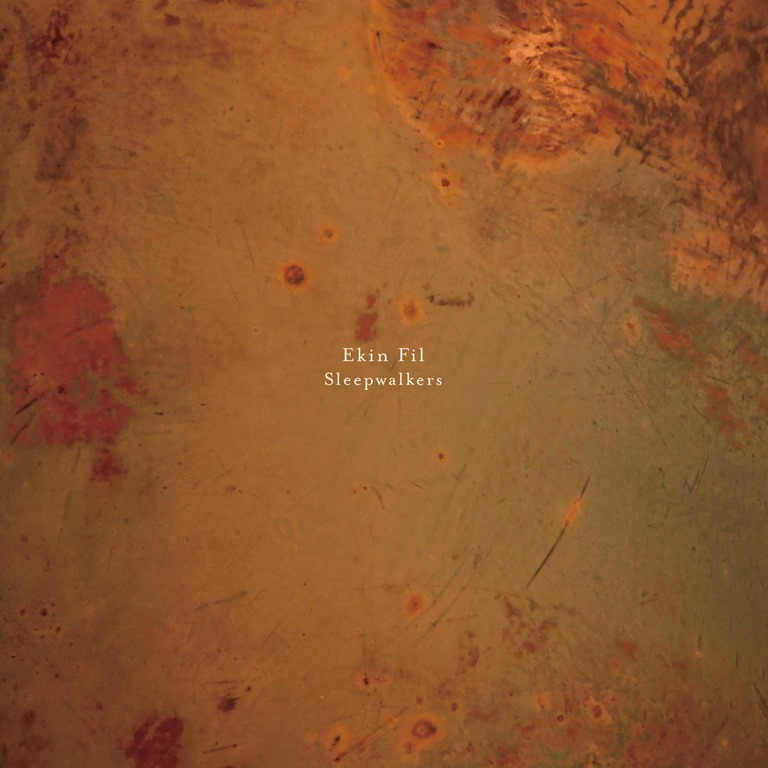
The notes which accompany this latest offering from Ekin Fil are instructive and informative, in terms of expectation and context, and as such, worth reproducing here:

‘The drone-pop consternations of Ekin Fil emerge through vaporous tone and forlorn, distant song, as if plucked from a dream. These exist on their own accord, moving with their own internal logic of an emotion heaviness that belies any the passing observation of this as mere shoegazing ambience. Her songs, her compositions find themselves adjacent the fragmented etherealization of Elisabeth Fraser’s voice from a forgotten scene of a particular David Lynch film, as a ASMR trigger for Proustian recollection. Something profound. Something hidden. Something desolately sad.’

Do I want to feel something sad? This is a question I asked myself in all seriousness. Everyone has felt deep, desolate, profound sadness at some point, to varying depths and degrees, and while wading through the mires of a recent bereavement I find I can be set off easily and unexpectedly. But sadness is necessary, and is sometimes something to be embraced. To embrace sadness is not the same as to wallow, and to face sadness squarely is to accept its presence, and perhaps begin to make peace with it. And only in making peace with it is it possible to begin to move on.

The album’s first piece, ‘Sonuna Kadar’ is a billowing cloud of thick ambience, suffocating, disorientating. Occasional chimes do little to light the way, and the vocals drift, lost, lonely through this tentative space. Things grow darker still with ‘Stone Cold’: long noes echo out like sirens, and soft, fizzy-edged notes ripple before being absorbed by cruising waves of thick, heavy sound. The organ is almost without question the heaviest of sounds, a droning, wheezing sound that has the capacity to be uplifting, but, more often than not, is slow a d mouthful. It’s a synthesized organ drone with slowly throbs away on ‘Reflection’, too lugubrious, soporific effect.

Vocals echo as if reverberating in caverns, cathedrals, while the instrumentation is abstract, its direction unfathomable. ‘Sleepwalkers (Version 2)’ is heavy with atmosphere, and the experience is haunting.

The absence of percussion or structure renders these pieces formless, rootless, shapeless, and consequently they hang like heavy cloaks which drag the head down to the ground, and, staring at your feet you contemplate the weight of the world.

Sleepwalkers is one of those albums which seems to build in effect cumulatively over its duration, and wile it’s not overtly heavy with, say, distortion or volume, it brings a weight that drags you down, and the final composition, the ten-minute ‘Gone Gone’ pulls the shoulders down.

Listening to Sleepwalkers doesn’t fill me with sadness, as much as a sense of unease. It does unquestionably bring a sense of weight, but on listening I feel a sense of uneasiness and uncertainty more than anything. But music presents much of what you pitch in and bring to it. With Sleepwalkers, Ekin Fill presents music with open doors. What will you bring?

AA

a0105911352_10

8th June 2024

Christopher Nosnibor

This release is as intriguing – and strange – as its enigmatic and beautifully-crafted handmade packaging.

Music for Strangers continues the reissue programme for releases from underground experimental duo Photographed By Lightning, and arrives on the heels of NO, Not Now, never which represented their first new material in twenty years. For this one, we dive back twenty years, to 2004, the most prolific year of their career, until, suddenly, it halted.

While Blood Music (also 2004) consisted of a large number of comparatively brief pieces, Music for Strangers is a very different proposition, featuring as it does four longform tracks, with a couple around the ten-minute mark and a couple around the twenty. Each simply bears a numerical title.

The original release – produced in a CD edition of 100 – was disseminated not for sale on line or anywhere, but by covert means, with copies being left at random in public places. This was quite a thing in avant-garde circles for a time in the years after the turn of the millennium, particularly when MySpace was at its peak, and something that I myself participated in, leaving various pamphlets in pubs and the like, and slipping A5 leaflets various books in WHS and Waterstones. Why? Because.

Dave Mitchel and Syd Howells – aka Photographed by Lightning – are very much part of that avant-garde milieu. Something has been lost over time, and now there’s a certain nostalgia for it, meaning that the arrival of this reissue carries a certain resonance beyond the thing in itself.

There are bits of vocals interspersed here and there – abstract enunciations and discombobulous jabberings – and they emerge for fleeting moments amidst sprawling expanses of strange, otherworldly instrumental passages.

‘One’ (denoted as ‘I’ on the CD version) combines swampy abstraction and space-rock bleeepery to disorientating and atmospheric effect, which descends into dense murk in the final minutes before silence descends for a full minute. The silence is even more disconcerting than the sound which preceded it. The truth is, silence unsettles us, scares us even. It’s the reason some people can’t stand to be alone, and the reason many simply can’t shut the fuck up for a moment: they can’t handle silence, and find silence more terrifying than darkness. I suppose that while both are forms of sensory deprivation, in the modern world, while darkness still feels like a natural phenomenon – if your blinds or curtains blank out light pollution and you switch off your electricals – silence is almost beyond comprehension. There is always traffic, a distant siren, a phone vibration, the wind, rain, the babble of one’s own internal monologue. When was the last time you can honestly say you experienced true silence? That isn’t to say that with the hum of the hard-drive and my laboured hayfevery breathing, in connecting with this album I did, but the abrupt end of sound emanating from the speakers, in a time when a minute feels like an eternity, really struck me, left me feeling… what?

But at thirteen minutes, this is merely a prelude to the second track, a plunge into the subterranean swamps which drags the listener deeper into suffocating darkness for an immersive but uncomfortable nineteen minutes. There’s dadaist quirky playfulness in evidence here, the sonic equivalent of shooting water pistols and throwing overripe windfall berries at random passers-by, which redresses the balance against the backdrop of tetchy, grumbling noise created first and foremost to antagonise – which is course it does. It tests the patience and challenges the senses, with bubbles and ripples echoing as if from within a cave – for extended periods, as the sounds gradually mutate. For a spell, it sounds like water-filled lungs laboriously respiring, which makes for more difficult listening than it may appear on paper, drifting into something resembling the relentless rock of nodding donkeys at an oil drill site, and creeping into ‘Three’, it’s like sneaking down into the sewers to escape one threat only to be confronted with another.

Music for Strangers is certainly their darkest, most suffocating work, stretching dark throbs and abstract sound to the absolute limits and nudging beyond.

The bonus disc which is part of the physical release, containing Music from Nowhere, offers further insight into their prolific and prodigious experimentalism at the time, providing jut short of an hours’ worth of additional material. That it’s essentially more of the same only heightens the effect.

Given the varied and experimental nature of their output, there isn’t really a definitive release which encapsulates the work of Photographed By Lightning, and Music for Strangers isn’t really an entry-level release – but this does very much encapsulate their experimental spirit, their singularity – their awkwardness – and knack for creating difficult soundscapes.

AA

a0888861779_10

Mortality Tables – 7th June 2024

Christopher Nosnibor

Mortality Tables have continued to release titles from their ‘Life Files’ series at a remarkable rate, with instalments 18 and 19 landing in May, and hot on their proverbial heels, this, number 20, in the first week of June.

The premise remains consistent, namely ‘Recordings of places, people, objects, moments in time, environments and quotidian events [which] are shared with a range of artists working across different disciplines. Those artists are free to respond to the recordings in any way they like. And so, as ever, the field recordings, courtesy of Mortality Tables main man Mat Smith provide the foundation and inspiration.

Killiegrew Monument is a peculiar thing. Located in Falmouth, and intended as a memorial to the last surviving member of the Cornish family, the monument is a sharp obelisk constructed in 1738. It looks altogether more contemporary, and ultimately anomalous with its surroundings. And one might say that this release is similarly anomalous. I can imagine that beholding this curious construction would inspire an array or reactions. But why the fuck would you play a stone monument with a sharp stone? Is that really one of the responses you’d likely have to coming face to face with such a construction? Well, perhaps, if you’re possessed of an avant-garde mindset, whereby instead of reflecting on the origins of The Wind in the Willows, you find yourself contemplating ways of making unusual noises.

Once again, when it comes to the ‘Life Files’ series on Mortality Tables, we don’t know what the source materials actually sound like.

‘Killigrew Monument Played With A Sharp Stone (Part One)’ is an odd sound work: there’s chatter and ambient drift and scratches and shuffles and scrapes, but what on earth is going on? Seagulls wheeling and cawing – and on those squawks the sound echoes and reverberates, and the collage of sound collides with a strange rendition of ‘One, two, three four five, once I caught a fish alive’.

There’s lots of processed echo and cawing gulls at the start of ‘Killigrew Monument Played With A Sharp Stone (Part Two)’, as well, and it does, in some respects, sound like someone crooning abstractly into a child’s echo mic just to see how it sounds. The longer of the two pieces, at almost thirteen minutes in duration, it creates a deeply strange and disorientating atmosphere, which is likely evocative of this curious monument, which stands out of time and out of keeping with its surroundings as a testament to human folly, and, ultimately to vanity.

Too abstract to be ‘songs’, too much happening to be ‘ambient’, the result is a haunting and somewhat disorientating soundwork of a rare quality.

AA

a4230686863_10

Kranky – 5 April 2024

Christopher Nosnibor

Stars of the Lid are one of those acts who seem to have spent a – now lengthy – career on the fringe, an ultimate cult act who’ve built a substantial following without ever being well-known. Here in the UK, at least, they’re strictly a 6 Music act. With Brian McBride’s passing last year, their future remains unclear, but in the meantime, Adam Wiltzie, who had already been active for some time as a solo artist, offers up a new set of drifting, dreamy, discombobulating amorphous ambient works in the form of Eleven Fugues for Sodium Pentothal.

Sodium Pentothal is (to quote, unfortunately, Wikipedia), ‘an ultra-short-acting barbiturate and has been used commonly in the induction phase of general anesthesia’ and is also perhaps better known as a ‘truth serum’.

We recently aired the opening track, ‘Buried At Westwood Memorial Park, In An Unmarked Grave, To The Left Of Walter Matthau’ here at Aural Aggravation, and it’s inevitably tempting to infer connotations from this title in context of events – something the album’s title wouldn’t seem to necessarily counter. But Eleven Fugues for Sodium Pentothal seems to be preoccupied with memory and place in a broader sense.

We’re infirmed that the album ‘took shape following a move north from Brussels into the Flemish countryside, although it was initially inspired by a recurring dream wherein “if someone listened to the music I created, then they would die.” The album uniquely evokes and evades the allure of oblivion, keening between beauty and ruin, forever unresolved.”

Dreams have a way of staying with you, and of twisting your psyche in some unsettling way, the more vivid ones lingering and replaying for hours, even days on end, the vaguer ones leaving you feeling somehow disjointed and in a slip from being in step with the world, partially detached, partially disconnected, as if looking at your own life through a window. Recurring dreams can prove particularly unsettling, and have a way of encroaching on your waking hours, assuming a reality of sorts.

The track titles, in the main, tell us very little, presenting mere abstractions, although one suspect they carry significantly greater weight of meaning for the composer. Bereavement and loss has a way of bringing layers of meaning to the slightest things, often unsuspectingly – a sight, a sound, something not even remotely directly related, has the capacity to trigger a memory, which in turn has the capacity to elicit an emotion or some not-quite-definable internal response. It’s often fleeting, or otherwise vague and indefinable, something impalpable and beyond reach, leaving a certain pang of bereftness – in much the same way as if waking from a dream.

Eleven Fugues for Sodium Pentothal is not a dark or heavy album, but one which is dense in its atmosphere and carries a certain air of melancholic reflection in its drifting waves. This melancholy may well be as much a reflection of the way places – even unfamiliar locations – have the capacity to stir memories but indirect association – again, a sound, a smell, a certain shade of lighting, the angle of a tree, a riverbank – prods a deep corner of the memory most unexpectedly, causing memories we didn’t even know we had, or still had, to trickle forth, vaguely, out of focus, out of context, and sometimes you wonder if is really is a memory or a fragment of a dream.

There are some deep, rich, grainy textures to be found here, and ‘(Don’t Go Back To) Boogerville’ brings some dark, heavy strings and sonorous scrapes to close the album – which, incidentally, contains only nine tracks. Loop’s Robert Hampson was an inspired choice for the album’s mixing, bringing the layers of organic-sounding drones to the fore.

Returning to the press notes, ‘Wiltzie cites the barbiturate of the title as both muse and sacred escape: “When you are sitting face forward on the daily emotional meat grinder of life, I always wished I could have some, so I could just fall asleep automatically and the feeling would not be there anymore.”’ With Eleven Fugues for Sodium Pentothal, he has created that perfect escape. This is an album that lends itself well to listening – or half-listening – by candlelight with a slow-sipping drink, and to simply drift and nod to.

AA

547558

Mille Plateaux – 22nd March 2024

Christopher Nosnibor

What’s often fascinating to me as someone who writes about music quite extensively, is to observe the avenues other writers explore, particularly when engaging with music that’s ambient, obscure, or otherwise difficult to take a hold of and to pin down. This fascination is amplified when the music, either by its inherent nature, or by virtue of explanatory words from the artist, has a foundations in a theoretical or conceptual context.

Achim Szepanski has been tasked with a challenge when it comes to the notes to accompany

Oolong: Ambient Works, which is the 17th studio album from multi disciplinary artist Ran Slavin, which is pitched as ‘a 74 min drone-ambient-minimal-symphonic infused LP that takes after various teas in the far east.’ To heighten the experience, each track is accompanied by ‘a slow and atmospheric visual journey shot by RS in East Asia and the total can be experienced in total and joined as an immersive 74 minute journey.’

Szepanski helpfully explains the layered meanings in the translations of the word ‘oolong’, and expounds the complex interconnections of tea and dragons through a filter of Felix Guattari (which isn’t entirely surprising, given the label releasing it). He grapples with ‘the minimalist concept of tea architecture’ and the way in which ‘Not only the centripetal, but also the centrifugal orientation of the sound is imaginary.’

While the visuals clearly form an integral pat of the project overall, I shall preserve my focus exclusively on the audio release, and in advance of this draw the distinction between audio created to provide a soundtrack, and visuals created to accompany an audio work, because while Szepanski discusses at length the relationship between the visuals and the tea path and the simultaneous limitations placed on the work by the visuals and their capacity to enhance the experience, Oolong: Ambient Works is an audio release or an ambient persuasion, as the title suggests.

The seventy-four minutes is divided into eight individual pieces, with titles such as ‘Grand Jasmin’ and ‘Assam Jungle; as well as others which are less overtly tea-derived, like the first composition, ‘Time Regained’. It’s fifteen minutes of slow-simmering ambience, the levels of which fluctuate and catch, the glitches rupturing the smooth surface of the soft sonic fabric.

Szepanski makes an important point when he writes ‘It is impossible to know exactly what the individual sounds signify. Sometimes it might be the intention to hear the sounds of nature. But it’s not a question of identifying its source and its effect.’ And so we come to what is, for me, the crux of the ambient listening experience, whereby the source of the sounds is far less significant than what the listener hears. Not even what I hear as a listener, although I can only speak and interpret for myself, and the beauty of this experience is that however much Slavin strives to imbue this work with meaning, it cannot be imposed. Slow pulses bring a rhythmic element to this otherwise abstract piece, which is deeply calming, but occasional warps jolt the listener from their state of tranquillity like a prod.

‘Butterfly of Ninh Binh’ flits by with crackles and scratches by way of disturbance, and the introduction of static and ersatz surface noise to recordings is a curious one, as something which only became a feature with the advent off digital audio. Those who have come to vinyl since the renaissance are less likely to relate, since vinyl is now a plush commodity and not something people leavy lying around or use as a coaster or whatever as was commonplace in the sixties, seventies, eighties. But such interference is integral here: Slavin’s approach to ambience on Oolong is subtly different, and introduces just enough dissonance and discomfort for it to be not entirely comfortable.

The ten-minute ‘Ruby Ceylan’ is soft and ripping repetitive and hypnotic, but something – perhaps the abstract moans, perhaps something else – is just off.

Iroh, in Avatar: The Last Airbender, is a keen advocate of the calming properties of Jasmine tea, and I get a far stronger Jasmine connection from this – the original animates series, that is – than from ‘Grand Jasmin’ here – the album’s shortest track is subtle and soothing, but also marks a change of texture with a thumping beat which echoes away hard and fast beneath its slow-swelling outer layers.

‘Himalayan Flower’ unfurls slowly and with pronounced percussion, before the ten-minute ‘Summer Monsoon’ brings the album’s conclusion. A slow, mesmeric, soporific cloud of ambience passing by, with occasional clangs and abstract interruptions which echo through the drift, this is a real; eyelid-drooper which suggests it’s time to sleep, or time for a coffee.

AA

MP69_front

Mortality Tables are blasting out the second series of LIFEFILES releases at quite a pace, and LF17 is the seventh release in the season.

Describing LIFEFILES as ‘creative exchanges’; the premise is simple: ‘Recordings of places, people, objects, moments in time, environments and quotidian events are shared with a range of artists working with sound. Those artists are then free to respond to the recordings in any way they like, either through manipulation or composition.’

LF17/Edinburgh is Elizabeth Joan Kelly’s response to a set of recordings made in Edinburgh in August of 2021 by Mat Smith, namely Emeka Ogboh ‘Song Of The Union’ installation, Calton Hill (24.08.2021), Princes Street Gardens (24.08.2021), and Car on Calton Road cobblestones (25.08.2021).

The titles are plain, factual, locational, without any sense of the temporal or any indication of connotation, association, or resonance. And this is fitting, since the three compositions – ‘Calton Hill’, ‘Princes Street Gardens’, and ‘Calton Road Cobblestones’ are gentle, electroambient works which speak little of either the time or the place. These pieces are very much responses to the recordings themselves, rather than their location. Based in New Orleans, and purveyor of ‘post-apocalyptic junkyard drone pop’, Kelly has brought her own perspective to the source materials. Of course, this is precisely the spirit of the project – to see how each artist interacts with the material to forge something new, and the fact that each artist will have a completely different approach is what makes this so interesting. Because when given material and parameters, however much freedom an artist has, those parameters will also have a bearing on the output alongside the variables of the input itself and the artist’s methodologies.

In Elizabeth Joan Kelly’s hands, the sounds of a vibrant city are rendered, smoothed, with cross-hatching, delicate shading, some light smudging, a soft blending, by which everything clamorous is faded out to leave a slow hazing. There is, ultimately, no sense of Edinburgh itself here, and we find ourselves adrift, drifting on slow tides of sound with no connection to time or space. It’s not an unpleasant experience, by any means.

LF17/Edinburgh couldn’t be further removed stylistically from Ergo Phizmiz’s release, The Tin Drummer Has Collapsed, which came out only the week before. Where there was collaging, there is blending, mixing, reshaping, and where there was noise, there is calm. Neither release is in any way ‘better’ than the other – just different. And these differences are to be embraced.

AA

a2155768596_10

Dret Skivor – 1st December 2023

Christopher Nosnibor

Yes, that’s fjord, not fox, meaning you won’t find these collaborating sound artists bouncing around the woods dressed as furry animals, making daft, random sounds. Well, you won’t find them bouncing around the woods dressed as furry animals, anyway, although Dave Procter did spend many years performing while wearing a latex pig’s head, but he put a stop to that after David Cameron started turning up at his shows.

This latest collaboration between Martin Palmer and Dave Procter is, in fact, inspired by the site of previous experimental audio tests in 2019, namely the sculpture “what does the fjord say?” in Trondheim harbour. As they tell it in the accompanying notes, ‘Armed with percussive sticks, contact microphones, audio recorders and the occasional toy and synth, they set about a full exploration of the sculpture and their own sonic ideas in and around the sculpture, using created and environmental sounds to answer the question posed by the sculpture. These recordings are Palmer and Procter’s replies.’

The first reply ‘støyende arbeider’ is more of a lecture than a simple reply, with a running time of twenty-one minutes. Consisting of random clatters, crashes, squidges, squelches and shifting hums which ebb and flow amongst an array of incidental intrusions, it’s more of a non-linear rambling explication, and exploration of the rarely-explored recesses of the mind than a cogent conclusion. But then, why should a reply necessarily be an answer. This, then, is a dialogue, a discussion, not an interview constructed around a Q&A format. It’s nothing so formal, and all the more interesting for its being open-ended, evolving organically. There are points at which the thuds, clanks and scrapes grow in their intensity, creating a sense of frustration, as if attempting to unravel a most complex conundrum and finding oneself stuck and annoyed by the fact that there is something just out of reach, something you can’t quite recall. And at times, this is also the listener’s experience. The way to approach this is by giving up on the expectation or hope of coherence, or anything resembling a tune, and yield to the spirit of experimentalism.

‘Moose Cavalry’ and ‘Mock Paloma’ are both significantly shorter pieces, the former being atmospheric and evocative, the animalistic calls conjuring images of beats roaming moorlands in the mist. Plaintive, droning moans and lows transmogrify into warped, pained cries and needling drones. The latter is different again: dark, tense, shrill tones scratch and scrape, flit and fly, reverberating from all directions. It’s unsettling, uncomfortable.

These three compositions are so different from one another, it superficially makes for a somewhat disjointed set, but on deeper reflection, what Palmer and Procter have forged a work which demonstrates how it’s possible, and even desirable, to approach a subject from multiple angles and perspectives. I still don’t know what the fjord says, but I do know that Palmer and Procter have posed some interesting musings in response.

AA

a3551752136_10

Felte FLT-089 – 14th July 2023

Christopher Nosnibor

Mission to the Sun is Chris Samuels of Ritual Howls fame (synths, samples, programming) and Kirill Slavin (vocals/lyrics), and comes recommended for fans of Wolf Eyes, Moin, Throbbing Gristle, Coil, The Legendary Pink Dots, Drew McDowall, Suicide, Cabaret Voltaire, etc.

Sophia Oscillations is their second album, and it pitched as ‘an immersive journey through the dark corners of post-industrial music’, whereby ‘The Detroit based duo continues the sonic exploration started on their debut album Cleansed by Fire, while delving deeper into themes of isolation and lost communication. Christopher Samuels’ synths, samples and rhythmic programming is accented by Kirill Slavin’s haunting vocal delivery as the listener receives intersperse audio recordings from the outer reaches of inner space.’ This may seem an unusual angle of approach given their chosen moniker, but the one place hotter than the sun or the earth’s core is the core of what it is to be human. We still understand space better than we understand the deep sea, and the deep sea better than we understand the human mind. There is much scope for exploration in every sphere.

William Burroughs famously described ‘Scottish Beat’ writer Alexander Trocchi as a ‘cosmonaut of inner space’, although he also applied the label to himself, stating ‘In my writing I am acting as a map maker, an explorer of psychic areas, a cosmonaut of inner space, and I see no point in exploring areas that have already been thoroughly surveyed.’

This is an appropriate context for the eight compositions which make up Sophia Oscillations, which are essentislly beatless but strongly rhythmic in form. If they belong to the lineage of the avant-garde and the industrial music of the late 70s, it equally draws on a host of other, more contemporary threads in order to forge something quite different and ultimately new.

‘Drowning’ surges and pulses, rippling waves washing over a slow-treading bassline which wanders up and down, stepping somewhere between DAF and The Cure’s Carnage Visors while the vocals whisper and wheeze low in the mix, a stealthy monotone that’s both tense and detached. Whistles of feedback strain from the speakers and wrap themselves around the whole drifting expanse. Things take a turn for the abrasive on the title track, with machine-gun blasts of noise cutting through grainy swathes of bleak ambience, gradually fracturing and fragmenting quite uncomfortably.

There are hints of medievalism and classical on ‘Censor Sickness’, but they’re melted into a dark murk of muttered voices and unsettling atmospherics, and the combination is quite unsettling and far from comfortable: if anything, it’s queasy, and the minimal yet noisy ‘Unborn’ pushes this to another level: stark, metallic, robotic electronica, it has an 80s dystopian feel which again calls to mind DAF and Cabaret Voltaire. The late 70s and early 80s were exciting because musicians with limited means – and ability – were finding ways of using emerging, and increasingly affordable – technology to make music which represented the world in which they found themselves. As such, the emergence of experimental electronic music and industrial music was born out of a collision of multiple factors, none of which will ever recur, and for this reason can never be recreated.

Mission to the Sun aren’t attempting to recreate history here, but instead, Sophia Oscillations finds them processing history through their own filters. ‘Attrition’ brings together post-rock and crunching industrial electronica with a dash of Gary Numan and more detached spoken-word vocals, and it’s a hybrid that isn’t easy to process, because it all feels so alienating. But then, articulating alienation always does.

The churning grind of ‘Cornerstone’ sounds like the intro to something by Big Black, but instead of Roland kicking in, alongside a relentless bass, it just grinds on and on, and it’s dark and messy. Once again, Slavin’s voice is half-buried in the mix: it’s difficult to decipher the words, and his voice hovers, blank, flat, vaguely Dalek-like, in the vein of Dr Mix, but less harsh.

Sophia Oscillations is a challenging album. Yes, it’s unsettling, bleak, stark sparse, but the hardest part is the fact it doesn’t confirm to any one genre, it doesn’t follow any obvious or specific form, and it’s not the fact that it’s unsettling and difficult to find a place for it that’s the issue, but the fact it keeps you tense and on edge for its duration. But, perhaps even more than that is the fact it feels removed from anything human. But it’s not so far removed as to be alien. The brain simply isn’t equipped to process the inhuman– or the near-human-but-not-quite, the uncanny, the unheimlich. Because we recognise it, and yet we don’t. Sophia Oscillations brings the challenge right in front of your face. Sit back, draw breath, process. This isn’t an easy ride.

AA

FLT089_front