Posts Tagged ‘70s’

Cruel Nature Records – 28th July 2023

Christopher Nosnibor

The Sargasso Sea is a unique place on earth: situated within the Atlantic ocean, it is the only sea without a land boundary – a sea within an ocean, in other words – its borders defined by sea currents. Its name is derived from to the vast ‘sea’ of free-floating seaweed called Sargassum which occupies the space, and it’s an ecosystem like no other, the aquatic equivalent of the Amazon. And yet its existence appears to be considerably less well-known, despite the success of Jean Rhys’ 1966 novel, Wide Sargasso Sea, which has been adapted for film, stage, TV, and radio and has been lauded as a pivotal work of postcolonial feminism. And it’s this book which I think of when I hear the word ‘sargasso’ – although clearly, it has absolutely no bearing on this album. What even is a sargasso sky?

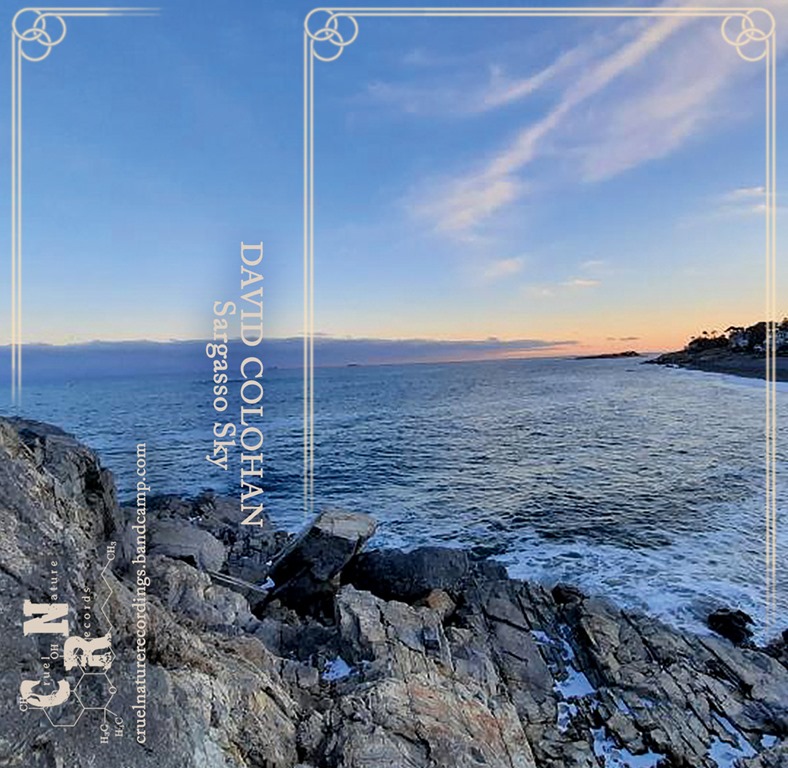
The liner notes paint the scene, where ‘A sargasso sky shimmers above a twilit American shoreline, slipping in & out of time. Via a way slowed down take on jazz fusion, limpid pools catch its reflection, ebbing & flowing with the soon to come stars… The cover images taken at Marblehead, Massachusetts depict something of the aura of an area that H.P. Lovecraft considered life-changing. Step into the sea & sky….’

There are many layers, then, to this release, which extend far beyond the surface of the music itself. But when it comes to the music, Colohan presents ten pieces, all comparatively concise (only four extend beyond the five-minute mark, and none reach beyond eight), and the form is ambient yet structured, with rippling washes of synth gliding over the mellow mists of sound which float invisibly through the air. Despite its title casting its eye above the horizon to the sky, parts of this album is given to a preoccupation with the water, still, as exemplified by titles such as ‘Sacred Teeming Waters’ and ‘Longshore Drift’.

Whereas much ambient music is formless, abstract, the instrumentation vague, on Sargasso Sky, David Colohan offers musical works with structure, and with the implementation of identifiable instruments.

‘Longshore Drift’ is led by sparse piano, backed by a sliding, bulbous synth bass that’s extremely eighties in sound, and elsewhere on the album, long resonant voices dominate, from flute to organ. These are clearly synth voices, sounds conjured digitally in response to creative needs but also evolving technology facilitating new music. There are some bold drones which surge and swash on ‘Anoint’, and ‘Summers Old as Stars’ brings late 70s and early 80s synth stylings to the fore, with hints of Tubular Bells and Vangelis, and the myriad music of this era which remained anonymous. But for all that, Sargasso Sky is subtle and it’s still not overtly electro for the most part, and it’s not of the prog persuasion either. But what is it? Certainly, there are parts which do very much pursue progressive forms, and Sargasso Sky is very much an exploratory work: spacious, undefined by limits of composition or instrumentation.

AA
a2197923751_10

Christopher Nosnibor

Sometime during lockdown – which one, I can’t remember exactly, but likely the first, where here in England what initially looked like being a couple of weeks, ended up being more like a lifetime. After the lockdown announced on 23 March 2020 was extended on 16 April for ‘at least three weeks’ and in fact running into June, the fear surrounding the lifting of restrictions saw references to Stockholm Syndrome circulating with increasing frequency in the media.

Described as ‘a psychological response’ which occurs when hostages or abuse victims bond with their captors or abusers, and the victim may come to sympathize with their captors, and

may even begin to feel as if they share common goals and causes.

The name originates from a failed bank robbery staged in Stockholm in 1973, where Jan-Erik Olsson, and his charismatic accomplice Clark Olofsson held four employees as hostages, remaining captive for six days in one of the bank’s vaults, and when the hostages were released, none of them would testify against either captor in court; instead, they began raising money for their defence.

While the syndrome is disputed, the concept is something of a source of fascination. Personally, I had never been one of those who found themselves ‘loving lockdown life’, but found myself apprehensive about the easing of lockdown: what would be the ‘right’ way to behave in public, how would things ‘work’? I didn’t need to worry about pub and gig etiquette for a while, but was more fearful of other people than I was of Covid – because people are unpredictable, and after being cooped up for so long, who knows how many might have lost it?

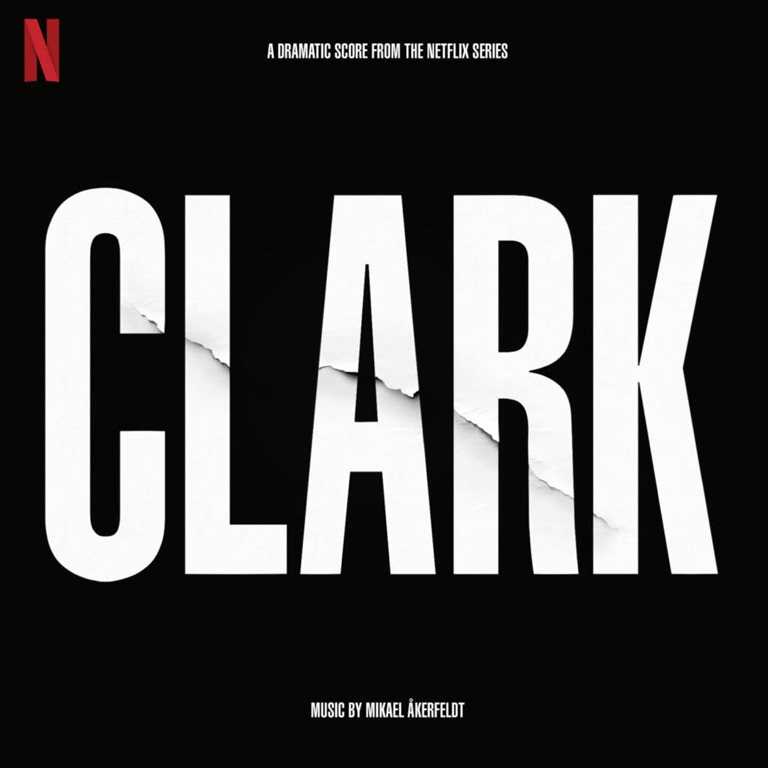
Swedish Netflix mini-series Clark is the story of Clark Olofsson, and while it’s won awards, I found its stylised and flippant comedy-drama approach to be pretty ‘meh’. There’s vague amusement to be had, but ultimately – and for obvious reasons – presents Olofsson as ‘cool’, a cheeky bad boy out for But then, just because it’s not what I would have wanted it to be doesn’t mean it’s no good, it’s just not my bag.

While there are some bold intercuts of ‘proper’ songs featured, it’s not a series where you find yourself really paying attention to the soundtrack for the majority of the time. Listening to the soundtrack independent of the series, it’s a mystery as to why this is.

Of course, much of the interest in the soundtrack will be the fact that it was scored by Mikael Åkerfeldt of progressive metal legends Opeth – and as much as this score is overtly cinematic, it draws equally on progressive rock, funk, laid-back jazz, and 70s cop shows. The last nine of the thirty-four tracks feature vocals, and this portion of the album feels separate again, and may have worked as a separate release or bonus CD or something, as it’s quite a leap. Hell, ‘Måndag I Stockholm’ goes full Sabbath. Incongruous is an understatement and it’s hard to know what to make of it all. Then again… why not?

AA

Varied, engaging and evocative, it’s imaginative and listenable and entertaining – and a lot less frustrating than the series itself.

 MikaelAkerfeld_Clark_LP_Gatefold.indd

6th May 2022

Christopher Nosnibor

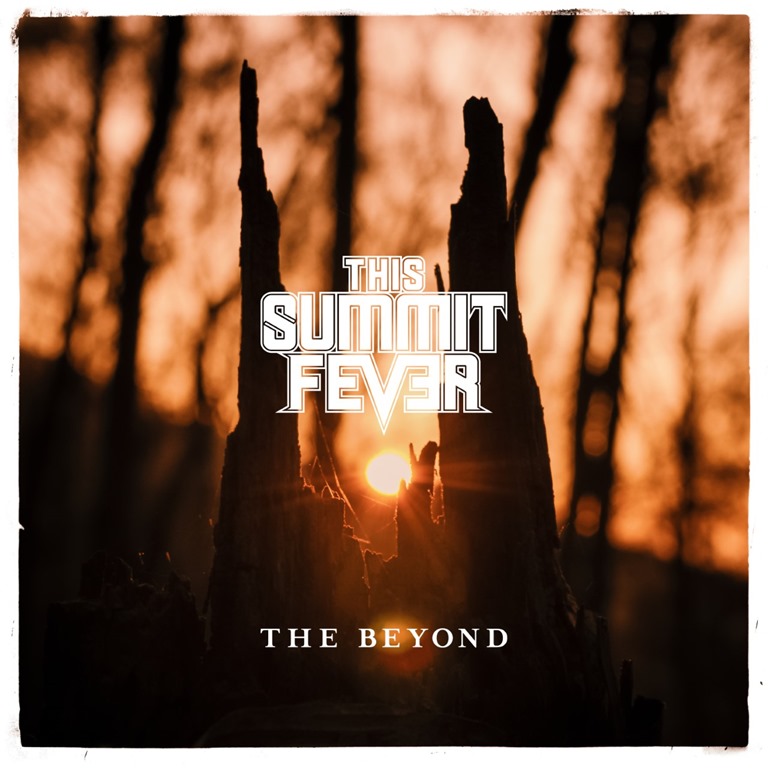
The second ‘The Beyond’ begins to rumble from the speakers (I always prefer speakers; earphones and headphones are fine for in transit, but if you’re going to sit back and listen to music, turning it up and letting it breathe and fill your space by listening through speakers, can’t be beat) you’re slapped with solid straight-up 70s vintage. If the comparisons and parallels with the inevitable nods to Sabbath and Led Zep seem predictable, don’t for a second think that that’s all there is here.

The guitar is dense and the bass is chunky, and there’s a deep psychedelic twist to this monster slab of ball-busting stoner blues steeped in reverb… and then you backtrack and realise they’re a duo, with one guitar, drums, and vocals. What? Really? Yep.

White Stripes may have started the rock duo trend, but it’s taken a while to really become truly accepted and widespread, and you could probably contend that while the likes of Blood Red Shoes, DZ Deathrays, Yur Mum, and Lovely Eggs (who are finally gaining the recognition they richly deserve) have been doing it and doing it well for absolutely ages on the grassroots circuit, it was Royal Blood who broke the doors down contemporaneously. But since Royal Blood went off the boil after just one album, there’s an abundant space for quality duos to show that it’s possible to achieve a full band sound without a full band.

As ‘The Beyond’ showcases, This Summit Fever show how by cranking it up and playing hard, two can achieve the sound of four, and what’s more, they’ve got tunes to back it up. And this is a tune, alright.

AA

LIVE DATES

May 15th 2022 – The Asylum 2, Birmingham

June 10th 2022 – The Black Heart, London

October 22nd 2022 – Tap ’n’ Tumbler, Nottingham

thumbnail_This Summit Fever