Archive for July, 2024

With every movement of American Standard, Uniform peels off a new layer and tells the story inside of the one that came before it.  It’s Uniform’s most intimate work to date, tackling themes of self-destruction and with a particular focus on vocalist Michael Berdan‘s lifelong struggle with bulimia nervosa. His lyrics sink down into the core of the innermost self, the small human being crushed in the grip of sickness. His bandmates join him, applying majestic droning that becomes both mechanical and omniscient. As the rhythms continually pulverise, Uniform gives themselves over to the grinding gears of an uncaring universe.

The thematic content behind American Standard can be divided down the middle into two distinct sections. While the A-side of the record deals with an individual who exists in a purgatorial state of physical and psychic crisis, the B-side serves to address how a lifetime of dealing with an eating disorder has impacted those around him.

Permanent Embrace,” available today, is the album’s final statement. Berdan tells, “It touches on a facet of the disease that I’m incredibly wary of facing. Built on a narrative foundation laid out by author and lyrical collaborator Maggie Siebert, the song revolves around the idea of a person holding a loved one as an emotional hostage. Seeing perverse beauty in a story about a car crash, the narrator relates the analogy of two automobiles twisted together to that of his last standing relationship. As he has broken down over time, so has the one who continues to stand by him. The object of his manipulative guilt trips remains locked in a hopeless situation, terrified of what he may do to himself if they were to finally leave.

The music reflects the psychic violence of the lyrics, as riffs and rhythms that wouldn’t feel out of place in the Unsane catalog careen into giant synth melodies before collapsing into itself. This is kind of our misguided interpretation of what Faith No More were doing on ‘Angel Dust’, and we hope that our tip of the hat to those masters of madness can hold a candle to their horrific splendor.”

For “Permanent Embrace,” Uniform teamed up with director Sean Stout on the single’s compelling visual. Stout tells, "Without sounding trite, when we first read Mike’s lyrics to the record our reaction was extremely visceral. They are brutally introspective and beautiful at times and we wanted to try visually to convey that range of emotion in a sequence of single images that unfold narratively and potentially shift their own meaning over time. Our concept was to intertwine images of an outer world-overgrown, rusting and moving on in its decay-with an inter-world that is largely going through the same process as a result, but is markedly separate as well. We never see one observe or interact with the other, yet they are the same and of the same world."

Watch the video for ‘Permanent Embrace’ here:

AA

Uniform wants to find what’s underneath. And what’s underneath the underneath. And what’s under that.
American Standard begins with a shock. A voice, a room, a face in a mirror. In the mirror stares a visage, doubled and staring back. Each line comes back to him: reflected and refracted in the unsympathetic glass. Forget for a moment that Berdan has been destroying his throat in Uniform for over a decade. Forget his highly stylised delivery on the band’s acclaimed collaborative work (alongside experimental doom titans The Body and Japanese heavy rock powerhouse Boris). Forget the entire tradition of abrasive vocals in aggressive music. Look for what’s underneath the songs, the form, and the style.

To help peel away this narrative of eating disorders, self-hatred, delusion, mania, and ultimate discovery, Berdan sought assistance from a towering pair of outsider literary figures. Alongside B.R. Yeager (author of the modern cult-classic Negative Space) and Maggie Siebert (the mind behind the contemporary body horror masterpiece Bonding), the three writers eviscerate the personal material to present a portrait of mental and physical illness as vividly terrifying as anything in the present-day canon. The result is an acute articulation of a state beyond simple agony, capturing the thrilling transcendence and deliverance that sickness can bring in the process.

American Standard is surely Uniform’s most thematically accomplished and musically self assured album to date. Sections spiral and explode. Motifs drift off into obscurity before reasserting themselves with new power. Genres collide and burst open, forming something idiosyncratic and new. There’s a grandeur, due in part to the addition of Interpol bassist Brad Truax alongside the percussive push and pull of returning drummer Michael Sharp and longtime touring drummer Michael Blume, marking his Uniform recorded debut here. However, this magnificence is most clearly attributable to the scale and power of guitarist and founder Ben Greenberg’s arrangements, matching ever elegantly to the intense lyrical subject matter.

Underneath it all, what remains is trust. A record of this range and depth, a piece of art so far out on a ledge, can only be attempted with an extreme and almost foolish amount of understanding between collaborators. American Standard stands firmly on the bedrock that Uniform’s two original members, Michael Berdan and Ben Greenberg, have been building on for over a decade.

In Greenberg’s words, “When we started this record, Berdan told me: ‘I trust you to come up with a solid foundation for this, however you envision this thing. I want you to realize it completely, because I believe in you.’ So I wanted to write something overwhelming and all-encompassing for Berdan to lead his narrative through… because I trust and believe in him.” For an album to defy simple genre exercises and become a work of art, the musicians behind it must push themselves so far beyond the frayed ends of an established comfort zone that they might never return. Without a shred of doubt, American Standard is a work of art, agonising in its honesty and relentless in its pursuit of sonic transcendence. It is hideous. It is beautiful. It is necessary.
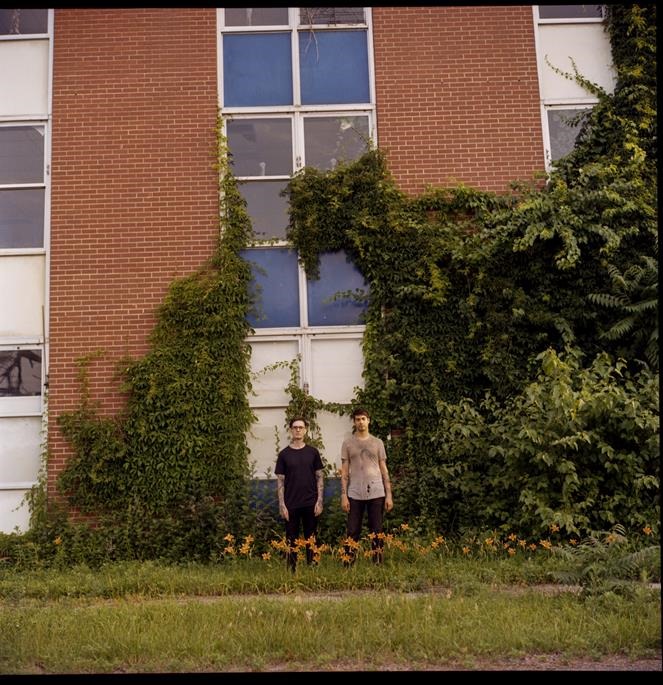
240528_Uniform_Press-07-99028a051405143c

Press Photo By Joshua Zucker-Pluda & Sean Stout
Pictured: Founding Members Ben Greenberg (Guitar), Michael Berdan (Vocals)
Not Pictured: Mike Sharp (Drums), Brad Truax (Bass), Michael Blume (Drums)

The collective of renowned musicians from Norway’s west coast henceforth known as WHISPERING VOID is releasing their first ever video single ‘Vi finnes’ (‘We Exist’) taken from their forthcoming debut full-length At the Sound of the Heart. The album has been slated for release on October 18, 2024.

Watch the video here:

WHISPERING VOID comment: “The main lyrics in this song are in Norwegian, more specifically in an Eastern dialect of Norwegian, and this creates a slippery and almost untrustworthy character”, vocalist Kristian Espedal writes. “The title, ‘Vi finnes’ means ‘we exist’, but the lyrics are about us never existing. The words are about the morning, which is an opportunity, and about the hours, which are the repetition of everything that happens all the time but is never the same. There is much hopefulness in this song, and at the end even a bit of suffering. When the lyrics move into English, they steer into a different direction. Ferrucio came up with the idea for the video. The lady in this film is observing life from the past. I like the very subtle connection to the lyrics.”

Lindy-Fay Hella adds: “I love the vibe of the video”, the vocalist enthuses. “I like that there is a connection with the song’s lyrics, but it also adds a new dimension to it. The haunted house in this video is situated in my neighbourhood and the lady in the video is one of my best friends. She really fits this song. I feel somewhat reminded of the fairy tale ‘Goldielocks and the Three Bears’.”

WHISPERING VOID album cover "At the Sound of the Heart"

Black metal legends Mork have announced their new album Syv today, set for release on 20th September on Peaceville. Alongside the news, the band have shared the album’s first single ‘Utbrent’. Speaking about the new single, Mork creator, frontman and mastermind Thomas Eriksen said “Utbrent is a depiction of getting burnt out and the struggle of holding oneself standing. Even whilst silently knowing the day will actually come and break you down…the harsh punishment of living as life breaks you down and burns you out”.

Watch the lyric video for ‘Utbrent’ here:

AA

Following on from Thomas Eriksen’s self-titled Udåd project debut earlier this year; a dark release which explored the more underground & murkier-sounding waters of primitive black metal from a by-gone era, Syv emerges as the new pinnacle of Mork’s and Eriksen’s ever-evolving journey, as well as a creative expansion both sonically & compositionally over all prior works.

Syv also undoubtedly represents Mork’s most expressive and diverse works to date, with exquisite melodies interspersed with brutal and even occasionally progressive riffs amid an ever-present air of melancholy. This forms a perfect backdrop for Eriksen’s thematic dive through the contemplations of looming mortality, and digressions through the depths and contrasts of human existence; from the blackness of despair, to the pride & strength in overcoming, as well as absorbing additional inspiration from tales of old.

“We have reached the seventh chapter of the Mork saga. As I have stated earlier, it has been important for me to let the music evolve over the span of albums. It has really been a rewarding couple of years writing and recording “SYV”. When listening back the finished product I felt a great satisfaction. Brutal riffs meeting melancholy and melodic passages with a slight progressive approach. Lyrically scraping the bottom of human existence and frailty as well as touching an immense pride and strength. This is probably my most varied album to date. Which in my mind makes a perfect outcome and addition to the Mork catalogue.” – Thomas Eriksen

Syv was performed, recorded & mixed by Eriksen himself, with engineering assisted by Freddy Holm (who also contributes with strings and synths). Mastering work on the album was carried out by studio mastering guru Maor Appelbaum (Sepultura) in collaboration with Jack Control at Enormous Door (Darkthrone).

Mork

Photo by Daniel Pedersen

1st May 2024

Christopher Nosnibor

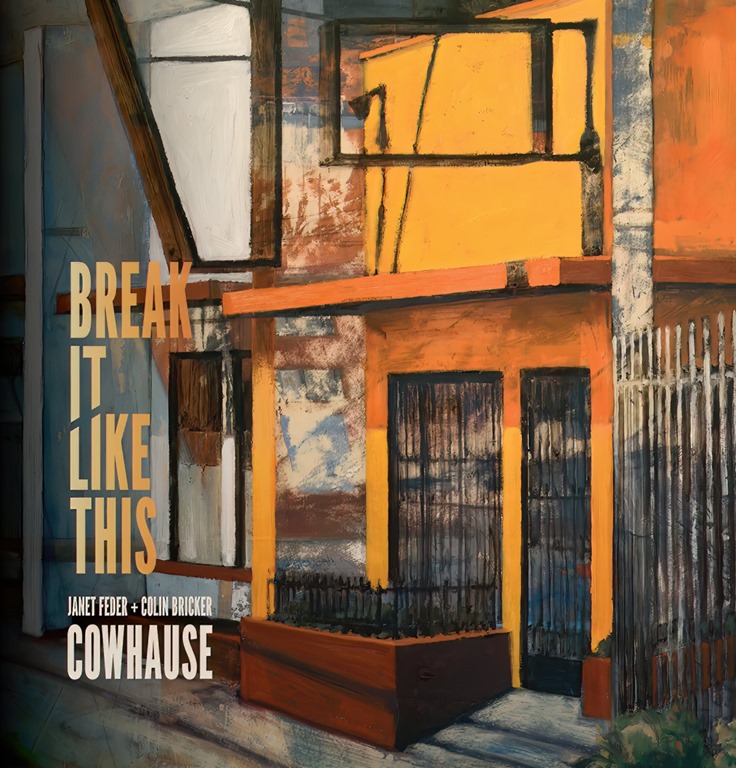
Once again, I’m late on this one, but also, once again, not nearly as late as the artist. This album has been a long, long, long time in coming. And that’s an understatement. As the bio details, ‘Janet Feder plays mostly baritone guitars and analogue, hand-made sounds; Colin Bricker (aka Brokerclinic) is an electronic musician and record producer known for his cutting-edge computer music, characterized by beautiful, twisted, broken soundscapes and skittering rhythms. This is their first new album in 19 years.’

19 years! Consider that for a moment. Almost two decades: there will be people who have been born, gone through school, got married and have started families of their own in this time. After such a protracted time out, it feels perhaps likes less of a return and more like starting afresh. Not that Janet has been creatively dormant during this time by any stretch (I recently covered the reissue of See It Alone by Sorry For Laughing, on which she features, and there have been numerous other releases in recent years, but collaborating with different people inspires different approaches and Break it Like This sounds and feels fresh, inspired and invigorated.

Break it Like This is brimming with ideas and range. The first composition, the appropriately-titled ‘Opening’ introduces the album’s manifold varied elements – scratchy guitar scraped and manipulated more often than picked or strummed intersect with extraneous noise and stuttering electronic beats. The volume see-saws and things suddenly break down at the most unexpected moments, disrupting any emerging flow.

Then again, there are some folksy runs of picked notes, and some heavily treated vocals, as on ‘Angles & Exits’, a crackling collision of disparate elements. Gentle guitar and clattering percussion joust it out as if two songs are overlaid in a sonic palimpsest, and what could be a beautiful pastoral tune is rendered as wreckage.

There are tangles of notes and serpentine rhythms which clamour, clatter, and crack from every whichway, and the mix is such that details spring from left and right, from the back of the room, from above your head and around your ankles, adding to the extreme disorientation of jarring pieces like ‘Blue State’. There are so many hints of songs and melodies which exist in a potential state; there are moments where something threatens to take shape, but simply never emerges. ‘Plan to Live’ offers haunting echoes of something atmospheric, splintered by rapid-fire beats which seem completely at odds with it. ‘Banjo’ reconfigures hillbilly wanderings into a postmodern, post-apocalyptic, post-everything soundscape which evokes visions of broken down cars and broken down society, a fatigued scraping out of making music after there’s nothing left but desolation, the notes ringing out into ruins and rubble, a theme which continues through the desolate flamenco-tinged ‘Heater’, before it swings into a psychopathic dance groove. It feels like the soundtrack to a bleak, Ballardian tale set amongst drifting sands, rusting vehicles, and dilapidated buildings, while the only survivors are the deranged.

A deep-running sense of ‘otherness’ runs through Break it Like This. Familiar elements, twisted and misshapen to a point that they no longer feel so familiar, and instead take on a more curious and uncomfortable form, abound. So many moments feel so close, and yet so far, in their proximity to the things we know and are comfortable with. But twisted, distorted, mangled, they take on more sinister forms, shadowy, strange.

Break it Like This is testing, nudging at the senses, piling up the discord and the irregularities of the structures and stoking a sense of bewilderment. This is experimentalism and collaboration at its best, excavating new terrain and forging something unexpected and challenging – while retaining a musicality which keeps it within the realms of listenability.

AA

a0587584873_10

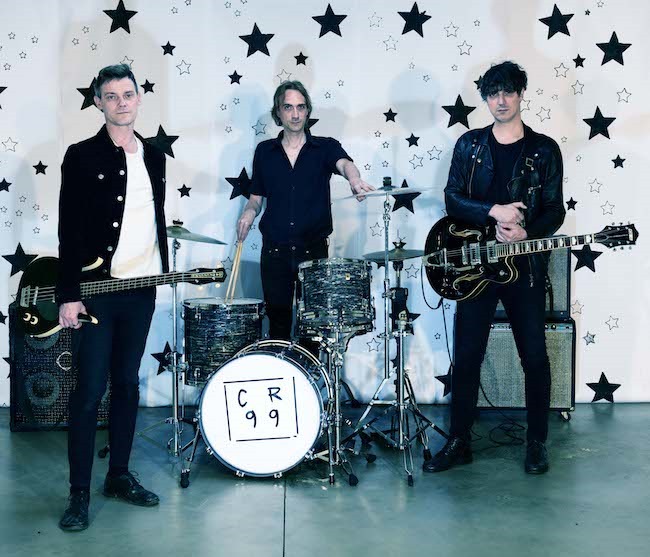
Italian psych band Cosmic Room 99 have announced their debut album will be released on 11 October via Sister 9 Recordings" (UK)/ Little Cloud Records (US)/Shyrec (ITA).

They recently shared their debut single ‘Plastic Venus’. They explain: “Everything is fiction, everything is altered, everything is seen through filters, nowadays even Venus is made out of Plastic”.

Watch the video here:

AA

The band’s name was inspired by a documentary called ‘The Cosmic Room’, which tells the story of NATO employee Bob Cohen accidentally discovering a top-secret plan to eradicate part of the world’s population to maintain Earth’s sustainability. The number 99 in numerology represents someone who uses their gifts to make the world a better place, encapsulating the band’s ethos.

Musically, Cosmic Room 99 draw influences from a diverse range of sources, including the obsessive rhythms of The Velvet Underground, the dreamy psychedelia of Syd Barrett’s Pink Floyd, the harmonies of The Beach Boys’ "Pet Sounds", the sharp feedback of The Jesus and Mary Chain, the austere wave of Joy Division, and the deep, abysmal worlds of Bauhaus, all linked by a punk attitude.

The album was recorded primarily in their home studio in Treviso, Italy, where band members played various instruments, creating a collaborative and cohesive work. To add warmth to their sound, they recorded vocals and analog drums and mixed the songs at Overdrive Studio in Treviso, with producer and sound engineer Edoardo "Dodi" Pellizzari. Final mastering was done by Collin Jordan at The Boiler Room in Chicago, USA, adding the finishing touch to their music.

AA

5tqs_COSMICROOM99PRESSSHOT1650

Photo credit: Francesca Janes

Christopher Nosnibor

Forty-five years on from the release of their debut album, The Crack, The Ruts – or Ruts DC as they subsequently became – as still going, and perhaps unexpectedly, they’ve been more prolific in the second half of their career than the first.

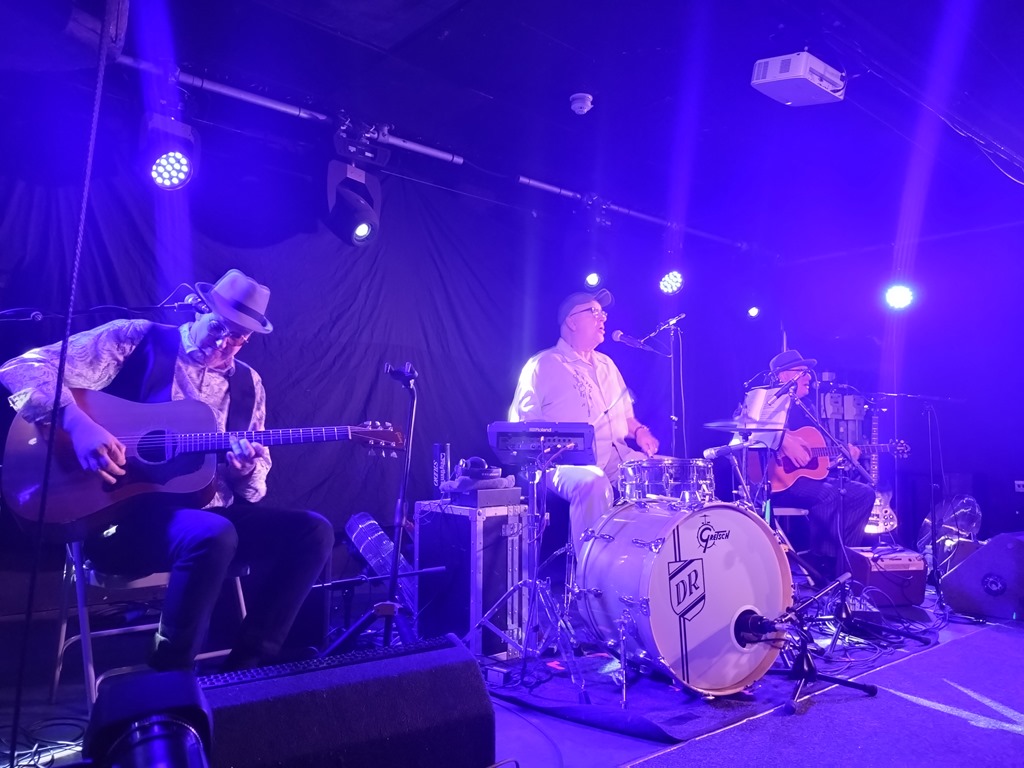
Having released two Electracoustic albums – stripped back versions of material from their back catalogue, they’re back on the road with this format, too. The trio seated in a line on the stage befits a band whose members are in their late sixties / early seventies. They’re done being ‘cool’ or staying ‘punk’: “punk’s dead”, Segs shrugs at one point during tonight’s set. It’s striking just how honest and open they are during the lengthy intros and meandering anecdotes which seem to spring spontaneously, often without punchlines or clear endings. These are off-the-cuff, unrehearsed, down the pub type chats, which provide some real insight into the workings of the band and its members. Unpretentious, grounded, it’s a joy to feel this kind of intimacy with a band of such longstanding who truly qualify – and it’s not a word I use often – as legends.

They’re a band at ease with one another and the audience, Ruffy particularly happy to be back in his home town and regaling us with a lengthy tale about his early life, his father, and shoplifting out of necessity.

Not being able to get out so much lately, I have to pick my nights out carefully and strategically, and I had been in two minds about this one, for a number of reasons. But within minutes, it became apparent that coming down had been the right decision. Y’see, music can reach parts that practically nothing else can. Once comes to associate songs, bands, albums, with people, places, life experiences. They become indelibly connected, for better or worse. And The Ruts are a band who carry substantial emotional, reflective weight for me on a personal level. Of course, this is about me rather than the band, but this is a contemplation on how we engage with music and how songs and bands, become the soundtrack to our lives, and it’s something we only really realise in hindsight. And I feel that sharing the details of this complex and intimate relationship with a band is part of a dialogue we need to open up.

I was around thirteen or fourteen when I began hanging round the second-hand record shop where I would subsequently become the Saturday / holiday staff. The owner was – to me, being fifteen years my senior – an old punk, and he introduced me to a shedload of bands, and would air-bass around the shop to ‘In a Rut’, a song he would also cover with his band. This song – indubitably one of THE definitive punk singles – would become an anthem to me in my life, a song I always play to remind myself to get my shit together when times are tough. If punk has a solid link with nihilism, ‘In a Rut’ provides a counterpoint, as a rare positive kick up the arse. It’s a song I play when I need to remind myself that I need to get my shit together. It must surely be one of the greatest songs of all time. And what a debut! And that was even before ‘Babylon’s Burning’…

The first time I met my (late) wife’s dad – who died in 2003 at the age of 50 – he was blasting The Ruts and Rage Against the Machine on his car stereo, and I knew immediately we’d get on well. And we did. He was a grumpy fucker who hated anything establishment, and had great taste in music.

And so The Ruts and Ruts DC are a band who run a thread through my life. I find it hard to hear them without a pang of sadness, but ultimately, they’re an uplifting experience, and this is so, so true of tonight’s show.

‘Music Must Destroy’ makes for a strong opener and provides an opening for a not-quite anecdote about number-one fan Henry Rollins (another hero of mine and my wife’s, we got to see The Rollins and numerous spoken word performances, including one which included an expansive tale of his obsession with The Ruts and how he came to front the band at their reunion fundraiser for guitarist Paul Fox in 2007), who provided additional vocals to this, the title track of their 2016 album. It provides an early reminder of the fact that they’re more than merely a heritage band, and that they’ve always been, and continue to be, political.

‘West One’ and ‘Love in Vain’ land early, and the range and quality of the material stands out a mile. The set spans punk, reggae, rockabilly, anthems… and they have songs that mean something, too.

20240718_202740

One thing that sets Ruts DC’s acoustic(ish) sets apart isn’t that the lead guitar has some pedals and tweaks and that it’s not a straightforward acoustic strum, but the fact the arrangements rightly bring the details to the fore. Listen to The Crack and it’s apparent that the basslines are special. And paired down, you can really hear everything that’s going on. Their material is so much more than the lumpen three-chord thud of regular pub-rock derivative punk. They switch slickly into dub mode, with echoed rimshots and booming heavy bass, and the sound – and musicianship – is outstanding.

‘Something That I Said’ arrives as the penultimate song of set one, before closing with a new song, ‘Bound in Blood’ that’s a strong new wave cut. And suddenly, with the introduction of an electric guitar, it’s louder, too.

The second set is more electric, but still minimal in terms of arrangement, and stripped back: ‘Dope for Guns’ shows the song’s solid structure. It’s a rapturous experience to hear them powering through ‘Staring at the Rude Boys’ and ‘Babylon’s Burning’ towards the end of the set, and then to hear them segue ‘In a Rut’ with a full-lunged rampant chorus of Neil Young’s ‘Rockin’ in the Free World’ was truly rapturous. Again, there’s a personal element here: a song I associate with my wife, and a song she in turn inherited from her dad, I found myself shedding a tear at hearing a great song well-played. It wasn’t just a token gesture to enhance and pad the set: they meant it and felt the power of the sentiment. And right now, we need to cling to that. These are dark and fucked-up times.

They ramped things up to slam in a fully electric, fully punk rendition of ‘Criminal Mind’ to draw the curtain on the night. And what a night. And what a band.

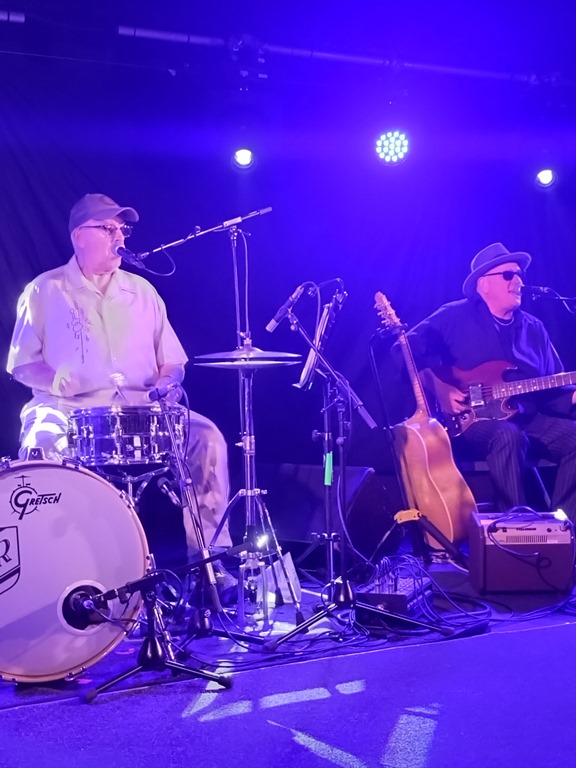
20240718_215617

While they do still thrive on their early material, and do it justice, they have so much more to offer, too, and significantly, they’re not attempting to recreate the experience of the late 1970s with some sad old punk nostalgia trip. They’re clearly happy onstage – that is to say, loving the fact they’re up there, still going, and playing these songs. They’ve every reason to be: tonight, they deliver solid gold.

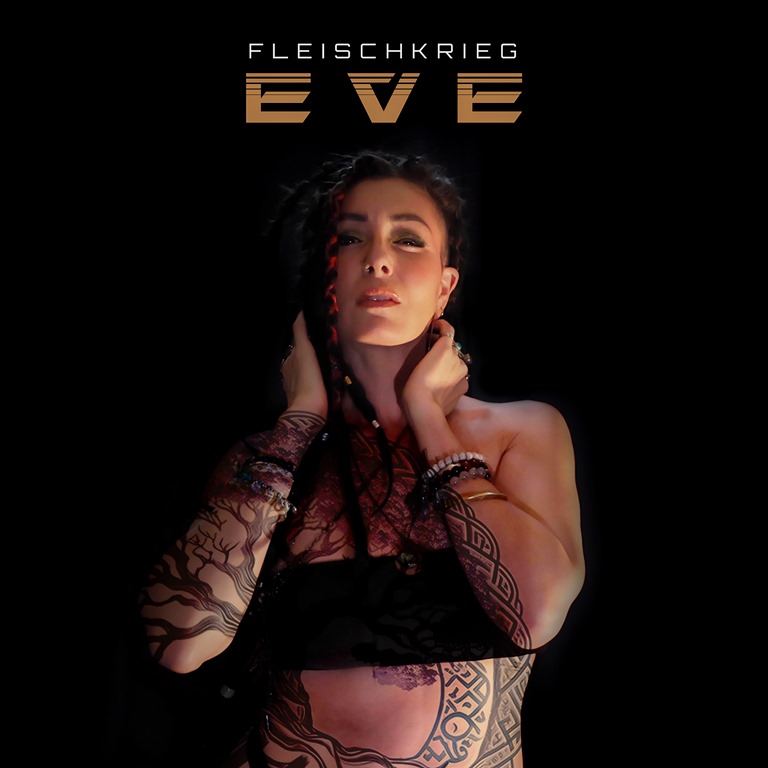
Industrial band, FLEISCHKRIEG has unleashed their new single & video, ‘Eve’.

The song ‘Eve’ is based on the Gnostic tradition of Adam’s wife being the hero in the Genesis creation myth – rather than the villain. This second century Christian sect revered Eve as an early incarnation of the Divine Feminine, and if it weren’t for her courage to commit “original sin” – we’d still be trapped in a genetics lab known as the Garden of Eden.

The song is sung from Adam’s point of view – he praises Eve for delivering them from the tyranny of the Elohim. Though they are “thrown out the gilded cage”, Adam asks Eve to “make the thorns our home”, a poetic nod to human resilience in the face of catastrophe.

iItalian scholar Mauro Biglino and his research on the Biblical Apocrypha inspired the song’s themes and lyrical content. Mauro briefly translated for the Vatican – but was eventually fired when his published works revealed modern Christian theology was incompatible with the written texts of ancient Hebrew authors.

The song was produced, mixed, and mastered by Logan Mader (Machine Head, Once Human).

Watch the video here:

AA

813380

May 2024 / July 2024

Christopher Nosnibor

Gintas K is possibly one of the most-featured artists here at Aural Aggravation, and I’ve written about his work elsewhere, prior to establishing this site. I’ve often commented – sometimes flippantly, sometimes in sheer awe – at his rate of output, but it seems appropriate to make the observation once again, since a little while ago I found myself simply swamped and a shade overwhelmed by the volume of submissions I was receiving. Electroacoustic Space Drumming landed in my inbox and I failed to so much as open it, let alone download it. Then, Outsider’s appeared, reminding me I was behind on things, only to discover that a split tape release with Jacob Audrey Taves had come out in between the two.

The first of the releases, Electroacoustic Space Drumming, comes courtesy of London label Anticipating Nowhere Records, as a download and limited cassette (in an edition of 20, more than half of which have gone already).

The titles are incomprehensible to me, but I very much doubt this will make any difference to my appreciation of this jangling, bleeping glitchfest. The six tracks do very much sound like a circuit meltdown, the digital xylophonic cadences interrupted by sudden jolts or sound and stuttering microbeats like an Action Man marching band trapped inside a jam jar half-full of water. Creaks, groans, and splashes abound and contrive to create a complex and layered work.

It’s difficult – if not impossible – to unpick everything that’s going on, and consequently, you simply sit back and let it wash over you. But that doesn’t mean it’s comfortable, or easy to do so.

And then there is Outsider’s, with its questionably-placed apostrophe in the title. Outsider’s what, precisely? And with twenty-three tracks, released digitally and as a colossal five disc CD work, it’s an absolute beast.

The five CDs make sense in a way which is less apparent on the digital release, as there are essentially five segments or suites, with the tracks belonging to each names with a suitable prefix: jazz, crunchy, noise, drones, and piano stuff. Each contains between three and six pieces, effectively an EP’s worth apiece.

In truth, the track titling isn’t especially helpful: the six tracks of the first set, ‘jazz’, and entitled ‘jazz good’, ‘jazz also good, jazz prolongation’, ‘jazz’, ‘jazz’, and ‘jazz.’ Spoiler alert: there’s nothing especially jazzy about the ‘jazz’ cuts, but there’s electronic percussion that cuts through foamy bubbling washes and a disarray of oddness that sounds like machine gun fire, and glitches aside, it almost feels co-ordinated. And no-one needs a jazz prolongation, although this decidedly unjazz cut, we can forgive.

The four ‘crunchy’ cuts are riots of bleeps and squips, a riot of sound that’s no more vigorous than on the first, ‘crunchy.geras greit.’ The two pieces simply entitled ‘crunchy’ combine haunting, hovering tones, and collapsing circuits and lurching synaptic stutters, like exposed wires sparking as they swing, and things become increasingly scratchy, scrapy, a frenzied buzz of fractured, fizzing, fucked electronics.

The three ‘noise’ pieces build in their noisiness, but at heart aren’t all that dissimilar from the ‘crunchy’ pieces, although perhaps quieter and less overwhelming, and overwhelming it is. Then again, the ‘drone’ pieces aren’t especially droney, and more represent explosions of frothing discord, and the final suite, ‘piano stuff’ is a cacophonous conglomeration of bubbling noise down a drain.

These recordings remind me of my early days of reviewing, back in 2018 or so as my introduction to truly avant-garde, experimental electronic works, and Gintas K – perhaps one of the first acts I discovered as an exponent of dripping, bleeping, weppling, weirdness. All this time later. he’s still proving to be a rare master of electronica. Come 2024, and Gintas K is still right there at the forefront.

a1621189998_10a2101315344_10

‘Pagan Synth’ duo, ESOTERIK has just unveiled their new single, ‘Mentor’ from the forthcoming EP, Archetypes.

For the next installment of the EP, ESOTERIK explores the insight and experience the ‘Mentor’ has to offer. Get lost in the hypnotic groove but heed the advice of the Mentor for it’s the end of suffering. It’s a beacon in the darkness calling you from the illusive world of form. It’s a voice that’s behind the incessant stream of thoughts; a gentle nudge with a firm but helping hand. The choice has always been yours all along. Will you be a listening ear, or will you flounder in the chaos?

On the upcoming EP Archetypes, the band examines the tropes that have weaved a thread across societies for centuries. “It’s such an interesting topic and really highlights the power of language whether written or passed down via word of mouth. The legends hold a commonality that span through time and culture. Before the world was connected by technology, these stories held the experiences and wisdom for generations to come. Whether they are steeped in symbolism or ritual, the lessons are still infused and if sensational that only ensures the survival beyond our limited life spans.”

Check ‘Mentor’ here:

AA

965696

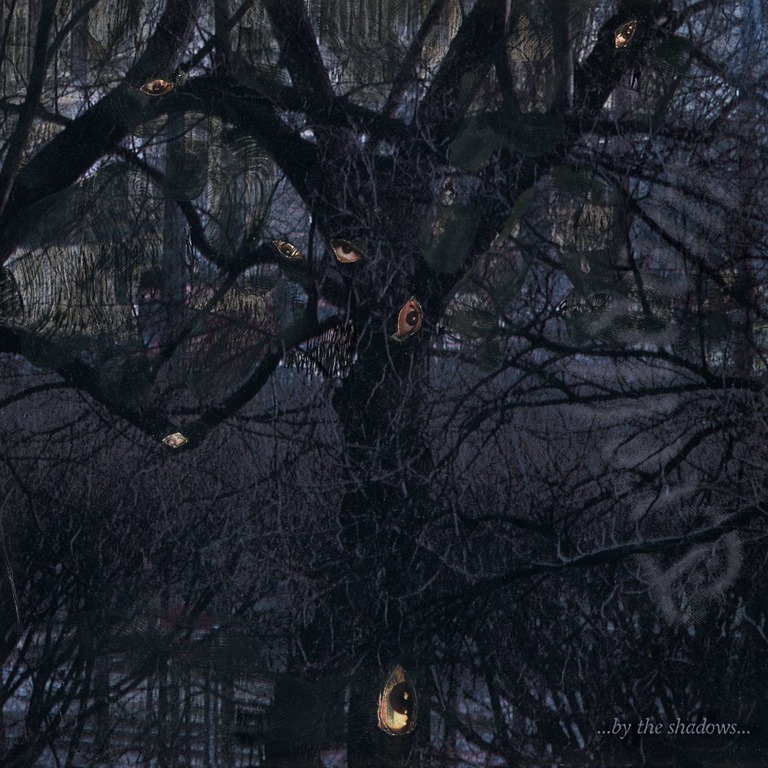
TRELLDOM drop ‘Exit Existence’ as the next single taken from the legendary Norwegians’ forthcoming new full-length: …by the shadows… has been scheduled for release on September 13

TRELLDOM do neither comment on their music nor explain their art.

Listen to ‘Exit Existence’ here:

AA

a1feee92-0a23-7e45-118d-c6293471ef74