Archive for July, 2019

Gizeh Records – 26th July 2019

Christopher Nosnibor

‘File under: Avant-Garde, Drone, Dark-Ambient’, says the press release. And yes, the nine pieces on Göldi fell, an album limited to 175 hand-printed copies on CD are indeed darkly ambient drone-fests, rich in atmosphere and the rumbles of distant thunder. I spend many long hours listening to music of this ilk, and while I do enjoy it, I sometimes struggle for new descriptors, and often find myself gradually drifting in a way that means I have no significant emotional response to detail. And yet this is most definitely not ‘background’ audio: it’s mood-influencing, and the creeping fear chords and unexpected interjections and the trembling sawing scrapes contrive to jangle the nerves and leave the listener on edge. Yes, I’m glancing over my shoulder, pausing my typing to listen to determine if the sound I just heard came from the speakers of an intruder on the stairs, someone in the back yard.

The strings drone and drag into scraping metallic contrails that melt into undifferentiated sonic melanges, and this is an album that creeps and crawls, spreading dark energy like dry ice around the ankles as it plunders the gut-twisting fear-chords and unsettles from beginning to end.

At times mellow, delicate, and at others uncomfortable, scraping sinuous and dissonant, this is a deep and contemplative work that elicits reflection from the listener. At this particular moment, I’m reflecting on time – specifically, time when I had time to stop, to think, to spend afternoons simply listening to music and / or reading a book. It feels like a long time ago. What happened?

For all the darkness, I can’t help but be amused by the press write that states ‘Several Wives lie in the darkened corner of a room. Paintings torn, forgotten against the wall. Dead rhythms seep through the floor. Everything is tired. Everything is jaded.’

It’s funny because of the band name. it works in that it conjures a most visual and vaguely surreal image that’s entirely incongruous with the music itself. Plus, as anyone who’s married will likely tell you, one wife is more than enough, and the prospect of several is even more terrifying than the shrieking, wailing cat, string crescendo that howls and mewls the challenging finale of ‘The Blinding of Delilah’. There’s also an element of if not outright humour, them flippancy about some of the titles: ‘that dream you had’, ‘that other dream you had’, and ‘Her on the phone’ are casual-sounding and contrast with the weighty, atmospheric drones that creep and crawl around among the looming shadows of their own casting.

Göldi fell is a difficult album, but for all of the right reasons. None of it feels easy or comfortable. And nor should we want it to. It’s healthy to be unsettled, unnerved from time to time, to be dragged out of that tiredness, that jadedness.

AA

GZH91-Several-Wives-Goldi-fell-Sleeve_1024x1024

Buzzhowl Records / EXAG

I caught Thank way back in December 2016, supporting Oozing Wound at The Brudenell in December 2016. Having a gig to review never fails as an excuse to leave a works night out early: it’s up there with a family emergency, only way cooler. Obviously, working with a bunch of straights who listen to whatever’s on the radio and have next to no concept of ‘alternative’, the sphere in which I exist and the music which is the focus of my ‘other’ job is completely beyond them,

The review of that night described Thank as something of a ‘“supergroup” collaboration between members of various bands, including Irk and Super Luxury’, clocking Irk’s front man Jack Gordon on drums, and Freddy Vinehill-Cliffe, bassist with Beige Palace, providing off-kilter vocals. And a lot of Day-Glo. On reflection, it’s probable that not a single member of Thank had been born when Day-Go was all the rage first time around. I remember my eye-watering acid yellow tennis socks with fondness. As I also now remember that show, meaning that a new release is most welcome.

‘Think Less’ prefaces the arrival of their second EP, ‘Please’, set for release in October, and finds another Leeds noise luminary, Theo Gowans adopt a permanent place in the latest lineup. It’s a wild frenzy of lo-budget industrial funk that throws together Cabaret Voltaire, Throbbing Gristle and early Nine Inch Nails into a blender, tossing in a messy vocal with an unashamedly northern accent and spraying the resultant snarling mess all over a chunky and deeply infectious cyclical groove that’s an instant earworm. Raw, ragged, jagged and all the better because of it, it’s cause to get excited.

AA

Thank - Please

Christopher Nosnibor

Ashley Reaks’ second album of the year is his second (not of this year) with Hull poet Joe Hakim (who I sadly didn’t get to see perform at Long Division Festival in Wakefield the other month due to my ongoing failure to clone myself.

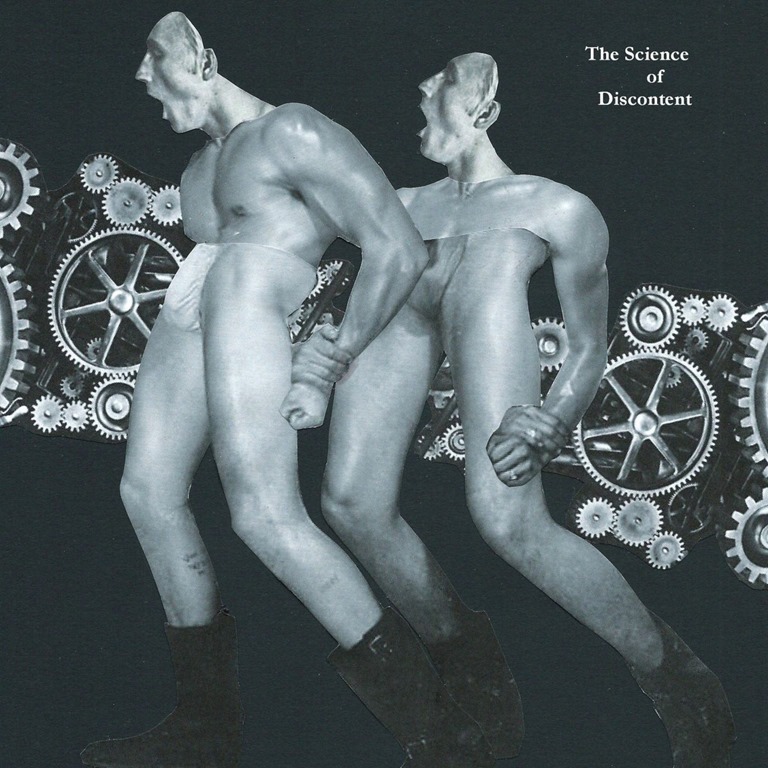
The Science Of Discontent – furnished with one of Reaks’ typically warped collage-art covers – returns to the bleak sociopolitical seam of its 2015 predecessor, Cultural Thrift. Reflecting on this, who would have thought that things would be even worse four years on from 2015? Back then, austerity was grinding us down in Britain as the world continued to drag its way along in the wake of the financial collapse that spanned 2007-2011.

2019, 11 years after the Conservative government announced their first austerity measures, and nine years after the programme was introduced, we’ve still ruled by austerity, and now we’ve got fucking Trump and Brexit on top. Small wonder we’re discontent.

Musically, it’s a classic Reaks cocktail of dub reggae, ska, post-punk, and – as have been coming into increasing prominence in his melting-pot-of-everything compositions – prog rock and jazz. The individual arrangements are comparatively minimal – or, more specifically, the music is kept in check during the spoken passages. This means that the instrumental segments, where the band cut loose, really stand out. By stand out, I mean like the proverbial sore thumb. That’s no criticism: it’s Reaks’ MO, and his revelling in rendering spectacular incongruities that somehow work that’s his primary superpower.

The subject matter Hakim explores on The Science Of Discontent is bleak and a times harrowing: ‘Dead Legends’ is less a celebration of posthumous recognition and the route to artistic immortality as a bitter dissection of the plight of the artist, for whom getting fucked up and committing suicide is likely the only career option that’s likely to yield any kind of success.

Death, damage, and decline are recurrent themes across the nine pieces here, and they’re all delivered in a twangy but downbeat monotone. The apparent dispassion of the delivery does nothing to detract from the lyrical impact: Hakim’s enunciation is crisp – and dry – and contrasts with the buoyant brass and thick Jah Wobble-style basslines that bounce and stroll.

‘New World Order Evangelists’ finds Hakim venting his spleen over government and conspiracy theories and contemporary culture and ‘Orwellianism’ over some seriously jazzy jazz that somehow drifts into some post-rock guitar, while the spacious soundscapes that create an oddly flat atmosphere on ‘The Customer is Always Wrong’ provides a stark and dislocated backdrop to Hakim’s monologue delivered from the perspective of a long-suffering shop worker. ‘Saturday Night Sob Story’ is more depressing still. There’s a degree of crossover in terms of territory with Sleaford Mods, but Hakim doesn’t hector, he just puts it out there in snippets of dialogue and tightly-penned vignettes.

There’s precious little joy here – and yet the quality of the wordsmithery, compositions, and musicianship – do provide reasons to be cheerful. In the face of unapologetically direct depictions of ‘broken Britain’ – minimum wage, zero-hours, shit nightclubs, drugs, booze, ruined communities, dog-eat-dog, social division – Hakim’s craft and Reaks’ crazy hybridization offer a glimmer of hope that however crushed, however fucked, however domed we all are, the imperative to creative art under the worst of circumstances remains a fundamental human trait. Ashley Reaks and Joe Hakim have (again) created an album for our time. And in such desperate times, The Science Of Discontent is precisely what we need.

AA

Science of Discontent

Crocodile Records – 28th June 2019

Christopher Nosnibor

I’m always elated to see one of my own lines quoted in a press release, but I’m actually more pleased to see that Amy’s comeback remains in the rails with the release of the third of her projected singles ahead of the release of her long-awaited album in October.

Said album is being described as ‘a narrative diary of depression, hope and redemption’, and ‘a bold and intimate set of heartfelt songs’. I’d assumed that ‘bold’ was referring to her personal, reflective lyrics, but this offering is bold in the musical sense, going large and cinematic and revealing another facet of her artistry.

‘Sleepwalker’ still contains personal, emotionally-driven lyrics – fragments that see two separate threads intercut with one another – and is a deceptively layered composition, with xylophone and acoustic guitar riding loping drums into a chorus that’s simultaneously delicate but surging, and finds Studt stepping away from contemplative fragility, really belting it out with a force and confidence not in evidence on either of the two previous releases.

It’s a great alt-pop tune, which in context hints at an album release that’s diverse and packed with some serious growers.