Archive for June, 2017

Chelsea Wolfe has announced the release of Hiss Spun, her sixth album, upcoming via Sargent House on 22nd September 2017. Additionally, Wolfe has some remaining European dates, and has announced an extensive Autumn tour of North America. A full list of dates is below.

Following her acclaimed 2015 album Abyss, Hiss Spun is at once dynamic, heavy, and raw.  Recorded by Kurt Ballou (Converge), the album was conceived as an emotional purge, a means of coming to terms with the tumult of the outside world by exploring the complexities of one’s inner unrest. “I’m at odds with myself,” she explains. “I got tired of trying to disappear. The record became very personal in that way. I wanted to open up more, but also create my own reality.

Hiss Spun features prominent guitar contributions by Troy Van Leeuwen (Queens of the Stone Age, Failure) throughout the album, and a guest spot from Aaron Turner (Old Man Gloom, SUMAC) on the song ‘Vex’.

By way of a taster, she’s unveiled ‘16 Psyche’. You can get your lugs round it here:


Chelsea Wolfe Live Dates:

14/6 Malmö, SE – Babel w/ Christine Owman
17/6 Clisson, FR – Hellfest
19/6 Antwerp, BE – Trix w/ Moon Duo
18/8 Las Vegas, NV -  Psycho Las Vegas

North American tour:
28/9 – Santa Ana, CA – Constellation Room
30/9 – Los Angeles, CA – The Regent Theater
2/10 – San Diego, CA – Belly Up Tavern
3/10 – Tucson, AZ – 191 Toole
4/10 – Phoenix, AZ – Crescent Ballroom
6/10 – Austin, TX – Paramount Theatre
7/10 – Houston, TX – White Oak Music Hall
8/10 – Dallas, TX – Kessler Theatre
10/10 – Nashville, TN – Exit/In
11/10 – Atlanta, GA – Aisle 5
13/10 – Chapel Hill, NC – Cat’s Cradle
14/10 – Baltimore, MD – Baltimore Soundstage
15/10 – Philadelphia, PA – Theatre of Living Arts
17/10 – New York, NY – Irving Plaza
19/10 – Cambridge, MA – The Sinclair
20/10 – Montreal QC – Le National
21/10 – Toronto, ON – The Opera House
22/10 – Detroit, MI – El Club
24/10 – Chicago, IL – Metro
25/10 – St. Paul, MN – Turf Club
27/10 – Denver, CO – Bluebird Theater
28/10 – Salt Lake City, UT – Urban Lounge
30/10 – Seattle, WA – The Showbox
31/10 – Vancouver, BC – Venue Nightclub
1/11 – Portland, OR – The Wonderland Ballroom
3/11 – Sacramento, CA – Ace Of Spades
4/11 – San Francisco, CA – The Regency Ballroom
* Youth Code will open all North American shows

Aural Aggro faves Hands Off Gretel return to York on Thursday and promise to bring with them a tidal wave of angry, angsty grunge rock.

They’re pitched as being ‘for fans of Nirvana, Hole and Alt Grunge’, and it’s an accurate enough summary, as their debut album Burn the Beauty Queen evidences in spades. But what it doesn’t really convey is just what a killer live act they are, and in Lauren Tate they have a real star in the making as their focal point.

Support comes from Brooders and the mighty (and seriously noisy) Seep Away. Needless to say, we’re fans.

There’s more info, including ticket links, at the Facebook event page. See you down the front!


Image may contain: 2 people, text

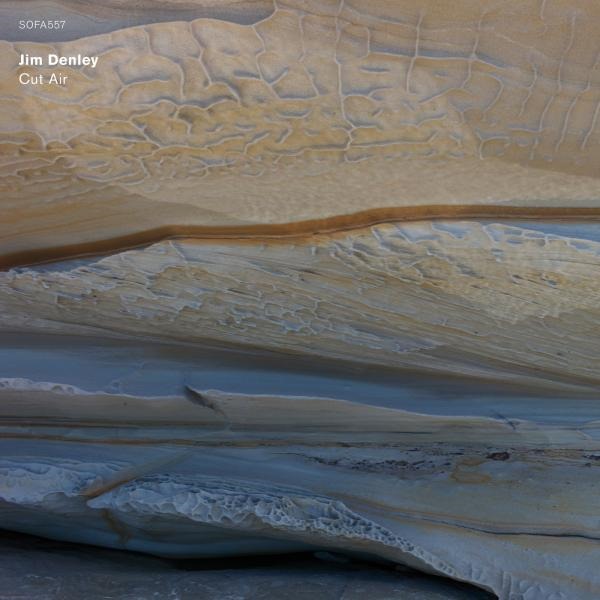
SOFA – SOFA 557 – 21st April 2017

Christopher Nosnibor

Antipodean multi-instrumentalist, composer and experimentalist Jim Denley has been playing the flute since 1969 and has a formidable reputation in his home territory, not to mention an extensive resumé.

Denley has a preoccupation with location: as there is no flute tradition in his native Australia, his aim – according to his biography – is to situate his music within a global outlook, and takes is cues from flute traditions from other parts of the world, spanning Europe, Papua New Guinea, the Far East and the Amazon, and, in particular, the flute traditions of the Solomon Islands. There is always something to learn: with a background very much rooted in western music, particularly of the post-punk period and beyond, the fact that there are specific regional flute traditions is something I was unaware of. I suspect this is not something unique to me.

Denley is clearly immersed in his research of the traditions which inform his work, in particular this album, with the album’s second longform track, ‘For Celina Rokona’ dedicated to a flautist from Ataa in North East Malaita, who played the Sukute, described as ‘a curious combination of flute and percussion’. Who knew that the flute had such a lengthy and diverse, pan-continental history, or that there were so many hybridisations across the continents? This does perhaps explain why the two nineteen-minute compositions on Cut Air sound precisely nothing like any flute I’ve ever heard.

I’m unclear, after listening to Cut Air, if my knowledge and understanding of these various traditions is any more advanced. Aside from moments of fluttering, tweeting, looping harmonics much of Cut Air consists of quiet. It consists of interloping notes which quiver and quail, tremble and tremor. The air isn’t explicitly cut, but subject to soft, massaging vibrations which alter its movement, softly, subliminally, imperceptibly. This is not an immediate or direct work, and it’s very much an album which requires a degree of patience as it hangs, unobtrusively, in the background.

Jim Denley - Cut Air

SOFA – SOFA 556 – 7th April 2017

Christopher Nosnibor

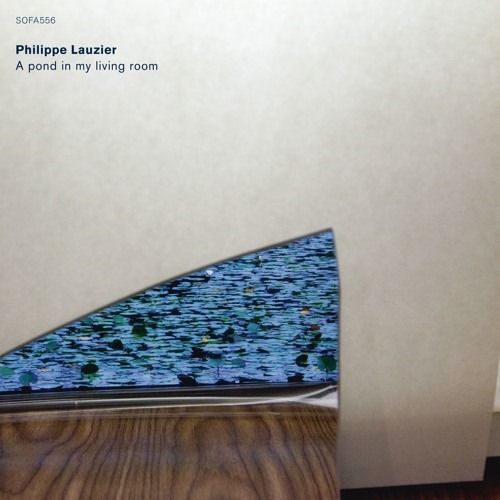
Within a few weeks of moving into my current home, there was an immense storm, which led to my discovery that it wasn’t water-tight, on account of a) having no cover over the letter box b) some defective guttering c) a gap between the roof tiles and the brick work. Consequently, this – admittedly unusually heavy – downpour resulted in there being a pool of water, an inch or so deep and over two feet in circumference just inside my front door. Ok, it was more of a puddle than an actual pond, but the anecdote serves to illustrate that the surrealist image conjured by the title of Philippe Lauzier’s second album is neither strange nor funny when the abstract notion becomes an actual lived experience.

The album’s four tracks are built around multiple tracks of bass clarinet, but there is nothing on A pond in my living room which could be readily identified by ear alone as being woodwind, and the longform compositions are explorations of sound rather than structure, with not a trace of jazz or orchestral influence to be heard.

‘Bleu Pénombre’ opens the album in a long, swirling churn of feedback. Gradually, layers of sound build, granular textures roughen the surface of the undulating, elongated multitonal humming. It’s a richly atmospheric composition, which suggests a preoccupation with the relationships between sounds as much as with the sounds themselves. Higher pitches and nagging oscillations emerge as ‘Bleu Pénombre’ bleeds into the uneasy ‘Water Sprinkling’. The notes quiver and ripple, like a mirage through a heat-haze. Sharp blasts of white noise fizz against the creeping whines which populate the sparse, eerie ‘On the Window Side’. The result is ominous, unsettling, with the unpredictably-placed shards of static adding moments of shock to the tension which Lauzier sustains over the full duration of the ten-minute piece, which culminates in a dark, rhythmic pulsation.

None of the sound contained on the album carries connotations of water, or even any overt reference to the surreal juxtaposition the title suggests, but this only accentuates the air of abstraction which hangs over the album as a whole. The final track, ‘Napping in a Neglected Garden’ yawns and grates, a metallic creak like a rusty gate opening and closing replayed in half-time dominates the haunting eleven-and-a-half-minute work. Gradually, the slow, natural rhythm becomes subject to disruption and halting adjustments bring further disruption and twist the listener’s sensory adjustment.

A pond in my living room is more effective and affecting by virtue of its comparatively subtle approach. A pond in my living room is not a loud album, and does not rely on harsh textures and tones to achieve its discomforting impact.

Philippe Lauzier - Pond

Noble – NBL-221 – 15th April 2017

Christopher Nosnibor

Reliq is Serph. What’s the difference? Serph’s compositions are typically dream-like and utopian in their stylings, while Reliq’s work are edgier and more dance orientated. So says the press release. Life Prismic is the third album by Serph in his Reliq guise, and draws on music from a vast array of cultural and geographical origins for forge something

Life Prismic jangles and jingles, wows and flutters with swerving, loopy grooves and rippling rhythms which run into and across one another from perpendicular angles.

Plinky-plonk house piano tropes are bent and twisted through funnels of mellow head-nodding hipster dance vibes. The hyped-up chipmunk energy of ‘Ceramic Samba’ is nothing if not energetic, with flickering, clippy beats and hyperactive, pitched-up vocals. It demonstrates a playfulness at work, as well as a serious overdose of sugar, and it’s enough to leave anyone feeling vaguely giddy with the surging uptempo headrush.

Gentle, bleepy chillout zones are conjured with in between spaces, with xylophones and lad-back beats creating moments of comparative tranquillity, and ‘Morocco Drive’ introduces a range of strings and woodwind over a drifting synth to create an enigmatic, ethereal and exotic atmosphere before a frenetic drum ‘n’ bass rhythm powers in.

Each track bursts outward and reaches in multiple directions over its course: there’s nothing predictable about any of the structures or arrangements. Jazz licks, samples and other vocal snippets, bhangra beats and abstract incantations are all whipped into the same mix as thumping 4/4 dancefloor-orientated rhythms, and ‘Rain No More’ manages to pack in a low-down and dirty funk mid-section into its eclectic hybrid form.

It’s rather difficult to know exactly what to make of Life Prismic. In terms of ideas, it’s an explosive riot. That said, some of those ideas develop into recurrent themes over the course of the album, which in some respects diminishes their impact. But with 13 tracks and a running time in excess of an hour, there comes a point where it feels like overkill. No matter: in smaller chunks, Life Prismic is an entertaining listen.

Rwliq - Life Prismic

Immediata – IMM010 – 3rd July 2017

Christopher Nosnibor

One track spanning fifty minutes. It’s one of those compositions which lacks explicit firm, and creeps and crawls and spreads itself like a low fog that drifts under doors and through cracks in windows. Much of The Slow Creep Of Convenience is quiet, to the point of near inaudibility. It’s most definitely background music, and ambient in the purest sense, in that it affects the mood subliminally, infiltrating the psyche almost completely imperceptibly. It is, as the title suggests, a slow creep, an album which slowly, invisibly reaches in and subtly massages the edges of the mental state, rather than affecting an overt and direct transformation.

It’s almost exactly a year since Anthony Pateras released to very different albums simultaneously, and the style of The Slow Creep Of Convenience is very different from either of those, revealing an artist capable of significant creative diversity. The Moment In and Of Itself and The Long Exhale, while contesting and in some respects complimentary, were both overtly experimental. The Slow Creep Of Convenience is infinitely more restrained, focused. It’s very much a minimalist work.

We’ve covered the slow creep, but what about the convenience? Reading this as social commentary, and perhaps as a quieter parallel to Arsenal’s Factory Smog is a Sign of Progress, The Slow Creep Of Convenience stands as a document referencing the less positive aspects of the endless tide of progress and development. Just as industrialisation heralded the onset of the modern age and a new mode of existence, which brought with it infinite benefits but also new and unprecedented problems, so the shift toward convenience, toward tertiary industry, the advent of leisure industries, heralded the arrival of the age of stress, anxiety and dysfunction. We now live in a culture of endless immediacy, centred around instant online transaction and interaction, around immediate dispatch. Amazon Prime is nothing to on-line banking and Hungry House. Everything I available immediately, at the click of a button. Smartphones may have only come to the market in 2008 – less than a decade ago – but the revolution has already happened and we’ve all been utterly engulfed by the pace of development. So just how slow has his creep been in real terms?

In some respects, it doesn’t matter: our perception of time has changed. Time is accelerating, and in the age of convenience, it’s easier than ever to evaporate time. But who noticed?

The undulating, intertwining drones and hovering, jangling, multitonal hums with the texture of dragonfly wings which forge extended passages of this multi-faceted work intimate a nagging unease, the underlying discomfort of anxiety. It’s more than difficult to pinpoint, of course: it’s simply there in the background, yet impossible to ignore.


By Norse – 23rd June 2017

James Wells

BardSpec is the ambient project / band from Enslaved composer/ guitarist Ivar Bjørnson. It’s certainly quite a departure from the snarling, gnarly but melodic metal he’s associated with. There isn’t a single bar of double-pedal bass drumming, one mangled, downtuned chord struck on a guitar with in excess of six strings.

How this actually translates is a series of compositions which incorporate electroacoustic elements for form a layered, atmospheric sound. Even so, Hydrogen is really not ambient in the strictest sense: the album’s six lengthy tracks are structured, sculpted, organised and arranged so as to be anything but background.

On ‘Bone’, a picked acoustic guitar occupies the foreground while howling electric guitar feedback hangs so far back in the distance as to be barely audible. Against bust bongos and a fleeting bassline, clouds of abstract electronic wing drift. There’s a linearity to the nine-minute piece as the percussion builds and everything layers progressively toward a rich, oceanic expanse of sound.

‘Fire Tongue builds a huge sonic cloud which drifts around a propulsive rhythm and serpentine guitar / synth motifs which intertwine to create a hypnotic, trance-like desert of sound.

‘Gamma’ is perhaps the album’s most truly ambient work: while there is a picked guitar echoing in the background it’s a piece which drifts and twists and actually calls to mind the introductory passage in the debut by The Psychedelic Furs, where the hum and circle of static gradually fade in before the throbbing bass and chiming guitars of ‘India’ kick in.

On the twelve-minute ‘Salt’, the combination of mesmeric beats and echo-soaked guitar create a deep, textured atmosphere.

This is intelligent, articulate music which explores an array of textures and styles to create a something nuanced and detailed and quietly compelling.

2LP-Gatefold-6mm-Spine

Bearsuit Records – 24th June 2017

Christopher Nosnibor

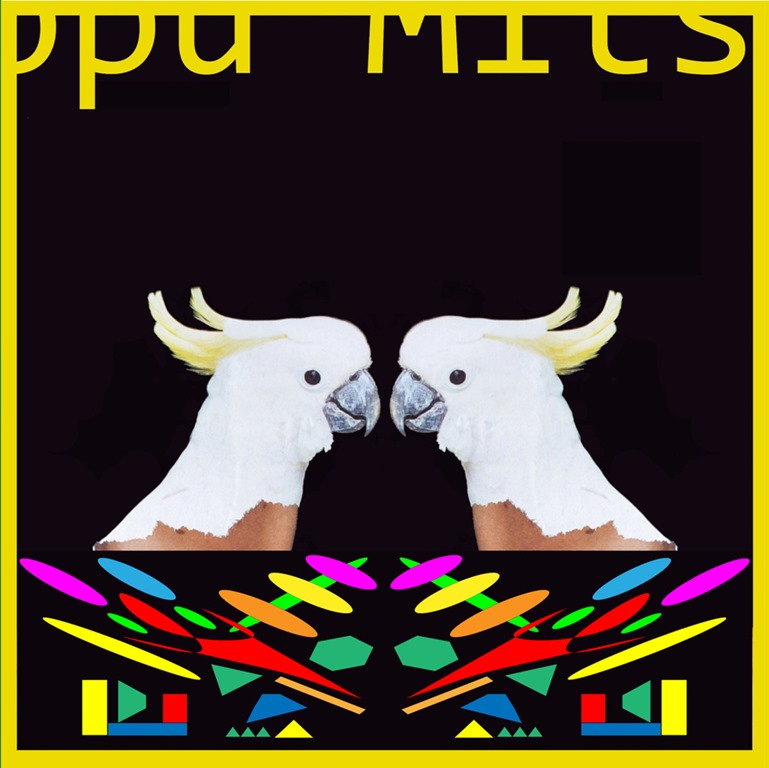
If the album’s opening cut suggests an album of slightly hipsterish glitchy electronica, it soon evolves into rather less comfortable territory. The elements of commercial club music are all in evidence, and at times, to the fore, but this is an album that pushes into myriad electronic territories. Throughout, Mitsui keeps one eye on groove and the other on confounding expectations.

You want ideas? You want range? Ippu Mitsui has ideas and range. ‘Small Rider’ is exemplary, flipping between delicate chimes and mellow grooves to altogether more aggressive beats with woozy, warping basslines burrowing every which way. It packs a lot into four and a half minutes, and no mistake.

Moment of ‘Fine Spine’ come on like early Prodigy, with vintage acid house stylings colliding with abstract electro-oddness. ‘Bottle Neck U’ brings a deep, subterranean bass groove and hard beats with an almost industrial intensity, while ‘In My Mind’ ventures into deep, dubby territory.

‘Bug’s Wings (Another Take)’, like its counterpart opener, is, superficially, pure bouncy club music, with a flimsy 90s piano– a throwback to the Chicago house sound that carried forward infinitely too long – line weaving its way through the track, but then it also bundles in a whole heap of other stuff that sees Mitsui leaping off on unexpected tangents with dizzying frequency. The albums final track, ‘Quick 919’,with its fairground organs and explosive beats, owes more to JG Thirlwell’s early adventures with tape loops than anything contemporary.

I might argue that only a Japenese artist could, or would, make an album like this. It is, by turns, kitschy and saccharine, and brain-bendingly obtuse and awkward. It’s certainly inventive, and Mitsui seems bent on self-sabotage, with every moment of linear, accessible dance countered by some twisted and unpredictable moment of weirdness. And this is what makes L + R an album worth hearing.


Ippu Mitsui

2nd June 2017

Christopher Nosnibor

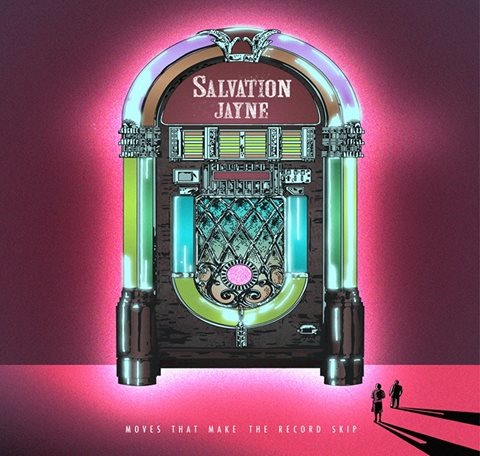
The digital generation may be unfamiliar with the experience of leaping around their bedrooms to favourite tunes, only for their exuberance to result in the needle skipping a groove or two. While it’s unlikely to cause any damage to either the vinyl or the stylus, it has a way of disrupting the flow and making you feel like a bit of a buffoon. There’s Kent four-piece Salvation Jayne’s EP suggests, it contains rock nuggets potent enough to inspire bedroom moshing, although it’s not being released on vinyl.

After a brief introductory segment, the EP gets going properly with ‘Burn it Down’ which we covered when it first aired back in April. And it’s a cracking tune, chunky blues-based guitars chopping against a sinewy lead line and strolling bass. It also meets the ‘monster chorus’ requirement for a strong rock tune. And yes, tunes matter: on Moves That Make the Record Skip, Salvation Jayne offer tunes, with strong vocal melodies shaping the songs.

If ‘The Jailer’ contains all of the elements of infinite 80s rock bands and reminds me of many, many pub gigs I caught at the tail end of the 80s and into the early 90s in my home town (for all I know, there are still the same sort of bands cranking out the same stuff in the same venues now: Lincoln never was the most progressive of places), it’s well-executed and has the guts in the delivery to make it work. There’s also some nice slidey guitar action that brings a dirty country / blues vibe. ‘Thrillride’ starts with a low-slung bass and sassy, semi-menacing vocal from Chess Smith before she gives it some throat and everything kicks in.

EP closer ‘Whorehouse Down on the SE’ makes for a strong finish: it’s a percussion-driven hefty rock workout which has all the makings of an anthemic crowd-pleaser live. It mines a proper old-school rock seam, and calls to mind The Pretty Reckless at their best, with Smith giving it the raw, rough ‘n’ tough treatment.


Salvation Jayne - Moves

Consouling Sounds – 23rd June 2017

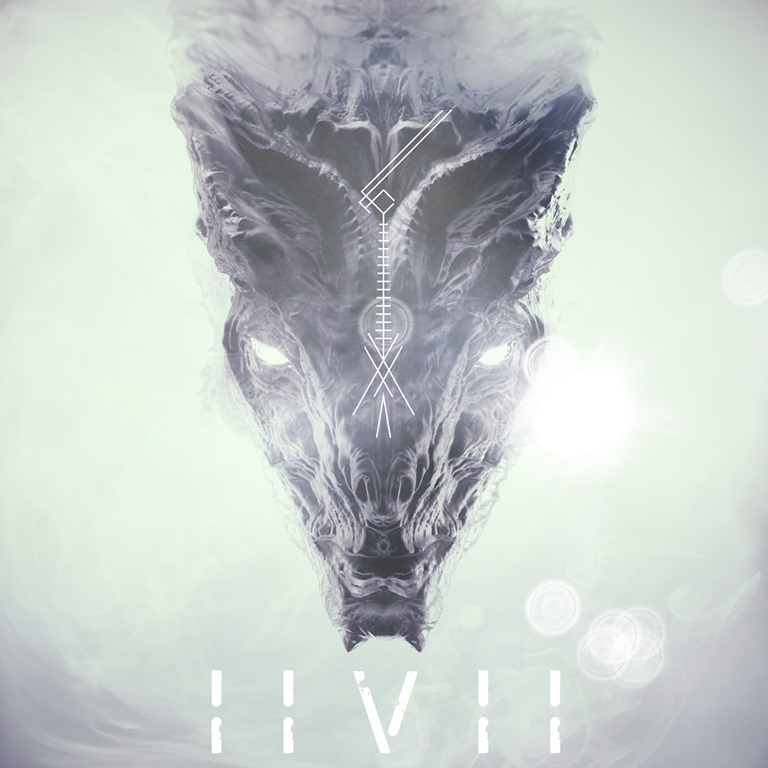
IIVII – pronounced ‘ivy’ as it so happens – is the musical vehicle for visual artist, multi-instrumentalist and composer Josh Graham. It’s actually quite fitting to the creeping ambience and gradually-expanding soundscapes which develop almost imperceptibly on Invasion. The bio bigs it up as being his ‘enigmatic inter-galactic solo project’, which focuses on ‘sonically engulfing and moody soundscapes, layered with a science-fiction edge.’

Graham has quite a resume: having worked as a designer and director, he has also collaborated with a variety of bands including Mastodon, Neurosis, Jesu, Shrinebuilder, ISIS and The Dillinger Escape Plan.

Invasion is pitched as a work which ‘traverses genre and explores elements of drone, classical, ambient, electronica, and vaporwave’, and it’s very much an album of tonal variety and texture, not to mention compositional and stylistic range – to the extent that sometimes one might wonder if the playlist has moved onto something else entirely.

Invasion is less a collection of individual pieces but a single set which forms an ever0shifting whole; from the lonely piano which echoes across the expansive atmospherics of ‘We Came Here from a Dying World’ through the creeping bassline and fear notes which hang hauntingly on ‘Unclouded by Conscience’, with its distant, rolling drum and post-rock intimations, and through the more overtly beat-driven.

There are extended minimalist moments, like the slow-pule hum which introduces ‘Hidden Inside’ to stark and chilling effect; the glitchy bass and glacial overtones do little to soften the icy bleakness of the funeral bells and amorphous sonic drifts which carry a chilly edge over the occasional bursts of subsonic thunder. Melodic arabesques rise from eddying pools of resonant bass hums and twirling contrails.

The tribal beats and throbbing synthesized bass, draped with icy synth notes, which define the dynamic drive of ‘No More Enemies’ call to mind Movement era New Order: it’s dark, detached, otherworldly, and corresponds with the album’s artwork, which depicts an invading species of alien origin (also completed by Graham, who, poignantly, served as Soundgarden’s art director at the time of the press release).

Nuanced has become one of those words, but there’s a rich detail and infinite texture to be found on Invasion that demands its application. This is an articulate, considered and meticulously-realised work which operates on multiple levels.


IIVII_INVASION_Cover_1500