Posts Tagged ‘Yannis Kyriakides’

Unsounds – 24th May 2024

Christopher Nosnibor

When it comes to being a music writer, for me, at least, perhaps even more of a buzz than getting advance listens of the most eagerly-anticipated releases is being exposed to music I otherwise wouldn’t have. And the nature of the avant-garde means that you have to be in the know to know. Being introduced to the Unsounds label and the work of Yannis Kyriakides certainly opened my eyes – and more so my ears – to a whole expanse of music I assumed must exist, but would have had no obvious means of locating or accessing while going about my ordinary life before.

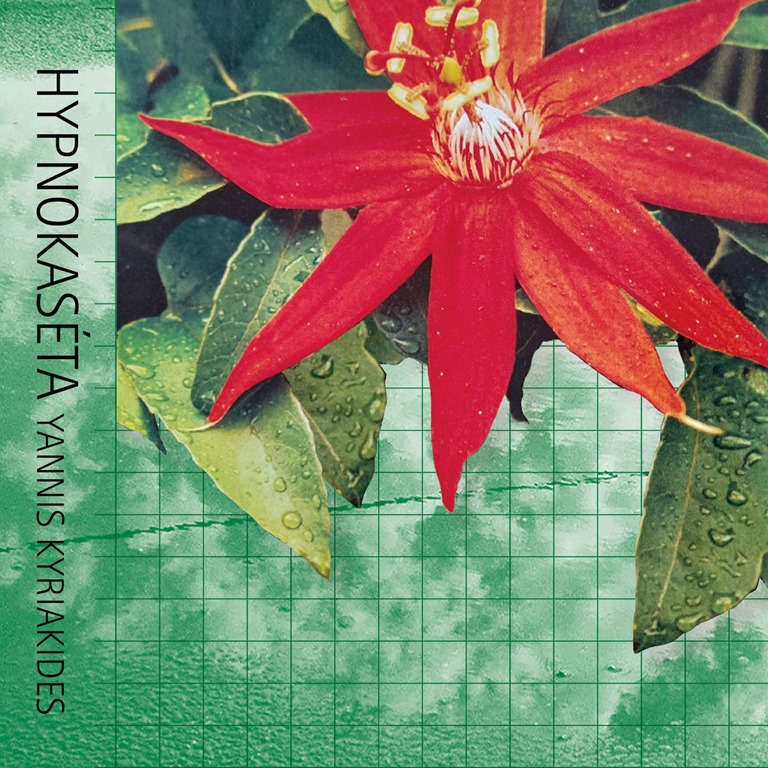
Although I’ve only dipped in and out of Yannis Kyriakides’ output, more as one with a casual interest than a fan per se, his work has never ceased to impress with its range and constant questing for something different, something new, both sonically and methodologically and “Hypnokaséta (2020-2021) is no exception.

Kyriakides’ introductory notes explain both the concept and the practice behind the recording of the album: “Hypnokaséta (2020-2021) is a continuous set of 16 pieces for string quartet, improviser (playing cassettes and any instrument) and live electronics. The source material is based on dreams that I had during the first few months of lockdown, April-June 2020. Accounts of these dreams are encoded in the music that is played by the quartet and also encrypted in the sound textures that surround this.

“The pieces alternate between quartet as the foreground and electronic interludes, where solos or duos underpin the soundscape. The title of the piece (Greek for ‘sleep-cassette’) refers to a theory of dreams proposed by Daniel Dennett, that says that dreams are loaded into consciousness like a cassette tape during the night and played just before waking.”

It’s longtime collaborator Andy Moor who provides the guitar and tape work on these recordings, and together with Kyriakides’ electronics, which move between shuddering skitters and unsettling scratchiness and quite abstract sounds, when juxtaposed with the strings – which span playful to mournful to droning discord.

The sixteen pieces have been mastered as six separate tracks, but they flow as one immense composition in a continuous state of transition. Within each of the six numbered tracks, the individual segued pieces bear titles, with their time markers also noted. The titles present, if not strictly a narrative, then a guide to the theme, the idea, the inspiration.

‘Hypnokaséta I’ comprises ‘The government’s new cultural scheme’, ‘All roads to the airport are blocked’, and ‘Everyone is nervous, everyone is lost’, titles which serve to encapsulate the events and the sensations they engendered within the populace at the strangeness and uncertainty of lockdown.

‘Hypnokaséta III’ is a stunning work of contrasts, containing as it does the gentle, almost light-spirited string-led ‘The reluctant hotel manager’ and the dramatic, jarring ‘She lifts the mountain’, a dark, alien drone brimming with electronic tension that crackles and tweets. The rapid switches in mood and form recall the sudden and wild extremes I experienced myself during this time: it was impossible to keep up with the constant stream of developments in the news, while at the same time entrapped within the confines of the house, where the world outside felt so very far away, while also having to accommodate the changeable and diverse headspaces of friends, family, and colleagues. No-one knew what the fuck was going on, or how to cope.

There was an air of unreality about it all, and at times it became difficult to distinguish between the bewildering nightmarish reality of the wakeful hours and bewildering nightmarish sleep, and in drawing on dreams in the creation of Hypnokaséta (2020-2021), Kyriakides captures the essence of that abstract space forged in the mind where everything blurs. This blurring and abstraction is also reflected in the titles: ‘The concert promoter complains that not much happens in the piece’ sounds like something that could happen in one of those self-reflective semi-anxiety dreams, and ‘Bridges are being dismantled

across the city’ has an apocalyptic sense of separation, while ‘Body swap opera’, ‘Swimming pool synthesis’, and ‘Mutations on an empty grid’ are altogether more surreal in their connotations.

Throughout the album, the lister is jolted from a moment of tranquil reverie by some abrasive thud or rasp, an unexpected spike in volume, and a turn towards an altogether more disquieting atmosphere.

The composition is nuanced, the placing of the switches and transitions perfectly timed to achieve optimal impact, never allowing the listener to truly settle, to relax, to sit back and enjoy, and the moments of tension are indeed tense; but credit must also go to the performers: the strings are played with a keen awareness of the importance of both dynamics and detail, and Moor, in his capacity of ‘improviser’ brings texture and tone delivered with an infallible intuition. The album’s structures may be subtle, almost invisible, but they’re affecting, and as a whole, Hypnokaséta (2020-2021) is an experience which permeates the psyche in unexpected ways.

AA
a2874939530_10

Unsounds Records – 15th June 2023

Christopher Nosnibor

These are certainly three names to conjure with as prominent features of the experimental scene. Anne-James Chaton and Andy Moor have collaborated on numerous albums, and I personally discovered them via the Transfer series in 2011, around the same time as Chaton’s Evenements 09, which I found fascinating in its contemporary application of loops and with its parallels to the cut-up technique and Burroughs’ and Gysin’s tape experiments of the late 50s and early 90s.

As the biography which accompanies the release of this lates outing explains, ‘the duo Andy Moor and Anne-James Chaton continue their conversation with a new set of digital singles, diving this time into the rich language of the traditional metiers. The Handmade series is an homage to crahftsmanship through an exploration of the lexicons specific to bakery and pastry making, jewellery, joinery and wrought iron making, that will unfold over the course of 4 thematic volumes. With guest Yannis Kyriakides on electronics they create works where abstract notions mix with tangible ones by linking the arts of the hand with sound and poetry.’

The Moor / Kyriakides collaboration A Life is a Billion Heartbeats proved to be a gripping work for quite different reasons, and one thing that’s always a feature of any work featuring Moor is his versatility, as well as the fact that he doesn’t use the guitar in a remotely conventional fashion.

The two tracks on this single really do showcase the strengths of all three artists, and shows just how collaboration and collectivism can amplify individual powers.

But never mistake ‘art’, however obscure or experimental, for something which is always entirely serious: This, the first of the ‘Handmade’ series – projected to comprise four digital singles, to subsequently be released as a CD album and download, akin to the Transfer series, sees them taking on ‘the vocabulary of pastry making… Side A «Garniture» offers a curious anthology of poetry written by mixing the actions of the pastry chef, units of measurement and figures of speech. On Side B, «Sur Mesure» deploys all the richness of the culinary language when it comes to expressing the scarse [sic] or the plentiful’.

Truth be told, for a non-French speaker, the linguistic twists and any humour associated with the juxtaposition of subject matter and context with delivery are lost beyond the cover art, leaving simply the sonic experience – but this alone is more than enough. Chaton’s monotone spoken word is nonchalant and gives nothing away, while Moor peels off shards of dissonance from his guitar amidst drones and hums and clanks and a distant but insistent clattering percussion. Feedback and irregular discordant chanks and un-chords all crash and slide across one another in an irregular latticework of noise.

‘Sur Mesure’ is less challenging, less overtly difficult and dissonant, and sees the three employ the same elements but to an altogether more subdued and atmospheric effect, making for a good contrast against ‘Garniture’.

There’s no doubt that most would simply file this under ‘weird shit’, but it’s a strong experimental work which delves deep into dynamics, tones, and unusual juxtapositions, and really prods at the neural pathways in the most unexpected ways.

(Click the image for audio)

77U_art

Unsounds 65U – 15th June 2020

Christopher Nosnibor

While Andy Moor’s distinctive guitar playing is central to this collaborative work, it’s worth stating from the outset that this is a challenging listen. Spacious and eerie, above all it’s atonal and discordant, as if the two musicians are playing against one another, rather than with, and, moreover, against themselves, particularly in Moor’s case as he digs deep to pick notes in counter-time and counter-melody.

How this album came to be is worth recounting, so I shall quote directly: ‘In 2017 Andy Moor and Yannis Kyriakides were invited to participate in Xavier Veilhan’s ‘Studio Venezia’ at the French pavilion for the 57th Venice Art Biennale. This was a space where a series of musicians were in residence throughout the six month duration of the festival, recording and performing there in an open environment. The two musicians had access to a variety of instruments and machines including Moog, Buchla and Vermona synths which were used for some of the recordings. The unusual situation here was that they were working in a studio, experimenting, trying out ideas while at the same time being a part of an ongoing art installation. So they were part of the space, yet not really knowing whether they should play for the crowds who were constantly passing through the pavilion or just ignore them.’

‘The result was nine hours of recorded material mostly improvised or based on a few basic rhythmic patterns that Kyriakides had prepared as starting blocks. For this album they selected 45 minutes of what they considered to be the strongest material after several listenings and editing sessions.’

That’s a lot of material, and a lot of whittling and editing, but the end result is well-assembled and flows together nicely – while at the same time mining a seam of arrhythmia and clanging dissonance. Moreover, each piece is distinct and distinctive, with different textures, tones, and moods, and as such, Pavilion represents a disorientating, difficult journey.

The layers on ‘Camera’ build at different rates, crossing over one another and interfering with one another’s time signatures so as to become bent out of shape, colliding against one another in a clutter of discoordination. The synth bass on ‘Dedalo’ warps and scratches and scrapes away as low grooves that trip and curl, wow and flutter. There’s a playful side to it, with the rhythmic swing and metallic clattering that sounds like pots and pans, which contrasts with the more ponderous atmospherics of ‘Concha’, a nine-and-a-half minute exercise in detuning and retuning, as notes bend and bow with a slow, resonant decay.

‘Diluvio’ is unpleasantly tense and prickly, and the album ultimately drifts towards an uneasy conclusion with the last couple of pieces, which are simultaneously dolorous and soporific, albeit in a dark, horror-movie dreamscape sort of a way.

Pavilion leaves you feeling… not quite bewildered, but spaced, separated, as if standing half a step behind your own body or your own shadow. It’s less about if this is a good thing in itself, as much as the fact that this is a work which has a degree of psychological resonance, which marks it as a creative success.

AA

Yannis Kyriakides Andy Moor – Pavilion

Unsounds – 57u – 10th February 2017

Christopher Nosnibor

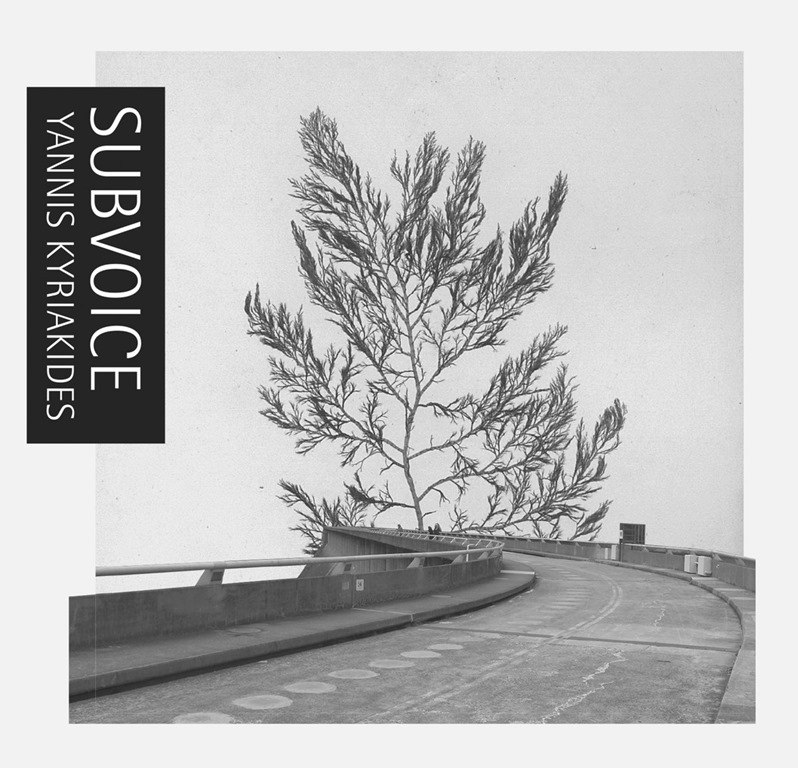
Unsounds have a history of releasing magnificently-packaged albums, and Subvoice by Yannis Kyriakides is up there with the best of them. The double CD is housed in a chunky hardcover book binding, which contains an actual book, some forty pages in span.

My introduction to the concept of the subvoice came via William Burroughs, who, around the time he was exploring the myriad potentials of the cut-up technique, made innumerable audio experiments. While most of these involved tape splicing, dropping in and cutting out, some investigated the subvoice in a most literal fashion. Some of these barely audible and even more barely listenable recordings appeared on Nothing Here Now But the Recrdings on Industrial records, with the liner notes describing ‘Throat Microphone Experiment’ – if memory serves – as a not entirely successful attempt to capture subvocal speech.

The definition of ‘subvocal’ is ‘relating to or denoting an unarticulated level of speech comparable to thought’. Kyriakides describes the works in the collection as ‘an investigation into ideas of voice and language [which] range from works in which text is directly encoded into music… to ones in which the voice is examined, dissected and pulled apart’. He explains that ‘in both approaches the underlying idea is to explore what happens when material has a clear semantic form, whether communicated in text or speech, is translated into musical structure’.

While thematically and theoretically linked, the nine pieces – which have a combined running time of almost two and a half hours – are from quite distinct and separate collaborative projects Kyriakides was involved in between 2010 and 2015.

The first piece on disc one, ‘Words and Song Without Words’ is the shortest work, being a couple of seconds under ten minutes, but appropriately introduces the kind of sonic palette Kyriakides and his collaborators – in this instance, Francesco Dillon, who contributes cello – work from. ‘Paramyth’ is eerie, disconsolate, the cracked ramblings splayed in all directions over tense piano and uncomfortable strings, but ultimately peters out into something softer. Skittering strings scurry busily in brief and disjointed flurries, hectically flying here and there, on ‘Toponymy’. Muffed voices bring a discomforting sense of the unheimlich, a sense of the intangible and of something just out of the reach of understanding.

Ominous notes hover and ring on the last piece on the first disc, ‘Circadian Surveillance,’ a twenty-five minute exercise in haunting atmospherics, where distant voices are barely audible under a rumble of turning static and hovering notes which resonate into dead air.

Onto disc two, ‘Der Komponist’ – a composition for orchestra and computer – begins quietly, ominously, with protracted near-silences between delicate, low, slow builds, before horns begin to add cinematic drama. It’s very filmic, very – for wont of a better word – soundtracky, and is reminiscent of some of JG Thirlwell’s more recent orchestral works. The climax is a slow, swelling succession of surging brass, underscored by a rippling digital churn.

‘Politicus (Dawn in the Giardini’ is perhaps the lightest and most playful composition of the nine, and utilises the variability and versatility of the prepared disklavier. The original work was a twelve-hour sound installation. The booklet explains the technical aspects in great detail, and Kyriakides outlines the way in which algorithms based on speech drive the formulation of the piece, here in an abridged fourteen-minute segment. The immense complexities behind the composition are completely hidden from the listener, with the surface completely masking the mechanical depths.

The final piece, ‘Oneiricon’ is a work for ensemble and computers. It’s an exploration of dreams, and is often subtle to the point of subliminality. And because Subvoice is very much a ‘background’ work, while it often drifts for significant stretches without really pulling particularly hard on the attention, it does mean that its immense duration is not an issue. Equally, because Subvoice is a collection rather than a work conceived as a single continuous whole, it’s possible to listen and appreciate in segments, without absolute commitment. And it is an album to listen to and appreciate: Kyriakides’ compositions are varied and textured and demonstrate an attention to form and sonic detail which extends far beyond the basic premise of ‘the voice.’

a0933203676_10

Unsounds – 55U

Edward S. Robinson

William Burroughs may have become a figure toward whom many hip musicians gravitated towards in the seventies and eighties, but it remains a rather perverse fact that his enduring influence appears to be stronger in the world of music than in literature. It’s true that many ‘alternative’ musicians and counterculturalists latched onto his lifestyle and biographical details more than his actual output, romanticising the idea of the ‘literary outlaw’ but it would equally be a mistake to underplay the effect his innovations in audio, with his tape recorder experiments extending the concepts surrounding the cut-ups proving hugely influential acts like Cabaret Voltaire and Throbbing Gristle. It’s a shame, then, that so many of the albums which cite Burroughs as an influence are simply dismal. Burroughs may have referenced various ‘poplar tunes’ in his works and resided in Tangiers in the late 1950s but I haven’t yet established any textual basis to connect Burroughs with bad avant jazz or half-arsed hip-hop.

Yannis Kyriakidies and his collaborators are clearly immense fans of Burroughs, and the CD booklet records that the text for the album is not derived from Naked Lunch, but ‘a Burroughsian cut-up of sorts’. Now, this is problematic in that the cut-up technique came later: there are no cut-ups in Naked Lunch, but I would rather be charitable and embrace the spirit of the album: the words were in fact derived from ‘word frequency analyses’ of the book’s segments, and as such, it’s fair to say that the lyrical content very much captures the essence of the book. I can’t help but be impressed by their referencing of Ian MacFadyn’s essay ‘The Mouth Inside: The Voices of Naked Lunch’, and am equally intrigued by the implication that the album was set to be called simply Naked Lunch: Kyriakideas records in his notes that Robert Ashley, to whom the album is dedicated, implored him to use the title and deal with any copyright issues later, but finds the artist conclude ‘somehow I did get scared by the difficulties.’ But what about the music, and what about the delivery?

The heavy, heavy crackle of vinyl. Scratched as scratched. From the glitching fuzz or white noise croaks the voice of William Burroughs. Slowed, as if drugged. The sound warps and slows, as if the tape is stretches or the turntable drive belt is slipping. As a barbershop quartet croon Gregorian chants to provide an incongruously jaunty backing, his voice is dragged to an unintelligible drone, slower and slower. Finally, all that remains is a faint whistle, clattering and a thumping beat like a heart’s pulse, which eventually, finally slows… and silence. ‘Boy…. Boys…’ sings an operatic tenor voice against a backdrop of springy instrumentation and whistling analogue on ‘Boy’. The vocal harmonies build in layers, skyward. It might not sound like my impression of Naked Lunch, but that’s a reflection of the book’s multifaceted nature.

‘Shakin’’ takes Johnny Kid and the Pirates’ hit and jars and stutters it, one more scratched CD, bowed LP, cassette tape chewed in the machine heads. From the sonic swamp into which the song rapidly descends emerge crawing pterodactyl-like sounds. Like Burroughs’ fragmented, fevered narratives, so the pieces of music are twisted and contorted out of shape, linearity dispensed with in favour of atmosphere and heightened sensation.

Kyriakides returns to the barrelling scrape of badly worn vinyl on ‘Junk World’, while industrial scraping and a babble of voices in multiple languages combine to disorientating effect on ‘Like replicas’, before ‘Speed Days’ moves into the kind of musical territory more commonly associated with Burroughs-related recordings and tributes, with scratching and rattling industrial percussion.

In all, it’s something of a mixed bag, and while I personally don’t love all of the music, I have to admire its spirit.


Lunch-Music- WEB-350x350