Posts Tagged ‘wistful’

Mortality Tables – 27th February 2026

Christopher Nosnibor

Mortality Tables’ Impermanence Project continues apace, this time with a nine-minute work by alka, with spoken word by Andrew Brenza. This piece uses a 1979 / 80 cassette recording of Mortality Tables founder Mat Smith singing Marie Lloyd’s music hall song ‘My Old Man (Said Follow The Van)’ with his late father, James.

As Bryan Michael (alka) writes, ‘I felt there was a parallel between the rent collector-avoiding moonlight flits that inspired ‘My Old Man (Said Follow The Van)’ and the fleeting, ever mutable nature of life. I also like the idea of moments being captured within magnetic fields – a cassette, in this instance – which can then be re-played. To me, they’re like ghosts of memories.

Given just how fragile those magnetic fields are – prone to deterioration and even erasure – while the very tape itself is liable to stretching, warping, being chewed in the heads and rendered unplayable, or even snapping, it feels as if the medium of the source material is, in itself, an encapsulation of impermanence. Even supposedly permanent records are always at risk of ceasing to be.

And, indeed, such a simple recording, likely made for fun in the moment without a view to posterity, absolutely captures the essence of impermanence; James is no longer with us, but his voice lives on here, while the voice of Mat as a child is a reminder that childhood, too, is but a stage, and one which is, in the scheme of life, but brief.

Initially, the sound is so quiet that one may even think there is nothing but silence, but gradually, soft, gently pulsating synth tones fade in. The instrumentation is sparse, ethereal, cloud-like, while the voices drift amidst a soft, dreamy haze, very much creating the effect of the ‘ghosts of memories’ of which alka speaks. It isn’t until the final three minutes that Brenza’s spoken word contribution begins, reflecting on impermanence and mortality, and ‘the way I started to dress like my father once, after his death, because it made me feel close..’

The different elements are drawn together in an almost alchemic fashion, to produce a work which is not lugubrious, but wistful and contemplative.

AA
a0843506011_10

12th January 2024

Christopher Nosnibor

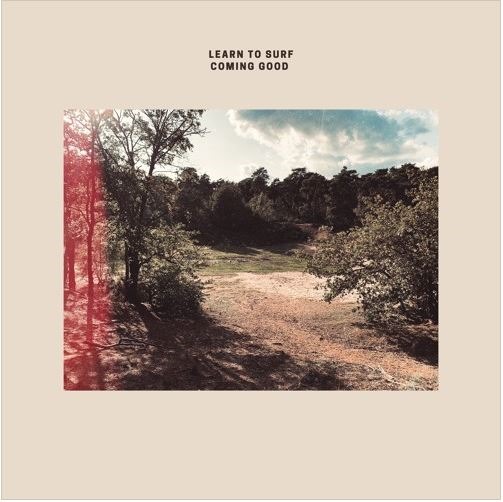
Sometimes, a song has the capacity to make you feel different. I find this happens most often when it’s least expected. ‘Coming Good’, the debut release by Learn to Surf came particularly unexpected. It’s certainly not my usual kind of thing – but there’s just something about that melancholic, reverby picked guitar and the washes of rippling chords cascading down over the top, and there’s a nuanced complexity in the relationship between this, and the layered harmonies, which are imbued with a carefree dappled-haze chilledness with a twist of wistful pining that’s hard to really put a finger on.

Because all music is now a vast nexus of intertext and influence, unravelling or otherwise attempting to frame songs – and bands – in a clear and specific context is nigh on impossible, not least of all because so much context comes from within, from one’s own spheres of reference, and as culture has become increasingly fragmented, so our experiences and references lose the sense of universality they once would have had. Time was, when there were only four, or five, TV channels, the entire nation was glued to the same show at the same time, and the following day, everyone would be talking about that episode, even if it was only EastEnders. This was a time when the main way to access music was via the radio, and if you wanted to hear anything beyond the charts or the classics, you needed to tune into John Peel, or Annie Nightingale after the Top 40 on a Sunday night. How times have changed!

I digress, but for a purpose, insomuch as the more disparate our experiences and reference points become, the less relatable and relevant they become to anyone who doesn’t live inside your head. I spent an age wondering what it was about ‘Coming Good’ that sounded familiar, before eventually concluding that it was ‘Gentle is Her Touch’ by Post war Glamour Girls, and the Alt-country / Americana act Sons of Bill on their Cure-influenced last album Oh God, Ma’am. It would likely be more useful for a broader audience to draw comparisons to Ride, and note the jangly indie psychedelic aspects of what is an absolutely marvellous, goosebump-inducing song with ‘classic’ vibes radiating from it in every direction.

20th November 2020

Christopher Nosnibor

So often, less is more. Lyrics that are personal and specific yet vague have the capacity to convey as much more than lines that are direct or explicit. And so it is with ‘Wander & Lost’ that Kin speak of loss and yearning, of distance and sadness and that sense of feeling cut off and alone.

As much as ‘Wander & Lost’ is ostensibly a pining, post-breakup song, it equally stands as a summary of the sense of loss that the distance so many are feeling from friends and family under life in lockdown. Maintaining closeness simply isn’t as easy, and everyone, everything has changed, is changing.

Wander & Lost begins with a wistful, minor-key guitar, picked and chorus-laden, and it provides a delicate backing for the dreamy, contemplative vocals. The drums are distant and everything is balanced, the instruments and vocals all infusing to form a cloudy aural drift. There are shades of melancholy lingering on the peripheries, and it’s never easy to determine if this is the music or projection – but then again, this is why music resonates beyond its immediate boundaries, and ‘Wander & Lost’ transcends its immediate aims on account of a certain musical intuition.

This is one of those songs that’s all about the slow build, and it doesn’t suddenly erupt or explode, but instead gradually swells into a soft, rippling wash of introspection. It’s a sad song that hits that perfect sad song sweet spot.

AA

Kin press shot