Posts Tagged ‘wide-ranging’

Cold Spring Records – 23rd June 2025

Christopher Nosnibor

It may be a heretical stance, particularly as a big fan of Throbbing Gristle, but Psychic TV never really did it for me. They felt a bit meandering, wanky folky, in the same way as a lot of David Tibet’s stuff does. This may be to my detriment, and I may be missing the joys and benefits of a huge catalogue, but… I can shrug it off, and I will live.

TG and seminal filmmaker Derek Jarman were kindred spirits, provocative, avant-garde, and testament of their reciprocal artistic respect is cemented in their 1980 collaboration, where TG soundtracked Jarman’s movie Under the Shadow of the Sun (with the soundtrack being released some four years later).

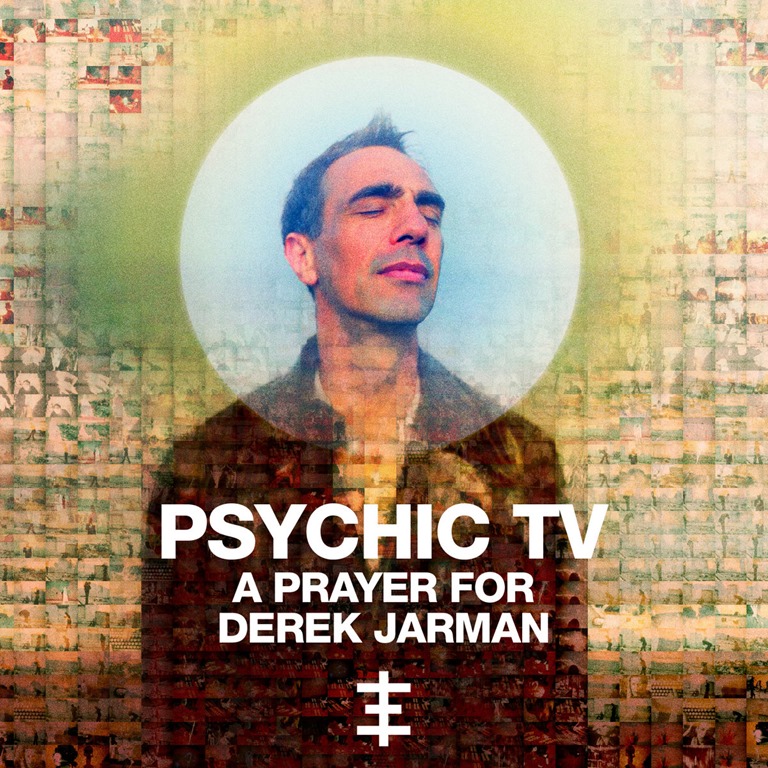
A Prayer For Derek Jarman was recorded later, on LP in 1985 by Temple Records and subsequently reissued as an extended CD version by Cold Spring in 1997. As the accompanying text explains, ‘Unavailable for almost three decades, this collection from the Cold Spring archive has been repackaged and remastered with new artwork. A documentation of the soundtrack work created by Psychic TV for the film-maker and artist Derek Jarman, it serves as a demonstration of why PTV were one of the most important groups in the underground scene of the 1980s and 1990s.’ The material on this disc was – as far as I can discern – last available in 2011 as part of the Themes six-CD box set, also released via Cold Spring, and this represents a solo release of disc two.

There’s no mistaking that both Jarman an PTV were important, although I would personally rank the former above the latter – that may be a rather subjective position to take, though, and there is no denying the immense shadow Genesis P Orridge would cast over the scene for many a year and perhaps an eternity.

The titular ‘Prayer For Derek’ is intended as an invocationary prayer and is based on Tibetan rituals; a collage of sounds including field recordings of the lulling waves running aground on the shingle beach opposite Jarman’s Prospect Cottage in Dungeness, Kent, home of some of the UK’s best preserved ‘sound mirrors’ – alongside bird song, crying babies and massed ritualised chants to aid the late director in his after-life journeys. It follows the seventeen-minute churning abstract noise whorl that is ‘The Loops Of Mystical Union’ – and which is, on balance, as good as any of Throbbing Gristle’s expansive dark noise works, and ‘Mylar Breeze (Parts 1 & 2) on which the promo for the album is predominantly pitched, and the ‘Mylar Breeze (Part 3)’. These compositions are piano-led and border on neoclassical. Dainty, charming, and musically eloquent, they certainly mark a departure from the work more commonly associated with Orridge or PTV, as well as evidencing the reasons why they are such a difficult act to pin down, or even distinguish the ‘good’ and ‘not so good’ works in their immense and wide-ranging – and variable – catalogue. With its echoed, looped vocal layers redolent of Gregorian chants, it’s not so hard to determine why ‘Mylar Breeze (Part 3)’ is not mentioned in the promo, although it’s entirely captivating.

As the accompanying text observes, ‘Other tracks feature elongated drones, washes of dissonance, melancholic guitar chime, evocative piano scoring, Burroughs cut-ups, gothic chants and snarling dogs.’ ‘Rites of Reversal’ marks a clear contrasts from the delicate piano-led compositions, diving in with some hard-edged grinding oscillations, which, again, lean more toward the kind of dark noise that was the TG trademark.

A Prayer For Derek Jarman is broad in scope and mood, and this is as appropriate is it is likely deliberate. It certainly presents the more experimental aspects of Psychic TV, and as varied as it is, the quality is also there.

AA

AA
a2838757322_10

nynode intermedia – 7th July 2023

Christopher Nosnibor

Sometimes, a title just captures the imagination. And in some respects, art – be it a book, an album, or a movie, will take one unawares in the same way as a new person. Sometimes, it’s something unexpected at precisely the right time, discovering something you don’t even know you need until it’s there. To select a quote from what may appear to be an unlikely source, ‘just when you least expect it, just what you least expect’, sang The Pet Shop Boys on ‘Love Comes Quickly’. It’s a great line because it so succinctly summarises the unpredictable nature of life, and this wordy title tripped a similar trigger, which, I accept is uniquely personal…. But then, in the personal lies the universal. It must be so true for many that we’ve met the right person, but at the wrong time, for whatever reason.

And so it is that I’m spiralling on a chute of reflection, a wall of mirrors inset with faded and distorted memories of people I’ve met and lost along the way as I begin to ease myself into what ultimately proves to be a remarkably diverse album, with deft compositions flitting between retro electronica, sparse techno, trance and shoegazy electrombience – and a lot more besides. Other times, mood-dependent, I may find the perceived lack of identity frustrating, the gentle mellifluousness without any obvious focus nigglesome, but right here, right now, I’m ready to experience transportation. And having emerged from a journey for the artists, If We Had Met Earlier Things Might Have Turned Out Differently feels like a suitable soundtrack.

As the accompanying notes recount, ‘Hours of recorded improvisations were arranged afterwards to slowly shape what would be the new sound of the duo. After three years of experimenting and writing various compositions the album slowly began to unravel itself and took its final form. Eleven unique pieces — deep explorations of sound — that all have their own story to tell are assembled in this collection of snapshots from the past years.’

In some ways, then, If We Had Met Earlier Things Might Have Turned Out Differently is more of a work of sculpture than composition, moulding and shaping the recordings into pieces with form and structure. Rising from a mist of gentle ambience, ‘Arbour’ soars, but is pinned down by a solid martial drum and ambulant, bulbous bass.

Listening to the ominous discordant experimentalism of ‘X’, I reflect on the fact that there was a time I’d have found this boring, just as I’d have cringed at anything remotely jazz-flavoured and sneered at anything overtly dance, before the clattering mess of ‘Techno | Hovestaden’ arrives, chanking and chiming over some ponderous keys, rippling piano, and evolving drones. In the background, as the piano plays mellow chords, there’s a banging tune giving it large way off in the distance, and it’s like hearing a neighbour’s music through your own. It’s irritating, but it’s real: as William Burroughs wrote, ‘life is a cut up’.

‘Ghost’ is suitably eerie, and ‘Shinjuku’ goes all-out tweaking electro, straddling late 90s dance and new age which just shouldn’t work and I should detest, but having lived through this and experienced a somewhat fractious relationship with tunes like ‘The Sun Rising’ and ‘Sadeness Part 1’, I’m rather more at peace with the incorporation of diverse elements to conjure sensations of spaciousness and spirituality, as long as they don’t involve pan pipes. Gotta have limits, y’know. This doesn’t actually sound like these musical forebears, but it feels as if there’s a certain context and progression at play here. The present only exists because of the past.

We’re plunged back into ominous drone territory with ‘Odessa’, and its warping grind which quavers up and down is most unsettling, building to a droning roar that’s hard not to equate to missiles and jets as the oppressive buzz grows louder.

The looming brass and slow, deliberate percussion of the spacious ‘Noon’, as it trickles slowly toward the album’s soft ending, with clattering percussion slowly marking a long wind-down before ‘Tide’ smoothy washes everything away to a smooth, blank state once more.

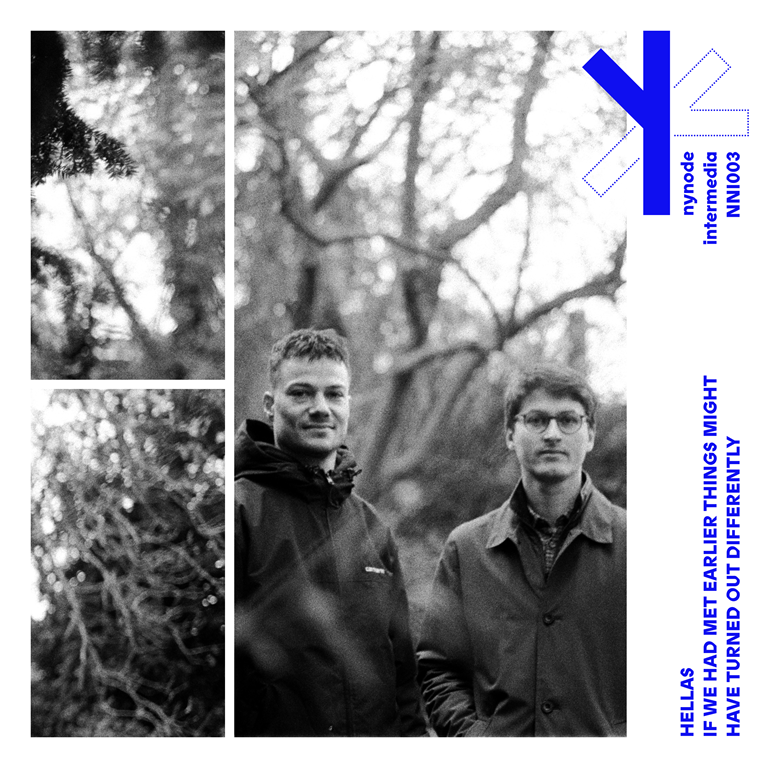
So what does this say? It says Hellas have conjured a majestic work from – well, who knows what source material? How much of this album came to fruition in the wake of its recording? And how much does it matter? It’s not as it’s an AI work, contentiously bypassing human input: pianist Peter Sabroe and drummer Jeppe Høi Justesen, with the assistance of producer Brian Batz have created something with personality, intricacy, depth. If I’d have heard it ten years ago, I’d have hated it: now… it reaches me. It’s an accomplished work, subtly complex and possessing significant depth. It’s amazing how things can turn out.

AA

NNI003_art