Posts Tagged ‘tunes’

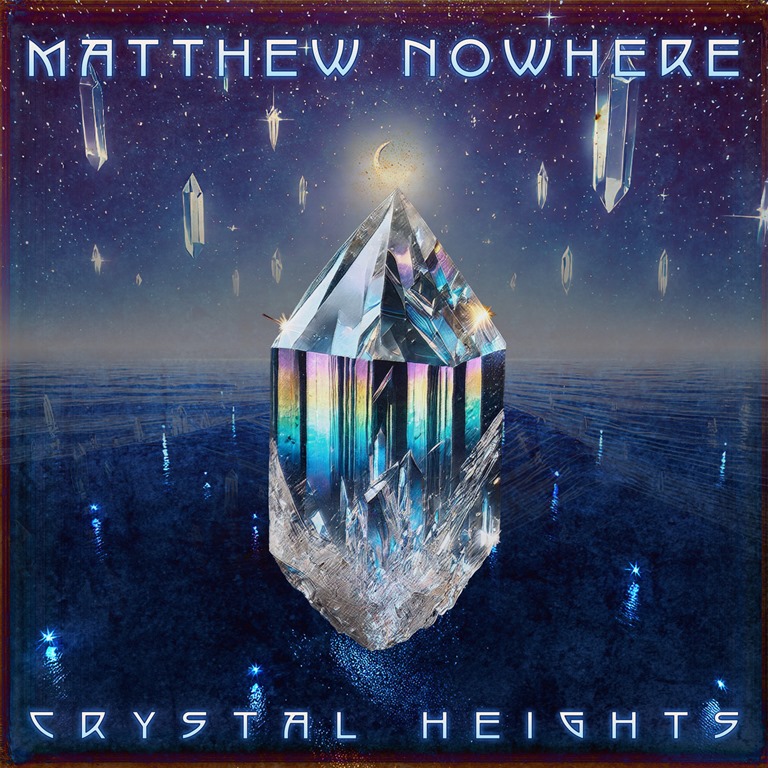
How times have changed. Back in the early 80s, this would have been mainstream. It would have been major label. It would have been huge. It would have smashed the charts. 2025: nah. And so Crystal Heights is a self-released effort, and the chances are its audience will be respectable but limited.

This is an album which is steeped in all things retro: it’s an electropop work which is light and airy and easy on the ear, and low on demand.

He describes it as ‘a sonic love letter to the 1980s’, and the title track is exemplary: it’s light, bouncy, melodic. But it feels somewhat shallow, a shade flimsy. Then again, this was also true of much 80s pop, and it was a criticism levelled at pop music at the time. Critics in particular were not especially enamoured by electronic instruments, particularly sequencers. Here in the UK, the Musicians’ Union sought to ban drum machines as they were seen as doing drummers out of a job. They weren’t really all that keen on synths, either. Using machines to make sound wasn’t considered ‘real’ music.

Again, how times have changed (although drum machines in a ‘rock’ context are still unusual). Drum machines didn’t eradicate drummers, but the death of small venues pretty much killed off bands, impacting the number of places for them to play in the most dramatic fashion. And the proliferation of two-piece acts, and solo acts, is nothing to do with technology, and everything to do with the simple practicalities of performing live music. Rehearsal spaces are as scarce as gig spaces: what are bands to do?

The mid-tempo ‘Love is Only What We Are’ sounds like mid-80s radio-friendly movie soundtrack material, and drifts along nicely with some picked reverby guitar work, and it works nicely as a counterpoint to the crisp snare and clinical kick drum sounds. ‘Echoes Still Remain’ is atmospheric, evocative, and also sounds so familiar – not because it is, but because it’s the very quintessence of so much music released circa 1984. It’s hard to fault the level attention to detail here. ‘Ruby Shards’ provides perfect evidence of this, in that it manages to compress pretty much the entirety of New Order’s output into four and a half minutes.

‘Transforming’ was recorded with Lunar Twin, and is a bona fide electropop banger. Constructed around a rippling loop, it’s a supple work that oozes 80s vintage. It’s going to nag me for weeks which songs it reminds me of. It’s a clear standout in an album that’s solid but… but what, exactly? It feels light, perhaps lacking, even. But what more should we want from it, realistically? Innovation? No, that was hardly the objective here. Lunar Twin also features alongside The Antonio Family Singers on ‘Persist3nce’, a brooding slow-burner built around a mesmeric beat which fades to grey.

With Crystal Heights, Nowhere has achieved something that’s not insignificant – an album that’s instantly accessible, strong on melody, and enjoyable.

AA
a0495838035_10

New Heavy Sounds – 30th May 2025

Christopher Nosnibor

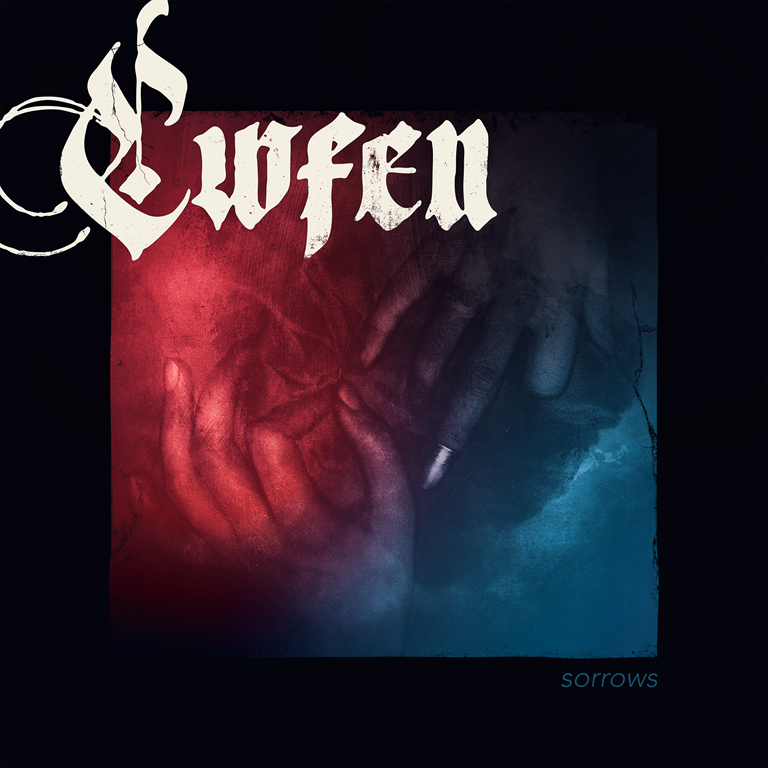
One of the strongest cases in favour of attending shows at local grassroots venues is that a punt may reward by striking pure gold with the discovery of a band that absolutely blows you away. It may be rare, but when it happens… POW! And so it was that a few months ago, I witnessed Glasgow’s Cwfen’s first live performance south of the border in the middle of the lineup for a £6 midweek gig at my local 150-capacity venue. Even before I learned that they were signed to New Heavy Sounds – a label which consistently delivers on the promise of its name, in finding bands which are heavy, but offer something new, something different, and have homed so many outstanding acts through the years – and had some much bigger shows lined up, it was clear that this was a band of rare talent, and who wouldn’t be playing 150-capacity venues for long. On stage, they had that quality that you only know when you see it. And they had songs.

And here they are, recorded in the studio, on their debut album, Sorrows. The huge, riff-driven epics are interspersed with brief incidental instrumental pieces, appropriately entitled ‘Fragment’ and numbered sequentially. The first provides a soft intro before ‘Bodies’ blasts in with seven minutes of supreme chuggage. It’s a gritty hard rock behemoth, but it’s more than just another monolithic riff monster: there’s a shade of goth sensibility about it, not least of all in Agnes’ brooding vocal, but there’s also the brittle-edged lead guitar work, and the song brings a powerful sense of drama and theatricality, building to a rabid, demonic climax… and straight away, it’s apparent that this is something special.

Cwfen have a supreme grasp of dynamics, of mood, of atmosphere, and Sorrows has all of these in spades. Single cut ‘Wolfsbane’ grinds in, meshing together gothy lead guitar, rich with chorus, and reverb-laden vocals which are simultaneously haunting and commanding, while a thunderous bass nails things down tight at the bottom end. Next up is ‘Reliks’, released as their debut single, and it’s different again, an atmospheric mid-tempo song which soars, managing to incorporate elements of classic 80s rock and shoegaze, while at the same time bringing the atmosphere of Fields of the Nephilim. Nothing’s overdone, and nothing’s underdone, either: everything fuses together in perfect balance, while ‘Whispers’ melds 70s rock vibes with a hard rock, delivered with a hint of anthemic power ballad. And in the background, raw banshee screams fill the swell of sound towards the end with pure emotional release. ‘Penance’ brings the weight with thunderous drums, squalling feedback, and a crushing riff behind a demonic howl of a vocal, which switches to achingly magnificent melody for the chorus. ‘Embers’, meanwhile, makes for a megalithic monster of a tune, delivering seven minutes of crushing riffery and standing as the heaviest and maybe one of the most overtly ‘metal’ song in the album – although full-force closer ‘Rite’ plunges deeper into darkness, a blackened anthem by way of a finale to a superlative set.

On Sorrows, Cwfen deliver on their name: magical, mystical, menacing, haunting, dark… but they bring so much more, and certainly do not belong in any given pigeonhole. While this is indisputably a ‘heavy’ album, it’s accessible – without going pop or being overly polished. It’s an album which makes a high-impact first impression, but reveals more depths and layers with subsequent listens. Sorrows is a masterful work, which ventures far and wide in its musical inspirations and touchstones, meaning it’s never samey, never predictable, but at the same time, Cwfen demonstrate an intense focus, forging a sound which is distinctive, rather than derivative. A rare gem, and a standout of 2025 so far.

AA

cwfen-sorrows-artwork-final-3000px

11th November 2022

Christopher Nosnibor

Yorkshire based Mayshe-Mayshe’s bio references blending ‘dreamy art-pop and electronica with rich storytelling, skittering percussion and infectious melodies’, and how her ‘deceptively simple songwriting – at once universal and deeply personal – incorporates choral vocals, vintage synths and the occasional hairdryer.’

Said hairdryer was observed in a couple of live reviews I’ve penned in recent years, in catching her live in 2016 and 2021, but what always stands out during her performances is just how deftly she combines an array of elements, both stylistic and instrumental. She’s by no means just ‘another’ loop pedal artist, but a musical who judiciously uses the tools available to conjure textured, layered, detailed works which are, at the same time, simple and radiate aa unique sense of – for wont of a better word – naivete. But equally, her capacity for understatement is a defining characteristic. The fact that while playing a number of regional shows to launch Indigo, her second full-length album, her hometown show in York on the release date is in a record shop/café with a capacity of about 30 speaks for itself.

Performing as Mayshe-Mayshe, Alice Rowan presents as not necessarily shy, but introspective, considered, contemplative and as much as immersing her work in reservedness, there’s a certain sparkle of sass and levity in the mix, as titles like ‘You Throw Lemons, We Throw Parties’ from 2019’s Cocoa Smoke indicates.

Indigo is simultaneously simple and complex. As the lyrics to the title track demonstrate, she’s given to exploring emotional depths by balancing the direct and the oblique to create an obfuscating haze. And, in record, the same is true of her compositions.

‘But I Do’ kicks the album off in a style that’s minimal and poppy and kinda urban but at the same time ethereal and shoegazy, with busy fingerdrums and a crystalline distillation of mood that invites solid and favourable comparisons to The XX.

‘Dark Mountain’, released as a single in September, is really rather buoyant, with a bouncy bass and busy lead synth and twitchy urban vocal delivery that’s quite at odds with the tense lyrics and the ‘I’m drowning, downing’ hook which speaks to anxiety and panic. I suppose you might call it a sugar-coated pill, but it showcases Alice’s capacity to pen bleak yet buoyant pop tunes.

In contrast, ‘Moonflood’ is altogether darker yet dreamy, in a Curesque way, while ‘The Colours of Anxiety’, which originally featured on the 2019 Long Division compilation, is looping, lilting, and easy on the ear in a way that brushes over the tension it channels via a stuttering beat akin to a palpating heart. In this way, Mayshe-Mayshe conveys sensation beyond the words, beyond the explicit, and does so beautifully, in the most subtly resonant fashion.

In many ways, ‘Eczema’ speaks for itself, an itch that just won’t go away, sore and raw, uncomfortable and irritating, but presented in a palatable fashion, and ‘How to be Happy’ feels like a conscious attempt to be uplifting – which is it, but there are strong undercurrent which are less joyous. ‘Zachter’ is another previous release, having featured as the lead track on the two-track Zachter EP last year. With its lyrics in German and its instrumentation sparse and gloopy and with a hypnotic minimal dance groove, it’s something of an oddity which sits apart from the rest of the album.

The title track, released as a single only the other week, rounds the album off in a hazy, intricately detailed style. Accessible, and often breezy-sounding and easy on the ear, Indigo is an album that’s rich in depth and complexity. It’s thoughtful and emotive and dark and tense yet still extremely enjoyable. It’s a wonderful thing.

AA

su49355-Mayshe-Mayshe_2022-1_-_smaller_copy

Shows:

Nov 10

Cobalt Studios

Newcastle Upon Tyne, UK

Nov 11

FortyFive Vinyl Cafe

York, UK

Nov 12

Hatch

Sheffield, UK

Nov 14

Dubrek Studios

Derby, UK

Nov 15

The Holy GrAle

Durham, UK

Nov 17

Oporto Bar

Leeds, UK

Nov 18

The Peer Hat

Manchester, UK

Nov 19

The Studio

Hartlepool, UK

Nov 20

The Grayston Unity

Halifax, UK

Nov 26

Blues Night

Richmond (North Yorkshire), UK

Limited Noise – 29th April 2022

Christopher Nosnibor

With a CV that lists near-multitudinous membership and participation in bands (notably his regular gigs with Snack Family and World Sanguine report, but also contributing to Sly ands the Family Drone and countless others), renowned experimentally-minded jazz drummer and percussionist Will Glaser has taken some time out to continue his solo album sequence with the fourth instalment of Climbing in Circles.

Over the course of three previous releases, Glaser has explored jazz, folk, and beyond, through an experimental prism and with a methodology that’s very much about improvisation. This outing features long-time collaborator, Matthew Herd, on saxophones and piano, alongside trumpeter, electronic artist and producer, Alex Bonney, and was assembled over the course of five day. While the album is loosely constructed around two overarching ‘acts’, they consist of eleven separate and distinct pieces, and bookended by ‘Beginnings’ and ‘Endings’, there’s a narrative arc of sorts, here.

It begins with crawing birds and a gentle piano playing what one could readily describe as a charming melody with a quite conventional structure, and ends with a genuinely pleasant lilting piano tune – and yes, I mean tune in that it has all the conventional features of one.

In between, there is slow decay and infinite space. Rumbling, echoes, notes reverberate off one another at distance. Sax and trumpet trill and drone, sometimes at one, at others as if duelling. The percussion rolls and crashes, but more often than not, at distance, and creating texture and atmosphere and colouring the pieces with expression rather than maintaining rhythm.

The combination of instruments is relatively conventional in jazz, and, similarly, there’s nothing particularly radical about the way they’re played and interact on here. But there’s considerable joy to be had in simply listening to the musicianship and the way the musicians themselves interplay on the pieces. ‘Spiral Dance’ is a hypnotic serpentine spin, while ‘Bad Dream Machines’ is a drifting mass of fragmentation, dissonant, discordant, and above all, a work that exists in the spaces between the notes and in the reverb and echoes as in the notes themselves.

There will be some – perhaps many – who are deterred by the very mention of jazz, and there is a perception of there being a certain elitism about jazz – the idea that random notes and borderline unlistenable chaos is somehow a superior art form, and anyone who doesn’t ‘get’ it is clearly a philistine. But Glaser is a remarkably positive showcase for jazz, with a focus on the listener rather than purely the musicianship. Climbing in Circles Pt 4 is about atmosphere, about vibe, rather than indulgent wanking: this is jazz you don’t need to be an aficionado to appreciate. It’s listenable, and it’s varied, too.

On ‘Dead Fly Disco’, he and his collaborators play completely straight, a song with structure and swing, something you could even dance to, or at least nod a long to its toe-tapping groove in a basement bar late at night. ‘Ballad in the Jazz Style’ almost feels like they’re playing with and working within the tropes as an example of discipline, and it’s highly restrained and wonderfully moody in that sad, smoky jazz melancholy way.

There’s plenty going on, and enough to maintain interest, but not so much as to be chaotic or to lose the listener. Whether these things make it a good access point to jazz, it’s hard to say, but what it does mean is that Climbing In Circles pt.4 is a jazz album that’s accessible and enjoyable simply as a musical work.

AA

Climbing In Circles cover 1000px CMYK