Posts Tagged ‘tone’

Ideologic Organ – 5th September 2025

Christopher Nosnibor

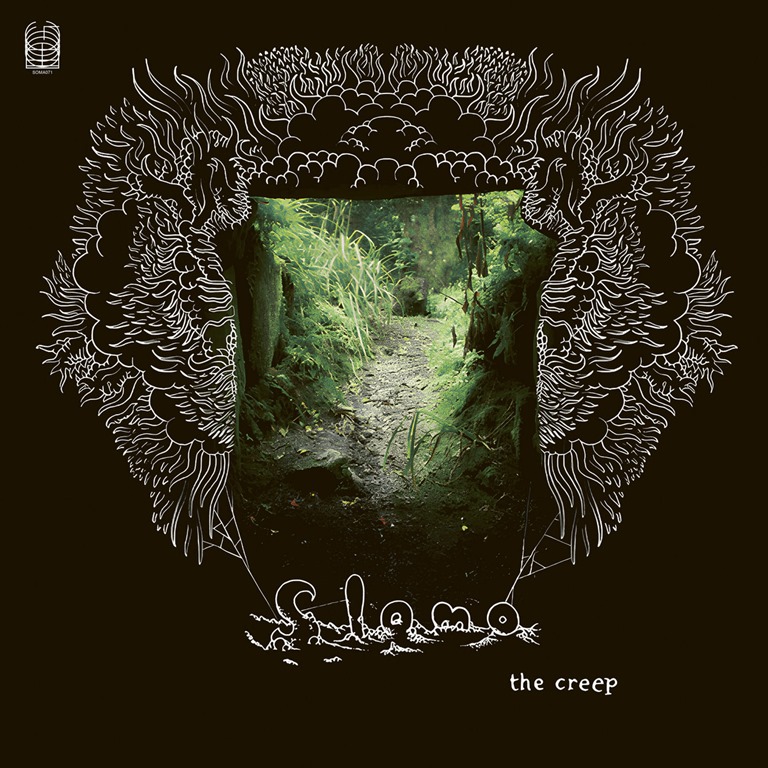
Umberto Eco is one of the many authors I feel I should have read, and hope that one day I will get around to reading. Social media has of late showered me with posts and reposts with a quite from Eco about owning more books than you will ever read – something I never much relate to. I only have so many hours in the day, and reading – since I insist on engaging with books rather than passively absorbing audio books while participating in other activities – is one of those pastimes which is time-intensive. I find music-listening to be comparable. As much as I enjoy listening to music while I’m cooking or participating in other activities, I like to give music full attention, especially new music. And it’s in this context that I often find I purchase music – like books, albeit to a lesser extent – at a faster rate than I can consume it. And this is why it’s taken me until the twentieth anniversary release of Slomo’s The Creep to catch up with this cult classic which brings together sludge / doom and vintage industrial influence.

The album’s context, too, is worth providing here, and so, I shall quote at length rather than paraphrase – not because I’m lazy in my writing, but because I fear making omissions, and feel that liner notes or press releases articulate in a way which better represent the artist.

Just one week after the passing of COIL’s Jhonn Balance in late 2004, the 61-minutes of "The Creep" manifested in a Sheffield suburb. Not yet a band and only captured due to happenstance, this first music of Slomo flowed forth without any consideration of it even being "a piece", let alone a release, though it didn’t take long for the participants (Chris "Holy" McGrail and Howard Marsden) to realise they’d captured something of distinct colour on account of how often they were listening to it.

Initially dubbed "The Ballad of Jhonn & Sleazy", the pair soon instead ascribed the music to Boleigh Fogou; a prehistoric underground chamber on the Land’s End peninsula that both had recently visited and been affected by. "The Creep" took its name from the peculiar side chamber assumed to be if ritual function, having no apparent practical use. This ponderous music chimed perfectly with the fogou; an apparently stolid place that teems with life once you become attuned to its frequency.

Fitting in perfectly alongside other massive single-track albums such as Sleep’s "Dopesmoker", COIL’s ‘Queens of the Circulating Library’, Cope’s "Odin", and Boris’ "Flood", "The Creep" secured a limited release on Cope’s Fuck Off & Di CD-R label in 2005 that quickly sold out via supportive outlets such as Southern Lord, Aquarius Records and Stephen O’Malley’s Ideologic Organ – then operating merely as a blog and micro-store.

And now, Ideologic Organ present a twentieth-anniversary vinyl edition. No doubt there will be plenty of people who are happy about this: after all, it’s never been released on vinyl, and I expect the tonal qualities of vinyl are ideal for a work where there is so much texture, so much richness of tone. The slow, resonant, reverberating bass during the quiet intro deserves deep grooves and decent speakers.

One downside of where the industry is now – and there are, as most of us are aware, many – is that the days of a promo copy of a slab of vinyl are essentially over (unless you’re writing for a major national or international publication), meaning I’m here with some decent enough speakers, but basing my opinion of the mastering and overall sonic experience based on an MP3 version. And as the low notes crawl, quivering, from those decent enough speakers, the rooms seems to darken and the atmosphere grows thicker, heavier.

Not a lot really happens during the first fifteen minutes, but the effect is profound, in that it resonates throughout the body. There is movement, but it occurs at a tectonic pace, and by stealth, rumbling around the far reaches of internal organs. For anyone who has read The Anatomy of Melancholy, Robert Burton’s seventeenth-century analysis of depression which explores the effects of the various humours on both mind and body. And The Creep slowly pulls on the gut and the intestinal tract in the most shuddering, lugubrious ways. At times it’s barely there, but shudders and shivers uncomfortably low on the psychic register. Others… there are low peaks among the troughs, but this is an album that registers more on a subliminal level and certainly low in the guts.

Where I raised the point of the vinyl release likely being popular with many fans, the counterpoint to this is the disruption to the continuity that the format creates. Listening to the MP3 version, there’s a fractional pause at just over thirty-two and a half minutes. It feels like a minor stutter, given that there is a long, low, undulating bass boom that fans out like a ship’s horn or subaquatic signals – but imagine having to get up and flip the record at this critical point before things begin to build. I’m perhaps being picky, but this feels like an unwarranted disruption.

The second half is even lower and slower than the first: twenty-nine minutes of bleak, rumbling abstraction. It’s the perfect amalgamation of drone, experimental, and dark ambient. And The Creep is dark. Whisps of feedback trail around and waft over hovering bass tines which simply roll and reverberate. Time stalls. Everything hangs in suspension: even your mind, and your digestion, hang, suspended, paused. Your breath… your mind. You stop thinking and simply float in this, this sound. Immersive is an understatement. It’s all-consuming, and you can easily lose yourself – completely – in this slow, slow, heavy drone.

20 years on, it’s clear that this is a work which is timeless. Niche, but timeless, in the same way that Earth 2 and Sleep’s Dopesmoker are more than just heavy droning noise. It’s no means an easy listen, but I’d still point to it as an essential one.

AA
a3748639222_10

Unsounds Records – 15th June 2023

Christopher Nosnibor

These are certainly three names to conjure with as prominent features of the experimental scene. Anne-James Chaton and Andy Moor have collaborated on numerous albums, and I personally discovered them via the Transfer series in 2011, around the same time as Chaton’s Evenements 09, which I found fascinating in its contemporary application of loops and with its parallels to the cut-up technique and Burroughs’ and Gysin’s tape experiments of the late 50s and early 90s.

As the biography which accompanies the release of this lates outing explains, ‘the duo Andy Moor and Anne-James Chaton continue their conversation with a new set of digital singles, diving this time into the rich language of the traditional metiers. The Handmade series is an homage to crahftsmanship through an exploration of the lexicons specific to bakery and pastry making, jewellery, joinery and wrought iron making, that will unfold over the course of 4 thematic volumes. With guest Yannis Kyriakides on electronics they create works where abstract notions mix with tangible ones by linking the arts of the hand with sound and poetry.’

The Moor / Kyriakides collaboration A Life is a Billion Heartbeats proved to be a gripping work for quite different reasons, and one thing that’s always a feature of any work featuring Moor is his versatility, as well as the fact that he doesn’t use the guitar in a remotely conventional fashion.

The two tracks on this single really do showcase the strengths of all three artists, and shows just how collaboration and collectivism can amplify individual powers.

But never mistake ‘art’, however obscure or experimental, for something which is always entirely serious: This, the first of the ‘Handmade’ series – projected to comprise four digital singles, to subsequently be released as a CD album and download, akin to the Transfer series, sees them taking on ‘the vocabulary of pastry making… Side A «Garniture» offers a curious anthology of poetry written by mixing the actions of the pastry chef, units of measurement and figures of speech. On Side B, «Sur Mesure» deploys all the richness of the culinary language when it comes to expressing the scarse [sic] or the plentiful’.

Truth be told, for a non-French speaker, the linguistic twists and any humour associated with the juxtaposition of subject matter and context with delivery are lost beyond the cover art, leaving simply the sonic experience – but this alone is more than enough. Chaton’s monotone spoken word is nonchalant and gives nothing away, while Moor peels off shards of dissonance from his guitar amidst drones and hums and clanks and a distant but insistent clattering percussion. Feedback and irregular discordant chanks and un-chords all crash and slide across one another in an irregular latticework of noise.

‘Sur Mesure’ is less challenging, less overtly difficult and dissonant, and sees the three employ the same elements but to an altogether more subdued and atmospheric effect, making for a good contrast against ‘Garniture’.

There’s no doubt that most would simply file this under ‘weird shit’, but it’s a strong experimental work which delves deep into dynamics, tones, and unusual juxtapositions, and really prods at the neural pathways in the most unexpected ways.

(Click the image for audio)

77U_art

Constellation – 20th May 2022

Christopher Nosnibor

The first collaborative full-length album by Automatisme (the Canadian musician and conceptual artist William Jourdain) and Swiss field recordist, ambient musician, visual artist and writer/academic Stefan Paulus, Gap/Void is nothing if not a deep, immersive sonic experience.

While the origins of many albums are largely unremarkable and barely worthy of reading, let alone comment, Gap/Void is a strong exception, and for that reason, it feels appropriate to quote at length:

Paulus approached Jourdain with a proposal based on his field recordings made during numerous mountain expeditions in the Swiss Alps, the Caucasus, and north of the Arctic Circle—documenting stormy weather, high alpine winds, avalanches, and sounds emanating from glaciers and from the insides of crevices and caves. Paulus created ambient noisescapes from these recordings by splicing and folding them into hundreds of layers of sound: an analog to the geological strata of their geographic sources. The resulting audio mixes, compounding a multiplicity of spatio-temporal excursions, were then further encased in drones using the natural tone series (the traditional zäuerli or wordless yodels of northeastern Switzerland), the monotonic standing drone of Lamonte Young’s Dream Syndicate, and the mass chords of early 1970s Kosmische Musik as points of reference. Paulus sent these extended ambient/noise pieces to Jourdain as source material for the latter’s bespoke Automatisme techniques, where variable tempo and glitch systems forge more overt minimal techno/IDM works.

‘Hey, how about an Arctic trek?’ doesn’t really sound like a pitch for a musical collaboration, and pitched to a TV producer, it would probably have been a series with its own self-made soundtrack – although for TV they’d have probably wanted some celebrities slogging across the barren wastes lugging audio gear or something stupid.

The first of the album’s ten tracks is the twelve-minute ‘Säntis’, where an insistent and overtly synthesised loop thrums against a slow ambient swirl before an insistent uptempo kick drum beat thumps in and for a spell things go techno… before becoming derailed. The tempos are all over, the ebbs and flows run in different times and tempos and before long it becomes quite overwhelming, disorientating as the layers build… and then everything falls away and you’re left with the rumbling sound of the wind scouring the bleak, barren ground. It sounds harsh and inhospitable, it sounds dark and unsettling, and yet it feels less tense and is somehow less agitating than the preceding pulse-quickening sensory overload.

Things do settle a little as the album progresses, and by the arrival of the third track, ‘Uble Schlucht’, we’re into something of a more straightforward Krautrock style, dominated by bubbling synths and motorik grooves. But, at the same time, it’s a soundscape of shifting terrain, of snowdrifts and undulations, crags and cervices.

There’s a restlessness about Gap/Void that means it’s impossible to settle, that keeps you on edge in a way. The compositions – particularly the way the percussion is eternally evolving, in a continual flux, more a series of palpitations and panic attacks than a pulsating heartbeat – are tense, ever-moving, with a flicker-filled urgency that offers little respite.

‘Blau Schnee’ goes all out on the deep bass and low-end murkiness, the beats and bass melting into one another, while ‘Stoos’ goes ultra-sparse and is so minimal it borders on the microtonal, before an off-tempo beat bounds in and trips the wire.

The pieces on the second half of the album are rather shorter, with none over the six-minute mark, but the sound and sensation remain similar, with crackling electronics dominating and beats that poke at the innards – sometimes subtly, others less so. But it never really lets up, and while very little of Gap/Void gives even the vaguest hint of its source and origins, it does convey a certain sense off desolation, of isolation. Soon, we will all live in desert, and it will sound like this.

AA

cover Automatisme Stefan Paulus - Gap Void