Posts Tagged ‘soft’

Cruel Nature Records – 1st August 2025

Christopher Nosnibor

Nicholas Langley outlines his latest offering with the explanation that “One Square Centimetre Of Light is a continuation of the ideas and techniques I used to compose Thinky Space and especially Cymru Cynhyrchiol. Recorded in spring and summer 2024, this album was an outlet for a lot of thoughts and emotions regarding the involuntary loss of time and memory.’

There are gaps in the narrative here – gaps which I don’t feel it’s necessarily appropriate to probe or plug, particularly when, in his extensive explanation of the album’s final, thirteen-minute piece, ‘Missing Day’ – of which he writes: “‘Missing Day’ can refer either to the mourning feeling of losing whole days to bad health, or to the actual calendar day of mourning, Missing Day, on February 20th. For this piece, as well as layers of tracks 3, 4 and 5, I returned to the generative music techniques I started in 2016. This time around I spent many days getting to grips with programming multiple pieces until I eventually programmed a piece which exactly conveyed my feelings of mourning and hope.”

Memory loss can be a source of panic, anxiety, and while it appears to be a focus, or inspiration of sorts for this album, it feels inappropriate to probe here. But listening to the soft, soporific ambience of One Square Centimetre Of Light, I find myself wondering – where will it go next?

It doesn’t really need to ‘go’ anywhere: the instrumental works which make this album are subtle, sublime. ‘Welsh Summits’ is a beautiful, resonant ambient exploration, while ‘The Weather on the Seafronts’ is magical, mystical, ambient, while ‘Old Age’ quivers and chimes abstractedly, with layers of resonance and depth.

And so we arrive at ‘Missing Day’: fully forty minuses of melodic instrumental exploration, serene, calm, expansive. It’s soft and as much as One Square Centimetre Of Light soothing, the vast sonic expanse of ‘Missing Day’ encapsulates the album’s conflicting and conflicted nature.

One Square Centimetre Of Light is overtly serene and beguiling, but hints at an undisclosed turmoil beneath the surface, a work which is a sonic balm, the result of a process to calm inner strife. As lights at the end of the tunnel go a mere on centimetre is barely there – but there it is. And it is hope. keep the focus on that.

AA
a2057051706_10

Hallow Ground – HG1703 – June 2017

Christopher Nosnibor

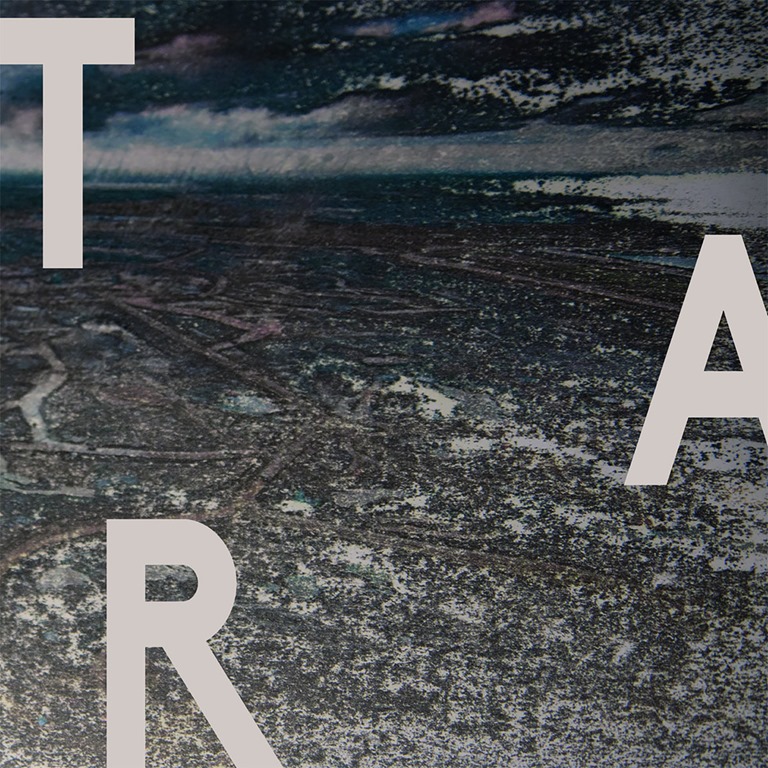
TAR is the fourth solo album by Tehran-based composer Siavash Amini, although he’s joined by Pouya Pour-Amin on electric double bass and Nima Aghiani on violin. Not that the individual instruments are readily recognisable in the thick sonic swirls which combine to forge the ever-shifting soundscapes of TAR at least in the main. But when Aghiani’s violin weeps and bleeds emotive from amidst the amorphous aural clouds which turn and taper, billowing and rolling, throbbing and pulsating.

‘A Dream’s Frozen Reflection’ begins droney but gentle, but inside the first two minutes breaks into a serrated sonic tempest. Music that sounds for all the world like a circular saw accompanied by a saw played more conventionally (does anyone play the saw any more? Or has it more or less gone the way of the comb and the washboard?) isn’t an easy sell, but Amini creates an intense aural experience that immerses the senses. But for all the harsh tones, there are contrasts in abundance, and through forging a shifting soundscape, the atmosphere changes, sometimes almost subliminally over the course of the piece.

‘Rivers of Tar’ plunges into murky, dark territory, but crystalline glissandos cascade through the eddying clouds of sulphur, while graceful strings rise and sweep expansively. It’s hard to determine whether or not it really carries an emotional resonance, but as a listening experience, it’s got more than enough range and features some passages which do have that vital drag.

At times, ‘The Dust We Breathe’ is barely there, delicate contrails of soft ambience washing in and out. There are periods dominated high-volume undulations of grating, snarling noise early on, but over the course of its fourteen-minute duration, the track drifts quietly and softly into the background.

It’s Amini’s ability to manoeuvre, effortlessly and almost untraceably, the trajectory of the four compositions from head-crushing abrasion to lulling calmness which is the greatest achievement of TAR. It’s an ambient album which carries a sting in the tail sharp enough to hurt, while equally massaging the mental receptors with its delicate tones.

The extent to which TAR translates Amini’s desire to explore ‘the fragile tensions between and individual and collective subconscious’ is largely irrelevant: TAR is an unexpectedly dynamic work, brimming with texture and contrast.

Siavash Amini – TAR