Constellation – 26th August 2022
Christopher Nosnibor
One’s perception of time changes with its passage. As you get older, it seems different, and passes differently too. In childhood, there’s the sense that summers are long and sunny, school holidays stretch out in front of you like a playing field the size of Wembley Stadium, whereas in adulthood, six weeks is no time, and the summer means it’s nearly time to start considering Christmas. But even in adulthood, while there’s a keen and pressing awareness of the rapid passing of time, it’s easy – and perhaps it’s how we’re psychologically wired – to ignore the overall narrative span while focusing on the rapid cycle of existing in the present. You get caught up in the infinite and swift cycle of the working week, thee routine, you complain about how time flies as New Year becomes Easter becomes Hallowe’en becomes Christmas, even how every birthday marks the passing of another year. But for all the talk of making the most of life and living every day or week like it could be your last, that’s what it is – talk. Because it’s almost impossible to comprehend there being an end, not just of life, but of anything. It’s simply human nature to take things for granted, that the sun will always rise, that you will always be able to buy the same bread and crisps and whatever in the supermarket.
And then they stop making a certain brand of crisps or chocolate and there are mutters of discontent, and then, twenty years later, online forums are oozing nostalgia for these things. These things of no consequence.
Over the course of seven previous album since 2001, Canadian quintet Esmerine, co-founded by percussionist Bruce Cawdron (Godspeed You! Black Emperor) and cellist Rebecca Foon (Thee Silver Mt. Zion, Saltland) have, as their bio notes, straddled the boundaries of ‘contemporary classical and late 20th century Minimalism’ and ‘more visceral and lyrical sonic terrain born from post-rock, folk and global.’
Such a broad palette is the perfect base from which to paint scenes of shifting perspectives that explore the theme of the title.
Time stalls during the nine-minute ‘Entropy: Incantation – Radiance – The Wild Sea’ – a piece which transitions through numerous parts and brings a range of atmospheres, from quietly brooding piano solo to soaring, majestic post-rock, trickling into the brass-orientated ‘Entropy: Acquiescence’ which evokes that sepia toned Hovis advert kind of nostalgia. And so it’s here I discover that that isn’t an exclusively English thing, but still – there is a cultural heritage of a nostalgia for a golden age of simplicity and innocence. It is, of course, a fallacy: past times were difficult, flawed. It’s easy to hanker for a rose-tinted rendition of a past you never knew, and ‘Imaginary Pasts’ seems to acknowledge this, wordlessly, via the medium of slow drones and rippling piano.
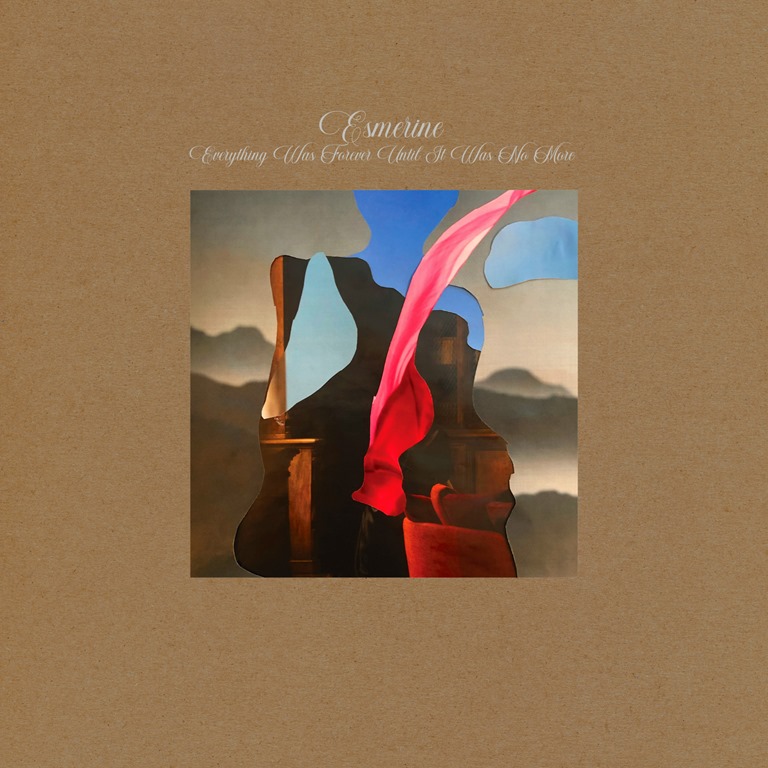
And so it is that Everything Was Forever Until It Was No More mines a golden post-rock seem of evocativeness, conveyed by means of slow-burning epics, interspersed with fragmentary pieces, which, while under three minutes in duration, give the album a certain sense of pace amidst the spic sprawlers, which culminate in the seven-and-a-half minute ‘Number Stations’. The brooding ‘Wakesleep’ is tense and eerie, with a sense of foreboding, that paves the way for the dolorous funeral chimes that herald the arrival of the closer.
There’s a sadness to it, and it’s this sadness which permeates the album as a whole. It’s a sadness that speaks of lost time and fading pasts. And when they’re gone, they’re gone. And yet there are soft hints of redemption, that nothing is entirely finite. Nothing is forever, but memories linger longer than life.
AA

 Aural Aggravation