Posts Tagged ‘Piano’

Solaire Records

Christopher Nosnibor

Threads of a Prayer is an immense work. Over the course of two discs and two and a half hours, Volume 1 of this two-part project finds Jeffrey Roden exploring quiet spaces, and as much as he explores spirituality, he also explores the effects of quietness and solitude in a world where life is a perpetual crescendo of noise.

The first time I played disc one was at work. I like to listen to music to drown out the inane babble of my colleagues. Due to recent cost-saving moves, my colleagues are now in closer proximity and more densely-packed than previously (which is what happens when multinational corporations decide that profits are more important than people, and close one of the main offices, condensing the workforce of three offices into two). The volume is, at times, unbearable, and music helps to filter out the background racket and therefore helps me to focus. This was not the result with Threads of a Prayer, which is, in the most part, so quiet as to be barely audible.

There are long periods of silence, or near silence. Such silence feels somehow daring, but also creates a remarkable atmospheric intensity. In these moments, in the right listening conditions, it is possible to cast off the clamourous hum of the world, the everyday, other people. These are periods for reflection, for contemplation. A dolorous single note played on piano resonates, booming, on the third of ’12 Prayers: One’. These, it feels, are prayers offered in dark times, under testing circumstances, but always with a ray of hope twinkling.

Roden’s piano playing demonstrates remarkable focus and restraint, not just in the spaces between the individual notes, but the attention to the way in which the soft passages are played with such delicacy, flickering flourishes as gentle as a butterfly’s wing, and with a natural grace seemingly finer than the blunt tools of human hands are capable.

The presentation is outstanding: the design is sleek, discreet, classically understated. The card stock which houses the jewel case and magnificently produced thirty-six page booklet is uncommonly heavy, and the high level thought that has gone into both the contents and layout of the booklet is clearly apparent. Make no mistake, this is a true work of art. The presentation gives a sense of occasion, of importance. For all its duration and the meticulous nature of the packaging, the pieces which make up the work are remarkable not for their scale or grandeur, but for their hushed introspection.

 

Jeffrey Roden – Threads of a Prayer – Volume 1

Makkum Records – MR17 / Platenbakkerij Pb 006 – 17th November 2016

James Wells

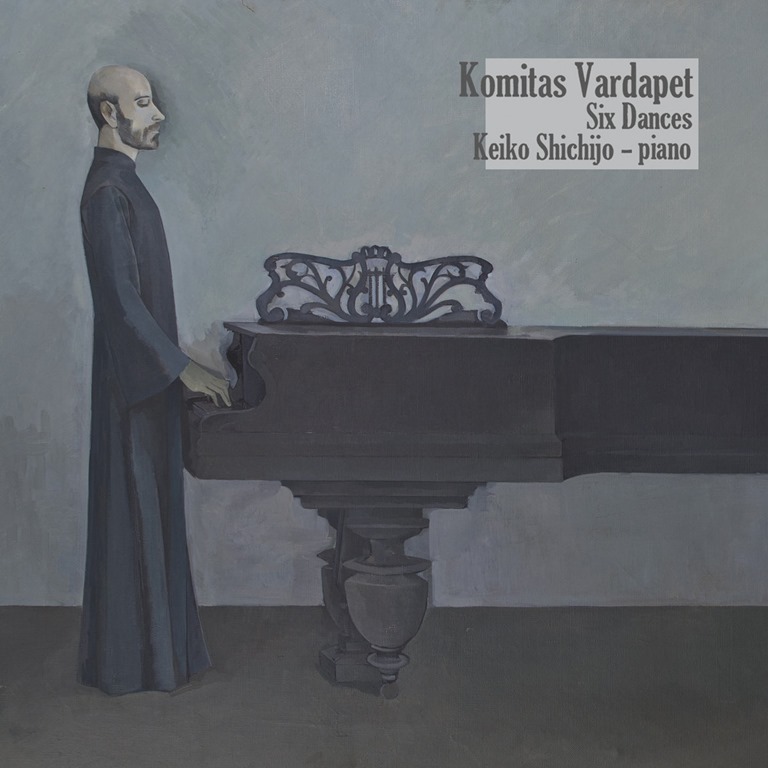
In these times of accelerated media and an exponential growth in the volume of mew works being cast out into the world, it’s often easy for lesser-known items from the past to be lost to history, to be buried and forgotten. And yet the archive is an eternally rich source of gens which so deserve rediscovery. This album – released simultaneously on 10”vinyl, CD and download – is very much a labour of love. The origins of its existence lie in the past: Komitas Vardapet penned a cycle of pieces for piano – Six Dances – based on Armenian dances, in 1906.

Makkum Records’ Arnold de Boer writes how, on hearing Keiko Shichijo perform Vardapet’s compositions, he fell in love with the music, and how Internet searches revealed other performances of Six Dances but none which touched Keiko’s. and so he made it his mission to capture Keiko playing the pieces, and how it came to pass that Keiko played them on a Steinweg Nachf piano, built in 1880, in the Geelvinck Hinlopen Huis in Amsterdam, a 16th Century house along the city’s canals in December 2014.

In using such a vintage instrument, the recordings are imbued with a deeply ingrained and palpable sense of the origins of the work. ‘Unabi’ sounds like a child learning ‘London Bridge’: the notes are not so much tentative as prone to wandering, but there’s something compelling about the seemingly innocent disjointedness which sometimes creps into the refrain.

The looping motifs of ‘Shushiki’ are delicately charming, and draw the listener’s attention with their easy grace. The heavy timbre of the low notes at the beginning of ‘Het u Araj’ is compelling, and Kieko captures the spirit of the composter’s direction to perform the final piece ‘Shoror’ .The performances are wobbly, wonky, yet delicate and sincere, and this is an integral part of their mystical, dust-coated appeal.


Komitas Vardapet - Six Dances

Frozen Light – FZL 041

James Wells

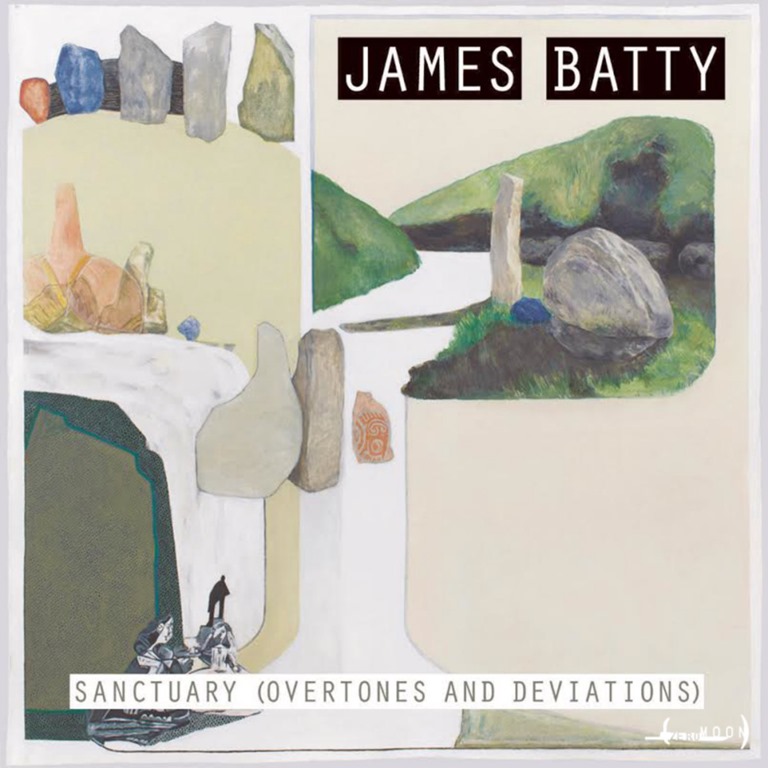
There’s something mildly irksome about the phrase ‘tickling the ivories’. It’s perhaps a strange personal quirk, but perhaps it’s the louche thespy associations of the phrase which are so bothersome. There’s also the fact that the phrase really fails to convey what’s truly involved in the act of playing the piano. Well, that’s usually the case. But much of the music on Sanctuary sounds very much like the tickling of ivories. Often quiet, delicate, light, tentative and experimental piano notes flit here and there, forming irregular patterns in the air. There are passages of haunting melody, with wavering drones quivering tremulously. There are also scraping strings, trilling woodwind and stomping elephantine rhythms passing through the protracted periods of hush. But first and foremost, it’s about the ivories, and there’s nothing remotely irksome about it.


James Batty - Overtones

Reveal Records – 11th March 2016

Christopher Nosnibor

Vigils comprises a suite of 11 sparse piano-led compositions. As a unit of work, its pace is predominantly sedate; the strings are subtle, graceful, and the mood is thoughtful, reflective. This is very much Birkin’s objective here, and he describes the album as ‘a soundtrack to the idea of looking back at our present from somewhere in the future’. But Vigils is not an album that cries nostalgia. It does not evoke a sense of longing for a future past. But equally, nor does it soundtrack a sense of guilt or a desire to separate from the part. It evokes the passage of time, of retrospection, of ageing, but without resorting to Instagram filters. Vigils is about time, but doesn’t set out to evoke a specific time as such, and in doing so, transcends time.

In context, ‘Accretions’ is surprisingly spirited and uptempo – that isn’t to go so far as to say it’s pop, but the rippling chords and hooky repeated motifs are accentuated with big chords that imbue the piece with a boldness that romps along in a way which is overtly accessible.

‘Moonbathing’ introduces picked acoustic guitar and harmonious vocals while a violin weaves shades of pastoral folk, while the orchestral chamber music of ‘Atomhog’ is sweet, crisp, and uncluttered in its arrangement.

Birkin explains the concept behind the album its artwork by observing that “Significant human evolution is not fast and loud but slow and quiet. So slow that you almost don’t notice it happening. Except when you look back and see changes after they’ve happened…that’s when you see the giant leaps.” Based in Derbyshire, Birkin formulated the album secluded in his isolated residence in an old mill, itself an artefact from a bygone era repurposed for contemporary living.

And while we – that of course is me speaking on behalf of an assumed section of the population right now – often speak of the unbridled pace of change, in real terms it’s all relative. Mobile phone models and laptops may change faster than you can blink, but that’s only superficial change. Lifestyles, attitudes, the big things, change much more gradually, almost imperceptibly. And indeed, it’s during those imperceptible, gradual changes, that the leaps occur.

I daresay that no-one living in the Industrial Revolution felt as though they were living in a period which would come to mark a pivotal period in human history, just as those living in the inter-war or post-war years we likely too busy simply living to consider the present as a period. Similarly, growing up in the 80s never felt like the dawn of the digital age or late capitalism, and there’s very little obvious difference between pre- and post-millennial life as it goes. But in the present, the eighties feel like another life, the sixties and seventies like historical fictions.

Time is but a construct measured in lived experience, and subtly, subliminally, by implication and by simply side-stepping stylistic trappings of past, present or imagined future, Richard J. Birkin captures all of this in a beautiful, poised and soothing collection of work.


Richard-J-Birkin-Vigils

Richard J. Birkin Online