Posts Tagged ‘Phill Niblock’

Karlecords – 12th April 2024

Christopher Nosnibor

This three-way collaboration promises ‘intense, menacing layers of thick drones and alien sounds,’ and comes laced with sadness in the wake of the recent passing of Phill Niblock.

Karlrecords’ statement around this release and how it came to be is simple, direct, and worth quoting here:

In summer 2022, within just a few weeks and by pure coincidence, 2 proposals regarding Phill Niblock albums arrived: one suggesting an overdue vinyl reissue of a CD release (more on that when the time has come for it), the other email was from Anna Clementi saying she and Thomas Stern were working on new pieces that Phill Niblock has written for her … when Zound Delta 2 was complete, Phill sent photographs for the two artworks, we met twice to discuss details, but unfortunately he died unexpectedly early January this year so the album now is, sad as it is, a posthumous release … an intense goodbye from one of 20th century most iconic composers.

While Niblock departure was sudden and unexpected, it’s remarkable that not only had he enjoyed a career spanning five decades and ranging across minimalist and experimental music, film and photography, but that at the age of ninety, he remained prolific until his final days, as Looking for Daniel, released in February, and representing his final compositions, evidences.

Like Looking for Daniel, Zound Delta 2 contains two longform composition, and, again, it’s a monumental drone-orientated work. ‘Zound Delta 2’ is eerie, other-worldly, haunting and atmospheric. Ethereal voices hum and moan, breathy wordless monastic incantations come together and emanate disembodied exhalations as if calling from the other side. No doubt the actual source sounds and the process was quite banal and workaday, but the effect… the effect sends shovers all over and goosebumps pickle in response to this chilling swell of sound. Beneath the moans and cries are slow-turning rumbles and delicate, wisp-like ambience. Everything sounds slowed down and stretched, sound suspended in time and space as they hang in the air. The layers wrap around one another, and while minimal in form, a density of atmosphere builds which makes it hard to catch your breath.

Sometimes, a dream can affect the shape and mood of the entire day which follows, and this has been one of those days for me. More often than not, it’s simply a hangover of anxiety or a sense of doom which looms, but since my wife died early last year, I’ve dreamed of her only rarely, so when I do, the impact is great, and if feels as if she’s speaking to me, even when there’s no obvious message. Invariably, she’s well again in my dreams, or at least looks healthy again, and sometimes, she imparts words or wisdom. But mostly, it feels a if her presenting in my dreams is a reminder, a kind of haunting. The reason I take this diversion isn’t purely a matter of indulgence, but because it’s relevant to the tone of ‘Zound Delta 2’, which creates the sensation of Niblock pre-empting his departure with a recording which sounds as if it’s being projected from beyond. The abstract voices aren’t tortured hellish howls, but the sound of purgatorial lostness, wandering in between worlds, wanting to communicate, to be heard, but without the capacity for articulation.

Perhaps this isn’t the album I should be listening to tonight – but then again, perhaps it is. Culturally, we avoid talk of death, we shield our eyes from it. As the sole inevitability of life, we need to turn and confront it. ‘Zound Delta 2’ is without doubt one of the most powerful, intense, moving and difficult pieces I can recall hearing. It is so, so sad, so far beyond human, so far beyond this realm. It feels like the purest grief, the deepest of sadness, the ultimate release, the sound of being dragged, unsuspectingly, into the spirit realm. Everything collapses and eddies into a disorientating swirl of sound in the tracks final minutes, growing evermore uncomfortable.

‘Zound Delta 2 (Version)’ is fractionally shorter, but no less comfortable. Again, it begins quite gently, almost delicately and emanating an air of tranquillity – but it’s soon disrupted by creeping undertones of distortion. There’s squelching, trudging, sloshing and rumbling discomfort amidst uneasy drones and heavy flutters, and if it’s momentarily lighter than the ‘original’ version, this alternative or second version swiftly evolves to become pure tension. As it progresses, ‘Version’ become more uncomfortable, more distorted, more strangled, tortured, and asphyxiated. I feel my muscles tighten and my head spin. It’s dark, it’s tense, it’s difficult.

Clearly, it would be erroneous to presume that Niblock was aware of his limited time. But something about Zound Delta 2 feels like a planned exchange from a place beyond our experience and understanding. It’s as if he had stepper over some time before, and brought something back and shared it with his collaborators for this work.

Any response to a musical work is personal, subjective. Perhaps my in-the-moment reaction is coloured by timing, by the moment of the now – bad timing. But – BUT… something about Zound Delta 2 is intrinsically hard to manage, touching a subconscious level that really triggers something. As slops and churns wash and eddy around the eternal drones which form the dominant fabric of the album, Zound Delta 2 tugs at our feet and ankles and disturbs the ground beneath our feet. Dark and dank, Zound Delta 2 is not an album to listen to in the dark.

AA
KR115_front

25th January 2024

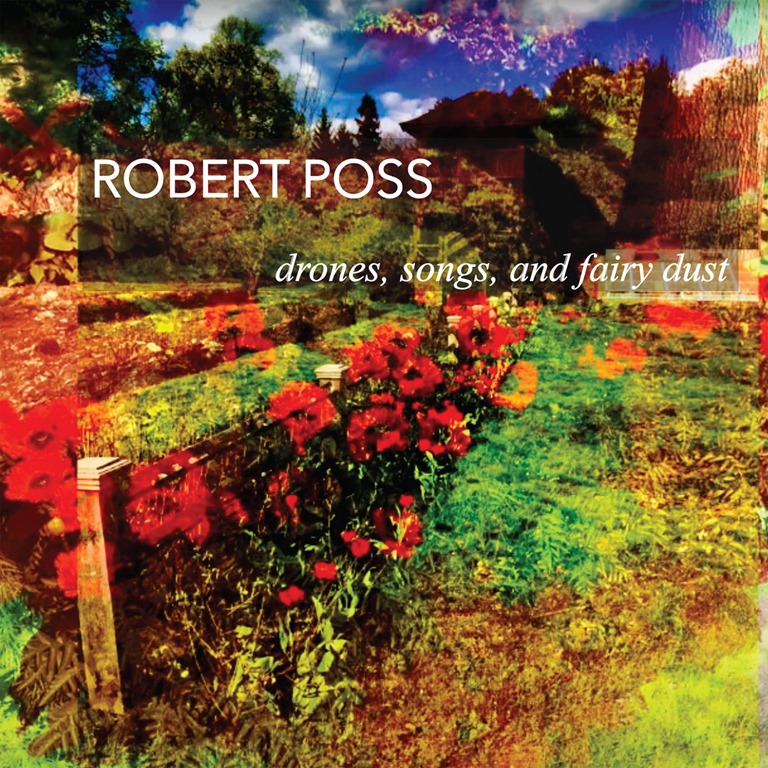
With Band of Susans, active between 1986 and 1996, Robert Poss curved an arc from the New York noise scene towards more of a shoegaze sound. With releases on Blast First and Mute, and featuring a pre-Helmet Page Hamilton on second album, Love Agenda, not to mention a reputation for eardrum-shatteringly loud live performances, the band unquestionably achieved more in terms of influence and cult cred than commercial success (something their final album, Here Comes Success (1995) seemed to acknowledge in its title). But what qualifies as success? Capitalist culture and media tell us that success is a career, promotion, cash, holidays, cruises, bug house big car. But that’s because these are the status symbols capitalism tells us we should aspire to. How about having enough to be ok, a home you like and feel comfortable in, having friends, knowing yourself and being comfortable in your own skin, and having the freedom to do things which give you pleasure? It’s a question of values: what do you value more, time, or money? Status, or the satisfaction of being true to yourself?

There seems to have been a fair bit made of fellow BoS alumni Karen Hagloff’s return to music making in recent years, but not so much about Robert Poss’ sustained output since the band called it a day. But then again, Poss has spent a career being somewhat overlooked and vastly underrated. Both his songwriting and style of playing is quite distinctive and unusual – quirky seems a reasonable adjective, and is certainly not a criticism. The notes on bandcamp note that ‘The release is dedicated to composer/filmmaker/photographer Phill Niblock, a long-time mentor, colleague and friend.’ The timing of this certainly renders this dedication particularly poignant, and also highlights the way in which exponents of avant-gardism feed off one another and evolve one another’s ideas in different directions.

The Niblock connection certainly sheds additional light on Poss’ approach to composition and sound, favouring drones and repetition over rigid verse/chorus structures and progression, and Drones, Songs and Fairy Dust does very much contain, as the title suggests, a miscellany of bits and pieces, ranging from exploratory wanderings to fully-formed songs using conventional ‘rock’ format of guitars, bass, and drums – and on some, there are even vocals, notably the punchy post-punk cut ‘Your Adversary’, which marks a change of style with its murky production and blustery drum machine backing.

The first of these, ‘Secrets, Chapter and Verse’ is a title which could easily be on a Band of Susans release and the song carries that Band of Susans vibe – jangly indie but played loud – and I mean LOUD, with strolling bass running back and forth and up and down beneath the layers of guitar, the vocals low in the mix and serving primarily functional capacity – sonic placeholders.

‘Out of the Fairy Dust’ combines jangling indie and ambient drone and in many respects does carry echoes of ‘Here Comes Success’ – but also Love of Life era Swans – at least until about halfway through where it takes a sudden turn into deeper folk territory. It’s quite a contrast with the deep, ultra-droney sonorous ambience of ‘Foghorn Lullaby’.

Like the epic solo workout that is ‘Hagstrom Fragment’, which comes on like some legs akimbo 90s rock, ‘Skibbereen Drive’ lunges into rock mode, and follows the chord sequence of ‘Flood II’ from The Sister’s of Mercy’s Floodland – and sounds very like it, with its cold synths and crisp drum machine, but without the acoustic guitar detail and lead guitar line. It’s a real contrast to the epic dronescape of ‘Into the Fairy Dust’, on which the drums are a million miles behind the drone as they clatter and roll away, onwards, ever onwards, but also almost entirely submerged in the mix. Elsewhere, with its snarling synth grind, ‘S Romp’ sounds like Suicide doing dirty disco, and ‘Trem 23’ – well, it takes us back to the 23 enigma.

Drones, Songs and Fairy Dust showcases a remarkable diversity of styles, and it’s neither as dry nor as dark as all that, with ‘Imaginary Music On Hold’ presenting a most whimsical feel. As a collection, it never fails to be interesting, or enjoyable, and showcases Poss’ eclecticism and range, and there’s pleasure to be had from listening to a collection of work by an artist who never feels constrained or compelled to confirm to a given genre or mode. It’s something that seems to trouble many people, not least of all labels and critics, that an artist’s creations are based on the pursuit of creative endeavour and interest rather than assigning themselves a category by which they must live. The flipside of this is that it may not feel particularly like an album it its own right, but more like a collection of demos and ideas – and just as the title summarises the contents as three separate elements – Drones, Songs and Fairy Dust – so it feels like it contains the seeds of three separate and distinct projects – a droney one, an indie one, and a dark rock-orientated one. It would be exciting to witness those three projects realised, but what we have here, regardless of future intent, is a document of forward-facing music-making and an artist whose sole priority is doing his own thing. This is, ultimately, the ambition for any artist: to create without concern for commercial matters. And Drones, Songs and Fairy Dust is an exemplary product of creative freedom.

AA

a2882047316_10

Unsounds/Echonance Festival – 2nd February 2024

Christopher Nosnibor

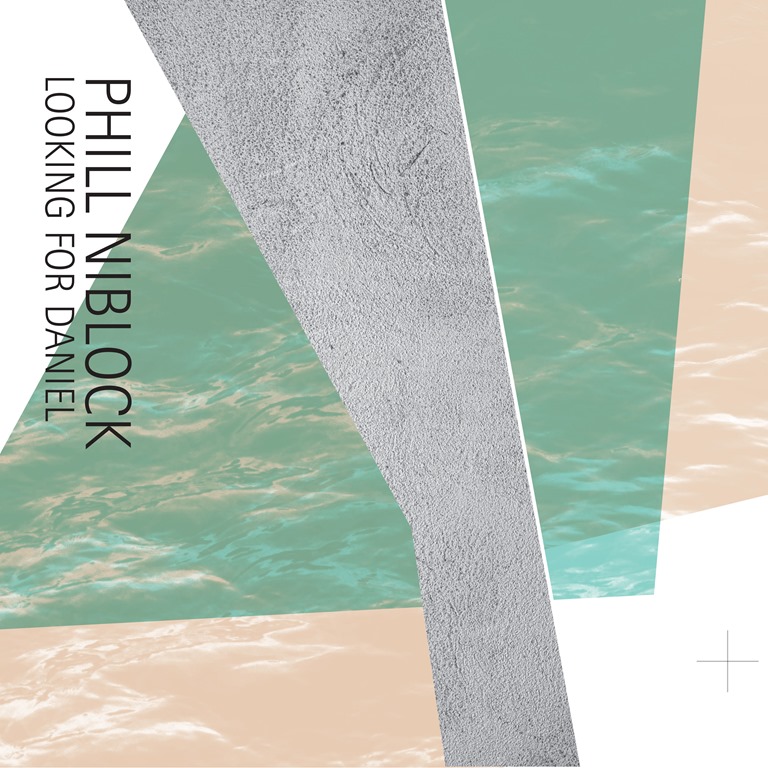
It’s never a comfortable experience to learn of someone’s passing, even if it’s someone you’re only really aware of rather than familiar with. My knowledge of Phill Niblock and his work was relatively scant, although I had written about a few of his releases over the years. I wasn’t particularly enthused by Touch Five back in 2013 – an album I would probably appreciate considerably more now. This likely says as much about me as it does Phill Niblock, but does perhaps indicate just how artists who fully espouse avant-gardism are always ahead, and tend to only be truly appreciated later. And so, to learn of Niblock’s passing only this month, from the press release which accompanies this release was a… moment, a cause to pause.

And so as I read how this release serves to ‘commemorate the late Phill Niblock with this release made in close collaboration with the composer,’ and features recordings of some of his very last compositions just before his passing in January 2024. ‘The two works on this album, ‘Biliana’ (2023) and ‘Exploratory, Rhine Version, Looking for Daniel’ (2019) represent the hallmarks of his unique approach to composition where multiple, closely-tuned instruments and voices are used to create rich and complex sonic tapestries…

The fact that he was still composing up to the age of ninety is remarkable. The fact these two pieces don’t feel radically different from much of his previous work is impressive. And yet, in context, the fact that these final works are such long, expansive, and unsettling compositions feels fitting.

To understand and contextualise the pieces, it’s worth quoting directly: ‘In Biliana, written for performer Biliana Voutchkova, her violin phrases and vocalizations carve out a deep sonorous space full of fluctuating overtones. By emphasizing on the physicality and materiality of her sound, the piece gives us the sensation of stepping back to reveal a singular portrait of the musician. ‘Exploratory, Rhine Version, Looking for Daniel’ was recorded by two Netherlands based ensembles, Modelo62, and Scordatura ensemble from a live recording made at the Orgelpark, Amsterdam during the Echonance Festival in February 2023. It is a complex work comprising of 20 parts, where lines seem to emerge and disappear out of a landscape of harmonies and sonic spectra. There is also a voice hidden in this mass of instruments, just like in Biliana, giving both works an added human element – something that always emerges out of Phill Niblock’s seemingly dense musical constructions.’

Each piece takes a long form, extending beyond the twenty-minute mark.

A decade ago, I bemoaned just how ‘droney’ Touch Five was, how it was impossible to perceive any tonal shifts. Listening to ‘Biliana’, I’d have likely posited the same complaint, bit with hindsight and personal progression, it’s the eternal hum, the intense focus on the most minute and incredibly gradual of shifts, which are precisely the point and the purpose – and the things to appreciate. On the one hand, it is testing. It’s minimal to the point of a near-absence, an emptiness, but present enough to creep around your cranium in the most disquieting of fashions.

It’s not uncommon to lie awake and night or have deep pangs of regret which knot the stomach when you replay that awkward exchange, that time you said the wrong thing, the occasion when you plain made a twat of yourself one way or another. The same anguish hangs heavy over reviews where I’ve simply been wrong. There’s no way of undoing them – and to repost or revise down the line would be disingenuous, an act of historical revision. You can only correct the future in the present, and not in the past. We all know how rewinding history to make a minor alteration goes. Before you know it, your hands are fading and you’re about to become your own father or something.

You almost feel yourself fading over the duration of ‘Biliana’ as the eternal glide of string sounds hangs thick and thickening in the air and somehow at the same time remains static. Where is it going? Where are you going? Everything feels frozen in time, slowed to complete stasis in a slow-motion drift. Wondering, waiting… for what? A change. But why would change come? Breathe, let it glide slowly over you, however much you feel a sense of suffocation.

‘Exploratory, Rhine Version, Looking for Daniel’ begins sparser, darker, danker. Ominous, string-line drones swell and linger, here with scraping dissonance and long-looming hums. Nothing specific happens… but it crawls down your spine and you feel your skin tingle and creep. Nothing is quite right, nothing is as it should be.

Over the course of his long, long career as a defining figure of the contemporary avant-garde, Niblock was outstanding in his singularity, and the unswerving nature of his compositions, a vision which, as this release evidences, remained unaltered to the end.

77U_front