Posts Tagged ‘Mille Plateaux’

Mille Plateaux – 22nd March 2024

Christopher Nosnibor

What’s often fascinating to me as someone who writes about music quite extensively, is to observe the avenues other writers explore, particularly when engaging with music that’s ambient, obscure, or otherwise difficult to take a hold of and to pin down. This fascination is amplified when the music, either by its inherent nature, or by virtue of explanatory words from the artist, has a foundations in a theoretical or conceptual context.

Achim Szepanski has been tasked with a challenge when it comes to the notes to accompany

Oolong: Ambient Works, which is the 17th studio album from multi disciplinary artist Ran Slavin, which is pitched as ‘a 74 min drone-ambient-minimal-symphonic infused LP that takes after various teas in the far east.’ To heighten the experience, each track is accompanied by ‘a slow and atmospheric visual journey shot by RS in East Asia and the total can be experienced in total and joined as an immersive 74 minute journey.’

Szepanski helpfully explains the layered meanings in the translations of the word ‘oolong’, and expounds the complex interconnections of tea and dragons through a filter of Felix Guattari (which isn’t entirely surprising, given the label releasing it). He grapples with ‘the minimalist concept of tea architecture’ and the way in which ‘Not only the centripetal, but also the centrifugal orientation of the sound is imaginary.’

While the visuals clearly form an integral pat of the project overall, I shall preserve my focus exclusively on the audio release, and in advance of this draw the distinction between audio created to provide a soundtrack, and visuals created to accompany an audio work, because while Szepanski discusses at length the relationship between the visuals and the tea path and the simultaneous limitations placed on the work by the visuals and their capacity to enhance the experience, Oolong: Ambient Works is an audio release or an ambient persuasion, as the title suggests.

The seventy-four minutes is divided into eight individual pieces, with titles such as ‘Grand Jasmin’ and ‘Assam Jungle; as well as others which are less overtly tea-derived, like the first composition, ‘Time Regained’. It’s fifteen minutes of slow-simmering ambience, the levels of which fluctuate and catch, the glitches rupturing the smooth surface of the soft sonic fabric.

Szepanski makes an important point when he writes ‘It is impossible to know exactly what the individual sounds signify. Sometimes it might be the intention to hear the sounds of nature. But it’s not a question of identifying its source and its effect.’ And so we come to what is, for me, the crux of the ambient listening experience, whereby the source of the sounds is far less significant than what the listener hears. Not even what I hear as a listener, although I can only speak and interpret for myself, and the beauty of this experience is that however much Slavin strives to imbue this work with meaning, it cannot be imposed. Slow pulses bring a rhythmic element to this otherwise abstract piece, which is deeply calming, but occasional warps jolt the listener from their state of tranquillity like a prod.

‘Butterfly of Ninh Binh’ flits by with crackles and scratches by way of disturbance, and the introduction of static and ersatz surface noise to recordings is a curious one, as something which only became a feature with the advent off digital audio. Those who have come to vinyl since the renaissance are less likely to relate, since vinyl is now a plush commodity and not something people leavy lying around or use as a coaster or whatever as was commonplace in the sixties, seventies, eighties. But such interference is integral here: Slavin’s approach to ambience on Oolong is subtly different, and introduces just enough dissonance and discomfort for it to be not entirely comfortable.

The ten-minute ‘Ruby Ceylan’ is soft and ripping repetitive and hypnotic, but something – perhaps the abstract moans, perhaps something else – is just off.

Iroh, in Avatar: The Last Airbender, is a keen advocate of the calming properties of Jasmine tea, and I get a far stronger Jasmine connection from this – the original animates series, that is – than from ‘Grand Jasmin’ here – the album’s shortest track is subtle and soothing, but also marks a change of texture with a thumping beat which echoes away hard and fast beneath its slow-swelling outer layers.

‘Himalayan Flower’ unfurls slowly and with pronounced percussion, before the ten-minute ‘Summer Monsoon’ brings the album’s conclusion. A slow, mesmeric, soporific cloud of ambience passing by, with occasional clangs and abstract interruptions which echo through the drift, this is a real; eyelid-drooper which suggests it’s time to sleep, or time for a coffee.

AA

MP69_front

Mille Plateaux – 1st December 2023

Christopher Nosnibor

It’s always exciting to hear what electronic experimentalism Neuro… No Neuro have cooked up, and Positive* is the second album this year, following on from the collection of glitchy snippets which comprised Compartments back in January. Just as Compartments was a very different project from its predecessor, Faces & Fragments, so Positive* explores very different territory from the ‘Kawaii-Glitch’ of Compartments.

As the accompanying notes explain, ‘Positive* by Neuro… No Neuro is based upon thin slices of memory, and the disintegration of their existence. The day-to-day, with its ‘ups and downs’, all while operating/existing above and to the right of the body. When the day ends, and the separated is reunited; how does one collect what is no longer there? …Separating consciousness from the corporeal… Memory and thought are being swept out to sea in granules that are imperceptible to those around you. Short term is riddled with inconsistencies…Say “so long” to the granules.’

It’s all about focus, and the focus of Positive* is very different from any previous projects. And when it comes to projects like this, details are important. In context, it’s ok to focus on those details, and to do so isn’t obsessive or excessively picky, but to engage with a creative work on the basis of its design, its intent. I preface my assessment this way because the first thing I’m drawn to, before hearing a single note, is the asterisk in the title. Such a mark denotes a footnote, an aside, a necessary commentary on the subject.

But there is not one appended to the accompanying notes. What can it mean? Is this an accidental omission? It seems unlikely, and as such, one can only conclude that it’s for the reader to decipher the nature of the discourse. In my own experience of academic writing, it’s often the case that the real commentary and the grain of the research lies in the notes, and so it is the case here.

‘This Time for Sure’ brings some stuttering ambient drum ‘n’ bass which arrives in a drift of Japanese-inspired scales, bit there are some subtle details and textures to be found low down in the mix. It certainly sets the tone for this comparatively delicate collection of pieces, most of which are fairly fleeting, sitting around the two-and-a-half-minute mark on average.

Each of the titles pins a positive slant on neutral or even potentially negative scenarios – ‘Even I can See this Now’, ‘When You Actually Want to Wake Up’, ‘Drier days Ahead’ – all feel like phrases uttered the kind of pep talks you might give yourself in times of struggle. C’mon, you can do this! Sometimes, try as you might, it still feels empty and futile, and as oft as you repeat it, you struggle to believe it.

‘When You Actually Want to Wake Up’ perhaps represents this struggle most keenly, a loping glitch like the back and forth internal monologue you struggle to overcome: yes… no… yes… no… just get up… but…’

‘Of Course You Know it All’ has an implied snarky, snideness to its title, but it’s still positive, right? Its glitchy, picky, chiming mellowness float beneath some pinging arcs, while the sweeping ambience of ‘Almost Through’ arrives with a sense of sagging fatigue, the kind of positivity many feel in the last half hour of the working week – fagged out and clinging to that point of release.

The world is dark and life is a grind, and it’s often difficult to see the light, the positive aspects among it all – and they are few and far between. Platitudes like ‘at least I have a job’ or ‘at least I have my health’ don’t really carry much conviction. Sure, there’s always someone worse off, but it’s hardly saying much. It’s ok to be negative, to be discontent.

And perhaps it’s here we finally come to understand and appreciate the asterisk. Positive* is, overall, melodic, and feels quite uplifting, being gentle, the urgent beats tempered by ambience and melodicism. It’s actually – dare I say it – quite nice. But finding those uptempo, upbeat aspects, maintaining balance, is hard as you juggle and struggle to keep things together, a day at a time. And perhaps this is how we can best appreciate Positive*. Just as memory drifts and floats, so does our capacity to continue onwards and to stay afloat. All you can do is hang in there.

AA

a3005718583_10

Mille Plateaux – 20th January 2023

Christopher Nosnibor

Less than a year on from Faces & Fragments, Neuro… No Neuro are back again with another substantial instalment of scratchy, glitchy electronica that’s rich in retro vibes.

Each piece is short – around two minutes – and drifts into the next. As the air floats past carrying soft analogue notes on a gentle waft, you suddenly realise you’re already five tracks in. It’s not that Compartments is undemanding, so much as that it’s subtle, meaning that it circulates in the atmosphere without dominating your headspace in an intrusive fashion.

The beats are backed off, even as they stutter and troll, flicker and jar. There’s a softness about the sounds and the way these woozy, warped snippets trickle together that’s almost soporific, especially when tinkling chimes cascade in ripples.

The Mille Plateaux website describes Compartments as Kawaii-Glitch (Kawaii being the Japanese culture of cuteness), noting that ‘The very artificial glitch aesthetics are not, as usual, depicted by a cold and sterile feeling; but quite contrary have the qualities of an artificial sweetener… Be careful when associating kawaii with just sweet, innocent or cute notions… just as Anime often masks grown-up topics with ‘childish’ surface structures, the album underlies a soft darkness & melancholy. Sometimes the unspeakable comes in disguise. Like the fashion style Yami-Kawaii, a bizarre mixture of kawaii-aesthetics with questions of depression and suicide, this album offers a mixillogical splice of life in which every second might take a turn into the irreal and eerie. To make distinctions between what is real and what are delusions, dreams or nightmares, emotional highs and lows, becomes impossible. In some sense it is ‘too much’ while still minimalistic in style.’

On the penultimate track, ‘Just Crumbling,’ things seem to come apart at the seams as stammering beats fly away from sounds firing in all directions like breaking springs. The temperature drops further at the finale, as those split sprockets echo into the cold night air and as the final sounds of the bonus-length last track, We’ll be Seeing You Soon’, which clanks and echoes for a fill four minutes, fade away, I sit, full, aurally content and calm… and worried. What subliminal toxicity has this album dispersed internally? How will I feel about Compartments once I begin to process and digest its multi-faceted contents? I don’t know but then, I don’t know if II trust what I heard, or my instincts on how to react. There is definitely more to Compartments than first meets the ear.

MP53_front

Mille Plateaux – 6th February 2020

Christopher Nosnibor

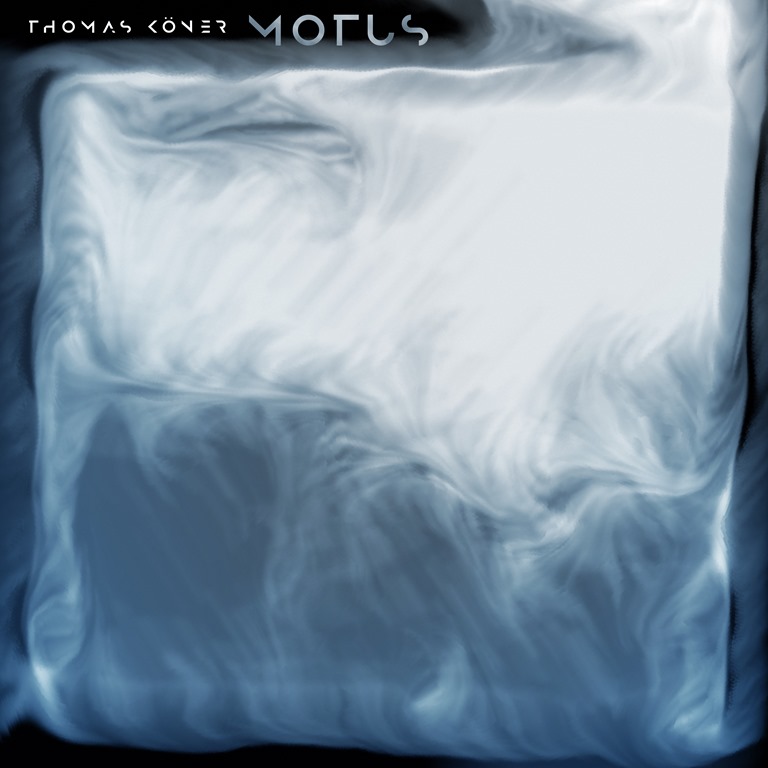
Motus is one of those albums that spreads eight pieces across four sides of vinyl. Most of these pieces are around seven minutes in duration, and manifest as grumbling, low-end analogue electronic instrumentals. Indulgent? Depends on your position, maybe. Audiophile quality? Vinyl addiction? While the pieces which make up Motus don’t immediately intimate a need for attention to detail and there’s no scope for the listener to bask in hearing the rich production values optimally through the medium of vinyl, the frequencies and tones that Köner explores probably do benefit from that full-spectrum vinyl sound, the audio uncompressed and benefitting from the full dynamic range, particularly those low-end sounds, some of which are so low as to almost disappear beneath the average listener’s hearing range.

Motus is steeped in theory, which is fitting given its release on Mille Plateaux, which takes t name – and also its ideologies from radical theorists Gilles Deleuze and Félix Guattari, after whose 1980 text Achim Szepanski’s Frankfurt label devoted to minimal techno, glitch, and other various other experimental electronic forms takes its name.

Köner says of the album that ‘Motus is more (to me) than just music made with analogue synthesizers, it is about attitude, a way of relating to sound and the (e)motion it affects. A lifestyle, where movement, being moved and moving become one. My practice is vibrational, about the skin, touch and surfaces and the gaseous medium in between.

Vibrational it is: these pieces tremble and quiver and grate and grind and shudder and shake and judder and growl.

The first piece, ‘EXTENSION (Attack)’ is a low, glutinous throb, a gelatinous bellyache of a pulsation, rent with crackling, grating treble spurs that scrape at the walls of the cerebellum and scratch the lining of the gut. It’s unsettling, and marks the start of the album’s trajectory, which is unexpectedly linear, and follows a slow descent towards sluggish sludge that’s barely a muddy bubble by the end.

Along the way, ‘SUBSTRATE (Binaural)’ is a low, oscillating throb that expands and resonates over seven brain-bending minutes: there’s something about the more subtle of variations having the most torturous effect, especially when there’s a metronomic pulsing beat lurking beneath, while ‘OSCILLATOR (Luminous)’ reduces everything to an ambulating low-end slip and slide, a muddy melt of trudging bumps. The final cut, ‘SYNTHESIS (Carnal)’, takes things lower and slower still, to the point of near subliminality, slowly winding and grinding into the ground.

Motus is an odd one, an album that undermines itself as it evolves, reducing itself to a lesser sonic amount with each piece. And yet, as the sounds shrinks to little more than a gloopy brown puddle, the effect grows.

AA

MP6_front