Posts Tagged ‘Massimo Pupillo’

Subsound Records – 18th April 2025

Christopher Nosnibor

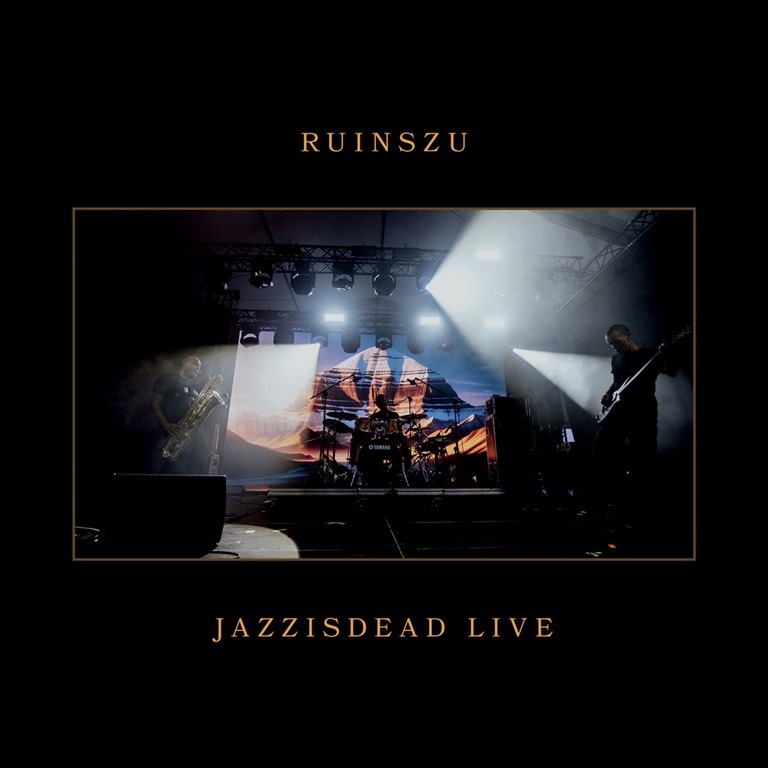
Twenty-eight years and fourteen albums into their career, Zu continue to confound, and to defy comfortable categorisation. Jazzisdead, their first release in six years, is their third live album. It’s most certainly not, however, a set comprising live renditions of greatest hits and fan favourites, and instead being a collaboration between Zu bassist Massimo Pupillo and saxophonist Luca T. Mai, with drummer Yoshida Tatsuya, founder of the Japanese band Ruins – and as such, the moniker follows in the vein of Zu93 (Zu with David Tibet of Current 93). The result, then, is a crazed hybrid of punk, sludge metal and jazz driven by some frenetic full-kit drumming.

‘Gravestone’ kicks it off with a thunderous riff and it’s a track that wouldn’t sound out of place on a Melvins album, while the frenzied ‘Speedball’ comes on like The Dead Kennedys but with some wild falsetto vocals and a blustering blast of sax. How is this even possible?

There are some more sedate passages, but they seemingly exist as tricks to convince you that they’re capable of delivering something more conventional: the introduction to ‘Asmodeo’ is gentle, atmospheric, and it’s almost soothing – but halfway through, it’s explodes in a riot of honks and parps, drums flying in all directions, and each composition slalems hither and thither: at times they’re tightly together, at others , the three instruments play across one another at wildly divergent angles, as if playing three completely different tunes – and yet somehow there’s a groove happening.

‘La Grande Madre Delle Bestie’ features some eye-popping machine-gun snare work before slithering to a swampy crawl, and the thing about Jazzisdead is that it’s simply impossible to second-guess what’s going to happen next. Repeat listens don’t render the work more familiar, but instead reveal entirely different albums. Elsewhere, ‘Hyderomastgroningen’ is a lumbering beast that brings a grungy swagger that brings hints of the Jesus Lizard. However, it’s perhaps Melt Banana who stand as the closes comparison to this in their crazed and irreverent approach to music-making, and this is nowhere more apparent than on ‘Memories Of Zworrisdeh’, the album’s longest track with a running time of five minutes, and which packs in an album’s worth of ideas into that time. ‘Muro Torto’ is another track of two halves, with long, groaning drones giving way to an almost ska-like bouncing thumpalong. Predictable, this is not.

There are several pieces which are but fragments, intersecting passages a minute or two in duration, and these only add to the experience of an album so packed with changes in tempo and key that it’s most discombobulating. It’s dizzying, jaw-dropping, impossible to keep up with, and the interplay between the players is remarkable. Ultimately, Jazzisdead makes for a hell of a listen – although you might need to lie down for a bit afterwards.

AA
a3703079166_10

Subsound Records – 10th March 2023

Christopher Nosnibor

It’s easy in the age of the Internet to conduct enough research behind the scenes to present oneself as having an extant k knowledge of a subject. It’s also a huge temptation to do this as a reviewer or critic, because there’s a certain expectation from audiences that if you’re going to proffer opinions on things, you ought to know what you’re talking about. It’s that knowledge and authority that ought to differentiate someone who presents insightful critiques from the boorish tosser down the pub – or, as is more common now, on social media who has an opinion on everything but talks out of their arse because they know nothing.

But life is an open-ended learning experience, and the day you stop learning, you’re effectively dead. And so it is that while I’m familiar with Malcolm McDowell, primarily for his role in A Clockwork Orange, and Massimo Pupillo of ZU, but not the Italian poet and essayist Gabriele Tinti – which is surprising given his prolific output and the immense reach of his work, especially considering that his career hasn’t been without controversy. Still, the fact he is prolific and has immense reach, as well as being a keen collaborator, explains the coming together of these three for a collaborative album, which finds McDowell reading Tinti’s works over music by Pupillo.

McDowell reads five pieces from the 2021 collection Ruins, dedicated to what he calls the “living sculpture of the actor”, ruminating on the distant past as it echoes through to the present. In keeping with the subject matter – where art and mythology of the ages provide evocative contemplation – there are weighty words, formulated with such syntax as to accentuate their gravity and import, and McDowell’s delivery does them admirable justice. As much as Tinti is given to elevated tone, there’s both a resonating sense of spirituality and an earthiness to his words, and McDowell reads with nuance, bringing the more visual aspects to the fore as he speaks of flesh and blood and bones wounds and exploding veins. There’s a physicality to the writing which possesses a rare potency, and as such, the words are well-suited to the context.

Pupillo’s atmospheric score, conjured using ‘a plethora of different sources, various synthesis, samples of eastern European choirs, processing McDowells’ voice,’ lends further layers of depth: at times choral and monastic voices rise and ring out against elongated drones, rich and organ-like, at others billows of sound creep like tendrils of fog.

Songs Of Stone may only be some twenty minutes in duration, with each side working nicely as a single, continuous soundwork punctuated by the spoken segments, but its grave intensity means that any longer would be difficult to digest. As it stands, Songs Of Stone feels perfectly formed.

AA

a3543316873_10

Ici, D’ailleurs – 22nd June 2018

I find myself increasingly drawn to album covers that evoke a sense of desertion, emptiness, and which are oddly plain, bald. French avant-garde specialists Ici, D’ailleurs are particularly good in housing albums in covers of this type, with their ‘Mind Travels’ series, of which this is number eleven, being particularly noteworthy (and the tri-fold cover with a thick spine is especially nice). On the one hand, the cover art gives nothing away. On the other, it created a certain sense of emptiness and foreboding, which perfectly describes the music it houses.

Mysterium Coniunctionis – the product of a collaboration between Thighpaulsandra (who featured on many Coil albums) and Massimo Pupillo (who built his reputation as bassist with Zu, and has continued to expand it working with Eugene Robinson and as part of Triple Sun) – is dark and foreboding, and more.

The press blurb explains the album’s purpose neatly, so I shall quote: ‘Mysterium Coniunctionis makes direct reference to the eponymous and testamentary work of the psychiatrist Carl Jung, subtitled An Inquiry into the Separation and Synthesis of Psychiatric Opposites in Alchemy. It clearly reflect the duo’s intention to create particularly immersive and meaningful music from supposedly opposing materials’.

Mysterium Coniunctionis contains two tracks, each around the twenty-minute mark in terms of running time, and corresponding with one side of an album apiece. Halfway through the first, ‘Sagyria’, my wife wandered into my office and said she was worried there was something up with the motor on the dehumidifier before realising the uncomfortable humming was emanating from my speakers. Humming, throbbing, deep and resonant tones dominate both compositions.

There’s minimal movement across the album as a whole, and listening digitally the tracks bleed together to form an extended, expansive soundscape that pushes discomfort, a sense of disquiet and tension. Always tension. Some fourteen minutes into the second track, ‘Solve et Coagula’, the sounds reaches a shivering, spine-tingling level of intensity and density. It’s all in the frequencies, as the midrange and treble loom to the fore and get uncomfortable – really uncomfortable.

The ‘opposing materials’ which form the fabric of Mysterium Coniunctionis are the digital and analogue: in combination, they forge a dense and unsettling sound that eddies and whirls and tunnels into the inner regions by stealth.

AA

URUK