Posts Tagged ‘Martin Taxt’

Thanatosis Produktion – 30th August 2024

Christopher Nosnibor

Reconnecting with Microtub via their new album takes me back: a year or two into doing this reviewing thing, I began to find myself with access to a whole array of experimental music the likes of which I never knew existed, as released on labels like Editions Mego and Room40. Revelation is an understatement. It was the opening of the doors to a whole new world – a world where albums would contain a single track of ten to twenty minutes on each side, or otherwise a raft off really short snippets of what sounded like digital code, or… well, anything.

I thought I’d heard it all, having explored Metal Machine Music and picked up a stack of grindcore releases where a 7” EP packed in anything up to a dozen tracks and still had more playoff than a three-minute pop single. Pah. I knew nothing, and my tastes were so, so narrow.

Suddenly, my eyes were opened to new vistas, and I even learned that I didn’t actually hate all things jazz, and I lapped up all of these crazily inventive exploratory releases. Among them, Microtub stood out because I was simply blown away – and also somewhat amused – by the very idea of a microtonal tuba. What even is that? What does it look like, and who came up with the idea? And how on earth were there three players off this instrument who managed to find one another and come together to form a creative unit?

I still don’t have all of the answers to these questions, but Thin Peaks is the sixth album by Robin Hayward (UK/DE), Peder Simonsen (NO), and Martin Taxt (NO), and it contains five pieces: the four comparatively short compositions, ‘Andersabo’ (parts 1-4), which occupy side A, and the seventeen-minute title track which fills side B.

As ever with such works, the process is both interesting and integral when it comes to appreciating its evolution and final emergence, as well as the timespan from conception to release:

‘Initially developed during an artist residency in Andersabo, Sweden, the two pieces ‘Andersabo’ and ‘Thin Peaks’ underwent several adaptations before being recorded in 2022. The pieces draw on the acoustic phenomena of half-valve combinations, creating distinctive timbres and harmonic spectra based on the unique half-valve signature of each tuba. Whilst ‘Thin Peaks’ hockets between the pitches arising from a single half-valve combination, each of the four movements of ‘Andersabo’ results from a different half-valve combination, sometimes resulting in surprisingly consonant harmonies.’

A fair bit of this sounds quite technical to me, but technical knowledge and ability isn’t essential when it comes to listening – it may help, but I suspect many ‘technical’ musicians would find the way in which they use their extreme technical skills to create sound which doesn’t necessarily confirm to many people’s concept of ‘music’. The pieces on Thin Peaks are droney, often a shade atonal, a little dissonant, and almost completely without structure when compared to either conventionally-shaped rock, pop, etc., or even jazz or classical. There are no crescendos, no hooks, no… no nothing to grab a hold into. It’s a whole other realm when it comes to conceptions of what constitutes music. It isn’t an easy in. Abstraction is simply not part of musical convention or what our brains are generally attenuated to process. But if you can open your ears and enter this other sonic realm, it can be enriching in the most unexpected of ways.

Thin Peaks is intriguing, its sparse arrangements and contrasting tones acting simultaneously like a scarification and soothing of the faculties. Breathe slow, and go with the flow…

AA

THT35 front

SOFA – SOFA 555 – 13th January 2017

Christopher Nosnibor

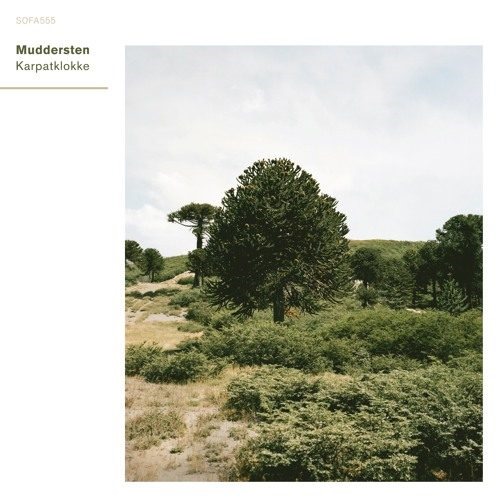
It’s no secret that I have a real penchant for what the man on the street – and most of my friends, and certainly the uncultured crets in my dayjob would brand ‘weird shit.’ Indeed, it’s fair to say that Aural Aggro’s primary raison d’être is to give coverage to the obscure, weird shit that exists way, way off the radar. It’s not necessarily that I’m being wilfully perverse: oftentimes, I will simply find that the supposedly weird shit resonates with me on some subconscious level, in the way that only music can. But then there are some releases that I appreciate because they’re plain bizarre. Muddersten’s Karpatlokke is an album that appeals on both levels, in that sonically, it’s intriguing, unusual, dark and intense, and conceptually, and in its construction, it’s utterly perverse.

‘Muddersten is a type of mudrock whose original constituents were clays’, the press release explains. Perhaps it was creative misprision on my part, but I immediately began to envisage the trappings of an obscure subgenre, a bastard offshoot of sludge metal, or a hybrid born out of crust punk. This would ordinarily make more sense, contextually, than the literal meaning which in fact applies here.

The second release to land with me in a week to feature Martin Taxt and his microtonal tuba, the instrumentation listed in the creation of this creeping compost-based composition is nothing if not unusual: Håvard Volden plays (relatively) conventional instruments, the guitar and the tape loop. Taxt, along with his microtonal tuba, contributes electronics. And then there’s Henrik Olsson, master of objects, friction, and piezo. I had to look up piezo. Precisely how one renders music from abstractions is unclear, but this strange union, which finds the trio conjure an album which is ‘all about the hydraulic’ and is preoccupied with the movement of moisture through clay and soil and its absorption by plants, is a successful one. And, for the second time in a week, I’m compelled to contemplate the line in Marvell’s ‘To His Coy Mistress’ which refers to ‘vegetable love’. Karpatlokke could well be a definite soundtrack to the Aristotelean reading of the concept.

The sounds the trio produce are appropriately earthy, although by no means overtly or conventionally musical in their nature. As such, the music does not feel as if its mechanical origins are instruments as man-made as guitars, tape-loops and electronics. Although predominantly organic-sounding, there are some pretty gnarly tones to be found here: droidal, digital squeaks and bleeps ping rapidly around sharp-edged bursts of sound. Drips and groans counterpoint dark, growling rumbles. ‘Kjempeløk’ grinds out a heavy, trudging vibration, thickly abrasive. Slow-motion scrapes turn through glitchy, crackling rhythms on ‘Stjerneskjerm’, as strings bend, bow and slowly slip the sprockets of time. It’s an unsettling work, evoking slow, creeping movement and evolutionary growth, amplified: the sonic equivalent of a nature documentary shot in high-definition, with ultra-close-ups, the frames sped up and slowed down to render in the sharpest relief the brain-bendingly awesome occurrences which take place daily in the natural world, unnoticed and invisible to the naked eye.

Each track’s title refers to a plant: ‘Stjerneskjerm’ translates as ‘Astrantia major’, commonly known as ‘master wort’, and the impressive-sounding ‘Blodstorkenebb’ is in fact a composition inspired by the rather humble Geranium sanguineum, aka bloody crane’s-bill or bloody geranium. Yes, this dark, dank, swirling noise which gnaws as the intestines and churns at the cranium is inspired by a bloody geranium. Which why it’s a great, if extremely unusual, album. Well worth digging out.


Muddersten – Karpatklokke