Posts Tagged ‘Mark Beazley’

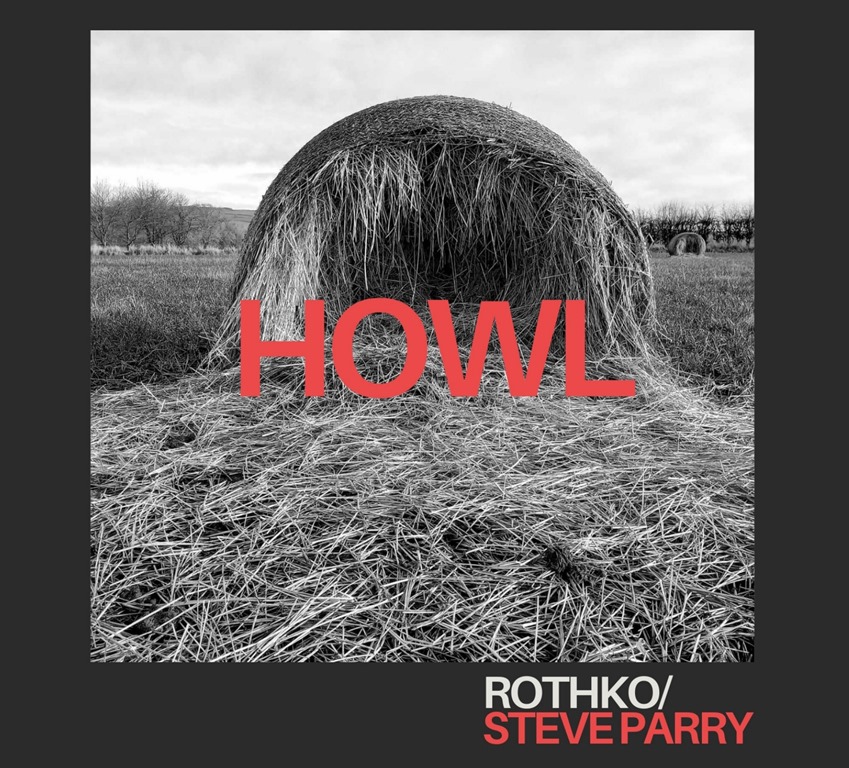
Trace Recordings – 11th October 2024

Christopher Nosnibor

One might say that this collaboration has been a long time in coming: the pair have been friends for some twenty years, and have made contributions to one another’s recordings over that time. There’s no question that it was worth the wait. Their process and the way in which they each contributed is integral to the finished work, and here, not only to save typing, but to ensure nothing is lost in translation or paraphrase, I shall quote from the accompanying notes:

‘Emanating from the sounds of a church organ, with many short pieces recorded by Steve Parry in an ancient secluded church, and then embellished by Beazley, with his resonant bass tones, electric guitar and electronics, HOWL captures the senses of ambience, harmony, discordance and noise, with recordings of the churches space, of its emptiness, interspersed with the music.

‘The two, long, resulting pieces, create an almost ritualistic event, of something taking place that is mysterious, uplifting, and, in parts, unsettling.

‘The album reflects an emptiness, the echoes from ancient walls, a deep sense of place—and the refractions between these two artists. HOWL veers between moments of meditative beauty and unsettling discord, creating a soundworld that feels ritualistic, mysterious, and transformative.’

This is very much an accurate summary and fair description of the album, consisting as it does of two compositions each with a running time of around twenty minutes, but it’s more of a challenge to convey in fullness the resonant effects of this vaporous sonic drift. The first, ‘In the Season of Darkness’ is formed around elongated drones, but their organ origins isn’t immediately obvious in the ear. One associates the instrument with bold, piping swells which sing to the heavens, but here, it’s more subdued, almost a low, rumbling wheeze which provides an eddying undercurrent. Acoustic guitar and slow, meandering bass are far more dominant, and it’s very soon clear that this is by no means an ambient work, or a work without structure or form. The guitar and bass play distinct notes and motifs, often alternating with one another, but sometimes playing in co-ordination, and others still across one another. Treble strains like taut whines of restrained feedback filter through, these higher-end frequencies forming a counter to the resonating bass and the mid-range organ drone which slowly begins to emerge and take form a few minutes in.

The dissonant incidentals rupture the surface like lightning through a thick, rolling cloud cover. The mood is sombre, ominous. The fact it’s pitch black outside and has been since around 6:30, I’m feeling autumnal and writing by candlelight probably means I’m feeling it more, but this is music with a subliminal, subconscious pull. There’s a segment around the mid-point where there’s a pause, and there’s nothing but clatters and clanks, like tin cans rattling in the wind, before the drone returns, darker and denser than before, and with a sepulchral reverb, and it’s something which taps into something primitive and earth-born within. I can only really articulate it by way of a brief recollection of a time I visited an obscure stone circle in Scotland. Most of the stones were gone, but the shape of the circle was marked out by a ring of nettles. It was probably around twelve metres in diameter, and the few remaining stones were no more than three feet high. It was a little way off a minor road, in an unkept grazing field and as unremarkable as it was forgotten and neglected, and I had only paused by it because I had spotted it on the map. But, arriving at the place, something happened: the air temperature dropped a couple of degrees, the wind sped up and clouds obscured the sun; but more than this, there was an atmosphere which brought goosebumps and a shiver down my spine. The place had an atmosphere, and I almost felt as if I was for a brief moment splitting across millennia. The sensation was but fleeting, but it was palpable. The experience of hearing this piece is akin to that, resonating on a level beyond the sphere of commonplace experience.

Counterpart composition, ‘In the Season of Light’ is, again, constructed around a long, long, reedy drone, this time with piano and delicate scrapes and wind-like rustles and whooshes adding the additional layers and textures. It doesn’t feel our sound especially light or uplifting: dark sonorous tones and groaning creaks occupy the corners, before, again around the mid-point, a gentle guitar part, reminiscent of later Earth tunes, arrives, and there are some delicate strings, too. Finally, light begins to break through.

HOWL clearly has no correspondence with Allen Ginsberg’s seminal poem, but does very much tap into something primal and primitive, the way we feel the effects of the seasons, the sun, the moon, possessing what one might perhaps describe as a ‘spiritual intuition’, reaching elemental aspects of the human DNA. Understated, but powerful and moving, it’s a subtly intense work.

AA
6 page ECOpack with measurements.pdf

10th March 2023

Christopher Nosnibor

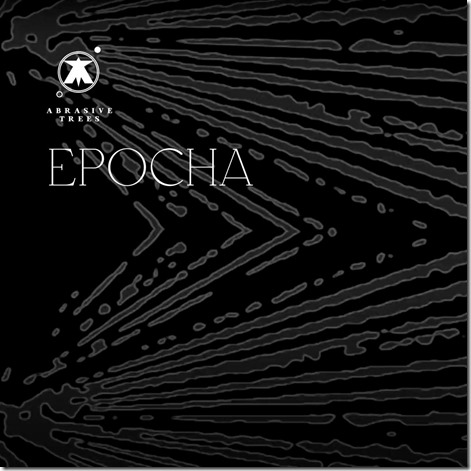
Epocha gathers together Abrasive Trees’ output from 2019-2021 – a brief but pivotal period for the band released four singles and EPs which found them evolving and solidifying their sound. They’ve been variously described as Post-Punk/Post-Rock/Post-Folk and permutations thereof, and all of these elements are in the mix in a style that has gothic – but not explicitly ‘goth’ overtones across the course of the nine tracks gathered here.

Although ostensibly a five-piece centred around Matthew Rochford in their current incarnation, these recordings feature a host of contributors, notably Mark Beazley of Rothko and Band of Holy Joy, who was also involved in elements of production, mixing, and mastering the tracks, and among others. It’s perhaps because of what these individuals bring, both in terms of playing style and instrumentation – with cello, e-bow, organ, and dulcimer among the array of instruments which augment the standard setup off bass, drums, and guitar.

The fact that the songs aren’t simply presented chronologically – and remixes have been omitted – does give this disc a more the feel of an album set than a compilation, and this makes for a journey-like listening experience.

The album opens with ‘Bound for an Infinite Sea’, the lead track of the EP bearing the same title from September 2020, and the chiming guitarline is reminiscent of The Nephilim era Fields of the Nephilim, and sets the expansive atmospheric tone that defines the sound of Abrasive Trees.

While there are vocals, they feature sparingly, rippling up between the lengthy instrumental sections. On ‘Replenishing Water’, this manifests as a percussion led swirling psych groove, whereas elsewhere, as on the slow, hypnotic ‘Before’, the vibe is rather more spaced-out and trippy, and there’s certainly an experimental, almost-jam-based aspect to the music in places.

Predominantly, though, there’s a contemplative, brooding nature that seeps through the rich yet subtle arrangements, and at times, in the folkier parts, I’m reminded of Last Harbour (granted, not a comparison that will likely leap out to many, but so often the best bands are underrated and under the radar). The dark, moody ‘Alone in the World’ is eerie, haunting, and other-worldly.

In pulling together these recordings, released variously on cassette, vinyl, and hand—packaged CD, one would hope that Abrasive Trees will find new converts, even if there are only 100 copies of this CD-only release – if its existence steers people to the digital versions of the original, then it’s all to the good, although it has to be said, as a fan of physical media, Epocha is a lovely item, as well as a well-realised document of the band’s first phase.

a4124501000_10

(Image links to Bandcamp)

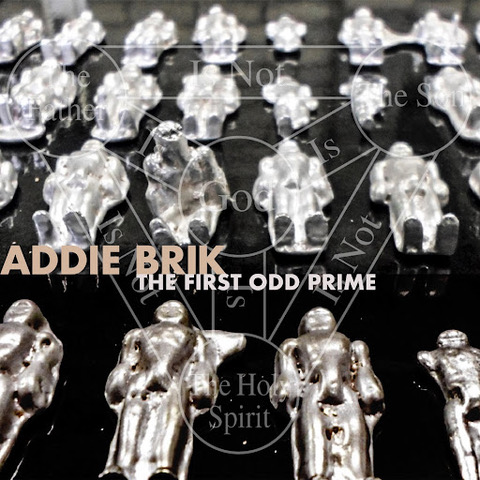
They say all good things arrive in threes, and the third single to be cut from Addie’s upcoming album ‘That Dog Don’t Hunt’ (out 25 November, via Itza Records) is a prime example.

A song that dwells upon the laws of the ultimate numbers game, “The First Odd Prime” finds Addie reflecting on Fibonacci’s revolutionary sequence, and the natural order of things. As Addie explains: “This is about compassion, as seen through the lens of Nature, The Golden Ratio, Fibonacci Numbers, with the fairy dust of the Charles Laughton film, Night of The Hunter, thrown in for colour.”

Chiming with the themes of “odd primes, the Golden Mean, rescue and homecoming” expressed in the song, the new single arrives with a mesmeric official video that finds the numerical and the natural artfully intersecting with one another. Directed by Andy Alston (Del Amitri) and co-edited with Addie Brik, the live footage was captured outside Addie’s home in  Scotland, with additional film clips provided by Glenn Lewis (Mick Harvey, Cambodian Space Project).

Featuring a stellar cast of guest players, “The First Odd Prime”’s thunderous rhythms come courtesy of Simple Minds’ Jim McDermott on Drums, with Glenn Lewis (guitars) and Nick Blythe (bass) adding to its swirling maelstrom of sounds. US star N’dea Davenport (Brand New Heavies, Malcolm McClaren) also contributes her vocals to its hypnotic chorus hooks.

AA

Addie B2

Following recent singles including, the slow-burning ‘Retromingent’ and folk-tinted ‘Gearless’, ‘The First Odd Prime’ is the latest excerpt to be taken from Addie Brik’s upcoming studio album That Dog Don’t Hunt (out 25 November, via Itza Records).

The Georgia-born, Scottish-based artist’s first release since 2018’s acclaimed ‘I Have A Doctor On Board’, Addie’s new album documents the decline of Western society and culture, tells of the vilification of truth-sayers and whistleblowers, and derides the corrosion of free thought and the tide of dissolution our human liberties face in the 21st Century. Speaking about the album, Addie says: “I think Pythagoras, Socrates, Plato… the ancient Greeks blazed a very wise trail with the Golden Mean that influenced the best of what the West has achieved. The Golden Mean can right matters, which have gone too much in one direction, like betrayal or corruption; it’s about symmetry as opposed to chaos. The US Constitution, an inspired 4-page document, is still completely revolutionary. It states that man has unalienable rights, these rights are from Divine Authority and not from the State. It was written for ‘The one dissenting voice’. Whether it be society, music, architecture or education, the overarching thought should be: is it true, is it good, is it beautiful?”.

With its initial sessions arranged by Steve Shelley of Sonic Youth, the album was recorded between Fernando Vacas’ private studio in Córdoba and her current base in Scotland during lockdown. Featuring appearances from Scottish talents including Deacon Blue’s Jim Prime (who also happens to be Addie’s neighbour), Alex Rex of Trembling Bells, Robbie MacIntosh (Paul McCartney / The Pretenders), Jim McDermott (Simple Minds / The Silencers) and The Scottish National Youth Choir; it also features contributions from further afield musicians including Glenn Lewis (who added guitars from Melbourne), plus engineering from Bob Coke and bassist Stephen Harrison from Bob’s studio in Paris. Writing retreats on the Isle of Skye with resident artist Doc Livingston (Kings of Kaakon / Uncle Rocket) would also feed into the record’s inherent sense of spaciousness and quiet contemplation.

Produced by Addie Brik, it was mixed jointly by Tufty, Paul Stacey and Pierre Marchand, with additional mixing and Mastering by Mark Beazley (Itza Records).

Purposeful and powerful, ‘That Dog Don’t Hunt’ is a record that burns with a luminescent ambition and a calescent political intent delivered by an artist at the top of her game.

Addie B1

28th April 2022

Christopher Nosnibor

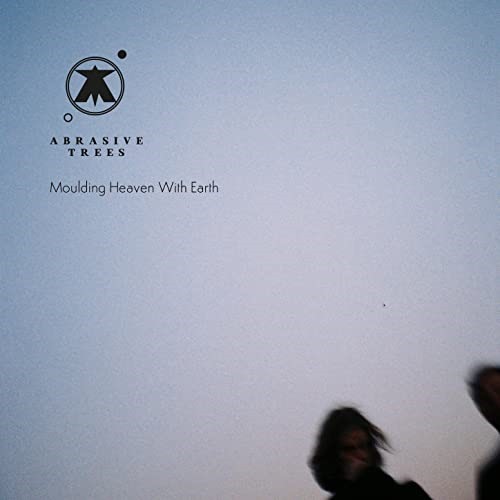
While physical formats for music may not be especially popular these days, there really is no substitute for holding an article in in your hand. It’s not just about the artefact or the possession – although increasingly, I feel that actually ‘owning’ your music seems like a sound move as acts pull their music from popular platforms – particularly Spotify – and acts who no longer exist cease to maintain their websites and BandCamp profiles and their works simply disappears. Nothing is permanent, but when it comes to things which are virtual, their ephemerality is even more pronounced. This is a long way to coming around to saying that the CD for Abrasive Trees’ new single is magnificent as an item, and it’s very much a fitting way to present the musical contents, and with three tracks including a remix of ‘Moulding Heaven with Earth’ by Mark Beazley (Rothko), it’s a proper 12” / CD single release, the likes of which are sadly scarce these days.

I don’t just love it for the nostalgia: this feels like a proper, solid package in every way, and ‘Moulding Heaven with Earth’ is very much cut from the cloth of sparse, minimal shoegazey post-rock, which provides the backdrop to a stirring spoken word performance before spinning into a slow-burning extended instrumental work. It builds and it broods, the atmosphere growing denser and tender as the picked guitar lines unfurl and interweave across a slow, strolling bass. A reflection on life and death, earth and afterlife, it’s a compelling performance, and the words would stand alone either on a lyrics sheet or as a poem. From there, it’s a gradual, and subtle journey that culminates in a crescendo – that’s strong, yet restrained.

B-side / AA side ‘Kali Sends Flowers’ is moving: again, it’s understated, and yet so very different, spinning a blend of post punk – even hinting at the gothier end of the post-punk spectrum – and psychedelia that in places hints at Spear of Destiny in the way it’s sparse yet rousing. It’s one of those songs that simply isn’t long enough, and that demands for ‘repeat’ to be hit immediately to keep it going.

Mark Beazley’s remix of ‘Moulding Heaven with Earth’ accentuates the atmospherics, and while it retains the rhythm – and if anything it highlights the beef of the bass – and is generally quite respectful in its treatment, and somehow expands the vibe and introduces a more ambient feel, while at the same time shaving over a minute off the time of the original. It’s an interesting – and I mean that positively – reworking, and one that most definitely brings something fresh to the track, rounding off what’s as close to a perfect EP as you’ll hear all year.

AA

AA

31UQdh hqYL

Wise Queen Records / Shapta – 4th September 2020

Christopher Nosnibor

Abrasive Trees may be the solo project of Scottish-born guitarist and singer Matthew Rochford, and this may be a debut release, but already the project has acquired a roll-call of contributors on a par with Pigface or The Damned. Amongst these are Peter Yates (Fields of The Nephilim), Mark Beazley (Rothko/Band of Holy Joy), Steven Hill (Evi Vine), and Jo-Beth Young (Talitha Rise/RISE/Yates & Young).

The sum of this three-tracker bears little obvious relation to its parts, in the best possible way: there’s no sense of baggage or of any of the contributors striving to define the sound with their various stylistic signatures, and what’s more, none of the compositions sound remotely alike, showcasing a creative openness and willingness to experiment and embrace different forms.

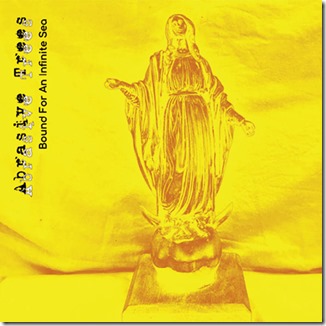
Emerging from a thick atmospheric mist, ‘Bound for an Infinite Sea’ has gothic overtones, with picked guitars echoing out over a deep, rumbling bass. With hints of early Cure, Skeletal Family and Salvation, it broods through shadowy shapes in a fashion that’s perfectly evocative of the early 80s post-punk sound, but it’s also spun with an ethereality that owes as much to the 4AD roster and 90s shoegaze. Rochford’s voice sounds dislocated, disembodied, as it floats into the air, lost, alone. The production is hazy, a vagueness hangs over the notes, with the instruments blurring together as the percussion lingers hesitantly in the background.

Beginning with hints of expansive post-rock, there’s almost a folky feel to the delicate instrumental ‘Brother Saint’, which washes into the more abstract, experimental semi-ambience of ‘Replenishing Water (Stripped)’.

Uncertainty, trepidation, and a certain sense of otherness permeate this set, and if Abrasive Trees’ identity and direction seems unclear at its conclusion, then it’s all to the good, leaving open all avenues and possibilities for exploration.

a3041202781_16